
Poor air quality inside your office is costing you more than you may realise. Employees in spaces with inadequate ventilation report higher rates of fatigue, headaches, and reduced concentration, all of which erode productivity over time. Office air quality improvement is not a single fix. It requires a layered approach that addresses ventilation, filtration, pollutant sources, and ongoing monitoring. This guide covers 10 proven strategies that office managers and wellness advocates can apply immediately, along with the criteria to assess where your workspace stands right now.
Table of Contents
- Key takeaways
- 1. Establishing your baseline with air quality monitoring
- 2. Increasing natural ventilation
- 3. Optimising your mechanical ventilation system
- 4. Upgrading HVAC filters to MERV 13
- 5. Adding activated carbon filtration for VOC control
- 6. Deploying portable air cleaners in problem zones
- 7. Controlling pollutant sources before adding equipment
- 8. Engaging employees in daily air quality habits
- 9. Setting up continuous monitoring and scheduled reviews
- 10. Comparing strategies by effectiveness, cost, and complexity
- What I’ve learned about office air quality after years in the field
- Improve your office air with Climatepro solutions
- FAQ
Key takeaways
| Point | Details |
|---|---|
| Assess before you act | Establish baseline CO2, VOC, and particulate readings before investing in equipment or upgrades. |
| Ventilation and filtration work together | Relying on one alone leaves gaps; both must be used together for consistent results. |
| Source control is the highest-value step | Removing pollutant sources before adding filtration reduces your overall IAQ burden most cost-effectively. |
| Filter choice matters significantly | MERV 13 captures far more fine particles than MERV 8, but system compatibility must be verified first. |
| Monitoring drives continuous improvement | CO2 and VOC sensors in key zones allow you to catch problems early and adjust strategies accordingly. |
1. Establishing your baseline with air quality monitoring
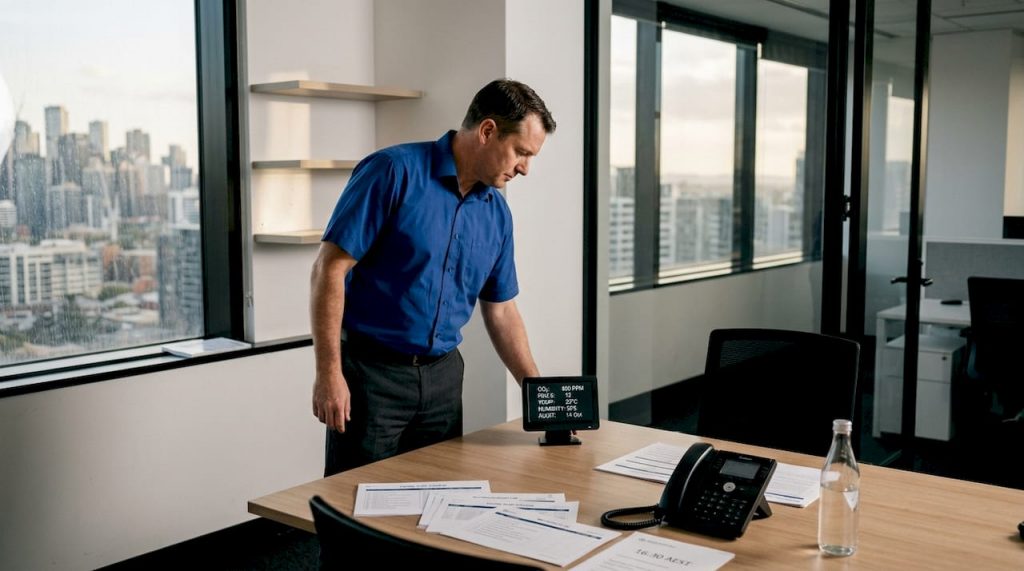
Before any office air quality improvement steps make sense, you need to know what you are dealing with. Measuring CO2, volatile organic compounds (VOCs), and particulate matter gives you a factual picture of where problems exist and how serious they are.
Key metrics to track:
- CO2 levels: CO2 below 800 ppm indicates good ventilation; above 1500 ppm requires immediate intervention
- Particulate matter (PM2.5): Fine particles that penetrate deep into the respiratory system and affect cognitive function
- VOC concentration: Gases released from furniture, cleaning products, and office equipment
- Relative humidity: Ideal range is 40 to 60 per cent; outside this range, comfort and health both suffer
Place monitors in meeting rooms, open-plan work areas, and enclosed offices separately. These locations often show very different readings. Monitoring CO2 alongside VOC and particulate sensors gives you the data needed for proactive management rather than reactive complaints.
Pro Tip: Run your monitors for at least two full working weeks before making any changes. This captures peak occupancy periods, cleaning days, and any HVAC cycling patterns that might otherwise go unnoticed.
2. Increasing natural ventilation
Natural ventilation is the lowest-cost air quality improvement tip available to most offices. Opening windows and doors during low outdoor pollution periods increases fresh air exchange and dilutes occupant-generated pollutants like CO2 and humidity without requiring any infrastructure changes.
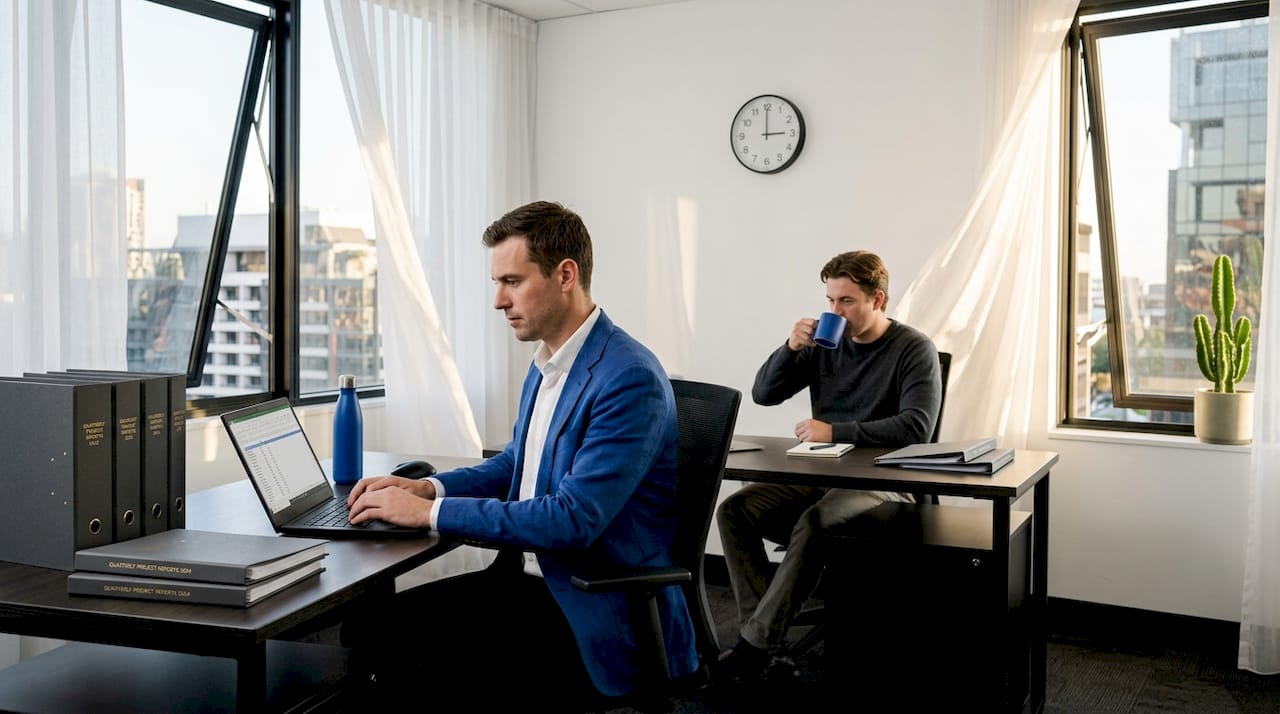
The practical limit here is outdoor air quality. In urban areas or near busy roads, outdoor pollutant levels may actually worsen indoor air when windows are open. Check your local air quality index before establishing an open-window policy. Early mornings before peak traffic are generally the best window for natural ventilation.
Position openings on opposite sides of the floor plate where possible. Cross-ventilation moves air more effectively than a single open window. Even a 10-minute flush at the start and end of the day makes a measurable difference to CO2 accumulation.
3. Optimising your mechanical ventilation system
Most offices rely on mechanical HVAC for air distribution, but the system is often set up for thermal comfort rather than air quality. Reviewing your ventilation improvement checklist with a qualified HVAC technician is the most direct route to better air exchange rates.
Three areas to review:
- Air change rates: Confirm they meet current guidelines for your occupant density. Many older systems were commissioned for lower occupancy levels than they now serve.
- Fresh air dampers: Check that outdoor air dampers are opening fully and not stuck partially closed, which is a common fault after years of operation.
- Energy recovery ventilators (ERVs): Where budget allows, ERVs recover heating or cooling energy from exhaust air while still bringing in fresh outdoor air. This addresses the efficiency trade-off that often discourages managers from increasing fresh air intake.
Pro Tip: Ask your HVAC technician to log damper positions and supply air temperatures alongside CO2 data. This pairing reveals whether ventilation rate changes are actually reaching occupied zones.
4. Upgrading HVAC filters to MERV 13
Standard commercial HVAC filters rated at MERV 8 are designed primarily to protect equipment, not to remove fine particulates that affect occupant health. Upgrading to MERV 13 captures substantially more health-relevant particles, including fine dust, pollen, and aerosols.
The critical caveat: MERV 13 filters must be compatible with your specific HVAC unit. Higher filter ratings increase airflow resistance. In systems not designed for this, the result can be compressor stress, reduced airflow, and ultimately equipment failure. Always confirm compatibility before changing filter specifications.
| Filter rating | Particle capture capability | Typical application | System impact |
|---|---|---|---|
| MERV 8 | Basic dust and pollen | Equipment protection | Minimal |
| MERV 13 | Fine particles, aerosols, smoke | Occupant health protection | Moderate (check compatibility) |
| HEPA (H13/H14) | 99.97% of particles ≥0.3 microns | Portable units and medical settings | Not suitable for most HVAC |
Pro Tip: If your HVAC cannot handle MERV 13 without modification, a verified MERV 11 filter combined with portable HEPA units in high-occupancy zones often achieves a comparable outcome at lower system risk.
5. Adding activated carbon filtration for VOC control
HEPA filtration addresses particles. It does not address gases. Pairing HEPA with activated carbon improves VOC and odour removal by 95 to 99 per cent, making this combination significantly more effective than either technology alone.
In office environments, VOC sources include fresh paint, adhesives, new furniture and carpet, printer emissions, and cleaning products. These gases are invisible and odourless at low concentrations, meaning occupants often do not associate their symptoms with air quality at all. Activated carbon filtration addresses this silent category of pollutants that frequently appears on any meaningful indoor air hazards list.
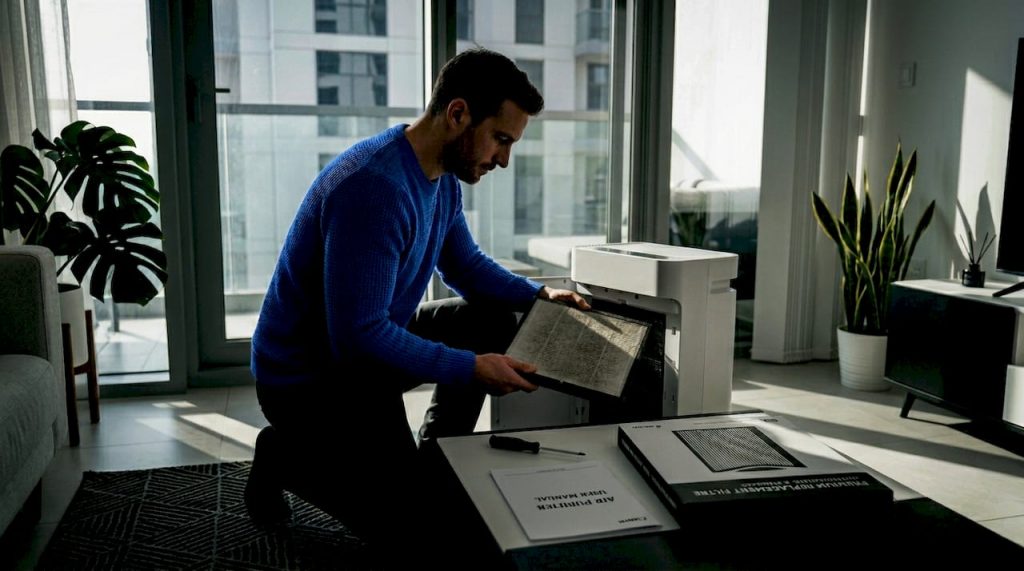
When selecting portable air purifiers for your office, confirm the unit contains a genuine activated carbon layer of meaningful depth, not just a thin carbon coating on a foam pre-filter. The difference in performance is significant. For those exploring air cleaning technologies, this distinction is worth understanding before purchasing.
6. Deploying portable air cleaners in problem zones
HVAC systems distribute air across a whole floor, but air mixing is not instantaneous. Dead zones form in corners, enclosed offices, and meeting rooms where occupant density is high but airflow is limited. Portable air cleaners address these localised pockets directly.
Place units in:
- Meeting rooms used for extended sessions
- Enclosed offices with poor natural ventilation
- Reception areas where foot traffic brings in outdoor pollutants
- Printer and copier areas where ultrafine particles accumulate
Avoid units that generate ozone or use ionisation as their primary mechanism. Additive air cleaning devices like ionisers may produce harmful byproducts that worsen indoor air quality. Choose units based on HEPA and activated carbon filtration. These are subtractive technologies that remove pollutants rather than introducing new compounds.
7. Controlling pollutant sources before adding equipment
Source control is the most cost-effective IAQ strategy available to office managers. Reducing the amount of pollutants introduced into the space means ventilation and filtration systems face a lower burden from the outset.
Key source control measures for offices:
- Replace solvent-based cleaning products with low-VOC or fragrance-free alternatives
- Specify low-VOC paints, adhesives, and sealants for any fit-out or refurbishment work
- Allow new furniture and carpet to off-gas in a well-ventilated area before installation
- Manage moisture from leaks, condensation, or wet areas promptly to prevent mould growth
- Implement a clear policy on fragrances, including air fresheners and personal products, in shared spaces
Effective source control prevents many issues that would otherwise require costly filtration upgrades or ventilation increases. This step costs little and pays dividends across every other strategy on this list.
8. Engaging employees in daily air quality habits
Infrastructure improvements only go so far. Occupant behaviour contributes directly to indoor air quality, and a short, practical briefing for all staff can reinforce good habits without requiring any capital expenditure.
Practical guidance to share with your team:
- Open windows during breaks when outdoor air quality permits
- Keep desks clear of unnecessary clutter, which traps dust and reduces cleaning effectiveness
- Report blocked or covered vents immediately rather than assuming facilities will notice
- Avoid bringing strongly scented products into shared spaces
On the topic of office plants: they are often cited as natural air purifiers, but the evidence for meaningful pollutant removal in real office conditions is limited. Plants add to occupant wellbeing through other means, but they should not be positioned as a substitute for mechanical filtration or ventilation improvement.
Pro Tip: Share a simple monthly air quality update with staff, including CO2 readings and any steps taken. Transparency builds awareness and encourages employees to report issues they would otherwise ignore.
9. Setting up continuous monitoring and scheduled reviews
Monitoring is not a one-time activity. A guide to healthier office air has to include a plan for ongoing data collection, review, and adjustment. Without this, even well-designed interventions can drift out of performance over time as occupancy patterns change, equipment ages, or new pollutant sources are introduced.
| Review frequency | Activity | Responsible party |
|---|---|---|
| Weekly | Check CO2 and particulate readings from sensors | Facilities manager |
| Monthly | Review trends and identify zones with persistent issues | Wellness advocate or manager |
| Quarterly | Service HVAC filters and portable unit filters | Qualified HVAC technician |
| Annually | Full IAQ assessment with professional-grade instruments | Independent specialist |
Integrate air quality data with employee feedback. If a team consistently reports headaches or fatigue in a specific area, cross-reference with sensor data from that zone. Patterns in the data and in staff reports together pinpoint problems faster than either source alone.
10. Comparing strategies by effectiveness, cost, and complexity
With multiple air quality improvement tips available, office managers need a clear way to prioritise. The table below summarises all ten strategies across the dimensions that matter most for practical decision-making.
| Strategy | Effectiveness | Cost | Complexity |
|---|---|---|---|
| Baseline monitoring | High (enables all others) | Low to moderate | Low |
| Natural ventilation | Moderate | Negligible | Low |
| HVAC optimisation | High | Moderate | Moderate |
| MERV 13 filter upgrade | High | Low | Low to moderate |
| Activated carbon filtration | High for VOCs | Moderate | Low |
| Portable air cleaners | High (localised) | Moderate | Low |
| Source control | Very high | Very low | Low |
| Employee engagement | Moderate | Negligible | Low |
| Continuous monitoring | High | Low to moderate | Moderate |
| ERV installation | Very high | High | High |
Source control and monitoring consistently deliver the highest return for the lowest outlay. Commercial air quality solutions that combine these approaches with targeted filtration upgrades represent the most practical path for most office environments.
What I’ve learned about office air quality after years in the field
I’ve seen offices spend considerable sums on HEPA air purifiers while their HVAC dampers were stuck partially closed and their cleaning team was using heavily scented products every morning. The technology investment produced almost no measurable improvement because the fundamentals were not in place first.
My consistent observation is this: most offices have a source control problem, not a filtration problem. New furniture, synthetic carpet, printer cartridges, and fragrance-based cleaning agents generate more pollutant load than a HEPA unit can realistically manage. Address the source first, then layer in filtration for what remains.
The other misconception I encounter frequently is the idea that a standard HVAC system is “handling” air quality simply because it is running. Standard MERV 8 filters are equipment protection measures, not occupant health measures. The air coming through those vents may be thermally comfortable and still carry concentrations of fine particles and VOCs that impair cognitive performance over a full working day.
The good news is that the integrated approach works. When you combine source control, verified ventilation rates, appropriate filtration, and ongoing monitoring, the results show up in sensor data and in staff feedback within weeks, not months.
— Nevel
Improve your office air with Climatepro solutions

Climatepro supplies a range of air purifiers, humidifiers, and dehumidifiers suited to office environments across the UAE. The Honeywell Air Touch P2 combines true HEPA filtration with an activated carbon layer, making it well suited for medium to large office spaces where both particulate and VOC control are priorities. For smaller offices or individual workstation areas, the Honeywell Air Touch P1 delivers the same filtration technology in a compact footprint. Climatepro also stocks humidifiers to help maintain the 40 to 60 per cent relative humidity range that supports both comfort and air quality. Products are available for delivery across Dubai, Abu Dhabi, Sharjah, and all other Emirates.
FAQ
What CO2 level is acceptable in an office?
CO2 readings below 800 ppm indicate good ventilation in occupied spaces. Levels above 1500 ppm signal inadequate fresh air exchange and require immediate ventilation review.
Can HEPA filters remove VOCs from office air?
HEPA filters capture particles but cannot remove gaseous pollutants. Activated carbon filtration must be paired with HEPA to address VOCs and odours effectively.
How often should office air filters be replaced?
Most portable HEPA units require filter replacement every 6 to 12 months, depending on usage and occupant density. HVAC filters should be checked quarterly by a qualified technician.
What is the most cost-effective way to improve office air quality?
Source control delivers the highest return for the lowest cost. Removing or substituting VOC-generating products, managing moisture, and using fragrance-free cleaning agents reduces the pollutant load before any equipment investment is needed.
Are ionising air purifiers safe for office use?
Ionising devices classified as additive air cleaners may generate harmful byproducts including ozone. HEPA and activated carbon units are the recommended choice for occupied office environments.
Recommended
- Home air quality improvement guide for UAE homeowners — Blog | ClimatePro UAE
- How to improve air quality in UAE apartments — Blog | ClimatePro UAE
- Commercial air quality solutions for UAE property managers — Blog | ClimatePro UAE
- What air solution experts do for better indoor air — Blog | ClimatePro UAE