Managing indoor air quality in UAE commercial buildings is genuinely complex. Between desert dust storms, high ambient humidity, and the dense occupancy typical of office towers and retail centres, indoor air quality problems result from indoor pollutants and inadequate ventilation causing higher pollutant levels than outdoor air. For property managers responsible for tenant satisfaction and building performance, selecting the right commercial air quality solutions requires more than buying a purifier and hoping for the best. This article provides a structured framework covering evaluation criteria, filtration technologies, product comparisons, and practical decision guidance tailored to the UAE environment.
Table of Contents
- Key criteria for evaluating commercial air quality solutions
- Effective filtration technologies for commercial buildings
- Top commercial air quality solutions in the UAE market
- Comparison of commercial air quality solutions
- Choosing the right commercial air quality solution for your property
- Why a systems approach is critical for lasting air quality improvements
- Explore commercial air quality solutions with ClimatePro
- Frequently asked questions
Key Takeaways
| Point | Details |
|---|---|
| Assess existing HVAC system | Check duct and coil cleanliness to ensure new filters perform effectively and last longer. |
| Use multi-layer filtration | Combine HEPA filters with activated carbon and UV-C for comprehensive contamination control. |
| Adapt maintenance for UAE climate | Replace HEPA filters every 6–8 months due to high dust and control humidity to prevent mould. |
| Ventilation is crucial | Air purifiers do not replace ventilation; adequate fresh air exchange is essential for health. |
| Choose solutions based on property needs | Tailor air quality technologies to building use, occupancy, and local environmental conditions. |
Key criteria for evaluating commercial air quality solutions
Before selecting any equipment or system, property managers need to establish a clear picture of what they are actually solving. Jumping straight to product specifications without this groundwork is one of the most common reasons air quality projects fail to deliver results.
Effective IAQ improvements start with understanding indoor pollution sources and ensuring adequate ventilation. In UAE commercial buildings, those sources typically include construction off-gassing from new fit-outs, cleaning chemicals, occupant activity, and fine desert dust infiltrating through building envelopes. Ventilation should be benchmarked against ASHRAE 62.1, the widely adopted standard specifying minimum outdoor air delivery rates per person and per square metre of floor area.
The condition of the existing HVAC system is crucial before choosing filters. Dirty coils, blocked ducts, or degraded drain pans will undermine even the best filtration equipment. Any assessment should include a physical inspection of ductwork, filter housings, and fan performance before new systems are specified.
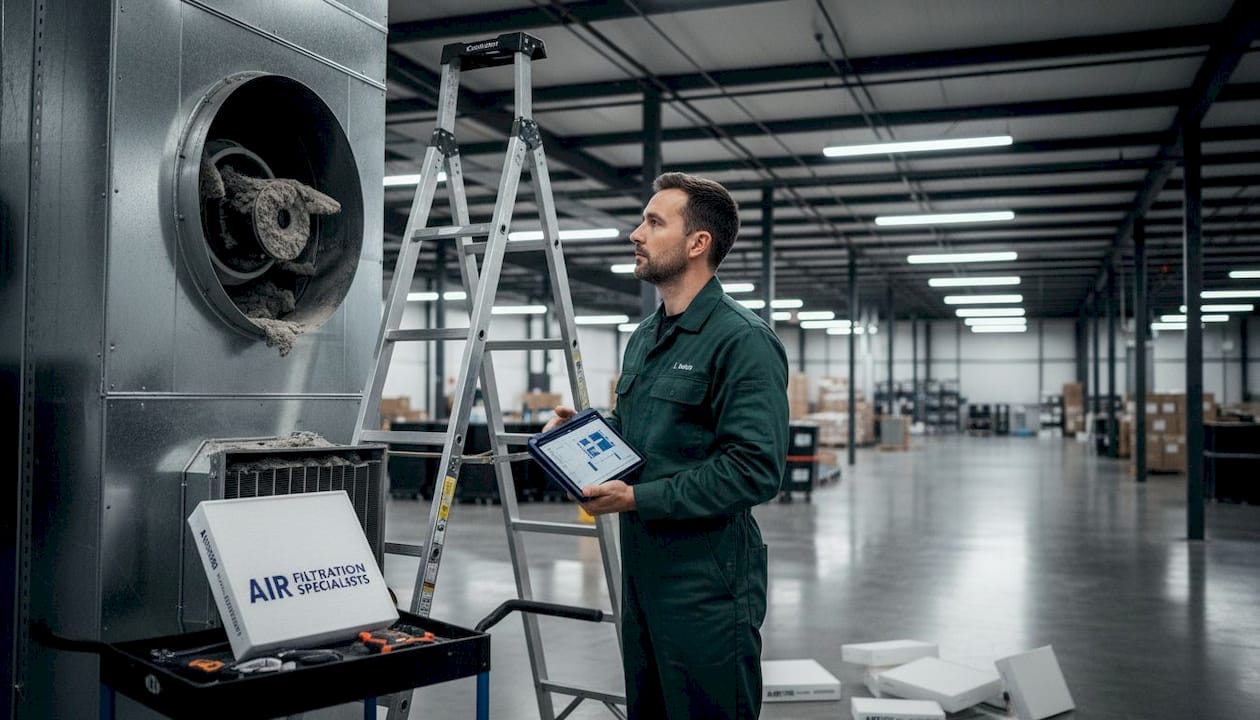
The UAE climate requires more frequent maintenance due to dust and humidity, meaning standard international maintenance schedules are not appropriate as a baseline. Filters will load faster during Shamal dust events. Humidity during summer months creates conditions that support biological growth in poorly maintained systems.
Key evaluation criteria to address before purchasing:
- Pollutant profile: Identify whether the primary concerns are particulates, gases, biological contaminants, or a combination
- Ventilation adequacy: Confirm outdoor air delivery rates meet ASHRAE 62.1 minimums; filtration cannot compensate for insufficient fresh air
- HVAC system condition: Inspect and clean ducts, coils, and drain pans before upgrading filtration technologies
- Climate-specific factors: Account for elevated dust loads and humidity when planning UAE indoor air quality maintenance intervals
- Monitoring capability: Plan for air quality sensors or periodic testing to verify ongoing performance rather than assuming equipment is working
Pro Tip: Request air quality testing data before specifying equipment. Many suppliers can provide particulate, CO2, and VOC readings within 24 hours. This removes guesswork from system sizing and filtration choice, and gives you a documented baseline for tenant reporting.
For buildings with significant humidity variation across seasons, climate control strategies must be factored into any air quality plan. Humidity above 60% indoors creates conditions where dust mites and mould become active concerns.
With these critical criteria established, let’s explore the main commercial air quality solution types available to address them.
Effective filtration technologies for commercial buildings
Commercial filtration uses multiple layers: mechanical filtration for particles, activated carbon for gases, and UV-C as an add-on technology. Understanding each layer helps property managers avoid over-specifying in one area while leaving another pollutant category unaddressed.
HEPA filtration is the primary technology for particulate control. HEPA filters can capture 99.95% to 99.995% of particles down to 0.3 microns, which includes fine desert dust (PM2.5), pollen, mould spores, and most bacteria. H13 and H14 grades are the relevant benchmarks for commercial applications. The distinction matters because H14 offers a full order of magnitude improvement in efficiency over H13 for the smallest particles.
Activated carbon filtration addresses gases and odours that HEPA cannot capture. Volatile organic compounds (VOCs) from paints, adhesives, cleaning products, and carpets are absorbed into the carbon’s porous surface structure. In commercial settings with high occupancy or food preparation areas, activated carbon is not optional; it is necessary for managing odour complaints and maintaining acceptable VOC levels.
UV-C technology is best understood as a supplementary layer rather than a standalone solution. UV-C irradiation at 254 nanometres inactivates bacteria and viruses by disrupting their DNA. However, exposure time and lamp intensity are critical variables. Many in-duct UV-C installations provide insufficient contact time to achieve meaningful disinfection at normal HVAC airflow rates. UV-C is most effective when combined with HEPA and activated carbon filters rather than used as a replacement for either.
Electrostatic precipitators charge particles so they adhere to collector plates. They are effective at reducing visible dust but require regular plate cleaning and can produce trace ozone as a by-product, which is a concern for occupied spaces.
Key considerations when layering filtration technologies:
- Always prioritise HEPA-grade mechanical filtration as the primary particulate control method
- Add activated carbon where VOCs, odours, or chemical off-gassing are confirmed pollutant sources
- Specify UV-C only where biological contamination risk is elevated, such as in healthcare facilities or food courts
- Confirm that commercial air purifiers have sufficient Clean Air Delivery Rate (CADR) for the actual floor area being serviced
- Account for humidity control devices in the overall IAQ plan, particularly for spaces prone to condensation
Understanding these filtration technologies prepares us to compare common commercial air quality solutions tailored for UAE environments.
Top commercial air quality solutions in the UAE market
Commercial HEPA solutions achieve high particle capture while maintaining adequate airflow, but not all units are built for continuous commercial operation. Property managers should distinguish between residential-grade purifiers repurposed for office use and units genuinely designed for high-occupancy, high-throughput environments.
The Honeywell Air Touch P2 is a strong entry for mid-size commercial spaces. It combines HEPA H13 filtration with activated carbon and is rated for continuous operation, which is essential in occupied buildings where units cannot be cycled off overnight. The air quality sensor and auto mode make it practical for spaces where facilities staff cannot monitor units manually.
For spaces where humidity is also a managed variable, the Dyson Purifier Humidify+Cool PH2 De-NOx integrates HEPA purification with evaporative humidification and cooling in a single unit. This is particularly relevant in UAE office environments where winter air conditioning can drop indoor relative humidity below 30%, affecting occupant comfort and increasing respiratory irritation.
Maintenance schedules need shortening in dusty UAE environments. What a manufacturer rates as a 12-month filter life under laboratory conditions may translate to 6 to 8 months in a Dubai high-rise or an Abu Dhabi commercial centre near an industrial zone.
| Solution type | Best suited for | Maintenance interval (UAE) | HVAC integration |
|---|---|---|---|
| HEPA H13 standalone | Offices, clinics, retail | 6 to 8 months | Supplementary to HVAC |
| HEPA + activated carbon | Mixed-use, food courts, hotels | 4 to 6 months | Supplementary to HVAC |
| In-duct HEPA system | Large commercial, multi-floor | 6 to 9 months | Fully integrated |
| Combined purifier/humidifier | Offices, clinics | Per manufacturer, adjusted | Supplementary to HVAC |
| UV-C add-on (in-duct) | Healthcare, hospitality | Lamp replacement annually | Integrated |
Pro Tip: When evaluating commercial air purifiers, request the CADR figure for PM2.5 specifically, not just the overall clean air delivery rate. In UAE conditions, fine dust particle management is the highest-priority performance metric.
With a clear understanding of solution features, we can now compare these technologies side-by-side to guide your selection.
Comparison of commercial air quality solutions
Filters can account for 30% of HVAC energy costs, and filter maintenance directly impacts both energy consumption and tenant comfort. This makes lifecycle cost analysis an important part of solution comparison, not just the upfront equipment price.
Higher MERV-rated filters improve air quality but increase static pressure, which forces fans to work harder. In older HVAC systems not designed for high-efficiency filtration, this can accelerate wear and increase energy bills. Always verify that your HVAC system’s fan capacity can support the filter’s resistance before upgrading.
| Technology | Filtration type | Particle efficiency | VOC/odour control | Energy impact | UAE maintenance |
|---|---|---|---|---|---|
| HEPA H13 | Mechanical | 99.95% at 0.3 µm | None | Low to moderate | 6 to 8 months |
| HEPA H14 | Mechanical | 99.995% at 0.3 µm | None | Moderate | 4 to 6 months |
| Activated carbon | Adsorption | Minimal | High | Low | 4 to 6 months |
| UV-C (in-duct) | Irradiation | None independently | None | Low | Lamp: 12 months |
| Combined HEPA + carbon | Mechanical + adsorption | 99.95%+ | High | Moderate | 4 to 6 months |
| Electrostatic precipitator | Electrical charge | High (variable) | None | Low | Plate cleaning: monthly |
Key considerations from this comparison:
- Combined HEPA and activated carbon units offer the broadest pollutant coverage and are generally the most practical choice for UAE commercial environments
- Electrostatic precipitators require frequent manual maintenance; in large commercial buildings, this creates operational overhead that often goes unmet
- UV-C adds measurable value in high-risk biological environments but should never replace mechanical filtration
- Energy costs from filtration are real and should be factored into budget modelling alongside improving air quality strategies
- Humidifiers for commercial spaces should be evaluated alongside filtration choices where humidity management is a year-round concern
Pro Tip: Run a total cost of ownership calculation over three years when comparing solutions. Include filter replacement costs, energy consumption, and estimated maintenance labour. Units with lower upfront prices frequently prove more expensive in operation under UAE conditions.
Having compared commercial air quality solutions thoroughly, let’s explore how these options fit specific property needs and operational contexts.
Choosing the right commercial air quality solution for your property
No one best filtration system fits every commercial facility; choices depend on building use, occupancy, contaminant types, and local environment. This is the starting point for any selection process, and it means property managers need to resist the appeal of one-size-fits-all recommendations.
A structured selection process should follow these steps:
- Define the building profile: Occupancy type, density, hours of operation, and any specialised activities such as food service, clinical use, or industrial processes
- Identify the primary pollutant sources: Conduct baseline air quality testing or use existing complaint data to identify whether particulates, VOCs, biological contaminants, or humidity are the priority concern
- Assess HVAC readiness: Inspect and document the condition of ducts, coils, and air handling units before specifying new filtration equipment
- Match filter technology to pollutant type: Use HEPA for particulates, activated carbon for gases and odours, and UV-C as a supplementary layer where biological risk is elevated
- Plan for UAE-specific maintenance: Schedule filter inspections at least quarterly and replacements on shorter cycles than manufacturer defaults; adjust after Shamal events
- Select air cleaning technologies that integrate with current systems: Avoid over-specifying standalone units where in-duct solutions would provide more consistent coverage
Building type guidance:
- Office towers: HEPA H13 or combined units; prioritise CO2 monitoring alongside filtration to manage ventilation adequacy
- Retail centres: Combined HEPA and activated carbon for odour management; high-foot-traffic areas need units with higher CADR ratings
- Hotels: Full-system approach including in-duct filtration, standalone units in guest rooms, and humidity management in common areas
- Healthcare facilities: H14 HEPA minimum; UV-C add-on appropriate; strict maintenance scheduling required
Pro Tip: If HVAC ductwork cleaning has not been performed in the past three years, schedule it before installing new high-efficiency filters. Clean ducts allow filters to perform as rated and reduce the risk of biological contamination being redistributed through the system.
With these criteria in mind, let’s examine an expert perspective offering practical insights often overlooked during solution selection.
Why a systems approach is critical for lasting air quality improvements
Many air quality projects underperform because filtration is treated as a standalone fix without addressing HVAC system condition. This is the single most consistent failure pattern observed across commercial building upgrades. A high-performance HEPA unit installed in a building with dirty coils, insufficient outdoor air delivery, and no monitoring plan will not meet expectations regardless of its specifications.
Higher dust loads and humidity in the UAE demand maintenance plans tailored to real conditions, not generic international guidelines. A property manager who follows a European or North American maintenance schedule in a Dubai commercial building will find filters failing early, energy costs rising, and tenant complaints continuing. The environment here is categorically different, and the maintenance plan must reflect that.
The most successful IAQ programmes share a common structure. They begin with an assessment rather than a product purchase. They treat air cleaning technology as one component of a broader system that includes ventilation, source control, humidity management, and ongoing monitoring. They also build in rapid response protocols for events like sandstorms or new building works that temporarily spike pollutant loads.
Return on investment from this approach is tangible. Buildings with well-managed IAQ programmes consistently report fewer tenant complaints, lower maintenance call-out frequency, and longer equipment service life. These outcomes translate directly into tenant retention and reduced operational expenditure. The alternative, responding to IAQ complaints reactively, costs more in both money and reputation over time.
Explore commercial air quality solutions with ClimatePro
ClimatePro UAE offers a range of products suited to the demands of UAE commercial properties, from standalone HEPA purifiers for office suites to combined filtration and humidification units for hotels and clinics.

The catalogue covers commercial air purifiers with H13 and activated carbon filtration, humidifiers for dry-season comfort management, and dehumidifiers for humid summer conditions. All products are available with delivery across the UAE, including Dubai, Abu Dhabi, Sharjah, and the Northern Emirates. ClimatePro also provides guidance on system selection and maintenance planning for commercial property managers who need to match product specifications to their specific building and occupancy profile. Contact the team directly for tailored advice before making a purchasing decision.
Frequently asked questions
What are the main indoor air pollutants affecting commercial buildings in the UAE?
Commercial buildings in the UAE commonly face fine desert dust, VOCs, and humidity-related mould growth, including PM2.5 and PM10 particulates, volatile organic compounds from building materials and cleaning products, and biological contaminants that thrive during high-humidity months.
How often should HEPA filters be replaced in UAE commercial environments?
HEPA filter replacement intervals in dusty UAE conditions are shorter than standard, typically around 6 to 8 months rather than the 12-month cycle common in cooler, cleaner climates, with more frequent checks following dust events.
Can air purifiers alone ensure good indoor air quality?
No. Air purifiers and ventilation serve complementary but distinct functions; ventilation remains essential, and purifiers cannot substitute for adequate outdoor air delivery or the elimination of pollutant sources at their origin.
Why is HVAC system condition important before installing new filters?
Neglected HVAC maintenance reduces filter life and performance, increasing operational costs and generating tenant complaints; dirty ducts and coils restrict airflow, cause filters to load faster, and allow contaminants to bypass filtration media.
What role does humidity control play in UAE indoor air quality?
Managing indoor humidity between 40 and 60% reduces microbial growth and health risks, preventing mould and dust mite proliferation that become active concerns during the UAE’s humid summer months and keeping occupant respiratory comfort within acceptable ranges.