Air conditioning accounts for 60 to 70% of household electricity costs during Dubai summers, making it one of the largest household expenses for residents across the UAE. Whether you own your home or rent, the way you manage your indoor climate directly affects your monthly bills, your comfort, and the quality of the air you breathe. This article provides practical, evidence-backed steps for homeowners and renters alike, covering everything from thermostat settings and maintenance responsibilities to air purifiers and emerging solar technology, so you can stay comfortable while keeping costs under control.
Table of Contents
- How to set your AC for maximum efficiency
- Seasonal maintenance for better air and savings
- Improving indoor air quality beyond AC
- Advanced and overlooked climate solutions
- A smarter approach to comfort in the UAE
- Recommended products for climate control
- Frequently asked questions
Key Takeaways
| Point | Details |
|---|---|
| Optimal AC setting | Using 24°C delivers maximum comfort and efficiency for UAE homes. |
| Regular maintenance | Changing filters and reporting faults keeps your system clean and lowers costs. |
| Air quality devices | Combining purifiers, humidifiers, and good ventilation improves health indoors. |
| Advanced solutions | Solar AC and LED lighting offer savings, but most renters benefit from efficient tweaks. |
| Smart acclimatisation | Adjusting to higher temperatures with fans can save hundreds of dirhams monthly. |
How to set your AC for maximum efficiency
With energy bills as high as they are in the UAE, the right thermostat setting makes a significant difference to monthly expenditure. Many residents default to the lowest possible temperature, assuming colder means more comfortable. In practice, this approach drives up costs without proportional gains in comfort.
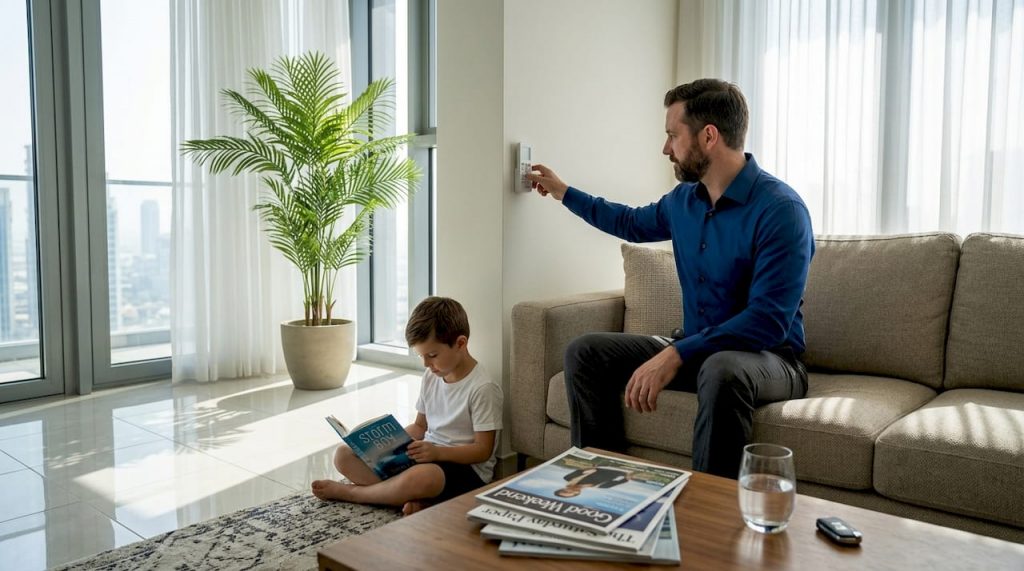
DEWA recommends setting AC thermostats to 24°C as the optimal balance between comfort and energy efficiency. This single setting is one of the most impactful changes a household can make. The reason is straightforward: each degree lower increases consumption by 5 to 10%, meaning a thermostat set to 20°C can cost up to 40% more to run than one set to 24°C.
| Thermostat setting | Estimated cost increase vs 24°C |
|---|---|
| 23°C | 5 to 10% higher |
| 22°C | 10 to 20% higher |
| 20°C | 20 to 40% higher |
| 18°C | 30 to 50% higher |
Acclimatisation also plays a role in perceived comfort. Residents who gradually raise their thermostat settings over several weeks often find that 24°C to 26°C becomes entirely comfortable. This is because the body adapts to ambient temperatures when exposed consistently. Pairing this approach with ceiling or pedestal fans allows air circulation to create a wind-chill effect, making a room at 25°C feel cooler than still air at 23°C.
Pro Tip: Use a programmable thermostat or smart AC controller to raise the temperature automatically during sleeping hours or when the home is empty. Most occupants are comfortable at 26°C during sleep, which can reduce overnight cooling costs considerably.
Key strategies for AC efficiency:
- Set the thermostat to 24°C and maintain it consistently.
- Use fans to improve air circulation and perceived comfort.
- Close curtains and blinds during peak sunlight hours to reduce heat gain.
- Service your AC unit before the peak summer season.
- Avoid opening doors and windows while the AC is running.
Managing air changes for indoor air quality is also relevant here. When indoor air is cycled too slowly, pollutants and humidity build up, forcing the AC to work harder. Understanding the relationship between ventilation and AC performance helps you optimise the entire system rather than just adjusting a single number.
Humidity is another factor that directly affects comfort. In summer, the UAE experiences high outdoor humidity, and in winter, the air inside air-conditioned rooms can become very dry. Both extremes affect comfort and health. Dehumidifiers in Dubai address excess moisture during humid months, while humidifiers for UAE homes help restore comfortable moisture levels when AC dries the air significantly in cooler months.
Seasonal maintenance for better air and savings
Once your AC is set correctly, ongoing maintenance is essential for sustained savings and air quality. A well-maintained system runs more efficiently, lasts longer, and delivers cleaner air. Neglected units accumulate dust and biological growth in the filters and coils, which forces the compressor to work harder and degrades the quality of air being circulated throughout the home.
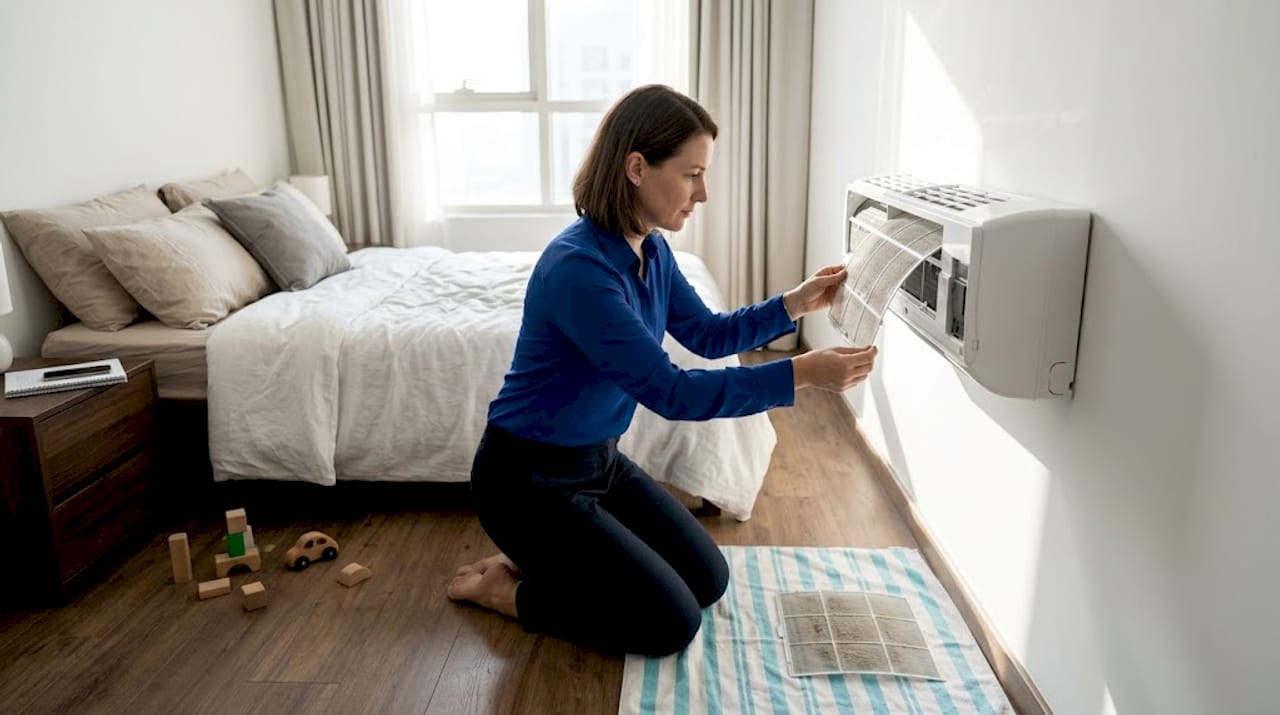
Understanding who is responsible for what is particularly important for renters. Under UAE law, landlords handle major repairs and renters manage filters and are expected to report issues promptly. This means renters should not wait for a complete system failure before informing the landlord, as delayed reporting can sometimes shift liability for repair costs.
Here is a practical maintenance schedule for UAE homes:
- Check and clean or replace AC filters every 4 to 6 weeks during heavy summer use. Clogged filters restrict airflow and force the system to consume more electricity.
- Inspect the outdoor unit monthly for dust accumulation, debris, or obstructions. Blocked airflow around the condenser reduces efficiency significantly.
- Schedule a professional service before summer (March or April) and again in autumn (October). This covers refrigerant levels, coil cleaning, and electrical connections.
- Report unusual sounds, water leaks, or temperature inconsistencies to your landlord immediately if you are renting. These are signals of developing faults that escalate quickly in extreme heat.
- Keep the area around indoor units clear of furniture and curtains. Blocked return air vents strain the system.
“Consistent maintenance is the most reliable way to extend AC lifespan and sustain efficiency. A system serviced annually can operate effectively for 10 to 15 years, while a neglected unit may fail within five.”
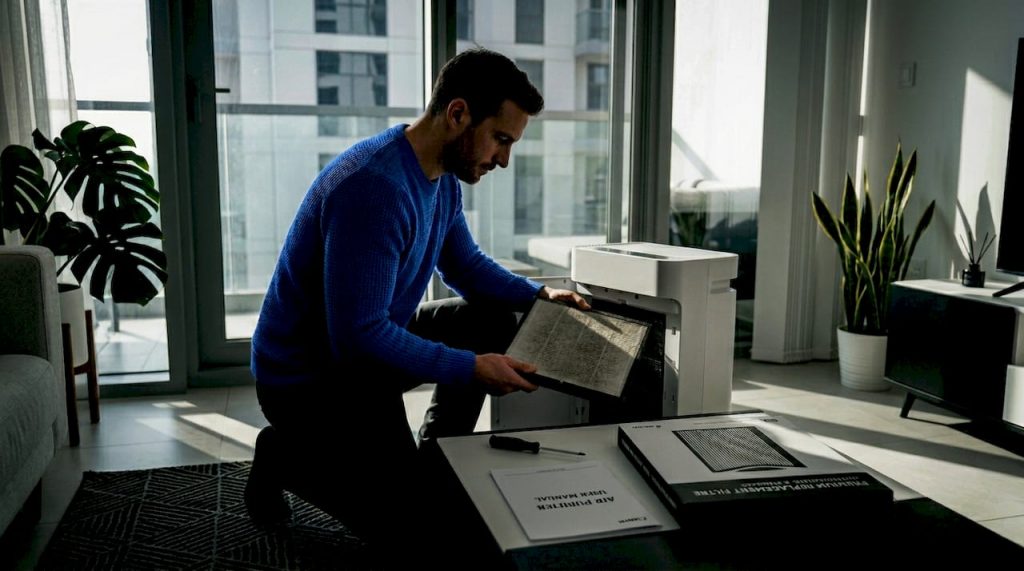
Replacing AC filters on schedule is the single most impactful maintenance task that renters can carry out independently. Clean filters not only improve efficiency but also reduce the concentration of dust, pollen, and fine particles in the indoor air. For households with allergy sufferers or young children, this is a health priority as much as a cost-saving measure.
Pro Tip: Take a photo of your AC filter when you replace it and keep a simple log of dates. This record is useful both for tracking your maintenance intervals and for demonstrating to a landlord that you have fulfilled your responsibilities under the tenancy agreement.
Improving indoor air quality beyond AC
Besides AC maintenance, there are other ways to enhance air quality and household comfort. Air conditioning controls temperature, but it does not filter fine dust particles, remove volatile organic compounds (VOCs, which are chemical gases released by furniture and cleaning products), or maintain optimal humidity. Addressing these gaps requires additional products and strategies.
Air purifiers in Dubai are one of the most effective tools for reducing airborne particles, allergens, and odours. HEPA (High Efficiency Particulate Air) purifiers capture particles as small as 0.3 microns, which includes dust mite allergens, mould spores, and fine outdoor pollution particles that enter through gaps in windows and doors. In the UAE, where dust storms and construction sites are common, this level of filtration is particularly relevant.
Humidifiers for indoor comfort serve a different but equally important function. Prolonged exposure to air-conditioned environments typically results in indoor relative humidity dropping below 30%, which can cause dry skin, irritated eyes, and respiratory discomfort. A humidifier restores moisture levels to a comfortable range, typically between 40% and 60% relative humidity.
| Device | Primary function | Best suited for |
|---|---|---|
| Air purifier | Removes particles, allergens, odours | Allergy sufferers, pet owners, dusty environments |
| Humidifier | Adds moisture to dry air | Winter months, over-air-conditioned spaces |
| Dehumidifier | Removes excess moisture | Humid summer months, coastal homes |
| Ventilation fan | Improves fresh air exchange | Kitchens, bathrooms, enclosed rooms |
Ventilation is another area that residents often overlook. Opening windows briefly during cooler evening or morning hours flushes out carbon dioxide and indoor pollutants that accumulate when a home is sealed for air conditioning. In urban environments with outdoor pollution concerns, a short ventilation window of 10 to 15 minutes in the early morning balances fresh air intake with minimising particle ingress.
AC efficiency measures can reduce bills by 30 to 40%, and combining those measures with proper air quality devices delivers results that AC alone cannot achieve. Cleaner air, better humidity balance, and reduced allergen loads all contribute to better health outcomes and a more comfortable home environment throughout the year.
Advanced and overlooked climate solutions
Whether you are ready for advanced technology or simple fixes, there is a climate solution available for every budget and living situation. Not every effective solution requires significant investment, and understanding the range of available options helps households prioritise appropriately.
Solar AC is a developing option for homeowners in the UAE. Research indicates that solar AC achieves a COP of 1.1 (Coefficient of Performance, a measure of cooling output per unit of energy input) at a 25-degree panel tilt with 95% efficiency, making it a promising long-term investment for reducing grid dependency. For homeowners with suitable roof space and capital for installation, solar-assisted cooling can substantially reduce electricity costs over a 10 to 15 year horizon.
For renters and those seeking lower-cost solutions, several practical measures can deliver equivalent perceived comfort:
- Ceiling and pedestal fans: Running a fan in conjunction with AC at 24°C can feel equivalent to AC alone at 21°C, at a fraction of the electricity cost.
- Blackout or thermal curtains: Reducing solar heat gain through windows can lower indoor temperatures by 2 to 4°C during peak daylight, reducing the load on the AC system.
- LED lighting: Switching to LED globes reduces both electricity use and the heat generated by older globe types, which adds to indoor thermal load. For practical guidance on implementing this, energy-saving lighting tips provide useful context.
- Draft sealing: Applying self-adhesive foam tape around window and door frames is inexpensive and reduces the infiltration of hot outdoor air.
- Reflective window film: Applied to glass, this film blocks a proportion of solar radiation without significantly affecting natural light levels.
| Solution | Estimated cost | Best for | Estimated saving |
|---|---|---|---|
| Thermostat at 24°C | No cost | All residents | Up to 40% on cooling |
| Ceiling fan addition | AED 200 to 600 | Renters and owners | 10 to 15% on cooling |
| Thermal curtains | AED 100 to 400 | Renters and owners | 5 to 10% on cooling |
| Solar AC system | AED 15,000 and above | Homeowners only | 50 to 70% long term |
| LED lighting | AED 50 to 200 | All residents | 5 to 8% total electricity |
Luxury comfort settings cost up to 60% more than settings in the recommended range. This comparison makes clear that the financial case for combining simple, low-cost measures is strong. A household that installs thermal curtains, adds a ceiling fan, and maintains the thermostat at 24°C can achieve results that approach the comfort level of luxury settings at a significantly reduced cost. Explore the full range of UAE climate solutions available to find options suited to your home and budget.
A smarter approach to comfort in the UAE
There is a persistent misconception that lower temperatures equal better living. In the UAE context, this belief drives enormous amounts of unnecessary electricity expenditure. After reviewing the evidence and available solutions, a different conclusion emerges: perceived comfort is not primarily a function of low temperature, it is a function of balanced conditions.
Most residents who consistently set their thermostats below 21°C are not experiencing greater comfort. They are experiencing habituation to extreme cooling, which makes moderate temperatures feel unpleasant by comparison. The adjustment period when raising thermostat settings is real, but it is temporary. Acclimatisation to higher temperatures saves AED 400 to 600 per month when combined with fan use, and this saving compounds across an entire summer season.
The investment case for indoor air quality improvements is similarly compelling. Households that add air purifiers, maintain humidity at appropriate levels, and service their AC systems consistently report fewer allergy-related complaints, reduced medication use, and better sleep quality. These are outcomes that lowering the thermostat to 18°C does not deliver. Resources on improving air quality in UAE homes provide a useful framework for understanding how air circulation and purification work together.
The smarter approach is not about sacrifice. It is about understanding that thermal comfort, air quality, and cost efficiency are all achievable simultaneously, and that targeting all three with appropriate products and strategies delivers better outcomes than obsessing over a single thermostat number.
Recommended products for climate control
If you are ready to make changes, here are solutions tailored for UAE homes to help you get started.

ClimatePro UAE supplies a full range of indoor air quality and climate control products for homes across Dubai, Abu Dhabi, Sharjah, and all seven emirates. Browse our air purifiers to find HEPA-rated options suited to apartments, villas, and offices. Explore our range of humidifiers and dehumidifiers to address seasonal humidity concerns throughout the year. For ongoing AC maintenance, our selection of replacement filters covers the most common unit types used in UAE properties. All products are available with delivery across the UAE, making it straightforward to find the right solution for your specific home and climate needs.
Frequently asked questions
What AC temperature saves the most energy in Dubai homes?
Setting your thermostat to 24°C is optimal for both comfort and energy savings, with each degree lower raising consumption by 5 to 10%.
How much can I cut my electricity bill with efficient climate control?
AC efficiency measures can reduce your cooling bill by 30 to 40%, translating to savings of AED 400 to 600 each month during Dubai summers.
Who repairs AC units in UAE rental homes?
Landlords handle major repairs such as compressors and ductwork, while renters are responsible for routine filter changes and promptly reporting faults.
Does AC alone ensure healthy indoor air?
AC controls temperature but does not remove allergens, fine particles, or VOCs. Air purifiers, humidifiers, and regular ventilation are all needed to maintain healthy indoor air quality.