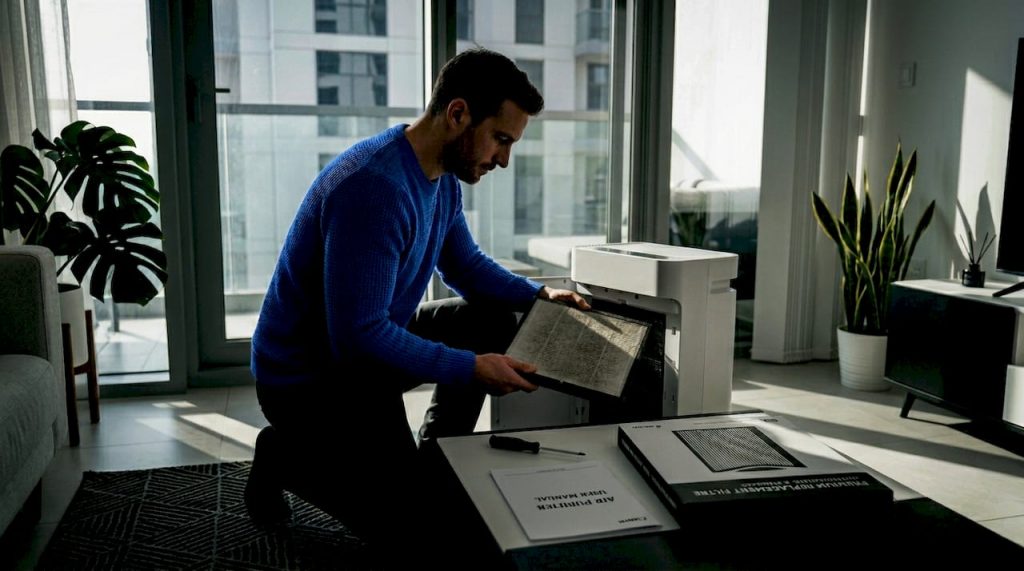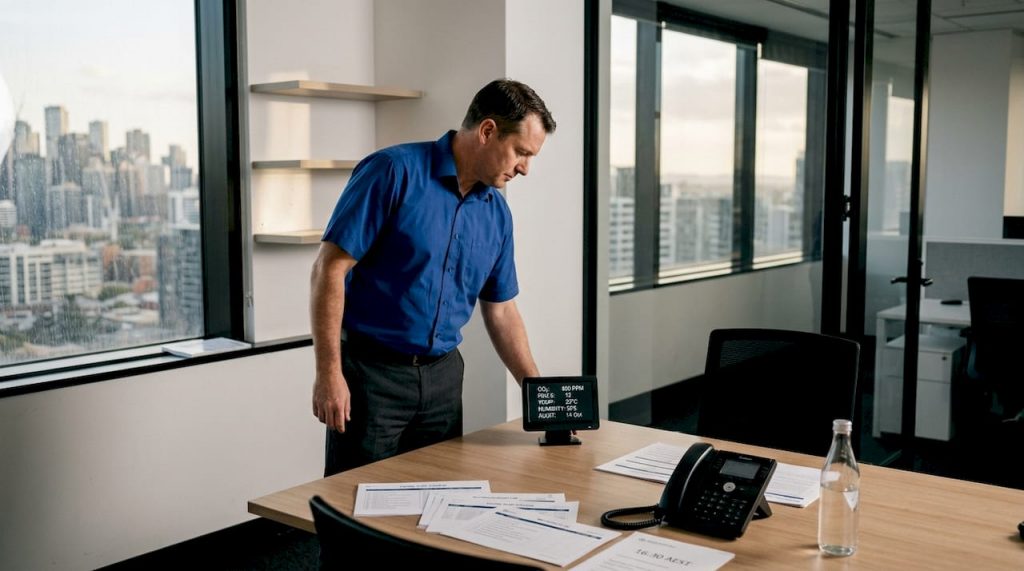

Air purifiers are devices that actively remove dust, allergens, volatile organic compounds (VOCs), and airborne pathogens from indoor air. For hotels, they are not optional extras. They are a direct response to measurable guest complaints, staff health risks, and the growing expectation that clean air is a basic standard of hospitality. Understanding why hotels need air purifiers starts with what is actually in the air guests breathe.
Why hotels need air purifiers: the indoor air quality case
Indoor air quality (IAQ) is the recognised industry term for the condition of air within a building as it relates to the health and comfort of occupants. Hotels face IAQ challenges that most commercial buildings do not. High guest turnover, heavy use of cleaning chemicals, synthetic fragrances, and variable HVAC loads all create an environment where pollutants accumulate quickly. TVOC levels in freshly cleaned rooms are 4 to 8 times higher than in adjacent hallways. That gap is caused by cleaning products and air fresheners, not by guests themselves.
Hotels using continuous IAQ monitoring see an 82% reduction in air-quality-related guest complaints within six months. That figure reflects how much of the guest experience is shaped by air quality before a guest ever speaks to staff. Air purifiers, when correctly specified and maintained, address the root cause rather than masking it.
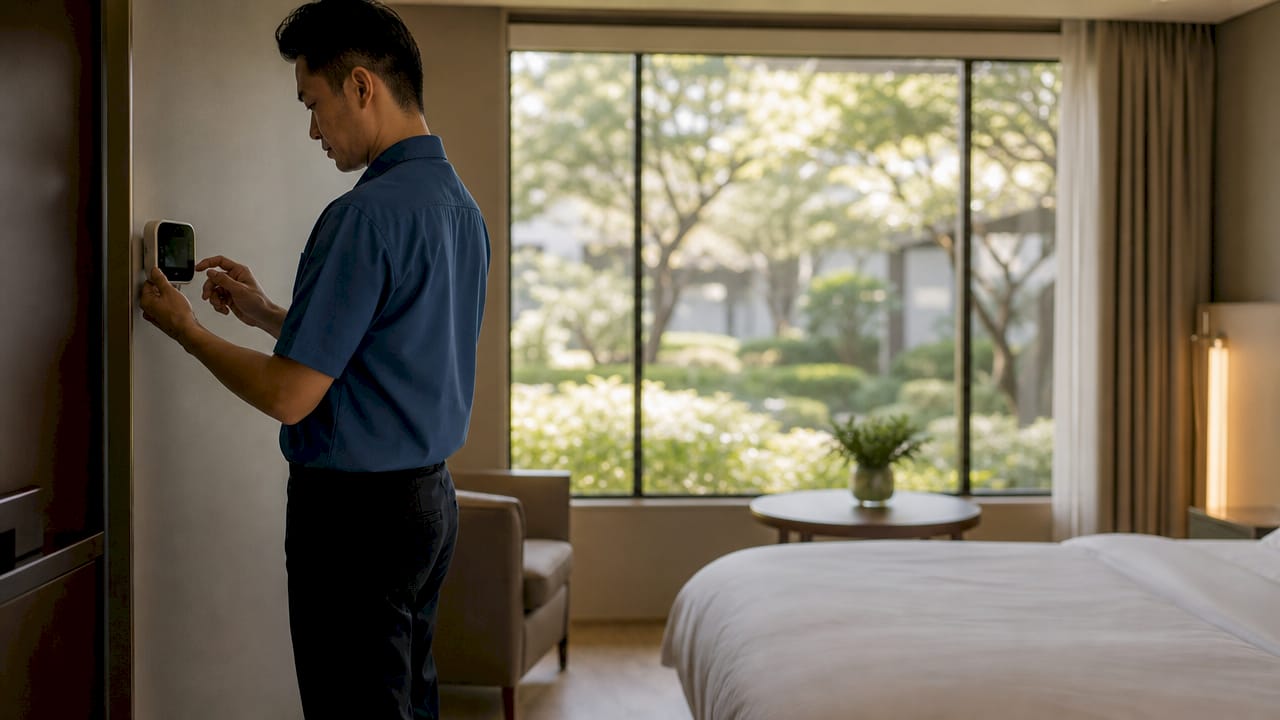
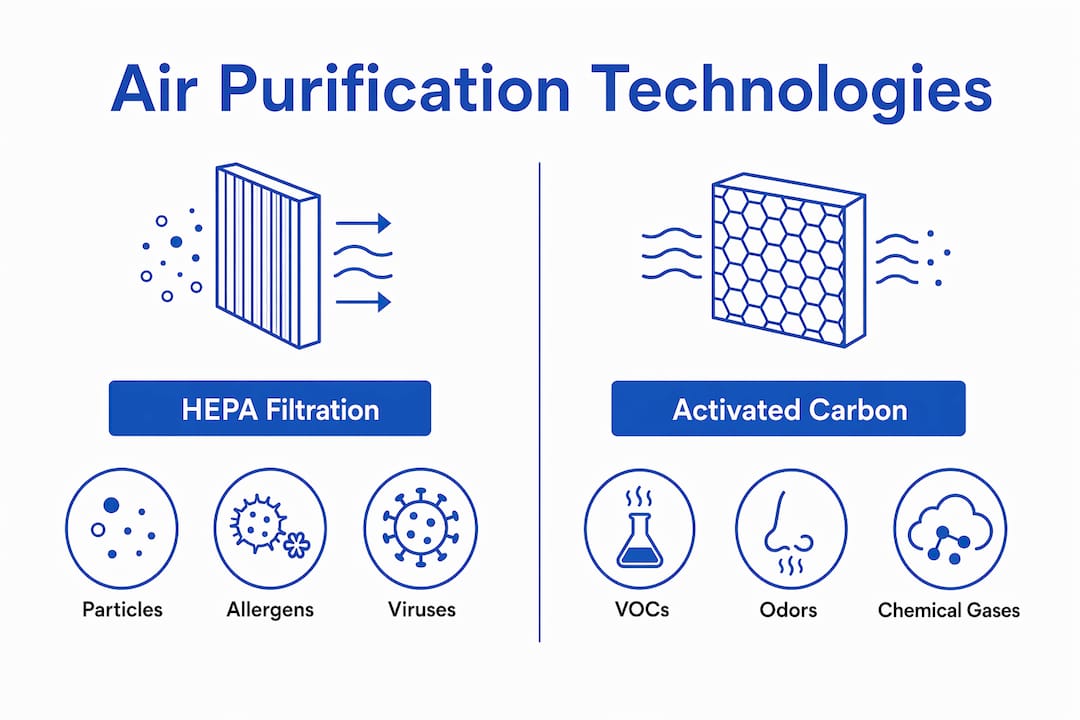
The core technologies in commercial hotel air purification are HEPA filtration and activated carbon filtration. HEPA filters capture particles down to 0.3 microns, including dust mite allergens, mould spores, and fine particulate matter. Activated carbon layers adsorb VOCs and odours that HEPA alone cannot trap. Together, they cover the two primary complaint categories: stuffiness and chemical smell.
How do air purifiers remove pollutants in hotel rooms?
Air purifiers work by drawing room air through a series of filter stages. In a hotel context, the sequence typically runs from a pre-filter for large particles, through a HEPA layer for fine particles, and then through an activated carbon stage for gases and odours. Each stage targets a different class of pollutant.
The table below compares the main air purification technologies used in hotels.
| Technology | What it removes | Best suited for |
|---|---|---|
| HEPA H13 filter | Particles ≥0.3 microns, allergens, mould spores | Guest rooms, lobbies |
| HEPA H14 filter | Particles ≥0.15 microns, fine PM2.5 | Medical-grade or premium suites |
| Activated carbon | VOCs, odours, cleaning chemical residues | Freshly cleaned rooms, back-of-house |
| UV-C germicidal | Bacteria, viruses on filter surface | High-turnover rooms, shared spaces |
| Ioniser | Fine particles via electrostatic charge | Supplement only, not standalone |
Common hotel pollutants include dust and dust mite allergens from bedding, VOCs from cleaning agents and synthetic fragrances, mould spores in humid bathrooms, and carbon dioxide from occupants in poorly ventilated rooms. Each of these affects guest comfort in a different way. Allergens trigger respiratory symptoms. VOCs cause headaches and eye irritation. Elevated CO₂ causes fatigue and poor sleep quality.
Integrating air purifiers with the hotel’s HVAC system adds another layer of control. Demand-controlled ventilation linked to CO₂ sensors allows the system to respond to actual occupancy rather than running at fixed rates. Pairing this with air purifiers can reduce HVAC energy consumption by 20–30% during low-occupancy periods while maintaining air quality. The purifier handles residual particulates and VOCs that ventilation alone cannot address.
Pro Tip: Place air purifiers near the main sources of VOC generation in a hotel room, specifically near the bed and the bathroom entry, rather than in the centre of the room. This positions the unit to capture pollutants before they disperse.
Do air purifiers improve guest satisfaction and hotel reviews?
Guest satisfaction and air quality are directly linked. Clean air has shifted from a luxury feature to a fundamental brand standard, with guests actively citing stuffy rooms and persistent odours in negative online reviews. A single negative review mentioning air quality can influence booking decisions for hundreds of prospective guests.
The most common air-quality-related complaints in hotel reviews fall into three categories:
- Musty or chemical smells on arrival, often from cleaning products or stale HVAC air
- Allergy symptoms during the stay, including sneezing, congestion, and eye irritation
- Poor sleep quality linked to stuffiness and elevated CO₂ in sealed rooms
Reducing these complaints has a direct effect on review scores and repeat bookings. Proactive IAQ monitoring prevents guest dissatisfaction before it reaches the review stage. Air purifiers are the physical intervention that monitoring systems identify as necessary.
“Guest reviews increasingly link stuffy rooms and odours to brand failure, making clean air a fundamental hotel standard, not a luxury.” — Elevate hotel stays: Prioritise indoor air quality
Staff health is also a factor. Hotel housekeeping staff face repeated exposure to VOCs and, in some cases, mould. Poor IAQ creates legal and financial exposure through occupational health claims. Addressing IAQ with air purifiers and monitoring protects both guests and employees.
Energy efficiency and operational benefits of hotel air purifiers
Air purifiers contribute to operational efficiency when integrated with the hotel’s broader building management approach. The key is moving from calendar-based maintenance to outcome-based maintenance.
- Adopt pressure differential tracking. Replacing filters based on pressure drop rather than fixed schedules prevents airflow restriction and energy waste. A filter that is replaced too early wastes consumables. One replaced too late restricts airflow and forces the motor to work harder.
- Link ventilation to real occupancy data. CO₂ sensors provide a reliable proxy for occupancy. When CO₂ levels are low, ventilation rates can drop without compromising air quality, reducing fan energy use.
- Use IAQ data to trigger maintenance actions. Continuous monitoring platforms flag when VOC or particulate levels exceed thresholds, allowing engineering teams to act before guests notice a problem.
- Schedule filter checks around seasonal peaks. Pollen seasons and dust events in the UAE increase filter loading rates. Pressure differential tracking automatically accounts for these variations without requiring manual schedule changes.
- Ventilate rooms during turnovers. Opening a window for 10 minutes during cleaning significantly reduces VOC levels before guests arrive. This reduces the load on air purifiers and extends filter life.
Pro Tip: Track filter pressure drop data across multiple rooms over a 12-month period. Rooms with consistently higher loading rates often indicate a localised source of pollution, such as a nearby kitchen exhaust or a bathroom with inadequate ventilation.
The contrast between calendar-based and outcome-based maintenance is significant. Calendar-based replacement treats all rooms as identical and ignores actual usage patterns. Outcome-based replacement, guided by continuous monitoring and automation, reduces unnecessary costs and maintains consistent performance. For a hotel with 200 rooms, the difference in annual filter expenditure can be substantial.
How to choose and maintain air purifiers for hotels
Selecting the right air purifier for a hotel requires matching the unit to the specific demands of each zone. Guest rooms, lobbies, and back-of-house areas have different pollutant profiles, occupancy patterns, and noise tolerances.
The table below outlines the key selection criteria by hotel zone.
| Hotel zone | Priority pollutants | Recommended filter grade | Noise sensitivity |
|---|---|---|---|
| Guest room | VOCs, allergens, fine particles | HEPA H13 + activated carbon | High: must be quiet at operating speed |
| Lobby | Dust, outdoor particulates, odours | HEPA H13 | Moderate |
| Restaurant/dining | Cooking odours, VOCs, fine particles | HEPA H13 + heavy carbon | Moderate |
| Back-of-house | VOCs, mould spores, cleaning chemicals | HEPA H13 + activated carbon | Low |
| Spa/wellness | Fine particles, fragrance compounds | HEPA H14 + activated carbon | High |
Selecting commercial air purifiers for hotels requires verifying HEPA performance at the airflow rate needed to achieve the target air changes per hour for the room size. Many units are marketed with noise levels measured at minimum speed. The relevant figure is the noise level at the speed required to deliver the specified air changes per hour for the room. A unit that is quiet at low speed but loud at operating speed will generate noise complaints.
Key maintenance practices for hotel air purifiers include:
- Check pre-filters monthly in high-traffic zones and quarterly in low-traffic areas
- Monitor HEPA filter pressure drop rather than replacing on a fixed schedule
- Clean external housing and air intake grilles during each room deep-clean
- Log filter replacement dates and pressure readings to identify rooms with abnormal loading
- Test unit performance after filter replacement to confirm airflow has returned to specification
For hotel managers seeking a broader framework on proactive IAQ management, the principles of continuous monitoring and responsive maintenance apply across all zones, not just guest rooms.
Key takeaways
Hotels that invest in air purifiers and continuous IAQ monitoring reduce guest complaints, protect staff health, and lower HVAC energy costs through outcome-based maintenance.
| Point | Details |
|---|---|
| IAQ directly affects reviews | Stuffy rooms and odours appear in negative reviews and damage brand reputation. |
| TVOC levels spike after cleaning | Freshly cleaned rooms have VOC levels 4–8 times higher than hallways; purifiers and ventilation reduce this. |
| Outcome-based maintenance wins | Pressure differential tracking replaces filters at the right time, saving energy and maintaining airflow. |
| Zone-specific selection matters | Guest rooms need quiet units at operating speed; back-of-house tolerates higher noise but needs strong carbon filtration. |
| Monitoring prevents complaints | Hotels using continuous IAQ monitoring report an 82% reduction in air-quality-related complaints within six months. |
The case for treating air quality as infrastructure
Hotels have spent decades investing in visible guest experience: bedding, lighting, bathroom fittings. Air quality has been treated as a background condition rather than a managed asset. That approach is no longer defensible.
What I have observed across hospitality IAQ discussions is that the hotels making the most progress are not necessarily those with the largest budgets. They are the ones that have stopped treating IAQ as a housekeeping variable and started treating it as an engineering outcome. The shift from “we clean the rooms” to “we monitor and verify the air” is a meaningful one. It changes what gets measured, what gets reported, and what gets fixed.
The uncomfortable reality is that most hotel rooms have measurably poor air quality for the first hour after cleaning. Cleaning chemicals and synthetic fragrances create a VOC spike that guests walk into at check-in. That first impression is invisible but physiologically real. Guests who feel a headache or eye irritation within the first 30 minutes of arrival are unlikely to attribute it to air quality. They are likely to attribute it to the room, the hotel, or the brand.
Air purifiers, paired with a 10-minute ventilation window during turnover and continuous monitoring, close that gap. The investment is modest relative to the cost of a single negative review cycle. The operational discipline required is straightforward. What is missing in most hotels is not budget or technology. It is the decision to treat air as something that needs to be actively managed.
— Nevel
Climatepro’s air purification solutions for hotels
Hotels across the UAE looking to address IAQ can find a range of commercial-grade options through Climatepro.

The Honeywell Air Touch P2 is well suited to hotel guest rooms, combining HEPA filtration with activated carbon and quiet operation at working speeds. For smaller rooms or back-of-house areas, the Honeywell Air Touch P1 offers a compact footprint without compromising filtration performance. Climatepro also carries a full range of air purifiers for lobbies, restaurants, and spa zones, with delivery available across Dubai, Abu Dhabi, Sharjah, and all seven emirates.
FAQ
What pollutants are most common in hotel rooms?
The most common pollutants in hotel rooms are dust, dust mite allergens, mould spores, and VOCs from cleaning chemicals and synthetic fragrances. VOC levels in freshly cleaned rooms are 4–8 times higher than in adjacent hallways.
Do air purifiers reduce negative hotel reviews?
Hotels using continuous IAQ monitoring report an 82% reduction in air-quality-related guest complaints within six months. Air purifiers address the root causes of complaints such as odours, stuffiness, and allergen exposure.
What HEPA grade should hotels use in guest rooms?
HEPA H13 is the standard recommendation for hotel guest rooms, capturing particles down to 0.3 microns including allergens and fine particulate matter. HEPA H14 is appropriate for premium suites or wellness areas where higher filtration performance is required.
How often should hotel air purifier filters be replaced?
Filter replacement should be based on pressure differential readings rather than a fixed schedule. Rooms with higher occupancy or greater pollutant loads will require more frequent replacement, and pressure tracking identifies this automatically.
Can air purifiers help hotels reduce energy costs?
Yes. When paired with demand-controlled ventilation and CO₂ sensors, air purifiers allow HVAC systems to reduce ventilation rates during low-occupancy periods, cutting HVAC energy consumption by 20–30% while maintaining air quality.