Guest complaints about stuffy rooms, unusual odours, or dry air are rarely random. They almost always trace back to a gap in this hotel indoor air quality guide principle: that good air requires active management, not just functional HVAC equipment. Poor indoor air quality affects guest health, accelerates negative reviews, and can place a property outside regulatory compliance. This guide walks hotel managers and operations staff through the tools, processes, and verification steps needed to build a proactive IAQ programme that protects guests and supports long-term brand performance.
Table of Contents
- Key takeaways
- What every hotel IAQ programme needs
- Step-by-step proactive IAQ maintenance
- Troubleshooting common hotel IAQ problems
- Verifying IAQ improvements and maintaining compliance
- My take on IAQ as a competitive asset
- Upgrade your hotel’s air quality with Climatepro
- FAQ
Key takeaways
| Point | Details |
|---|---|
| Monitor the right parameters | Track CO2, PM2.5, VOCs, humidity, and temperature across all hotel zones. |
| Replace filters by condition, not calendar | Use pressure differential data to determine filter replacement timing and avoid ASHRAE compliance failure. |
| Integrate housekeeping with HVAC | Coordinate cleaning schedules and low-VOC product use with ventilation cycles for measurable air quality gains. |
| Automate alerts to maintenance workflows | Link IAQ sensor thresholds to work orders so staff respond before guests are affected. |
| Document everything for compliance | Maintain calibration logs, maintenance records, and audit trails to demonstrate indoor air safety standards. |
What every hotel IAQ programme needs
Before any improvement effort begins, operations teams need a clear picture of what they are managing. A hotel is not a single air environment. It is a collection of zones with different occupancy profiles, ventilation loads, and pollution sources.
The core IAQ parameters to monitor are CO2, PM2.5 (fine particulate matter), volatile organic compounds (VOCs), relative humidity, and temperature. Each tells a different story. Elevated CO2 points to inadequate ventilation relative to occupancy. High PM2.5 levels indicate filter performance issues or outdoor pollution infiltration. VOCs appear after renovation work, off-gassing from furnishings, or the use of fragrance-heavy cleaning agents. Humidity above 60% for more than 24 hours promotes mould growth, while levels below 30% cause respiratory irritation in guests.
The equipment required to manage these parameters spans sensors, filtration, and monitoring platforms. The table below summarises the core tools any hotel operation should have in place.
| Equipment | Purpose | Specification guidance |
|---|---|---|
| Multi-parameter IAQ sensors | Monitor CO2, PM2.5, VOCs, humidity, temperature | Zone-specific deployment, calibration schedule required |
| MERV-rated filters | Capture particulates and allergens | MERV 11–13 for most hotel applications |
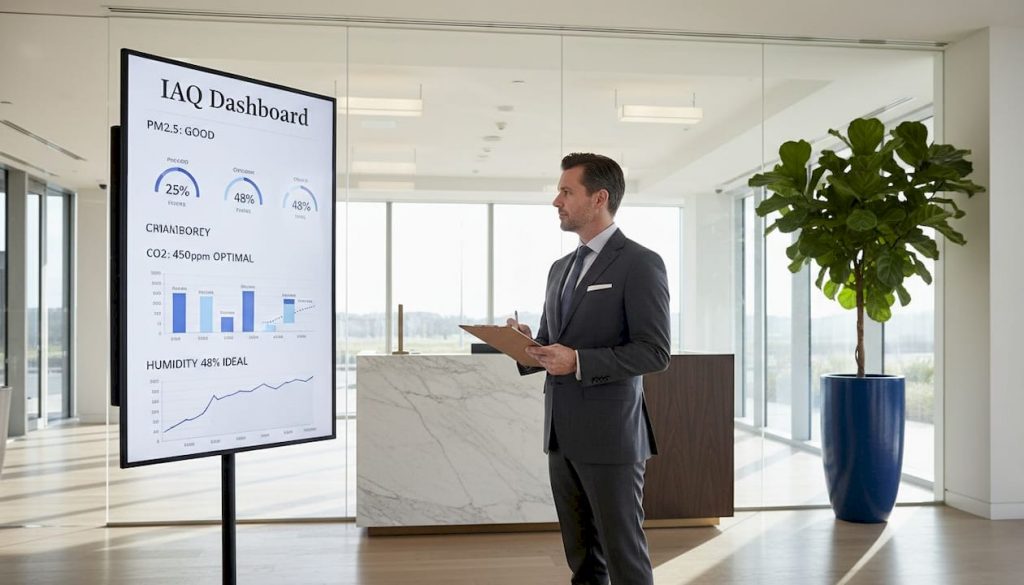
| Monitoring dashboard | Centralise sensor data and generate alerts | Must link to maintenance work order system |
| Pressure differential gauges | Track filter loading in real time | Replace filters when differential exceeds threshold |
| Air purifiers | Supplement filtration in high-occupancy areas | Deploy in lobbies, conference rooms, and corridors |
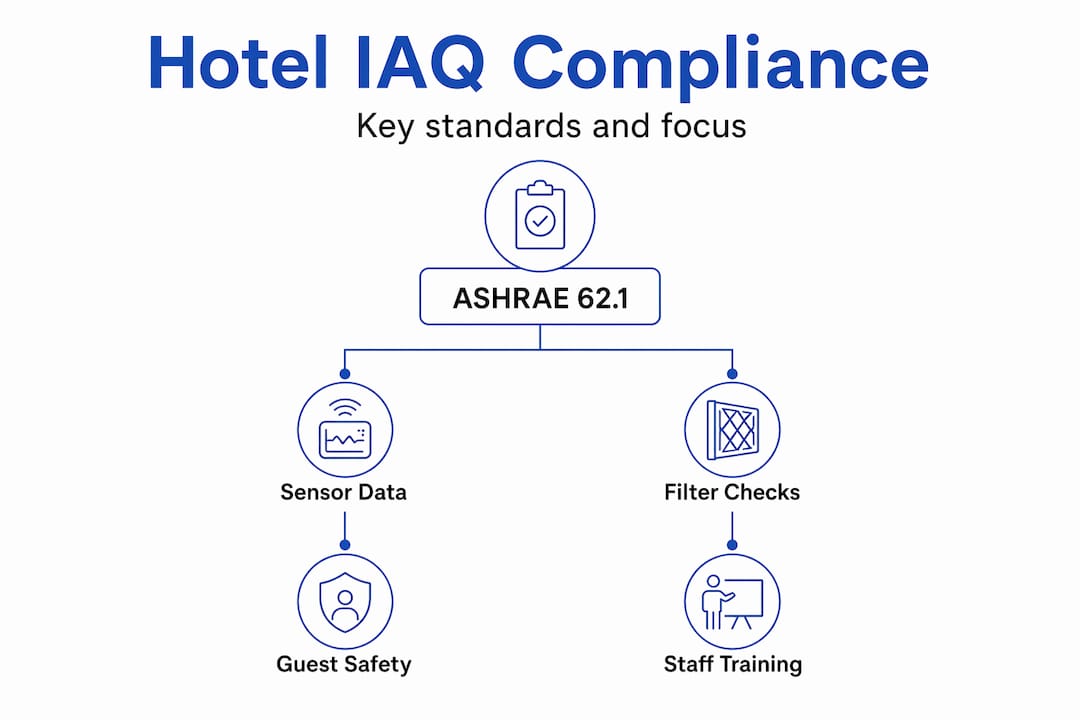
Compliance requirements also shape what a programme must achieve. ASHRAE Standard 62.1 defines minimum ventilation and IAQ thresholds for commercial buildings including hotels. The WELL v2 standard adds further requirements for air quality verification and documentation. Local regulations in the UAE align closely with these international benchmarks but should be confirmed against current municipal guidance.
Pro Tip: Map your property by zone type before purchasing any sensors. A 200-room hotel with conference facilities, a gym, and a restaurant has at least five distinct air quality environments, each requiring different monitoring priorities.
Step-by-step proactive IAQ maintenance
A proactive IAQ programme follows a phased approach, addressing the highest-risk zones first and building out systematically. The following sequence reflects best practices for hotel air quality that prioritise source control and data-driven scheduling.
-
Map and prioritise zones. Rank areas by occupancy density, ventilation complexity, and guest sensitivity. Guest rooms, lobbies, conference rooms, and gyms typically receive highest priority. Back-of-house areas are addressed in a second phase.
-
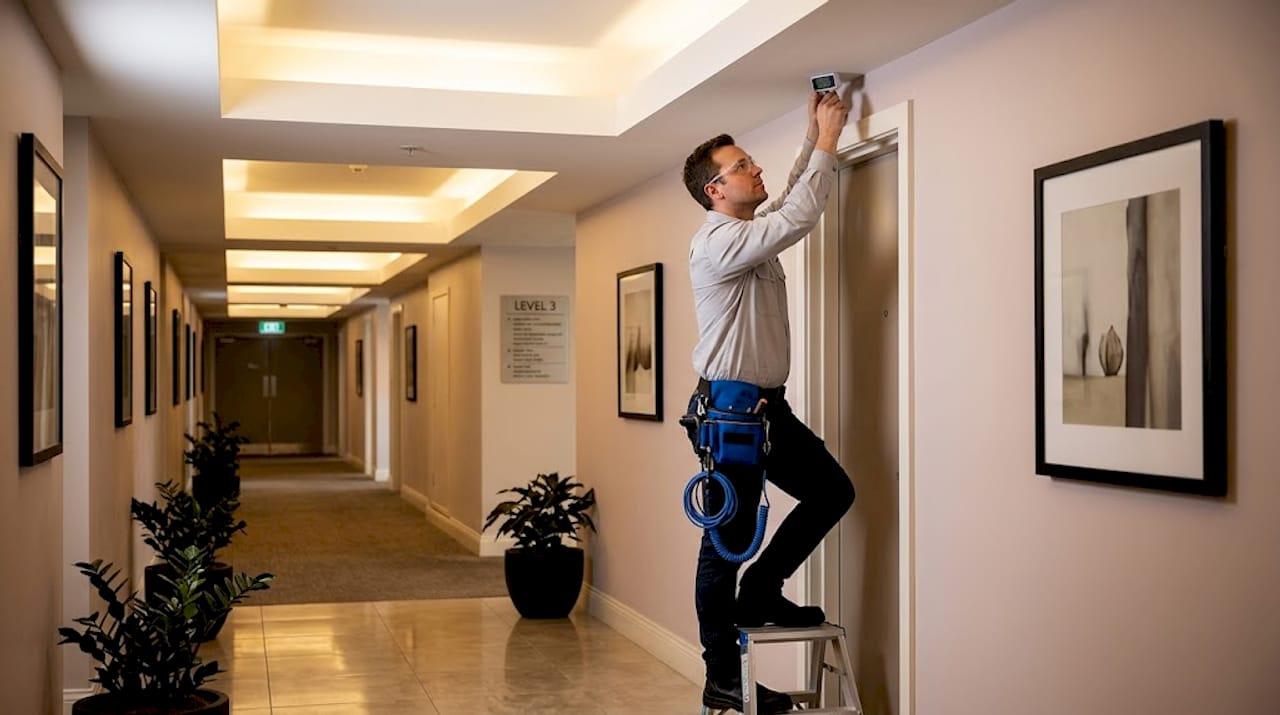
Install multi-parameter sensors per zone. Position sensors at breathing height (1.1 to 1.7 metres) and away from supply air diffusers. Link each sensor to the monitoring dashboard and set alert thresholds: CO2 above 1,000 ppm should trigger an automated work order tied to the responsible HVAC asset.
-
Switch to pressure differential filter management. Calendar-based replacement is unreliable. A heavily loaded filter can reduce air volume by 25 to 40% before a fixed schedule would flag it. Install differential pressure gauges across all air handling units and replace filters when readings exceed the manufacturer’s threshold.
-
Schedule coil cleaning based on performance data. Dirty coils reduce cooling capacity and allow moisture accumulation that contributes to microbial growth. Review coil inspection data quarterly and clean proactively rather than waiting for performance complaints.
-
Coordinate housekeeping with ventilation cycles. Low-VOC cleaning agents reduce chemical load in guest areas significantly. Schedule cleaning during periods when ventilation can flush residual compounds before guest occupancy. Fragrance-heavy products can undermine IAQ targets even when HVAC systems are operating correctly.
-
Activate demand-controlled ventilation (DCV). DCV linked to occupancy sensors is recognised by ASHRAE 62.1 as a compliant pathway for variable-occupancy spaces. It prevents CO2 buildup in rooms during peak use and reduces unnecessary energy consumption when spaces are empty.
-
Schedule sensor calibration. Sensor drift produces false readings that either miss real problems or generate unnecessary work orders. Establish a calibration schedule aligned with each sensor manufacturer’s specification, and log every calibration event.
The table below summarises this maintenance workflow for operational reference.
| Task | Responsible team | Frequency |
|---|---|---|
| Sensor threshold review | Engineering | Monthly |
| Pressure differential check | Engineering | Weekly |
| Filter replacement (differential-triggered) | Engineering | As needed |
| Coil cleaning | Engineering / contractor | Quarterly |
| Housekeeping VOC audit | Housekeeping manager | Quarterly |
| Sensor calibration | Engineering | Per manufacturer spec |
| DCV occupancy profile review | Engineering | Bi-annually |
Pro Tip: When onboarding new housekeeping staff, include a 15-minute IAQ briefing covering why product choices and room ventilation sequencing matter. Small behavioural changes at the housekeeping level compound across hundreds of room-turns each week.
Troubleshooting common hotel IAQ problems
Even well-maintained properties encounter IAQ problems. The ability to identify the root cause quickly is what separates operations teams that resolve issues before guests notice from those that respond to reviews after the fact.
The most common symptoms and their likely causes include the following:
- Musty or damp odours in guest rooms: Usually indicates humidity above 60% sustained for more than 24 hours. Check drain pan conditions, cooling coil moisture levels, and bathroom exhaust fan performance. Also inspect for blocked condensate lines.
- Widespread guest complaints about stuffiness: Often points to failed outside air dampers or a filter loaded beyond its effective capacity. Verify damper position manually, check pressure differential readings, and confirm DCV is functioning as programmed.
- Eye or throat irritation reported by guests: Likely a VOC issue. Review recent renovation activity, check for new furnishings off-gassing, and audit housekeeping product inventory for high-fragrance or solvent-based chemicals.
- Elevated CO2 readings during low occupancy: Suggests the DCV system is not responding to actual occupancy data. Check occupancy sensor calibration and verify the control logic connection between sensors and air handling units.
- Inconsistent air quality across the same floor: Often caused by filter bypass. Inspect filter frames and sealing gaskets for gaps that allow unfiltered air to pass around the media.
Troubleshooting works best when it follows a structured protocol tied to the monitoring dashboard. Alert patterns over days or weeks often reveal systemic causes rather than isolated faults.
Treat indoor air quality as critical infrastructure. Integrating IAQ into capital and operational planning, rather than addressing it reactively, is the approach that sustains high performance year on year.
Avoid the two most common pitfalls: neglecting sensor calibration schedules and delaying filter changes because budgets are constrained. Both generate costs that exceed the savings they appear to create.
Verifying IAQ improvements and maintaining compliance
Measurement closes the loop. Without documented data showing that IAQ has improved and is being maintained within target ranges, operations teams cannot demonstrate compliance, justify future investment, or catch gradual performance drift.
Set clear target benchmarks aligned with recognised standards. The table below shows recommended thresholds that align with ASHRAE 62.1 requirements and general WELL v2 guidance.
| Parameter | Target range | Concern threshold |
|---|---|---|
| CO2 | Below 800 ppm | Above 1,000 ppm |
| PM2.5 | Below 12 µg/m³ | Above 35 µg/m³ |
| VOCs (TVOC) | Below 500 µg/m³ | Above 1,000 µg/m³ |
| Relative humidity | 40–60% | Below 30% or above 60% |
| Temperature | 20–24°C | Outside range for extended periods |
Monitoring dashboards should display real-time readings and retain historical data for at least 12 months. Trend analysis across this data period allows engineering teams to identify seasonal patterns, equipment degradation, and zones that consistently underperform.
Conduct formal IAQ audits twice a year. These should include physical inspection of filter condition and frame sealing, damper position verification, humidity control system performance, and review of sensor calibration logs. Audit findings should be documented with corrective actions and sign-off dates.
Continuous monitoring with automated alerts reduces guest complaints by catching parameter drifts before they affect the guest experience. This data also provides the evidence base for management reporting and budget proposals. Presenting trend data that shows a direct relationship between IAQ investment and complaint reduction is more persuasive than general arguments about air quality.
Pro Tip: Schedule an independent professional IAQ test at least once a year. Internal monitoring is valuable for day-to-day management, but third-party verification adds credibility when presenting compliance evidence to regulators or ownership groups.
Staff training rounds out the verification cycle. Engineers and housekeeping supervisors should understand what sensor readings mean, how to interpret dashboard alerts, and when to escalate. Knowing how to measure indoor air quality accurately and respond to the data is the skill that determines whether a monitoring investment actually delivers outcomes.
My take on IAQ as a competitive asset
I have seen hotel operations teams invest in capable HVAC systems and then assume the work is done. The equipment is there, the compliance boxes appear to be ticked, and IAQ moves off the agenda until a cluster of guest complaints forces it back. That reactive posture is the single biggest obstacle to consistent air quality performance.
What actually changes outcomes is a zone-specific, data-driven maintenance regime that links sensor readings to work orders and work orders to documented resolution. When engineering can show that CO2 in conference rooms is consistently below 800 ppm, or that humidity in ground-floor rooms has stayed within range for six months, the IAQ programme becomes a tangible asset rather than an invisible cost.
The integration of housekeeping is another area that most properties undervalue. Changing from fragrance-heavy to low-VOC cleaning products, and timing ventilation post-cleaning, are low-cost changes with measurable results. I have found that the hotels that do this consistently are the ones where guests comment positively on the “freshness” of rooms without being able to explain why.
Viewing IAQ as critical infrastructure, the way you would treat fire safety or lift maintenance, is the shift that makes a programme sustainable. It gets into capital planning, staff training, and procurement criteria. That is when the results become durable rather than episodic.
— Nevel
Upgrade your hotel’s air quality with Climatepro

Climatepro supplies air purification and IAQ solutions suited to the demands of hotel environments across the UAE. For high-traffic zones such as lobbies, conference rooms, and corridors, the Honeywell Air Touch P2 delivers high-performance particulate filtration that complements your existing HVAC operation. For smaller guest-facing spaces, the Honeywell Air Touch P1 offers an effective and cost-conscious option. Browse the full range of hotel-grade air purifiers available through Climatepro, with delivery across Dubai, Abu Dhabi, Sharjah, and all UAE emirates. Contact the team directly for volume pricing or to discuss zone-specific deployment recommendations.
FAQ
What are the key IAQ parameters hotels should monitor?
Hotels should monitor CO2, PM2.5, VOCs, relative humidity, and temperature across all guest-facing zones. Each parameter reflects a different source of air quality risk and requires a different corrective response.
How often should hotel HVAC filters be replaced?
Filter replacement should be triggered by pressure differential readings, not fixed calendar schedules. A loaded filter can reduce air volume by 25 to 40% before a calendar-based schedule would prompt action, creating an ASHRAE compliance gap.
What causes musty odours in hotel guest rooms?
Musty odours typically result from humidity above 60% sustained for more than 24 hours, which promotes mould growth. Check drain pans, condensate lines, and bathroom exhaust performance as the first diagnostic steps.
How does demand-controlled ventilation help hotel IAQ?
Demand-controlled ventilation adjusts fresh air supply based on actual occupancy, preventing CO2 buildup during peak use and reducing energy waste when spaces are unoccupied. ASHRAE 62.1 recognises it as a compliant ventilation pathway.
What documentation is needed for IAQ compliance?
Compliance documentation should include sensor calibration logs, filter replacement records with pressure differential data, audit reports with corrective actions, and maintenance schedules. This evidence base supports regulatory inspections and internal management reporting.
Recommended
- How to improve air quality in UAE apartments — Blog | ClimatePro UAE
- How to interpret air quality index for healthy homes — Blog | ClimatePro UAE
- Air changes per hour and better indoor air quality — Blog | ClimatePro UAE
- Understand air cleaning technologies for healthier UAE homes — Blog | ClimatePro UAE