Measure the floor area in square metres or square feet, rate how damp the space feels, then match those two numbers to an AHAM-style pints per day chart before rounding up to the nearest retail size. A 20 litre or 20 pint unit suits a normal bedroom; a damp basement usually needs 30 to 50 pints or a whole-home system. When in doubt, size up rather than down.
TL;DR:
- A 20 to 30 pint dehumidifier generally suits most bedrooms up to 300 sq ft, but larger or damper spaces may require units rated for 40 to 50 pints.
- Adjustments for room height, below-grade locations, or laundry use can add up to 10–15 pints, so rounding up to the next retail size ensures adequate capacity.
- For spaces over 1,500 sq ft or with persistent dampness, a whole-home ducted system is more effective than portable units.
- Proper placement near moisture sources and drainage options like continuous hoses or built-in pumps optimize performance and maintenance.
- The latest test standards have reduced labeled capacities; compare units based on the post-2019 AHAM chart figures for accurate sizing.
Table of Contents
- What size dehumidifier do you need? Reading the AHAM chart
- How do you measure your room and adjust for real conditions?
- What size dehumidifier suits each room in your home?
- Where should you place it and how should it drain?
- Should you choose a portable unit or a whole-home system?
- How much will it cost to run, and what features matter?
- What does Climatepro recommend for UAE homes?
- What actually determines the right size
- Buy your dehumidifier locally with Climatepro
- Sources
- FAQ
What size dehumidifier do you need? Reading the AHAM chart
The Association of Home Appliance Manufacturers publishes the sizing logic most reputable buying guides still follow, and it’s built on two inputs only: floor area and moisture severity. Everything else, ceiling height, below-grade location, laundry use, is an adjustment layered on top.
Post-2019, the test standard changed, so a unit once sold as “70 pints” is commonly labelled closer to 50 pints today under current Consumer Reports guidance. If you’re comparing an older review against a current product listing, the numbers won’t line up unless you account for that shift.
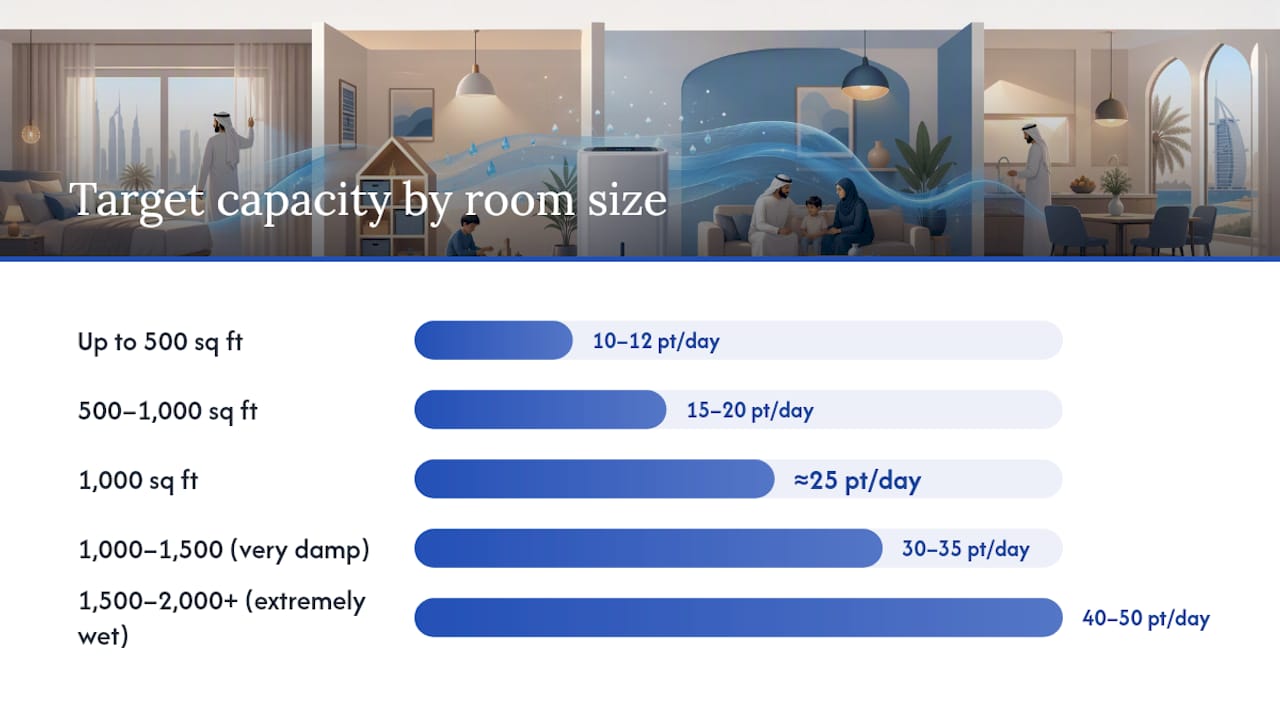
Here’s the baseline, using post-2019 AHAM logic:
- Up to 500 sq ft, moderately damp: around 10 to 12 pints/day
- 500 to 1,000 sq ft, moderately damp: around 15 to 20 pints/day
- 1,000 sq ft, moderately damp: roughly 25 pints/day, per Consumer Reports’ own chart
- 1,000 to 1,500 sq ft, very damp: around 30 to 35 pints/day
- 1,500 to 2,000+ sq ft, extremely wet (standing water, musty smell): 40 to 50 pints/day or higher
Retail sizes cluster around 20, 30, 35 and 50 pints, so treat the chart output as a target and buy the nearest size that meets or slightly exceeds it. If you think in litres, the conversion is straightforward: 1 pint equals roughly 0.473 litres, so a 30 pint unit removes close to 14 litres of moisture per day under test conditions.
How do you measure your room and adjust for real conditions?
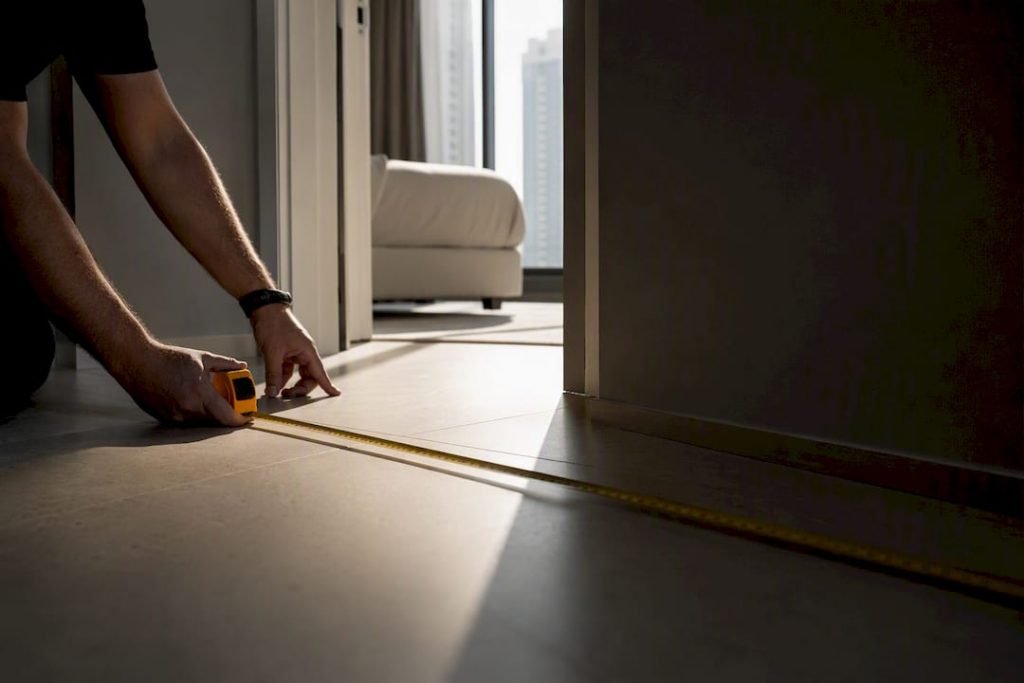
Multiply length by width in metres or feet to get floor area, then note your ceiling height, because the AHAM chart assumes a standard 8-foot ceiling and taller rooms hold more air to dry out.
A worked example: a 4m by 5m bedroom is 20 square metres, or about 215 sq ft, comfortably inside the “up to 500 sq ft” band. If it feels merely sticky rather than visibly damp, that’s moderately damp territory, and a small unit will handle it.
Moisture severity isn’t guesswork. Moderately damp means the space feels clammy in humid weather, with slight musty odour but no visible mould. Very damp means noticeable odour, damp spots on walls or belongings, or visible condensation. Extremely wet covers standing water, seepage, or a room that has flooded before.
Once you’ve got a base pints/day figure, stack these adjustments:
- Ceiling above 8 ft: multiply by 1.13 for 9 ft ceilings, or 1.25 for 10 ft.
- Below-grade room (basement, semi-buried level): add 5 pints.
- Space doubles as a laundry area: add another 5 pints.
- Crawl space with exposed dirt floor: add 10 pints.
- Round the final total up to the next retail size, never down.
Pro Tip: If your calculation lands right between two retail sizes, always choose the larger one. A slightly oversized unit runs shorter cycles and lasts longer than one working flat out to keep up.
What size dehumidifier suits each room in your home?
Different rooms carry different moisture loads and different tolerance for noise, so the right pick varies more than a single chart suggests.
- Bedrooms: a 20 pint unit typically covers 150 to 300 sq ft, which fits most bedrooms comfortably. Set the humidistat around 45 to 50% and prioritise a quiet compressor over raw capacity, since this unit runs while you sleep.
- Bathrooms: frequent steam means you need continuous drainage rather than a small tank you’ll empty daily. A 20 to 30 pint unit with a hose connection handles most ensuites and family bathrooms.
- Living areas and open-plan apartments: a single larger unit, 30 to 50 pints, usually outperforms two small ones, because stronger fans move air through the whole space instead of drying pockets near each unit.
- Laundry rooms: add the +5 pint adjustment for laundry use to whatever your base area suggests, and lean toward pump drainage given the water volume involved.
- Basements and crawl spaces: these need units rated for low temperatures, since basements often sit below 65°F where standard compressors lose efficiency. Expect 40 to 50 pints for a mid-size basement, or a whole-home system for anything larger or persistently wet.
Where should you place it and how should it drain?
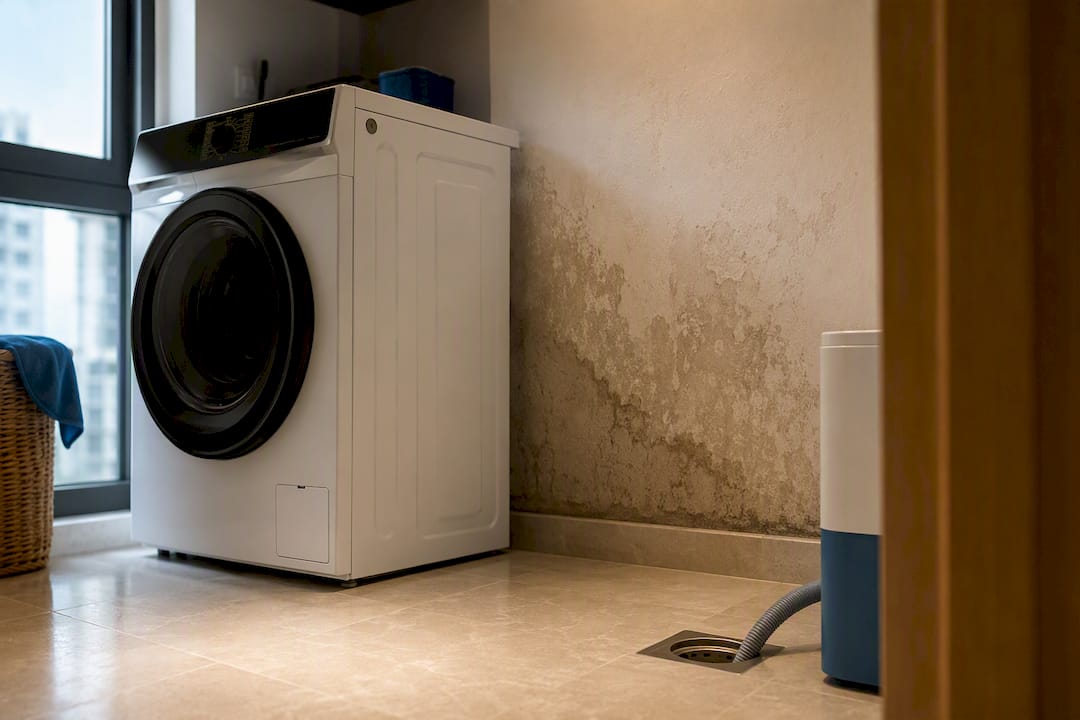
Position the unit near the main moisture source, a laundry corner, a damp basement wall, rather than tucking it into whichever corner is out of the way. Airflow into and out of the unit needs at least 15cm of clearance on all sides.
- Tank: simplest option, but needs regular emptying, impractical for basements or high-humidity rooms.
- Continuous drain hose: connects to a floor drain and runs unattended for weeks, the standard recommendation for basements and laundry areas.
- Built-in pump: pushes water upward to a sink or window, useful when there’s no floor drain nearby.
In open-plan spaces, point the airflow toward the room’s centre rather than a wall, and check the filter monthly. If you’re running the unit through a UAE winter with lower ambient humidity, seasonal set-point adjustments can prevent unnecessary cycling.
Pro Tip: Placing the unit right beside the dampest wall or the laundry machine cuts the time it takes to bring humidity down, because it’s pulling moisture from the source rather than waiting for it to spread through the room.
Should you choose a portable unit or a whole-home system?
A portable dehumidifier suits a single room or a couple of adjoining damp areas, generally anything under 1,500 to 2,000 sq ft with one dominant moisture source. It’s also the right call when the problem is seasonal rather than constant.
Whole-home systems make more sense when humidity is a house-wide issue rather than a single-room problem, particularly in homes with persistent musty odour across multiple levels, or total conditioned space beyond what a 50 pint portable can realistically manage. These units tie into ductwork and often integrate with existing HVAC, so installation involves a technician rather than a simple plug-in setup.
One detail worth knowing before you shop: a single correctly sized portable unit typically outperforms two undersized ones, because fan strength and air circulation matter as much as total rated capacity. Two weak units fighting the same room often leave dead zones neither one reaches.
How much will it cost to run, and what features matter?
Running cost comes down to a simple sum: wattage times hours of operation times your electricity rate. A correctly sized or slightly oversized unit finishes its job faster and cycles off, while an undersized one runs for hours trying to catch up, often burning more total energy despite its smaller draw.
Look for these efficiency features when comparing models:
- Energy factor rating confirmed under ENERGY STAR test protocols, which standardise how capacity is measured.
- Built-in humidistat that shuts the compressor off once target humidity is reached, rather than running continuously.
- Continuous drain option to avoid manual emptying and reduce standby time.
- Low-temperature or frost control mode for basements and cooler rooms.
In hot, genuinely humid real-world air, the same unit can pull 20 to 40% more moisture than its rated capacity suggests, which is useful context if your unit seems to be outperforming its spec sheet.
What does Climatepro recommend for UAE homes?
Local conditions add a layer the AHAM chart doesn’t cover: dry, air-conditioned interiors for much of the year, punctuated by high outdoor humidity, especially near the coast. Climatepro’s guide on choosing a dehumidifier walks through matching capacity to room type using the same measurement steps outlined above, adapted for regional buying.
For background on how these units actually pull moisture from the air, the dehumidification process explainer is worth a read before you shop. And if you’re weighing up portable options for everyday use, the role of portable dehumidifiers in home settings covers where they fit best against fixed installations.
What actually determines the right size
The AHAM chart gives you a defensible starting number, but the adjustments, ceiling height, below-grade rooms, laundry use, do more heavy lifting than most buyers expect. Measure first, apply the chart, then round up.
— Nevel
Buy your dehumidifier locally with Climatepro
A curated dehumidifier range with local stock, delivery options across the seven Emirates, and in-country warranty handling can simplify your purchase so you avoid shipping units overseas for support. Calibration for local conditions like dry indoor air from constant air conditioning and dusty outdoor air can be important factors that generic international buying guides may not always cover.

If you’ve worked through the sizing steps above and landed on something in the 20 to 30 pint range for a bedroom or living space, the Xiaomi Smart Dehumidifier Lite is a solid example of what’s currently in stock at that capacity. Not sure which model matches your room after running the numbers? Browse the full dehumidifier catalogue or get in touch with Climatepro’s support team for model-level sizing help before you buy.
Sources
This guide draws on AHAM’s sizing standard, ENERGY STAR capacity testing, Consumer Reports sizing charts, and Climatepro’s own buying guidance.
- What Size Dehumidifier Do I Need? (AHAM Sizing Chart + Calculator) | HVAC Base
- How Do I Know What Size Dehumidifier I Need? | Consumer Reports
- What size dehumidifier do I need? — The Spruce
FAQ
How do I know what size dehumidifier I need?
Measure your room’s floor area, rate how damp it feels using categories from moderately damp to extremely wet, then match both figures on an AHAM-style pints per day chart. Add adjustments for ceiling height, below-grade location, or laundry use, then round up to the nearest retail size.
Do I need a 12 litre or 20 litre dehumidifier?
A 12 litre (roughly 25 pint) unit suits a small to mid-size room under moderately damp conditions, while a 20 litre unit handles larger or damper rooms, including most basements or spaces with a below-grade adjustment. If your room exceeds 500 sq ft or feels very damp rather than just clammy, go with the 20 litre option.
Will a 20 litre dehumidifier do the whole house?
Generally no. A 20 litre unit covers a single large room or a small open-plan area, but whole-house humidity control usually needs either multiple correctly placed units or a ducted whole-home system, particularly in homes over 1,500 to 2,000 sq ft.
What is the best size dehumidifier?
There’s no single best size. The right capacity depends on your room’s floor area and moisture severity, adjusted for ceiling height, basement location, and laundry use. Most bedrooms suit a 20 pint unit, while damp basements typically need 30 to 50 pints or more.
Can I check dehumidifier options for my home in the UAE?
Yes. Climatepro’s dehumidifier category lists current in-stock models with local delivery across the Emirates, and the support team can help match a model to your room’s calculated capacity.