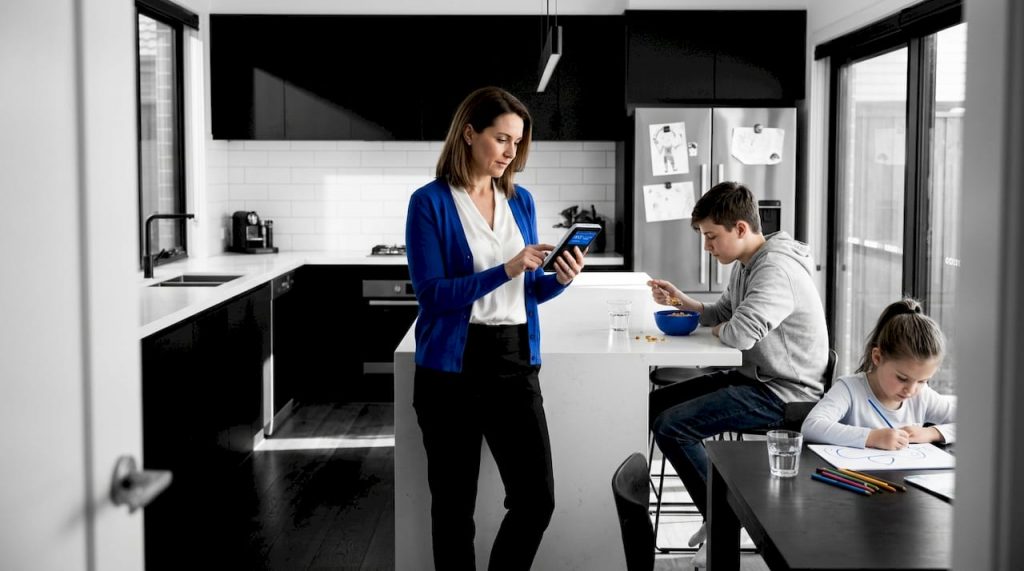

Smart humidity control is defined as an automated indoor climate system that continuously monitors and adjusts the moisture level in your home’s air without any manual effort. The industry term for this technology is automated humidity regulation, though “smart humidity control” accurately describes how modern sensor-driven systems behave. The EPA recommends maintaining indoor relative humidity between 30% and 50% to prevent mould growth, dust mite proliferation, and respiratory irritation. Keeping air within that band is precisely what smart humidity systems do, using integrated sensors and automatic humidistats to replace the guesswork of manual dials and seasonal adjustments.
What is smart humidity control and how does it work?
Smart humidity control operates through a continuous sensor-actuator feedback loop that compares live moisture readings to a target range and triggers your humidifier or dehumidifier automatically. The integrated humidistat reads the air’s relative humidity in real time. When the reading falls below your set minimum, the humidifier activates. When it climbs above your set maximum, the dehumidifier takes over. No manual adjustment is needed at any point.
The sensor sits at the heart of the system. It samples the air continuously, sending data to a controller that makes decisions within seconds. This speed matters because humidity can shift quickly when you open windows, run a shower, or cook a meal. A manual system would miss these fluctuations entirely.
Key components in a typical smart humidity system include:
- Humidity sensors that measure relative humidity as a percentage
- An integrated humidistat that compares live data to your target range
- A humidifier or dehumidifier (or both) that the system activates automatically
- A controller or app interface that lets you set targets and review logs
- Optional voice or smart home integration for hands-free adjustments
Pro Tip: Set your system using deadband logic rather than a single target point. A deadband range of 40%–50% prevents the equipment from switching on and off constantly, which reduces motor wear and extends the life of your unit significantly.
What types of smart humidity systems suit home use?
Smart humidity solutions fall into two main categories: portable smart humidifiers and centralised whole-house systems. Each suits a different home size, budget, and lifestyle.
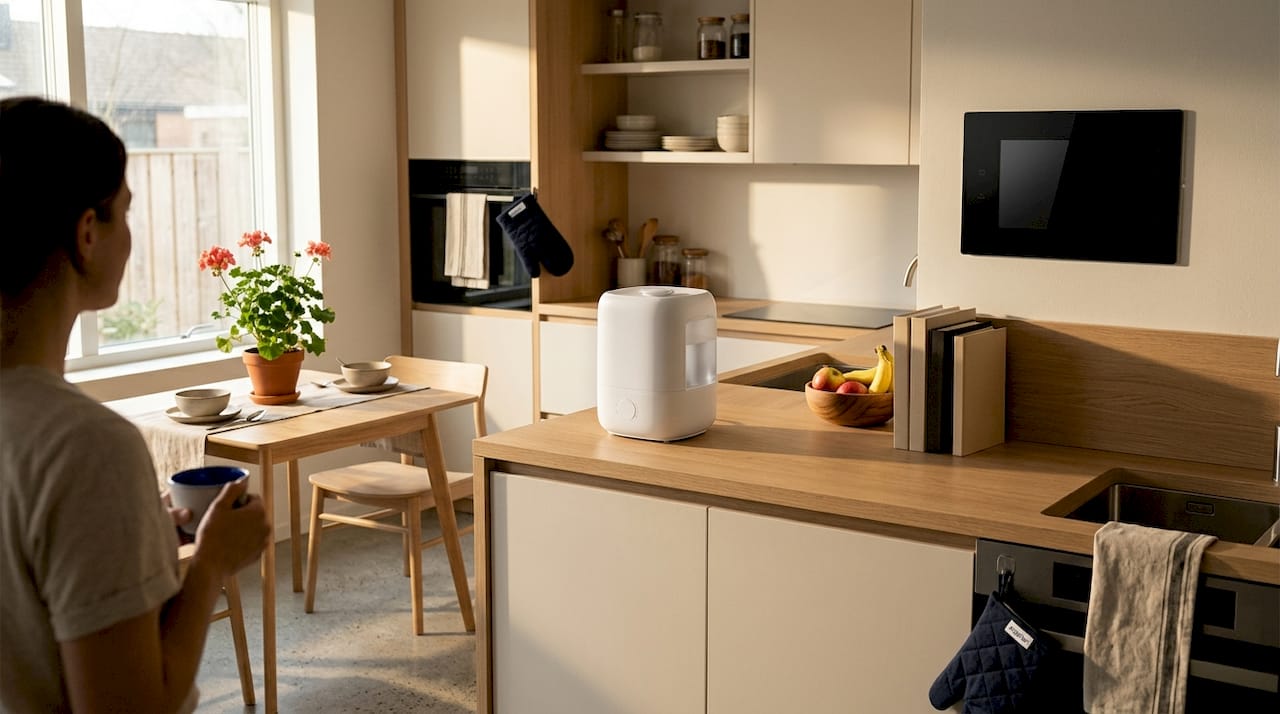
A portable smart humidifier is a standalone unit designed for a single room. It connects to Wi-Fi, reads humidity through a built-in sensor, and adjusts its output automatically. These units work well in bedrooms, nurseries, and home offices where you spend most of your time. They are affordable, easy to set up, and require no professional installation.
A centralised whole-house system integrates directly with your HVAC ducting. It conditions air as it circulates through the home, delivering consistent humidity across every room from a single control point. This approach suits larger homes and homeowners who want a set-and-forget solution without managing multiple devices.
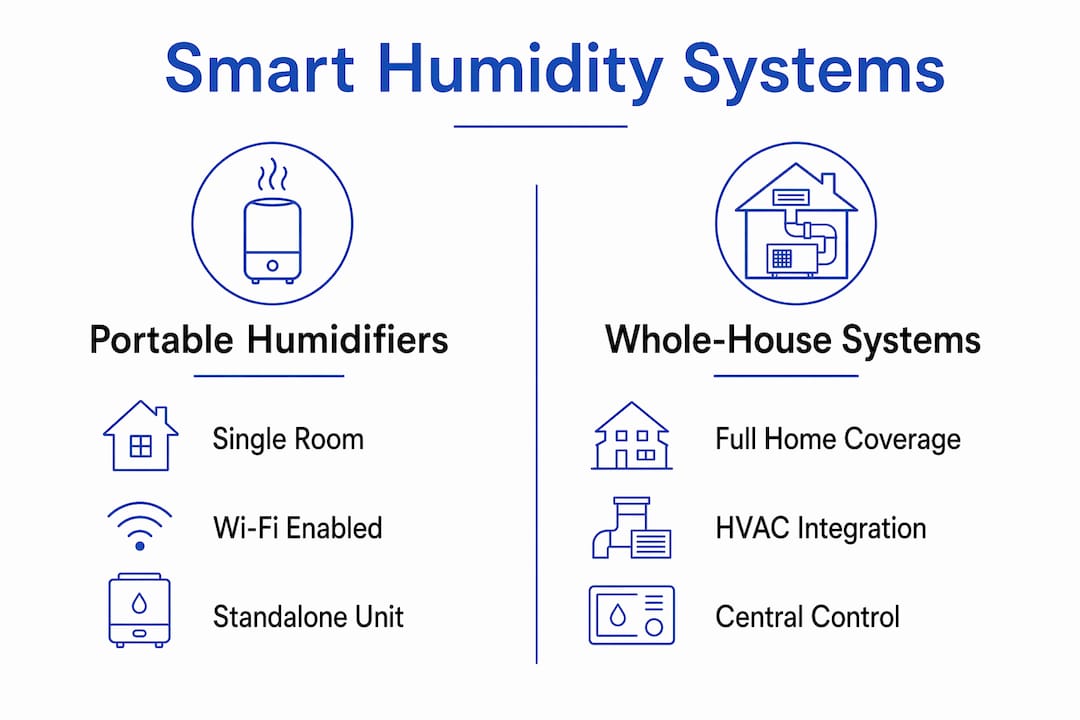
| Feature | Portable smart humidifier | Whole-house system |
|---|---|---|
| Coverage | Single room | Entire home |
| Installation | Plug-and-play | Professional required |
| Maintenance | Weekly tank cleaning | Annual HVAC service |
| Consistency | Variable across rooms | High throughout home |
| Upfront cost | Low to moderate | Moderate to high |
Portable units suit bedrooms and nurseries well, but they cannot humidify a whole house without multiple devices running simultaneously. Running several portable units increases your maintenance load and can create uneven humidity pockets. For large homes, a centralised system delivers more reliable results with less daily effort.
What are the health and energy advantages of smart humidity?
The primary benefit of automated humidity regulation is health risk prevention. The EPA’s recommended range of 30%–50% relative humidity is not arbitrary. Air below 30% dries out mucous membranes, worsens asthma, and increases susceptibility to airborne viruses. Air above 50% encourages mould colonies and dust mite populations, both of which trigger allergic reactions and respiratory irritation.
Smart systems correct these conditions automatically. They do not wait for you to notice dry skin or a musty smell. The sensor detects the problem and the system responds before the air quality deteriorates to a level you can feel.
The energy benefits are equally concrete. A system that maintains a precise humidity band runs its equipment only when needed. That is more efficient than a manual humidifier left running at a fixed output regardless of actual conditions. Integrating your humidity control with a smart home energy workflow compounds these savings further by coordinating humidity, temperature, and ventilation as a single climate system.
Key health and energy advantages include:
- Reduced risk of mould and dust mite growth within the EPA-recommended range
- Lower incidence of dry skin, chapped lips, and respiratory irritation in winter
- Automatic correction of humidity spikes from cooking, bathing, or weather changes
- Reduced equipment run time through precise, demand-driven operation
- Compatibility with smart thermostats for coordinated climate management
Pro Tip: Sync your humidity targets with your seasonal thermostat settings. In winter, lower your humidity target slightly to prevent condensation on cold windows. In summer, raise it modestly for comfort. This seasonal adjustment approach prevents both moisture damage and unnecessary equipment cycling.
How should you adjust and calibrate your system seasonally?
Season-aware humidity control adjusts target ranges based on outdoor temperature and moisture conditions rather than holding a fixed setting year-round. This distinction matters because the same indoor humidity level that feels comfortable in summer can cause condensation on walls and windows in winter.
Follow these steps to calibrate and adjust your system across seasons:
- Set a winter target of 30%–40% relative humidity. Cold outdoor air holds less moisture, so indoor air dries out quickly. A lower target prevents condensation on cold surfaces while still protecting respiratory comfort.
- Shift to a summer target of 45%–55% relative humidity. Warmer air holds more moisture naturally, and a slightly higher indoor target maintains comfort without encouraging mould growth.
- Check your sensor against a dedicated hygrometer every three months. Sensor drift causes systems to regulate against inaccurate data, resulting in over- or under-humidification even when the display looks correct.
- Apply deadband logic to your seasonal targets. Rather than setting a single point, define a range such as 35%–45% in winter. This prevents short-cycling and reduces wear on motors and heating elements.
- Log your readings monthly. A pattern of readings above or below your target signals either sensor drift or a change in your home’s air sealing that needs attention.
The most common calibration mistake homeowners make is trusting the device display without verifying it against an independent reference. A hygrometer costs very little and takes seconds to use. Skipping that check can mean your system runs incorrectly for months without any visible warning sign. For a detailed walkthrough of managing humidity across seasons, Climatepro’s step-by-step home guide covers the full process.
Practical tips for homeowners setting up smart humidity control
Choosing the right system starts with your home’s floor area and your daily routine. A single portable smart humidifier suits a studio apartment or a single bedroom. A home with multiple living areas and bedrooms benefits from either a centralised system or a coordinated set of room-level devices managed through a single app.
Practical setup and maintenance advice for homeowners:
- Match the system to your space. A portable unit rated for 30 square metres will not maintain consistent humidity in a 100-square-metre open-plan living area.
- Place sensors away from vents and windows. Airflow from vents and temperature differences near windows skew readings and cause the system to respond to localised conditions rather than the room average.
- Clean portable unit tanks weekly. Stagnant water in a humidifier tank grows bacteria and mould, which the device then disperses into the air you breathe. Hygienic device design is as important as sensor precision for maintaining air quality.
- Use the app to review humidity logs. Patterns in your data reveal problems before they become visible, such as a slow upward drift in humidity that signals a ventilation issue.
- Integrate with voice assistants carefully. Voice commands are convenient for quick adjustments, but rely on your app or controller for scheduled and seasonal changes where precision matters.
- Do not rely on a single portable unit for whole-house coverage. Multiple portable units create uneven humidity zones and multiply your maintenance tasks. If whole-house control is the goal, a centralised system is the more practical choice.
For homeowners in the UAE, where outdoor humidity swings dramatically between seasons, pairing a smart humidifier with a quality dehumidifier gives you control in both directions. Climatepro’s smart climate tips for UAE homes explains how to configure both devices as a coordinated system.
Key takeaways
Smart humidity control is the most reliable method for maintaining the EPA-recommended 30%–50% indoor humidity range, protecting both occupant health and home structure through automated, sensor-driven adjustments.
| Point | Details |
|---|---|
| EPA humidity standard | Keep indoor relative humidity between 30% and 50% to prevent mould and dust mite growth. |
| Sensor feedback loop | Systems compare live humidity readings to targets and trigger devices automatically without manual input. |
| Deadband logic | Set a humidity range, not a single point, to prevent short-cycling and extend equipment life. |
| Seasonal calibration | Adjust targets each season and verify sensor accuracy against a dedicated hygrometer every three months. |
| System choice by home size | Use portable units for single rooms and centralised systems for consistent whole-house humidity control. |
Why I think most homeowners underestimate calibration
Most articles on smart humidity control focus on features: app connectivity, voice control, scheduling. Those features matter, but they are secondary to one thing that rarely gets discussed plainly: sensor accuracy.
I have seen homeowners run systems for months believing their humidity was perfectly managed, only to discover the sensor had drifted several percentage points off. The device looked fine. The app showed green. But the actual air was either too dry or creeping toward mould territory. A three-minute check with a $20 hygrometer would have caught it immediately.
The other thing I find underappreciated is deadband logic. Setting a system to a single target point of, say, 45% causes the equipment to cycle on and off constantly as the reading hovers around that number. That cycling wears out motors faster than continuous operation would. Professionals define a range for exactly this reason, and homeowners should too.
Smart humidity systems are genuinely useful technology. The automation is real, the health benefits are well-supported, and the energy savings from demand-driven operation are measurable. But the technology only performs as well as the calibration and configuration behind it. Get those two things right, and the rest takes care of itself.
— Nevel
Climatepro’s humidity and air quality solutions for your home
Climatepro stocks a full range of smart humidifiers, dehumidifiers, and air purifiers suited to homes of every size across the UAE, with delivery to Dubai, Abu Dhabi, Sharjah, and beyond.

Whether you need a portable unit for a single bedroom or a capable dehumidifier for whole-home moisture management, Climatepro carries products with built-in sensors, app control, and energy-efficient operation. The humidifiers range includes models suited to nurseries, bedrooms, and large living areas, while the dehumidifiers catalogue covers units that integrate with smart home systems for coordinated climate control. Every product ships with clear specifications so you can match the unit to your floor area and usage needs before you buy.
FAQ
What is smart humidity control in simple terms?
Smart humidity control is an automated system that uses sensors to monitor indoor moisture levels and activates a humidifier or dehumidifier to keep relative humidity within a healthy range, without manual adjustment.
What humidity level should I set my smart system to?
The EPA recommends a target range of 30%–50% relative humidity for optimal health and comfort. Adjust toward the lower end in winter to prevent condensation and toward the higher end in summer for comfort.
What is a smart humidifier and how does it differ from a standard one?
A smart humidifier includes a built-in humidity sensor and Wi-Fi connectivity, allowing it to adjust output automatically based on real-time air conditions. A standard humidifier runs at a fixed setting until you manually change it.
How often should I calibrate my smart humidity sensor?
Check your sensor’s accuracy against a dedicated hygrometer at least every three months. Sensor drift can cause your system to regulate against inaccurate data, leading to poor humidity control despite normal-looking readings.
Can one portable smart humidifier control humidity for a whole house?
A single portable unit is designed for one room and cannot maintain consistent humidity across a whole house. Whole-house coverage requires either a centralised HVAC-integrated system or multiple coordinated units, which increases maintenance demands.