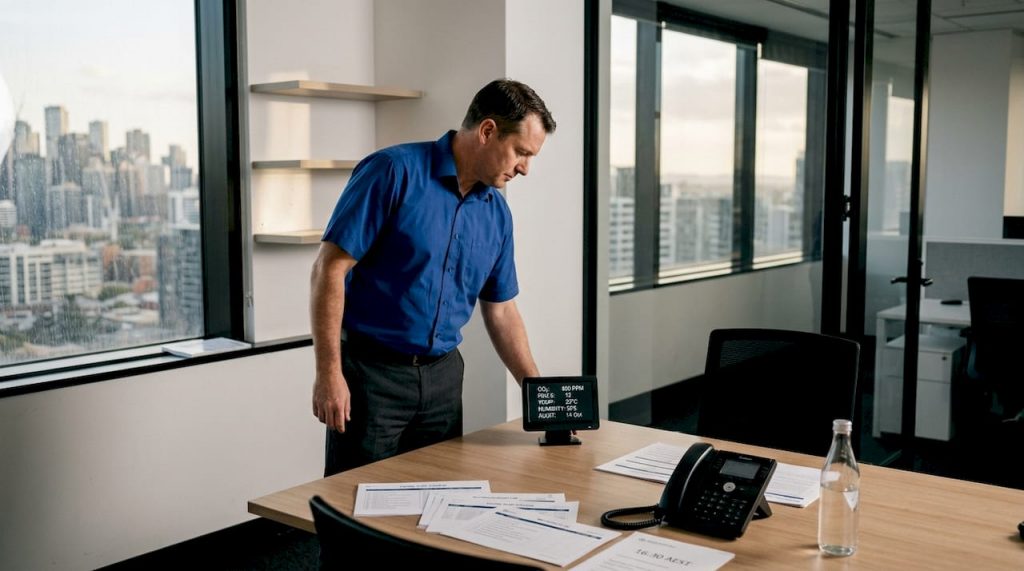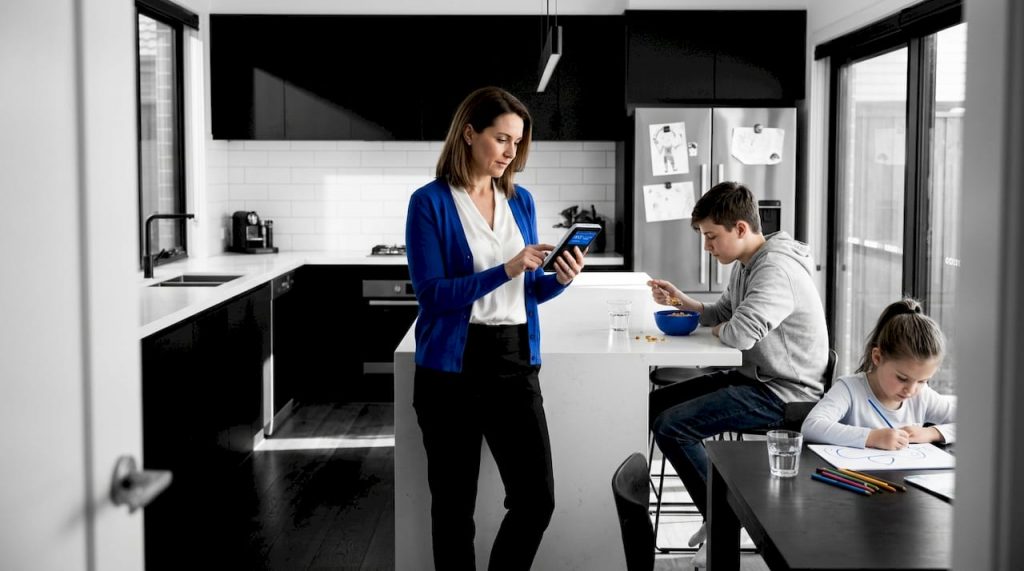

Smart air monitors are continuous diagnostic devices that measure indoor pollutants, humidity, volatile organic compounds (VOCs), and gases in real time, giving homeowners immediate, data-driven insight into the air they breathe. The role of smart air monitors goes well beyond simple detection. These devices connect via Wi-Fi, push alerts to your smartphone, and increasingly trigger automated responses to keep your home’s air within safe limits. For anyone serious about home wellness in 2026, understanding how these devices work and what they can realistically do is the starting point for genuinely cleaner indoor air.
How do smart air monitors detect indoor pollutants?
Smart air monitors rely on several distinct sensor types, each targeting a specific category of indoor air threat. Understanding what each sensor does helps you choose the right device and interpret its readings accurately.
The most common sensor types found in consumer monitors include:
- Particulate matter (PM2.5 and PM10) sensors: Use optical laser technology to count and size airborne particles. Fine particles from cooking smoke, dust, and outdoor pollution fall into this category.
- VOC sensors: Detect gases released by cleaning products, paints, adhesives, and synthetic furnishings. These use electrochemical or metal oxide semiconductor technology.
- CO2 sensors: Measure carbon dioxide concentration, which rises with occupancy and poor ventilation. High CO2 is a reliable indicator of stale, under-ventilated air.
- Humidity and temperature sensors: Track moisture levels and thermal conditions. Smart monitors alert users when humidity exceeds 50%, the threshold above which mould growth accelerates.
Consumer IoT air quality monitors cost under $400, compared to reference-grade regulatory stations that cost between $15,000 and $40,000. That price gap reflects a real difference in precision. Consumer devices provide near-instant, indicative readings rather than laboratory-grade measurements.
Optical sensors used in low-cost monitors are sensitive to humidity and temperature, which can skew readings if the device is placed near a window, kitchen, or bathroom. Calibration matters more than most users realise. A device that reads accurately in a controlled environment may drift in a UAE home where ambient humidity and temperature fluctuate significantly.
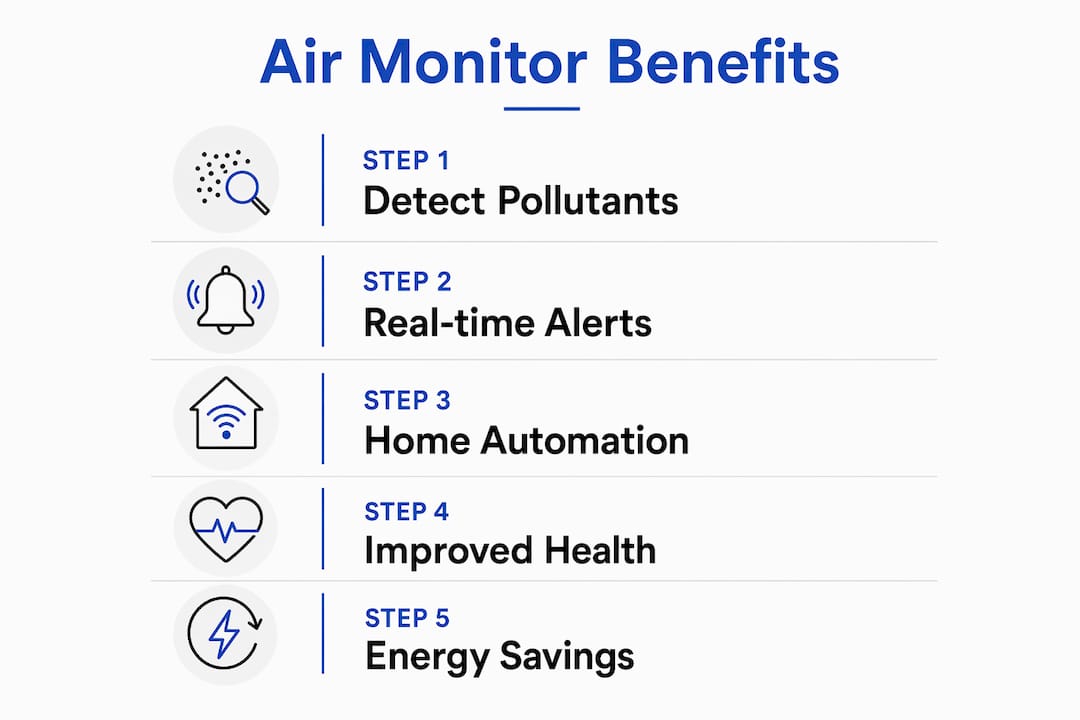
Pro Tip: Place your monitor away from direct airflow, cooking surfaces, and windows. Readings taken in stable, central locations are far more representative of the air your household actually breathes.
What are the main benefits of air quality monitors at home?
The practical benefits of using smart air quality solutions at home are most visible when you connect monitor data to specific daily activities. Real-time data allows you to correlate cooking, cleaning, or painting with specific pollutant spikes, making the source of a problem visible rather than invisible.
Key health and lifestyle benefits include:
- Respiratory risk reduction: Identifying PM2.5 spikes from cooking or dust storms lets you act before prolonged exposure occurs.
- Allergen management: Humidity tracking helps prevent mould and dust mite proliferation, two of the most common indoor allergen sources.
- Ventilation optimisation: CO2 readings tell you precisely when a room needs fresh air, removing the guesswork from opening windows or running fans.
- Air purifier effectiveness tracking: Monitoring PM2.5 levels before and after running an air purifier confirms whether the device is performing as expected.
- Sleep quality improvement: Overnight CO2 and humidity data reveals whether bedroom air quality is affecting rest, a factor many homeowners overlook entirely.
The importance of air monitors becomes especially clear in households with children, elderly residents, or anyone managing asthma or allergies. These groups are disproportionately affected by short-term pollutant spikes that a healthy adult might not notice. A monitor gives you the evidence to act, not just the instinct.
How do smart monitors integrate with home automation?
Air sensor technology has evolved from passive detection to active air quality management. Modern smart monitors connect via Wi-Fi and integrate with IoT platforms, enabling automated responses when pollutant levels cross predefined thresholds. This is where the role of air quality sensors shifts from informational to genuinely functional.
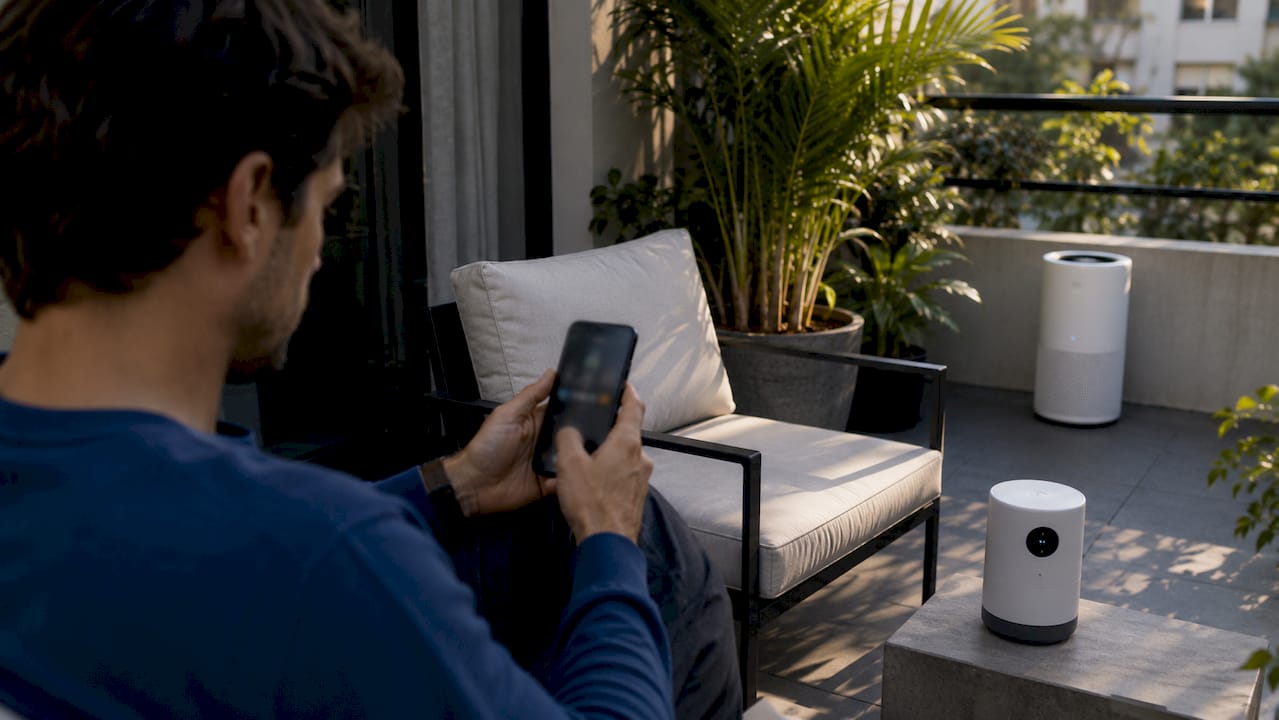
Common smart home integrations include:
| Device | Trigger | Automated Response |
|---|---|---|
| Extraction fan | VOC or PM2.5 spike | Fan activates automatically |
| Air purifier | PM2.5 above threshold | Purifier switches to high speed |
| HVAC system | CO2 above 1,000 ppm | Fresh air intake increases |
| Smart humidifier | Humidity below 40% | Humidifier activates |
| Smart dehumidifier | Humidity above 55% | Dehumidifier activates |
Automation using pollutant thresholds reduces energy consumption by triggering ventilation only when air quality actually requires it, rather than running systems continuously. This is a meaningful cost saving in a climate like the UAE, where HVAC systems run for extended periods. You can review your home’s smart climate control setup to see where monitor-triggered automation fits best.
Most consumer monitors pair with apps from manufacturers such as Airthings, Awair, and IQAir, offering dashboards, historical trends, and push notifications. Some integrate directly with platforms like Apple HomeKit, Google Home, and Amazon Alexa, allowing voice commands and scene-based automation. The home automation potential of these devices is expanding rapidly as sensor accuracy and protocol standardisation improve.
Pro Tip: Set conservative alert thresholds in your monitor’s app. A PM2.5 alert at 15 micrograms per cubic metre gives you time to respond before levels reach the WHO guideline limit of 25 micrograms per cubic metre.
What limitations should you know before relying on smart monitors?
Smart monitors are diagnostic tools, not air cleaners. Monitors only identify pollutant spikes; improving air quality requires separate interventions such as air purifiers, dehumidifiers, or improved ventilation. This distinction is the most commonly misunderstood aspect of home air monitoring.
Consumers should be aware of the following limitations:
- Indicative accuracy only: Consumer devices identify pollution trends but are not designed to replace regulatory-grade reference equipment. Treat readings as directional, not absolute.
- Environmental interference: Temperature, humidity, and nearby emission sources all affect sensor output. A reading spike near a gas cooktop may reflect combustion gases rather than a broader air quality problem.
- Data interpretation challenges: Raw sensor data requires scientific literacy to distinguish a brief spike from sustained exposure. A single high reading is not the same as a chronic air quality problem.
- Sensor drift over time: Electrochemical and metal oxide sensors degrade with use. Most consumer devices require replacement or recalibration after 12–24 months.
- No source identification: A monitor tells you that VOCs are elevated. It does not tell you whether the source is a new piece of furniture, a cleaning product, or an external source entering through ventilation.
“Consumers should regard smart monitors as indicative rather than exact, focusing on trends and patterns over absolute values.” — Indicative Monitoring: A Practical Guide for Air Quality
When readings are consistently elevated despite ventilation and purification efforts, a professional indoor air quality assessment is the appropriate next step. Consumer monitors are a starting point, not a final authority.
Key takeaways
Smart air monitors provide real-time diagnostic data that, when paired with air purifiers, dehumidifiers, and proper ventilation, gives homeowners the information needed to maintain genuinely healthier indoor environments.
| Point | Details |
|---|---|
| Monitors are diagnostic, not corrective | A smart monitor identifies air quality problems; fixing them requires purifiers, ventilation, or dehumidifiers. |
| Sensor placement affects accuracy | Position monitors away from kitchens, windows, and direct airflow for reliable, representative readings. |
| Automation delivers real savings | Threshold-triggered ventilation and purification reduces energy use compared to continuous HVAC operation. |
| Interpret trends, not single readings | One elevated reading is rarely cause for alarm; sustained patterns over hours or days indicate a genuine issue. |
| Consumer devices have cost and accuracy limits | Monitors under $400 provide indicative data; reference-grade accuracy requires professional-grade equipment costing far more. |
Why real-time air awareness changes how you manage your home
Most homeowners I speak with are surprised to discover that their indoor air quality is often worse than the air outside. That counterintuitive reality is what makes smart monitoring genuinely worthwhile, not as a gadget, but as a practical management tool.
The biggest mistake I see is treating a monitor purchase as the solution. You buy the device, watch the numbers, and feel reassured when they look acceptable. But the real value comes from acting on what the data shows. A CO2 reading climbing past 1,200 ppm in a bedroom at night is not just a number. It explains why you wake up feeling unrested. A VOC spike every time you run the dishwasher points to a ventilation gap worth fixing.
The second mistake is over-interpreting individual readings. I have seen people panic over a brief PM2.5 spike from frying an egg, when the reading normalised within ten minutes of opening a window. Focus on sustained trends across hours and days. That is where the health-relevant information lives.
For UAE homeowners specifically, the combination of sealed, air-conditioned interiors and high ambient dust makes continuous monitoring particularly relevant. The home air quality guide for UAE conditions is a practical starting point for understanding what local air quality challenges look like and how to address them systematically.
The technology is good enough in 2026 to be genuinely useful. The devices that pair sensor data with automated device control are the ones worth investing in. A monitor that simply displays numbers is less valuable than one that triggers your air purifier when PM2.5 rises, or activates your dehumidifier when humidity climbs past 55%.
— Nevel
How Climatepro helps you act on what your monitor finds

A smart monitor tells you what is wrong with your indoor air. Climatepro’s range of air purifiers, dehumidifiers, and humidifiers gives you the means to fix it. The Honeywell Air Touch P2 is a reliable choice for households dealing with PM2.5, dust, and allergens, priced at AED 705 and available for delivery across Dubai, Abu Dhabi, Sharjah, and all UAE emirates. For humidity control, Climatepro’s dehumidifier range pairs directly with monitor data to keep moisture levels within the 40–55% range that prevents mould and dust mite growth. Browse the full air purifier catalogue to find a device matched to your room size and air quality priorities.
FAQ
What does a smart air monitor actually measure?
Smart air monitors measure particulate matter (PM2.5 and PM10), VOCs, CO2, humidity, and temperature in real time. Some models also detect carbon monoxide and formaldehyde depending on the sensor configuration.
How accurate are consumer smart air monitors?
Consumer monitors provide indicative readings rather than laboratory-grade accuracy. They are reliable for identifying trends and pollutant spikes but are not designed to replace reference-grade regulatory equipment costing $15,000 or more.
Can a smart air monitor improve my air quality on its own?
No. A smart monitor diagnoses air quality problems but cannot clean or correct them. Improving air quality requires pairing monitor data with air purifiers, dehumidifiers, or improved ventilation.
How do smart monitors connect with other home devices?
Most smart monitors connect via Wi-Fi and integrate with platforms such as Apple HomeKit, Google Home, and Amazon Alexa. They can trigger automated responses in air purifiers, extraction fans, and HVAC systems when pollutant thresholds are crossed.
How often should i recalibrate or replace my smart air monitor?
Electrochemical and metal oxide sensors in consumer monitors typically require recalibration or replacement after 12–24 months of use. Check your device manufacturer’s guidelines, as sensor drift can cause readings to become less reliable over time.
Recommended
- Step by step air quality assessment for homes — Blog | ClimatePro UAE
- Humidifier for dry air: your practical home guide — Blog | ClimatePro UAE
- Buy Levoit EverestAir Smart Air Purifier in Dubai | Best Price AED 1,169 | ClimatePro UAE
- Home air quality improvement guide for UAE homeowners — Blog | ClimatePro UAE