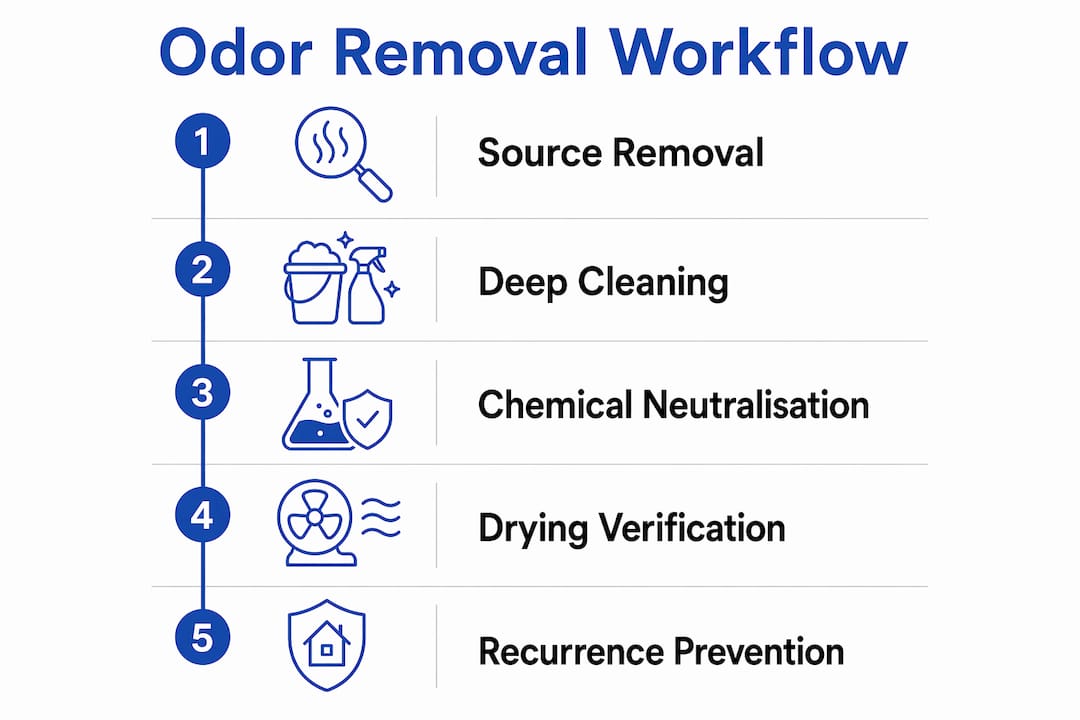
An odor removal workflow is a structured, three-stage process covering source removal, deep cleaning, and chemical neutralisation to permanently eliminate indoor smells. Masking odors with air fresheners does not solve the problem. Industry best practices recommend removing the physical source first, then cleaning with agents like enzymatic cleaners, and finally verifying the result through sensory evaluation after full drying. This guide walks homeowners and renters through each stage, including the tools, techniques, and verification steps needed for lasting indoor freshness.
What tools and materials do you need for an effective odor removal workflow?
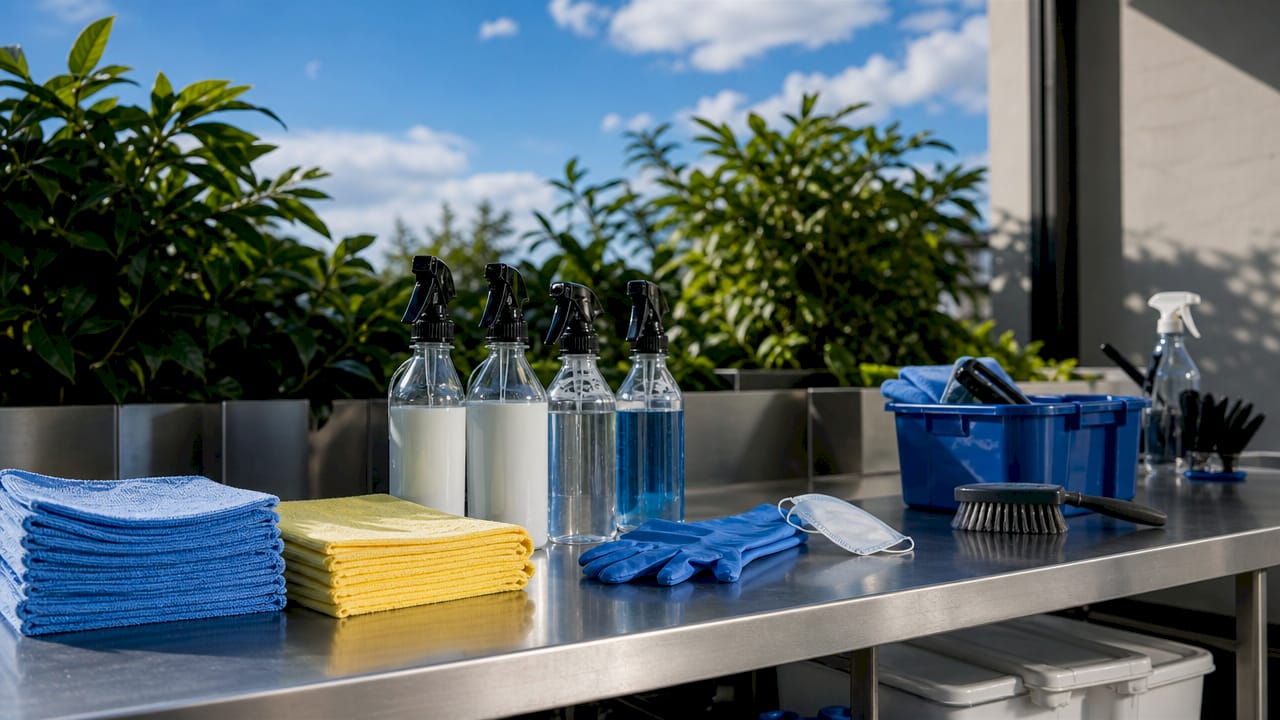
Preparing the right materials before you start saves time and prevents incomplete treatment. Arriving at a stubborn odor source without the correct cleaner is one of the most common reasons the smell elimination process fails on the first attempt.
Cleaning agents
- Enzymatic cleaners: Break down organic matter such as pet urine, food spills, and mould. They require a dwell time of 10–30 minutes for standard odors, and up to 24–48 hours for deep-set protein-based odors.
- White vinegar: Neutralises alkaline odor molecules on contact. The vinegar scent dissipates quickly and carries odor compounds with it as it dries.
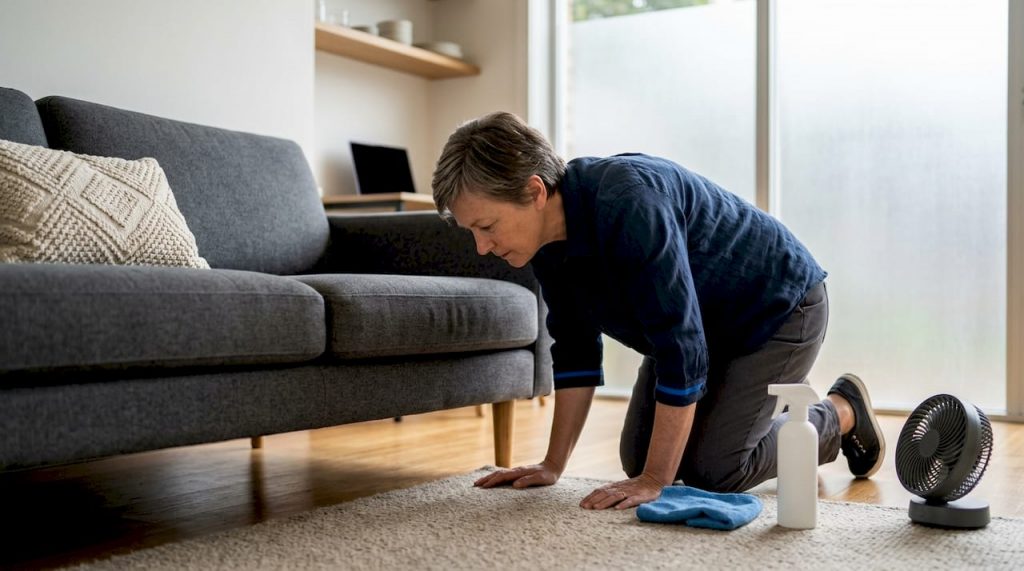
- Baking soda: Absorbs acidic odors from fabrics, carpets, and upholstery. Leave it in place for several hours before vacuuming.
- Activated charcoal: Adsorbs a broad range of volatile organic compounds from the air. Place sachets in enclosed spaces like wardrobes, cars, or under sinks.
Tools and safety gear
| Tool | Purpose | Best use |
|---|---|---|
| Microfibre cloths | Apply and absorb cleaning agents | Hard surfaces, upholstery |
| Scrub brushes | Agitate cleaner into porous surfaces | Grout, carpet fibres, timber |
| Vacuum cleaner | Remove dry residue and baking soda | Carpets, mattresses, soft furnishings |
| Fans and ventilation aids | Accelerate drying and air exchange | All rooms post-treatment |
| Rubber gloves | Protect skin from cleaning agents | All cleaning stages |
| P2 dust mask | Prevent inhalation of mould spores or fumes | Mould remediation, chemical treatments |
Pro Tip: Always open windows and run a fan during and after treatment. Adequate ventilation speeds up drying, which is critical for accurate sensory evaluation once the process is complete.
How do you identify and remove the source of indoor odors effectively?
Source removal is the most critical step in any smell elimination process. Cleaning and neutralising without first removing the source guarantees the odor returns.
Map the odor before treating it
Experts recommend mapping odor patterns and evaluating air pathways before applying any treatment. This means forming a hypothesis about where the smell originates, then testing it systematically. Walk through the affected area at different times of day. Odors often intensify when HVAC systems run, which points to duct contamination rather than a surface source.
Common indoor odor sources and how to find them
- Rubbish and food waste: Check bins, compost containers, and areas behind appliances where food debris collects.
- Pet accidents: Use a UV torch in a darkened room to locate dried urine deposits on carpet, skirting boards, and subfloor areas.
- Mould and mildew: Inspect areas with poor airflow, including under sinks, behind washing machines, and inside wall cavities near plumbing.
- HVAC systems and ducts: Neglected air systems redistribute odors throughout the home even after surface cleaning. Check filters, drip trays, and duct openings.
- Spills absorbed into subfloor: Liquid odors that penetrate carpet underlay or timber subfloor require treatment at depth, not just at the surface.
Once the source is confirmed, remove it physically. Bag and dispose of contaminated materials. Clean the area surrounding the source before moving to the neutralisation stage.
Pro Tip: Before applying any cleaner, block off adjacent rooms and note whether the smell is stronger near vents or near surfaces. This single test tells you whether the odor source is in the air system or on a surface, which changes the entire treatment approach.
What are the best cleaning and neutralisation methods for complete odor elimination?
Chemical neutralisation is the key to effective odor control. It transforms odor molecules into inert compounds rather than covering them with a competing scent.
Masking versus neutralisation
Fragrance-based air fresheners bond temporarily with odor molecules and dilute the perceived smell. They do not change the chemical structure of the odor compound. Neutralisation, by contrast, uses chemical reactions, biological digestion, or adsorption to permanently alter or capture the odor molecule. The difference matters because masked odors return as soon as the fragrance dissipates.
Enzymatic cleaners for organic odors
Enzymatic cleaners are the most effective option for protein-based odors such as pet urine, vomit, and blood. The enzymes digest the proteins that produce the smell. Quick surface cleaning without adequate dwell time leaves the odor source intact beneath the surface. For deep-set contamination, saturate the area fully and keep it moist for 24–48 hours.
Neutralisation method comparison
| Method | How it works | Best for | Limitation |
|---|---|---|---|
| Enzymatic cleaners | Biological digestion of organic compounds | Pet urine, food spills, mould | Requires long dwell time |
| White vinegar | Neutralises alkaline odor molecules | Smoke, cooking odors, general surfaces | Strong initial smell |
| Baking soda | Absorbs acidic odor compounds | Carpets, fabrics, enclosed spaces | Slow-acting, not for liquids |
| Activated charcoal | Adsorbs volatile organic compounds from air | Wardrobes, cars, small rooms | Must be replaced regularly |
| Oxidising agents | Chemically break down odor molecules | Severe or widespread contamination | Requires careful handling |
Pro Tip: Combine methods for persistent odors. Apply an enzymatic cleaner first to address the biological source, then follow with a white vinegar rinse to neutralise any remaining alkaline residue. This two-step approach covers a broader range of odor compounds than either method alone.
For ongoing air quality management after cleaning, Climatepro’s guide on odour control solutions covers additional methods suited to residential settings.
How do you verify that odor removal was successful?
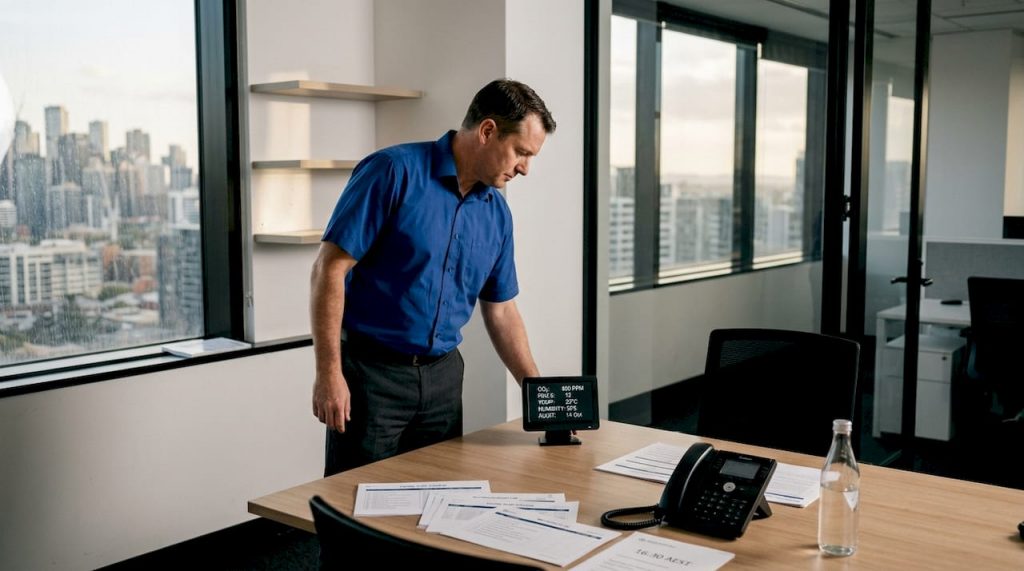
Verification is the stage most homeowners skip, and it is the reason odors appear to return. Professional restoration treatments can take hours to days. Assessing the result before the treated area is fully dry produces a false reading because residual moisture traps and temporarily suppresses odor compounds.
Steps for accurate verification
- Allow the treated area to dry completely before conducting a sensory evaluation. Open windows and run fans to accelerate drying.
- Re-enter the room after at least two hours of ventilation and assess the smell with fresh senses. Prolonged exposure dulls your ability to detect low-level odors.
- Check air vents and return ducts. If the smell reappears when the HVAC system runs, the air system requires separate treatment.
- Repeat the treatment if any odor remains. Repeated treatments are standard practice for deep-set contamination, not a sign of failure.
- Document the process. Recording before-and-after observations improves troubleshooting and helps you identify which method worked if the odor recurs.
Preventing recurrence
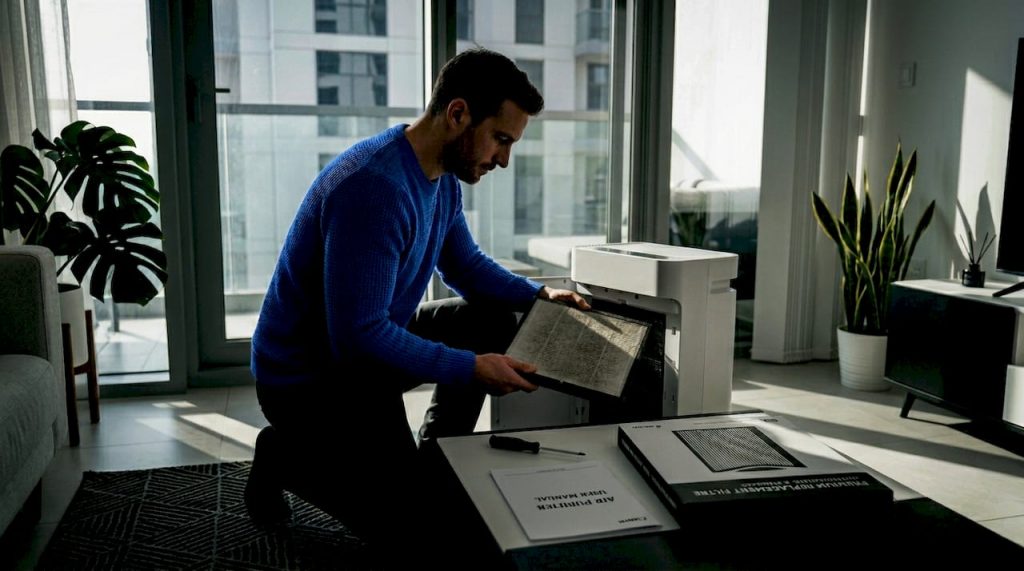
HVAC filter maintenance is the single most overlooked factor in odor recurrence. A dirty filter recirculates captured odor particles back into the room. Replace or clean filters on the schedule recommended by the manufacturer. For homes with persistent odor issues, an air purifier with a HEPA and activated carbon filter provides continuous odor capture between cleaning cycles. Climatepro’s home air quality guide covers filter maintenance and air purification strategies in detail.
Pro Tip: Ask a person who was not present during cleaning to assess the room. Your own senses adapt to residual odors during the process. A fresh nose gives a far more reliable result.
Key takeaways
A complete odor removal workflow requires source removal, chemical neutralisation, and verified drying before any result can be trusted.
| Point | Details |
|---|---|
| Source removal comes first | Cleaning without removing the physical source guarantees the odor returns. |
| Neutralisation beats masking | Chemical and enzymatic treatments permanently alter odor molecules; air fresheners do not. |
| Dwell time determines results | Enzymatic cleaners need 24–48 hours of moist contact for deep-set organic odors. |
| HVAC systems need attention | Neglected ducts and filters redistribute odors after surface treatment is complete. |
| Verify after full drying | Sensory evaluation before the area dries produces inaccurate results and false confidence. |
What I have learned from years of following an odor removal workflow
The most consistent mistake I see is treating odor removal as a single cleaning event rather than an investigative process. People apply a product, notice an improvement, and stop. Two days later the smell is back, and they assume the product failed. In most cases the product worked fine. The source was simply not fully removed, or the HVAC system was redistributing the odor from a different location.
The second mistake is underestimating dwell time. Enzymatic cleaners are not spray-and-wipe products. Applying them correctly means keeping the surface moist and undisturbed for an extended period. Most people wipe the area dry within minutes, which stops the biological process before it completes.
My strongest advice is to treat the first attempt as a diagnostic run. Note what changed, what did not, and where the smell seems to originate after treatment. That information is more useful than any single product. Combining natural agents like baking soda and vinegar with a quality enzymatic cleaner covers the widest range of odor compounds and gives you the best chance of a permanent result on the second attempt if the first is incomplete.
— Nevel
Climatepro air purifiers as part of your odor control plan
After completing a thorough odor removal process, an air purifier maintains the freshness you have worked to achieve. Surface cleaning addresses the source, but residual odor molecules remain airborne for hours or days afterward.

Climatepro stocks the Honeywell Air Touch range, including the Honeywell Air Touch P2 at AED 705 and the Honeywell Air Touch P1 at AED 591. Both models use multi-stage filtration combining HEPA and activated carbon layers to capture residual odor compounds and fine particles. For a broader selection suited to different room sizes, the full air purifier range is available with delivery across Dubai, Abu Dhabi, Sharjah, and all UAE emirates.
FAQ
What are the three stages of an odor removal workflow?
The three stages are source removal, deep cleaning with appropriate agents, and chemical neutralisation. Verification through sensory evaluation after full drying confirms the process is complete.
How long do enzymatic cleaners need to work?
Standard enzymatic cleaners require a dwell time of 10–30 minutes. For deep-set organic odors like pet urine, full saturation with a moist dwell time of 24–48 hours is necessary for complete protein digestion.
Why does the odor return after cleaning?
Odors return when the physical source is not fully removed, when the HVAC system redistributes captured odor particles, or when the treated area is assessed before it has dried completely.
Does white vinegar actually neutralise odors?
White vinegar breaks down alkaline odor molecules on contact and neutralises them chemically. The vinegar scent dissipates as it dries, carrying odor compounds with it rather than simply masking them.
How do I stop odors from coming back long-term?
Replace HVAC filters on schedule, address moisture issues that support mould growth, and use an air purifier with an activated carbon filter to capture airborne odor molecules between cleaning cycles.