
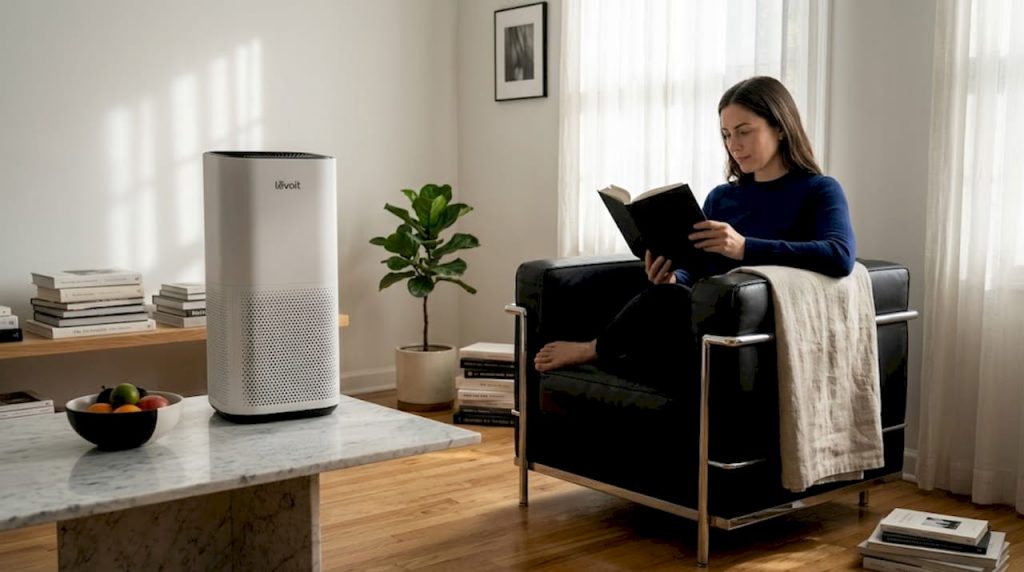
If you assume all premium air purifiers perform roughly the same, the Levoit Everest Air will challenge that view quickly. This Levoit Everest Air review covers the details that matter most to buyers considering a large-room purifier: particulate removal speed, sensor accuracy, filter costs, and how it stacks up against alternatives. The EverestAir sits at the top of Levoit’s consumer range, and while its specifications look impressive on paper, the real question is whether its performance and feature set justify the price for the spaces you need to clean.
Table of Contents
- Key takeaways
- Levoit Everest Air review: performance breakdown
- Design, build quality, and placement
- Filter technology and long-term costs
- Smart features and app integration
- How EverestAir compares to similar models
- My take on the EverestAir
- Find the right purifier for your space
- FAQ
Key takeaways
| Point | Details |
|---|---|
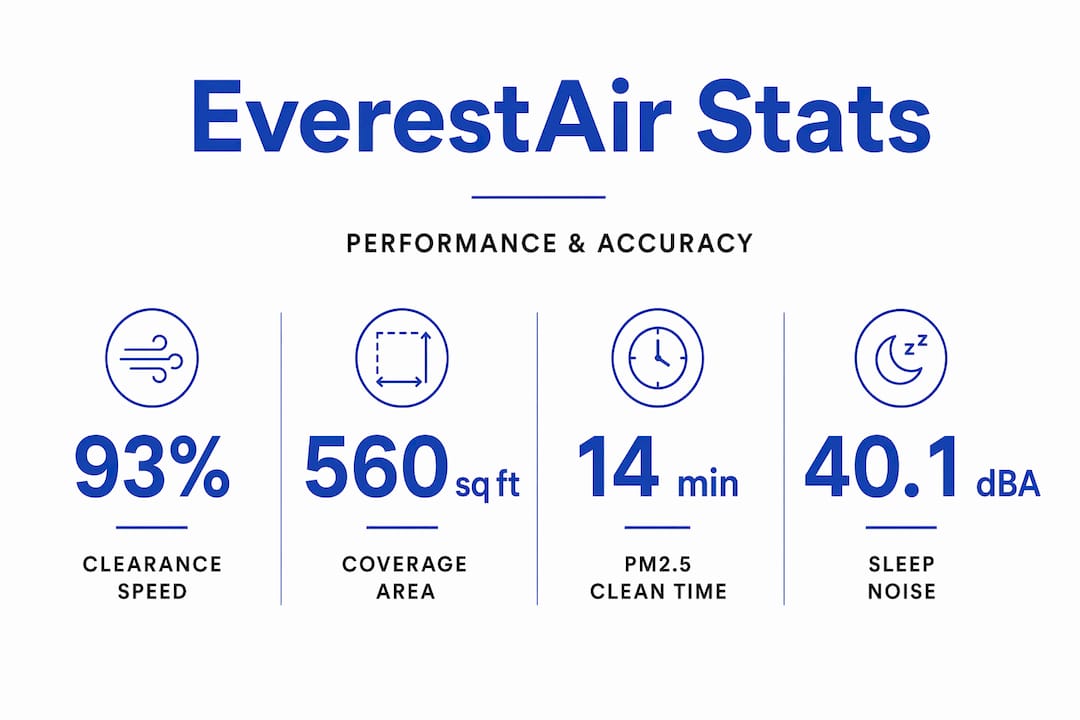
| Fast particulate clearance | EverestAir clears PM2.5 to near-zero in a 560 sq ft room within 14 minutes on Turbo mode. |
| Precision sensor accuracy | The AirSight Plus laser sensor matches professional-grade environmental monitors for PM1.0 and PM2.5 readings. |
| Long filter lifespan | The main filter lasts up to 15 months, reducing how often you need to buy replacements. |
| Quieter than comparable models | Sleep Mode runs at 40.1 dBA, quieter than its closest Levoit sibling, the Core 600S. |
| Filter costs add up | Replacement filters range from $50 to $100, so factor this into your total ownership budget. |
Levoit Everest Air review: performance breakdown
The performance data on this machine is genuinely strong. In independent testing, the EverestAir reduces PM1.0 and PM2.5 to near-zero in a 560 sq ft room within 14 minutes on Turbo mode. That is a fast result for a room that size, and it reflects both the high CADR rating and the quality of the H13 HEPA filtration working alongside the blower system.
The sensor is a standout feature. Most consumer air purifiers use infrared particle sensors, which can misread humidity or larger dust particles as fine particulate matter. The EverestAir uses an AirSight Plus laser sensor that matches professional environmental monitors for PM1.0 and PM2.5 accuracy. This matters because your purifier’s Auto mode decisions are only as good as the data feeding them. Inaccurate sensing leads to the machine running too hard or not hard enough.
On noise, the EverestAir holds a clear advantage over comparable models. Key measurements to know:
- Sleep Mode: 40.1 dBA on EverestAir versus 43.9 dBA on the Core 600S, a meaningful difference in a quiet bedroom
- Mid-range speeds: Noticeably restrained, making sustained daytime use comfortable in living areas
- Turbo mode: Louder, as expected, but the speed of clearance means you rarely need to run it for long
The EverestAir scores 93 out of 100 for particulate clearance speed and sensing accuracy, placing it among the top performers in the large-room consumer category. That score reflects real-world consistency, not just peak performance under controlled conditions.
Design, build quality, and placement
The EverestAir is a tall, upright unit with a matte finish and a touch control panel at the top. It reads as a deliberate design choice: the machine is meant to sit in an open space rather than be tucked into a corner. The touch panel is responsive and clearly labelled, which reduces the learning curve for new users.
One feature that genuinely improves real-world air quality outcomes is the adjustable directional vents. The vents adjust from 45° to 90°, allowing you to direct airflow toward specific zones in a complex room layout. Open-plan spaces with irregular shapes benefit from this considerably. Most large-room purifiers simply blow air in a fixed direction and rely on passive circulation to do the rest.
On mobility, the machine weighs 20.7 lbs and uses one-way bottom wheels. This is adequate for moving it from room to room, but the one-directional wheel design makes repositioning slightly awkward compared to units with swivel castors. If you plan to move it frequently, this is worth knowing in advance.
Pro Tip: Position the EverestAir at least 30 cm from walls and furniture to allow full airflow from all sides. Placing it in an open central location, rather than against a wall, noticeably improves how quickly it clears particulate matter in large rooms.
Build quality sits comfortably in the mid-to-premium range. It does not quite match higher-tier brands in terms of materials and finish, but the construction is solid and the unit feels durable under normal household conditions. For most buyers, it represents a reasonable quality-to-price trade-off.
Filter technology and long-term costs
The EverestAir uses a three-stage filtration system:
- Washable pre-filter: Captures large particles like pet hair and lint. Washable and reusable, which reduces ongoing costs.
- H13 HEPA filter: Removes fine particulate matter down to 0.3 microns, covering pollen, dust mite debris, smoke, and most bacteria.
- Activated carbon filter: Handles odours, VOCs, and gas-phase pollutants. The rectangular filter design improves odour removal compared to cylindrical filters used in other Levoit models, because it provides greater surface area contact with air passing through.
The main filter lasts up to 15 months under standard conditions, which is longer than most consumer purifiers. Many units in this class require replacement every six to twelve months. That extended lifespan reduces the frequency of replacement purchases, though not the cost when it does come time to replace.
Filter replacements cost between $50 and $100, depending on where you purchase them. Over a three-year period, that adds up to between $120 and $240 in filter costs alone. This is a detail consumers often overlook when comparing purifiers purely on purchase price. The EverestAir’s longer filter life does partially offset this, but buyers should model total ownership costs before deciding.

The VeSync app sends automatic filter change notifications based on actual usage hours, so you are not guessing when to replace it. The pre-filter can be rinsed under water, allowed to dry, and reinstalled, which is straightforward maintenance.
Smart features and app integration
The EverestAir connects to WiFi and operates through the VeSync app, which is the same platform used across Levoit’s smart home product range. Setting it up is a standard process:
- Download the VeSync app and create an account.
- Connect the purifier to your 2.4 GHz home WiFi network through the in-app pairing process.
- Enable Auto mode, scheduling, or sleep settings from the app dashboard.
- Link the app to Amazon Alexa or Google Home if you want voice control.
- Monitor real-time PM2.5 and PM1.0 readings directly from the app, including historical air quality data.
Auto mode uses the AirSight Plus sensor readings to adjust fan speed in real time. In practice, it responds within seconds to cooking smoke, cleaning products, or outdoor pollution spikes entering through open windows. This responsiveness is a direct result of the sensor accuracy discussed earlier.
The display panel includes an ambient light sensor that dims automatically in low-light conditions, which prevents the unit from functioning as an unintended night light in bedrooms. Sleep Mode locks fan speed at its lowest setting and disables the display, making it suitable for light sleepers.
Pro Tip: Use the VeSync app’s scheduling feature to run the EverestAir on a higher fan speed for 30 to 45 minutes before you return home in the evening. This pre-clears accumulated daytime particulate matter so you are walking into already-clean air.
The noise optimisation in lower speed modes makes the EverestAir a practical choice for bedrooms and home offices where sustained background noise becomes fatiguing over time.
How EverestAir compares to similar models
Understanding where the EverestAir sits relative to alternatives helps clarify its value proposition.
| Feature | Levoit EverestAir | Levoit Core 600S |
|---|---|---|
| Noise in Sleep Mode | 40.1 dBA | 43.9 dBA |
| Max power consumption | 70W | 49W |
| Filter lifespan | Up to 15 months | Up to 12 months |
| Sensor type | AirSight Plus laser | Infrared |
| Directional vents | Yes, 45° to 90° | No |
| Approximate price | $379.99 | Lower |
The Core 600S draws 49W at maximum speed compared to the EverestAir’s 70W. In a climate like the UAE where air purifiers often run continuously, that 21W difference compounds over months of operation. On the other hand, the EverestAir’s superior sensor, quieter operation, and directional vent control justify the premium for buyers who will use Auto mode frequently or place the unit in a living space where precision matters.
For those exploring alternatives outside the Levoit range, the Levoit Core 600S covers large spaces at a lower price point, while options like the Medify Air MA-112 suit buyers who want professional-grade filtration performance.
Key points to consider when deciding:
- The EverestAir suits open-plan spaces above 400 sq ft where rapid clearance and accurate auto-response matter.
- For rooms under 300 sq ft, the Core 600S provides comparable filtration at lower cost and energy use.
- If build quality and brand reputation at the premium end are priorities, other large-room purifiers may satisfy that expectation more fully.
My take on the EverestAir
I’ve reviewed enough air purifiers to know that the headline specifications rarely tell the full story. What stands out about the EverestAir is the combination of genuinely accurate sensing and practical airflow control. The directional vent adjustment is one of those features that sounds minor but changes how effectively the machine handles real rooms, not idealised test chambers.
Where I’d caution buyers is on two fronts. The physical size must be planned for carefully. This is not a unit you can tuck beside a bookshelf and forget about. It needs space to breathe and a deliberate placement strategy. The second concern is the filter cost over time. Many buyers compare unit prices, choose the EverestAir, and then encounter the $50 to $100 replacement cost without having budgeted for it. Factor that in from the start.
For buyers who need a genuinely capable large-room purifier with precision sensing, the EverestAir makes sense. For those running it in a smaller room or prioritising energy efficiency above other factors, the Core 600S or a well-specced alternative may serve better. The accuracy in particle sensing is the EverestAir’s most defensible advantage, and if that feature matters to you, the premium is reasonable.
— Nevel
Find the right purifier for your space
If you are weighing up options after reading this Everest air purifier review, Climatepro stocks a broad range of air purifiers suited to homes, offices, clinics, and commercial spaces across the UAE.

From premium large-room units to compact solutions for smaller areas, Climatepro carries brands including Levoit, Honeywell, Blueair, and Medify Air, with delivery available across Dubai, Abu Dhabi, Sharjah, and all other emirates. You can browse the full selection of air purifiers in the UAE and filter by room size, filtration type, and budget. If you are considering a Honeywell alternative at a competitive price, the Honeywell Air Touch P2 is worth comparing. Climatepro also supplies replacement filters, so ongoing maintenance is covered from the same source.
FAQ
How quickly does the EverestAir clean a large room?
On Turbo mode, the EverestAir reduces PM1.0 and PM2.5 to near-zero levels in a 560 sq ft room within 14 minutes. Real-world clearance times vary depending on pollutant source and room layout.
Is the Levoit EverestAir quieter than the Core 600S?
Yes. The EverestAir operates at 40.1 dBA in Sleep Mode compared to 43.9 dBA on the Core 600S, making it the quieter option for bedrooms and home offices.
How long do EverestAir filters last?
The main filter lasts up to 15 months under typical usage conditions, which is longer than most consumer-grade air purifiers. The washable pre-filter is reusable and does not need replacing.
What does the AirSight Plus sensor do differently?
The AirSight Plus laser sensor detects PM1.0 and PM2.5 particles at an accuracy level that matches professional environmental monitors, giving Auto mode more reliable data to work with than standard infrared sensors provide.
Is the Levoit EverestAir worth the price?
At $379.99, it scores 93 out of 100 for performance and sensing accuracy. It is worth the price for buyers who need rapid large-room purification and precise air quality data, but buyers with smaller spaces or tighter energy budgets should compare it against lower-cost Levoit models first.
Recommended
- Buy Levoit EverestAir Smart Air Purifier in Dubai | Best Price AED 1,169 | ClimatePro UAE
- Buy Levoit EverestAir-P Carbon Replacement Filter in Dubai | Best Price AED 163 | ClimatePro UAE
- Levoit 300 S Air Purifier: Full Review & Buying Guide — Blog | ClimatePro UAE
- Levoit Vital 100S Review: Specs, Pros & Cons — Blog | ClimatePro UAE