

An air conditioner normally removes moisture from indoor air as it cools. If your room still feels sticky with the AC running, the fault sits with the equipment, its settings, or a moisture source you haven’t accounted for. Most cases resolve with a fan setting change, a filter swap, or a cleared drain line, not a full system replacement.
TL;DR:
- Ensuring your AC has a fan set to auto, cleaning or replacing filters, and unclogging the drain line can significantly reduce indoor humidity issues.
- Humidity levels above 60% can promote mold growth and odors, so using a hygrometer helps monitor and keep it within the 30-50% comfort range.
- An oversized or short-cycling AC often fails to dehumidify properly, even if the room feels cool, requiring professional assessment.
- Indoor moisture from activities like cooking or drying laundry adds to the load, which may overwhelm the AC’s dehumidification capacity.
- Routine maintenance, including filter changes and drain checks, can prevent most humidity-related problems and avoid costly repairs.
Table of Contents
- Why does humidity build up in an AC room?
- What’s the ideal humidity level for a room with AC?
- Common reasons a room feels humid with the AC running
- Step-by-step fixes you can try today
- Portable or whole-house dehumidifier: which one do you need?
- Maintenance checklist and when to call a technician
- Balancing comfort, energy use and humidity control
- Get your humidity under control with ClimatePro UAE
- Where this advice comes from
- Sources
Why does humidity build up in an AC room?
An air conditioner cools by pulling warm indoor air across a refrigerant-filled evaporator coil. That coil is cold enough that water vapour in the air condenses on its surface, the same way a cold drink sweats on a humid day. This process removes latent heat (the energy tied up in moisture) alongside sensible heat (the temperature drop you actually feel). Both matter for comfort, but latent removal is what keeps a room from feeling clammy even at a comfortable temperature.
Run time and coil temperature both affect how much moisture leaves the room. A unit that cycles off quickly, because it’s oversized for the space, never runs long enough to strip meaningful moisture from the air, even though the thermostat setpoint gets hit fast. Several mechanical issues choke this process further:
- A fan set to run continuously rather than cycling with the compressor
- Dirty filters or a grimy evaporator coil restricting airflow
- Low refrigerant charge, which raises coil temperature and cuts moisture removal
What’s the ideal humidity level for a room with AC?
Indoor relative humidity is generally most comfortable between 30% and 50%, a range ASHRAE treats as the standard comfort band for most climates. Sustained readings above 60% create conditions where mould and dust mites thrive, with the EPA listing moisture control as the primary defence against indoor mould growth. Air that’s too dry causes its own problems, including dry sinuses and irritated skin, and Sleep Foundation research ties comfortable humidity levels to better sleep quality.
A cheap hygrometer settles the argument in minutes. Place it away from direct airflow from vents, away from windows, and at roughly chest height, then check it at different times of day.
- Below 30%: dry throat, static shocks, cracked skin
- 30 to 50%: the comfort zone for most people and most furnishings
- Above 60%: condensation on windows, musty odours, visible mould risk
Common reasons a room feels humid with the AC running
Before assuming the unit is broken, work through the usual suspects in order of likelihood.
- Fan set to ON instead of AUTO. A continuously running blower pushes air across a wet coil between cooling cycles, re-evaporating collected moisture straight back into the room.
- Dirty filters or a fouled evaporator coil. Restricted airflow reduces the surface area available for condensation, so less moisture gets pulled from the air even while the room cools.
- A clogged condensate drain. Standing water near the indoor unit, a musty smell, or a drain pan that never seems to empty all point to a blockage backing moisture up into the airstream.
- An oversized system short-cycling. A unit that reaches setpoint in minutes and shuts off hasn’t run long enough to dehumidify properly, regardless of how cold the room feels.
- Duct leaks or low refrigerant. Leaking ducts pull in unconditioned, moisture-laden air; low refrigerant raises coil temperature and weakens condensation.
- Indoor moisture sources. Cooking, showering, drying laundry indoors, and even a room full of plants all add water vapour that a struggling AC can’t keep pace with.
Step-by-step fixes you can try today
Work through these in order. Most humidity complaints resolve before you reach step four.
- Switch the thermostat fan from ON to AUTO. This is the single easiest fix and often resolves perceived humidity problems within an hour. Wait 30 to 60 minutes, then recheck your hygrometer.
- Replace or clean the air filter. A filter clogged with dust restricts airflow across the coil. Check monthly during heavy use and replace every one to three months depending on the type.
- Inspect the condensate drain line. Standing water or a musty smell near the indoor unit usually means a blockage. A cup of diluted vinegar poured into the drain access point can clear light algae buildup; switch the unit off first and call a technician if water backs up further.
- Open all vents and clear obstructions. Furniture or rugs blocking supply vents restrict the airflow the system needs to work efficiently.
- Run exhaust fans during cooking and showering. Venting moisture at the source stops it from ever reaching the AC’s workload.
- Add a portable dehumidifier to the worst-affected room. Run it centrally with doors closed for the fastest result while you address the underlying cause.
Pro Tip: Keep a simple log of your hygrometer reading each morning for a week before and after any fix. A number beats a feeling when you’re trying to work out whether a change actually worked.
Portable or whole-house dehumidifier: which one do you need?
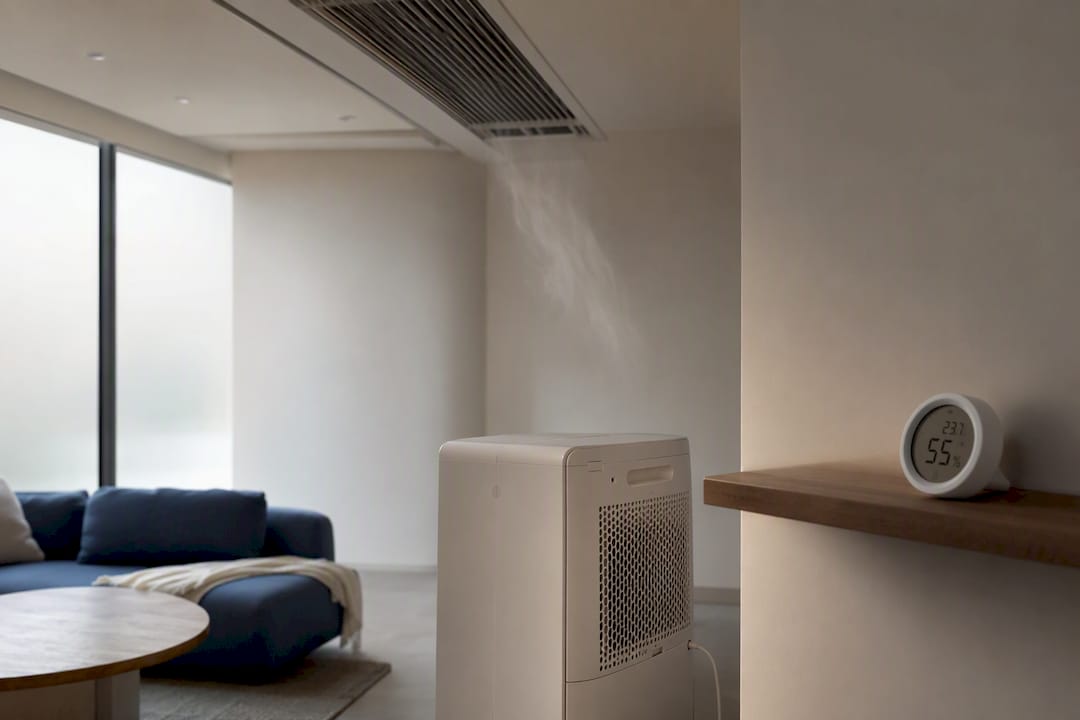
A single stuffy bedroom or a basement that never quite dries out is a job for a portable unit.
Sizing a portable unit comes down to room area and daily moisture load: small rooms and mildly damp conditions need less capacity than a large, consistently humid space. Beyond capacity, a few practical details separate a good buy from a frustrating one:
- Drain type: gravity drains suit ground-floor rooms; a built-in pump matters for upstairs installs where you can’t run a hose to a floor drain
- Noise level, especially for bedrooms or shared offices
- Auto humidistat so the unit cycles off once it hits your target range instead of running continuously
- Continuous drain option for spaces where emptying a tank daily isn’t practical
Our guide on choosing a dehumidifier breaks down capacity ratings against room size in more detail if you’re comparing specific models.
Maintenance checklist and when to call a technician
A short routine catches most humidity problems before they become uncomfortable, or expensive.
- Monthly: check or replace filters; confirm the condensate drain is flowing freely
- Pre-season: have the coil inspected, refrigerant levels checked, and blower function tested before peak cooling months
- Watch for: ice forming on the coil, constant short-cycling, or water pooling near the indoor unit
| Sign | Likely cause | Action |
|---|---|---|
| RH stays above 60% after DIY steps | Refrigerant or sizing issue | Book a technician |
| Musty smell near indoor unit | Clogged condensate drain | Flush or clear drain, monitor |
| Ice on evaporator coil | Airflow restriction or low refrigerant | Switch off unit, call a technician |
| Room cools fast but stays damp | Oversized unit short-cycling | Professional load assessment |
If your readings stay above 60% after working through the fan, filter, and drain checks, the problem has likely moved beyond what a filter change or vinegar flush can solve, and it’s time to bring in a technician for a proper diagnostic.
Balancing comfort, energy use and humidity control
Chasing a single perfect number is less useful than staying within the 35 to 50% band and accepting small seasonal drift. Running a dehumidifier alongside your AC often costs less in energy than dropping the thermostat a few degrees to “feel” drier, because temperature and moisture are separate problems with separate fixes. The cheapest long-term fix is still routine maintenance: a clean filter and clear drain prevent most of the expensive failures this article covers.
— Nevel
Get your humidity under control with ClimatePro UAE
If you’ve worked through the checks above and still need a dedicated fix, Climatepro stocks portable and whole-room dehumidifiers sized for everything from a single humid bedroom to a larger living space, alongside genuine replacement filters for the units that just need better airflow to start dehumidifying properly again.

Browse the dehumidifier range for gravity drain and pump models, or check the humidifier category if dry air is the actual complaint in another part of your property. For anything involving refrigerant levels or system sizing, that’s a job for a licensed technician, not a retail fix, but for filters, portable dehumidifiers, and day-to-day air quality gear, Climatepro’s catalogue is built to match the room, not just the budget. Order online for delivery, or get in touch if you need help sizing a unit correctly before you buy.
Where this advice comes from
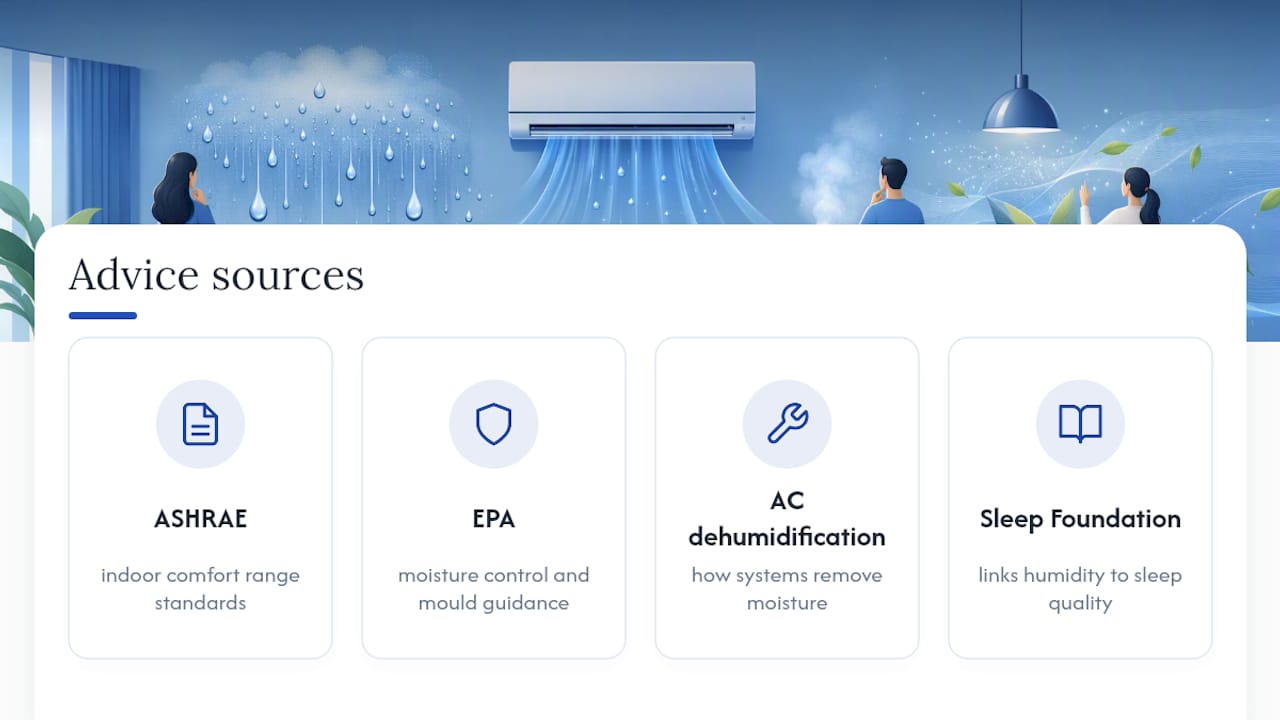
Standards and practical guidance for this article draw on ASHRAE’s technical guidance on indoor comfort ranges, EPA guidance on moisture control and mould prevention, a technical explainer on how AC systems actually dehumidify, and Sleep Foundation research linking humidity levels to sleep quality. Together they cover the standards, health guidance, and mechanical detail behind the fixes in this piece.
Sources
- EPA — ways to control moisture in your home
- The science of how AC controls humidity
- Sleep Foundation — humidity and sleep
Recommended
- Humidity control workflow: your step-by-step home guide — Blog | ClimatePro UAE
- Why manage dry air: health, home, and what to do — Blog | ClimatePro UAE
- Relative humidity explained: what it is and why it matters — Blog | ClimatePro UAE
- Why regulate office humidity: a guide for facility managers — Blog | ClimatePro UAE