
Dry indoor air is behind more everyday discomfort than most people realise. Cracked lips, an irritated throat, itchy skin, static electricity on clothing and furniture — these are not isolated annoyances but consistent signals that your home’s relative humidity is too low. A humidifier for dry air introduces water vapour into the room, raising moisture levels to a range where your body, your sinuses, and even your timber furniture can function without stress. This guide covers the main humidifier types, how to choose between them, how to maintain them safely, and how to confirm that your indoor air is actually improving.
Table of Contents
- Key takeaways
- Understanding humidity levels at home
- Types of humidifiers and how to choose
- Setting up and maintaining your humidifier
- Troubleshooting common humidifier problems
- Recognising the benefits in your home
- My take on humidifiers and what most guides get wrong
- Find the right humidifier for your home with Climatepro
- FAQ
Key takeaways
| Point | Details |
|---|---|
| Target the right humidity range | Keep indoor relative humidity between 30% and 50% to balance comfort and prevent mould growth. |
| Match the humidifier type to your needs | Cool mist models suit most households, but each type carries specific maintenance and water quality requirements. |
| Daily maintenance is non-negotiable | Change the water tank daily and descale regularly to prevent microbial growth and mineral build-up. |
| Use a hygrometer to monitor levels | Guessing is not reliable. A hygrometer confirms whether your humidifier is helping or creating new problems. |
| Distilled water reduces health risks | Tap water in ultrasonic models releases minerals and microorganisms into the air. Distilled water eliminates this risk. |
Understanding humidity levels at home
Before purchasing any device, it helps to understand what you are actually trying to achieve. Relative humidity (RH) is the measure of moisture in the air as a percentage of the maximum moisture the air can hold at a given temperature. The recommended indoor range from the American Lung Association is 30% to 50% RH, and ASHRAE Standard 55 specifies 30% to 60% RH in occupied spaces during the heating season.
Both too little and too much humidity create problems. Below 30% RH, you are likely to experience dry skin, nasal irritation, and static electricity. Above 60%, you risk condensation on windows and walls, which encourages mould growth and provides ideal conditions for dust mites. The goal is a stable middle range, not just “more moisture.”
The only reliable way to know where your home sits is to use a hygrometer. These are inexpensive digital devices that display current temperature and relative humidity. Place one in the room you use the humidifier in and check it regularly, particularly after changing settings or opening windows.
A few factors affect indoor humidity naturally. Ducted air conditioning and winter heating both reduce moisture. Poorly sealed homes in dry climates lose humidity faster. High ceilings and open floor plans mean more air volume for a humidifier to treat. All of these affect how much output your device needs.
Pro Tip: Purchase a hygrometer before you buy a humidifier. Knowing your baseline RH tells you whether you actually need a device, what output level to look for, and whether it is working once installed.
Types of humidifiers and how to choose
The term “humidifier” covers several distinct technologies, and the differences between them are practically significant. Choosing the wrong type for your situation leads to higher running costs, more maintenance, or potential health concerns.
Cool mist vs warm mist
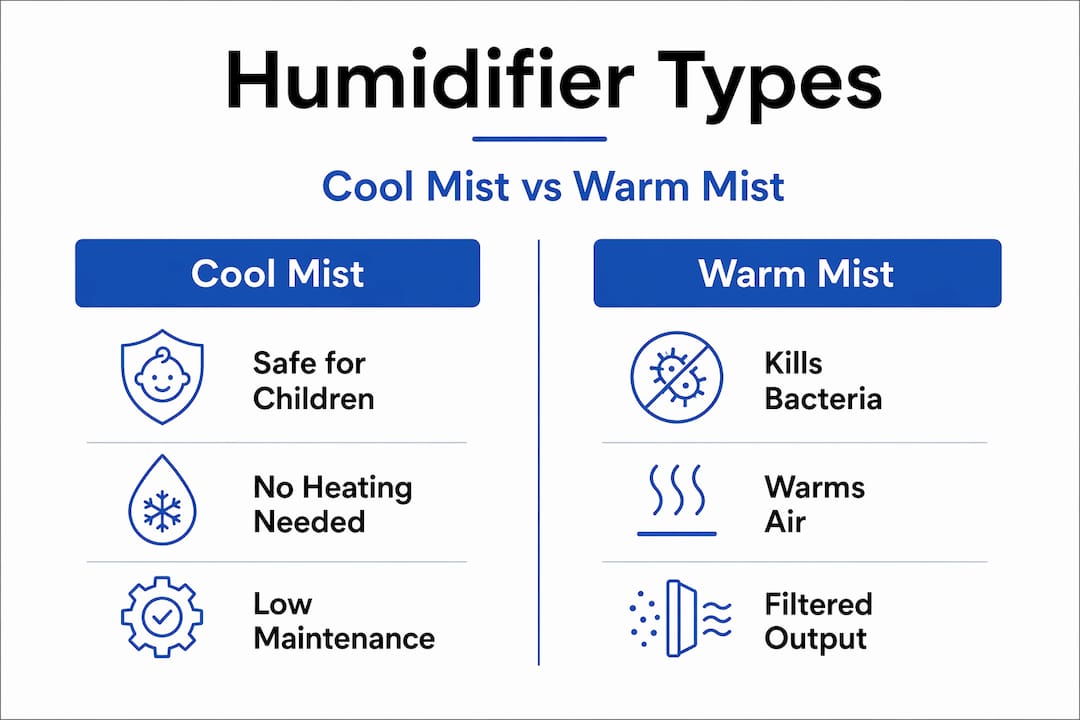
Cool mist humidifiers are the most common category for home use. They include three subtypes:
- Ultrasonic: Uses high-frequency vibration to produce a fine cool mist. Quiet and energy-efficient, but requires distilled water to avoid releasing minerals and microorganisms into the air.
- Evaporative: Draws air through a wet wick filter, releasing moisture as vapour. Self-regulating by nature since drier air absorbs more moisture. Requires filter replacements but is generally safe with tap water.
- Impeller: Uses a rotating disc to fling water at a diffuser, creating a fine mist. Less common, similar mineral dispersal concerns as ultrasonic models.
Warm mist humidifiers boil water to produce steam. The heating process kills most bacteria and eliminates mineral dispersal, making them easier to keep hygienic. The trade-off is burn risk with warm mist devices, higher energy consumption, and the fact that they are not suitable for households with young children.
Choosing by room size and usage
| Humidifier type | Best room size | Noise level | Water type needed | Maintenance effort |
|---|---|---|---|---|
| Ultrasonic cool mist | Small to medium | Very quiet | Distilled | Medium |
| Evaporative | Medium to large | Moderate | Tap water acceptable | Medium (filter changes) |
| Warm mist | Small to medium | Quiet | Tap water acceptable | Low to medium |
| Smart ultrasonic | Small to large | Very quiet | Distilled | Medium |
Smart humidifiers include app control, auto humidity sensing, and scheduling. Models like the Levoit Classic 300S offer quiet operation with app-based humidity management, which removes the guesswork for people who want set-and-monitor convenience. The Xiaomi Mijia evaporative model is a solid choice for larger rooms where energy efficiency matters.
Pro Tip: If you are buying a cool mist humidifier for dry skin relief and plan to run it overnight in a bedroom, ultrasonic is the better choice due to its low noise output. Just commit to using distilled water from day one.
Setting up and maintaining your humidifier
Correct setup and a consistent maintenance routine separate a genuinely useful device from one that becomes a health risk. Many people underestimate how quickly a neglected water tank creates problems.
- Position the device correctly. Place the humidifier on a flat, waterproof surface at least 30 centimetres from walls and furniture. Keep it away from electronics, timber flooring, and soft furnishings to avoid moisture damage.
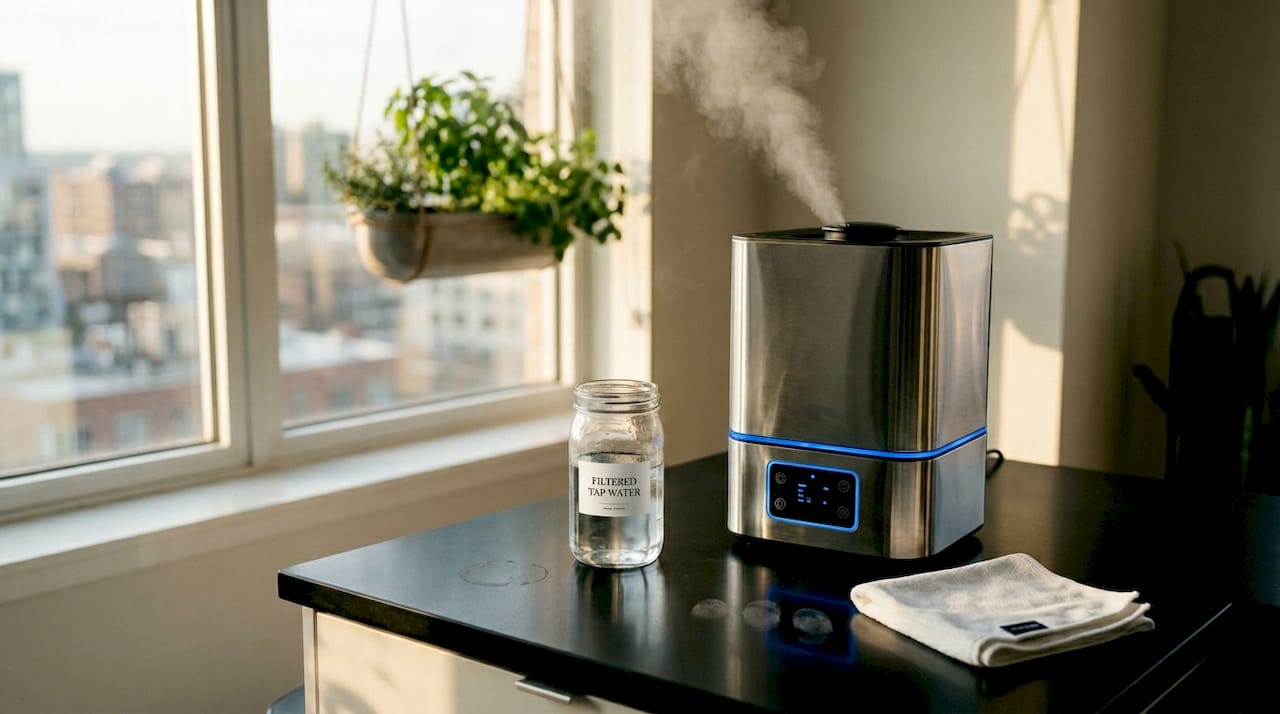
- Fill with the right water. For ultrasonic and impeller models, use distilled or demineralised water. For evaporative and warm mist devices, filtered tap water is generally acceptable, though check your manufacturer guidelines.
- Change the water daily. Daily water changes prevent stagnation, reduce odour, and stop microbial growth before it starts. Do not simply top up the tank. Empty it, rinse it, and refill.
- Clean the tank and base weekly. Use a diluted white vinegar solution to descale mineral deposits. For a deeper clean, a 3% hydrogen peroxide solution disinfects internal surfaces effectively. Rinse thoroughly before refilling.
- Replace filters on schedule. Evaporative humidifiers rely on wick filters that trap minerals and debris. A dirty or degraded filter reduces output and can introduce contaminants. Follow the manufacturer’s recommended replacement schedule.
- Monitor with your hygrometer. Run the device until your room reaches 45% to 50% RH, then adjust the output or run time to maintain that level. Do not leave the device running continuously without checking the reading.
Humidifiers should be treated as humidity controllers, not set-and-forget appliances. Excess humidity from poor ventilation or misuse can increase mould and dust mite growth, creating new health risks rather than resolving existing ones.
Pro Tip: Keep a small cleaning kit near the humidifier. A bottle of white vinegar, a soft brush, and a spare filter make weekly cleaning a five-minute task rather than a chore you keep delaying.
Troubleshooting common humidifier problems
Even with good habits, issues arise. Recognising the early signs keeps problems from escalating.
- White dust on surfaces. This is the most common complaint with ultrasonic models. It is aerosolised mineral residue from tap water. Switching to distilled water resolves it entirely.
- Musty or bad smells. Almost always caused by biofilm or mould inside the tank or base. This is a cleaning problem, not a device defect. Empty the tank, clean with hydrogen peroxide, and rinse before resuming use.
- Condensation on windows or walls. Your room has reached saturation point. Reduce the output or run time, and check your hygrometer. If RH is above 60%, switch the device off until the room dries out.
- Reduced mist output. Usually scale build-up on the ultrasonic disc or a clogged evaporative filter. Descale or replace the filter as appropriate.
- Unusual noise from the unit. Rattling or gurgling that was not there initially often indicates scale on internal components or a loose filter. Inspect, clean, and reassemble.
The Australian Centre for Disease Control includes humidifier misuse among practical mould risk factors, noting that ventilation and moisture control are both central to prevention. If you notice visible mould anywhere in the room, stop using the humidifier and address the source of excess moisture first.
Avoid adding essential oils or any other additives to the water tank unless your device’s documentation specifically approves it. Many humidifiers are not designed to handle oils and the residue damages the internal mechanisms and voids the warranty.
Pro Tip: Do a monthly inspection of the area around your humidifier. Check walls, window frames, and any surfaces near the mist outlet for early signs of condensation or mould. Catching it early costs you nothing. Missing it can cost quite a lot.
Recognising the benefits in your home
After two to four weeks of consistent, correctly maintained use, the improvements should be noticeable and measurable.
- Skin comfort: Dry, tight skin on the face and hands tends to improve within one to two weeks of maintaining 40% to 50% RH. A cool mist humidifier for dry skin relief works most effectively when run overnight in the bedroom where exposure time is longest.
- Respiratory ease: Nasal passages and throat feel less irritated in the morning, which is often one of the first changes people notice.
- Better sleep quality: Dry air aggravates snoring and makes breathing uncomfortable during sleep. Stable humidity reduces both.
- Reduced static electricity: Static build-up in the home drops noticeably once humidity is consistently above 35%.
- Confirmed by data: Your hygrometer should show stable readings between 40% and 50% RH during device operation. If it does not, adjust run time, output, or room sealing before concluding the device is inadequate.
Seasonal adjustment matters. In summer, air conditioning reduces indoor humidity significantly. In winter, heating has the same effect. Review your usage patterns at the change of each season and recalibrate based on current readings rather than assumptions.
My take on humidifiers and what most guides get wrong
I’ve seen a lot of people buy a humidifier, set it up, and consider the job done. In my experience, that is where most of the problems start rather than where they end. Maintenance is treated as optional in many how-to articles, but a strict maintenance routine is what separates a device that genuinely improves your indoor environment from one that slowly introduces microbial contamination into the air you breathe.
My other observation is that people chase the wrong metric. They focus on how much mist a device produces rather than whether the room’s actual relative humidity is reaching the target range. I’ve found that a quiet, appropriately sized ultrasonic unit with a hygrometer tells you far more than a powerful device running on guesswork.
The uncomfortable truth about mould risk is that it is not a fringe concern. When a humidifier runs without humidity monitoring in a poorly ventilated room, it can create the exact conditions it was supposed to help avoid. Controlled humidification with the right tools is genuinely beneficial. Uncontrolled humidification is not.
— Nevel
Find the right humidifier for your home with Climatepro
Climatepro stocks a curated range of humidifiers suited to different room sizes, budgets, and usage needs across the UAE. Whether you are looking for a quiet ultrasonic model for a bedroom, a smart evaporative unit for a larger living space, or a combined air purifier and humidifier that handles both moisture and air filtration, the range covers it.

All products are available for delivery across Dubai, Abu Dhabi, Sharjah, and the rest of the UAE. Browse the full humidifier catalogue to compare models by type, capacity, and features. If you are unsure which device suits your space, Climatepro’s team can help you make the right call before you purchase.
FAQ
What humidity level should I maintain at home?
The recommended indoor relative humidity range is 30% to 50% RH, as advised by the American Lung Association. Staying within this range supports comfort without creating conditions that encourage mould or dust mite growth.
Is a cool mist humidifier safe for children?
Cool mist humidifiers are generally considered safer for households with children than warm mist models, which carry a burn risk from heated water. Ultrasonic and evaporative models are both suitable, provided the tank is cleaned daily and distilled water is used in ultrasonic devices.
How often should I clean my humidifier?
Change the water daily and clean the tank and base at least once a week using diluted white vinegar or a hydrogen peroxide solution. Evaporative filter replacements should follow the manufacturer’s schedule, typically every one to three months.
Why is there white dust around my humidifier?
White dust is caused by minerals from tap water being dispersed into the air by ultrasonic humidifiers. Switching to distilled or demineralised water eliminates the issue entirely and also reduces health risks associated with aerosolised mineral particles.
Can a humidifier help with allergy symptoms?
A humidifier for allergy relief can reduce nasal dryness and irritation, which are common triggers. However, humidity above 50% RH increases dust mite activity and mould growth, both of which worsen allergies. Keeping levels between 40% and 50% RH and maintaining the device properly is the key to avoiding trade-offs.
Recommended
- Home air quality improvement guide for UAE homeowners — Blog | ClimatePro UAE
- Buy Blueair 2-in-1 Purify + Humidify DH3i in Dubai | Best Price AED 1,166 | ClimatePro UAE
- Buy Levoit Classic 300S Ultrasonic Smart Humidifier in Dubai | Best Price AED 320 | ClimatePro UAE
- Buy Blueair DreamWell Humidifier – Stone Grey in Dubai | Best Price AED 397 | ClimatePro UAE