
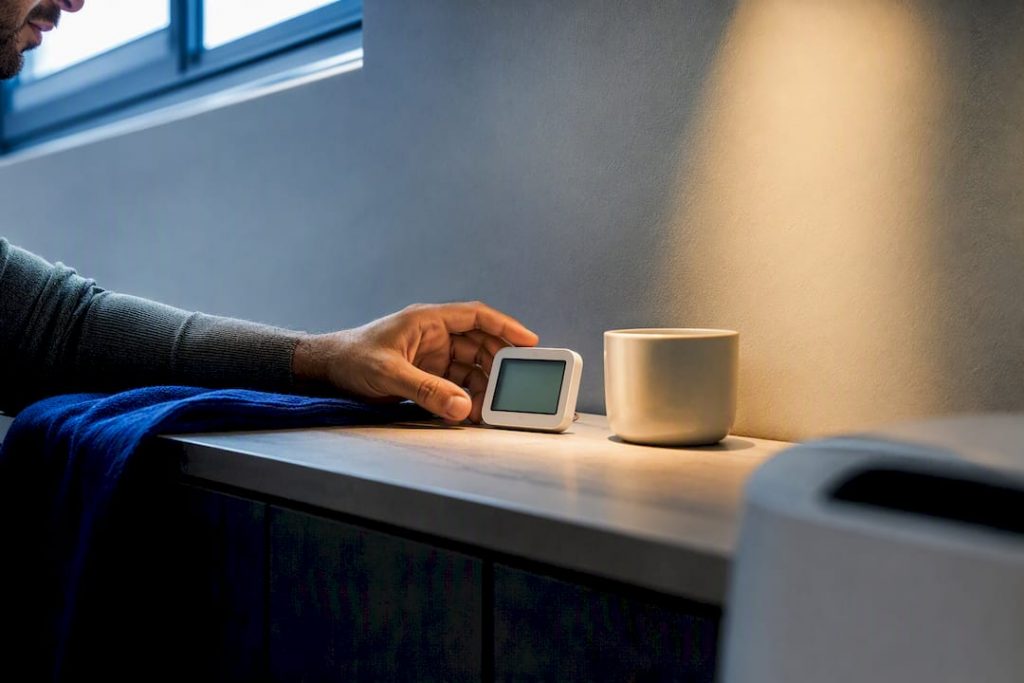
Run one if you have condensation on windows, damp patches, musty smells, or wet laundry drying indoors. Skip it if your home already sits in a comfortable range, since over-drying causes its own problems. Aim for indoor humidity around 30 to 40%, with somewhat higher levels acceptable in milder climates, and confirm your reading with a hygrometer before choosing between a compressor or desiccant unit.
TL;DR:
- Use a dehumidifier only if indoor humidity exceeds 50%, especially during winter when condensation, damp patches, or mold are detectable.
- Compressor dehumidifiers lose efficiency below 15°C and are unsuitable for unheated, cold spaces like garages, while desiccant units perform reliably down to 1°C.
- Proper setup involves measuring humidity over a week, placing the unit correctly, and managing drainage and running costs to optimize performance.
- Fix ventilation issues and building faults before relying on dehumidifiers, as they only address symptoms, not underlying moisture sources.
- Maintaining hygiene and monitoring with a hygrometer ensures the unit operates effectively and prevents mold growth inside the appliance.
Table of Contents
- When a dehumidifier helps with winter humidity control
- When you shouldn’t use a dehumidifier in winter
- How to set up your dehumidifier for winter conditions
- Compressor or desiccant: which suits cold rooms?
- Keeping your dehumidifier running well all winter
- Getting expert guidance on the right setup
- A short editor’s note on comfort versus dryness
- Where to find the right dehumidifier
- Sources
When a dehumidifier helps with winter humidity control
Cold weather traps moisture indoors. Windows stay shut, extractor fans run less, and everyday activities like cooking, showering, and drying clothes push humidity higher with nowhere for it to escape. This is when a dehumidifier earns its place.
Watch for these signs that your home would benefit:
- Recurring condensation on windows or cold walls, especially first thing in the morning
- Damp patches on ceilings, skirting boards, or in corners
- A persistent musty smell, particularly in basements or utility rooms
- Wet washing hung indoors because outdoor drying isn’t practical
- Visible mould spots on grout, window frames, or fabric
Once indoor humidity regularly climbs above about 50%, mould spores find conditions suitable to establish colonies. A dehumidifier pulls that moisture out of the air before it settles on cold surfaces, protecting paintwork, timber, and soft furnishings from long-term damage. A dehumidifier is genuinely useful for persistent condensation, damp bathrooms, or indoor laundry drying, though it isn’t automatically the right call for every household.
When you shouldn’t use a dehumidifier in winter
Not every home needs one, and running a unit unnecessarily can actively make things worse. Three situations call for restraint rather than a dehumidifier:
- Your home is already dry. Reducing humidity below about 30% can cause dry skin, irritated sinuses, static electricity, and cracking in wooden furniture and flooring. If your hygrometer reads low thirties percent or below, leave the unit switched off.
- The room is too cold for the technology you own. Compressor dehumidifiers lose efficiency once room temperatures fall below roughly 15°C, and the coils can ice over entirely in unheated spaces. Running a compressor unit in a chilly garage or spare room often does very little beyond wasting electricity.
- Moisture keeps returning despite dehumidifying. If humidity climbs straight back up after you switch the unit off, the real problem is usually ventilation, not air moisture. Check extractor fans, trickle vents, and exhaust ducting before assuming you simply need a bigger machine. Running a dehumidifier with windows open, or while ignoring a ventilation fault, wastes energy without fixing the underlying issue.
How to set up your dehumidifier for winter conditions
Getting this right takes fifteen minutes of setup and saves weeks of guesswork.
- Measure first. Use a digital hygrometer in two or three rooms, checking morning and evening for about a week. Don’t rely on a single reading, since humidity shifts with cooking, showering, and outdoor weather.
- Set a winter target. Dial the humidistat to 30–40% and use the unit’s target or auto humidity mode so it cycles off once that level is reached, rather than running continuously.
- Place it properly. Position the unit centrally in the room with the worst damp, away from walls and furniture, at least 15cm clear on all sides. Keep it clear of electronics and close doors and windows while it runs.
- Sort your drainage. Empty the tank daily during heavy use, or connect a continuous drain hose for longer runs. Pump-equipped models are worth it if your drain point sits higher than the unit.
- Manage running costs. Use a plug timer to avoid all-day operation, never run the unit with windows cracked open, and pair it with extractor fans in bathrooms and kitchens instead of relying on the dehumidifier alone.
- Dry laundry smartly. Put the unit in a closed room with the clothes airer, position it near the washing rather than across the room, and check the hygrometer afterwards so the rest of the home doesn’t end up too dry.
Pro Tip: Log your hygrometer readings for a full week before buying anything. Many homes only need dehumidifying in one room, at certain times of day, which changes what size unit actually makes sense.
Compressor or desiccant: which suits cold rooms?
Technology choice matters more in winter than any other season, because temperature directly affects how well each type performs.
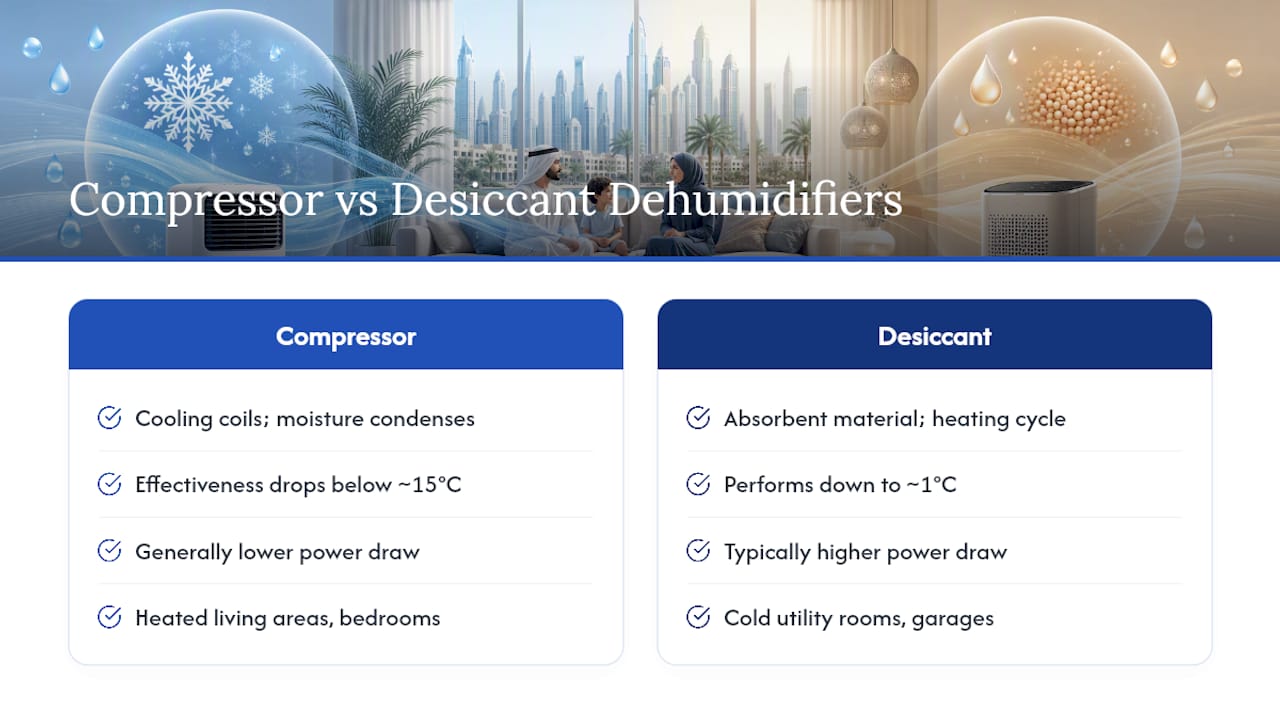
Compressor dehumidifiers work by cooling air across refrigerant coils so moisture condenses out. They’re efficient and generally quieter, but effectiveness drops sharply below about 15°C, and moisture can freeze onto the coils instead of draining away. They suit heated living areas and bedrooms, not unheated garages or basements.
Desiccant dehumidifiers use an absorbent material and a heating cycle instead of refrigerant, so they keep performing in cold spaces down to around 1°C. They typically draw more power than a comparable compressor unit, but that trade-off buys reliable performance in a cold utility room or garage, and the mild warmth they generate can even speed up indoor laundry drying.
Sizing matters as much as technology. Consumer Reports groups portable dehumidifiers into small, medium, and large capacity bands, and it’s worth sizing up rather than down if your damp problem is severe or the room is large. A single bedroom with occasional condensation needs a very different unit to a basement with standing damp. If multiple rooms show persistent condensation or you’re dealing with structural dampness, that’s a sign to bring in a professional rather than solve it room by room with portable units.
Keeping your dehumidifier running well all winter
A few minutes of upkeep each week keeps performance consistent and stops the unit becoming a mould source in its own right.
- Empty and rinse the water tank regularly, and clean the air filter every two to four weeks depending on use.
- If you notice ice forming on the coils, switch to defrost mode or relocate the unit somewhere warmer. Persistent icing in a cold room is a sign you need a desiccant unit instead.
- Trust a standalone hygrometer over the appliance’s built-in display, since placement and airflow around the unit can skew its internal sensor.
- Keep a simple log of readings so you’re not running the dehumidifier out of habit once humidity has already settled at a healthy level.
Pro Tip: If humidity keeps climbing back up within hours of switching the unit off, the fault is almost always ventilation, not the appliance. Fixing an extractor fan or a gap around a window fixes the room permanently; a dehumidifier only ever manages the symptom.
Getting expert guidance on the right setup
Choosing between compressor and desiccant technology, or sizing a unit correctly, usually comes down to details specific to your home rather than a generic rule. Guides on how to choose a dehumidifier and setting one up correctly walk through sizing, drainage, and placement for different room types. Pairing that guidance with a measurement-first approach, checking your actual humidity before buying anything, gives you a far better outcome than guessing based on room size alone.
A short editor’s note on comfort versus dryness
Fix the source of the moisture before reaching for a machine. A blocked extractor fan, a gap around a window frame, or poor insulation will keep undoing whatever a dehumidifier achieves, and no amount of running time fixes a ventilation fault. Once the building itself is doing its job, a dehumidifier becomes a precise tool rather than a constant crutch.
Aim for comfortable, not bone dry. A home sitting at 35 to 40% humidity protects timber, paint, and soft furnishings just as well as one running at 25%, without the dry skin, static, and cracked furniture that come with over-drying. Measure, fix what’s broken in the building, then let the dehumidifier handle what’s left.
— Nevel
Where to find the right dehumidifier
Once you know your target humidity and which technology suits your room, choosing a specific unit is straightforward. Climatepro’s dehumidifier range covers compact compressor models for everyday bedrooms and living areas through to units built for tougher, colder spaces. The Xiaomi Smart Dehumidifier Lite is a solid example for anyone dealing with moderate condensation in a single room, offering app-based humidity tracking so you’re not guessing at settings.

If you’re still not sure which technology or capacity fits your space, measure first with a hygrometer, then get in touch with A product support team can provide advice matched to your actual readings rather than a generic recommendation. Sorting out drafts and door seals around problem rooms helps too. Guides like this one on improving older home envelopes explain why sealing gaps often reduces moisture ingress before a dehumidifier even switches on. Start with the dehumidifier catalogue to compare capacities against your room size.
Sources
- Pros and cons of using a dehumidifier in the winter — TechRadar
- Desiccant vs compressor dehumidifiers — Home Air Quality Lab
- Dehumidifier buying guide — Consumer Reports