Dehumidifiers do help with allergies, because they remove the moisture dust mites and mould need to survive. The evidence points to one clear target: keep indoor relative humidity below 50%, ideally in the 40–50% range, and mite populations decline over weeks and months. A dehumidifier is not a standalone cure. It works best alongside mattress encasings, regular vacuuming, and, where symptoms persist, medical care. Measure the room first with a hygrometer, then let a humidistat do the fine control.
TL;DR:
- Maintaining indoor humidity below 50% is essential, but going lower can cause dry skin, irritated sinuses, and potential damage to furniture.
- Dehumidifiers effectively reduce dust mites and mould by removing moisture, but do not eliminate existing allergens in mattresses, carpets, or behind walls.
- The best units feature proper capacity matching room size, an integrated humidistat for automatic control, and options for continuous drainage to avoid frequent tank emptying.
- Accurate measurement of current humidity with a hygrometer is vital before purchase, and setting realistic targets around 40–50% optimizes allergy relief.
- Combining humidity control with mattress encasings, regular cleaning, and addressing water leaks provides the most effective layered allergy prevention approach.
Table of Contents
- How dehumidifiers reduce dust mites and mould
- What humidity level actually stops allergies?
- What features matter when buying an allergy dehumidifier?
- How do you set up a dehumidifier for allergy relief?
- Do you need more than a dehumidifier for allergies?
- Why trust this dehumidifier and allergy guidance?
- What allergy sufferers get wrong about dehumidifiers
- Where to start with ClimatePro for allergy relief
- Sources
- FAQ
How dehumidifiers reduce dust mites and mould
Dust mites cannot survive in dry air. They rely on ambient moisture absorbed through their bodies rather than drinking water, and once relative humidity drops consistently, their reproduction rate falls and populations shrink over several weeks. Many common indoor moulds follow the same pattern: they need sustained dampness on surfaces to establish and release spores, so drier air starves both allergen sources at the same time.
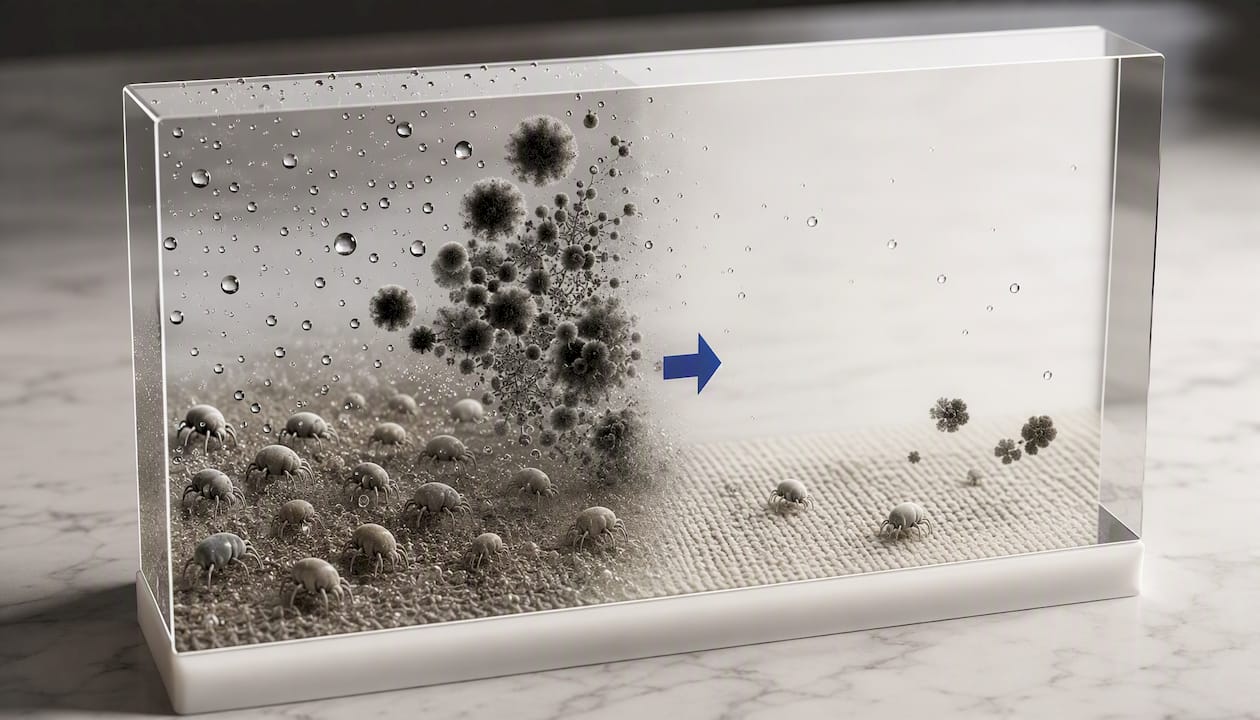
A dehumidifier attacks the shared cause behind two separate allergy triggers. Pull moisture out of the air consistently, and you’re removing the environmental condition both dust mites and mould need, rather than just masking symptoms.
That said, a dehumidifier only manages the air. It does nothing about allergen reservoirs already sitting in your home:
- Dust mite droppings and dead mite bodies trapped in mattresses, pillows, and carpet fibres stay put unless physically removed.
- Mould already established behind skirting boards or under carpet won’t disappear because the air around it gets drier.
- Existing dust and pet dander on soft furnishings still need vacuuming or washing.
Research on indoor allergen control backs this layered view. A systematic review of allergen exposure interventions found that combining humidity control with mattress and pillow encasings, plus frequent vacuuming, produces better results than any single measure alone. Separately, a Cochrane-level review of humidity-reduction measures for asthma confirms that lowering humidity is a recommended environmental control step, even though it treats the environment, not the person.
What humidity level actually stops allergies?
Most public health guidance converges on the same number: keep indoor relative humidity under 50%, with 40–50% cited as the practical sweet spot for allergy control. Popular-science reporting on dust mite biology confirms this threshold is where mite reproduction meaningfully slows, rather than a marketing-invented figure.
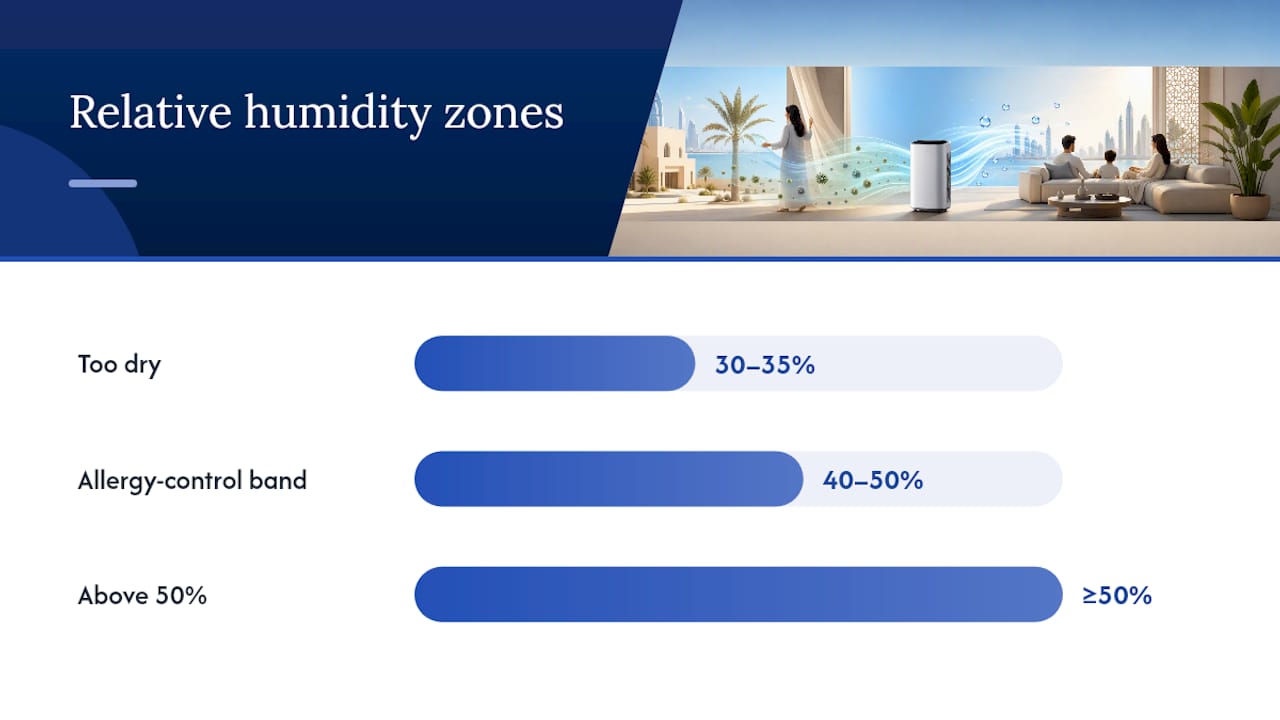
Statistic to remember: relative humidity below roughly 50% is the consistent benchmark cited across allergy and public health guidance for suppressing dust mite growth indoors.
Going lower isn’t automatically better. Air that’s too dry brings its own problems:
- Below about 30 to 35% relative humidity, dry air can irritate the sinuses, crack skin, and aggravate existing respiratory conditions.
- Running a dehumidifier continuously at maximum power to chase an unnecessarily low number wastes electricity and stresses the unit.
- Wood furniture, flooring, and musical instruments can also suffer from air that’s too dry for extended periods.
A systematic review of dehumidifiers for chronic asthma notes that while humidity reduction helps control mites, clinical asthma outcomes vary across trials, meaning the effect is real but not uniform for every person. Buy a simple hygrometer, check your baseline reading, then adjust from there rather than guessing. Our humidity control workflow guide walks through measuring before and after running a unit.
What features matter when buying an allergy dehumidifier?
Capacity comes first. Match the unit’s litres-per-day rating and stated room coverage to the actual size of the bedroom, nursery, or living space you’re treating. A unit rated for a small study will run constantly and still underperform in an open-plan living area.
An integrated humidistat matters more than most buyers realise. Rather than running at full power around the clock, a humidistat lets the unit switch off automatically once your target relative humidity is reached, then kick back in when it drifts up. That single feature protects against both the over-drying risk covered above and unnecessary energy use, a point Energy Star’s dehumidifier guidance specifically calls out.
Some models combine dehumidification with particle filtration in a 2-in-1 design. These can help in homes dealing with both damp and airborne allergens, but a 2-in-1 dehumidifier and air purifier generally won’t match a dedicated HEPA purifier for removing pollen or pet dander from the air. Treat the filtration as a bonus, not a replacement.
Other practical checks:
- Continuous drainage or a pump option cuts down on daily tank emptying, especially in humid climates.
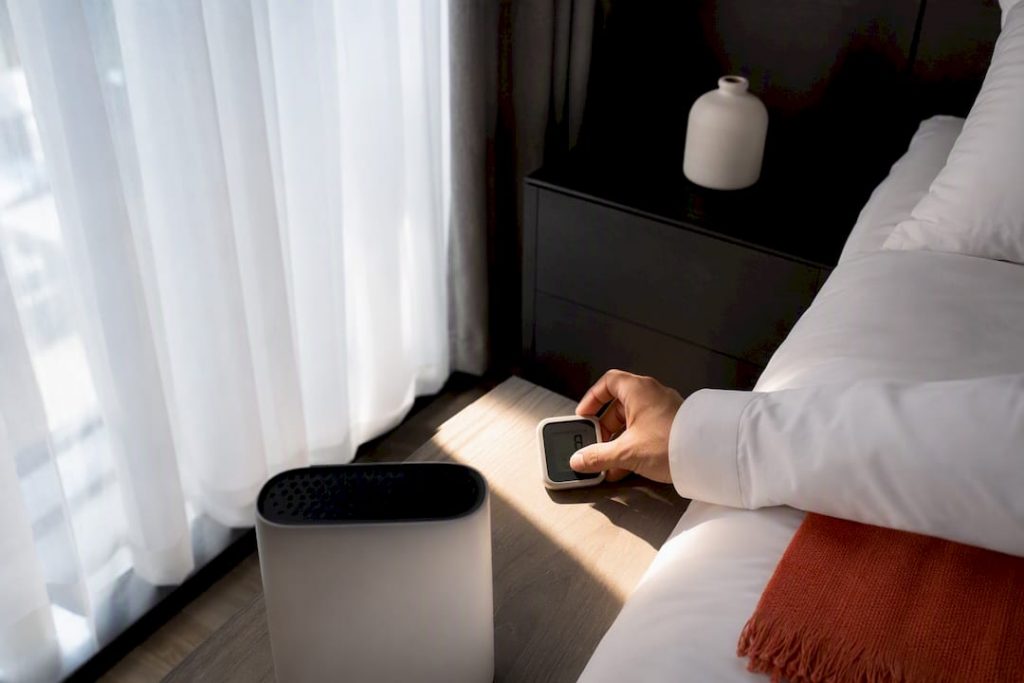
- Noise rating matters for bedroom placement, since a unit that’s too loud gets switched off or moved.
- Look at the energy label rather than marketing copy, and check CADR figures on any model claiming particle filtration.
Pro Tip: Don’t buy on litres-per-day alone. A unit with a poor humidistat will over-run and under-deliver even if its rated capacity looks generous on paper. Our guide to choosing a dehumidifier breaks down capacity against room size in more detail.
How do you set up a dehumidifier for allergy relief?
Placement and settings decide whether a dehumidifier actually reduces allergens or just runs in the background without doing much.
- Position it centrally in the room causing problems, away from walls, curtains, or furniture that block airflow.
- Set the humidistat to your target, typically 40–50%, and let the unit cycle automatically rather than running it on continuous maximum power.
- Let the reading stabilise over a few hours before judging whether the setting needs adjusting.
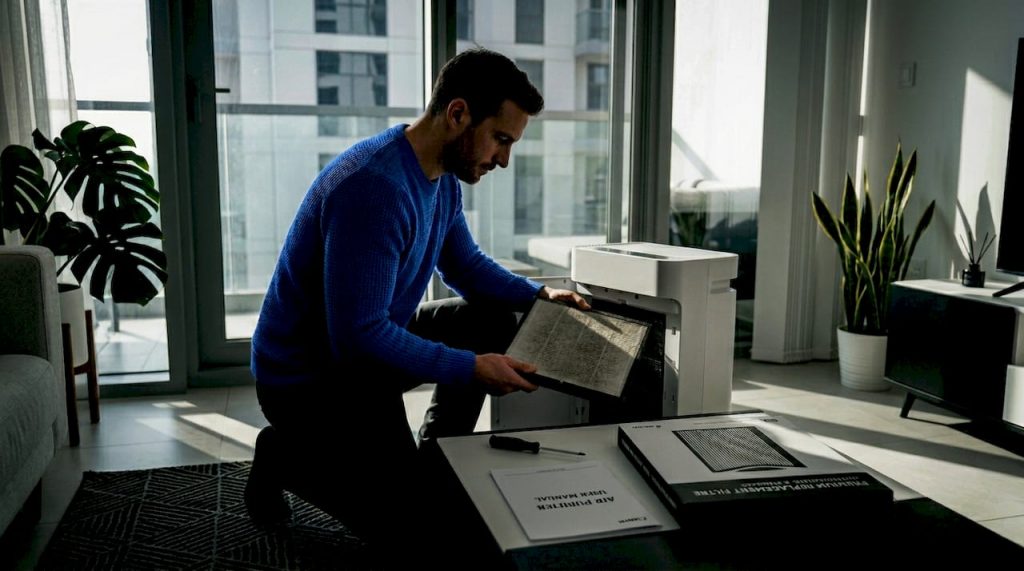
- Check filters and coils monthly. Clean or replace filters per the manufacturer’s schedule, and inspect coils for mould if the unit has been running in a damp room for a while.
- Empty and sanitise the water tank regularly, since standing water inside the unit can itself grow mould if left too long.
Running your dehumidifier alongside air conditioning helps stabilise whole-home humidity rather than fighting isolated pockets of damp air room by room. As background practice, favour auto mode over continuous run: it avoids over-drying and keeps electricity costs down, a principle that holds regardless of brand or model.
Pro Tip: If you live somewhere with a genuine seasonal humidity swing, adjust your target rather than leaving the humidistat static year round. Our step-by-step setup guide and seasonal humidity guide cover this in more depth.
Do you need more than a dehumidifier for allergies?
Yes. Humidity control is one part of a layered approach, not the whole answer. The strongest evidence points to combining several measures rather than relying on any single device.
- Allergen-proof mattress and pillow encasings block existing dust mite reservoirs the air alone can’t touch.
- Weekly vacuuming with a HEPA-filtered vacuum physically removes settled allergens from carpets and soft furnishings.
- Washing bedding weekly in hot water kills mites directly.
- Fixing damp sources (leaking pipes, poor bathroom ventilation) stops mould at the root rather than just drying the air around it.
HEPA air purifiers earn their place for airborne particles like pollen, pet dander, and smoke, but they don’t reduce settled mite reservoirs in mattresses or carpets the way targeted cleaning does. If symptoms persist despite these steps, particularly wheezing or breathing difficulty, it’s worth talking to a clinician about asthma or allergy management rather than adjusting appliances indefinitely.
Why trust this dehumidifier and allergy guidance?
ClimatePro UAE specialises in air purifiers, humidifiers, and dehumidifiers, and publishes practical guides like Measure First that walk through humidity measurement before any purchase decision. Compact units such as the Xiaomi Smart Dehumidifier Lite represent the kind of entry-level, humidistat-equipped option worth comparing against your room size and target RH.
Before buying anything, measure your current humidity with a hygrometer. Once you know your starting point, check that any unit you’re considering carries local, in-country warranty support rather than requiring overseas shipping for repairs.
What allergy sufferers get wrong about dehumidifiers
Most advice on this topic treats the dehumidifier as either a miracle fix or a waste of money, and both framings miss the point. The device does one job well: it removes the moisture dust mites and mould rely on. Judged against that narrow job, it earns its place in an allergy household. Judged as a cure for allergy symptoms on its own, it will always disappoint someone.
Where conventional advice falls short is the obsession with chasing the lowest possible humidity number. Readers hear “dry air kills mites” and assume more dryness equals more relief, then end up with cracked skin, irritated sinuses, and a unit running flat out around the clock. The asthma outcome research is honest about this: environmental control helps, but it’s not a guaranteed fix for clinical symptoms in every case.
If you take one thing from this, prioritise measurement over guesswork. Buy a hygrometer before you buy a dehumidifier. Know your baseline, set a realistic target, and treat the appliance as one tool in a household routine that also includes encasings and cleaning.
— Nevel
Where to start with ClimatePro for allergy relief
There are options to shop by room size and humidistat feature, with delivery and support across the UAE.

Start by measuring your current humidity, then browse the dehumidifiers category for units with an integrated humidistat suited to your room size. If your home also deals with airborne pollen, pet dander, or dust, it’s worth pairing a dehumidifier with a HEPA air purifier rather than expecting one appliance to cover both jobs. For a compact, budget-friendly starting point, the Xiaomi Smart Dehumidifier Lite suits smaller bedrooms and nurseries where a full-size unit would be overkill. Units typically ship with local UAE delivery and warranty handling, avoiding the need for overseas repairs. Head to the dehumidifier catalogue, check the litres-per-day rating against your room, and place your order.
This article is general information, not a substitute for advice from a qualified doctor. Consult a qualified healthcare professional about your own circumstances before acting on anything here.
Sources
- Minimizing indoor allergen exposure: What works? – PMC
- Do dehumidifiers help with allergies? | Live Science
FAQ
Are dehumidifiers good for allergies?
Yes, dehumidifiers help with allergies by lowering the humidity dust mites and mould need to thrive, which reduces two of the most common indoor allergy triggers. They work best combined with mattress encasings and regular vacuuming rather than used alone, as the allergen exposure research confirms.
What are the signs I need a dehumidifier?
Persistent musty smells, visible condensation on windows, damp patches on walls, or worsening allergy and asthma symptoms indoors all point to excess humidity. A hygrometer reading consistently above 50% relative humidity is the clearest practical sign.
Is it healthy to sleep in a room with a dehumidifier?
Yes, provided the unit is set to a sensible target, typically 40–50% relative humidity, rather than run continuously at maximum power.
Is a dehumidifier good for sinus problems?
A dehumidifier can help sinus symptoms linked to mould and dust mite exposure by reducing the conditions both allergens need to persist indoors.