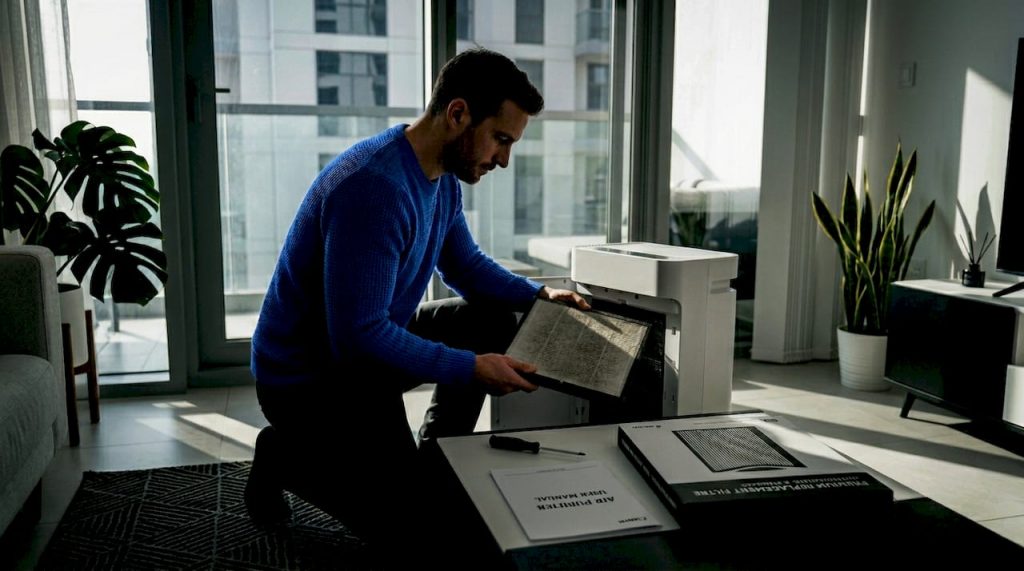
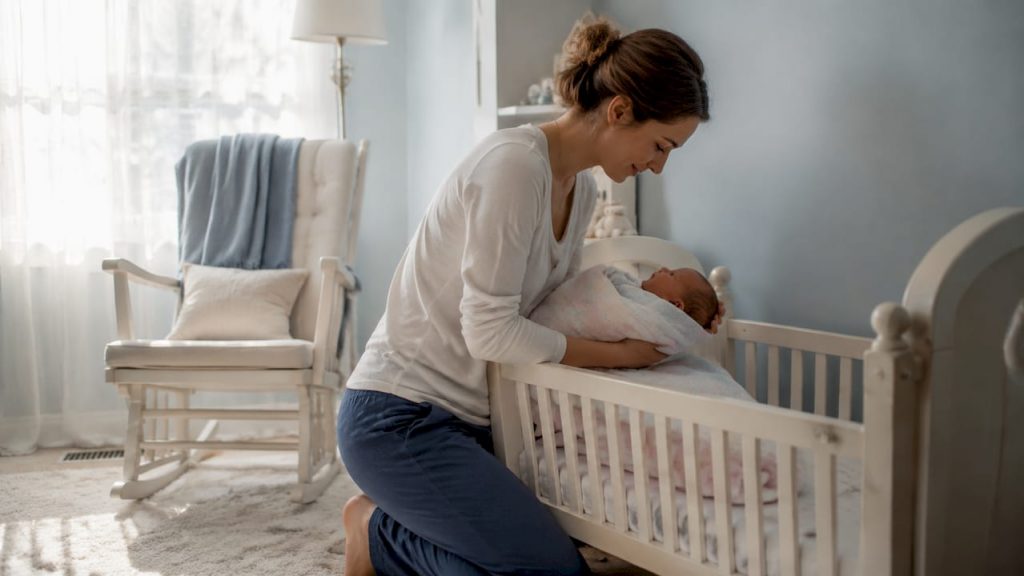
Nursery air quality is defined as the concentration and composition of airborne substances inside the room where your infant sleeps, plays, and develops. Children aged 0–5 breathe 40–60% more air per unit body weight than adults. That single fact explains why nursery air quality matters more than most parents realise. A pollutant level that causes no measurable effect in an adult can trigger respiratory irritation, immune responses, or lasting lung damage in a newborn. Nurseries also introduce unique pollution sources, including off-gassing from new furniture, fresh paint, and synthetic carpets, that compound the risk during the most vulnerable months of a child’s life.
Why nursery air quality matters: pollutants and infant vulnerability
The main indoor air quality (IAQ) threats in a nursery fall into three categories: volatile organic compounds (VOCs), particulate matter, and heavy gases. Each one interacts differently with an infant’s physiology.
VOCs are released by paints, adhesives, pressed-wood furniture, and synthetic fabrics. One detail many parents miss: even zero-VOC paint bases can contain high-VOC colour tints, meaning off-gassing can continue for weeks after the room looks and smells fresh. Selecting a low-VOC base is not enough if the tint added at the hardware store is not also low-VOC.
Particulate matter includes dust, pet dander, pollen, and combustion particles. Outdoor pollution and smoke raise airborne particle levels inside nurseries significantly, particularly in urban areas or near busy roads. In the UAE context, fine desert dust also contributes to indoor particle loads when windows are opened without filtration.
Heavy gases present a risk that is easy to overlook. Pollutants like radon, carbon monoxide, and pesticides accumulate near floor level because they are denser than air. A baby lying in a cot or crawling on the floor breathes directly from this polluted zone. Adults standing in the same room may register no discomfort at all.
- VOCs: paints, furniture, adhesives, synthetic textiles
- Particulate matter: dust, allergens, combustion particles, desert dust
- Heavy gases: radon, carbon monoxide, pesticides near floor level
- Biological pollutants: mould spores, dust mites, pet dander
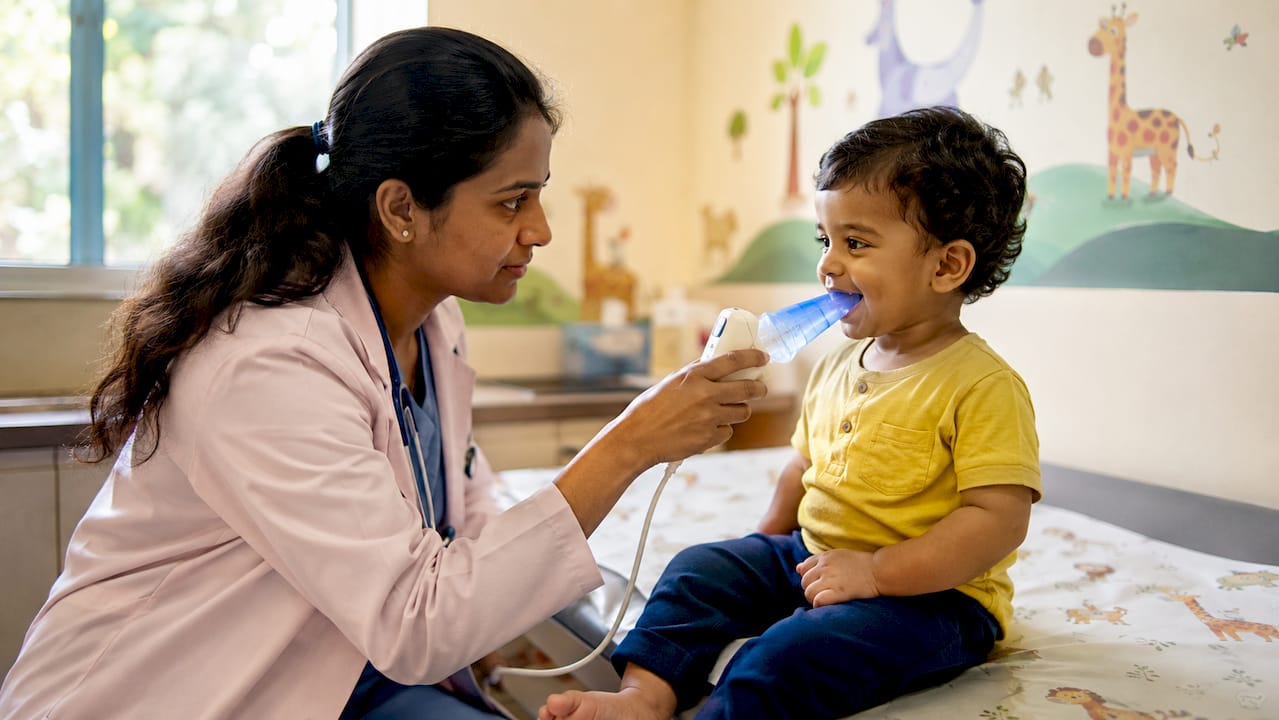
Infants compound this exposure through two physiological facts. Their lungs are still developing, so damage from pollutants is harder to repair. Their faster breathing rate means they cycle through more air volume per minute relative to their body size than any adult in the same room.
Pro Tip: Place a carbon monoxide detector at cot height rather than at adult eye level. The reading at floor level is more representative of what your baby actually inhales.
What are the recommended environmental standards for nurseries?
Knowing the right targets gives you something measurable to work towards. The table below summarises the key parameters recommended by current guidelines.
| Parameter | Recommended range | Why it matters |
|---|---|---|
| Indoor temperature | 20–22°C | Supports comfort and limits mould growth |
| Relative humidity | 40–60% | Inhibits dust mites and mould spores |
| Air changes per hour | 0.35 minimum | Dilutes pollutants and replenishes oxygen |
| VOC concentration | As low as achievable | Reduces respiratory irritation risk |
| Particulate matter (PM2.5) | Below 12 µg/m³ | Protects developing lung tissue |
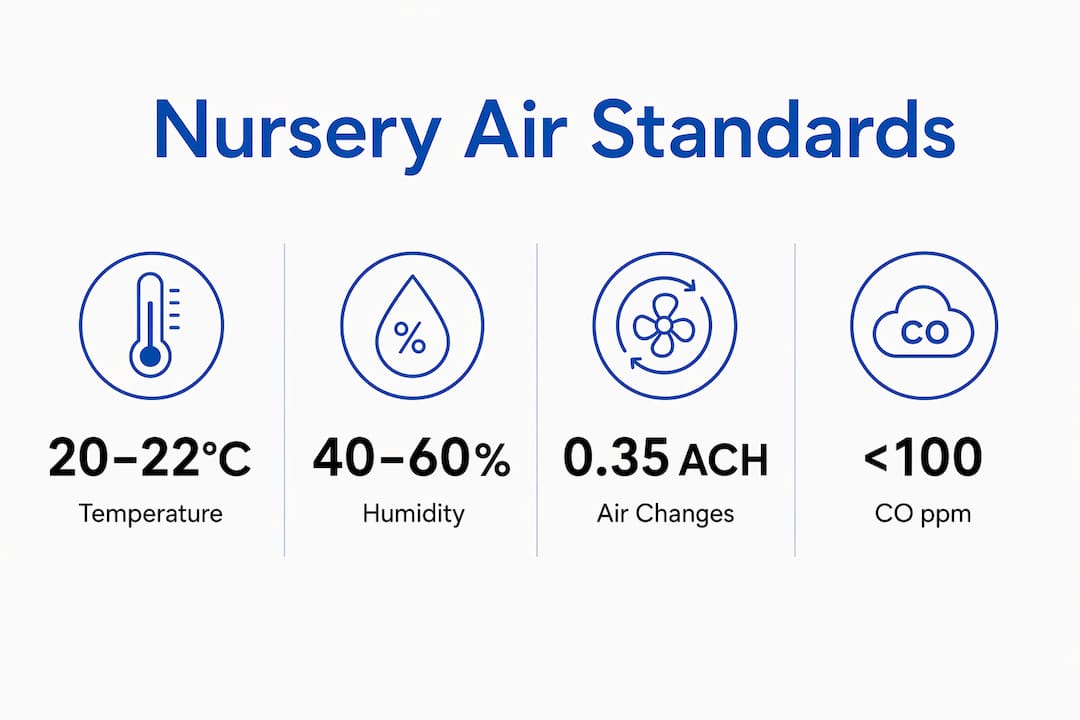
Ideal nursery temperature sits between 20–22°C with relative humidity at 40–60% to prevent both mould growth and dust mite proliferation. These two biological pollutants thrive outside that humidity window. Maintaining relative humidity near 40–50% specifically reduces dust mite and mould activity, which are among the most common nursery allergy triggers.
ASHRAE recommends a minimum of 0.35 air changes per hour for nurseries, achievable through a combination of mechanical ventilation, HEPA filtration, and source control. That figure is a floor, not a ceiling. In rooms with higher pollutant loads, such as those with new furniture or fresh paint, more frequent air exchange is warranted. You can read more about how air changes per hour affect indoor air quality in Climatepro’s dedicated guide.
Pro Tip: Use a digital hygrometer to monitor nursery humidity daily. These devices cost very little and remove all guesswork from humidity management.
How to improve nursery air quality: practical steps for parents
A hierarchy of controls is the most effective approach to maintaining clean nursery air. The order is source removal first, then ventilation, then filtration. Skipping to filtration without addressing sources is less effective and more expensive.
-
Complete painting and furniture assembly 4–6 weeks before your baby arrives. VOC off-gassing peaks in the first days after application and declines over weeks. Giving the room time to air out before occupancy is the single most cost-effective step you can take. Open windows and run a fan to accelerate the process.
-
Choose low-VOC or zero-VOC products throughout, including tints. Ask your paint supplier specifically about the tint system, not just the base. The same principle applies to furniture finishes, adhesives, and flooring underlays.
-
Ventilate without creating drafts on the baby. Cross-ventilation through two windows on opposite walls moves air effectively. Position the cot away from direct airflow paths. In UAE conditions where outdoor air quality is poor due to dust or traffic, consider a filtered mechanical ventilation unit rather than opening windows.
-
Add a HEPA air purifier as a supplementary layer. Portable HEPA air purifiers reduce particulate pollution effectively but work best alongside source control and ventilation, not as a replacement for them. Place the unit a few feet from the cot and run it continuously on a low or medium setting. This balances air cleaning performance with noise levels suitable for infant sleep.
-
Clean regularly and strategically. Vacuum carpets and soft furnishings with a HEPA-filtered vacuum cleaner at least twice a week. Wipe hard surfaces with a damp cloth rather than dry dusting, which redistributes particles into the air. Wash cot bedding weekly at 60°C to kill dust mites.
-
Monitor and control humidity. A digital hygrometer gives you a real-time reading. If humidity climbs above 60%, a dehumidifier brings it back into range. If it drops below 40%, particularly in air-conditioned UAE homes, a humidifier restores moisture without over-saturating the air.
The comparison below shows how different approaches stack up for common nursery air quality concerns.
| Concern | Source control | Ventilation | HEPA filtration |
|---|---|---|---|
| VOC off-gassing | Most effective | Accelerates removal | Limited effect |
| Particulate matter | Moderate | Helpful | Most effective |
| Mould and dust mites | Effective (humidity control) | Helpful | Moderate |
| Heavy gases | Moderate | Most effective | Limited effect |
For a full nursery air quality checklist tailored to UAE conditions, Climatepro has published a practical room-by-room guide.
How does air quality affect child health in the long term?
The impact of air quality on children extends well beyond immediate respiratory irritation. Long-term childhood exposure to indoor pollutants affects respiratory health trajectories and can increase the risk of asthma developing in later childhood. The lungs undergo their most critical structural development in the first three years of life. Pollutant exposure during this window does not just cause symptoms. It can alter the architecture of lung tissue itself.
Immune and inflammatory responses are also triggered by repeated pollutant exposure during infancy. The immune system is calibrated during early life, and chronic low-level exposure to VOCs, particulates, and biological allergens can shift that calibration towards heightened inflammatory responses. This is one mechanism linking early nursery air quality to later allergy and asthma diagnoses.
“Indoor air quality is an investment in long-term child respiratory health. Early exposure to pollutants affects lifelong health trajectories.” — Indoor Sciences, 2026
The good news is that early intervention works. Studies show that reducing pollutant exposure in the first year of life produces measurable benefits in lung function that persist into adolescence. Clean nursery air is not a short-term comfort measure. It is a contribution to your child’s health that compounds over decades.
Practical monitoring matters here. Parents who track nursery humidity, temperature, and air quality with low-cost sensors are better positioned to catch problems early. A mould issue identified at two months is far easier to address than one discovered at two years. For more detail on nursery air safety in the UAE context, Climatepro’s blog covers the most common local risks.
Key takeaways
Clean nursery air requires source removal, adequate ventilation, and targeted filtration working together, not any single measure in isolation.
| Point | Details |
|---|---|
| Infants breathe more air per kg | Babies inhale 40–60% more air per unit body weight than adults, increasing pollutant exposure. |
| VOC off-gassing is a hidden risk | Complete painting and furniture assembly 4–6 weeks before baby arrives to allow off-gassing to subside. |
| Target humidity 40–60% | Keeping relative humidity in this range limits dust mite and mould growth, the two most common nursery allergens. |
| HEPA filtration supplements, not replaces | Air purifiers are most effective when combined with source control and ventilation, not used alone. |
| Early exposure has lasting effects | Pollutant exposure in the first three years affects lung structure and increases long-term asthma risk. |
My perspective on nursery air preparation
I have reviewed a lot of nursery preparation advice, and the most common mistake I see is parents treating air quality as an afterthought. The cot gets chosen first. The paint colour gets chosen second. The air quality question, if it comes up at all, arrives last.
The physiology does not care about that order. A baby placed in a freshly painted room with new flat-pack furniture on day one is breathing peak VOC concentrations at the exact moment their lungs are most vulnerable. The four-to-six-week rule for off-gassing is not excessive caution. It is the minimum sensible gap.
The other misconception I encounter is the idea that buying an air purifier solves the problem. It helps, genuinely. But a HEPA unit running in a room with a humidity problem, a fresh coat of standard paint, and no ventilation plan is doing perhaps 20% of the work needed. Source control and ventilation are not optional extras.
What I find reassuring is that the most effective steps are also the cheapest. Timing your renovation correctly costs nothing. Asking about VOC tints at the paint counter costs nothing. Opening two windows for cross-ventilation costs nothing. The technology, the purifiers and humidity monitors, adds value on top of those fundamentals. It does not substitute for them.
— Nevel
How Climatepro helps you maintain a healthy nursery environment
Climatepro stocks a range of air purifiers, humidifiers, and dehumidifiers specifically suited to nursery environments across the UAE.

For HEPA filtration, the Honeywell Air Touch P2 (AED 705) and the Honeywell Air Touch P1 (AED 591) both deliver quiet, continuous particulate removal suited to rooms where infants sleep. The Honeywell Air Touch U1 (AED 935) covers larger nursery spaces. For humidity control, Climatepro carries a full range of humidifiers and dehumidifiers to keep your nursery within the recommended 40–60% relative humidity range. Delivery is available across Dubai, Abu Dhabi, Sharjah, and all seven emirates.
FAQ
Why do infants face higher air pollution risks than adults?
Children aged 0–5 breathe 40–60% more air per unit body weight than adults, meaning they receive a proportionally higher dose of any pollutant present in the room.
What humidity level is best for a nursery?
Relative humidity between 40–60% is the recommended range. This level inhibits dust mite and mould growth while keeping the air comfortable for infant breathing.
When should I paint the nursery before the baby arrives?
Complete all painting and furniture assembly at least 4–6 weeks before your due date. This allows VOC off-gassing to subside before your baby occupies the room.
Where should I place an air purifier in a nursery?
Place the unit a few feet away from the cot and run it continuously on a low or medium setting. This position allows effective air circulation without directing airflow directly onto the baby.
Does opening windows improve nursery air quality?
Ventilation is one of the most effective ways to dilute indoor pollutants. In UAE conditions where outdoor dust or traffic pollution is high, use a filtered mechanical ventilation unit or open windows during low-pollution periods such as early morning.
Recommended
- Why monitoring AQI at home protects your family’s health — Blog | ClimatePro UAE
- Air changes per hour and better indoor air quality — Blog | ClimatePro UAE
- Nursery air safety tips for healthy UAE babies — Blog | ClimatePro UAE
- Nursery air quality checklist for healthier UAE spaces — Blog | ClimatePro UAE