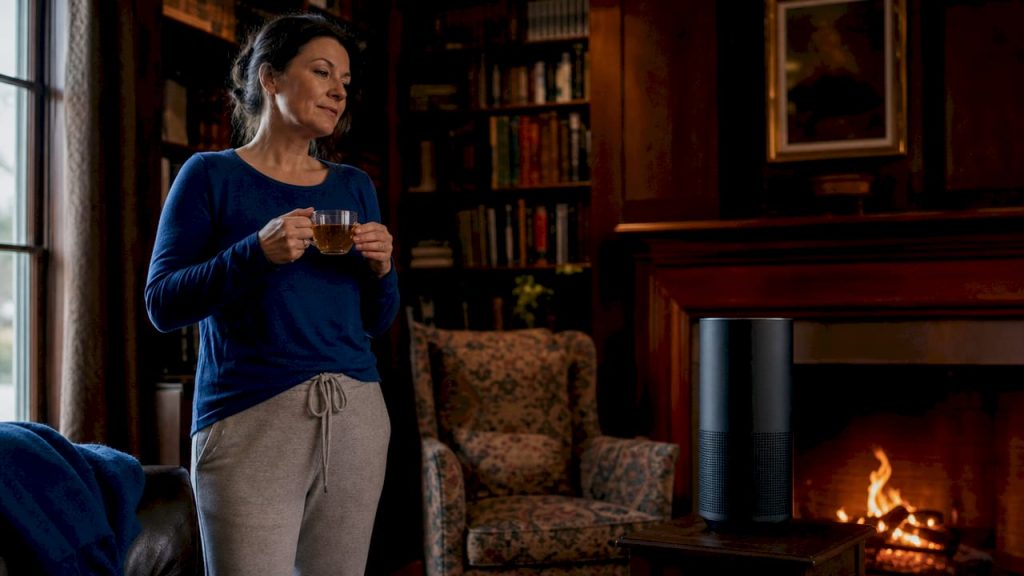
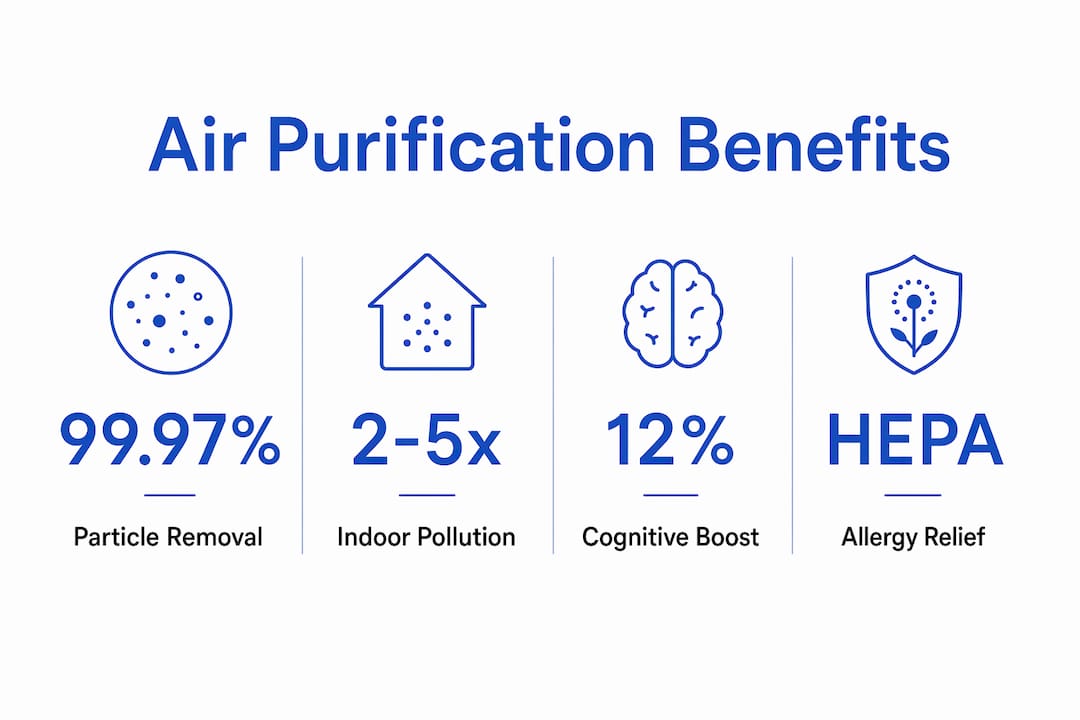
Air purification is needed because indoor air pollutant concentrations are frequently 2 to 5 times higher than outdoor levels. Household sources including cooking, cleaning products, and building materials release particles and gases that accumulate indoors with limited ventilation to clear them. The result is a breathing environment that poses real risks to respiratory health, allergy management, and even cognitive function. Understanding why air purification is needed is the first step toward making informed decisions about the air you breathe every day at home or at work.
Why is indoor air quality often worse than outdoor air?
Indoor air quality is compromised by a wide range of pollutants that build up when ventilation is poor. Unlike outdoor air, which disperses contaminants across large volumes, indoor spaces trap them. Everyday activities release pollutants continuously, and without active measures, concentrations rise to levels that affect health and comfort.
The main categories of indoor air pollutants include:
- Particulate matter (PM2.5 and PM10): Fine particles from cooking, candles, and dust that penetrate deep into the lungs.
- Volatile organic compounds (VOCs): Gases released by paints, adhesives, cleaning sprays, and synthetic furnishings.
- Allergens: Pollen, pet dander, dust mite debris, and mould spores that trigger asthma and allergic reactions.
- Combustion byproducts: Carbon monoxide and nitrogen dioxide from gas stoves, heaters, and tobacco smoke.
- Biological contaminants: Bacteria and viruses that circulate in recirculated air, particularly in sealed buildings.
Each pollutant type carries distinct health risks. Short-term exposure to elevated PM2.5 aggravates asthma and causes eye and throat irritation. Long-term exposure to VOCs is linked to liver damage and central nervous system effects. Allergens are a leading trigger for the more than 300 million people worldwide living with asthma.
“Indoor air pollution is one of the most significant environmental health risks, yet it remains largely invisible to most people living and working in affected spaces.”
Pollutants accumulate indoors because modern buildings are built tightly for energy efficiency. That same tightness restricts the natural air exchange that would otherwise dilute contaminants. The air pollution effects on health are well documented by the US EPA, which classifies indoor air quality as a priority public health concern.
How do air purifiers work to remove pollutants?
Air purifiers work by drawing indoor air through one or more filter layers that capture or neutralise specific pollutant types. The two most important technologies are HEPA filtration and activated carbon filtration, and they target fundamentally different categories of pollutants.
HEPA filtration
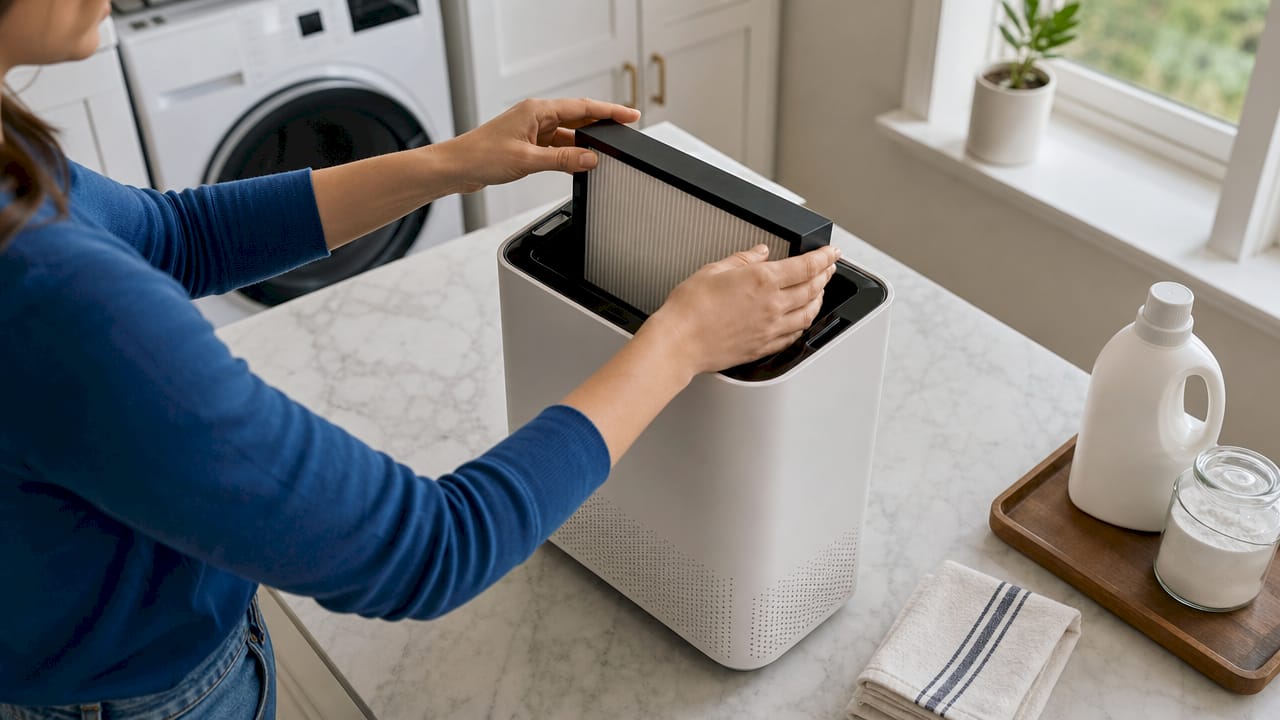
HEPA filters capture 99.97% of particles at 0.3 microns in size, including pollen, dust mites, mould spores, and smoke particles. That level of efficiency makes HEPA the standard for managing airborne particulate matter in residential and clinical settings. Peer-reviewed meta-analyses confirm that portable HEPA purifiers reduce indoor PM2.5 concentrations by 25–50% in real home conditions. That reduction translates directly to fewer asthma episodes, reduced allergy symptoms, and lower cardiovascular strain over time.
Activated carbon filtration
Activated carbon filters chemically bond with gaseous pollutants, including odours and VOCs, which HEPA filters cannot trap. This distinction matters. A HEPA-only unit will remove smoke particles but leave behind the chemical gases that cause odour and long-term toxicity. Units combining both filter types address the full spectrum of common indoor pollutants. For a deeper look at how these technologies compare, the air cleaning technologies guide from Climatepro covers the key differences in practical terms.
What purifiers cannot do
Air purifiers catch airborne particles but not settled dust on surfaces, furniture, or floors. Settled dust requires HEPA vacuuming and damp wiping to remove. An air purifier also does not provide fresh oxygen or reduce CO2 buildup. Ventilation is required for those functions. Understanding these limits prevents the common mistake of relying on a purifier alone while ignoring surface cleaning and fresh air exchange.
Pro Tip: Match your filter type to your primary concern. If you have pets or allergies, prioritise HEPA. If you cook frequently or use chemical cleaning products, choose a unit with an activated carbon layer as well.
What are the limits of air purifiers?
Air purifiers are one layer of a broader indoor air quality strategy, not a complete solution on their own. The US EPA recommends source control first, then ventilation, then air filtration as a supplement. Treating purifiers as a standalone fix is the most common mistake people make when addressing indoor air quality.
A sound indoor air quality approach follows this order:
- Source control: Remove or reduce the origin of pollutants. Stop smoking indoors, switch to low-VOC paints and cleaning products, and service gas appliances regularly.
- Ventilation: Open windows when outdoor air quality permits, use exhaust fans in kitchens and bathrooms, and consider HVAC ventilation improvements to increase fresh air exchange.
- Humidity management: Keep indoor relative humidity between 40% and 60%. High humidity promotes mould and dust mite growth. Low humidity dries mucous membranes and reduces the body’s natural defence against airborne pathogens.
- Air filtration: Run a HEPA and activated carbon purifier continuously in occupied rooms to capture what source control and ventilation cannot eliminate.
Air purifiers alone do not replace ventilation or source control, and HEPA filters leave gas pollutants untreated without an activated carbon stage. Ventilation is also the only reliable way to reduce CO2 buildup in occupied rooms. For practical guidance on why ventilation matters alongside purification, the Climatepro article on apartment ventilation benefits explains the relationship clearly.
Pro Tip: If you are unsure what pollutants are present in your home, a professional indoor air quality assessment can identify specific issues like mould, HVAC contamination, or ventilation deficits that a purifier alone cannot address.
How to use air purifiers effectively
Choosing the right unit and using it consistently determines whether you see real health benefits. A purifier sized for a 20-square-metre room will not adequately clean a 50-square-metre open-plan living area. Match the unit’s Clean Air Delivery Rate (CADR) to your room size, and check that the filter type addresses your specific pollutant concerns.
Key practices for effective use include:
- Run the purifier continuously in rooms where you spend the most time, particularly bedrooms during sleep. Long-term purifier use reduces health risks tied to PM2.5 and wildfire smoke, with documented benefits for cardiovascular and cognitive health.
- Place the unit correctly: Position it away from walls and furniture to allow unrestricted airflow. Central placement in a room or near the primary pollution source works best.
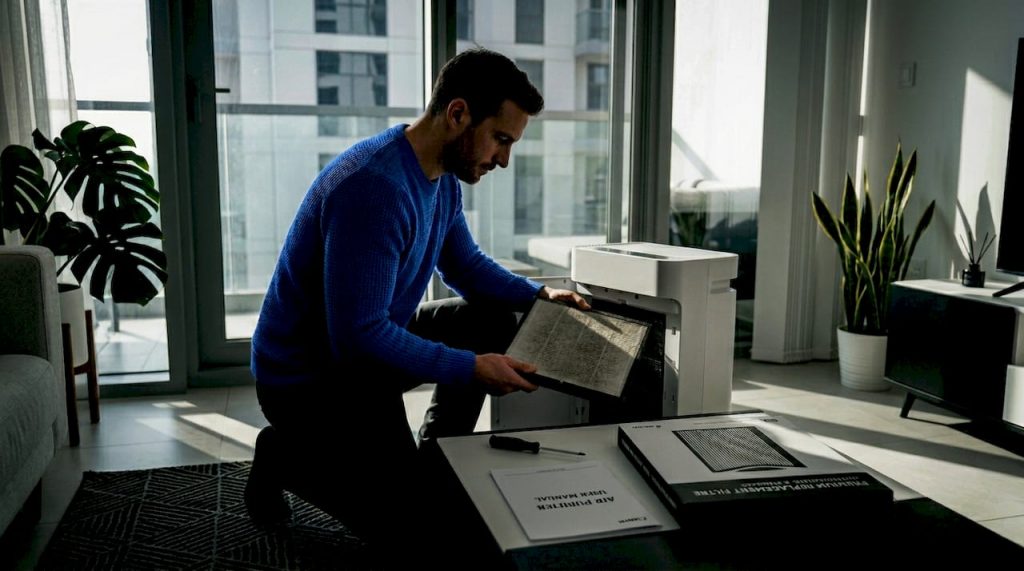
- Replace filters on schedule: A clogged filter reduces efficiency and can re-release trapped particles. Most HEPA filters require replacement every 6–12 months depending on usage and air quality.
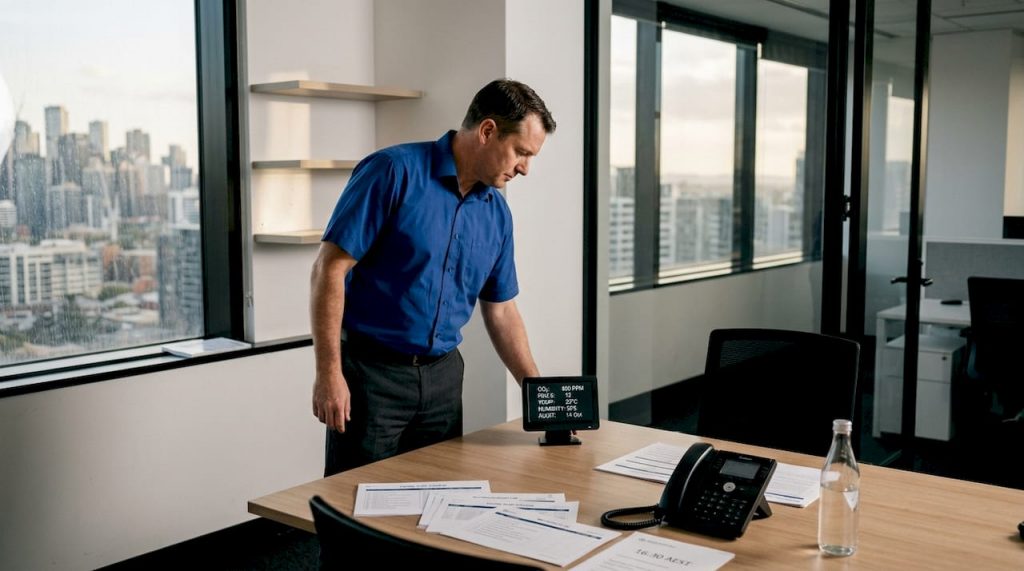
- Monitor air quality: Affordable indoor air quality monitors track PM2.5, VOC levels, humidity, and CO2 in real time. They tell you when your purifier is working and when conditions change.
- Vacuum with a HEPA vacuum: Surface dust and settled allergens require physical removal. A HEPA vacuum prevents resuspension of particles during cleaning.
A 2026 clinical trial found that adults aged 40 and over living near highways showed 12% faster cognitive test completion after just one month of using HEPA purifiers compared to sham units. That finding signals that the benefits of air purification extend well beyond respiratory comfort. For homes near busy roads, industrial areas, or construction zones, consistent purifier use is particularly important.
For guidance on selecting units that balance performance with running costs, the Climatepro blog on energy-efficient purifiers provides practical comparisons relevant to UAE conditions.
Key takeaways
Air purification reduces indoor pollutant concentrations significantly, but it works best as part of a three-part strategy combining source control, ventilation, and filtration.
| Point | Details |
|---|---|
| Indoor air is often more polluted | Concentrations of pollutants indoors are frequently 2 to 5 times higher than outdoors. |
| HEPA and carbon filters serve different roles | HEPA captures particles; activated carbon removes gases and odours. Use both for full coverage. |
| Purifiers have clear limits | They do not remove settled dust, reduce CO2, or replace ventilation. |
| Source control comes first | Reducing pollution at its origin is more effective than filtering it after the fact. |
| Consistent use delivers health gains | Long-term purifier use is linked to improved cardiovascular and cognitive health outcomes. |
Air purification: what the science actually tells us
The research on air purification is more nuanced than most product marketing suggests. I have seen many people buy a purifier, place it in a corner, and assume the job is done. The science says otherwise.
The cognitive benefits finding from 2026 is the one that genuinely surprised me. A 12% improvement in cognitive test speed after just one month of HEPA use is not a marginal gain. For anyone working from home or managing a family in a high-traffic urban area, that is a meaningful outcome. Yet most people still think of purifiers purely in terms of allergy relief.
What I find consistently underappreciated is the role of filter matching. Running a HEPA-only unit in a kitchen where VOCs from cooking and cleaning products are the dominant concern is like wearing a raincoat in a sandstorm. You are protected against the wrong thing. The combination of HEPA and activated carbon is not a premium upgrade. It is the baseline for effective purification in most homes.
The other mistake I see regularly is ignoring humidity. A purifier running in a room with 70% relative humidity is fighting a losing battle against mould spores and dust mites that thrive in those conditions. Managing humidity alongside filtration is not optional. It is part of the same system.
Air purification is a genuinely useful tool. The evidence for its health benefits is solid and growing. But it works best when you treat it as one component of a deliberate approach to indoor air, not a substitute for the harder work of reducing pollution at its source.
— Nevel
Climatepro’s range of air purifiers for UAE homes
Climatepro stocks a curated range of air purifiers suited to homes, offices, clinics, and commercial spaces across the UAE, with delivery available to Dubai, Abu Dhabi, Sharjah, and all seven emirates.

The range includes units with combined HEPA and activated carbon filtration, covering the full spectrum of particulate and gas-phase pollutants discussed in this article. The Honeywell Air Touch P2 is a strong option for medium to large rooms, offering both filter types in a single unit. For those comparing the full range by room size and filtration type, the Climatepro air purifier catalogue lists all available models with specifications and pricing in AED. Orders are placed online with straightforward delivery across the UAE.
FAQ
Why is air purification needed indoors?
Indoor air pollutant concentrations are frequently 2 to 5 times higher than outdoor levels due to cooking, cleaning products, and building materials. Air purification reduces these concentrations to protect respiratory and cognitive health.
Do air purifiers help with allergies?
HEPA air purifiers capture 99.97% of particles at 0.3 microns, including pollen, dust mite debris, and mould spores. Consistent use reduces airborne allergen loads and can significantly reduce allergy and asthma symptoms.
What is the difference between HEPA and activated carbon filters?
HEPA filters remove particulate matter including dust, smoke, and biological particles. Activated carbon filters remove gaseous pollutants such as VOCs and odours, which HEPA cannot capture.
Can an air purifier replace ventilation?
No. An air purifier recirculates and filters indoor air but does not supply fresh oxygen or reduce CO2 buildup. Ventilation is required alongside filtration for a complete indoor air quality strategy.
How often should air purifier filters be replaced?
Most HEPA filters require replacement every 6–12 months depending on usage intensity and local air quality conditions. Following the manufacturer’s schedule maintains filtration efficiency and prevents particle re-release.
Recommended
- Air quality concepts explained: your 2026 guide — Blog | ClimatePro UAE
- Why hotels need air purifiers: a manager’s guide — Blog | ClimatePro UAE
- Understand air cleaning technologies for healthier UAE homes — Blog | ClimatePro UAE
- Buy Honeywell Air Touch P1 Air Purifier in Dubai | Best Price AED 591 | ClimatePro UAE