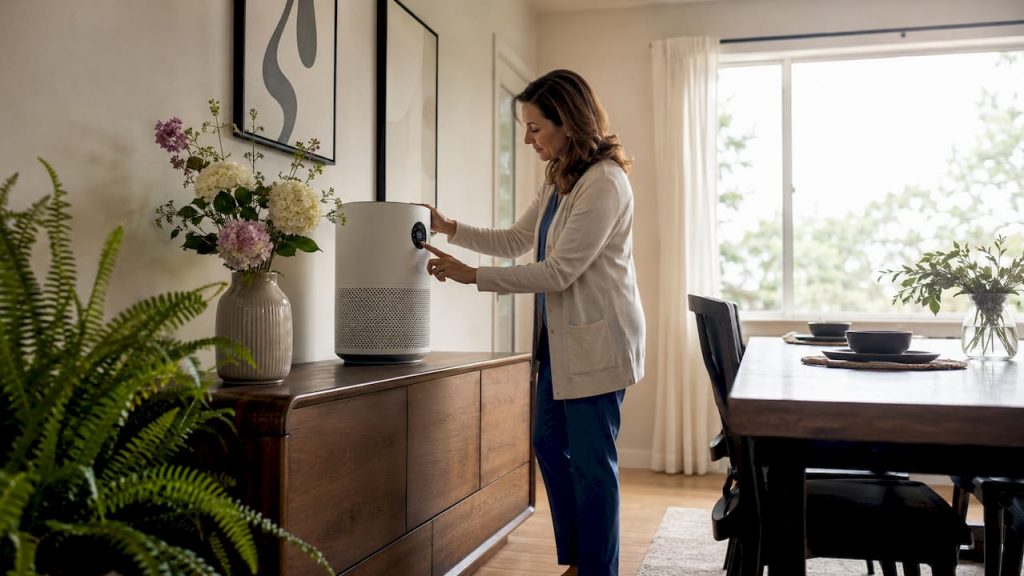
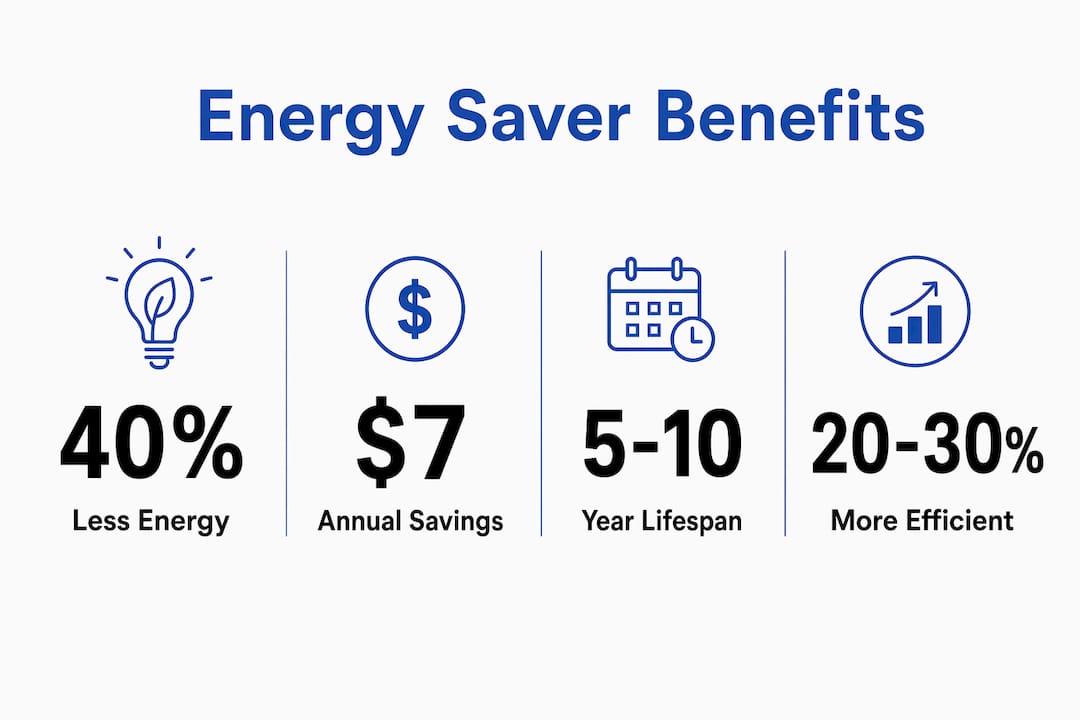
Energy-efficient air purifiers are defined as units that deliver effective indoor air cleaning while consuming significantly less electricity than standard models. The industry benchmark for this category is ENERGY STAR certification, and certified models use about 40% less energy than non-certified equivalents. That translates to $70–$140 in savings over a typical 5–10 year lifespan per unit. For homeowners and renters in the UAE weighing the question of why choose energy-efficient purifiers, the answer is straightforward: you get cleaner air, lower running costs, and a longer-lasting device. Brands like Levoit, Coway, and Honeywell lead this segment with models that balance filtration performance and low power draw.
Why choose energy-efficient purifiers over standard models?
Energy-efficient air purifiers reduce electricity consumption through a combination of motor technology, smart sensors, and certification-backed design standards. Understanding these features helps you make a more informed purchase decision.
DC motors versus AC motors
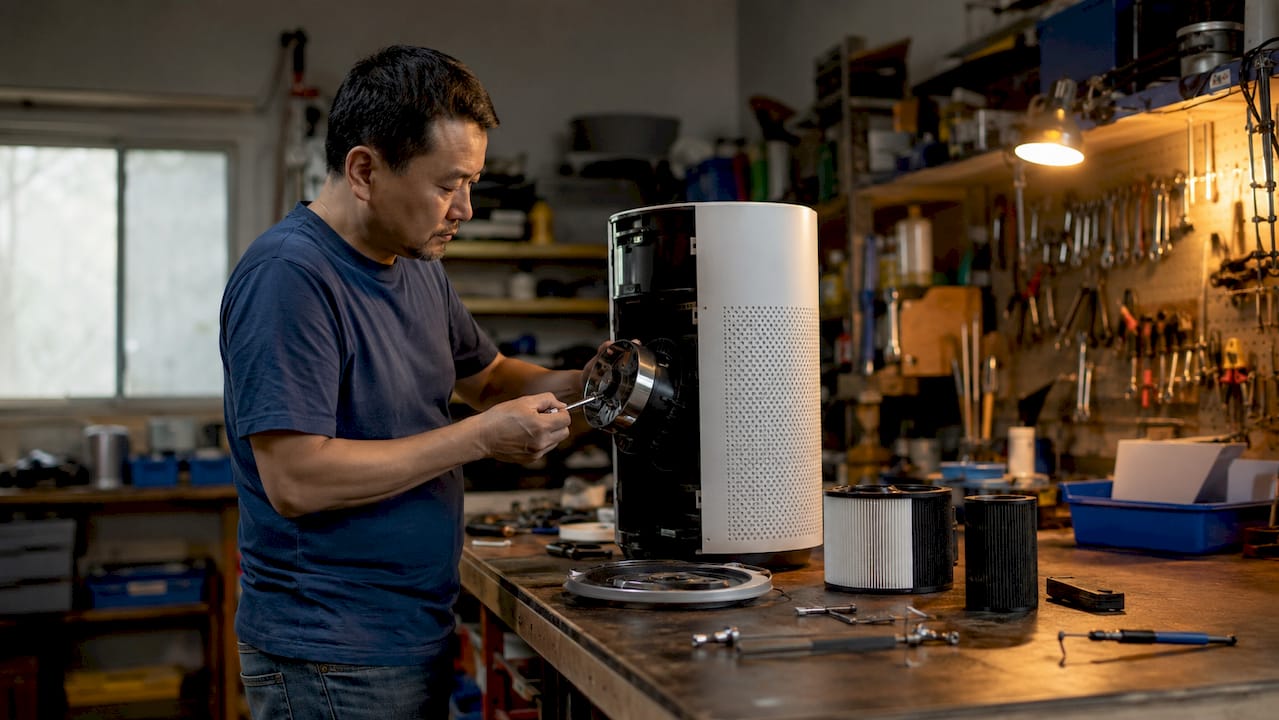
DC motors are 20–30% more energy-efficient than the AC motors found in older or cheaper units. That efficiency gap means DC motor purifiers often recoup their purchase price through electricity savings within two years. Most modern units from Levoit, Coway, and Medify Air now use DC motors as standard. If a product listing does not specify the motor type, treat that as a signal to look elsewhere.
Auto mode and sensor-driven operation
Running a purifier in Auto mode reduces electricity use by 40–50% compared to fixed medium or high settings. The unit reads real-time air quality data from onboard sensors and adjusts fan speed accordingly. When air quality is good, the fan slows down and power draw drops. When a cooking event or dust spike occurs, the unit responds automatically. This is the single most effective operating habit for cutting energy costs without sacrificing air quality.
What power consumption actually looks like
- Modern energy-saving air purifiers consume as little as 10–28 watts on low or auto settings, comparable to a standard LED light bulb
- Standard non-certified models often draw 50–80 watts continuously, regardless of air quality conditions
- ENERGY STAR testing confirms certified models maintain performance without excessive power draw even under 24/7 operation
- Annual savings per certified unit sit at $7–$15, which compounds meaningfully across multiple rooms or over a decade of use
The wattage difference between a certified and non-certified model may seem modest in isolation. Across a full year of continuous operation, that gap adds up to a measurable reduction in your electricity bill.
What are the additional benefits beyond lower energy bills?
The financial case for energy-saving air purifiers is clear, but the advantages extend well beyond the electricity metre.
Longer device lifespan and modular filters
Energy-efficient certified purifiers feature durable, modular filter designs that extend device lifespan to 5–10 years. Non-certified cheaper models typically require full device replacement within 3–4 years due to sealed or non-replaceable filters. Modular filters mean you replace only the component that needs replacing, not the entire unit. Over a decade, that difference in replacement costs can be substantial.
Reduced environmental footprint
Environmentally friendly air purifiers reduce waste in two ways: lower electricity consumption cuts carbon emissions from power generation, and longer device lifespans mean fewer units ending up in landfill. For renters who move frequently, a durable modular unit is also easier to transport and reinstall than a bulky, single-use device.
Continuous operation and health outcomes
The main health benefit of energy-efficient purifiers is enabling uninterrupted 24/7 operation by removing cost barriers. When running costs are low, there is no financial reason to switch the unit off. Consistent filtration removes allergens, fine dust, and volatile organic compounds without interruption, which matters most for families with asthma, allergies, or young children.
- Lower noise levels: Most energy-efficient models include Sleep or Night modes that reduce fan speed and noise while maintaining baseline filtration
- Fewer filter replacements: Modular designs and lower motor workload extend filter life, reducing both cost and maintenance frequency
- Better air quality consistency: Continuous low-power operation prevents the pollutant build-up that occurs when units are switched off between uses
Pro Tip: If you have allergy sufferers in your household, prioritise models with a dedicated Sleep mode. These maintain filtration overnight at minimal noise and power draw, which is when allergen exposure during sleep matters most.
How do room size and usage habits affect efficiency?
Selecting the right purifier for your space is as important as choosing an efficient model. A poorly matched unit wastes energy regardless of its certification.
Matching CADR to room size
True energy efficiency depends on CADR-per-watt performance. CADR stands for Clean Air Delivery Rate, and it measures how much filtered air a unit delivers per minute. Matching CADR to your room size prevents two common problems: an undersized unit running at maximum capacity continuously, and an oversized unit cycling inefficiently. Purifiers undersized for the room run at maximum capacity and increase energy use unnecessarily. As a general rule, choose a unit with a CADR rating that covers at least two-thirds of your room’s floor area.
Operational habits that reduce power draw
- Use Auto mode as your default setting. Sensor-driven fan speed adjustment is the most effective way to reduce power consumption without manual intervention.
- Activate Sleep or Night mode overnight. Sleep modes reduce fan speed and noise while maintaining baseline filtration, making them ideal for overnight use in homes with tight budgets.
- Keep the unit running on low rather than switching it off. Turning purifiers off while away leads to pollutant build-up and higher energy spikes upon reactivation. Maintaining a low baseline is more efficient and healthier.
- Clean the pre-filter every two weeks. Vacuuming the pre-filter regularly reduces motor workload and electricity use by lowering air resistance. Neglecting this causes higher power draw and accelerated filter wear.
- Avoid placing the unit in a corner or against a wall. Restricted airflow forces the motor to work harder, increasing power consumption and reducing filtration effectiveness.
Pro Tip: Pair your purifier’s scheduling feature with your daily routine. Set it to run at medium speed one hour before you arrive home, then switch to Auto mode when you walk in. This approach maintains air quality without running the unit at high speed all day.
How to choose and maintain an energy-efficient air purifier
Selecting the right model requires checking a short list of specifications and understanding what each one means for your running costs and air quality outcomes.
What to look for when buying
| Feature | Why it matters |
|---|---|
| ENERGY STAR certification | Confirms the unit uses at least 40% less energy than non-certified equivalents |
| DC motor | Delivers 20–30% better efficiency than AC motor units and longer operational life |
| CADR rating matched to room size | Prevents inefficient operation caused by undersizing or oversizing |
| Modular filter design | Allows individual filter replacement, extending device lifespan to 5–10 years |
| Auto and Sleep modes | Enable sensor-driven power reduction without manual adjustment |
| Air quality sensor | Provides real-time data for Auto mode to function correctly |
Smart features like scheduling and air quality sensors are no longer premium additions. They appear on mid-range models from Levoit and Honeywell and pay for themselves quickly through reduced electricity consumption. When reviewing energy-efficient purifier options, check whether the unit’s smart app allows you to set operating schedules, as this adds another layer of control over running costs.
Maintenance habits that preserve efficiency
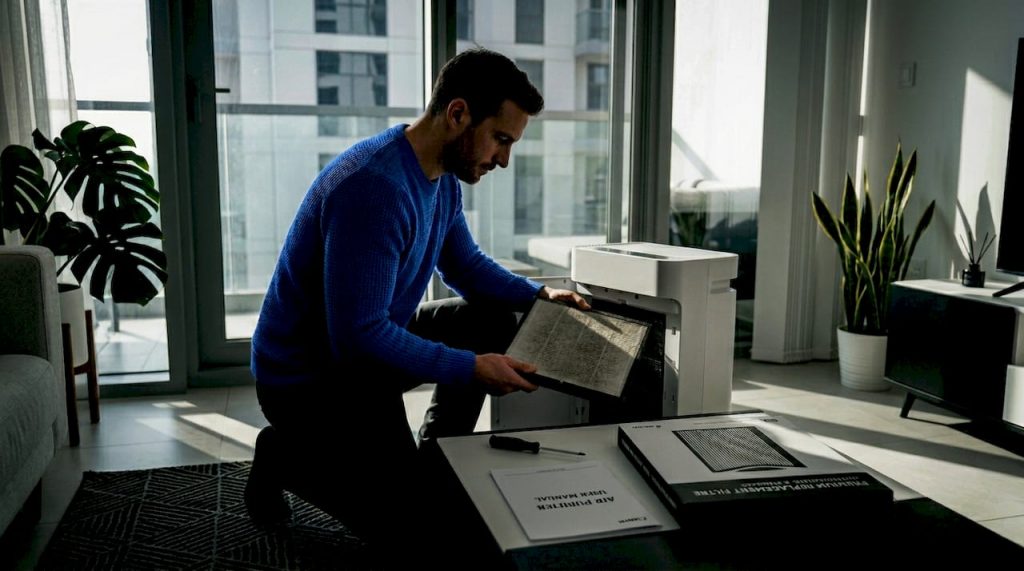
Regular maintenance is the most overlooked factor in long-term energy efficiency. A clogged pre-filter forces the motor to draw more power to maintain airflow. Periodic pre-filter cleaning reduces motor load and electricity consumption while extending device life. Replace HEPA and activated carbon filters on the manufacturer’s recommended schedule. Running a filter beyond its service life reduces filtration effectiveness and increases motor strain. For a practical overview of how these habits fit into a broader home air quality routine, the energy-efficient air cleaning workflow guide from Climatepro covers the full process in detail.
Weigh upfront cost against long-term savings before purchasing. A certified unit with a DC motor and modular filters costs more at the point of sale but delivers lower running costs, fewer replacements, and a longer service life. Over five years, the total cost of ownership for a certified model is consistently lower than for a cheaper non-certified alternative.
Key takeaways
Energy-efficient air purifiers with ENERGY STAR certification, DC motors, and Auto mode deliver the lowest total cost of ownership while maintaining consistent indoor air quality.
| Point | Details |
|---|---|
| ENERGY STAR certification matters | Certified models use 40% less energy and save $70–$140 over a typical device lifespan. |
| DC motors outperform AC motors | DC motor units are 20–30% more efficient and often recoup their cost within two years. |
| Auto mode cuts power significantly | Running on Auto reduces electricity use by 40–50% compared to fixed medium or high settings. |
| Match CADR to room size | Correct sizing prevents constant high-speed operation and unnecessary energy waste. |
| Pre-filter cleaning preserves efficiency | Vacuuming the pre-filter every two weeks lowers motor workload and extends filter life. |
What I’ve learned from watching people use purifiers wrong
Most people buy a reasonable purifier and then operate it in a way that cancels out most of its efficiency advantages. The two most common mistakes I see are switching the unit off when leaving the house and running it on high speed all day to compensate. Both habits cost more money and produce worse air quality than simply leaving the unit on Auto at a low baseline.
The other thing that surprises people is how much the pre-filter matters. A blocked pre-filter is invisible from the outside, but it forces the motor to work significantly harder to pull air through. I have seen units drawing nearly double their rated wattage simply because the pre-filter had not been cleaned in three months. That is a straightforward maintenance task that takes two minutes and costs nothing.
The health argument for continuous low-power operation is also stronger than most people realise. Allergens and fine particles do not stop accumulating when you leave the room. A unit running at 15 watts continuously does more for your indoor air quality than one running at 60 watts for four hours a day. For families with young children or anyone managing respiratory conditions, that consistency is the real value of choosing an efficient model. The Levoit Core 200S is a good example of a unit that handles this well in smaller rooms, drawing minimal power on Auto while maintaining genuine filtration performance.
— Nevel
Find energy-efficient purifiers at Climatepro
Climatepro stocks a curated range of energy-saving air purifiers suited to homes, apartments, and rental properties across the UAE, with delivery to Dubai, Abu Dhabi, Sharjah, and all seven emirates.

The catalogue includes certified models from Honeywell, Levoit, and Medify Air across a range of room sizes and budgets. The Honeywell Air Touch P2 is a high-efficiency option well suited to medium and large living spaces, combining strong CADR performance with low power consumption. For those comparing options across room sizes and price points, the full air purifier catalogue at Climatepro lists specifications, CADR ratings, and filter types to help you match the right unit to your space. The team is available to assist with product selection if you are unsure which model suits your needs.
FAQ
What does ENERGY STAR certification mean for air purifiers?
ENERGY STAR certified air purifiers use at least 40% less energy than non-certified models while meeting the same filtration performance standards. Certification is verified through independent testing, not self-reporting by manufacturers.
Is it better to leave an air purifier on all day or turn it off?
Leaving a purifier running on low or Auto mode continuously is more energy-efficient than switching it off and restarting at high speed. Turning the unit off allows pollutants to accumulate, which then requires energy-intensive high-speed operation to clear.
How do I know if a purifier is the right size for my room?
Check the unit’s CADR rating and compare it to your room’s floor area. A purifier with a CADR that covers at least two-thirds of your room’s square footage will operate efficiently without running at maximum capacity continuously.
Do energy-efficient purifiers filter air as effectively as standard models?
Yes. ENERGY STAR certified models are tested to confirm they maintain filtration performance while consuming less power. The efficiency gain comes from motor design and smart operating modes, not from reduced filtration capability.
How often should I clean or replace filters to maintain efficiency?
Vacuum the pre-filter every two weeks to reduce motor workload and maintain airflow. Replace HEPA and activated carbon filters according to the manufacturer’s schedule, typically every 6–12 months depending on usage and air quality conditions.
Recommended
- Energy efficient air cleaning workflow for homes — Blog | ClimatePro UAE
- HEPA filtration: Improve your UAE home’s air quality — Blog | ClimatePro UAE
- Levoit Core 300S air purifier: Guide to cleaner indoor air — Blog | ClimatePro UAE
- Dyson Air Purifier Buying Guide: Which Model Is Right for You? — Blog | ClimatePro UAE