Dehumidification is defined as the active removal of water vapour from indoor air to control humidity levels and protect your home. The recommended indoor humidity range is 30–50% relative humidity (RH). Staying within that range prevents mould growth, musty odours, and structural damage to walls, flooring, and furniture. For homeowners and renters, understanding the dehumidification process is the first step toward making a real difference to indoor air quality and long-term home comfort. Climatepro helps households across the UAE achieve that balance with reliable, well-matched equipment.
How does the dehumidification process work?
Dehumidification works by pulling moisture out of the air through one of two physical mechanisms: cooling air below its dew point, or exposing it to a moisture-absorbing material. Both methods reduce the water vapour content of the air and return drier air to the room.
The dew point and why it matters
The dew point is the temperature at which air becomes fully saturated and water vapour begins to condense into liquid. Dew point predicts condensation more reliably than relative humidity alone, because RH changes with temperature while dew point stays fixed until moisture is actually removed. A room at 28°C with 70% RH and a room at 20°C with 70% RH carry very different amounts of moisture. Tracking dew point tells you exactly when condensation and mould risk become real problems.
What happens inside a refrigerant dehumidifier
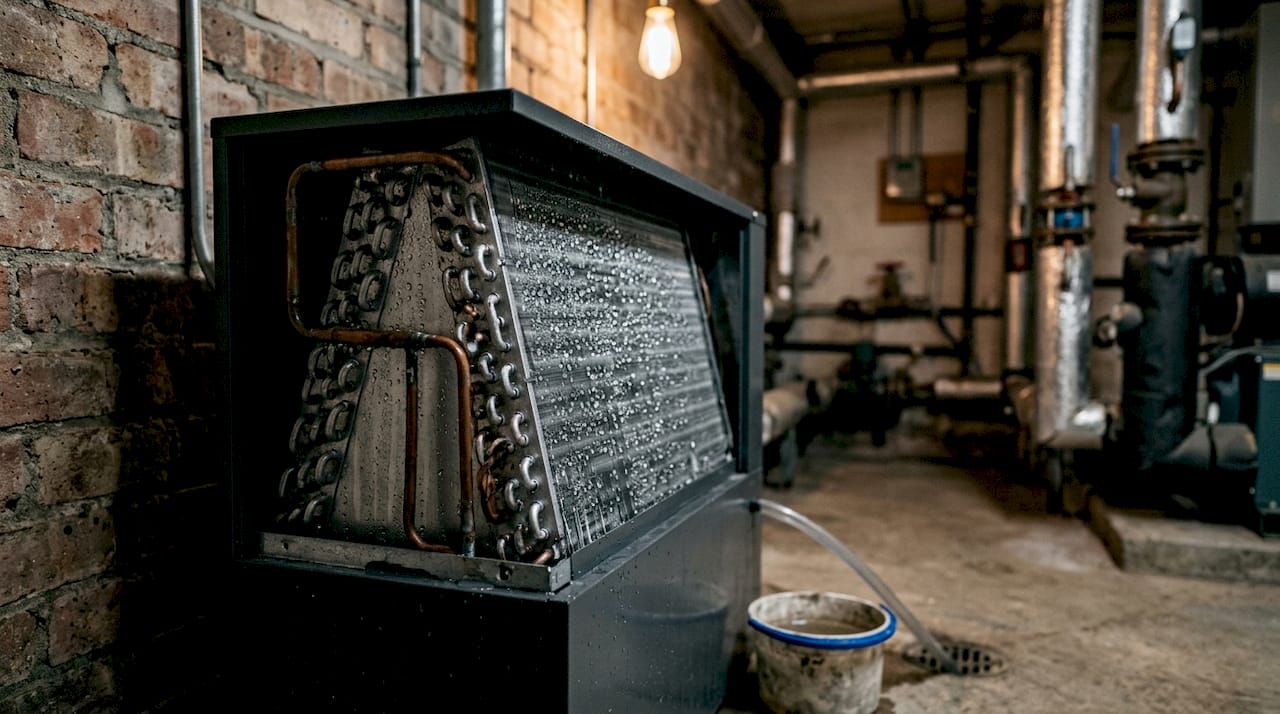
A refrigerant dehumidifier draws room air across a cold coil. The coil chills the air below its dew point, causing water vapour to condense into liquid droplets that drip into a collection bucket. The now-drier air passes over a warm condenser coil before returning to the room. Refrigerant units warm the air by 2–5°F as latent heat releases back into the space. This is a minor but measurable effect, and it means a dehumidifier is not the same as an air conditioner.
What happens inside a desiccant dehumidifier
A desiccant dehumidifier passes air through a rotating wheel coated in a hygroscopic material, typically silica gel. The material adsorbs water vapour directly from the air without any refrigeration. A separate heated airstream then regenerates the desiccant by driving the captured moisture out and away. The result is dry air delivered back into the room at a slightly higher temperature than with refrigerant models.
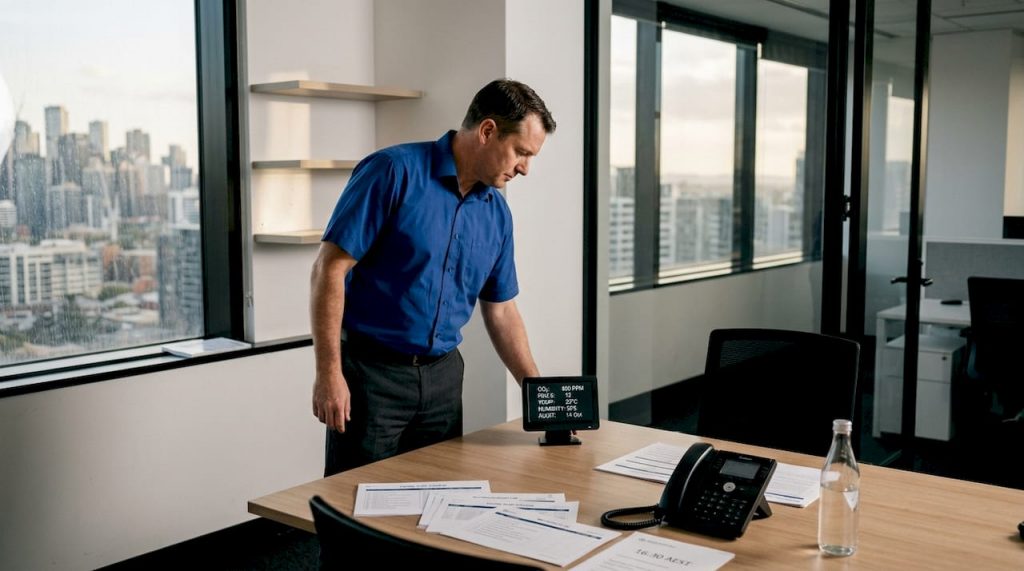
Pro Tip: Use a hygrometer to monitor both relative humidity and dew point in each room. Dew point readings above 15°C signal a genuine condensation risk, even when RH looks acceptable.
- Refrigerant method: cools air below dew point, water condenses on cold coils, collected in a bucket or drained continuously.
- Desiccant method: adsorbs moisture into a hygroscopic material, regenerated by heat, no cold coils required.
- Both methods return drier air to the room, though the temperature effect differs between the two.
What are the main dehumidification methods for homes?
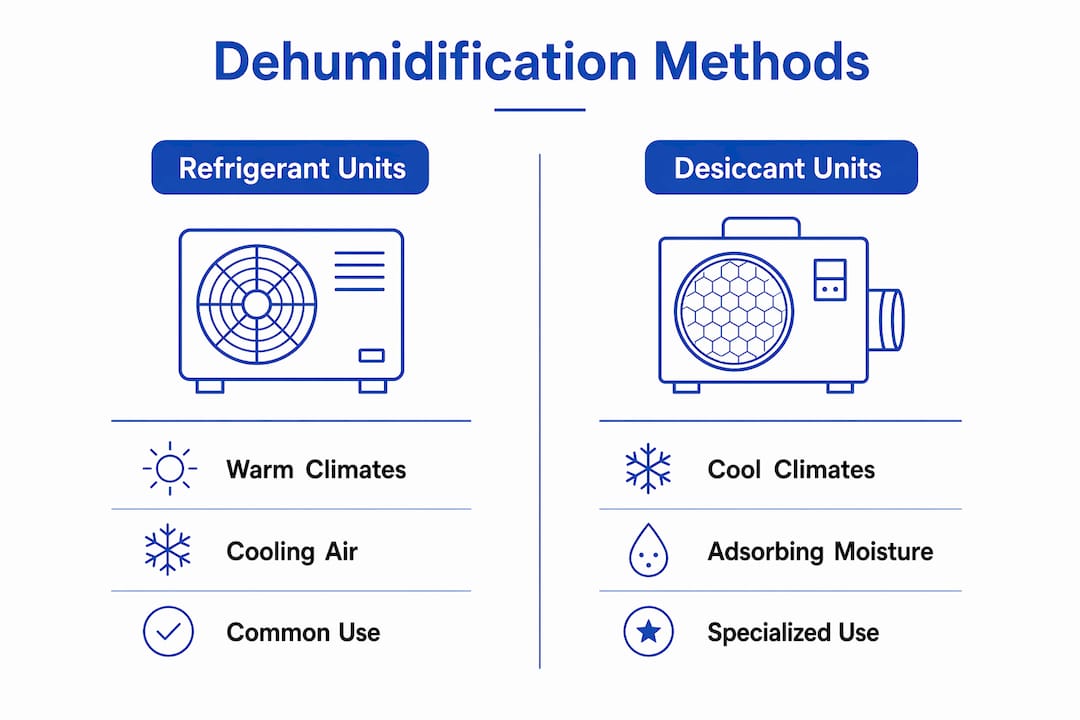
Two technologies dominate residential dehumidification: refrigerant (condensing) units and desiccant units. Each suits different conditions, and choosing the wrong type for your climate or space reduces effectiveness significantly.
Refrigerant dehumidifiers
Refrigerant dehumidifiers are the most common choice for homes in warm or temperate climates. They work efficiently when ambient temperatures stay above roughly 18°C (65°F). Below that threshold, efficiency drops by 30–50% because the cold coils ice over and the unit must run defrost cycles instead of removing moisture. For most UAE homes, where indoor temperatures rarely fall that low, refrigerant units are the practical default. They are generally quieter, cheaper to run, and available across a wide capacity range.
Desiccant dehumidifiers
Desiccant dehumidifiers perform well in cooler spaces such as unheated storage rooms, garages, or cold-climate homes. They have no cold coils to ice over, so they maintain consistent performance regardless of ambient temperature. The trade-off is energy consumption. Desiccant units use 40–70% more electricity per pint of water removed compared to refrigerant models. That cost adds up quickly in a continuously running residential setting. What is desiccant dehumidification best suited for? Spaces where refrigerant units simply cannot function reliably.
Portable versus whole-house systems
Portable units handle single rooms or small areas and are the most accessible entry point for homeowners and renters. Consumer dehumidifiers range from around $40 for basic portable units to $2,500 for whole-house systems. Whole-house systems integrate with existing HVAC ductwork and manage humidity across an entire property from a single control point. For renters, a portable unit is usually the only practical option. For homeowners with persistent whole-home humidity problems, a ducted system delivers more consistent results.
| Feature | Refrigerant units | Desiccant units |
|---|---|---|
| Best temperature range | Above 18°C (65°F) | Any temperature, including below 10°C |
| Energy efficiency | Higher (lower running cost) | Lower (40–70% more electricity per pint) |
| Typical use case | Living areas, bedrooms, warm climates | Garages, storage rooms, cold climates |
| Noise level | Moderate (compressor noise) | Generally quieter |
| Maintenance | Filter cleaning, bucket emptying | Filter cleaning, no defrost cycles |
Pro Tip: For UAE homes with year-round warm indoor temperatures, a refrigerant dehumidifier is almost always the right choice. Reserve desiccant models for unheated spaces or cool-season use.
How to choose the right dehumidifier for your home or rental
Selecting the right unit comes down to four practical factors: room size, humidity severity, energy use, and the features that affect day-to-day convenience.
Matching capacity to your space
Dehumidifier capacity is measured in litres or pints of water removed per day. A small bedroom with mild dampness needs a much smaller unit than a large open-plan living area with persistent high humidity. Measure the floor area of the space and check the manufacturer’s capacity rating against that area at the humidity level you are dealing with. Undersizing a unit means it runs constantly without reaching your target humidity. Oversizing wastes money upfront without delivering proportional benefit.
Key features to look for
- Collection bucket size: Standard portable units carry 1–2 gallon (roughly 4–8 litre) buckets. A larger bucket means less frequent emptying.
- Continuous drainage: A gravity drain or pump outlet lets the unit run indefinitely without manual emptying. This is the single most useful feature for set-and-forget operation.
- Humidistat control: A built-in humidistat shuts the unit off when target humidity is reached, saving electricity. Automatic control systems maintain target RH without constant manual adjustment.
- Noise rating: Bedroom units should ideally operate below 45 decibels. Check the specification sheet before buying.
- Energy rating: Look for units with a high energy factor (litres removed per kilowatt-hour). A better energy factor means lower running costs over the life of the unit.
For a practical walkthrough of setting up humidity control in your home, Climatepro’s step-by-step humidity guide covers the full process from assessment to ongoing management.
Maintenance basics
Clean or replace the air filter every two to four weeks during heavy use. A clogged filter reduces airflow and forces the unit to work harder, cutting moisture removal and shortening the compressor’s life. Empty and rinse the collection bucket regularly to prevent mould and bacteria building up inside the unit itself. Check the coils annually for dust or ice residue.
Common challenges when using dehumidifiers at home
Even a well-chosen dehumidifier delivers poor results if placed or operated incorrectly. These are the most common problems homeowners and renters encounter, and how to address them.
Temperature effects on performance
Refrigerant dehumidifiers lose significant efficiency in cooler conditions. Below 18°C, defrost cycles reduce moisture removal by up to half. If you notice the unit running but humidity staying high during cooler months, check the ambient temperature first. Switching to a desiccant unit for that space, or raising the room temperature slightly, resolves the problem.
Placement and airflow
- Place the unit in the centre of the room where possible, away from walls and furniture that block airflow.
- Keep doors and windows closed while the unit runs. Drawing in humid outdoor air defeats the purpose.
- In multi-room homes, a single portable unit cannot dehumidify the whole property. Use one unit per problem area, or invest in a whole-house system.
- Avoid placing units in corners or inside cupboards. Restricted airflow reduces output by a measurable amount.
Managing energy costs
Standard air conditioning often fails to control humidity adequately, which is why a dedicated dehumidifier is necessary even in air-conditioned homes. Running a dehumidifier continuously is expensive. Use the humidistat to set a target of 50% RH and let the unit cycle on and off automatically. This approach uses significantly less electricity than running the unit at full capacity around the clock.
Pro Tip: Track your dew point alongside relative humidity using a digital hygrometer. When the indoor dew point drops below 12°C, your dehumidifier has done its job and can rest. This simple habit prevents over-running the unit and cuts energy costs.
For broader advice on managing indoor climate efficiently, Climatepro’s climate control tips for UAE homes covers humidity, temperature, and ventilation together.
Key takeaways
Dehumidification is the most direct method for maintaining indoor humidity between 30–50% RH, preventing mould, protecting your home, and improving air quality.
| Point | Details |
|---|---|
| Target humidity range | Keep indoor RH between 30–50% to prevent mould, odours, and structural damage. |
| Two core methods | Refrigerant units suit warm spaces; desiccant units suit cold or unheated areas. |
| Dew point monitoring | Track dew point, not just RH, for accurate condensation and mould risk assessment. |
| Capacity matching | Size your unit to the room area and humidity severity to avoid under or over-performance. |
| Continuous drainage | A gravity drain or pump outlet removes the need for manual bucket emptying and improves reliability. |
What I’ve learned from years of watching homeowners get humidity wrong
Most homeowners buy a dehumidifier after the problem is already visible: mould on the bathroom ceiling, warped skirting boards, or a persistent musty smell in the bedroom. By that point, the damage is done and the dehumidifier is playing catch-up. The smarter approach is to treat humidity control as routine maintenance, not emergency response.
The other mistake I see constantly is buying on price alone. A $40 portable unit in a 60-square-metre open-plan living area will run flat out, never reach the target humidity, and burn out within a year. Matching capacity to the actual space is not optional. It determines whether the unit works at all.
One thing that surprises people: refrigerant dehumidifiers do not cool the room. They warm it slightly. If you are running a dehumidifier in summer and wondering why the room feels warmer, that is the latent heat releasing back into the space. Pair the dehumidifier with your air conditioning rather than treating them as alternatives.
Finally, the dew point reading on a hygrometer is more useful than the RH reading for understanding real moisture risk. Relative humidity shifts with temperature. Dew point does not. Once you start reading dew point, you will understand your home’s moisture behaviour in a way that RH alone never gives you.
— Nevel
Climatepro’s dehumidifier range for UAE homes

Climatepro stocks a full range of dehumidifiers for UAE homes, from compact portable units suited to single rooms through to higher-capacity models for larger living areas. Every unit is selected for reliability and performance in the UAE’s warm, humid climate. The range includes models with built-in humidistats, continuous drainage options, and quiet operation ratings suitable for bedrooms and living spaces. Climatepro delivers across Dubai, Abu Dhabi, Sharjah, Ajman, Ras Al Khaimah, Fujairah, and Umm Al Quwain. If you are also dealing with airborne dust or allergens alongside humidity, the Xiaomi Smart Dehumidifier Lite offers an accessible starting point with app-based humidity monitoring built in.
FAQ
What is the dehumidification process in simple terms?
Dehumidification is the removal of water vapour from indoor air to lower humidity levels. A dehumidifier pulls in humid air, extracts the moisture through cooling or adsorption, and returns drier air to the room.
What is the ideal indoor humidity level?
The recommended indoor RH is 30–50%. Staying within this range prevents mould growth, protects furnishings, and maintains comfortable air quality.
What is desiccant dehumidification?
Desiccant dehumidification uses a hygroscopic material, typically silica gel, to adsorb moisture directly from the air without refrigeration. It works in cold environments where refrigerant units lose efficiency.
Is dehumidification necessary if I already have air conditioning?
Standard air conditioning does not reliably control humidity. A dedicated dehumidifier is needed to maintain target RH levels, particularly in humid climates or poorly ventilated rooms.
How often should I clean my dehumidifier?
Clean the air filter every two to four weeks during regular use, and rinse the collection bucket at the same time. Annual coil checks prevent dust and ice residue from reducing performance.
Recommended
- Humidity control workflow: your step-by-step home guide — Blog | ClimatePro UAE
- Ultrasonic humidification: a homeowner’s guide — Blog | ClimatePro UAE
- Buy Xiaomi Smart Dehumidifier Lite in Dubai | Best Price AED 435 | ClimatePro UAE
- Energy efficient air cleaning workflow for homes — Blog | ClimatePro UAE