Most people assume that running an air purifier is enough to deal with dust in their home. It is not. Dust mitigation is the systematic practice of controlling and reducing dust accumulation and airborne dust particles indoors, and it covers far more ground than any single device can handle. Indoor dust is a complex mixture of skin cells, soil particles, pet dander, textile fibres, and even trace chemicals. Understanding what dust mitigation really involves, and which strategies actually work, is the first step toward genuinely cleaner indoor air.
Table of Contents
- Key takeaways
- What dust mitigation means for indoor air quality
- The three dust mitigation strategies explained
- Practical dust control methods for your home
- Technology-based dust suppression techniques
- Additional factors that affect dust buildup
- My perspective on dust mitigation in practice
- Upgrade your dust mitigation with the right tools
- FAQ
Key takeaways
| Point | Details |
|---|---|
| Source control comes first | Stopping dust at its origin is more effective than filtering it after it has spread through your home. |
| Three core strategies exist | Dust mitigation combines source control, improved ventilation, and air filtration for best results. |
| Cleaning method matters | Wet microfibre cloths and sealed HEPA vacuums remove dust; dry tools just redistribute it. |
| Humidity affects dust mites | Keeping indoor humidity between 40 and 50 per cent limits dust mite populations significantly. |
| Technology supplements, not replaces | Air purifiers and HVAC filters support dust control but cannot substitute for good habits and source management. |
What dust mitigation means for indoor air quality
Dust mitigation refers to the deliberate set of practices, tools, and environmental adjustments used to control and reduce dust, both the kind that settles on surfaces and the kind that remains suspended in indoor air. It is not a single action. It is an ongoing management approach.
Why does it matter? Exposure to indoor dust is linked to allergic reactions, worsened asthma, respiratory irritation, and long-term lung health concerns. Dust carries biological material including dust mite debris, mould spores, and pet allergens, all of which are potent triggers for sensitive individuals. For people living in high-density urban environments like those across the UAE, where outdoor particulate matter is already elevated, indoor dust load adds to an already challenging air quality situation.
The U.S. EPA categorises dust mitigation into three fundamental strategies, listed here in order of effectiveness:
- Source control: Reducing or eliminating the dust-generating sources in your indoor environment
- Ventilation: Diluting indoor air pollutants by introducing and circulating cleaner outdoor or filtered air
- Air filtration: Using mechanical or electronic filters to capture airborne dust particles before they recirculate
Understanding these three tiers is the foundation of any effective dust mitigation strategy. Each has a role, but they are not equally powerful on their own.
The three dust mitigation strategies explained
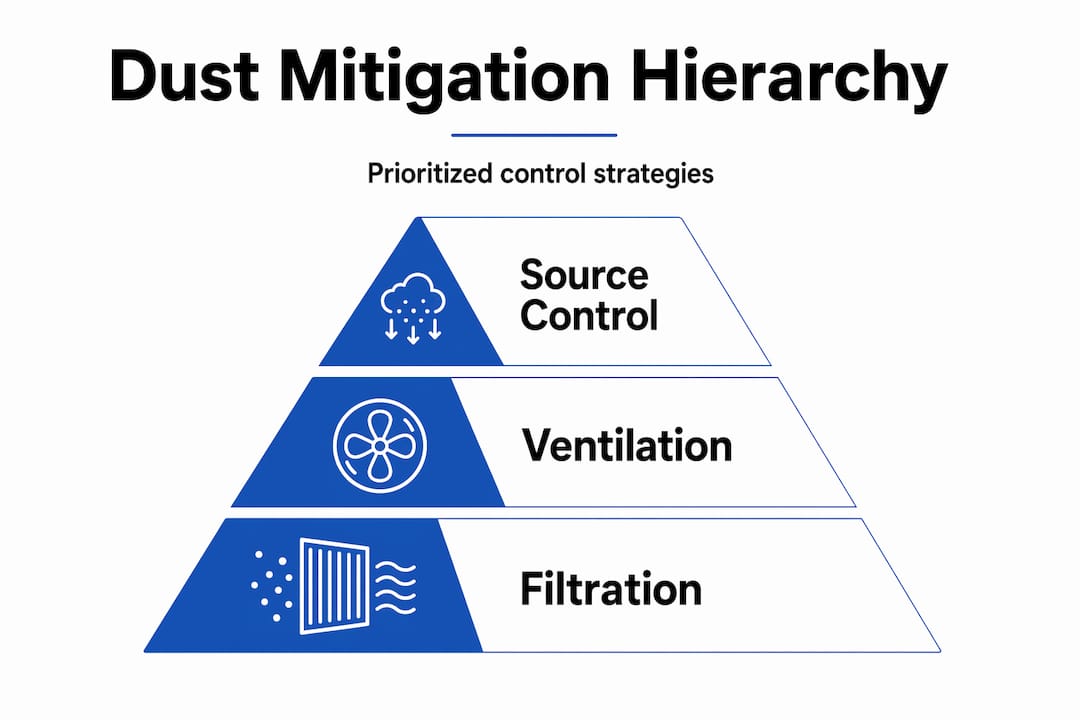
Source control: the most effective starting point
Source control is the most effective strategy for improving indoor air quality. In practical terms, this means reducing the amount of dust that enters your home or is generated within it. One of the highest-impact actions is using entryway systems. Research from the GSA found that up to 24 pounds of dirt can be tracked in by 1,000 people over 20 days, with removal costs running roughly $500 per pound. A well-placed walk-off mat at the front door is a genuinely cost-effective source control tool.
Ventilation: dilution and airflow management
Improving ventilation lowers indoor dust concentrations by replacing particle-laden air with cleaner air. This includes opening windows when outdoor air quality permits, using exhaust fans in kitchens and bathrooms, and ensuring that your HVAC system is drawing and exchanging air rather than simply recirculating it. For a practical explanation of how airflow rates affect dust and pollutant levels, the guide on air changes and indoor air quality from Climatepro covers this in useful detail.
Air filtration: a critical supporting layer
Air filtration captures particles already airborne. It does not stop dust from entering or forming, which is why it supplements rather than replaces the first two strategies. Air cleaners and filters supplement, but do not replace, source control and ventilation. That said, filtration is still a meaningful part of the picture, particularly for fine particles that cleaning cannot address.
| Strategy | Effectiveness | Ease of implementation | Typical cost |
|---|---|---|---|
| Source control | High | Moderate | Low to moderate |
| Ventilation improvement | Moderate to high | Moderate | Low to moderate |
| Air filtration (HEPA/MERV) | Moderate | Easy | Moderate to high |
Pro Tip: If you are only doing one thing, focus on source control. Entryway mats, regular laundering of soft furnishings, and reducing clutter will outperform running an air purifier in a dusty, unmanaged space.
Practical dust control methods for your home
Getting dust mitigation right at home does not require an expensive overhaul. Most of the gains come from consistent habits and smarter cleaning practices.
Cleaning techniques that actually work
Dry dusting tools redistribute dust into the air rather than removing it. Feather dusters and dry cloths are two of the most common culprits. Wet microfibre cloths work differently. They trap dust particles through a combination of static charge and moisture, preventing them from becoming airborne during cleaning. Use them damp, not soaked, for best results.
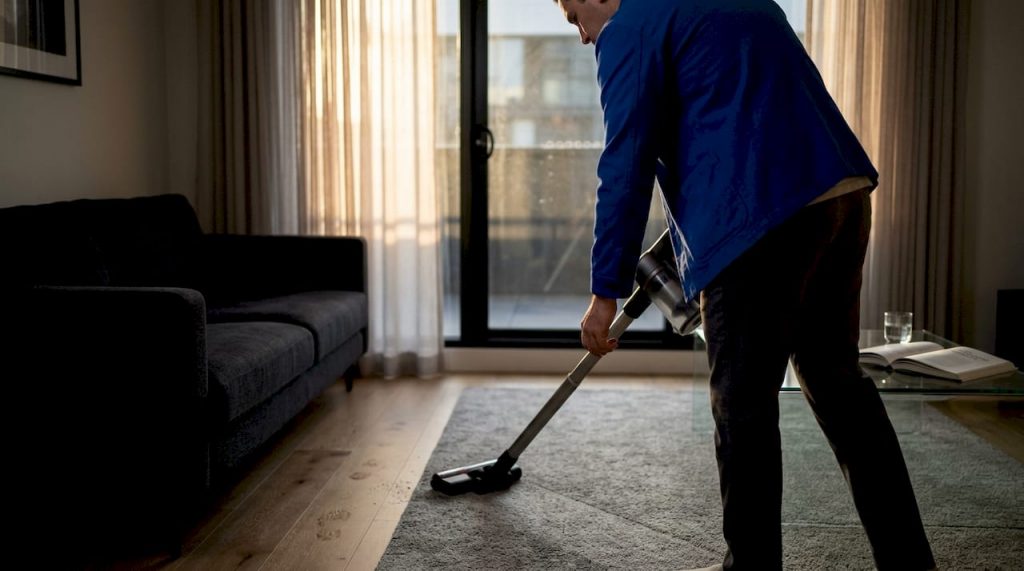
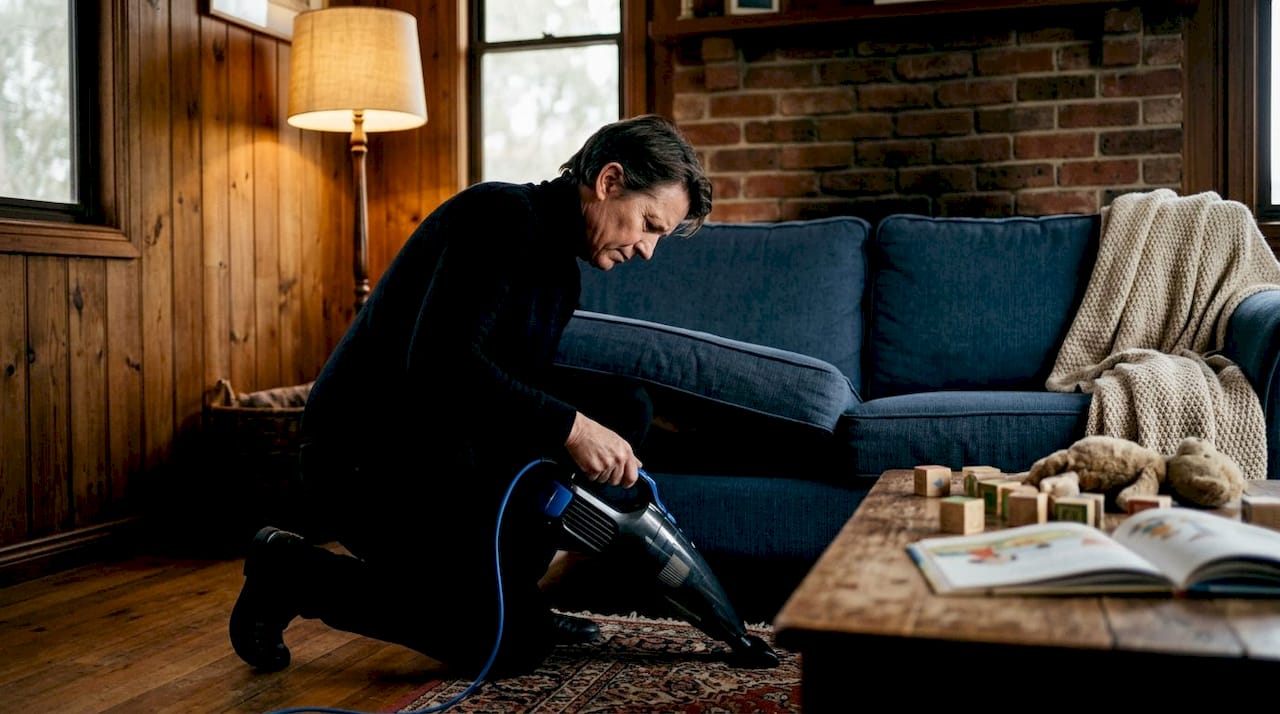
For vacuuming, the type of machine you use matters considerably. Fabrics act as dust magnets. Carpets, upholstered furniture, curtains, and bedding all accumulate significant dust loads. Vacuum these surfaces regularly and wash bedding in hot water every one to two weeks.
Managing the main sources of indoor dust
Here are the most common indoor dust sources and how to manage each one:
- Bedding and soft furnishings: Wash in hot water weekly; use dust-mite-proof covers on mattresses and pillows
- Carpets and rugs: Vacuum at least twice a week with a sealed HEPA system; consider replacing high-pile carpets in allergy-prone rooms
- Clutter: Reducing surfaces and organising space makes cleaning more effective and reduces areas where dust settles undisturbed
- Shoes and outdoor clothing: Remove at the door; use dedicated storage away from living areas
- Pets: Groom animals regularly and wash pet bedding frequently
Humidity as a dust management tool
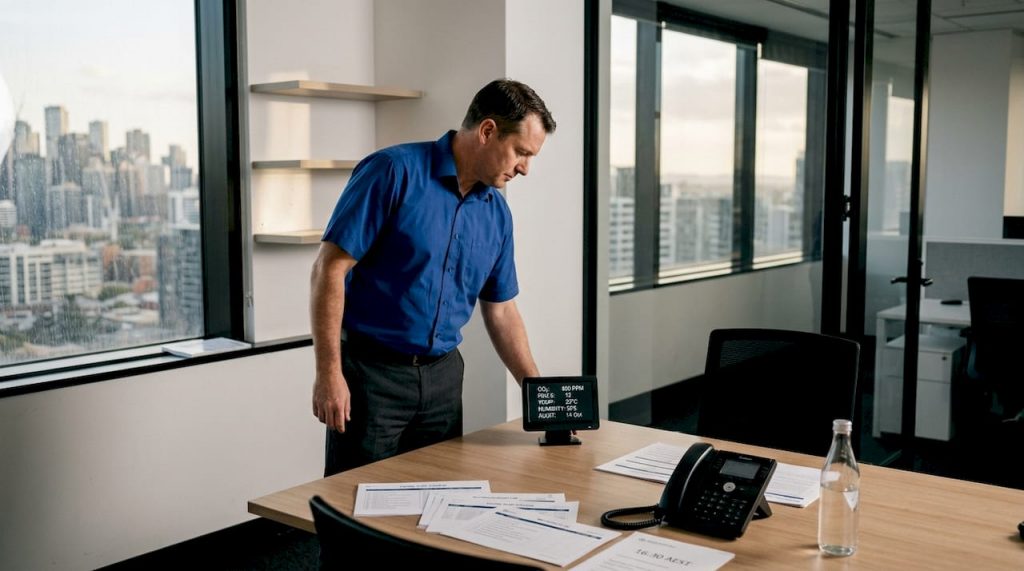
Maintaining indoor relative humidity between 40 and 50 per cent reduces dust mite populations significantly. Humidity above 50 per cent creates conditions where mites thrive. Dropping below 30 per cent can cause dry air problems of its own. A reliable hygrometer helps you monitor and adjust levels, particularly during dry seasons or when air conditioning is running heavily.
Pro Tip: Avoid using a feather duster anywhere in your dust management routine. It may feel productive, but it disperses fine particles into the air where they remain suspended for hours. A damp microfibre cloth takes the same amount of time and actually removes the dust.
Technology-based dust suppression techniques
Vacuum cleaners and sealed HEPA systems
Not all vacuums marketed as HEPA-capable are equal. A certified sealed HEPA vacuum system ensures all intake airflow passes through the filter with no leakage pathways. Many budget vacuums have HEPA filters installed but lack sealed housings, meaning fine dust bypasses the filter and exhausts back into the room. Look for certification from recognised bodies such as AAFA (Asthma and Allergy Foundation of America) when choosing a vacuum.
Air purifiers and HVAC filtration
Portable air purifiers with true HEPA filters are effective at capturing fine airborne dust in a defined room area. Their limitations are well understood: they do not clean surfaces, and they only process air that passes through them. Room sizing, fan speed, and filter quality all affect performance.
For whole-home filtration, upgrading HVAC filters to MERV 13 or higher and running fans continuously improves particle capture across the entire space. Running the fan continuously, even when heating or cooling is not active, circulates air through the filter and steadily reduces particulate levels. For guidance on specific air cleaning technologies for homes, Climatepro has a practical breakdown of options and MERV ratings.
| Device type | Dust removal efficiency | Coverage | Maintenance requirement |
|---|---|---|---|
| Sealed HEPA vacuum | Very high (surface and airborne) | Room by room | Filter checks every 3 to 6 months |
| Portable HEPA air purifier | High (airborne only) | Single room | Filter replacement every 6 to 12 months |
| HVAC with MERV 13 filter | Moderate to high (whole home) | Whole dwelling | Filter replacement every 1 to 3 months |
| Standard flat-panel HVAC filter | Low | Whole dwelling | Monthly replacement |
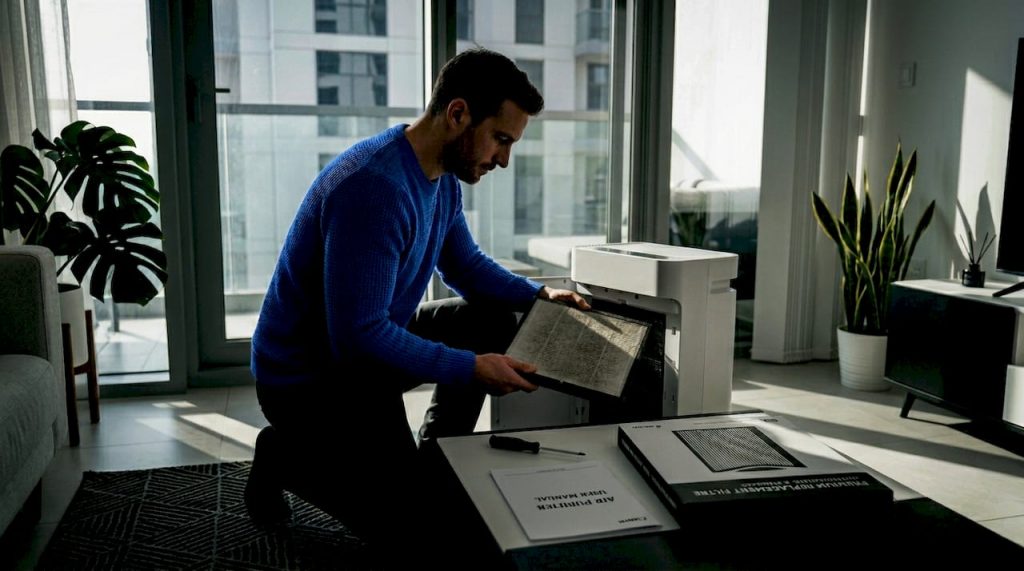
Regardless of which devices you use, filter maintenance is non-negotiable. A filter replacement schedule that matches manufacturer recommendations keeps devices performing as intended. A clogged filter does not just underperform; it can restrict airflow and create pressure problems in your HVAC system.
Additional factors that affect dust buildup
Several contributors to indoor dust are frequently overlooked, even by people who already have a cleaning routine in place.
- Renovation and construction: Sanding, drilling, and demolition generate extremely fine particulate matter. Seal off work areas with plastic sheeting, increase ventilation, and run air purifiers on high during and after any renovation work
- Chemical and fragrance products: Aerosol sprays, scented candles, and some cleaning products release volatile compounds that bond with dust particles and can worsen air quality
- Pest activity: Cockroach droppings and body fragments are a significant component of urban indoor dust and are strongly linked to asthma triggers in children
- Soft furnishings in bedrooms: Bedrooms consistently show higher dust loads than other rooms due to the concentration of fabrics and the amount of time spent there
The most effective dust management approach integrates all of these considerations. For people living in UAE apartments, where ventilation can be limited and outdoor dust levels are high, combining good cleaning habits with appropriate filtration and humidity control produces the best outcomes. The Climatepro guide on improving air quality in apartments addresses this specific context well.
My perspective on dust mitigation in practice
I have spent a considerable amount of time observing how people approach dust management, and the pattern I see most often is an over-reliance on technology. Someone buys a quality air purifier, puts it in the corner of the room, and expects the problem to resolve itself. It does not.
In my experience, the homes with the best air quality are not necessarily the ones with the most expensive filtration equipment. They are the ones where someone has thought carefully about what is bringing dust in and what is generating it inside. Entryway discipline, clutter reduction, and consistent wet cleaning make a larger cumulative difference than any single device.
What is most often overlooked is the role of clutter. Open shelves, stacks of books, and decorative surfaces are all areas where dust settles and cleaning becomes difficult. A clutter-free environment does not just look better; it is genuinely easier to maintain at a lower dust load.
My view is that technology and behaviour need to work together. An air purifier running in a poorly managed room is working much harder than it should and delivering much less than it could. Pair good filtration with consistent source control, and both investments perform far better.
Realistic expectations also matter. Dust mitigation is not a one-time fix. It is a maintenance practice. Set up systems that are easy to sustain rather than perfect routines that get abandoned after a few weeks.
— Nevel
Upgrade your dust mitigation with the right tools
Addressing dust in your home is a layered effort, and having the right equipment makes a measurable difference once your habits are in place. Climatepro stocks a range of air purifiers designed specifically for indoor dust and allergen reduction, including the Honeywell Air Touch P2, which uses multi-stage filtration to capture fine dust, bacteria, and airborne allergens. For those wanting a broader selection, the full air purifier catalogue covers options suited to rooms of different sizes and air quality needs across Dubai, Abu Dhabi, and the wider UAE.

Climatepro also carries replacement HEPA and compound filters for ongoing maintenance, including the Honeywell HEPA filter and the 4-in-1 compound filter for multi-pollutant control. Keeping filters current is what sustains performance over time, and Climatepro makes it straightforward to find and order the right replacement for your unit.
FAQ
What is dust mitigation, exactly?
Dust mitigation is the practice of controlling and reducing dust accumulation and airborne dust particles indoors. It combines source control, ventilation improvements, and air filtration as its three core strategies.
Is an air purifier enough to manage indoor dust?
No. Air purifiers are a useful supplement but do not replace source control and ventilation. Managing where dust comes from and how it accumulates is more effective than filtering it after the fact.
What humidity level reduces dust mites?
Keeping indoor relative humidity between 40 and 50 per cent effectively reduces dust mite populations. Levels above 50 per cent allow mite numbers to increase.
Why does my HEPA vacuum still leave dust in the air?
If your vacuum is not a certified sealed HEPA system, fine dust can bypass the filter and exhaust back into the room. Many vacuums labelled HEPA leak fine dust without a fully sealed housing around the filter.
How often should I replace air purifier filters for dust control?
Most portable HEPA air purifier filters should be replaced every six to twelve months, depending on usage and indoor dust levels. HVAC filters rated MERV 13 or higher typically need replacement every one to three months.
Recommended
- UAE air pollution: Impacts, monitoring, and solutions — Blog | ClimatePro UAE
- Understand air cleaning technologies for healthier UAE homes — Blog | ClimatePro UAE
- Air changes per hour and better indoor air quality — Blog | ClimatePro UAE
- Why monitoring AQI at home protects your family’s health — Blog | ClimatePro UAE