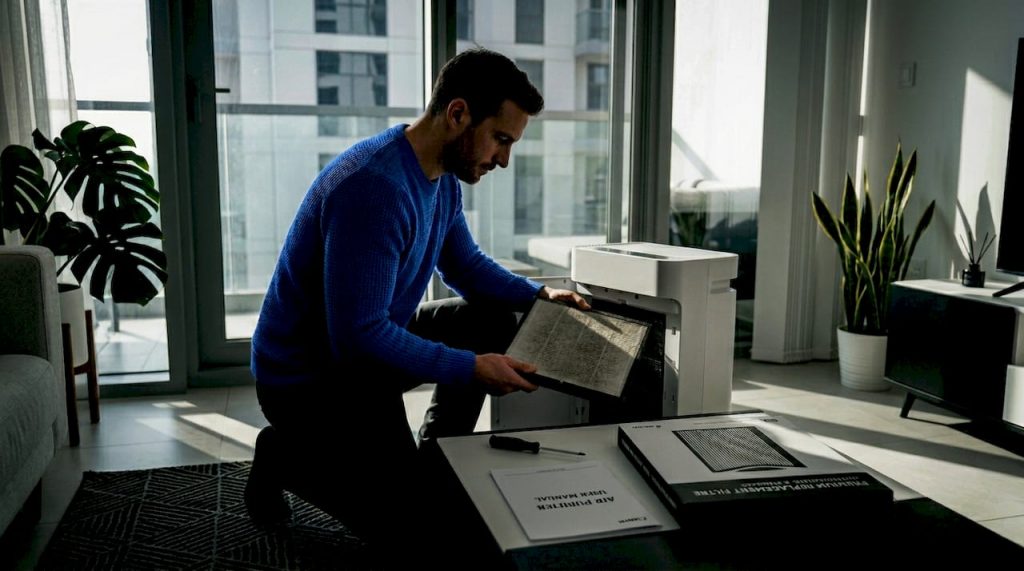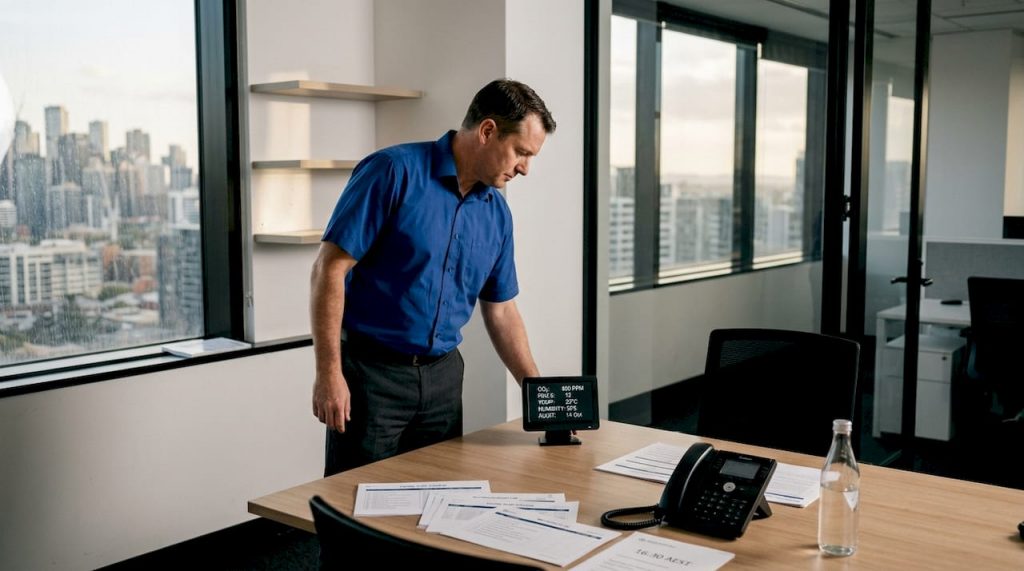
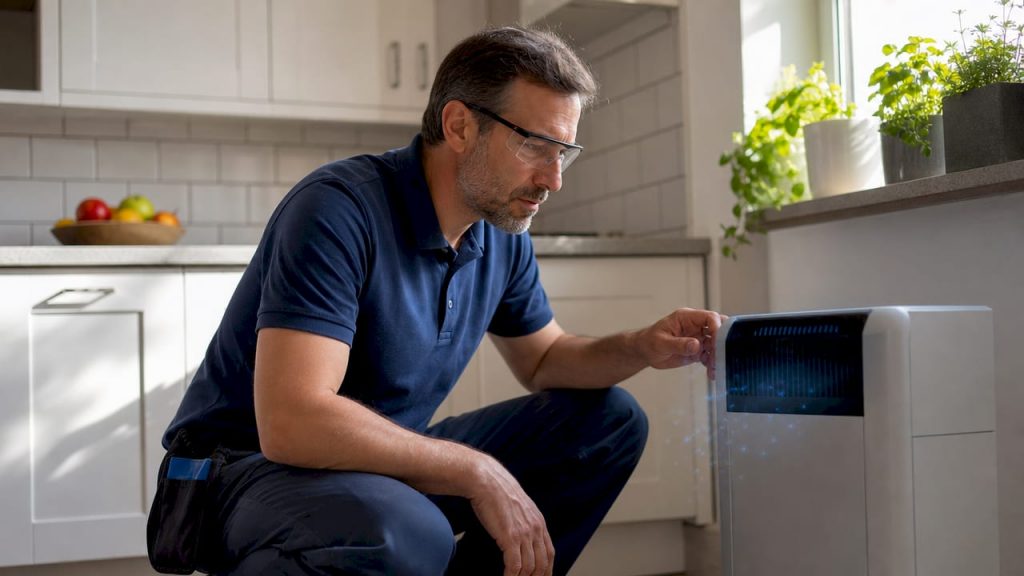
Air ionization is the process of electrically charging air molecules to influence airborne particles and improve indoor air quality. The technology, formally known as ionic air purification, releases charged ions that attach to particles like dust, pollen, and smoke, causing them to cluster and fall out of the air. What ionization does not do is physically remove those particles from your room. Understanding this distinction is the key to using air ionization technology wisely and safely.
What is air ionization and how does the process work?
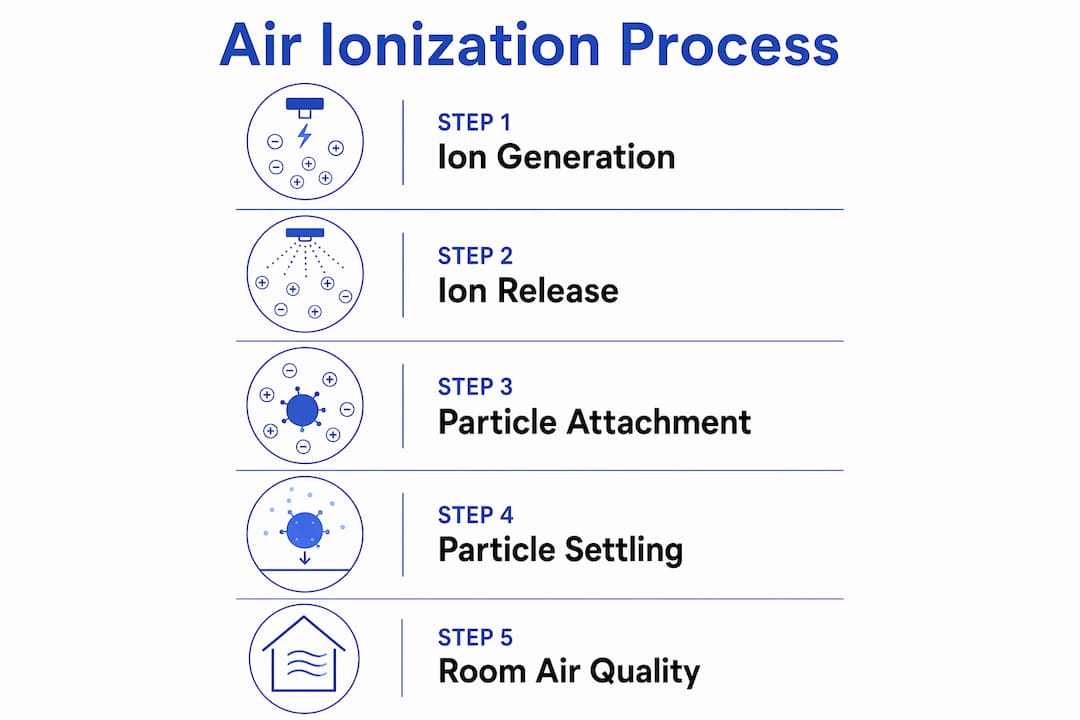
Air ionization works by generating electrically charged particles, called ions, and releasing them into the surrounding air. The most common method is corona discharge ionization, which applies a high-voltage electrical field of 6,000–20,000 volts to needle-shaped electrodes. This voltage strips electrons from nearby air molecules, producing a stream of negative ions. Those ions then travel through the room and interact with airborne contaminants.
How ions affect airborne particles
Once released, negative ions attach to airborne particles such as dust, allergens, mould spores, and smoke. The attachment gives those particles an electrical charge. Charged particles are then attracted to other charged particles or surfaces, a process called agglomeration. As particles cluster together, they become heavier and settle onto floors, walls, and furniture rather than remaining suspended in the air you breathe.

Unipolar vs bipolar ionization
Two main technology types exist in consumer and commercial air treatment. Unipolar ionizers release only negative ions, which is the more common configuration in entry-level devices. Bipolar ionizers release both positive and negative ions simultaneously, which can improve particle clustering across a wider range of contaminant types. Neither type physically captures or destroys particles. Both cause settling rather than filtration.
The air ionization process is best understood as a particle management system, not a purification system in the traditional sense. For a fuller picture of how physical filtration compares, the Climatepro guide on HEPA filtration explains the difference clearly.
Pro Tip: When evaluating any ionizer, check the voltage range of its corona discharge system. Devices operating at the higher end of the 6,000–20,000 volt range tend to produce more ions but also more ozone as a byproduct.
- Ions are generated at the electrode via corona discharge.
- Ions travel into the room air and attach to airborne particles.
- Charged particles attract each other and agglomerate into heavier clusters.
- Heavier clusters settle onto nearby surfaces.
- Settled particles remain on surfaces until physically cleaned away.
What are the benefits and limitations of air ionization?
Air ionization can reduce airborne dust particles by 30% to 60% depending on room airflow and particle size. That is a meaningful reduction for dust and larger particulate matter in low-airflow environments. The result is fewer particles suspended in the air at any given moment, which can benefit people sensitive to dust or pollen.
What ionization cannot do
Ionization does not remove gases, volatile organic compounds (VOCs), or odours from the air. Ions have no effect on chemical pollutants like formaldehyde or benzene. This is a significant limitation in UAE homes and offices where off-gassing from furniture, paints, and cleaning products is common. For those pollutants, activated carbon filtration is the appropriate technology.
The black wall syndrome problem
Ionizers do not physically remove contaminants. They cause particles to settle on dust, walls, and furniture instead of being captured and removed. Over time, this creates a visible dark residue on walls and surfaces near the device, commonly called black wall syndrome. Settled particles can also be re-suspended when someone walks through the room or when air currents disturb the surface. This means the contamination has not left the room. It has simply moved.
Ionization vs HEPA filtration: a feature comparison
| Feature | Air ionization | HEPA filtration |
|---|---|---|
| Particle removal method | Settling onto surfaces | Physical capture in filter media |
| Particle capture rate | 30%–60% reduction in suspension | 99.97% of particles at 0.3 microns |
| Gas and VOC removal | No | No (requires activated carbon add-on) |
| Filter maintenance | No filter, but surfaces need cleaning | Regular filter replacement required |
| Ozone production | Possible byproduct | None |
| Noise level | Very quiet to silent | Low to moderate fan noise |
Ionization does offer genuine advantages in specific situations. It operates quietly, requires no filter replacements, and can reduce airborne particle counts in enclosed spaces with limited airflow. These qualities make it a reasonable supplementary feature, not a standalone solution.
What are the health and safety considerations with air ionization?
The primary health concern with air ionization is ozone. Corona discharge ionizers produce ozone as an unintentional byproduct of the ion generation process. Ozone at concentrations as low as 0.050 to 0.070 ppm causes respiratory irritation and a measurable reduction in lung function. The California Air Resources Board (CARB) limits consumer air cleaners to a maximum ozone output of 0.050 ppm for this reason.
Who is most at risk
People with asthma, chronic obstructive pulmonary disease (COPD), or other respiratory conditions face the greatest risk from ozone exposure. Children and older adults are also more vulnerable. Even in healthy individuals, prolonged exposure to ozone above safe thresholds causes throat irritation, coughing, and chest tightness. The World Health Organization (WHO) and the US Environmental Protection Agency (EPA) both identify ozone as a significant indoor air pollutant.
Key safety considerations for air ionization use:
- Verify that any ionizer you purchase carries CARB certification, confirming ozone output stays within the 0.050 ppm limit.
- Avoid using standalone ionizers in bedrooms or enclosed spaces with limited ventilation.
- Do not use ionizers in rooms occupied by people with asthma or respiratory conditions.
- If your air purifier combines HEPA filtration with an ionization feature, consider disabling the ionization function. HEPA filters capture 99.97% of particles at 0.3 microns without producing any ozone.
- Check the product manual for ozone emission data before use.
“Many ionizers do not meet the 0.050 ppm ozone safety standard set by CARB. Checking certification before purchase is not optional for safe indoor use.”
Pro Tip: Search the CARB website directly for the certified air cleaning devices list. If a product is not on that list, treat its ozone output as unverified regardless of what the packaging claims.
How can air ionization be integrated with other purification methods?
Ionization works best as a secondary technology, not the primary one. Air quality experts advise multilayered strategies that combine physical filtration with supplementary technologies for genuinely better indoor air quality. Relying on ionization alone leaves gases, VOCs, and fine particles inadequately addressed.
Practical ways to integrate ionization effectively:
- Pair ionization with a HEPA filter to capture the particles that ions cause to settle before they reach surfaces.
- Use ionization as a supplementary feature in rooms where quiet operation matters, such as bedrooms or nurseries, while keeping the primary HEPA unit running in main living areas.
- In odour-prone spaces like kitchens or storage rooms, combine ionization with activated carbon filtration for broader coverage.
- Increase surface cleaning frequency in any room where an ionizer operates. Settled particles on floors and walls need regular removal to prevent re-suspension.
- Review your overall energy-efficient air cleaning workflow to confirm ionization fits within a broader, layered approach rather than replacing active filtration.
The most effective indoor air quality strategy treats ionization as one tool among several. A HEPA filter captures particles physically. Activated carbon handles gases. Ionization can reduce airborne particle counts between filter passes. Each technology addresses a different part of the problem.
Key takeaways
Air ionization reduces airborne particle counts but does not remove contaminants from a room, making it a supplementary technology rather than a standalone air purification solution.
| Point | Details |
|---|---|
| Ionization causes settling, not removal | Particles fall onto surfaces and must be cleaned away to truly reduce contamination. |
| Particle reduction is real but limited | Ionization can reduce airborne dust by 30%–60%, depending on room conditions. |
| Ozone is a genuine health risk | Corona discharge ionizers produce ozone; verify CARB certification before purchasing any ionizer. |
| HEPA filtration is the safer primary method | HEPA captures 99.97% of particles at 0.3 microns with no ozone byproduct. |
| Ionization works best as a supplement | Pair ionization with HEPA and activated carbon filtration for effective multilayered air cleaning. |
My honest assessment of air ionization technology
The marketing around air ionizers frequently overstates what the technology actually delivers. I have reviewed a significant number of ionizer products over the years, and the pattern is consistent. Packaging emphasises “cleaner air” and “fresher environments” without clearly disclosing that particles are simply moving to your walls and floors rather than being eliminated. That is not a minor omission. It changes how you should think about the product entirely.
The ozone issue is the part I find most concerning. Many ionizers sold in the UAE and across the region do not carry CARB certification. That means their ozone output is unverified. For households with children, elderly residents, or anyone with a respiratory condition, that is a real risk, not a theoretical one.
My recommendation is straightforward. Prioritise a quality HEPA air purifier as your primary device. If your unit includes an ionization feature, use it only in well-ventilated spaces and only after confirming ozone compliance. Ionization is not without value, but it belongs in a supporting role. Treating it as a primary solution is where people get into trouble.
— Nevel
Climatepro air purifiers with safe, multilayered filtration
Choosing an air purifier that combines technologies correctly makes a measurable difference to indoor air quality. Climatepro stocks the Honeywell Air Touch P2, a unit that pairs HEPA filtration with ionization in a configuration designed for home environments. It operates quietly, suits rooms of standard residential size, and is built to meet recognised ozone emission standards.

For readers who want to compare the full range of options, Climatepro’s air purifiers catalogue covers units across multiple price points and room sizes, with delivery available across Dubai, Abu Dhabi, Sharjah, and all seven UAE emirates. Every product listed is selected for reliability and compliance with indoor air quality standards.
FAQ
What is air ionization in simple terms?
Air ionization is the process of releasing electrically charged particles into the air to make airborne contaminants heavier so they settle onto surfaces. It reduces the number of particles suspended in the air but does not remove them from the room.
Does air ionization actually improve indoor air quality?
Ionization can reduce airborne dust and particulate matter by 30%–60% in controlled conditions. The improvement is real but limited, as settled particles remain on surfaces and can be re-suspended without regular cleaning.
Are air ionizers safe to use at home?
Safety depends on ozone output. Corona discharge ionizers produce ozone as a byproduct, and concentrations above 0.050 ppm cause respiratory irritation. Look for CARB-certified devices to confirm ozone emissions stay within safe limits.
What is the difference between an ionizer and a HEPA air purifier?
A HEPA air purifier physically captures particles in filter media, removing them from the room entirely. An ionizer causes particles to settle onto surfaces without capturing them. HEPA filtration produces no ozone; many ionizers do.
Can I use an ionizer alongside a HEPA air purifier?
Ionization works best as a supplementary technology paired with HEPA filtration. If your HEPA unit already includes a built-in ionization feature, disabling it is the safer choice unless the device carries verified ozone emission certification.