
Volatile organic compounds, or VOCs, are carbon-containing chemicals that evaporate into the air at room temperature. The US EPA defines them as compounds with high vapour pressure and low water solubility, emitted as gases from a wide range of solids and liquids. They include many human-made chemicals used in paints, pharmaceuticals, and refrigerants, as well as naturally occurring compounds. Formaldehyde is one of the most frequently encountered examples indoors.
What makes VOCs particularly relevant to indoor environments is their concentration. Indoor VOC levels can be up to ten times higher than outdoor levels, even in urban areas. That gap exists because modern homes seal in emissions from products and materials while limiting natural air exchange. VOCs are not defined by their smell. A product can release harmful compounds while smelling pleasant, or emit no detectable odour at all.
Key characteristics of VOCs:
- Organic compounds containing carbon that vaporise readily at normal indoor temperatures
- Emitted from thousands of products and building materials
- Present indoors as complex mixtures, often at concentrations well above outdoor air
- Include alkanes, aromatics, aldehydes, ketones, alcohols, and ethers
- Measured collectively as Total Volatile Organic Compounds (TVOC) or individually for compounds like formaldehyde
- Not defined by odour; scent is not a reliable indicator of VOC presence or safety
Where do VOCs come from in Australian homes?
The range of VOC sources inside a typical Australian home is broader than most people expect. The US EPA identifies thousands of VOC-emitting products across household, building, and office categories. Paints, lacquers, and varnishes are among the most concentrated sources, releasing solvents both during application and for days or weeks afterward. Cleaning supplies, pesticides, adhesives, and building materials all contribute, as do office equipment such as printers and photocopiers.
Off-gassing is the process by which VOCs migrate from a product’s surface into the surrounding air. It is most intense when products are new or freshly installed, and it accelerates with higher temperatures. A freshly painted room or newly laid carpet can push indoor VOC concentrations well above typical background levels. According to YourHome, Australia’s government guide to sustainable housing, off-gassing lessens dramatically over time after installation, but the initial period carries the highest exposure risk.
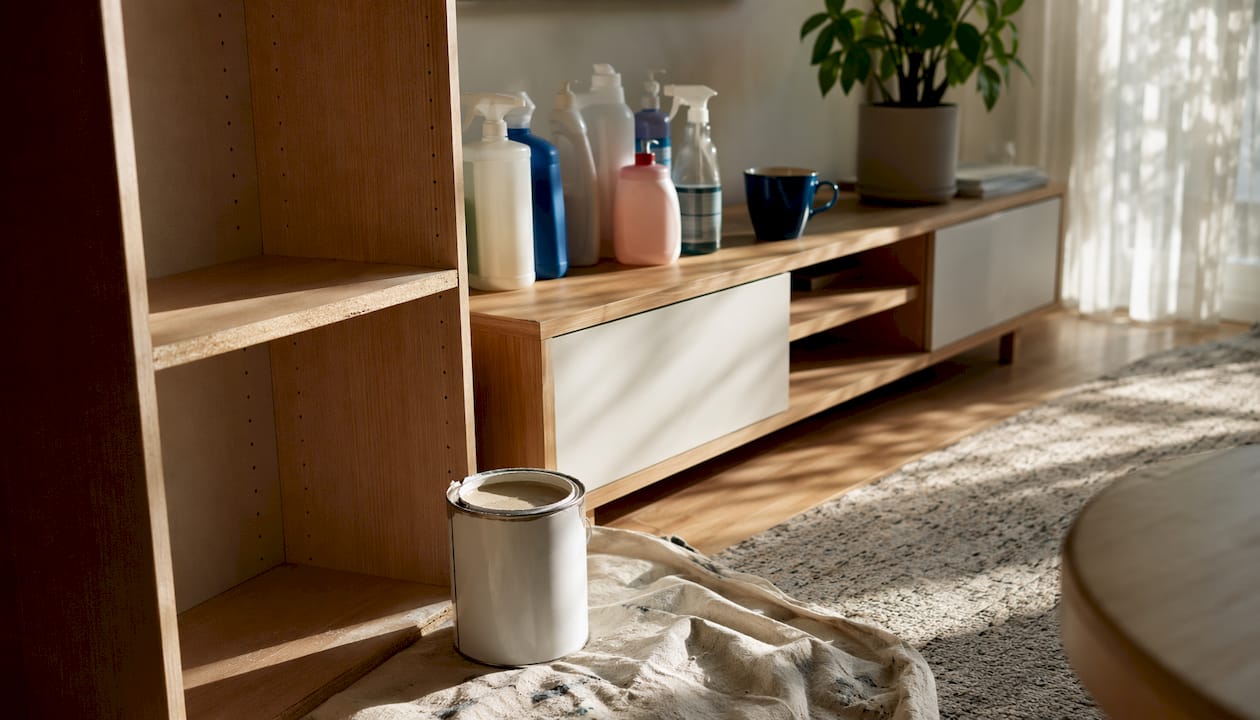
Behavioural sources add to the load. Smoking and vaping indoors release VOCs directly into the breathing zone. Fragranced cleaning agents, air fresheners, and perfumed toiletries are common contributors that many households overlook. The assumption that a product smells clean means it is safe does not hold when VOC emissions are involved.
Common indoor VOC sources in Australian homes:
- Paints, lacquers, and paint strippers — high solvent content, significant off-gassing during and after application
- Cleaning supplies — particularly fragranced or solvent-based products
- Pesticides — used indoors or tracked in from treated outdoor areas
- Building materials and furnishings — particleboard, MDF, carpet, and adhesives used in flooring and cabinetry
- Office equipment — printers and photocopiers emit VOCs during operation
- Glues, adhesives, and permanent markers — craft and office materials with concentrated solvent content
- Photographic solutions and correction fluids — less common but notable sources
- Smoking and vaping — direct VOC emission into indoor air
- Fragranced personal care and cleaning products — air fresheners, perfumed toiletries, and scented sprays
Pro Tip: Masking odours with air fresheners does not reduce VOC levels. It adds more VOC-emitting compounds to the air while concealing the problem.
How do VOCs affect your health?
VOC exposure indoors produces a range of health effects, from mild irritation to more serious long-term concerns. Australian indoor air quality guidance, including the National Construction Code (NCC) Indoor Air Quality Verification Methods, identifies eye and upper respiratory irritation, nasal congestion, headaches, and dizziness as the most commonly reported symptoms. These effects are typically associated with short-term or repeated exposure at elevated concentrations.

Individual VOCs are often present at concentrations too low to cause symptoms on their own. The concern lies in mixtures. When multiple VOCs combine indoors, they can react with oxidants such as ozone to form secondary irritants including acids and aldehydes. These reaction products can be more irritating than the original compounds, which is why the collective TVOC measure is used in health risk assessments rather than evaluating each compound in isolation.
Some VOCs carry more serious long-term risks. Formaldehyde and benzene, both found in indoor environments, are classified as human carcinogens. The NCC guidance notes that the magnitude of cancer risk from indoor VOC exposure currently carries a high level of uncertainty, but the association is established. Health effects also depend on the duration of exposure and individual susceptibility, with some people becoming sensitised and reacting to very low concentrations.
VOC exposure is not a single-compound problem. Australian indoor air quality standards treat TVOC as the primary measure because mixtures of compounds, not individual chemicals, drive most of the irritation and health risk seen in real buildings.
Vulnerable groups face heightened risk:
- Children — higher breathing rates relative to body weight increase exposure per kilogram
- Elderly individuals — reduced physiological resilience and more frequent time spent indoors
- People with asthma or chemical sensitivities — lower threshold for symptomatic response
- Pregnant women — potential developmental risks from certain VOC exposures
- Workers in poorly ventilated spaces — cumulative exposure over working hours
How are VOC levels measured and managed indoors?
Understanding TVOC as a measure
TVOC, or Total Volatile Organic Compounds, is the collective measure of all VOCs present simultaneously in indoor air. Australian indoor air quality frameworks, including the NCC Verification Methods, treat TVOC alongside other key contaminants such as carbon monoxide, nitrogen dioxide, ozone, and fine particles. Rather than testing for each compound individually, TVOC gives a practical snapshot of overall VOC burden in a space. Specific compounds like formaldehyde are also measured separately because of their individual health significance.
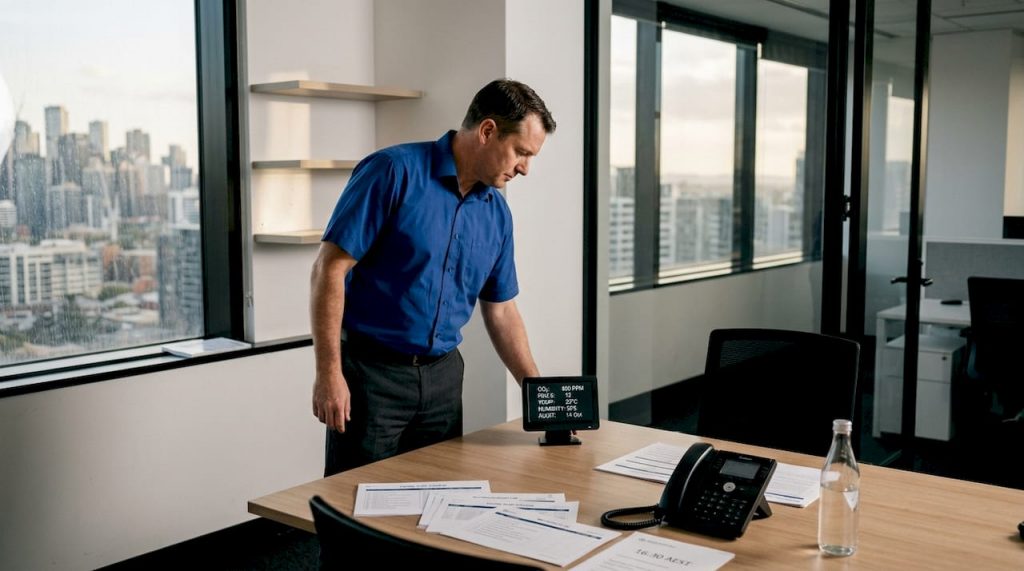
Indoor VOC testing uses a range of methods. Passive sampling devices, which collect air over a set period before laboratory analysis, are common in professional assessments. Direct-reading instruments provide real-time TVOC readings and are increasingly available for consumer use. Formaldehyde monitors are a separate category, given the compound’s prevalence in building materials and its status as a known carcinogen. Professional indoor air quality assessments in Australia typically combine TVOC measurement with targeted compound analysis to build a complete picture.
Strategies for reducing indoor VOC levels
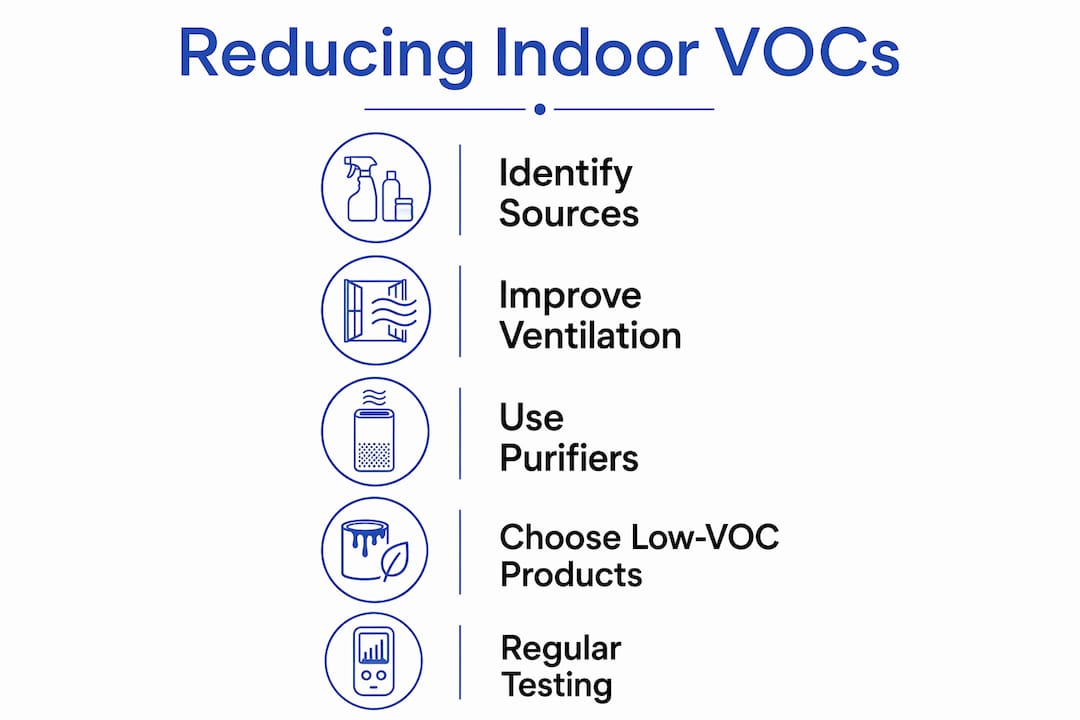
Source control is the most direct approach. Choosing products with lower VOC content, or avoiding certain product categories altogether, reduces the amount of compounds entering the air in the first place. This is more effective than trying to dilute or filter VOCs after they have been released. Ventilation is the second major strategy, and it works best when combined with source control rather than used as a standalone measure.
Practical steps for managing indoor VOC levels:
- Choose low-VOC or VOC-free paints and finishes — many Australian paint manufacturers now label products with VOC content per litre
- Ventilate during and after painting, varnishing, or adhesive use — open windows and run exhaust fans throughout the process and for several hours afterward
- Allow new furniture and flooring to off-gas before installation — where possible, leave new items in a well-ventilated space for several days
- Use exhaust ventilation in kitchens and bathrooms — these areas concentrate VOC sources including cleaning products and personal care items
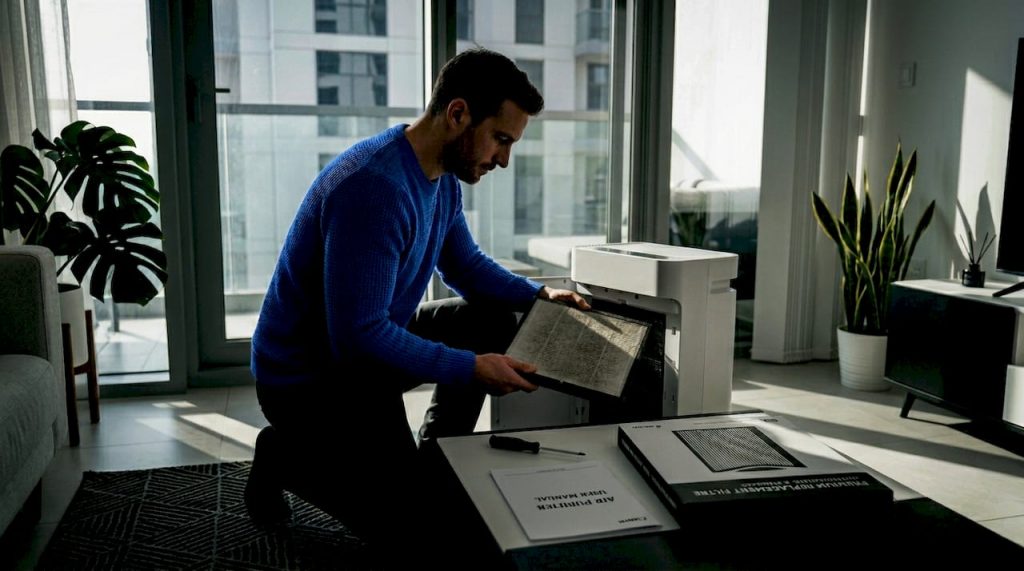
- Run air purifiers with activated carbon filtration — HEPA-only units do not capture gaseous VOCs; activated carbon is required for effective VOC reduction
- Store paints, solvents, and pesticides outside the living area — a garage or shed with ventilation is preferable to indoor storage
- Avoid fragranced cleaning products — unscented alternatives reduce VOC load without compromising cleaning performance
Pro Tip: Ventilation alone cannot compensate for a high-VOC product. The most effective approach combines source reduction with ventilation to keep indoor concentrations consistently low.
Practical Australian guidance for controlling VOC exposure at home
Source control is the primary strategy recommended by Australian indoor air quality authorities, and it begins before a product enters the home. Reading the Safety Data Sheet (SDS, formerly MSDS) for paints, adhesives, and cleaning products reveals VOC content and handling requirements. Many products that appear similar on the shelf carry very different VOC profiles, and the SDS is the most reliable way to compare them.
YourHome, the Australian Government’s sustainable housing resource, advises avoiding fragranced cleaning agents specifically because they introduce VOCs that serve no cleaning function. Liquid cleaning agents, air fresheners, and perfumed toiletries are among the most avoidable sources of indoor VOC exposure. Switching to unscented alternatives is a straightforward change with a measurable effect on indoor air quality.
Building material choices have a long-term impact that product choices do not. Particleboard and MDF used in cabinetry and flooring typically contain formaldehyde-based adhesives that off-gas for extended periods. Specifying low-formaldehyde or formaldehyde-free board products at the time of construction or renovation reduces baseline indoor VOC levels for the life of the building. This is particularly relevant during kitchen and bathroom renovations, where large volumes of board product are installed in enclosed spaces.
Ventilation strategy matters as much as ventilation quantity. Exhaust fans in kitchens and bathrooms, when used consistently, remove VOC-laden air at the point of generation rather than allowing it to mix through the home. Cross-ventilation through windows on opposite sides of a room dilutes concentrations faster than single-sided opening. For homes with limited natural ventilation options, air purifiers with activated carbon filters provide a practical supplementary measure.
Actionable steps for Australian homeowners:
- Read the SDS before purchasing paints, adhesives, sealants, or cleaning products
- Choose low-VOC or VOC-free certified products where available in the Australian market
- Replace fragranced cleaning agents and air fresheners with unscented alternatives
- Specify low-formaldehyde board products for any cabinetry or flooring renovation
- Use exhaust ventilation consistently in kitchens, bathrooms, and laundries
- Allow new furniture, carpet, and flooring to off-gas in a ventilated space before use
- Consider room-by-room air quality improvements as part of any home health review
- Consult an indoor air quality professional for assessment if symptoms persist despite source control measures
Pro Tip: YourHome (yourhome.gov.au) provides free, Australia-specific guidance on indoor air quality, including VOC reduction strategies aligned with local building practices and climate conditions. It is a practical starting point for any renovation or new build.
Climatepro stocks a range of air purifiers designed to address indoor air pollutants including VOCs, with activated carbon filtration options suitable for homes, offices, and commercial spaces across the UAE.

Key takeaways
VOCs are carbon-containing chemicals that evaporate at room temperature, and indoor concentrations can reach up to ten times outdoor levels, making source control the most effective first line of defence.
| Point | Details |
|---|---|
| VOC definition | Carbon-containing compounds that evaporate at room temperature, emitted from thousands of household products and building materials. |
| Indoor concentration risk | Indoor VOC levels can be up to ten times higher than outdoors, particularly after introducing new products or materials. |
| Health effects | Exposure causes eye, nose, and throat irritation, headaches, and dizziness; formaldehyde and benzene carry cancer risk. |
| TVOC measurement | Australian indoor air quality frameworks measure Total VOCs collectively, alongside specific compounds like formaldehyde, to assess real exposure. |
| Primary control strategy | Source control through low-VOC product selection combined with consistent ventilation is the most effective approach to reducing indoor exposure. |