Many UAE residents spend significant money on air purifiers or filters only to find their indoor air quality barely improves. The frustration is real, and it usually comes down to one thing: confusing or misleading claims about air cleaning technologies. Understanding how each technology actually performs, and where it falls short, is the difference between a smart investment and a costly mistake. This guide breaks down the core technologies clearly, compares what works against what doesn’t, and provides practical steps to get genuinely cleaner air at home.
Table of Contents
- Why indoor air quality matters in the UAE
- Core air cleaning technologies explained
- How to choose the right solution for your space
- Common pitfalls and smart tips for UAE residents
- Fresh perspective: what most air cleaning advice gets wrong in the UAE
- Find your best air cleaning solution with ClimatePro
- Frequently asked questions
Key Takeaways
| Point | Details |
|---|---|
| Match technology to needs | Assess your space and select certified HEPA or MERV13+ solutions tailored for UAE dust and pollution. |
| Watch out for misleading options | Avoid ozone generators and ionisers, which can worsen your indoor air quality. |
| Certifications matter | AHAM, CARB, and clear CADR ratings are signals of reliable, effective performance. |
| Placement and maintenance | Install purifiers away from obstructions and change filters as required for best results. |
Why indoor air quality matters in the UAE
The UAE presents indoor air challenges that are more complex than those found in most other climates. Seasonal dust storms push fine particles through even well-sealed buildings. Urban construction across Dubai, Abu Dhabi, and Sharjah generates persistent airborne particulate matter. High outdoor humidity in summer months drives moisture indoors, creating conditions for mould and dust mite growth. Together, these factors keep indoor air under constant pressure.
The key pollutant to understand is PM2.5, which refers to fine particles smaller than 2.5 micrometres in diameter. These particles penetrate deep into the lungs and are associated with respiratory and cardiovascular health risks, particularly for children, elderly residents, and anyone with asthma or allergies. A well-matched air cleaner can make a measurable difference: air purifiers reduce PM2.5 by 40 to 95% depending on the device, room conditions, and usage patterns.
UAE homes also face gaseous pollutants, including volatile organic compounds (VOCs) from furniture and paints, and cooking odours. Technologies that address only particles will leave these pollutants untreated. Reviewing filter options in Dubai that combine particulate and gas filtration is often the most practical starting point for residents wanting full coverage.
Key indoor air challenges unique to UAE environments include:
- Dust and sand particulates from desert conditions and construction sites
- Humidity fluctuations causing mould spores and dust mite allergens
- VOCs and cooking gases from indoor activities and building materials
- Urban pollution entering through ventilation systems and gaps in windows
No single technology addresses all of these equally well, which is why understanding each option matters so much before making a purchase.
Core air cleaning technologies explained
The air cleaning market offers a wide range of products, from simple mechanical filters to high-tech plasma and UV devices. Not all of them perform equally, and some carry real risks for indoor use.
Mechanical filtration: HEPA and MERV
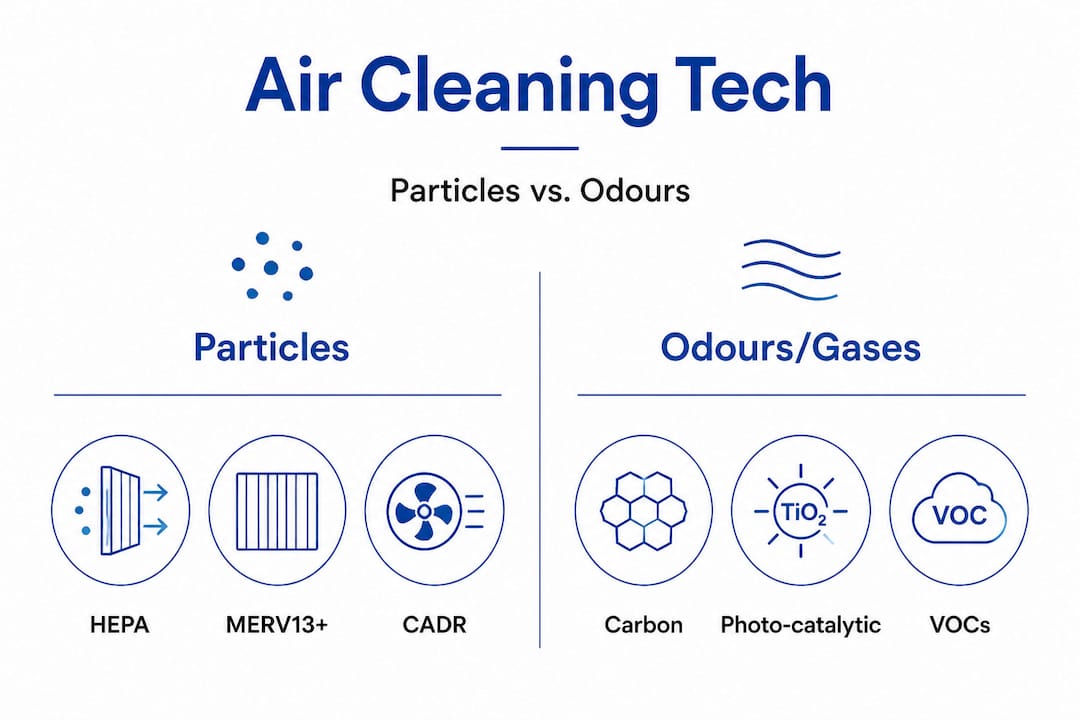
HEPA (High Efficiency Particulate Air) filters physically trap particles as air passes through a dense fibre mesh. A true HEPA H13 filter captures at least 99.97% of particles at 0.3 micrometres. MERV (Minimum Efficiency Reporting Value) is the equivalent rating system for HVAC (ducted air conditioning) filters. MERV 13 or higher is recommended for capturing PM2.5 and viral particles in whole-home systems.
Mechanical filtration is the most consistently proven technology across independent studies. It requires no power beyond the fan motor and produces no harmful byproducts. These are the baseline features to look for in any air cleaning product.
Activated carbon filtration
Activated carbon is a porous material that adsorbs gases and odours, including VOCs, cooking smells, and some chemical fumes. It works through a different mechanism than mechanical filters, meaning both are needed for comprehensive indoor air coverage. Carbon filters do have a finite lifespan and must be replaced on schedule to remain effective.
Ionisers, ozone generators, and PCO/UV devices
These technologies use electrical charges, ozone, or UV light to neutralise pollutants. The appeal is understandable, but the evidence is less encouraging. The EPA recommends avoiding ozone generators and ionisers in occupied spaces because they can produce irritants and secondary chemical byproducts. Photocatalytic oxidation (PCO) and UV devices show some promise in laboratory settings but have limited real-world performance data and may generate formaldehyde or other harmful compounds under certain conditions.
The effectiveness of portable air cleaners is measured by CADR, which stands for Clean Air Delivery Rate. CADR measures how quickly a purifier cleans a specific volume of air for a given pollutant. A higher CADR means faster cleaning for larger spaces. Always match CADR to the actual room size, not the marketing claims on the box.
| Technology | Particle removal | Gas/odour removal | Safety for indoor use |
|---|---|---|---|
| HEPA (H13+) | Excellent | None | Fully safe |
| Activated carbon | None | Good | Fully safe |
| HEPA + carbon combo | Excellent | Good | Fully safe |
| Ioniser | Limited | None | Not recommended |
| Ozone generator | Limited | Some | Not recommended |
| UV/PCO | Limited | Variable | Use with caution |
| MERV 13+ (HVAC) | Very good | None | Fully safe |
Pro Tip: Always look for air purifiers that combine a true HEPA H13 filter with a substantial activated carbon layer. Units marketed as “ionising HEPA” or “UV HEPA” often rely on the ionising or UV component as a marketing hook. The HEPA does the actual heavy lifting.
Residents looking to explore a range of air purifiers with verified filtration specifications will find it easier to compare certified options than to decode manufacturer marketing claims independently.
How to choose the right solution for your space
Selecting the correct air cleaning solution requires a structured approach. The technology matters, but so does matching the device to the room, the occupants, and the specific pollutants present.
Follow these steps to make a practical, informed decision:
-
Assess your space and occupants. Measure the room in square metres. Note whether the space is a bedroom, living area, or open-plan kitchen. Consider whether children, elderly persons, or allergy sufferers use the space regularly.
-
Identify your main pollutants. Dust and PM2.5 require HEPA filtration. Cooking odours and VOCs require activated carbon. High humidity levels require a dehumidifier rather than, or in addition to, an air purifier. Explore using dehumidifiers to manage moisture before it creates secondary air quality problems such as mould.
-
Match CADR to room size. The standard guideline is to provide at least two to five air changes per hour. For a 20 square metre bedroom, a unit with a CADR of around 150 to 200 m³/hr is appropriate. Underpowered units simply cannot clean the air quickly enough to make a measurable difference.
-
Check certifications. Look for AHAM (Association of Home Appliance Manufacturers) verified CADR ratings or CARB (California Air Resources Board) certification. These third-party certifications provide an independent check on manufacturer claims.
-
Consider your tenancy situation. Renters benefit from portable HEPA units that can move between properties. Homeowners with central AC systems should consider upgrading to MERV 13 or higher HVAC filters, which clean air across the entire home rather than one room at a time.
-
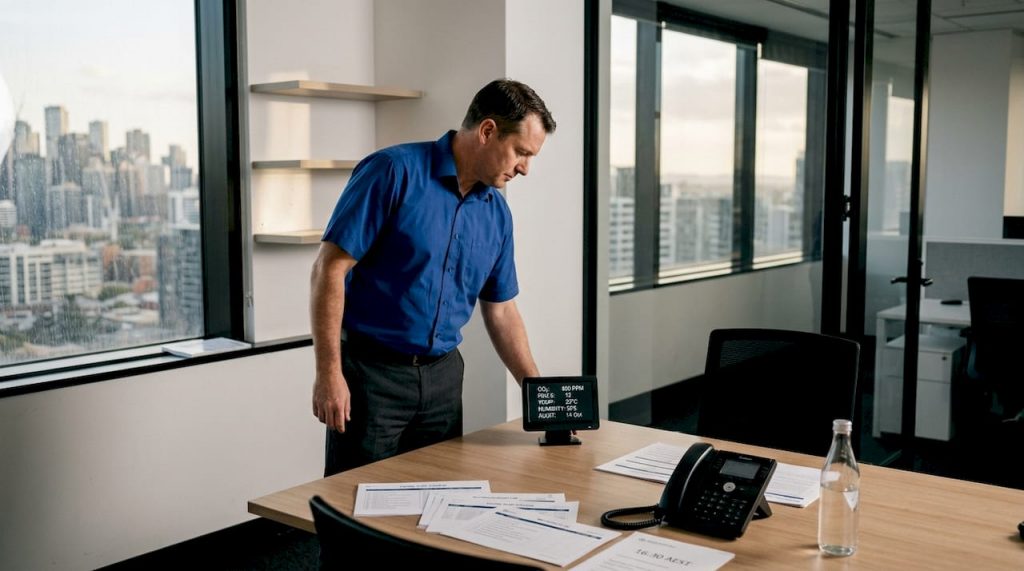
Monitor results. Use a PM2.5 sensor to verify that your cleaner is actually reducing particle levels. Without monitoring, there is no way to confirm whether the unit is performing as intended. Real-world CADR performance is affected by room turbulence, placement near walls or furniture, and resuspension of settled particles, all of which can reduce output compared to laboratory test conditions.
| Room size | Recommended CADR | Filter type | Recommended daily run time |
|---|---|---|---|
| Up to 15 m² | 80 to 120 m³/hr | HEPA H13 + carbon | 8 to 12 hours |
| 15 to 30 m² | 150 to 200 m³/hr | HEPA H13 + carbon | 12 to 16 hours |
| 30 to 50 m² | 250 to 350 m³/hr | HEPA H13 + carbon | 16 to 24 hours |
| Whole home | MERV 13+ HVAC | HVAC ducted filter | Continuous |
Pro Tip: Humidity levels above 60% reduce the effectiveness of mechanical filters and promote mould and dust mite growth. If your home runs humid, consider adding humidifier options in dry rooms and a dehumidifier in damp areas, alongside your air purifier, to address the full spectrum of indoor air quality factors.
Combine air cleaning with ventilation where outdoor air quality permits. Opening windows during lower-pollution periods, typically early morning after calm nights, helps dilute indoor pollutants that filtration alone cannot remove.
Common pitfalls and smart tips for UAE residents
Even technically sound air cleaners can underperform when used incorrectly. Here are the most common mistakes UAE residents make, and how to avoid them.
-
Choosing ionisers or ozone generators to save money. These devices are often cheaper, but the EPA and ASHRAE caution against their use in occupied spaces due to the risk of producing irritants. For sensitive occupants, the health cost can far exceed any upfront saving.
-
Buying units based on marketing claims rather than certified ratings. Terms like “nano plasma,” “photon shield,” or “quantum filtration” are not standardised or regulated. Always ask whether the product carries an AHAM-verified CADR rating or CARB certification before purchasing.
-
Placing units in corners or behind furniture. Air purifiers draw air through intake vents and expel filtered air from another side. Blocking either reduces airflow and cuts CADR significantly in practice. Place units at least 30 centimetres from walls and away from corners for best performance.
-
Neglecting filter replacement schedules. A clogged filter does not just lose effectiveness; it can restrict airflow enough to strain the motor and actually reduce air quality by re-releasing trapped particles. Follow the manufacturer’s recommended schedule, and replace sooner during dust storm seasons.
-
Relying solely on an air purifier without addressing humidity. In UAE homes, high humidity creates a secondary pollution source through mould spores and dust mites. An air purifier running in a 70% humidity room is fighting an uphill battle.
Filtration through HEPA and MERV-rated systems remains the most consistently proven and safest method for reducing airborne particles in homes. Technologies such as ionisers and UV devices may be marketed as advanced, but they lack the volume of independent, real-world evidence that mechanical filtration has built over decades of use.
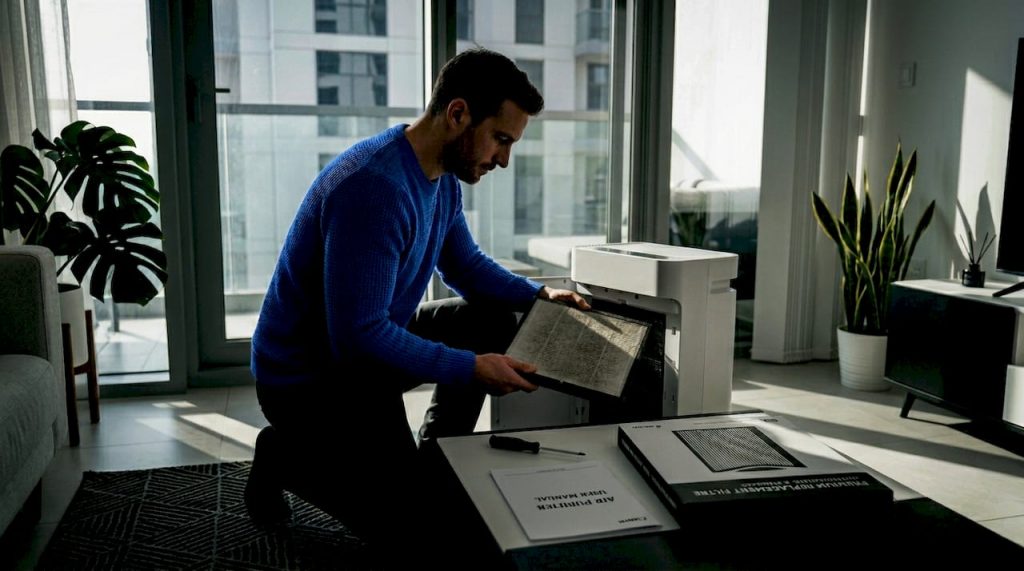
Pro Tip: Replacing HEPA filters for Dubai homes is especially important during the spring and autumn dust storm periods. Checking your filter monthly rather than annually during these seasons can significantly extend the life of your purifier and maintain its effectiveness.
Fresh perspective: what most air cleaning advice gets wrong in the UAE
There is a pattern worth addressing directly. Most air cleaning conversations in the UAE end up focused on which technology is the most advanced or the most impressive looking. This misses the point entirely.
The single biggest predictor of whether an air cleaner will improve indoor air quality is not the technology headline. It is whether the unit has been correctly sized for the room, placed in an optimal location, equipped with a genuine HEPA H13 or higher filter, and had its filter replaced on schedule. These four factors account for the vast majority of real-world performance variation between units that use similar underlying technology.
UAE residents are also particularly exposed to aggressive marketing. Many products sold regionally make claims that are not independently verified. A unit promoted as “hospital grade” or “99.99% effective” without an AHAM or CARB certification behind the claim offers no reliable guarantee of performance. The certification exists precisely because manufacturer claims are not sufficient on their own.
There is also a tendency to overinvest in one device while ignoring the broader system. An evidence-backed air purifier placed in the bedroom will clean the bedroom air. But if the ducted AC system is circulating dust through the rest of the home, or if the kitchen generates unfiltered cooking fumes, the bedroom purifier cannot compensate for the whole-home shortfall.
Genuinely clean indoor air comes from a combination of properly rated filtration, managed humidity, regular ventilation, and consistent maintenance. That is not an exciting marketing message. But it is the approach that consistently delivers measurable results. Residents who focus on the fundamentals and resist the appeal of unverified technology trends will nearly always end up with better air and better value for their investment.
Find your best air cleaning solution with ClimatePro
If you are ready to move from uncertainty to a clear, confident decision about indoor air quality, ClimatePro makes the process straightforward. Every product in the range is selected for verified performance, with certified HEPA, activated carbon, and HVAC filtration options suited to UAE home environments.

The Honeywell P2 Purifier is a strong starting point for bedroom and living room use, combining true HEPA H13 filtration with activated carbon in a unit sized for UAE apartments and villas. For a broader comparison of models across room sizes and budget ranges, browse the full all air purifier options catalogue. The ClimatePro team is also available to help match the right unit to your specific floor plan, occupancy, and air quality concerns, with delivery across all seven emirates.
Frequently asked questions
Are air purifiers effective against UAE dust and PM2.5?
HEPA and MERV13+ filters in air purifiers can reduce indoor PM2.5 and dust by 40 to 95%, significantly improving air quality in UAE homes exposed to dust storms and urban pollution.
Can I use an ioniser or ozone generator indoors?
No. Ionisers and ozone generators can produce irritants or harmful byproducts and are not recommended for occupied spaces, particularly where children or sensitive individuals are present.
Do air purifiers help with odours and gases such as cooking smells?
Air purifiers with a substantial activated carbon layer are effective at removing cooking odours and some harmful gases from indoor air. HEPA filtration alone does not address gases or odours.
How important is CADR when choosing a purifier?
CADR is the primary metric for measuring how quickly a purifier cleans a given volume of air. Always match the CADR to your room size to ensure adequate air changes per hour.
Should I replace my filters even if the air still smells clean?
Yes. Filter effectiveness declines steadily with use and cannot be reliably assessed by smell alone. Following the manufacturer’s replacement schedule, and replacing sooner during dust-heavy periods, is essential for consistent performance.
Recommended
- Levoit Core 300S air purifier: Guide to cleaner indoor air — Blog | ClimatePro UAE
- Buy Air Purifiers in Dubai UAE | Best Price AED – ClimatePro
- Air changes per hour and better indoor air quality — Blog | ClimatePro UAE
- Buy Honeywell Air Touch V4 Compound Anti-Bacterial + HEPA Filter in Dubai | Best Price AED 112 | ClimatePro UAE