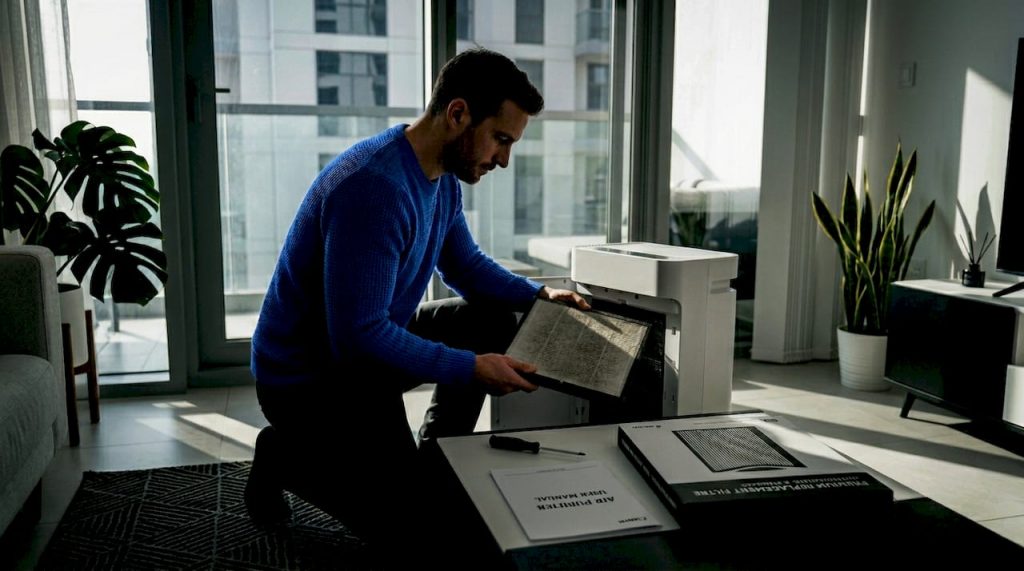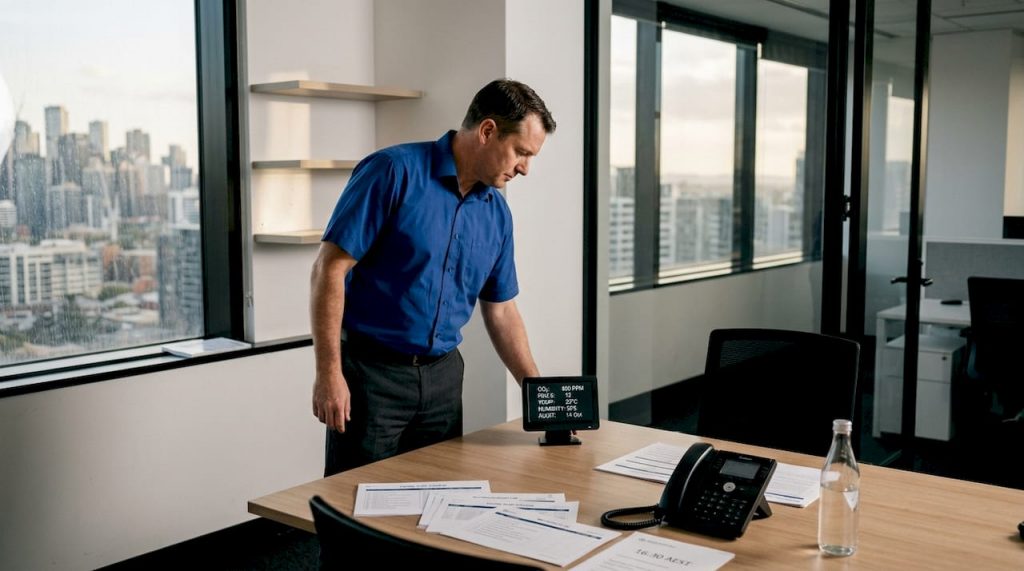
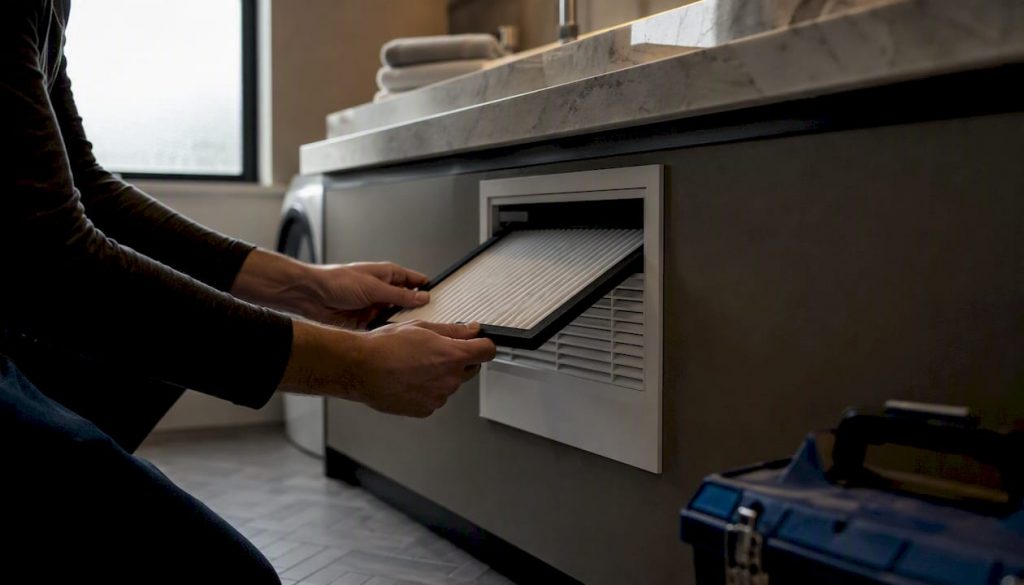
The main types of air filters are fiberglass/panel, pleated mechanical, true HEPA, activated carbon, electrostatic/electret, washable/reusable, and UV/ioniser units. The single most practical rule: match the filter to the contaminant you need to remove, and always confirm correct fit and seal in the housing before anything else.
Quick guidance by situation:
- Allergy sufferers and asthma households: True HEPA in a portable purifier, or a MERV 13 pleated filter if your HVAC system can handle the extra resistance
- Smoke-affected homes: HEPA combined with an activated carbon stage, in a portable unit sized by CADR to the room
- Odour and VOC control: Activated carbon is the primary tool; particle filtration alone will not address gases
- General dust and pollen, low-maintenance preference: A pleated MERV 8 filter in the central HVAC system, replaced on schedule
Key takeaways
Matching the filter type to the specific contaminant, confirming correct fit and seal, and maintaining replacement schedules are the three factors that determine real-world air filtration performance.
| Point | Details |
|---|---|
| Match filter to contaminant | Particles need mechanical or HEPA filtration; gases and odours need activated carbon; smoke needs both combined. |
| Fit and seal before efficiency | A well-sealed MERV 8 filter outperforms a poorly sealed MERV 13 in real conditions; check frame and gasket at every replacement. |
| Check HVAC compatibility | Upgrading above MERV 13 can restrict airflow and strain blowers in older systems; verify static-pressure capacity first. |
| Maintain on schedule | 1-inch pleated filters every 60–90 days; carbon stages every three months under heavy use; 4-inch deep-pleat filters every 6–12 months. |
| Climatepro for matched solutions | Climatepro stocks HEPA and HEPA+carbon portable purifiers with genuine replacement filters for homes, offices, and clinics. |
Table of Contents
- What are the main types of air filters and what does each one remove?
- How air filter ratings work: MERV, HEPA classes, and EN standards
- Filter media and construction: what’s inside the frame
- Which filter type suits your home situation?
- Maintenance and replacement: how often and what to watch for
- How to choose the right air filter: a step-by-step checklist
- Safety limits and realistic expectations for air filtration
- Why fit and seal matter more than efficiency rating
- An editorial perspective on what actually matters in air filtration
- Climatepro’s range for Australian homes and beyond
- Sources
What are the main types of air filters and what does each one remove?
Understanding what each filter category actually does prevents the most common purchasing mistake: buying a high-efficiency particle filter when the problem is odour, or vice versa.
Fiberglass/panel filters are the thin, low-cost disposable filters found in most standard HVAC return-air grilles. They capture large debris such as lint and coarse dust to protect the blower and coil, but offer minimal protection against fine particles, pollen, or allergens. Typical application: basic HVAC protection in systems where airflow is the priority.
Pleated mechanical filters use a folded non-woven polyester or paper media to increase surface area within the same frame size. They capture pollen, mould spores, pet dander, and finer dust particles at ratings from MERV 8 up to MERV 16. Pleated filters offer substantially more surface area than fiberglass and are the practical default for most Australian homes with ducted systems.
True HEPA filters meet a strict performance standard: they capture at least 99.97% of particles at 0.3 micrometres, the most penetrating particle size. Because of the airflow restriction they create, HEPA filters are typically used in portable purifiers rather than standard residential forced-air systems. HEPA-type or HEPA-like labels on cheaper products do not meet this standard and should be treated with scepticism.
Activated carbon filters work by adsorption rather than particle capture. Carbon-impregnated media binds gases, volatile organic compounds (VOCs), smoke odours, and chemical fumes to its surface. They do not remove fine particles on their own, so they are most effective when combined with a particle filter stage. Typical application: portable purifiers for kitchens, pet areas, or smoke-affected rooms.
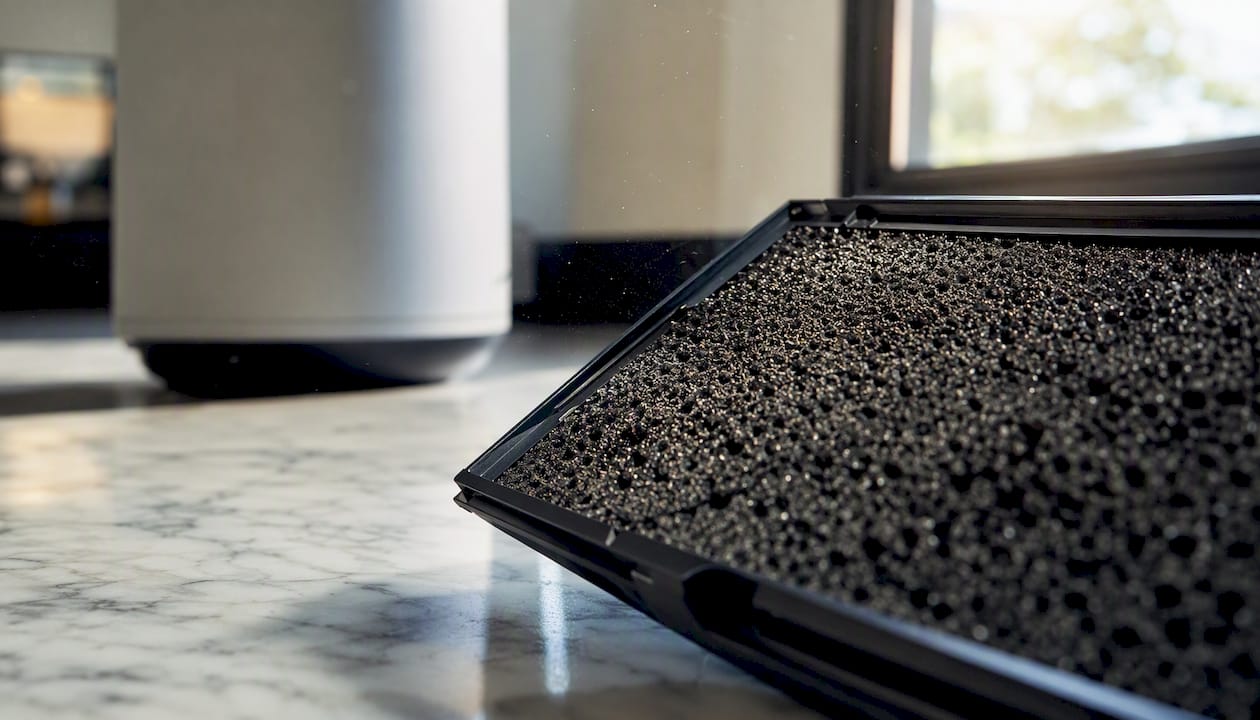
Electrostatic and electret filters use an electrostatically charged media to attract particles the way a magnet attracts metal filings. Electret filters are passive (the charge is built into the fibres during manufacture), while active electrostatic precipitators use a powered charge. Both can perform well when new, but capture efficiency tends to decline as the media loads with dust.
Washable/reusable filters use foam, aluminium mesh, or cotton gauze media that can be rinsed and reinstalled. They reduce ongoing replacement costs but generally offer lower filtration efficiency than pleated disposables at equivalent MERV ratings. They suit applications where convenience and cost matter more than fine-particle capture.
UV/UVGI lamps expose passing air to ultraviolet light to inactivate microorganisms. They do not capture particles and are most effective when airflow velocity is low enough for adequate exposure time. Often paired with a particle filter in portable or whole-house systems.
Ionisers and ozone generators charge airborne particles so they fall out of suspension or produce ozone to react with pollutants. Both carry safety concerns for occupied spaces and are discussed in the safety section below.
PCO/PECO (photocatalytic oxidation) units use UV light and a catalyst to break down VOCs and microorganisms. Performance varies significantly by design, and some configurations can produce by-products including formaldehyde at low concentrations.
How air filter ratings work: MERV, HEPA classes, and EN standards
Filter ratings exist to give buyers a consistent way to compare performance across brands. The two systems you will encounter most often in Australia are MERV and HEPA.
MERV (Minimum Efficiency Reporting Value) is an ASHRAE standard that measures a filter’s ability to capture particles across three size ranges: 0.3–1 micrometre, 1–3 micrometres, and 3–10 micrometres. The scale runs from 1 to 20.
- MERV 1–6: Basic panel and fiberglass filters. Capture large debris but little else.
- MERV 8: Standard pleated filter. Captures pollen, dust mite debris, mould spores, and pet dander. The practical minimum for allergy-conscious households.
- MERV 13: Captures fine particles including PM2.5, smoke, and bacteria-carrying droplets. The US EPA recommends MERV 13 where the system can safely accommodate it.
- MERV 16–20: Near-HEPA and HEPA territory. Typically used in hospitals and cleanrooms, not standard residential ducting.
True HEPA and EN1822 classes operate on a different standard. True HEPA (H13 under the European EN1822 standard) captures at least 99.95% of particles at the most penetrating particle size. H14 raises that threshold to 99.995%. These classifications are used in portable purifiers and medical-grade equipment. The key distinction from MERV is that HEPA is tested at the most penetrating particle size, whereas MERV is an average across size ranges.
What the numbers mean for your home: A MERV 8 pleated filter handles everyday dust and pollen in a ducted system without stressing the blower. Moving to MERV 13 adds meaningful protection against fine particles and smoke, but upgrading to higher-efficiency filters may restrict airflow in older or undersized HVAC systems and can increase blower strain and energy use. Always verify your system’s static-pressure capacity before stepping up.
Pro Tip: A mid-range pleated filter in the MERV 8–13 range is a safe default for most Australian ducted systems. Before moving above MERV 13, check the blower’s static-pressure rating or ask your HVAC technician whether the system can handle the added resistance.
Filter media and construction: what’s inside the frame
The media is the material that actually does the filtering work. Construction differences affect efficiency, pressure drop, lifespan, and cost in ways that are not always visible from the outside.
- Pleated non-woven polyester or paper: The most common residential media. Folding the material into accordion pleats multiplies the usable surface area within a standard frame, which improves both capture efficiency and filter life. ASHRAE technical guidance documents how pressure drop increases as media loads with captured particles over its service life.
- Spun fiberglass: Inexpensive and low-resistance, but captures only large debris. Suitable for protecting HVAC equipment, not for improving air quality.
- Foam and aluminium mesh: Used in washable filters and pre-filters. Easy to clean, low efficiency for fine particles.
- Oiled cotton gauze: Found in some performance automotive and workshop filters. High airflow, low fine-particle capture.
- Carbon-impregnated media: Activated carbon granules or carbon-coated fibres woven into or layered behind a particle filter. Adsorbs gases and odours through chemical bonding rather than physical trapping. Effective only while binding sites remain available; once saturated, the carbon stage stops working even if the filter looks clean.
- Electret/electrostatically charged media: Non-woven fibres given a permanent electrostatic charge during manufacture. The charge attracts fine particles that would otherwise pass through mechanical filtration. Performance can degrade with heavy loading or exposure to oils and moisture, which is worth noting in humid Australian climates.
The trade-off between filtration efficiency and pressure drop is the central engineering tension in filter design. A denser media captures more particles but forces the blower to work harder, increasing energy use and potentially shortening blower life. Deeper pleated filters (4-inch or 5-inch) resolve much of this tension by providing more media area at lower face velocity, delivering higher efficiency with lower pressure drop than a thin filter of equivalent rating. The catch is that they require a dedicated cabinet or retrofit to fit most residential systems.
Which filter type suits your home situation?
Matching the filter to the actual problem in the home is more reliable than chasing the highest efficiency rating available.
- Allergies and asthma: True HEPA in a portable purifier is the most direct solution for a bedroom or living area. For whole-house coverage via a ducted system, a MERV 13 pleated filter is effective if the system can accept it. Check HEPA filtration options for real-world application guidance.
- Pet dander and odours: A combination of MERV 8–13 pleated filtration (for particles) and an activated carbon stage (for odours) addresses both problems. Carbon replacement on a roughly three-month cadence is typical under heavy pet-odour loads.
- Smoke (bushfire season or indoor smoking): A portable HEPA purifier with a substantial carbon stage, sized by CADR to the room, is the most practical approach. The EPA recommends choosing a portable air cleaner with appropriate CADR for the room size. Central HVAC filtration alone is rarely sufficient for heavy smoke events.
- General household dust: A pleated MERV 8 filter in the ducted system, replaced on schedule, handles most everyday dust and pollen without stressing the blower or the budget.
- Kitchen odours and VOCs: Activated carbon is the primary tool. Particle filtration alone does nothing for gases. A portable unit with a thick carbon bed placed near the source is more effective than relying on the central system.
- Workshops and garages: Coarse dust and wood particles call for a high-airflow pre-filter or washable filter to protect equipment, with a separate HEPA portable unit if fine dust is a concern.
- Car cabins: A cabin air filter (typically a pleated MERV-equivalent filter) handles road dust and pollen. For commuters in high-traffic areas, a portable car air purifier with a HEPA stage adds meaningful protection against fine particles and exhaust particulates.
Central HVAC filtration covers the whole house but cannot be upgraded indefinitely without checking system capacity. Portable purifiers offer targeted, room-level control and can be moved where needed, making them the more flexible option for renters or households with specific problem rooms.
Maintenance and replacement: how often and what to watch for
Filter maintenance is where most households fall short. A clogged filter restricts airflow, reduces efficiency, and forces the blower to work harder, increasing energy costs.
- 1-inch disposable fiberglass filters: Replace regularly, as they load quickly and offer little filtration benefit once clogged.
- 1-inch pleated filters (MERV 8–13): Replace routinely under normal conditions. Homes with pets, smokers, or ongoing renovations should check more frequently and replace sooner.
- 4-inch deep-pleat filters: Service life of 6–12 months, depending on dust load. The larger media area means they load more slowly. Deeper pleated filters provide more surface area and longer service life when the system cabinet can accept them.
- Activated carbon stages: Require more frequent replacement under heavy odour or smoke use because carbon saturates invisibly and effectiveness decreases even if the filter appears clean. For replacement carbon filters, check the manufacturer’s cadence recommendation.
- Washable/reusable filters: Clean every 30 days. Allow to dry completely before reinstalling; a damp filter promotes mould growth in the housing.
- HEPA filters in portable purifiers: Typically 12 months, but check the unit’s indicator or manufacturer guidance. High-smoke or high-dust environments shorten this.
Factors that shorten filter life: pets (dander and hair load filters faster), active smokers, renovation dust, continuous HVAC run-time, and high outdoor particle loads during bushfire season.
Cost factors to consider: A cheaper filter replaced more often can cost more annually than a mid-range filter on a longer schedule. ASHRAE recommends lifecycle cost analysis that includes fan energy, not just filter purchase price. A filter with a high pressure drop raises electricity costs every hour the system runs. For practical maintenance scheduling, the air cleaner maintenance guide covers interval planning for common home setups.
Practical maintenance checklist:
- Visual check monthly: look for visible loading, discolouration, or damage to the frame
- Check for gaps between the filter frame and housing at every replacement
- Note whether airflow from supply registers has reduced, which can indicate a clogged filter
- If the system has a pressure-drop indicator, follow its signal
- Call an HVAC technician if the blower sounds strained or if energy bills rise unexpectedly after a filter upgrade
How to choose the right air filter: a step-by-step checklist
Choosing well requires a short sequence of checks before any purchase decision.
- Identify the primary contaminant. Particles (dust, pollen, dander) call for mechanical or HEPA filtration. Gases, odours, and VOCs require activated carbon. Smoke needs both. Microorganisms may call for UVGI as an add-on, not a replacement for particle filtration.
- Measure the filter slot. Length, width, and depth (thickness) must match exactly. A 1-inch filter in a 4-inch slot leaves a bypass gap that defeats the purpose of any efficiency rating.
- Check your system’s static-pressure capacity. Older ducted systems and smaller blowers were designed for low-resistance filters. Moving above MERV 8–11 without checking can strain the blower and reduce airflow to rooms. Ask your HVAC technician for the system’s maximum recommended MERV before upgrading.
- Decide between whole-house and room-level solutions. Central HVAC filtration covers all rooms but is limited by system compatibility. A portable HEPA purifier handles a specific room with more flexibility and no system-compatibility risk.
- Assess maintenance willingness. A washable filter sounds economical but requires regular cleaning and complete drying. A pleated disposable is simpler; a 4-inch deep-pleat filter offers the longest interval.
- Verify CADR for portable units. CADR (Clean Air Delivery Rate) measures how quickly a portable purifier cleans a room of a specific particle type. Match CADR to room size; a unit rated for 15 square metres will not adequately clean a 40-square-metre open-plan living area.
Questions to ask an HVAC technician:
- What is the maximum MERV rating my system can safely accept?
- Does my cabinet accept 4-inch deep-pleat filters, or would it need modification?
- What is the current static pressure across the filter, and how much headroom remains?
Red flags to avoid:
- “HEPA-like,” “HEPA-style,” or “HEPA-type” labels without a stated efficiency percentage
- Filters that visibly gap in the housing after installation
- Ozone-producing devices marketed as air purifiers for occupied rooms
- Carbon filters with a very thin carbon layer (a few millimetres of carbon granules will saturate within weeks)
Prose choice path:
Primary problem is smoke or strong odour: A portable HEPA + carbon purifier sized by CADR to the room is the most direct solution. If the ducted system can accept MERV 13 in a 4-inch cabinet, that adds whole-house particle control on top.
Primary problem is general dust and pollen: A pleated MERV 8 filter in the central system, replaced every 60–90 days, handles this efficiently without stressing the blower.
Primary problem is microorganisms or mould spores: MERV 13 pleated filtration captures most mould spores. UVGI can supplement this but does not replace particle filtration. Address the moisture source first; filtration alone will not resolve an active mould problem.
Safety limits and realistic expectations for air filtration
Filtration reduces indoor particle and gas levels, but it does not sterilise air and it does not replace ventilation or source control. The EPA is clear that filtration is a supplement to source control and ventilation, not a substitute for either.
Ozone risk from ionisers and ozone generators
Ionisers work by charging airborne particles so they deposit on surfaces. Some also produce ozone as a by-product. Dedicated ozone generators produce ozone intentionally, marketed as a way to neutralise odours and kill microorganisms. Ozone is a respiratory irritant at concentrations that are easily reached in occupied rooms. Consumer testing bodies generally do not recommend ionisers or ozone generators for use in occupied spaces. If a device is marketed as an “air purifier” but produces ozone, it should not be used while people or pets are present.
UVGI and photocatalytic claims
UV lamps inactivate microorganisms only when the exposure time and UV dose are sufficient. At typical residential airflow velocities, a single pass under a UV lamp may not deliver adequate dose. PCO/PECO systems can produce trace by-products depending on the catalyst and the VOCs present. Neither technology removes particles; both require a particle filter stage to be genuinely useful.
Practical safety checklist:
- Avoid ozone-producing devices in occupied rooms
- Prefer tested HEPA and activated carbon combinations for particle and gas control
- Verify CADR against room size for any portable unit
- Do not rely on filtration alone to address mould; fix the moisture source first
- Check that any UV or PCO device carries independent third-party test data, not only manufacturer claims
A filter that removes 99.97% of particles but allows air to bypass through a gap in the housing delivers far less than a MERV 8 filter that seals correctly. Fit matters more than the efficiency rating on the label.
Why fit and seal matter more than efficiency rating
The most common real-world failure mode in residential air filtration is not a low-efficiency filter. It is a high-efficiency filter installed with gaps, wrong dimensions, or a damaged frame gasket that allows air to bypass the media entirely.
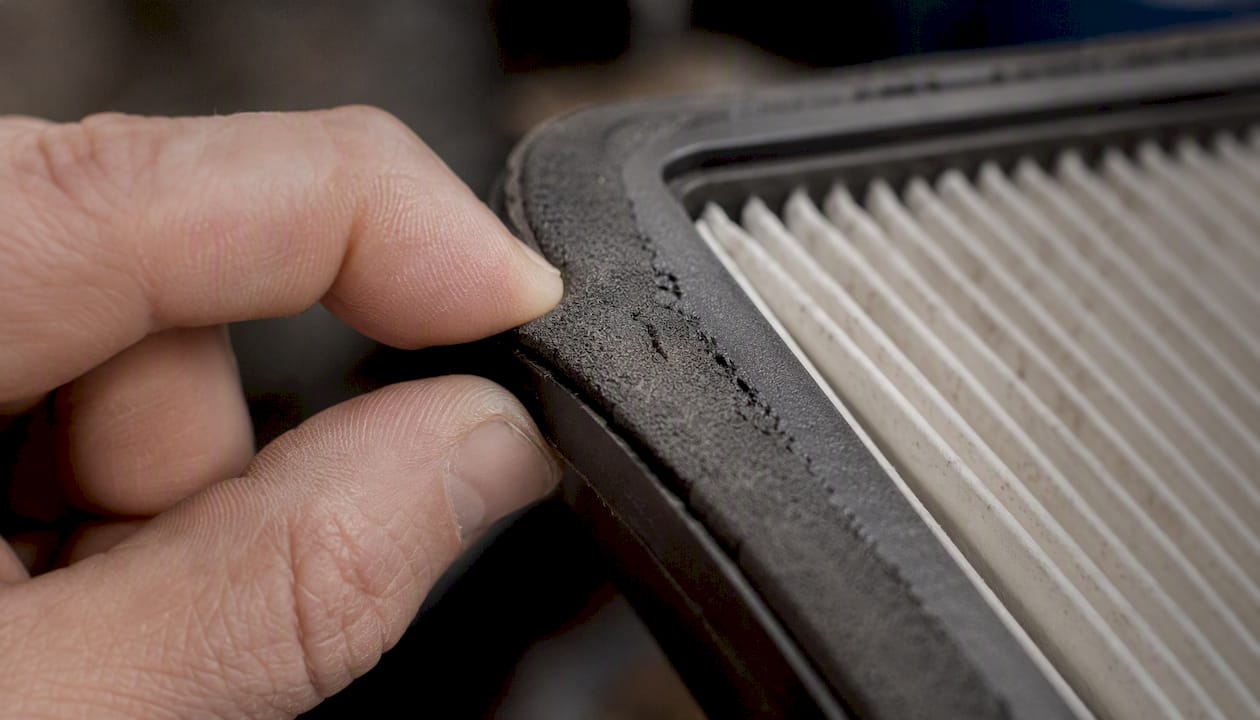
Air follows the path of least resistance. A 2-millimetre gap between a filter frame and its housing can allow a significant proportion of airflow to bypass the media without being filtered at all. This is why industry guidance consistently emphasises that a proper seal is the most critical factor for real-world filter effectiveness.
Common failure modes to check:
- Filter thickness does not match the slot (a 1-inch filter in a 2-inch slot)
- Bent or crushed filter frame from rough handling during installation
- Worn or missing gasket on the filter housing door
- Filter installed backwards (airflow arrow pointing the wrong direction)
- Oversized filter forced into a smaller slot, creating folds that bypass air
Steps to confirm a good seal:
- Hold the filter up to light before installation. If light passes through the frame edges rather than the media, the frame is damaged.
- After installation, run the system and pass your hand around the filter housing edges. Any airflow felt at the edges indicates a bypass gap.
- If available, check static pressure across the filter. A reading lower than expected for the filter’s rated resistance suggests bypass.
Pro Tip: Before upgrading to a higher-efficiency filter, confirm the existing filter seals correctly. A well-sealed MERV 8 filter outperforms a poorly sealed MERV 13 in real-world conditions. If your system is older, consult an HVAC technician before moving above MERV 11; the blower may not have the static-pressure headroom to handle the added resistance without reducing airflow to rooms.
An editorial perspective on what actually matters in air filtration
The air filtration category is full of marketing claims that outpace the evidence. Devices labelled “HEPA-type” or “99% effective” without a stated particle size and test standard are selling a feeling of clean air, not a measured outcome. The same applies to ionisers marketed as superior to HEPA because they produce no waste filter, a claim that conveniently omits the ozone risk.
The practical hierarchy is straightforward: identify the contaminant, choose the filter type that addresses it, confirm the filter seals correctly in the housing, and maintain it on schedule. A MERV 8 pleated filter that is replaced every 60 days and seals tightly will outperform a MERV 16 filter installed with a gap and left for 18 months.
The fit-and-seal point deserves more attention than it typically receives. Most filter guides focus entirely on efficiency ratings and particle sizes. Very few address the fact that the housing, the frame dimensions, and the gasket condition determine whether any of those ratings translate into real-world performance. That gap in the standard advice is where most households lose the benefit of whatever filter they have chosen.
Climatepro’s approach to filter matching reflects this hierarchy: start with the contaminant, check system compatibility, and prioritise a correct fit before considering an efficiency upgrade.
Climatepro’s range for Australian homes and beyond
Choosing the right filter type is only half the work. Having access to reliable, correctly specified products makes the other half straightforward.

Climatepro stocks a curated range of portable HEPA and combination purifiers suited to the scenarios covered in this article, from the entry-level Honeywell Air Touch P1 for single-room HEPA filtration to the Honeywell Air Touch P2 with combined HEPA and carbon stages for smoke and odour control. Genuine replacement filters are stocked alongside the units, so replacement cadence does not become a sourcing problem. Browse the full range and match a unit to your room size and contaminant type at Climatepro.
Sources
The following sources were used to assemble this article and are worth consulting directly for deeper technical detail.
- Guide to Air Cleaners in the Home | US EPA
- Best Air Filter Buying Guide – Consumer Reports
- FILTER TYPES AND PERFORMANCE (ASHRAE technical resource)
- All About AC Filters | Replacement, Types & Maintenance Guide
- How Do Air Purifiers Work?: A Guide to the Types of Air Purifiers
When shopping, look for CADR ratings on portable units, MERV ratings on HVAC filters, and EN1822 class designations (H13 or H14) on HEPA products. Avoid products that carry only vague efficiency claims without a stated test standard.
Recommended
- Air purifier buying tips: how to choose the right one — Blog | ClimatePro UAE
- Top replacement filters for apartments: what renters need — Blog | ClimatePro UAE
- Air filtration products for homes, offices and worksites — Blog | ClimatePro UAE
- Best air purifiers for apartments: top picks and sizing guide — Blog | ClimatePro UAE