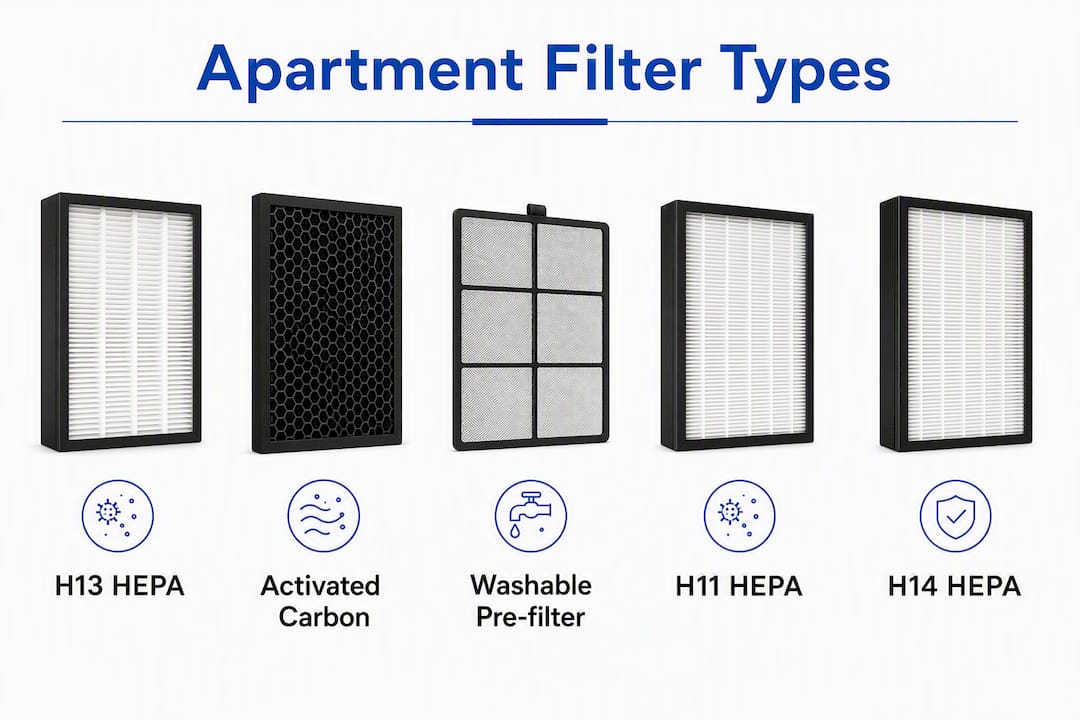
For most apartment renters, the right combination is an H13 True HEPA filter paired with a separate activated carbon cartridge and a washable pre-filter. H13 captures 99.97% of particles at 0.3 microns, the hardest size to trap, while activated carbon handles cooking odours and VOCs that HEPA media cannot touch. A clean pre-filter in front of both extends their working life considerably.
Before ordering, confirm your purifier’s exact model number and part code. OEM filters or verified compatible replacements that carry an EN 1822 H13 marking are the safest choice. If you cook regularly or have pets, keep a spare carbon cartridge on hand — it will saturate well before the HEPA needs replacing.
- Choose H13 True HEPA as the minimum grade for apartments near traffic, construction, or bushfire-prone areas.
- Add a separate activated carbon stage for odour and VOC control.
- Clean the washable pre-filter every 2–4 weeks to protect the HEPA from premature loading.
- Verify part code and filter shape before purchasing — keyed edges and airflow arrows are model-specific.
Table of Contents
- What does each replacement filter type do for apartment air quality?
- How do you pick the right replacement filter for your apartment?
- How do you find the exact replacement part and where can you buy it?
- Step-by-step: how to replace an air purifier filter safely
- When should you replace each filter in an apartment?
- Which replacement filter models should you look for in Australia and the UAE?
- Where to buy replacement filters and what do they cost?
- Key takeaways
- A note on filter choices for UAE apartments
- Climatepro replacement filters, delivered across the UAE
- Sources and further reading
What does each replacement filter type do for apartment air quality?
HEPA grades: H11, H13, and H14
H13 True HEPA captures nearly all particles at a size of 0.3 microns, the most penetrating particle size. H11 reaches roughly 95% at the same size, which sounds close but represents a meaningful gap when the particles in question are fine dust, mould spores, and PM2.5 from cooking or traffic. For households managing asthma, allergies, or seasonal smoke, that difference matters in practice.
H14 sits above H13 at 99.995% capture efficiency, but it is designed for clinical and clean-room environments. In a residential air purifier, H14 media restricts airflow, raises fan noise, and increases energy draw without delivering a meaningful health benefit over H13. For apartment use, H13 is the practical ceiling.
H11 is acceptable in low-risk rooms or where budget is genuinely constrained. Anywhere you have pets, frequent cooking, or proximity to shared ventilation, H13 is the minimum worth specifying.
Activated carbon
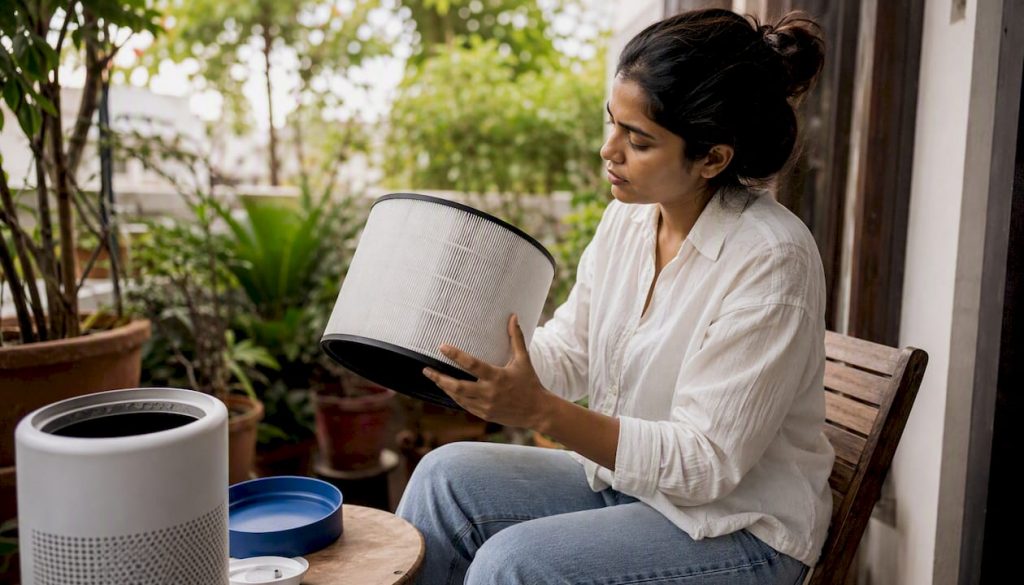
Mechanical HEPA filters remove particles but cannot capture gases or odours. Activated carbon handles many odour molecules and VOCs, though it has limits — some gases pass through regardless of carbon weight. In apartments with shared ventilation, cooking smells from neighbouring units and residual VOCs from cleaning products are the primary targets. Granular or pellet carbon generally outperforms thin fibrous carbon layers bonded to HEPA media, because it offers more surface area and a longer saturation point.
Washable pre-filters
Pre-filters sit in front of the HEPA and catch hair, large dust particles, and lint. Keeping them clean is the single most cost-effective maintenance habit: a clogged pre-filter forces the HEPA to work harder and shortens its replacement interval.
Pro Tip: H13 is the residential sweet spot. Use H11 only in a low-traffic, low-risk room where budget is the binding constraint. Skip H14 unless a medical professional has specifically recommended it for a household member.
| Filter type | What it captures | Apartment use case | Typical interval |
|---|---|---|---|
| H11 HEPA | ~95% of particles ≥0.3 µm | Budget rooms, low-risk spaces | 10–15 months |
| H13 True HEPA | 99.97% of particles ≥0.3 µm | Allergies, smoke, pets, cooking | 6–10 months |
| H14 HEPA | 99.995% of particles ≥0.3 µm | Clinical/industrial only | Not recommended for home use |
| Activated carbon | Odours, many VOCs | Cooking, pets, shared ventilation | 3–6 months |
| Washable pre-filter | Hair, large dust, lint | All apartments | Clean every 2–4 weeks |
How do you pick the right replacement filter for your apartment?
The decision comes down to four variables: room size and CADR, HEPA grade, carbon form and weight, and pre-filter type.
- Room size and CADR match: A filter’s HEPA grade is only useful if the unit moves enough air. A well-designed H13 unit with adequate CADR outperforms an H14 unit with insufficient airflow in most rooms. Check the purifier’s rated CADR against your room’s square metreage before upgrading filter grade.
- HEPA grade to match risk: H13 for anyone with allergies, asthma, pets, or exposure to smoke. H11 for a spare room with no occupants most of the day.
- Carbon form: Granular or pellet carbon lasts longer and captures more than a thin bonded layer. If your unit uses a bonded 3-in-1 filter, you replace the entire assembly when the carbon fails — even if the HEPA still has months of life left. Separate-stage designs cost less to maintain over a year in pet or cooking-heavy homes.
- Compatibility: Match the model number on the purifier’s base or rear sticker to the part code in the manual. Photograph the existing filter before removal to confirm shape, keyed edges, and airflow arrow direction.
For apartments with shared ventilation, manufacturer replacement intervals can shorten by 25–50% compared with a standalone house. Factor that into your annual filter budget.
How do you find the exact replacement part and where can you buy it?
Confirming compatibility
- Locate the model number on the purifier’s base, rear panel, or inside the filter housing.
- Open the user manual or check the manufacturer’s website for the corresponding part code.
- Photograph the existing filter before removal — note the shape, keyed edges, and airflow arrow direction.
- Cross-reference the part code with the seller’s listing and confirm the EN 1822 H13 marking on the replacement.
- If ordering an aftermarket compatible filter, request the specification sheet to verify filter media grade and seal design.
Sourcing in the UAE
Climatepro stocks verified replacement filters for Blueair, Levoit, and Honeywell Air Touch models with delivery across Dubai, Abu Dhabi, Sharjah, and all other emirates. For apartment air quality improvements, local stock means faster turnaround than international shipping, which matters when a filter fails mid-season.
Pro Tip: Keep two spare activated carbon cartridges if you cook daily or have pets. Carbon is the stage most likely to saturate between deliveries, and running a purifier with a spent carbon layer provides no odour protection.
Step-by-step: how to replace an air purifier filter safely
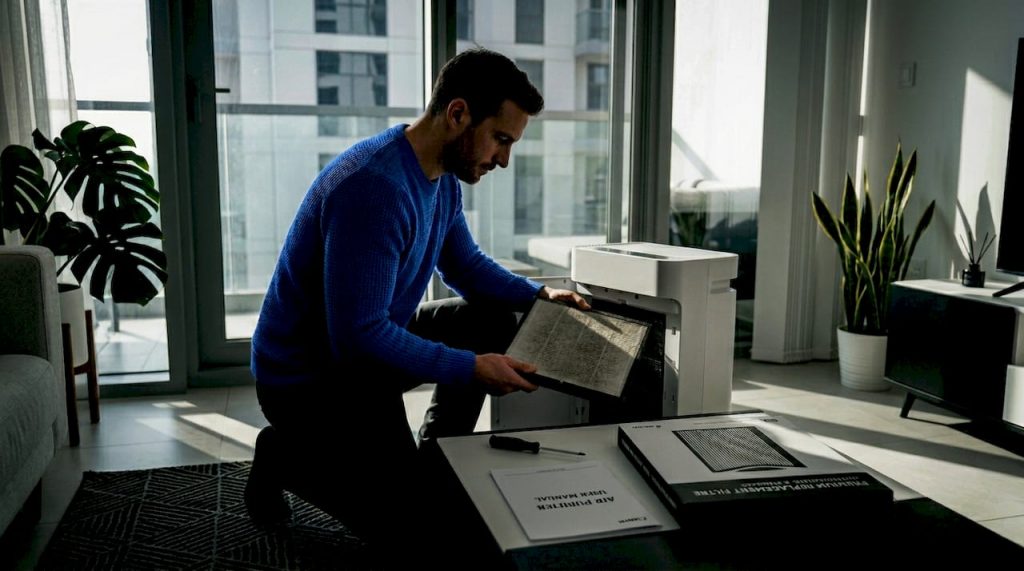
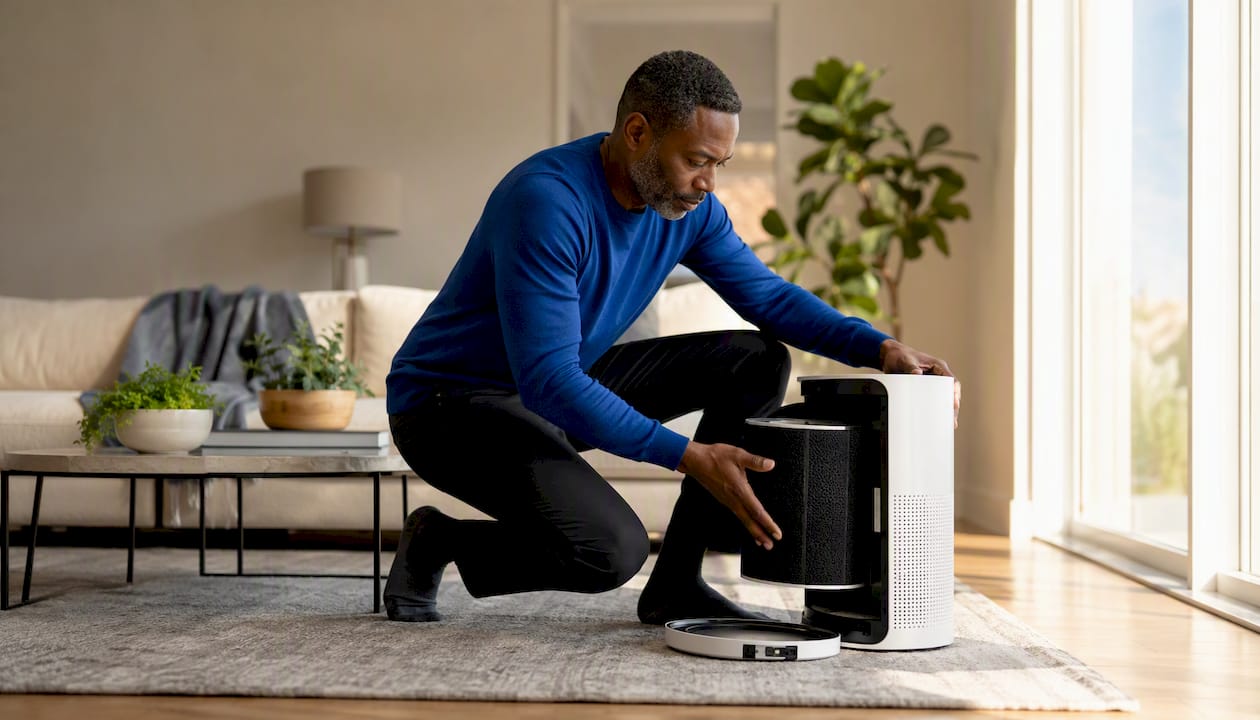
Power down and unplug the unit before opening the housing. This is non-negotiable — running fans can pull loose fibres from a disturbed filter into the room.
- Power off and unplug the purifier completely.
- Open the filter housing according to the manufacturer’s instructions — most units have a rear or side panel that unclips.
- Remove the old filter with a slow, steady motion. Do not shake or bang it indoors.
- Seal the used filter immediately in a plastic bag for disposal.
- Insert the new pre-filter first, then the HEPA, then the carbon stage — unless the unit’s design specifies a different order. Align airflow arrows and seat keyed edges firmly.
- Close and reseal the housing. Run the unit on a low setting for 5 minutes and listen for unusual noise, which indicates the filter is not fully seated.
Dispose of used filters in a sealed bag through general municipal waste. Do not compost or recycle HEPA filters — the trapped particulates are the hazard.
Pro Tip: Photograph the filter orientation before removal if the airflow arrows are faint or worn. A misaligned filter bypasses the media entirely and reduces effective CADR without any visible sign.
When should you replace each filter in an apartment?
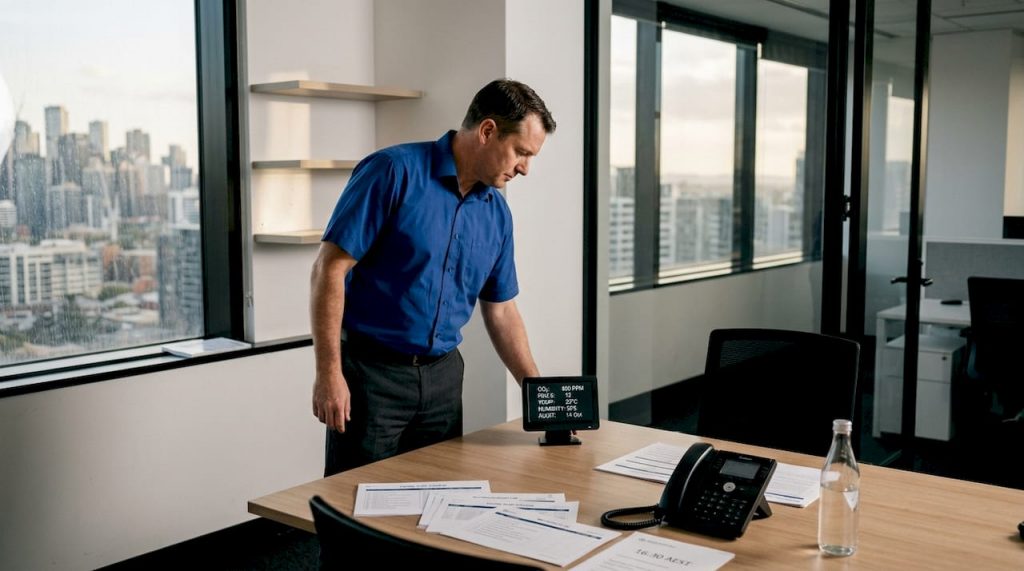
Manufacturer indicator lights are typically runtime counters, not load sensors. In a clean home they may trigger early; in a high-dust apartment they can run late. Use objective signs alongside the timer.
| Filter stage | Baseline interval | Accelerated interval (apartments) | Trigger signs |
|---|---|---|---|
| H13 True HEPA | 10–15 months | 6–10 months (pets, heavy cooking, smoke) | Reduced airflow, increased fan noise |
| Activated carbon | 3–6 months | 2–3 months (daily cooking, shared vents) | Odour return despite unit running |
| Washable pre-filter | Clean every 2–4 weeks | Every 1–2 weeks (high dust, pets) | Visible grey/brown loading |
- Odour return is the clearest sign of carbon failure. If smells reappear while the unit is running, replace the carbon stage regardless of the timer.
- Airflow drop or increased fan noise points to HEPA pressure build-up. A filter can appear relatively clean yet still reduce CADR by 15–20% due to internal loading invisible to the eye.
- After a smoke event — bushfire smoke, kitchen fire, or heavy neighbour cooking — inspect the carbon and pre-filter immediately rather than waiting for the scheduled date.
- Shared ventilation, building proximity to traffic or construction, frequent guests, and pet count all shorten filter replacement intervals.
For a full air cleaner maintenance calendar, Climatepro’s blog covers pre-filter cleaning schedules and seasonal adjustments for UAE conditions.
Which replacement filter models should you look for in Australia and the UAE?
Blueair Classic replacement filters
Blueair’s Classic series uses DualProtection filters that combine particle and activated carbon filtration in one assembly. The Classic 200 Series DualProtection Filter (AED 228) and Classic 400 Series (AED 298) suit allergy and smoke management. Confirm the series number on your unit before ordering — Classic 200, 400, and 500/600 use different filter dimensions. Best for: dust, pollen, and general particulate control.
Levoit Core series replacement filters
Levoit Core models typically use a bonded 3-in-1 filter (pre-filter layer, H13 HEPA, and activated carbon in one unit). The convenience of a single replacement is offset by the cost of replacing the whole assembly when the carbon saturates first. Best for: compact apartments where simplicity matters more than per-stage cost optimisation. Confirm the Core model number (Core 300, 400S, etc.) to match the correct cartridge.
Honeywell Air Touch replacement filters
Honeywell Air Touch models use model-specific cartridges. The Air Touch P2 is suited to medium rooms with allergy or pet concerns; the Air Touch U1 targets larger spaces. Replacement cartridges are model-locked, so the part code from the unit’s sticker is the only reliable reference. Best for: renters who want OEM fitment assurance and local stock availability.
For verified fitment and local UAE stock of Blueair, Levoit, and Honeywell Air Touch replacement filters, check Climatepro’s product pages before ordering from international marketplaces. Local stock means faster delivery and easier returns if a part code does not match.
Pro Tip: For allergy sufferers in apartments near construction or high-traffic roads, the allergy-proofing guide on Climatepro’s blog outlines which filter grades to prioritise by room type.
Where to buy replacement filters and what do they cost?
Typical price ranges (AED)
- H13 HEPA replacement filters: — AED 88–AED 371 depending on brand and series (Blueair pre-filters from AED 88; DualProtection assemblies from AED 225–AED 371).
Buying tips
- Buy separate-stage replacements where the unit supports them — it reduces annual cost when carbon saturates faster than HEPA.
- Confirm OEM or EN 1822 H13 certification on any aftermarket filter before purchasing.
- Prefer local UAE stock (Climatepro) over international shipping for faster delivery and easier compatibility support.
- Check the full air purifier range on Climatepro for current stock and pricing across Blueair, Levoit, and Honeywell models.
Used filters go into a sealed plastic bag and then general municipal waste in the UAE. Do not attempt to clean and reuse HEPA media — the fibres degrade and the trapped particulates become an airborne hazard.
For broader context on home air quality improvements, including ventilation retrofits that reduce filter load over time, the Better Quality Builders guide covers practical options for renters and owners alike.
Key takeaways
H13 True HEPA paired with a separate activated carbon cartridge and a clean washable pre-filter is the most practical and cost-effective filter combination for apartment renters managing smoke, odours, and allergens.
| Point | Details |
|---|---|
| Choose H13 as the minimum | H13 captures 99.97% of particles at 0.3 µm — the standard for smoke, allergies, and pet dander in apartments. |
| Replace carbon more often | Activated carbon saturates in 3–6 months in average apartments; odour return is the clearest replacement signal. |
| Adjust for apartment conditions | Shared ventilation and cooking can shorten HEPA intervals from 10–15 months to 6–8 months. |
| Verify part code before ordering | Model number and part code on the unit’s sticker are the only reliable compatibility reference. |
| Climatepro for local stock | Climatepro stocks verified Blueair, Levoit, and Honeywell Air Touch replacement filters with delivery across all UAE emirates. |
A note on filter choices for UAE apartments
Apartment renters in the UAE face a specific combination of challenges: fine desert dust, cooking odours from shared ventilation, and periodic smoke events. The guidance in this article reflects that reality. H13 is not an upsell — it is the grade that actually addresses PM2.5 from traffic and dust at the level that matters for respiratory health. Carbon is not optional in a building where cooking smells travel through shared ducts.
What often gets overlooked is the pre-filter. Renters focus on HEPA grade and carbon weight, then neglect the washable layer in front. A clogged pre-filter can halve the effective life of an H13 filter in a dusty environment. Two minutes of cleaning every fortnight is a more cost-effective intervention than buying premium filters and ignoring the basics.
Climatepro recommends genuine or verified compatible filters meeting EN 1822 H13 standards, and carries local stock for faster delivery across Dubai, Abu Dhabi, and other emirates.
Climatepro replacement filters, delivered across the UAE

Climatepro stocks genuine and verified compatible replacement filters for Blueair, Levoit, and Honeywell Air Touch purifiers, with delivery to Dubai, Abu Dhabi, Sharjah, Ajman, Ras Al Khaimah, Fujairah, and Umm Al Quwain. Every filter listed on the site carries model-specific fitment notes so you order the correct part the first time. For renters who need H13 HEPA, activated carbon cartridges, or washable pre-filters without the guesswork of international marketplaces, Climatepro is the direct local option. Browse the air purifier and filter catalogue or go directly to the Honeywell Air Touch P2 product page to check current stock and pricing.
Sources and further reading
- HEPA Filter Explained: H11 vs H13 vs H14 — HVAC Base: Authoritative breakdown of HEPA grade capture efficiencies and the practical case for H13 in residential settings.
- HEPA Filters Explained: H11, H13, H14 — Replacer Guide: Explains the CADR-versus-grade trade-off and why airflow matters as much as filter rating.
- H11 vs H13 HEPA filters — home trade-offs — Home Air Quality Lab: Details the airflow and energy penalties of H14 and why H13 is the practical residential ceiling.
- How often to replace air purifier filter — Clean Air Adviser: Covers replacement intervals, the limits of indicator lights, carbon saturation, and bonded-filter cost trade-offs.
- Air purifier buying guide — Consumer Reports: Sets out the functional difference between mechanical HEPA filtration and activated carbon for gases and odours.
Recommended
- Guide to allergy proofing apartments: practical steps for renters — Blog | ClimatePro UAE
- Air filter replacement: a clear step-by-step workflow — Blog | ClimatePro UAE
- Air purifier buying tips: how to choose the right one — Blog | ClimatePro UAE
- Why ventilate apartments: health, air quality & comfort — Blog | ClimatePro UAE