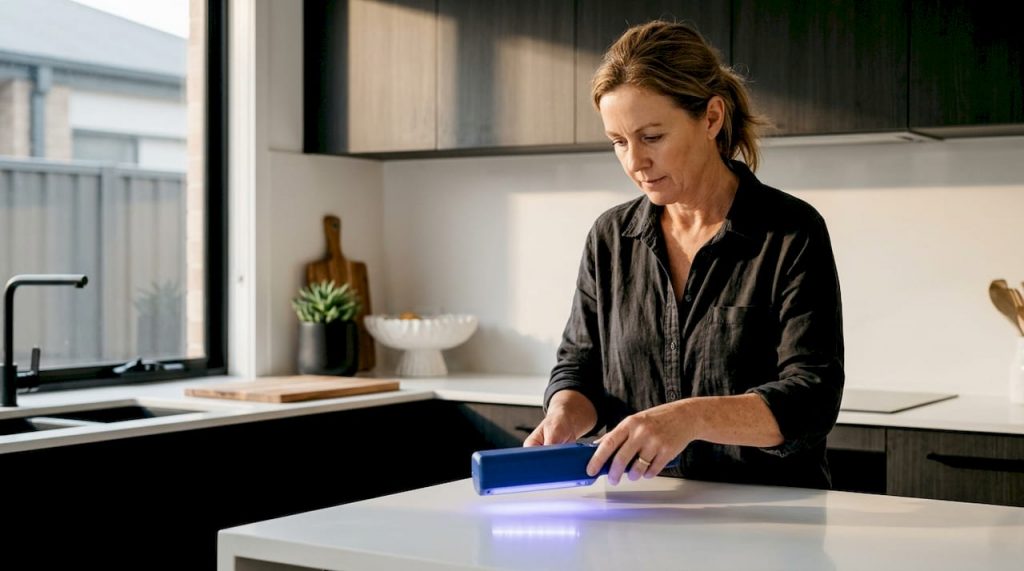
UV-C technology is a germicidal ultraviolet light method that disables microorganisms by damaging their DNA and RNA, preventing reproduction and making treated air and surfaces significantly safer. The industry term for this process is Ultraviolet Germicidal Irradiation, or UVGI. Understanding the role of UV-C technology matters for any homeowner or tenant in the UAE who wants cleaner indoor air and reduced pathogen load on surfaces. Devices from brands like Honeywell integrate UV-C directly into air purifiers, while far-UVC excimer lamps represent the newest generation of safer, human-compatible germicidal lighting. This guide covers how UVGI works, where it fits in a home, and what to watch for when choosing products.
How does UV-C technology work to disinfect air and surfaces?
UV-C damages microbial DNA/RNA so that bacteria, viruses, and mould spores cannot replicate. This is the core mechanism behind every UVGI device on the market, from in-duct HVAC lamps to portable air purifiers. The effect is not chemical. No residue is left behind, and no secondary reactions occur in the treated space.
The most common germicidal wavelength is 254 nm, produced by low-pressure mercury lamps. A newer category, far-UVC at 222 nm, is gaining traction because far-UVC lamps reduce human exposure risk compared to conventional 254 nm sources. The safety difference comes from the fact that 222 nm photons do not penetrate the outer dead-cell layer of human skin or the tear film of the eye, while still inactivating airborne pathogens. This distinction is critical for any application where people are present in the room.
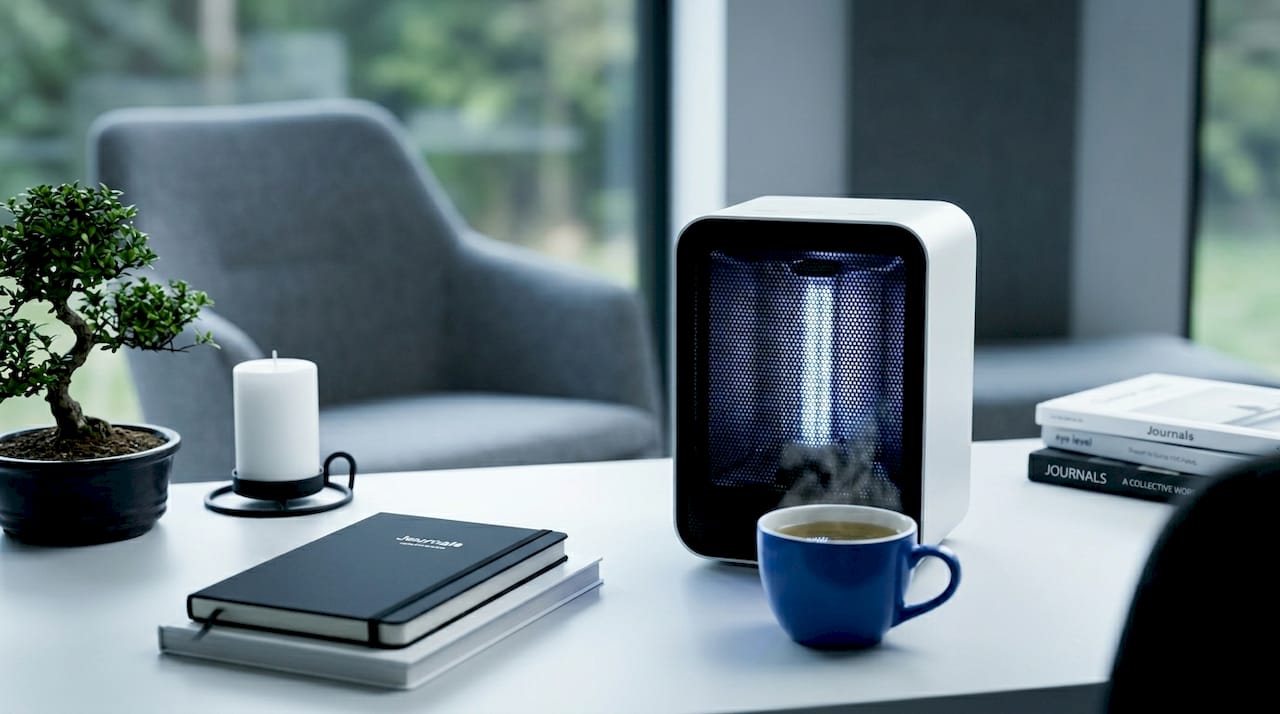
Performance is not simply a matter of switching on a lamp. UV-C efficacy depends on dose delivery considering irradiance, exposure time, geometry, and shadowing. A lamp positioned behind a cabinet will not disinfect the floor in front of it. The same wavelength and power output can produce vastly different results depending on room layout and device placement.
Key factors that govern UV-C performance:
- Irradiance: The intensity of UV-C light reaching the target surface or air volume, measured in microwatts per square centimetre.
- Exposure time: Longer dwell time increases the delivered dose, which is why in-duct systems outperform brief handheld passes.
- Line of sight: UV-C cannot bend around obstacles. Shadows created by furniture, ducting, or room geometry are untreated zones.
- Surface cleanliness: Organic matter reduces UV-C effectiveness on surfaces, so pre-cleaning is recommended before any UV-C surface treatment.
Pro Tip: When evaluating a UV-C air purifier, ask the manufacturer for radiometric performance data, not just wattage. Wattage tells you how much power the lamp consumes. Radiometric output tells you how much germicidal UV light is actually emitted.
What are the common applications of UV-C in homes?
The benefits of UV-C technology in a residential setting fall into three practical categories: air disinfection via purifiers, HVAC integration, and surface treatment.
-
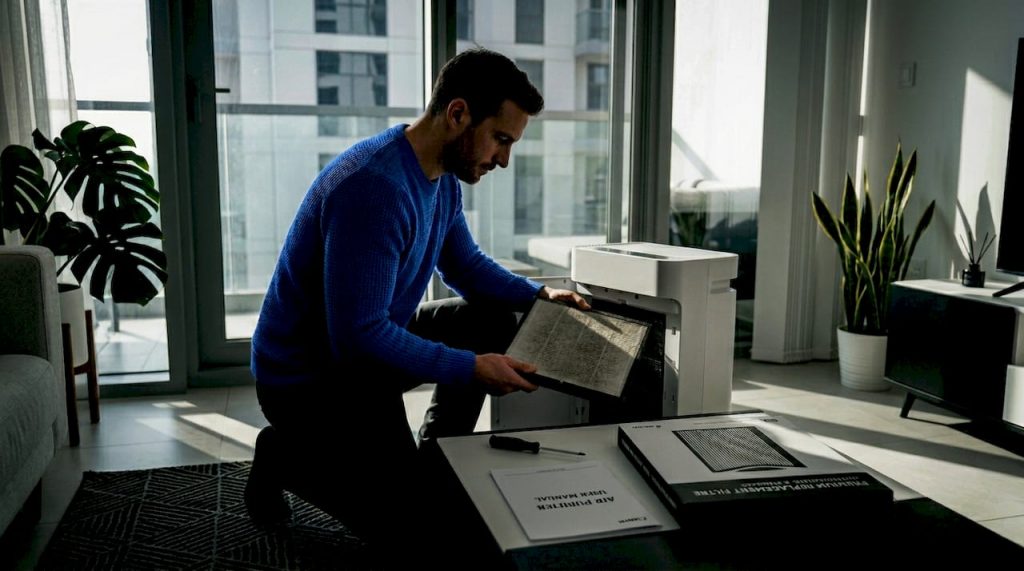
Portable UV-C air purifiers. These units draw room air through a chamber where it is exposed to a UV-C lamp, typically combined with a HEPA or activated carbon filter. The filter captures particulates and the UV-C inactivates any viable microbes passing through. Honeywell’s Air Touch P2, for example, combines multi-stage filtration with UV-C treatment in a single unit designed for rooms up to a specified area.
-
In-duct UVGI systems. Installed inside HVAC ductwork, these lamps irradiate air as it circulates through the system. ASHRAE guidance confirms that UVGI improves ventilation performance but cannot compensate for poor baseline ventilation. If your HVAC does not meet at least MERV 13 filtration, UV-C alone will not deliver adequate microbial control. The two technologies work together, not in isolation.
-
Upper-room UVGI fixtures. Wall-mounted or ceiling-mounted luminaires direct UV-C light into the upper zone of a room, above head height, where airborne pathogens circulate. Natural convection and air movement carry contaminated air through the irradiated zone repeatedly. This approach is more common in clinics and schools but is increasingly available for residential use.
-
Handheld and wand-style surface disinfection devices. These are the most accessible UV-C products for homeowners. They are used to treat benchtops, door handles, remote controls, and similar high-touch surfaces. Effectiveness depends entirely on maintaining the correct distance and moving slowly enough to deliver an adequate dose. Rushing the process leaves viable pathogens behind.
-
UV-C water treatment. Some whole-home water systems incorporate UV-C chambers to inactivate bacteria and viruses in drinking water. This is a well-established application with decades of validated use in municipal water treatment, now scaled for residential point-of-entry systems.
The importance of UV-C treatment is greatest when it is layered with other hygiene measures. A UV-C air purifier placed in a poorly ventilated room with no filtration will underperform. Paired with adequate ventilation and a quality filter, the same device delivers measurably cleaner air. For broader guidance on air cleaning technologies in UAE homes, the combination approach is consistently the most effective.
How does UV-C compare with other disinfection methods?
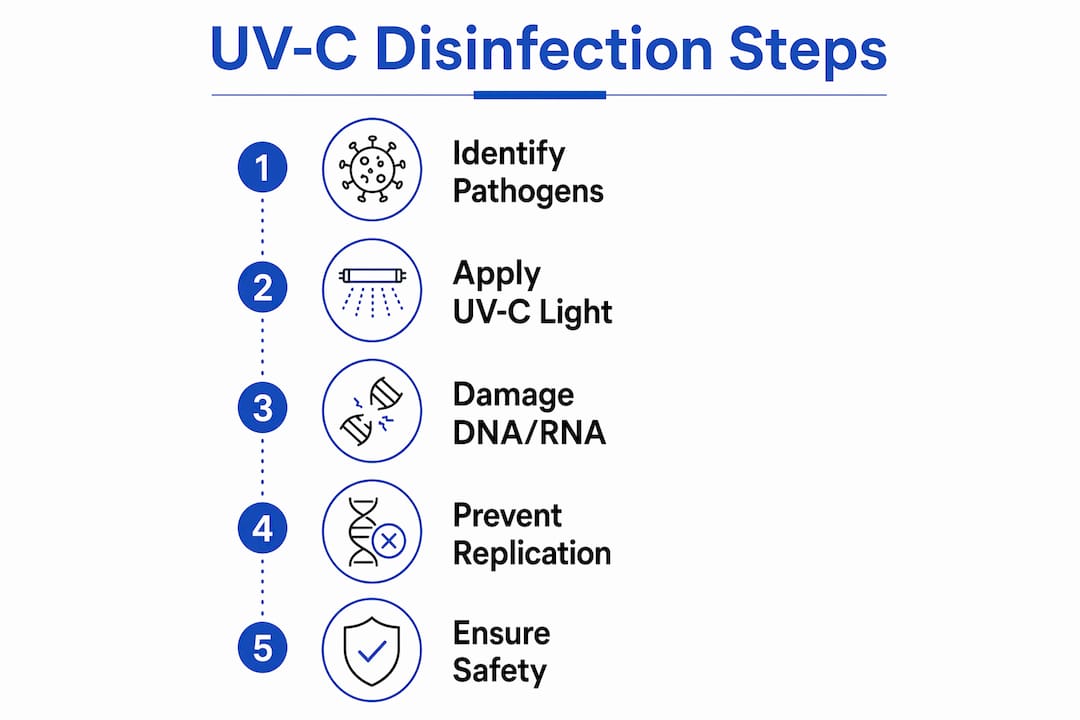
UV-C technology in air purification occupies a specific niche. It is not a replacement for filtration, ventilation, or cleaning. Understanding where it outperforms alternatives, and where it falls short, helps you build a practical home hygiene strategy.
| Method | Strengths | Limitations |
|---|---|---|
| UV-C (UVGI) | Inactivates microbes directly; no chemical residue; rapid action on airborne pathogens | Line-of-sight only; no effect on particulates; requires correct dose |
| HEPA filtration | Captures particles including allergens, dust, and mould spores | Does not inactivate captured microbes; filter replacement required |
| Chemical disinfectants | Broad-spectrum surface kill; penetrates organic matter | Residue concerns; ventilation required; not suitable for continuous air treatment |
| Mechanical ventilation | Dilutes airborne contaminants continuously | Does not inactivate pathogens; dependent on outdoor air quality |
The clearest advantage of UV-C for sanitisation is that it leaves no chemical trace. In a nursery, kitchen, or clinic room, this matters. Chemical disinfectants require dwell time, rinsing in some cases, and adequate ventilation to clear fumes. UV-C acts in seconds to minutes with no post-treatment requirements.
The clearest limitation is that UV-C does nothing for particulates. A room full of dust, pet dander, or pollen requires a HEPA filter, not a UV lamp. The two technologies address different problems, which is why combined units that integrate both are the most practical choice for most households.
Pro Tip: For UAE apartments where outdoor air quality varies significantly by season, pair a UV-C air purifier with a HEPA filter rated for fine particulates. The filter handles dust and sand ingress; the UV-C handles biological contaminants. Neither does the other’s job.
What safety considerations should homeowners know about UV-C?
UV-C light at 254 nm causes skin burns and eye damage with even brief direct exposure. This is not a minor risk. Products designed for occupied spaces must either shield the UV-C source completely, as in enclosed purifier chambers, or use far-UVC at 222 nm with validated filtering.
Far-UVC filtered excimer lamps use thin-film band-pass filters to remove harmful longer-wavelength emissions while maintaining antimicrobial efficacy. The filter is not optional. An unfiltered 222 nm lamp still emits some radiation at longer wavelengths that can harm eyes and skin. Any far-UVC product marketed for occupied-room use must include independent verification of its filter performance.
Product selection carries real risk because many UV-C luminaire products lack accurate performance data. Radiometric testing by independent bodies such as Pacific Northwest National Laboratory has found significant variability between nominal and actual UV-C output across commercially available devices. A product claiming 30 mW of germicidal output may deliver considerably less in practice.
Key safety and selection principles for homeowners:
- Choose products with third-party radiometric certification, not just manufacturer specifications.
- Never use open-beam 254 nm lamps in occupied rooms. These are for unoccupied spaces only, with automatic shutoff systems.
- Confirm that far-UVC products include verified band-pass filtering documentation.
- UV-C devices require maintenance; lamp output degrades over time and device failures reduce hygiene benefits without any visible warning sign.
- Integrate UV-C with your existing ventilation and cleaning routine rather than treating it as a standalone solution.
“Effective UV-C use requires matching device design to the specific infection control need, whether surface or airborne transmission, with validated UV-C dosage.” — UV Solutions Magazine, 2026
For apartment dwellers in the UAE, the practical starting point is a certified UV-C air purifier with an enclosed lamp chamber. This eliminates direct exposure risk entirely while delivering the air disinfection benefits. Guidance on improving air quality in UAE apartments covers the broader context of ventilation and filtration alongside UV-C.
My view on UV-C: useful tool, not a silver bullet
After reviewing the 2026 research and working through the practical realities of home air quality, my position is straightforward. UV-C is a genuinely effective disinfection technology when it is applied correctly. The problem is that “applied correctly” is harder than most product marketing suggests.
The misconception I encounter most often is that any UV-C device will improve air quality simply by being switched on. It will not. A poorly positioned lamp with inadequate irradiance, inside a device with no validated radiometric output, in a room with no baseline filtration, delivers very little. The HVAC filtration baseline matters as much as the UV-C component itself.
What I find genuinely promising is far-UVC at 222 nm with proper filtering. This technology addresses the core safety barrier that has limited UV-C to unoccupied spaces for decades. LED-based far-UVC sources are emerging and will eventually make continuous occupied-room disinfection practical and affordable for residential use. We are not fully there yet, but the trajectory is clear.
My practical advice: start with a certified enclosed-chamber UV-C air purifier from a brand with documented radiometric performance. Pair it with HEPA filtration and adequate ventilation. Do not rely on handheld wands as your primary disinfection method. And replace UV-C lamps on the manufacturer’s recommended schedule, because a degraded lamp provides false confidence without real protection.
— Nevel
Find UV-C air purifiers for your home at Climatepro
Climatepro stocks a curated range of air purifiers that combine UV-C disinfection with multi-stage filtration, suited to homes, apartments, and offices across the UAE.

The Honeywell Air Touch P2 integrates UV-C treatment with HEPA and activated carbon filtration in a single unit, available at best price from Climatepro with delivery across Dubai, Abu Dhabi, Sharjah, and all seven emirates. For a broader selection of certified UV-C air purifiers across multiple brands and room sizes, the full catalogue is available online. The Climatepro team can assist with product selection based on your room size, ventilation setup, and specific air quality concerns.
Key takeaways
UV-C technology delivers reliable germicidal performance only when device design, validated output, and correct integration with filtration and ventilation are all in place.
| Point | Details |
|---|---|
| Core mechanism | UV-C damages microbial DNA/RNA, preventing reproduction in air and on surfaces. |
| Line-of-sight limitation | UV-C cannot penetrate shadows or organic matter; pre-cleaning surfaces improves results. |
| Safety by design | Enclosed-chamber purifiers and filtered far-UVC lamps eliminate direct human exposure risk. |
| Filtration partnership | UV-C does not capture particulates; pairing with HEPA filtration addresses both biological and physical contaminants. |
| Product verification | Independent radiometric testing is the only reliable way to confirm a UV-C device delivers its claimed germicidal dose. |
FAQ
What does UV-C technology actually do to pathogens?
UV-C light at germicidal wavelengths damages the DNA and RNA of bacteria, viruses, and mould spores so they cannot reproduce. This inactivation occurs without chemicals and leaves no residue in the treated space.
Is UV-C safe to use in occupied rooms?
Conventional 254 nm UV-C is not safe for direct human exposure and must be used only in enclosed device chambers or unoccupied spaces. Far-UVC at 222 nm with verified band-pass filtering is designed for occupied-room use, but only products with independent safety certification should be used in this way.
Does a UV-C air purifier replace the need for a HEPA filter?
No. UV-C inactivates microbes but does not capture particulates such as dust, pollen, or allergens. A HEPA filter handles particulate removal. Combined units that include both technologies address a broader range of indoor air quality problems than either technology alone.
How often do UV-C lamps need to be replaced?
UV-C lamp output degrades over time, typically after 8,000 to 12,000 hours of use depending on lamp type, though this varies by product. Follow the manufacturer’s replacement schedule, as a degraded lamp continues to consume power while delivering insufficient germicidal dose.
Can UV-C technology replace regular surface cleaning?
No. Organic matter on surfaces significantly reduces UV-C effectiveness, so surfaces should be cleaned before UV-C treatment is applied. UV-C is best used as a supplementary disinfection step after physical cleaning, not as a substitute for it.
Recommended
- Buy Xiaomi Smart Antibacterial Humidifier 2 in Dubai | Best Price AED 153 | ClimatePro UAE
- Understand air cleaning technologies for healthier UAE homes — Blog | ClimatePro UAE
- Buy Honeywell Air Touch U1 Air Purifier in Dubai | Best Price AED 935 | ClimatePro UAE
- Buy Honeywell Air Touch V4 Air Purifier in Dubai | Best Price AED 471 | ClimatePro UAE