Whether tap water is acceptable depends on your humidifier type. Ultrasonic and cool mist units are the main concern because they can aerosolise minerals, while evaporative and steam units are far less likely to. If you run an ultrasonic humidifier, use distilled or low mineral water, or commit to a strict cleaning schedule, and always check the manufacturer’s manual first.
TL;DR:
- Ultrasonic humidifiers aerosolise dissolved minerals like calcium and magnesium, causing white dust and internal scale buildup if tap water is used regularly.
- Evaporative and steam humidifiers produce minimal mineral dust, making tap water acceptable if regular cleaning routines are maintained, especially in shorter or occasional use cases.
- Using distilled water reliably reduces white dust and scale, with reverse osmosis or demineralised water serving as practical but less thorough alternatives; bottled mineral water is not recommended.
- Frequent cleaning, including weekly rinsing and monthly disinfecting, is crucial to prevent microbial growth and scale regardless of water type.
- Letting water sit in the tank for days heightens problems; emptying and drying after each use significantly minimizes mineral deposits and device issues.
Table of Contents
- Which humidifier types are affected and why
- What tap water does: white dust, scale and microbial considerations
- When tap water is acceptable and when you should avoid it
- Practical ways to make tap water safer for a humidifier
- Cleaning and maintenance routine
- A note on common mistakes we see
- How ClimatePro can help you choose the right setup
- FAQ
- Sources
Which humidifier types are affected and why
Humidifiers reach the same goal through different mechanisms, and that mechanism decides whether tap water causes problems.
Ultrasonic humidifiers use a vibrating plate to break water into a fine mist. That mist carries whatever is dissolved in the water, including calcium, magnesium and other minerals, straight into the room. Impeller humidifiers work similarly, flinging water through a spinning disc and producing the same effect. Evaporative humidifiers pull water through a wick and rely on a fan to evaporate it, which tends to leave minerals behind in the wick rather than airborne. Steam vaporisers boil water, and boiling also does not send minerals into the air, though it does concentrate them in the tank over time.
A few signs tell you quickly which category your trouble falls into:
- A fine white film on furniture, screens or dark surfaces near the unit usually points to mineral aerosol from an ultrasonic or impeller device.
- Crusty white buildup inside the tank or on the base suggests scale from hard water sitting too long.
- A musty or stale smell often signals standing water and microbial growth rather than mineral content.
- A drop in mist output or steam volume can mean a clogged wick or scaled heating element.
What tap water does: white dust, scale and microbial considerations
The white dust that settles around an ultrasonic humidifier is mostly mineral salts, calcium and magnesium carbonates mainly, that were dissolved in the water and left behind once the fine droplets evaporate in the air. It settles on nearby surfaces and can also be inhaled as fine particulate, though the exposure is comparable to household dust rather than anything exotic.
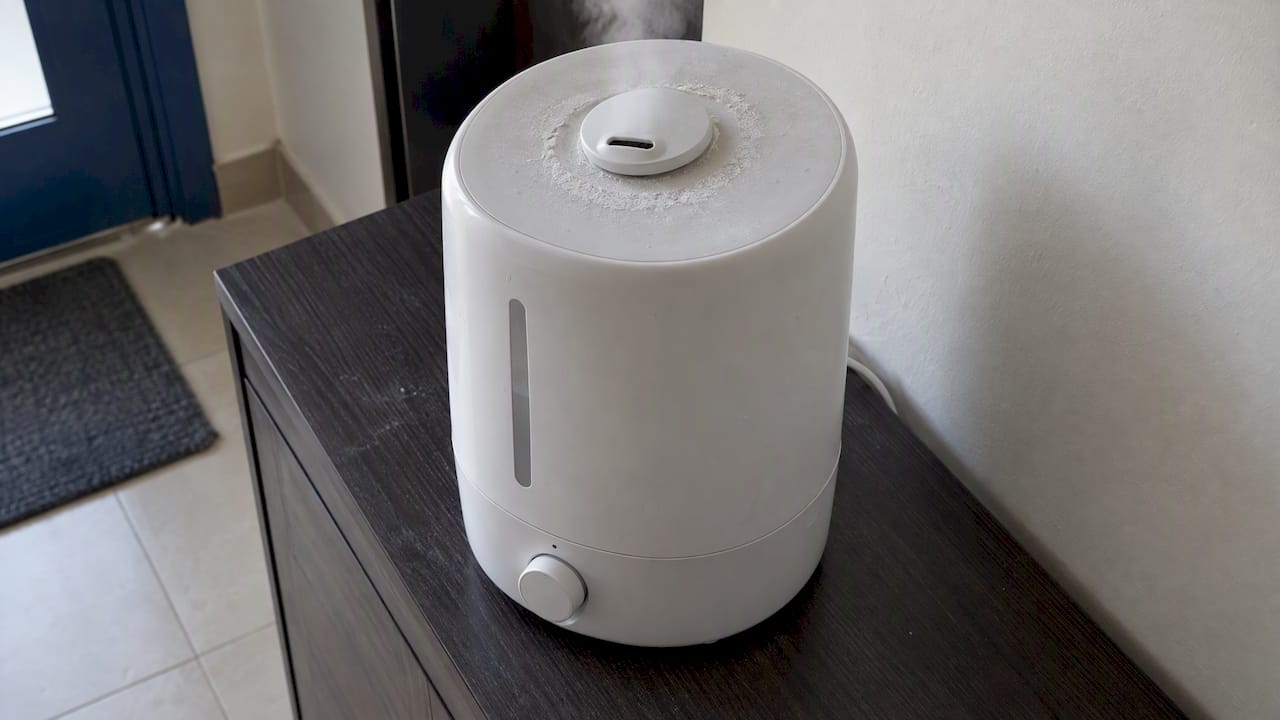
Inside the appliance, the same minerals form scale on tank walls, heating elements and wicks. Left alone, that scale roughens surfaces that are otherwise easy to wipe clean, creating pockets where microbes can take hold if the water sits for days without being emptied.
Water mineral content varies by source and region, and harder municipal or groundwater supplies make white dust and scale more likely to appear, according to USGS water resources materials on dissolved mineral variability. Regulatory guidance on this topic is notably cautious. Authorities document that mineral dispersal happens, but they do not conclude it poses a widespread serious health risk. The emphasis instead falls on choosing the right device and keeping it clean.
When tap water is acceptable and when you should avoid it
Deciding whether to keep using tap water comes down to a short checklist rather than a blanket rule.
- Evaporative and steam units: tap water is generally fine here since these designs disperse far fewer mineral particles into the air.
- Occasional or short-term use: if you run the humidifier for a few hours a day rather than continuously, mineral buildup is slower and easier to manage with routine cleaning.
- Strict cleaning habits: if you are willing to empty, rinse and deep clean on schedule, tap water in most devices remains workable.
- Ultrasonic units running long hours: these are the clearest case for switching to distilled or low mineral water.
- Nurseries and rooms for infants: given the sensitivity of the setting, low mineral water and a tighter cleaning routine are the safer default, and the device manual should always be the first reference.
- Persistent white dust or visible scale: if either keeps appearing despite regular cleaning, that is a signal to change water type rather than clean harder.
Practical ways to make tap water safer for a humidifier
If switching away from tap water makes sense for your device, a few options exist, each with its own trade-offs.
- Distilled water removes most dissolved minerals through a controlled boiling and condensing process, and it is widely available at supermarkets and pharmacies. It is the most reliable default for ultrasonic units.
- Reverse osmosis and deionised water remove a large share of minerals and work well as a practical alternative, though they are generally considered less thorough than distillation.
- Demineralisation cartridges and pitcher filters reduce mineral content as water passes through, but they have a limited lifespan and do not sterilise water, so they need regular replacement rather than being treated as a permanent fix.
- Bottled spring or mineral water is not a reliable substitute. These labels often still carry meaningful mineral content and can produce the same white dust as tap water.
Pro Tip: Boiling tap water does not remove dissolved minerals and can even concentrate them as water evaporates, so it is never a substitute for distillation or a demineralisation cartridge.
Cleaning and maintenance routine
A consistent routine does more to control scale and microbial risk than any single water choice, which is why Guidance centres on a simple weekly and monthly rhythm.
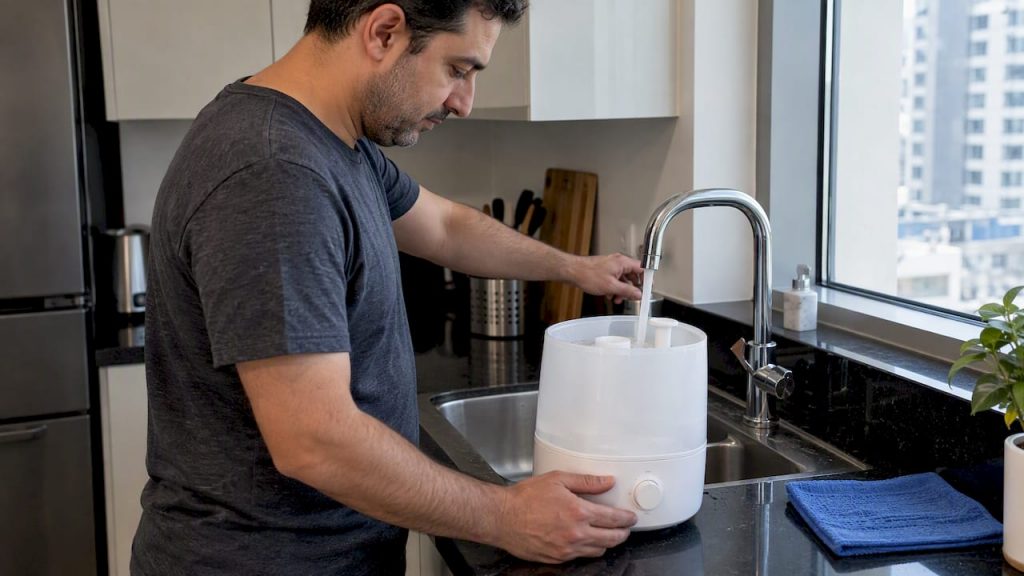
- Weekly: empty the tank fully, rinse with clean water, wipe down interior surfaces and refill rather than topping up old water.
- Monthly: deep clean with a vinegar soak or a manufacturer-recommended disinfectant to dissolve scale that daily rinsing misses.
- As needed: replace wicks or cartridges once they feel gritty, discoloured or stop absorbing water evenly.
- If white dust persists after switching to distilled or filtered water, inspect for a fouled wick or an exhausted cartridge rather than assuming the water is still the cause.
Dry, air-conditioned indoor conditions common across many homes push humidifiers to run longer hours, which shortens the interval between cleans. Treat the weekly and monthly routine above as a minimum rather than a maximum. Our guide on the humidity control workflow covers how to fit this into a broader home routine alongside air conditioning use.
Pro Tip: If you are unsure whether a cartridge still works, a sudden return of white dust after months of clean operation is usually the clearest sign it needs replacing.
A note on common mistakes we see
The most common error is not the water itself, it is letting water sit in the tank for days between uses. Emptying and drying the tank after each session, rather than topping it up, prevents most of the scale and smell complaints we hear about. For most homeowners, pairing an evaporative or steam unit with weekly rinsing is the simplest path to trouble-free use.
— Nevel
How ClimatePro can help you choose the right setup
Matching the right humidifier to your water supply is easier when you can compare evaporative, steam and ultrasonic models side by side before buying. ClimatePro’s humidifiers category lets you browse all three technologies, and our filters and accessories pages carry replacement wicks, demineralisation cartridges and cleaning kits suited to the model you already own.

- Browse the humidifier range by technology type to find a model suited to your water source.
- Check the filters and accessories pages for compatible wicks and cartridges before they run out.
- Contact support if you need device-specific guidance on water type or cleaning cadence.
Good indoor hygiene practices, including appliance cleaning, also support broader air quality goals, a point echoed in commercial cleaning guidance on maintaining healthy indoor environments. Visit the humidifiers catalogue to find a model that fits your routine and your water supply.
FAQ
What happens if I use tap water in a humidifier?
In an ultrasonic or impeller unit, tap water can send dissolved minerals into the air as fine white dust and leave scale inside the tank. In evaporative or steam units, the effect is far smaller since these designs disperse fewer mineral particles.
Is it better to use tap water or distilled water in a humidifier?
For ultrasonic humidifiers, distilled water is the better choice because it removes most dissolved minerals before they can aerosolise. For evaporative or steam units, tap water is usually acceptable provided you keep up a regular cleaning routine.
What’s the best water to put in a humidifier?
Distilled water is the most reliable option across all device types since it has the fewest dissolved minerals to leave behind as dust or scale. Reverse osmosis or deionised water is a reasonable second choice, while bottled spring or mineral water is not recommended.
What happens if you use tap water instead of distilled water?
You may notice more white dust around the unit, faster scale buildup inside the tank, and a shorter interval between cleans. The risk is mainly mechanical and cosmetic rather than a confirmed serious health hazard, though sensitive skin conditions can be aggravated by poor device hygiene, as eczema management guidance notes.