
Indoor air can be two to five times more polluted than outdoor air, yet most homeowners apply the same generic approach to every room. That is the core problem. Each space in your home produces distinct pollutants: bedrooms accumulate CO2 and dust mites, kitchens generate PM2.5 and combustion gases, and bathrooms breed mould from excess humidity. Effective room-by-room air tips treat each space as its own system, with specific targets such as CO2 below 1,000 ppm in sleeping areas and relative humidity between 40–50% in wet rooms. Climatepro’s range of air quality solutions is built around exactly this kind of room-specific thinking.
1. What are the best air quality tips for the bedroom?
The bedroom is where you spend roughly a third of your life, so air quality here directly affects sleep, recovery, and cognitive function. CO2 above 1,000 ppm disrupts sleep quality and reduces alertness the following morning. Keeping that level in check is the single most impactful bedroom air target.
The main sources of bedroom pollutants are bedding, furniture, and inadequate ventilation. Dust mites thrive in mattresses and pillows, and off-gassing from new furniture releases volatile organic compounds (VOCs) for months after purchase. Addressing these sources before buying any device is the correct order of operations.
- Use allergen-proof encasements on mattresses and pillows to physically block dust mite exposure.
- Vacuum weekly with HEPA-filtered units to prevent resuspension of particles from carpets and rugs.
- Open windows for at least 10 minutes each morning to flush accumulated CO2.
- Remove or air out new furniture in a garage or outdoor space before bringing it into the bedroom.
- Keep clutter minimal. Surfaces collect dust, and more objects mean more particle traps.
Pro Tip: If you cannot open windows due to outdoor dust or noise, a smart air monitor placed near the bed will tell you exactly when CO2 is climbing so you can act before sleep quality suffers.
2. How can kitchen air quality be improved during cooking?

The kitchen produces more airborne pollutants per hour than any other room in the home. Gas burners release nitrogen dioxide and carbon monoxide. Frying and grilling generate PM2.5 particles that penetrate deep into the lungs. Without active ventilation, these pollutants spread to adjacent rooms within minutes.
A ducted exhaust hood is the most effective single intervention. It captures pollutants at the source before they disperse. A recirculating rangehood with a carbon filter is a secondary option, but it does not remove combustion gases the way a ducted system does.
- Run the exhaust hood at full speed from the moment you turn on the cooktop, not after cooking begins.
- Clean exhaust fan grilles monthly to prevent the 30–50% airflow loss that builds up from grease and dust.
- Minimise prolonged gas burner use for tasks like simmering. An induction cooktop eliminates combustion gases entirely.
- Store cleaning chemicals in sealed containers inside a cupboard, away from open kitchen air.
- After cooking, leave the exhaust running for at least five minutes to clear residual particles.
Pro Tip: Keep a window cracked on the opposite side of the kitchen while the exhaust hood runs. This creates a pressure path that pulls fresh air through the space rather than recirculating stale air.
3. What are effective bathroom air tips to manage humidity?
Bathroom air quality is primarily a humidity problem. Relative humidity between 40–50% is the target range: below 40% causes dry skin and respiratory irritation, and above 60% creates conditions for mould and mildew growth. Most bathrooms without active ventilation exceed 80% humidity during a shower.
The exhaust fan is the bathroom’s most critical air control tool. Many installed fans are undersized for the room volume, or their grilles are so clogged that they move a fraction of their rated airflow.
- Check your fan’s CFM (cubic feet per minute) rating against your bathroom’s volume. A standard rule is 1 CFM per square foot of floor area.
- Clean fan grilles monthly to maintain rated capacity and prevent the significant airflow loss that accumulates from dust buildup.
- Leave the bathroom door ajar during showers to allow a fresh air supply path for the exhaust fan to work effectively.
- Run the exhaust fan for at least 20 minutes after showering to fully clear residual moisture.
- Place moisture-absorbing materials such as a small tray of silica gel near the vanity to manage residual humidity between showers.
Pro Tip: A dehumidifier sized for small rooms is a practical backup in bathrooms where exhaust fans cannot be upgraded, particularly in rental properties.
4. Which air quality strategies work best in living rooms and home offices?
Living rooms and home offices share a common challenge: they accumulate pollutants from multiple sources over long periods. Pet dander, carpet dust, printer emissions, and plastic off-gassing all contribute to a steady background load of particles and VOCs. CO2 also builds up quickly in home offices during video calls or focused work sessions, reducing concentration and increasing fatigue.
The Clean Air Delivery Rate (CADR) is the correct metric for sizing an air purifier to a room. The formula is: room square footage multiplied by ceiling height in feet, multiplied by five air changes per hour, divided by 60. A unit with insufficient CADR for the room volume will run continuously without meaningfully reducing particle counts.
- Vacuum carpets and upholstery at least twice weekly using a HEPA-filtered vacuum.
- Position air purifiers in the centre of the room or near the primary pollutant source, not in corners or behind furniture.
- Open windows on opposite sides of the room to create cross-ventilation during cooler parts of the day.
- Monitor CO2 with a dedicated sensor. Levels above 1,000 ppm signal the need for immediate ventilation.
- Identify and limit VOC sources: laser printers, synthetic rugs, and new plastic items all off-gas measurable compounds.
The table below outlines how air quality targets differ between these two spaces:
| Factor | Living room | Home office |
|---|---|---|
| Primary pollutant | Dust, pet dander, VOCs | CO2, printer emissions, VOCs |
| Ventilation priority | Cross-ventilation, windows | Fresh air supply, CO2 monitoring |
| Purifier placement | Central, away from walls | Near desk, away from obstructions |
| Key maintenance task | Weekly vacuuming, upholstery cleaning | Regular window opening, printer ventilation |
5. How to apply passive ventilation principles room by room
Passive ventilation uses temperature and pressure differences to move air without mechanical energy. The stack effect is the most reliable passive technique. A vertical height difference of 2–3 metres between low intake vents and high exhaust vents creates a natural updraft that draws fresh air in and pushes stale air out. This works in any multi-storey home or room with high windows.
Fan placement is equally important and widely misunderstood. Directing fans inward creates a positive pressure zone that pushes air through the space. Blowing fans outward without a corresponding intake creates dead air zones in corners and behind furniture.
- Position intake openings low on the windward wall and exhaust openings high on the leeward wall to maximise stack effect and cross-ventilation simultaneously.
- Direct fans to blow inward from a window rather than outward. This draws cooler outside air across the room.
- Keep internal doors open along the intended airflow path. A closed door in the middle of a planned airflow route breaks the pressure gradient entirely.
- Use casement or awning windows rather than sliding windows. They direct airflow into the room at an angle, increasing effective air movement by a significant margin.
- Avoid placing large furniture pieces directly in front of windows or vents. Even a sofa positioned 30 centimetres from a window can block a substantial portion of incoming airflow.
Pro Tip: For rooms with no cross-ventilation option, a whole-home air quality guide can help you identify where mechanical ventilation is the only viable solution.
| Technique | Best suited room | Key requirement |
|---|---|---|
| Stack effect | Stairwells, open-plan areas | 2–3 m height difference between vents |
| Cross-ventilation | Bedrooms, living rooms | Openings on opposite walls |
| Inward fan placement | Any room with one window | Second opening for air exhaust |
| Casement windows | Bedrooms, home offices | Correct orientation to prevailing wind |
Key takeaways
Effective indoor air quality improvement starts with source control in each room, followed by targeted ventilation and correctly sized filtration.
| Point | Details |
|---|---|
| Source control comes first | Remove or contain pollutant sources before investing in purifiers or ventilation upgrades. |
| Room targets vary | Bedrooms need CO2 below 1,000 ppm; bathrooms need relative humidity between 40–50%. |
| Fan direction matters | Fans blowing inward improve circulation; outward-facing fans create dead air zones. |
| Exhaust fans need maintenance | Monthly grille cleaning recovers 30–50% of lost airflow capacity in kitchens and bathrooms. |
| CADR determines purifier fit | Match air purifier CADR to room volume for effective particle reduction, not just room size. |
What I have learned from fixing air quality room by room
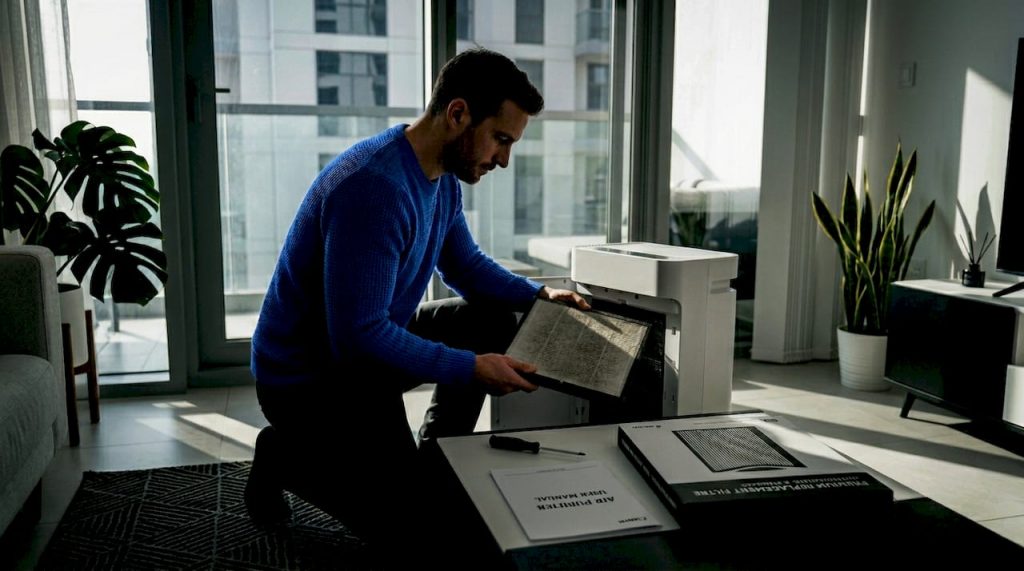
The most common mistake I see is homeowners buying an air purifier as the first step. Source control is the correct starting point in any air quality improvement hierarchy. A purifier running in a room full of off-gassing furniture or an uncleaned exhaust fan is fighting a losing battle.
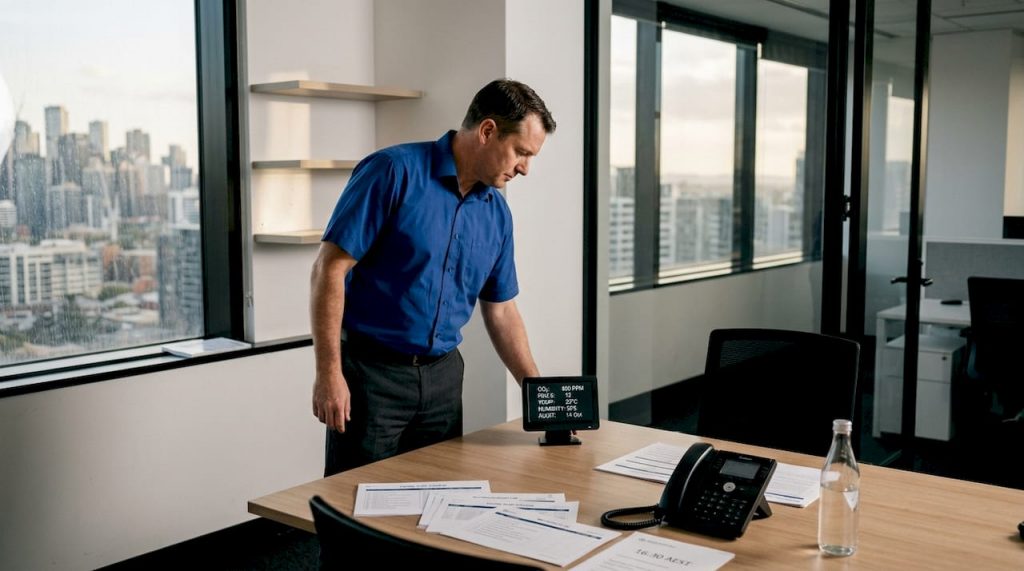
Measurement changes behaviour more than any advice article can. Once you place a CO2 monitor in a home office and watch the number climb past 1,200 ppm during a two-hour work session, you open the window without being told. Proactive monitoring builds habits that persist because the feedback is immediate and visible.
The room-specific approach also prevents overspending. A large-capacity purifier in a small bedroom is not twice as effective as a correctly sized unit. It is simply louder and more expensive to run. Matching the solution to the room’s actual pollutant profile and volume is the most cost-effective path.
My practical recommendation is to start with one room per week. Fix the source, improve the ventilation, then add filtration only if monitoring shows residual particle or gas levels above target. That sequence produces lasting results without unnecessary expenditure.
— Nevel
Climatepro’s room-specific air quality solutions
Getting the right product for each room is straightforward when you start with the room’s size and primary pollutant.

For bedrooms and smaller spaces, the Honeywell Air Touch P1 operates quietly with a sleep mode suited to night-time use. For living rooms and kitchens where VOCs and PM2.5 are the main concern, the Honeywell Air Touch U1 offers multi-stage filtration with smart sensors that adjust output automatically. Climatepro’s full air purifier catalogue covers every room size and filtration requirement, with delivery across Dubai, Abu Dhabi, Sharjah, and all UAE emirates.
FAQ
What does “room-by-room air tips” mean in practice?
Room-by-room air tips are targeted strategies that address the specific pollutants and ventilation needs of each individual space, rather than applying a single approach across the whole home. Each room has distinct air quality challenges that require different solutions.
How do I know if my bedroom CO2 levels are too high?
CO2 above 1,000 ppm in a bedroom reduces sleep quality and next-day cognitive performance. A dedicated CO2 monitor placed near the bed provides real-time readings and alerts you when ventilation is needed.
What is the correct humidity level for a bathroom?
Relative humidity between 40–50% is the target for bathrooms. Levels above 60% promote mould growth, while levels below 40% cause dryness and irritation.
How often should I clean kitchen and bathroom exhaust fans?
Monthly grille cleaning is the standard recommendation. Neglecting this maintenance can reduce fan airflow capacity by 30–50%, making ventilation ineffective even when the fan is running.
Does fan direction really affect air quality?
Fan direction has a measurable effect on circulation. Fans directed inward create a positive pressure zone that moves air through the room. Fans directed outward without a corresponding intake create dead air zones that reduce overall air exchange.
Recommended
- Why ventilate apartments: health, air quality & comfort — Blog | ClimatePro UAE
- Step by step air quality assessment for homes — Blog | ClimatePro UAE
- Understand air cleaning technologies for healthier UAE homes — Blog | ClimatePro UAE
- Office air quality improvement: top 10 strategies — Blog | ClimatePro UAE