
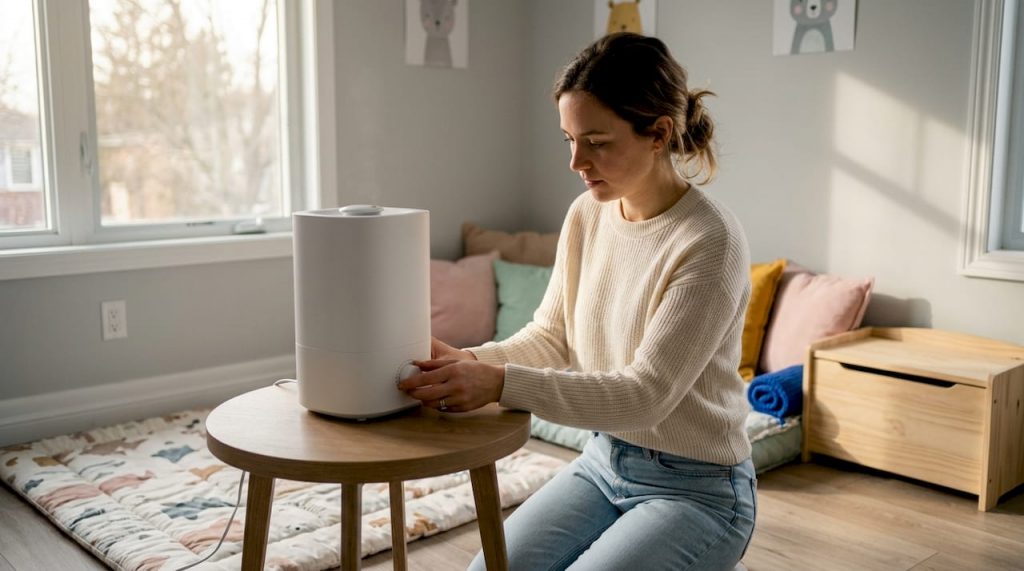
A humidifier is defined as a device that releases water vapour into the air to raise indoor humidity levels. The role of humidifiers in nurseries is to maintain safe, consistent moisture that soothes infants’ nasal passages, skin, and airways. Paediatricians consistently recommend cool-mist humidifiers as the only safe choice for baby rooms, since warm-mist vaporisers pose a scalding hazard to mobile infants. Brands like Honeywell and Blueair offer nursery-ready models designed with these safety priorities in mind. The target humidity range for any infant room sits between 40% and 60%, a figure that balances respiratory comfort with mould prevention.
What are the benefits of humidifiers for babies’ health?
Humidifiers support infant health by keeping the mucous membranes in the nose and throat moist. Dry air causes nasal passages to dry out, which thickens mucus and makes congestion worse. A properly humidified room helps thin that mucus naturally, making it easier for babies to breathe and feed.
The benefits of humidifiers for babies extend beyond the respiratory system. Infant skin is significantly thinner and more permeable than adult skin, which makes it prone to dryness, irritation, and eczema flare-ups in low-humidity environments. Maintaining humidity above 40% reduces transepidermal water loss, keeping skin supple without the need for constant topical application.
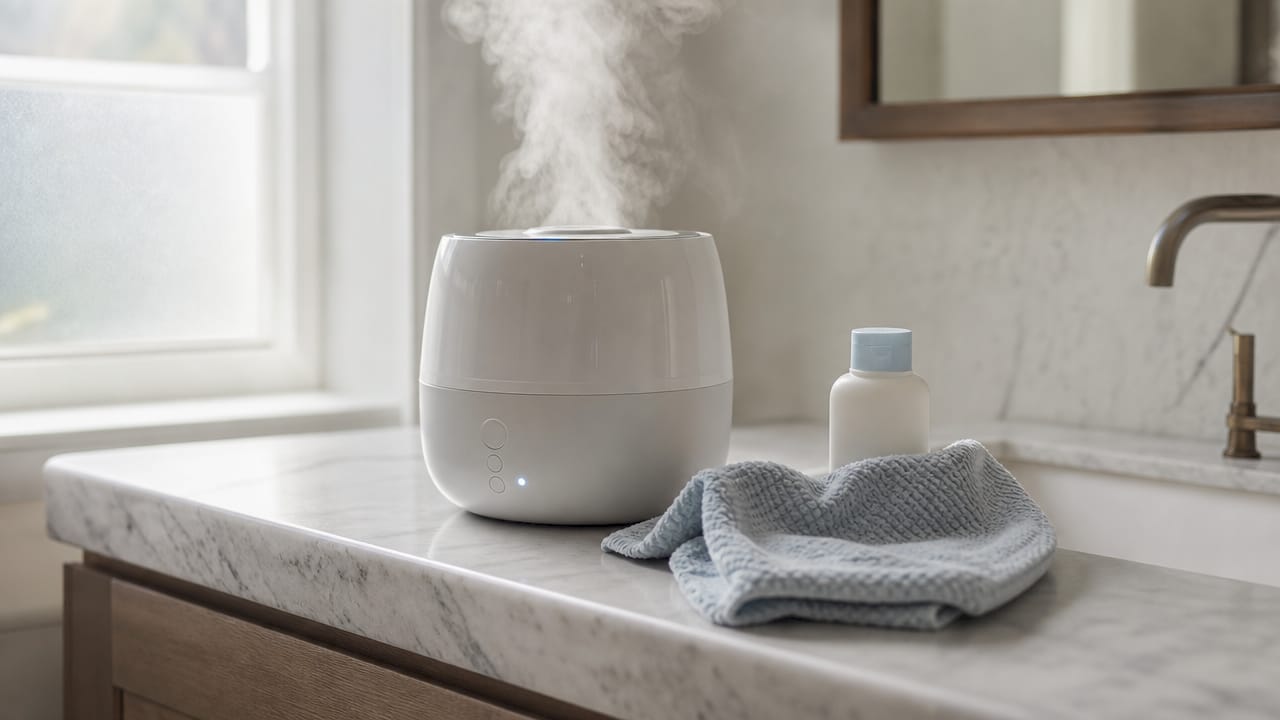
Sleep quality is another area where humidifiers provide measurable support. White noise from humidifiers is a secondary benefit that some babies find calming, helping them settle and stay asleep longer. The white noise effect is a bonus, not the primary function, but parents frequently report it as one of the most noticeable practical advantages.
Humidifiers are supportive aids, not primary medical treatments for infant respiratory illnesses. They create a more comfortable environment that supports the body’s natural processes. They do not shorten the duration of a cold or replace medical care.
- Nasal comfort: Moist air keeps nasal passages clear and reduces irritation from dry indoor conditions.
- Skin hydration: Adequate humidity reduces infant eczema flare-ups and general skin dryness.
- Sleep support: The gentle hum of a cool-mist unit provides white noise that can help babies settle.
- Respiratory ease: Humidified air supports the body’s ability to clear airways without medical intervention.
Pro Tip: Place the humidifier at least one metre from the cot and direct the mist away from the sleeping area. This prevents the bedding from becoming damp, which can encourage mould growth.
Why are cool-mist humidifiers best for nurseries?
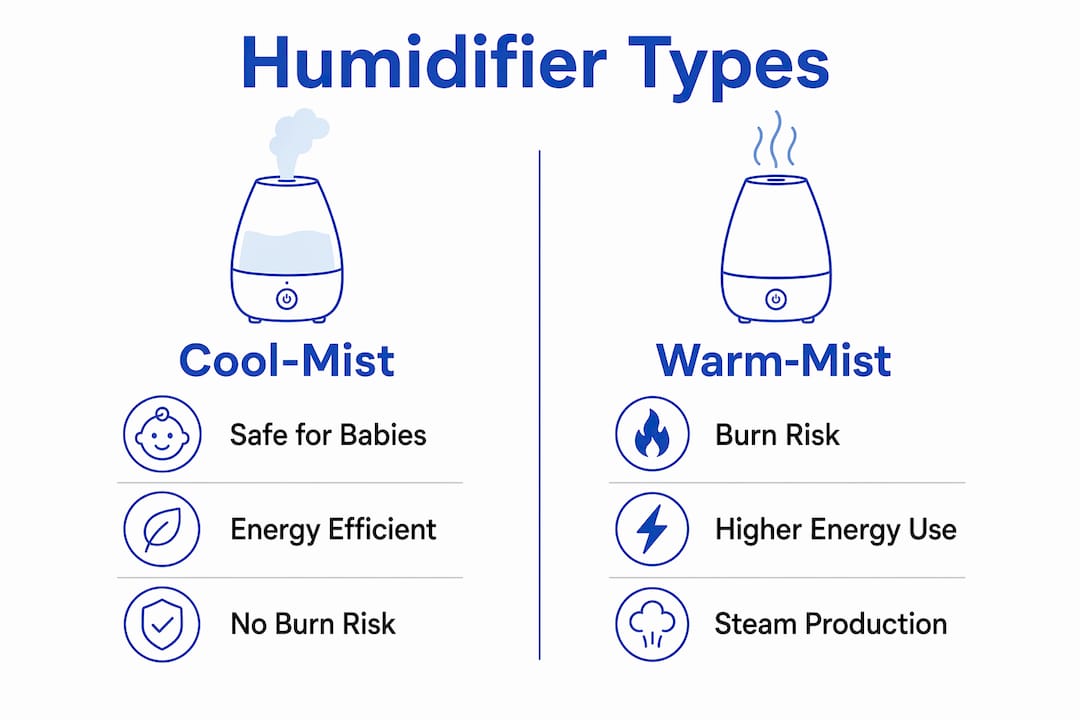
Cool-mist humidifiers are the only safe choice for nurseries because warm-mist vaporisers boil water to produce steam. That boiling element creates a burn risk if a curious toddler or crawling infant gets close to the unit. Cool-mist models produce the same therapeutic moisture without any heating element.
Warm-mist vaporisers also consume more energy than cool-mist alternatives because they must continuously heat water. Cool-mist units use either a fan or ultrasonic vibrations to disperse moisture, both of which draw significantly less power. For a device running overnight in a nursery, that energy difference adds up.
Cool-mist technology comes in two main forms: ultrasonic and evaporative. Ultrasonic models use high-frequency vibrations to create a fine visible mist. Evaporative models draw air through a wet wick filter, releasing invisible moisture. Each type has distinct advantages depending on the nursery environment and the parent’s maintenance preferences.
Using distilled water in any cool-mist humidifier is a straightforward way to reduce mineral deposits and prevent the dispersal of airborne particles. Tap water contains dissolved minerals that can accumulate inside the unit and, in ultrasonic models, be released into the air as fine white dust.
| Feature | Cool-mist humidifier | Warm-mist vaporiser |
|---|---|---|
| Burn risk | None | High (boiling water) |
| Energy use | Low | High |
| Paediatric recommendation | Yes | Not recommended for nurseries |
| Mineral dust dispersal | Possible with tap water | Minimal |
| Noise level | Low to moderate | Very low |
Pro Tip: If your nursery has a smart air quality monitor, use distilled water in an ultrasonic humidifier. Tap water mineral dust can trigger false readings on particulate sensors, making the room appear more polluted than it is.
How to safely use and maintain a humidifier in a nursery
Safe humidifier usage in baby rooms depends on four practical factors: humidity level, water quality, cleaning frequency, and operating schedule. Getting all four right prevents the device from becoming a health risk rather than a health aid.
-
Monitor humidity levels. Keep the nursery between 40% and 60% relative humidity. Use a standalone hygrometer or choose a humidifier with a built-in humidistat. Levels above 60% encourage mould growth and dust mite proliferation, both of which worsen respiratory health in infants.
-
Use distilled or demineralised water. Tap water introduces minerals and, in some regions, chlorine into the mist. Distilled water eliminates this risk and reduces limescale build-up inside the unit, extending its service life.
-
Clean the unit daily. Improper maintenance can aerosolise bacteria and mould from inside the water tank. Empty the tank each morning, rinse it with clean water, and allow it to dry before refilling. A weekly deep clean with a diluted white vinegar solution removes mineral deposits and inhibits microbial growth.
-
Replace filters on schedule. Evaporative humidifier filters need replacement every six weeks to prevent them from becoming breeding grounds for mould and bacteria. A clogged or contaminated filter defeats the purpose of running the device.
-
Operate selectively, not continuously. Use the humidifier mainly during dry conditions or when your baby has congestion, not as a year-round constant. Running it only when needed reduces the risk of over-humidification and extends the unit’s lifespan.
-
Choose a model with automatic shut-off. Units that switch off when the water tank empties prevent the motor from running dry, which can damage the device and, in some models, produce an unpleasant burning smell near the cot.
Pro Tip: Check the nursery’s air quality checklist regularly. Humidity is one factor in a broader picture that includes ventilation, dust, and airborne particles.
Ultrasonic vs evaporative humidifiers: which suits a nursery?
Choosing between ultrasonic and evaporative cool-mist models comes down to maintenance preference, nursery size, and water quality. Both types are safe for infant rooms when used correctly, but they behave differently in practice.
Ultrasonic humidifiers using tap water disperse mineral white dust that can irritate sensitive infant lungs and interfere with smart air quality sensors. Switching to distilled water eliminates this issue entirely. Ultrasonic models are generally quieter than evaporative units and produce a visible mist that parents often find reassuring as a sign the device is working.
Evaporative models draw room air through a saturated wick filter and release moisture as invisible vapour. The filter physically traps minerals, so tap water is less problematic. The trade-off is ongoing filter replacement costs and a slightly higher noise level from the internal fan. For parents who want lower ongoing costs and are comfortable with distilled water, ultrasonic models are the more practical choice.
| Feature | Ultrasonic | Evaporative |
|---|---|---|
| Visible mist | Yes | No |
| Mineral dust risk | High with tap water | Low (filter traps minerals) |
| Noise level | Very low | Low to moderate (fan) |
| Filter replacement | Not required | Every 6 weeks |
| Tap water suitability | Poor | Acceptable |
| Best for | Quiet nurseries, distilled water users | Parents preferring lower maintenance |
For a detailed look at how ultrasonic technology works in a home setting, the ultrasonic humidification guide from Climatepro covers the mechanics and practical considerations clearly. Nursery size also matters. A small room of under 15 square metres will reach the target humidity range faster than a larger open-plan space, so output capacity should match the room dimensions listed in the product specifications.
Key takeaways
Cool-mist humidifiers are the safest and most effective tool for maintaining the 40%–60% humidity range that supports infant respiratory health, skin comfort, and sleep quality in a nursery.
| Point | Details |
|---|---|
| Cool-mist is the only safe type | Warm-mist vaporisers pose a burn risk and are not recommended for nurseries. |
| Target humidity range | Keep nursery humidity between 40% and 60% to support health and prevent mould. |
| Daily cleaning is non-negotiable | Dirty tanks aerosolise bacteria; empty, rinse, and dry the unit every day. |
| Distilled water prevents mineral dust | Tap water in ultrasonic models releases white dust that can irritate infant lungs. |
| Use selectively, not continuously | Run the humidifier during dry periods or congestion, not as a permanent fixture. |
What parents often get wrong about nursery humidifiers
Parents frequently treat a humidifier as a set-and-forget appliance. That approach is where most problems begin. A humidifier that is not cleaned daily becomes a mist-dispersing petri dish, circulating bacteria and mould spores directly into the air a newborn breathes. The device itself is not the problem. Neglected maintenance is.
The second misconception I see regularly is the belief that a humidifier will cure a baby’s cold or respiratory infection. It will not. What it does is create a more comfortable environment that supports the body’s natural recovery. Moist air keeps mucus thinner and nasal passages less irritated, which makes a sick baby more comfortable. That is a meaningful benefit, but it is not treatment.
The white noise angle is genuinely underrated. Parents who buy a humidifier purely for humidity often discover the gentle hum helps their baby settle faster at night. That is a real, documented benefit, but it should be understood as a bonus. Buying a humidifier primarily for white noise and ignoring the humidity monitoring side is the wrong priority order.
My practical recommendation is to treat the humidifier the way you treat a steriliser. Clean it every day without exception, monitor the room humidity with a hygrometer, and use distilled water if you have an ultrasonic model. Follow those three steps and the device will do exactly what it is designed to do.
— Nevel
Nursery humidifiers and air quality products at Climatepro
Climatepro stocks a range of cool-mist humidifiers suited to nurseries across Dubai, Abu Dhabi, and the wider UAE. The Blueair InvisibleMist Humidifier H35i is an evaporative cool-mist model with a mineral-trapping filter, making it a practical choice for parents who use tap water. For parents who want both clean air and controlled humidity in one unit, the Blueair 2-in-1 Purify + Humidify DH3i combines filtration and humidification in a single nursery-ready device.

Climatepro also carries a full range of humidifiers for nurseries and complementary air purifiers to support broader indoor air quality. All products are available with delivery across the UAE. Choosing the right combination of humidity control and air filtration gives infants the cleanest, most comfortable environment possible from day one.
FAQ
Are humidifiers safe for newborns?
Cool-mist humidifiers are safe for newborns when placed at least one metre from the cot and cleaned daily. Warm-mist vaporisers are not recommended for nurseries due to the burn risk from boiling water.
What humidity level is best for a baby’s room?
The recommended range is 40%–60% relative humidity. Levels below 40% dry out nasal passages and skin, while levels above 60% encourage mould and dust mite growth.
How often should I clean a nursery humidifier?
Empty and rinse the water tank daily, and perform a deeper clean with diluted white vinegar once a week. Evaporative filter wicks need full replacement every six weeks.
Do humidifiers help with infant congestion?
Humidifiers support nasal comfort by keeping mucus thin and passages moist, which makes congestion more manageable. They are a comfort measure, not a medical treatment for infection.
Should I use tap water or distilled water in a humidifier?
Distilled water is the better choice, particularly for ultrasonic models. Tap water contains minerals that ultrasonic humidifiers can disperse as fine white dust, which may irritate infant lungs and trigger false readings on air quality sensors.