To remove a musty smell from your apartment, fix the damp source first, then clean affected materials and control humidity. Air purifiers and dehumidifiers help long-term, but they do not replace source cleanup.
Do these three things now:
- Open windows or run the AC fan to move air through the space
- Remove any wet or damp fabrics, towels, or rugs from the room
- Place open bowls of baking soda or activated charcoal near the strongest odour point
Air may feel noticeably fresher within a few hours of ventilating. Fabrics and soft furnishings typically need 24–72 hours of drying and cleaning before the smell clears. Persistent odours tied to hidden mould or saturated materials can take longer. The EPA advises that fixing the moisture source, removing contaminated material, and drying the area are the primary steps. The CDC recommends ventilation and drying as core controls. Climatepro stocks dehumidifiers and air purifiers with HEPA and activated carbon filtration, available for delivery across all seven Emirates.
Key takeaways
Removing a musty smell from an apartment requires fixing the moisture source, cleaning affected materials, and then using appliances to maintain low humidity and clean air continuously.
| Point | Details |
|---|---|
| Fix the source first | Dry and clean the damp area before using any absorbers or appliances. |
| Target humidity 30–50% | Keep relative humidity below 60% to prevent mould growth, per EPA guidance. |
| Clean in the right order | Dry, then wash, then deep clean, then deodorise — skipping steps embeds odour further. |
| Call a pro at 10 sq ft | Visible mould over roughly 10 square feet, or recurring odour after cleaning, warrants professional remediation. |
| Climatepro for local supply | Climatepro stocks dehumidifiers, HEPA + carbon air purifiers, and replacement filters with delivery across all seven Emirates. |
Table of Contents
- How to locate the source of musty odour room by room
- Quick natural remedies that neutralise musty odours right away
- Appliances and mechanical fixes that work in UAE apartments
- How to clean fabrics, carpets and hard surfaces to remove the smell at its source
- When to call a professional: clear decision points for renters
- Prevention habits that stop musty odours returning in UAE apartments
- Why drying, ventilation and cleaning work: the science behind it
- Climatepro’s perspective on tackling musty odours in UAE apartments
- Climatepro UAE: recommended products for musty odour control
- Sources
How to locate the source of musty odour room by room
Guessing wastes time. A structured inspection takes 20–30 minutes and narrows the problem to one or two locations.
- Bathroom: Check the shower recess, grout lines, silicone seals, and the underside of bath mats. Run water and listen for slow drainage. Lift the toilet cistern lid and check for moisture pooling. Smell directly at the drain.
- Kitchen: Open the cabinet under the sink and check for moisture, soft timber, or discolouration. Pull out the dishwasher slightly and inspect the floor behind it. Check the seal on the refrigerator door.
- Laundry area: Inspect the washing machine drum and door seal for mould. Check the hose connections at the wall. Smell the drain outlet.
- Closets and wardrobes: Open doors and let them air for 10 minutes. Check the back wall and floor corners for condensation or soft spots. Smell stored fabrics directly.
- Behind furniture on external walls: Pull sofas and beds away from external walls. Condensation forms on cool external walls in air-conditioned rooms, and mould can colonise the wall or the back of the furniture.
- Windows and sliding door frames: Check rubber seals and the track for standing water or black spotting.
- AC vents and return air grilles: Shine a phone torch into the vent. Dusty, damp-looking grilles or visible dark spotting indicate mould on the coil or in the duct.
- Under-sink areas and utility cupboards: These are high-risk zones in UAE apartments where plumbing runs through walls. Check for soft flooring, water stains, or a persistent drain smell.
Pro Tip: Use your phone camera to inspect dark corners you cannot easily see. Switch to video mode, turn on the torch, and record a slow sweep. Review the footage on a larger screen where discolouration and moisture marks are easier to spot.
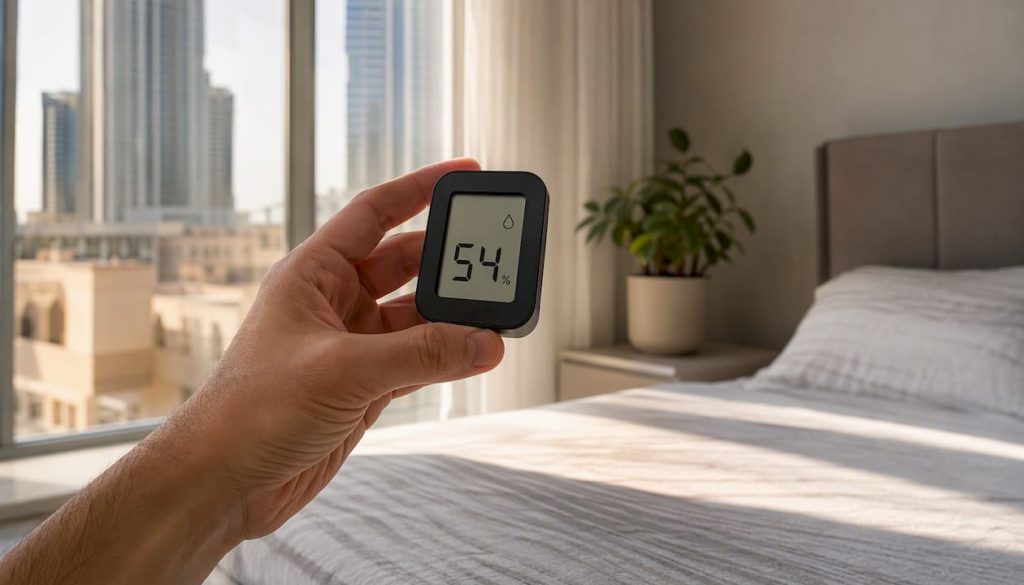
Use a hygrometer (a basic digital model costs under AED 50 at most hardware stores) to measure relative humidity in each room. If you are renting, photograph every finding with a timestamp and send a written report to your property manager. Keep copies of all correspondence.
Quick natural remedies that neutralise musty odours right away
Natural absorbers and ventilation are effective interim measures once the damp source has been identified. They reduce odour while you work on the underlying fix, but they do not eliminate the cause on their own.
Baking soda: Place open bowls or shallow trays of baking soda in the affected room. For carpets, sprinkle generously, leave for several hours or overnight, then vacuum with a HEPA-filter vacuum. Replace bowls every 48–72 hours. Baking soda absorbs odour molecules from the air and is safe on most surfaces.
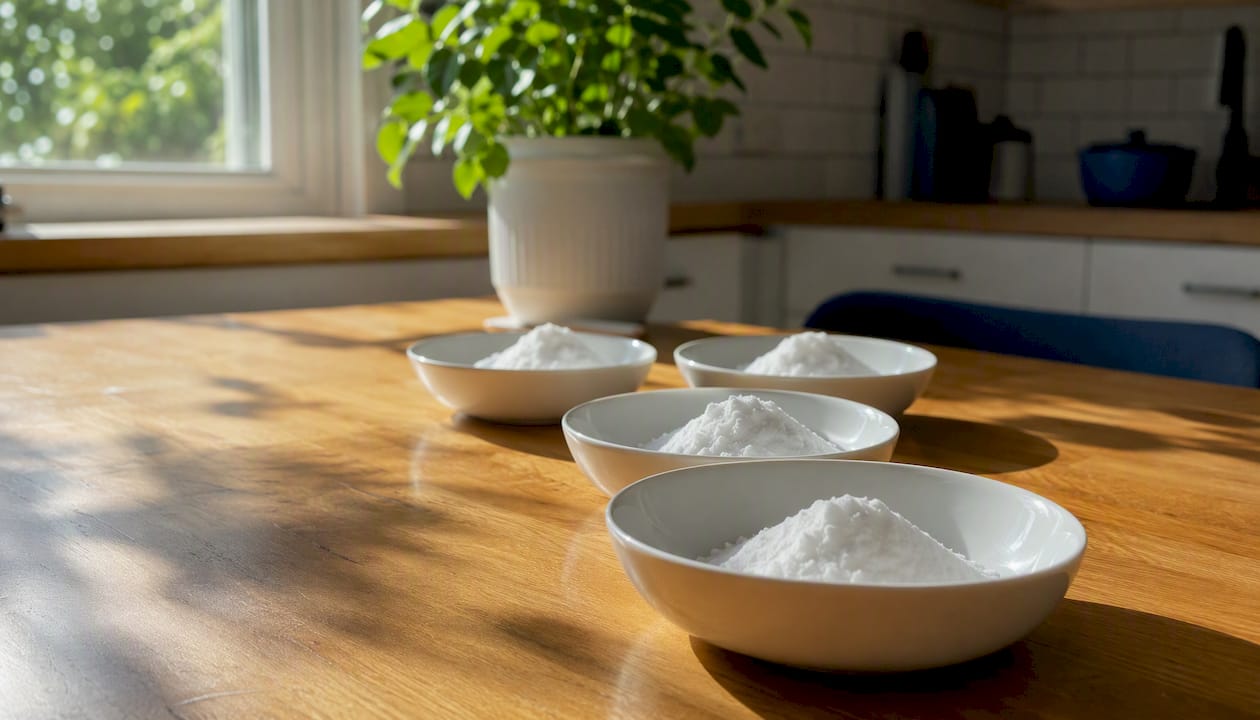
Activated charcoal: Bags of activated charcoal (also sold as activated carbon) placed near the odour source adsorb a broader range of volatile compounds than baking soda. Leave them in place for 24–48 hours and recharge by placing them in direct sunlight for a few hours. Activated charcoal and baking soda work best after the source area is dry and cleaned, not as a first step on a still-wet surface.
White vinegar: Spray diluted white vinegar (1:1 with water) onto hard, non-porous surfaces and wipe clean. For fabrics, add half a cup to a washing machine load. Do not mix vinegar with bleach at any point — the combination produces chlorine gas. Always check fabric care labels before applying any liquid.
Airing and sunlight: Move cushions, rugs, and curtains outdoors into direct sunlight where possible. UV exposure and airflow together reduce microbial load on fabric surfaces. Even two to three hours of sunlight makes a measurable difference to soft furnishings.
These methods typically reduce noticeable odour within a few hours in a well-ventilated room. Rooms with saturated materials or hidden mould will continue to smell until the source is physically removed or dried. Natural remedies used on a still-active mould source are a temporary measure only.
Appliances and mechanical fixes that work in UAE apartments
Long-term odour control in a UAE apartment requires managing humidity and filtering the air continuously. Natural remedies and cleaning address what has already happened; appliances prevent it from returning.
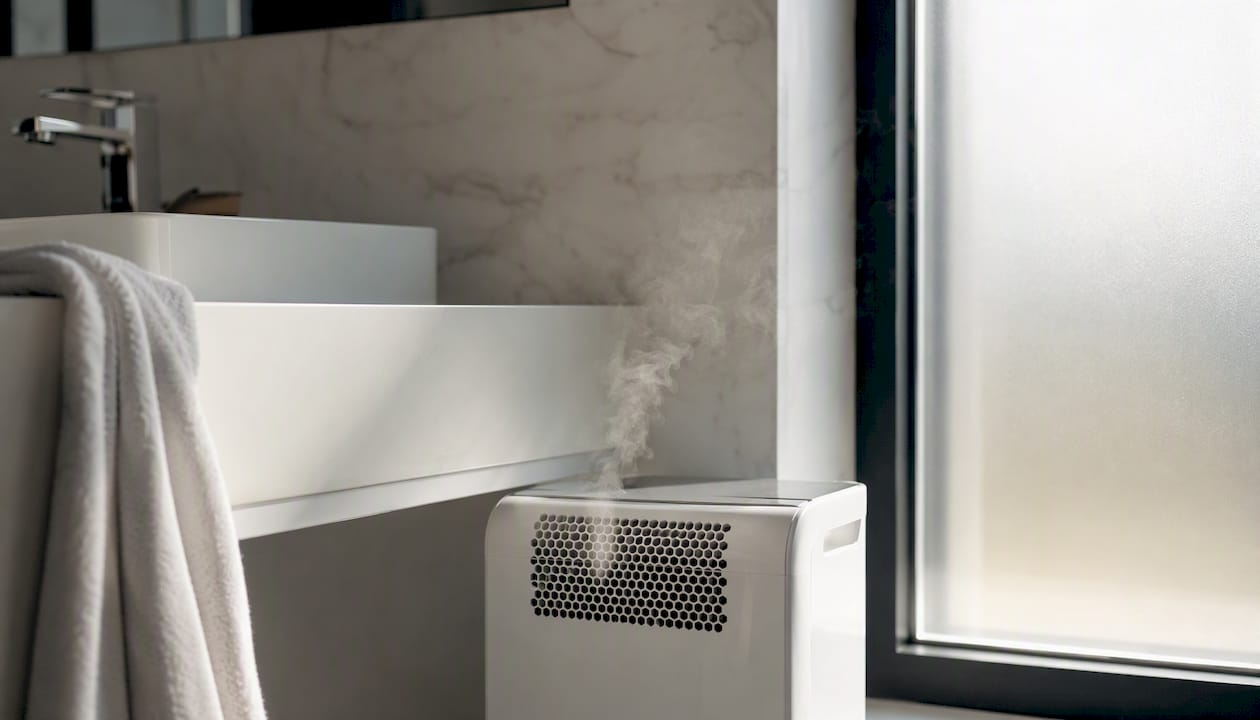
Dehumidifiers remove moisture from the air before it can condense on surfaces or be absorbed by soft materials. A dehumidifier sized correctly for the space and used alongside source repair and cleaning is one of the most reliable tools for preventing musty odour recurrence. The Xiaomi Smart Dehumidifier Lite (AED 435) is a compact option suited to bedrooms and smaller rooms in UAE apartments. Empty the water tank daily during humid months.
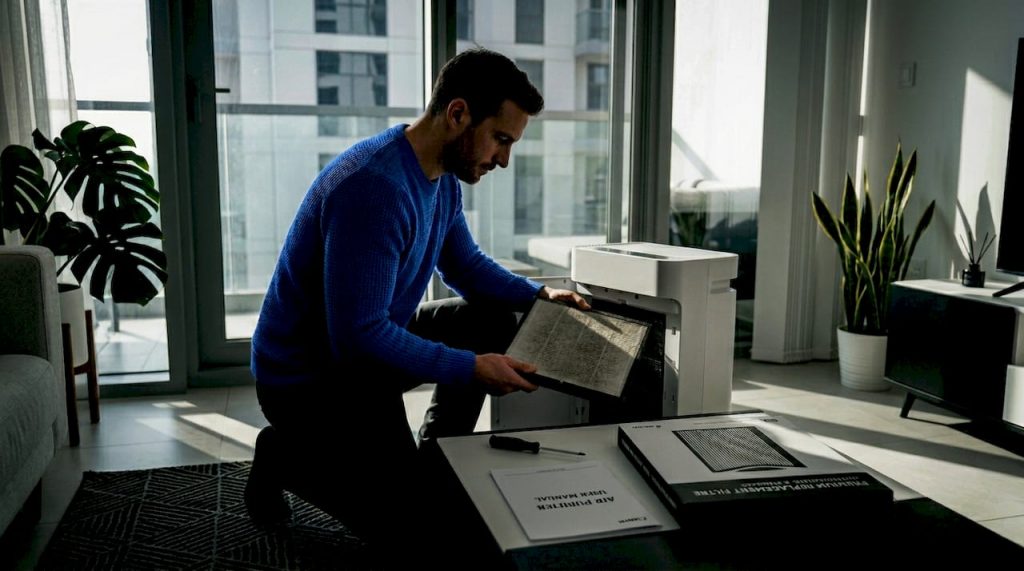
Air purifiers with HEPA and activated carbon filtration capture airborne mould spores and adsorb gaseous odour compounds simultaneously. HEPA H13 filters trap particles down to 0.3 microns, including spore fragments. The activated carbon layer handles MVOCs and other volatile compounds. The Honeywell Air Touch P2 (AED 705) suits open-plan living areas; the Honeywell Air Touch P1 (AED 591) is a practical choice for bedrooms and compact spaces. Blueair replacement filters, including the DualProtection filter for the Classic 200 Series (AED 228), are stocked locally for ongoing maintenance.
AC maintenance is often the most overlooked fix in UAE apartments. Dirty evaporator coils and blocked condensate drain lines create a continuously wet surface inside the unit where mould grows and then circulates through the apartment every time the system runs. Clean or have coils cleaned at the start of each cooling season, and flush the condensate line with diluted bleach annually.
Ventilation on cooler, drier days (typically October through March in the UAE) allows fresh air to displace stale, humid indoor air. For apartment ventilation strategies that improve airflow without compromising dust control, a balanced approach using exhaust fans and trickle ventilation is more practical than opening all windows during peak summer.
Note that air purifiers and carbon filters improve air quality but do not replace source control. Run them continuously in affected rooms, but do not rely on them alone if mould or saturated materials are present.
| Solution type | Best use case | Key limitation |
|---|---|---|
| Dehumidifier | Rooms with high ambient humidity or condensation | Does not clean existing mould or odour from materials |
| Air purifier (HEPA + carbon) | Ongoing airborne spore and odour control | Requires regular filter replacement to stay effective |
| AC maintenance | Whole-apartment air circulation | Needs professional service if coils are heavily contaminated |
| Natural ventilation | Cooler, drier months; daily bathroom/kitchen use | Not practical during UAE summer peak humidity |
How to clean fabrics, carpets and hard surfaces to remove the smell at its source
Cleaning follows a fixed order: dry first, then wash, then deep clean, then deodorise. Skipping the drying step and washing a still-wet item often embeds the odour further.
- Dry the item or area completely. Use fans, open windows, or a dehumidifier. Do not proceed to washing until the material is dry to the touch.
- Washable fabrics (clothing, bedding, curtains): Wash in the hottest water the care label permits. Add half a cup of white vinegar to the rinse cycle, or half a cup of baking soda to the wash cycle. Dry in direct sunlight or a tumble dryer on a high setting. Do not leave damp items in the machine.
- Carpets and rugs: Vacuum thoroughly with a HEPA-filter vacuum before applying any liquid. Spot-clean with a diluted white vinegar solution (1:1 with water) or a carpet-specific enzyme cleaner. For persistent odour, steam cleaning is more effective than surface sprays. If the carpet underlay is saturated, it typically needs replacement rather than cleaning.
- Upholstery: Vacuum first, then spot-treat with a diluted vinegar solution. Allow to dry fully before use. For heavily affected pieces, professional upholstery cleaning or steam treatment is the practical option.
- Hard, non-porous surfaces (tiles, sealed concrete, glass): Clean with a standard detergent solution, then apply a diluted bleach solution (1 part bleach to 4 parts water) to any visible mould. Leave for 10–15 minutes, then rinse and dry. The EPA guidance on mould cleanup recommends this dilution for non-porous surfaces.
- Safety precautions: Wear rubber gloves and eye protection when using bleach. Ventilate the room fully. Never mix bleach with vinegar, ammonia, or any other cleaner. The CDC advises that small mould areas (under about 10 square feet) can be cleaned by a careful resident; larger areas warrant professional assessment.
- Decide what to discard: Porous materials such as ceiling tiles, drywall, and heavily saturated carpet underlay that show mould growth generally cannot be cleaned effectively. Replacing them is more reliable than attempting remediation.
When to call a professional: clear decision points for renters
Some musty odour problems are beyond what cleaning products and appliances can resolve. Knowing when to escalate saves time and protects health.
Call a professional remediation service when:
- Visible mould covers an area larger than roughly 10 square feet (about 1 square metre)
- The odour returns within days of cleaning and drying
- You or household members experience worsening respiratory symptoms, persistent coughing, or allergy flare-ups that correlate with time spent at home
- Humidity stays above 60% despite running a dehumidifier continuously
- There has been flooding, a major pipe leak, or water ingress through the building structure
Steps for renters in UAE:
- Photograph every affected area with a timestamp as soon as you notice the problem
- Send a written notification (email is sufficient) to your property management company or landlord, describing the issue, location, and date first noticed
- Request written confirmation that remediation will be carried out, and keep all correspondence
- If the property manager does not respond within a reasonable period, escalate to the relevant municipality or housing authority in your Emirate
Professional remediation typically involves a moisture inspection, thermal imaging to locate hidden damp, physical containment of the affected area, removal of contaminated materials, and drying with industrial equipment. Follow-up testing confirms the area is clear before reinstatement. Professional intervention reduces the likelihood of recurrence compared with surface cleaning alone.
Prevention habits that stop musty odours returning in UAE apartments
Preventing musty odour is primarily a humidity management task. The EPA states that keeping indoor relative humidity between 30–50% is the key strategy for mould prevention, with growth becoming likely above 60%.
Daily and weekly habits:
- Run the bathroom exhaust fan during and for 15 minutes after every shower
- Never leave wet laundry in a closed room or inside the washing machine drum
- Wipe window frames and sills when condensation appears, particularly in air-conditioned rooms
- Air wardrobes and closets for 30 minutes weekly, especially those on external walls
- Ventilate the apartment on cooler, lower-humidity days (October through March in the UAE)
Longer-term measures:
- Service the AC unit at least once a year; clean or replace filters every 1–3 months depending on use
- Inspect under sinks and behind appliances after any heavy rain or building maintenance work
- Store paper, cardboard, and books in breathable containers off the floor
- Use a hygrometer to monitor humidity in high-risk rooms and adjust dehumidifier settings accordingly
For a broader checklist of ongoing indoor air quality maintenance relevant to UAE apartments, consistent habits matter more than any single product.
| Prevention measure | Frequency | Target outcome |
|---|---|---|
| Run bathroom exhaust fan | Every shower | Remove moisture before it condenses |
| Wipe window condensation | As needed, daily in summer | Prevent surface mould on frames and sills |
| AC filter cleaning or replacement | Every 1–3 months | Prevent mould on coils and in ductwork |
| Hygrometer check | Weekly | Keep RH at 30–50%, below 60% |
| Full apartment ventilation | Weekly (cooler months) | Flush stale, humid air |
| Under-sink and appliance inspection | After rain or building works | Catch leaks before materials saturate |
Why drying, ventilation and cleaning work: the science behind it
The musty smell itself comes from MVOCs produced by fungi and bacteria as they metabolise organic material on damp surfaces. A peer-reviewed study published on PubMed identified MVOCs as the primary contributors to musty odours in buildings with fungal growth. Removing the moisture removes the conditions that allow MVOC production to continue.
The EPA’s brief guide to mould and moisture and the CDC’s mould control guidance both prioritise moisture control and source removal over masking odours. Sprays and air fresheners address the symptom; drying and cleaning address the cause.
Key points from the evidence base:
- Dehumidifiers reduce ambient moisture and slow MVOC production, but if porous materials have already absorbed odour, drying alone is often insufficient — those materials need cleaning or replacement
- Air purifiers with activated carbon adsorb gaseous MVOCs from the air, reducing perceived odour, but the EPA notes that no air cleaner removes all indoor pollutants and that filtration does not replace source control
- Baking soda and activated charcoal are effective absorbers of odour molecules as a follow-up step after the source is cleaned and dry, as apartment-focused guides confirm
The practical implication: the correct sequence is always clean and dry first, then use appliances and absorbers to maintain the improvement.
Climatepro’s perspective on tackling musty odours in UAE apartments
Musty odour problems in UAE apartments are almost always solvable, but the sequence matters more than the products. The apartments most likely to develop persistent odour are those where humidity is managed reactively rather than continuously. Running a dehumidifier only after the smell appears, or replacing an air purifier filter once a year instead of every three months, means the devices spend most of their time underperforming.
The approach that works consistently is straightforward: fix the moisture source, clean what has been affected, then run the right appliance continuously at the right settings. That single data point changes how most residents manage their indoor environment.
For improving air quality in UAE apartments over the long term, the combination of a properly maintained AC system, a dehumidifier in high-humidity rooms, and an air purifier with HEPA and carbon filtration in living areas covers the full range of odour and air quality risks. The products exist; the habit of maintaining them is what most residents underestimate.
Climatepro UAE: recommended products for musty odour control
Climatepro stocks the devices and filters most effective for musty odour control in UAE apartments, with delivery across Dubai, Abu Dhabi, Sharjah, Ajman, Ras Al Khaimah, Fujairah, and Umm Al Quwain.

For living areas and open-plan spaces, the Honeywell Air Touch P2 (AED 705) combines HEPA H13 filtration with an activated carbon layer to capture both airborne spores and gaseous odour compounds. Bedrooms and smaller rooms are well served by the Honeywell Air Touch P1 (AED 591). For humidity control in compact spaces, the Xiaomi Smart Dehumidifier Lite (AED 435) is a practical, app-connected option. Blueair replacement filters are stocked for ongoing maintenance. Browse the full range of dehumidifiers available in the UAE or air purifiers to match the right unit to your room size.
Filters should be replaced every 3–6 months depending on use; dehumidifier tanks need emptying daily during peak humidity months. Contact Climatepro directly for sizing advice specific to your apartment layout.
Sources
The recommendations in this article draw on the following authoritative sources:
- Mold cleanup in your home — EPA
- Study on microbial volatile organic compounds and odour — PubMed
- Musty smell in the basement: Causes and solutions — BobVila
- How to remove mould and mildew smell in an apartment — ApartmentOdorGuide
Recommended
- Why ventilate apartments: health, air quality & comfort — Blog | ClimatePro UAE
- Guide to allergy proofing apartments: practical steps for renters — Blog | ClimatePro UAE
- How to improve air quality in UAE apartments — Blog | ClimatePro UAE
- Odour control solutions: best methods for homes — Blog | ClimatePro UAE