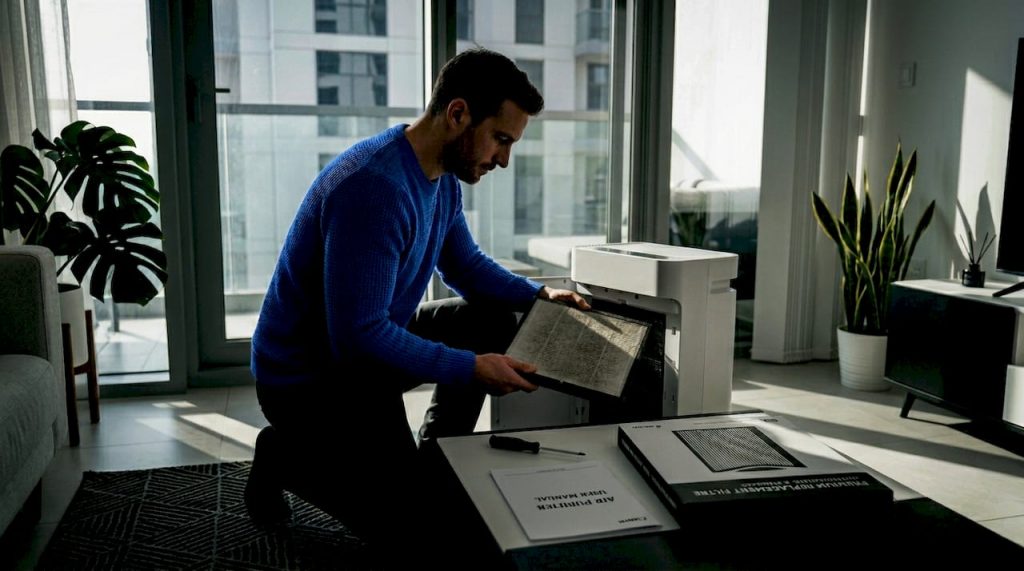
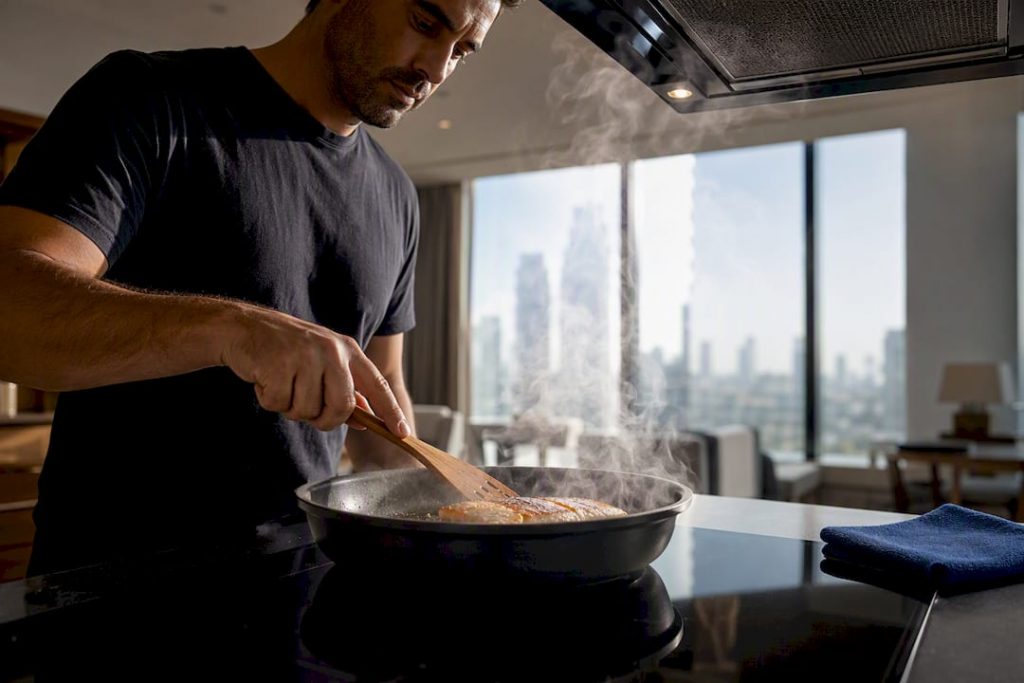
Remove the source of the smell first: bag food scraps and packaging and take them outside, then open windows and run a fan or extractor to move air through the apartment. Wipe down greasy surfaces, wash cookware, and set out bowls of vinegar or baking soda to absorb what’s left in the air. This combination clears most cooking odour within a few hours. If the smell lingers after cleaning, check the drain and soft furnishings, and consider an activated-carbon air purifier for ongoing control.
TL;DR:
- Removing fish scraps immediately and increasing cross-ventilation significantly reduces lingering odour, especially within the first hour after cooking.
- Boiling a vinegar-water mixture for 10 to 15 minutes is a proven method to neutralise air-borne fish smell effectively.
- Balancing cleaning greasy surfaces and laundering textiles with targeted use of baking soda or coffee grounds prevents odour re-absorption in soft furnishings.
- Using a combination of a recirculating hood paired with an open window or portable purifier shortens odour persistence in apartments with limited ventilation options.
- Continuous use of a HEPA and activated carbon air purifier suited to room size enhances ongoing removal of odour molecules, especially in small or open-plan layouts.
Table of Contents
- Quick actions to remove fish smell from an apartment
- What actually neutralises fish smell in a kitchen?
- How do you ventilate an apartment that only has a recirculating hood?
- Which surfaces and fabrics trap fish odour longest?
- Could the smell be coming from the drain or the bin?
- Do air purifiers actually help with cooking odour?
- How to stop fish smell before it starts
- What most people get wrong about fish odour in small flats
- Which Climatepro purifier suits a smelly apartment kitchen?
- Primary sources and further reading
- Sources
- FAQ
Quick actions to remove fish smell from an apartment
The first hour after cooking fish decides how long the smell sticks around. Odour compounds cling to grease, fabric, and stagnant air, so speed matters more than any single product.
- Bag and remove scraps immediately. Seal fish skins, bones, and packaging in a bag and take it straight outside rather than into the kitchen bin, where it will keep releasing odour for hours.
- Open windows and create airflow. A single open window barely helps. Open one near the cooking area and another on the opposite side of the apartment, or position a box fan to pull air through and out.
- Flush the sink briefly. Run hot water down the drain for a minute, then wash or soak pans, plates, and utensils rather than leaving them to sit.
- Set out absorbers. Place shallow bowls of white vinegar or baking soda in the kitchen and any adjoining room where the smell has spread.
Prompt removal of packaging, scraps, and trash, paired with quick laundering of towels and aprons, is one of the most consistently cited fixes for stopping odour before it settles into a space, according to Apartment Therapy.
Pro Tip: Run the extractor fan (or a portable purifier if the hood only recirculates) for the full length of cooking, not just while the fish is in the pan. Odour keeps releasing from hot cookware for several minutes after you switch off the heat.
What actually neutralises fish smell in a kitchen?
Vinegar, citrus, baking soda, and coffee grounds each work through a different mechanism, and knowing which one to use where saves time.
Boiled vinegar is the most effective airborne neutraliser for lingering fish odour. Mix three parts water to one part white vinegar, bring it to a simmer, and let it run for 10 to 15 minutes with the pot uncovered. The acidic vapour helps neutralise the trimethylamine compounds responsible for the classic “fishy” smell, a method backed by both The Spruce and America’s Test Kitchen as a reliable pantry fix, especially after frying.
- Citrus and spice simmer pots: add lemon or orange peels, a cinnamon stick, or a few cloves to a small pot of simmering water for 10 to 30 minutes. This doesn’t remove odour molecules so much as replace them with a fresher scent, which is why pairing it with ventilation matters more than relying on it alone.
- Baking soda bowls: leave shallow dishes of baking soda out in affected rooms for several hours or overnight. It absorbs odour passively rather than masking it.
- Coffee grounds: used or fresh grounds in an open container work similarly to baking soda and are a handy option if you’ve already used your baking soda for cleaning.
- Milk soak for raw fish: before cooking, soak fillets in milk for 15 to 20 minutes. This is a genuinely proven trick, not a myth. It draws out surface trimethylamine compounds before they ever hit the pan, meaning less odour to deal with in the first place.
Statistic Callout: A short simmer of diluted vinegar is the timing consistently recommended across household guides for clearing fish odour from the air, making it one of the few “kitchen hacks” with a genuinely repeatable result.
Combining a simmer pot with ventilation and cleaning works better than any single method alone, since scent replacement doesn’t remove the underlying grease and residue causing the smell, a point Martha Stewart’s household advice makes clear.
How do you ventilate an apartment that only has a recirculating hood?
Cross-ventilation beats a single open window every time. Fish odour needs somewhere to go, and if there’s only one exit point, it just settles back into the room once the air stops moving.
- Open a window near the stove and a second one on the far side of the apartment to create a through draft.
- Position a box fan facing outward in one window to actively push air out rather than relying on passive airflow.
- If your range hood only recirculates (common in many rental apartments), it’s still capturing grease, but it isn’t removing odour from the air. Pair it with an open window or a portable fan running during and after cooking.
- Start extraction before you start cooking, not after the smell has already spread, and keep pot lids on where the recipe allows it.
For UAE apartments, outdoor air quality and heat mean you can’t always leave windows open for long. Ventilate briefly straight after cooking when outdoor conditions are reasonable, then switch to purifiers and surface cleaning to finish the job. Effective ventilation strategy, according to Martha Stewart, comes down to timing extraction around the cooking itself rather than treating it as an afterthought. For more room-specific tactics, Climatepro’s room-by-room air tips cover airflow patterns for different apartment layouts.
Which surfaces and fabrics trap fish odour longest?
Grease is the real culprit here, more so than the fish itself. Odour compounds bind to fatty residue on splashback tiles, stovetops, and cabinet fronts, then keep releasing smell slowly for days if left uncleaned.
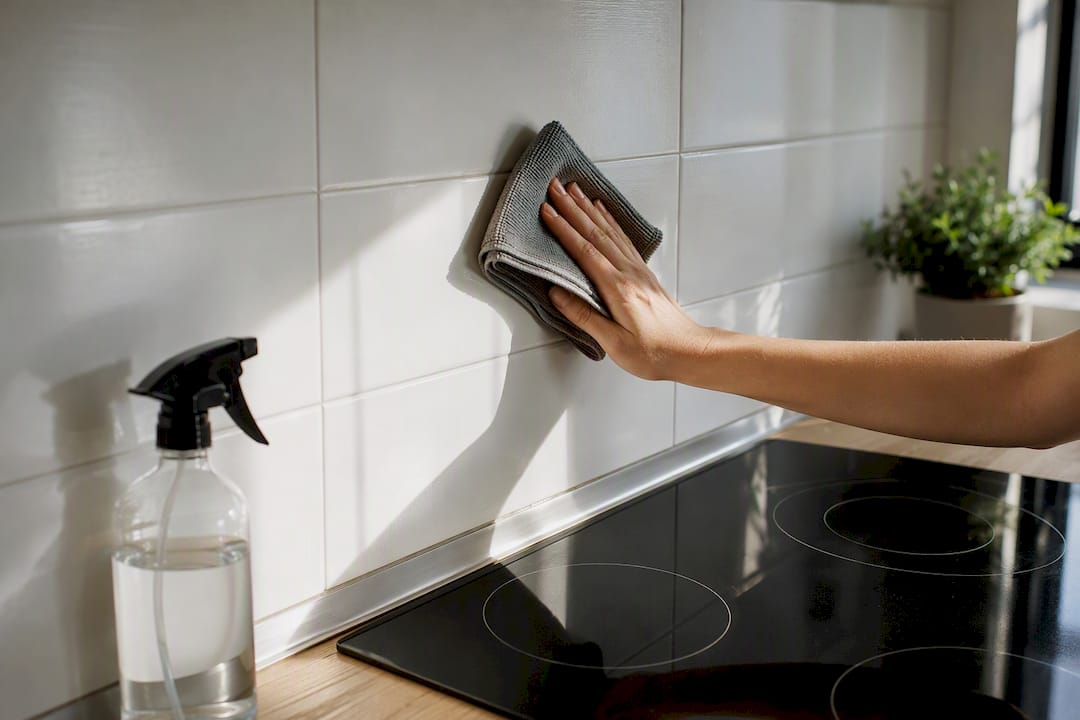
- Degrease first, wipe second. Use hot soapy water or a degreasing spray on the stovetop, splashback, and any nearby cabinet surfaces. A single wipe often isn’t enough. Go over greasy spots twice.
- Wash textiles that touched the cooking area. Dish towels, aprons, and any cushion covers nearby should go into a hot wash as soon as possible, or be hung outside to air if a wash isn’t practical straight away.
- Treat upholstery separately. A fabric-safe cleanser or a dusting of baking soda left for a few hours works for couches and chairs. If the smell has really settled in, a steam clean lifts it out of the fibres more thoroughly than surface treatment.
- Check your sponges and scrubbers. Porous cleaning tools absorb grease and odour just like fabric does. Replace them or give them a thorough rinse and dry, since a smelly sponge will quietly reintroduce the odour every time you use it.
Odour absorbed into soft furnishings and porous surfaces is one of the main reasons a smell seems to “come back” after you thought the kitchen was clean, particularly in smaller flats where cooking happens close to living space, according to Toolifty’s studio apartment guidance.
Pro Tip: If you only have time to clean one thing before guests arrive, degrease the stovetop and splashback first. That’s where the bulk of the lingering smell actually comes from, not the air.
Could the smell be coming from the drain or the bin?
Sometimes the fish is long gone but the smell isn’t, and the source is usually the sink or the rubbish, not the air.
- Flush the drain with boiling water, then follow with half a cup of baking soda poured down, followed by a cup of vinegar. Let it sit for 10 to 15 minutes before flushing with hot water again.
- Run a hot water and detergent cycle through the sink afterwards, and if the smell is stubborn, an enzyme-based drain cleaner breaks down the organic build-up that baking soda alone won’t shift.
- Empty and wipe out rubbish bins rather than just replacing the liner, and use a sealed liner going forward so packaging doesn’t sit against the bin itself.
Do air purifiers actually help with cooking odour?
Yes, but only the right kind. HEPA filters are excellent at trapping particles like smoke and dust, but they don’t do much for the gas-phase odour molecules that make a room smell like last night’s dinner. Removing those requires activated carbon, which adsorbs odour compounds rather than just filtering them out of the air, a distinction Climatepro’s own odour control guidance sets out clearly.
- Look for a unit that pairs HEPA with an activated carbon layer, not HEPA alone, if cooking smells are a recurring issue.
- Match the purifier’s CADR rating to your room size. An undersized unit will run constantly without ever properly clearing the air.
- Run it for several hours after cooking, not just during, since odour molecules keep circulating well after the pan is off the heat.
- Replace carbon filters on the manufacturer’s schedule. Carbon saturates over time and stops adsorbing odour even though the unit still sounds like it’s working.
In apartments with a recirculating hood, running a portable carbon purifier after cooking noticeably shortens how long the smell hangs around compared with ventilation on its own, particularly on days when opening a window isn’t practical.
| Situation | What helps most | Why |
|---|---|---|
| Frequent fish cooking in a small kitchen | HEPA + carbon purifier, run continuously | Carbon keeps adsorbing odour between cooking sessions |
| Recirculating hood only | Portable purifier plus a window fan | Hood traps grease but not odour gases |
| Occasional cooking, decent ventilation | Vinegar simmer and cross-ventilation | No ongoing device needed for infrequent smells |
| Studio apartment, cooking near living space | HEPA + carbon unit sized to the whole room | Odour spreads into fabrics fast in open layouts |
For sizing help, Climatepro’s apartment purifier guide breaks down which unit fits which room dimensions.
How to stop fish smell before it starts
Prevention takes less effort than cleanup, and most of it comes down to timing.
- Buy fish as close to cooking day as possible, and keep it wrapped and refrigerated until you’re ready to cook, rather than letting it sit unwrapped on the counter.
- A brief milk soak or rinse before cooking reduces the odour precursors on the surface, and cooking with a lid on, or wrapping fish in foil for the oven, keeps more of the smell contained.
- Start your extractor fan before the pan even heats up, not once the smell is already noticeable.
- Wipe up spills the moment they happen, and get any towels or cloths that touched raw fish into the wash promptly rather than leaving them by the sink.
What most people get wrong about fish odour in small flats
Most guides treat fish smell as an air problem, so people reach for air fresheners or scented candles first. That’s backwards. The odour is sitting in grease on your splashback, in your dish towel, and in your drain, not just floating in the room. Masking it with citrus or spice only works once you’ve actually dealt with the surfaces holding the smell in place.
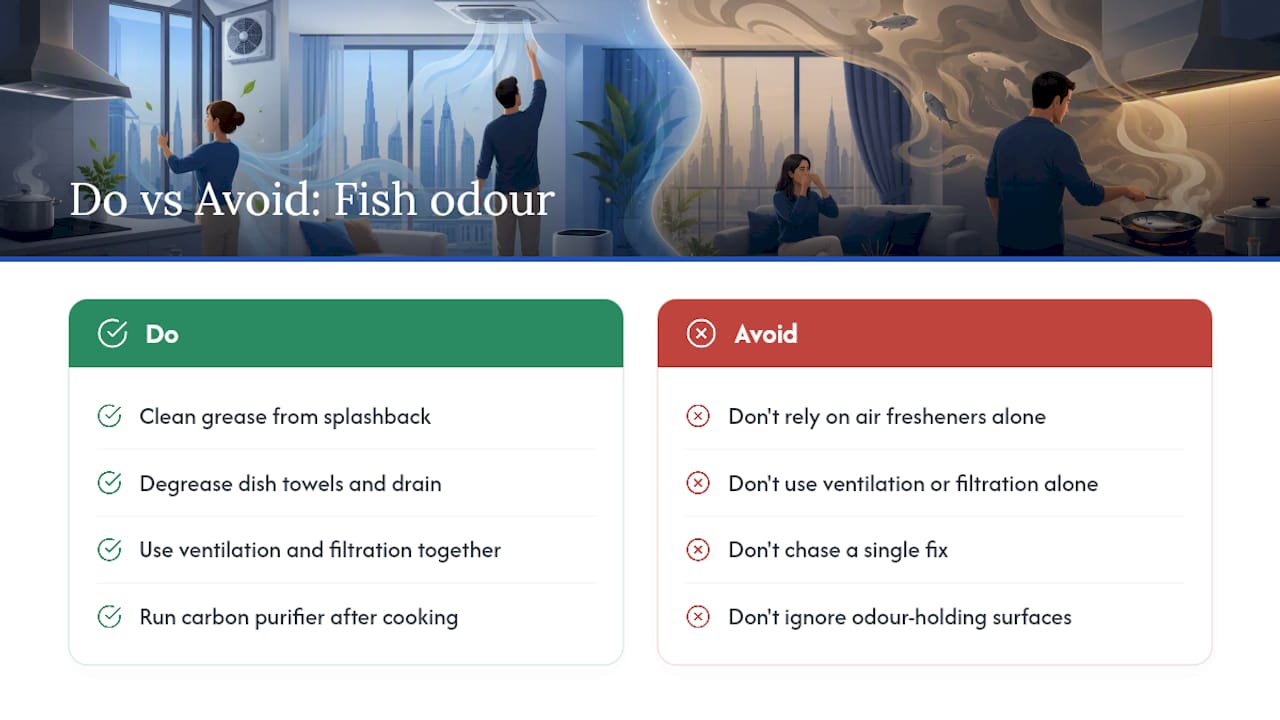
The other mistake is treating ventilation and filtration as alternatives rather than a pair. A recirculating hood plus an open window does more than either on its own, and a carbon purifier running for a few hours after cooking closes the gap on days when the air outside isn’t worth letting in. Readers chasing a single fix tend to be disappointed. It’s the combination of source removal, degreasing, and air handling that actually works, not any one trick.
For deeper reading on filtration choices, Climatepro’s guide on improving air quality in UAE apartments covers how climate and building design affect what’s practical day to day.
— Nevel
Which Climatepro purifier suits a smelly apartment kitchen?
If fish is a regular fixture in your kitchen, or your hood only recirculates, a dedicated purifier earns its keep fast. Look for a unit combining HEPA filtration with an activated carbon layer, sized to the room where the smell actually settles, not just the kitchen itself.

The Honeywell Air Touch P1 suits smaller kitchens or studio layouts where the cooking area opens straight into the living space. For larger apartments or open-plan units where odour spreads further, the Honeywell Air Touch P2 and the Honeywell Air Touch U1 offer stronger coverage. Browse the full air purifier range to compare sizing against your floor plan. The team can help match a unit and filter replacement schedule to how often you cook. Get in touch to find the right fit for your kitchen.
Primary sources and further reading
- How to Get Rid of Lingering Fish Smells in Your House — The Spruce
- How to Get Rid of Fried Fish Smell — America’s Test Kitchen
- How to Get Rid of the Fish Smell in Your House After Cooking — Martha Stewart
- How to Get Rid of Fish Smell in the House — Apartment Therapy
- Odour Control Solutions: Best Methods for Homes — Climatepro Blog
- How to Remove Musty Smell From Your Apartment Fast — Climatepro Blog
Sources
- How to Get Rid of Lingering Fish Smells in Your House
- How to Get Rid of Fried Fish Smell | America’s Test Kitchen
- How to Get Rid of the Fish Smell in Your House After Cooking
- How to Get Rid of Fish Smell in the House | Apartment Therapy
FAQ
What neutralises the smell of fish?
Boiled white vinegar (three parts water to one part vinegar, simmered for 10 to 15 minutes) is the most reliable neutraliser, alongside bowls of baking soda or coffee grounds left out for several hours to absorb odour passively.
What causes fishy smell in an apartment?
Fish smell comes from trimethylamine compounds released during cooking, which then bind to grease on surfaces, fabrics, and cookware. Poor ventilation and leftover scraps or packaging left in the kitchen make it linger far longer.
How long does it take for a fish smell to go away?
With prompt action (removing scraps, ventilating, and cleaning greasy surfaces) most fish smell clears within a few hours. If it lingers for days, the odour has likely settled into fabrics, a drain, or an AC filter and needs targeted cleaning or an activated-carbon purifier.
How do I get rid of the smell of fish in my house?
Remove food waste immediately, ventilate with cross airflow or a fan, simmer diluted vinegar or citrus peels for 10 to 15 minutes, and wash any fabric or cookware that touched the fish. For recurring odour, a HEPA plus activated-carbon purifier from Climatepro’s range helps keep the air clear between cooking sessions.