Set your air conditioner to 22–24°C with the fan on Auto or switch to dry mode, keep windows and doors shut when outdoor air is wetter than indoor air, and run bathroom and kitchen extractors during and for 15–20 minutes after use. Add a portable dehumidifier to any room that stays above 60% relative humidity.
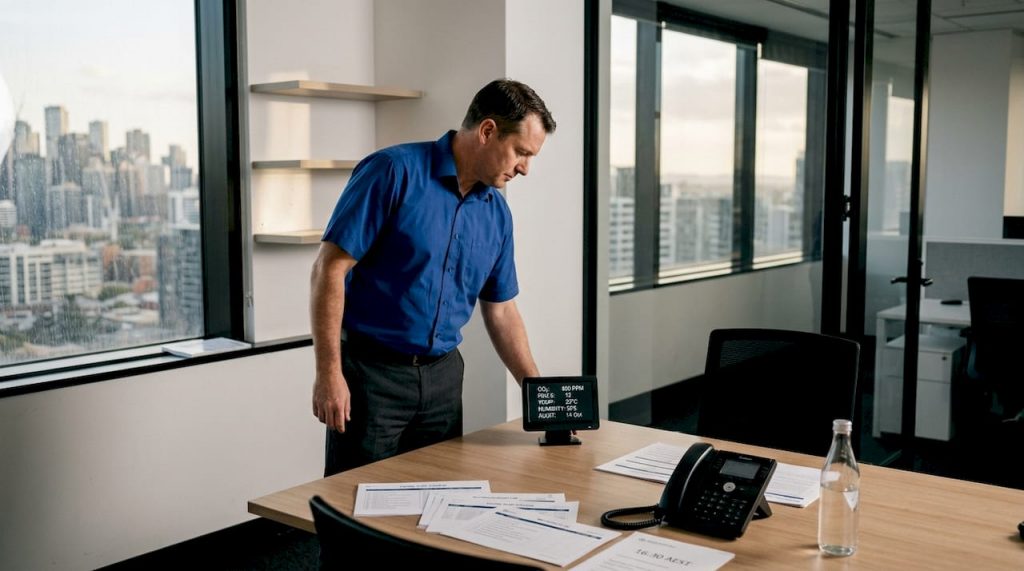
A digital hygrometer is the cheapest way to confirm these steps are working. Buy one, place it away from vents, and aim for a steady 40–50% relative humidity reading.
- Set AC to 22–24°C, fan on Auto, or use dry mode
- Close windows/doors when outdoor humidity exceeds indoor levels
- Run extractor fans during showers and cooking, plus 15–20 minutes after
- Track readings with a hygrometer and place a dehumidifier in problem zones
Key Takeaways
Reducing humidity in a Dubai apartment works best when AC settings, daily habits, and a targeted dehumidifier are used together rather than relying on any single fix.
| Point | Details |
|---|---|
| Set AC correctly | Use 22–24°C with fan on Auto or dry mode to give the coil enough runtime to condense moisture. |
| Track with a hygrometer | Aim for 40–50% relative humidity and check readings in problem rooms, not just the living area. |
| Fix daily habits | Run extractors 15–20 minutes after showers and cooking, and avoid indoor laundry drying when possible. |
| Service on schedule | Book professional AC maintenance every 3–6 months and clean filters monthly in dusty periods. |
| Use targeted equipment | A ClimatePro dehumidifier and filter supply handle the pockets an AC alone can’t reach. |
Table of Contents
- Why humidity control matters in Dubai apartments
- How to set your AC to remove more moisture
- Daily habits that cut indoor moisture
- When and how to use a portable dehumidifier
- Is your ventilation removing moisture or just moving it?
- Keeping your maintenance schedule on track
- Where to get local help and the right equipment
- Editorial take on getting humidity control right in Dubai apartments
- Get the right equipment for lasting humidity control
- Sources
Why humidity control matters in Dubai apartments
Dubai’s coastal climate pushes humidity up overnight even when daytime readings look fine. Warm, moisture-laden air off the Gulf cools after sunset and condenses on tiles, glass, and furniture backs, which is why residents often notice damp patches or musty smells first thing in the morning rather than in the afternoon heat.
Health and property risks climb once indoor relative humidity sits above roughly 60% for extended periods, a threshold the World Health Organization’s housing guidance links to indoor air quality problems including mould-related respiratory irritation. Comfort and dryness aren’t the same thing, either. A room can feel cold and still be damp if the air conditioner isn’t actually pulling moisture out of the air.
- Overnight condensation forms even after hot, dry-feeling days
- Risk to health and furnishings increases materially above 60% RH
- Overcooling a room doesn’t guarantee lower humidity
How to set your AC to remove more moisture
Your air conditioner is already the biggest dehumidifier in your apartment. It just needs to run correctly.
- Set the thermostat to 22–24°C. This range keeps the compressor cycling long enough for the coil to properly condense moisture out of the air, according to air conditioning and humidity guidance for Dubai homes.
- Put the fan on Auto, not On. A fan running constantly on high can re-evaporate condensation sitting on the coil before it drains away.
- Use dry mode where your unit has it. Dry mode slows the fan and extends cooling cycles specifically to extract moisture rather than chase a temperature target.
- Resist the urge to keep dropping the temperature. A colder room that stays damp is worse than a slightly warmer room that’s genuinely dry. Many residents chase 21°C thinking it will fix stickiness, when the real fix is runtime, not temperature.
- Check vents and drains are clear. A blocked vent or a condensate line that’s backing up is often the real reason a room feels humid despite the AC running all day.
Pro Tip: If a room still feels clammy an hour after the AC kicks in, check for short-cycling first. A unit switching off within a few minutes of starting almost never runs long enough to dehumidify properly, even if the thermostat says the target temperature was reached.
Daily habits that cut indoor moisture
Equipment settings only get you halfway. What you do each day in the bathroom, kitchen, and laundry matters just as much.
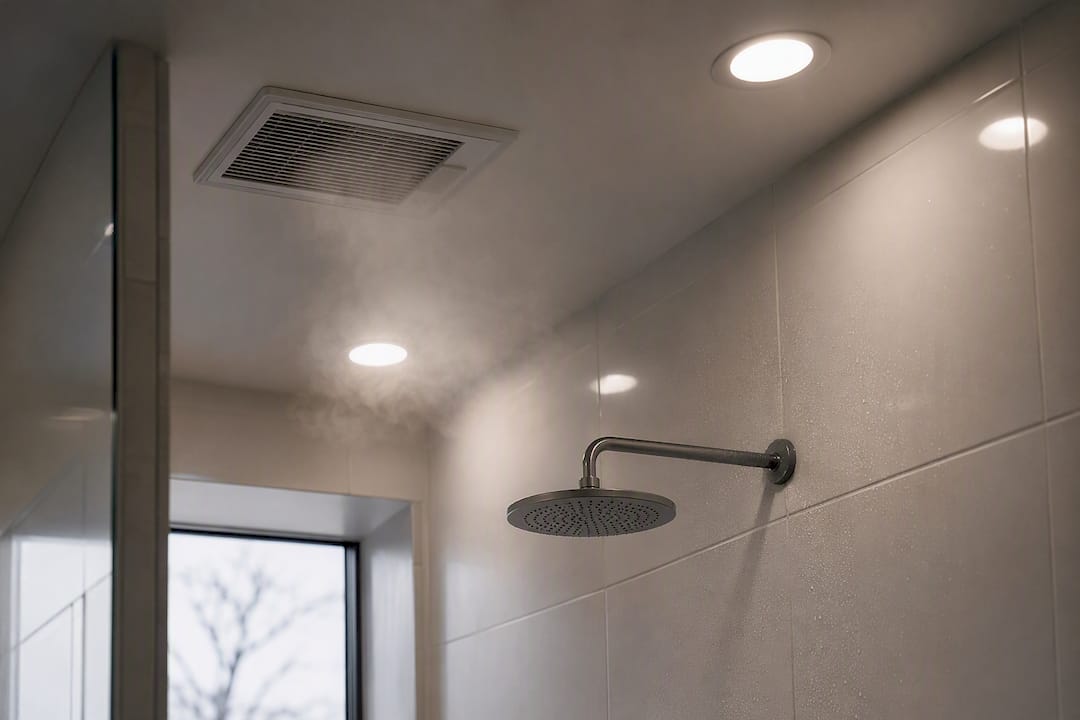
Extractor fans need to run during showers and cooking, and for 15–20 minutes afterwards, because residual steam keeps raising indoor humidity long after the tap or stove turns off, per Gulf News reporting on UAE indoor humidity. Switching a fan off the moment you step out of the shower undoes most of the benefit.
Drying laundry indoors is one of the fastest ways to spike humidity in a closed apartment. If a balcony or outdoor line isn’t an option, isolate the laundry to one room, close the door, and run a dehumidifier or extractor in that space specifically rather than letting the moisture spread through the whole unit.
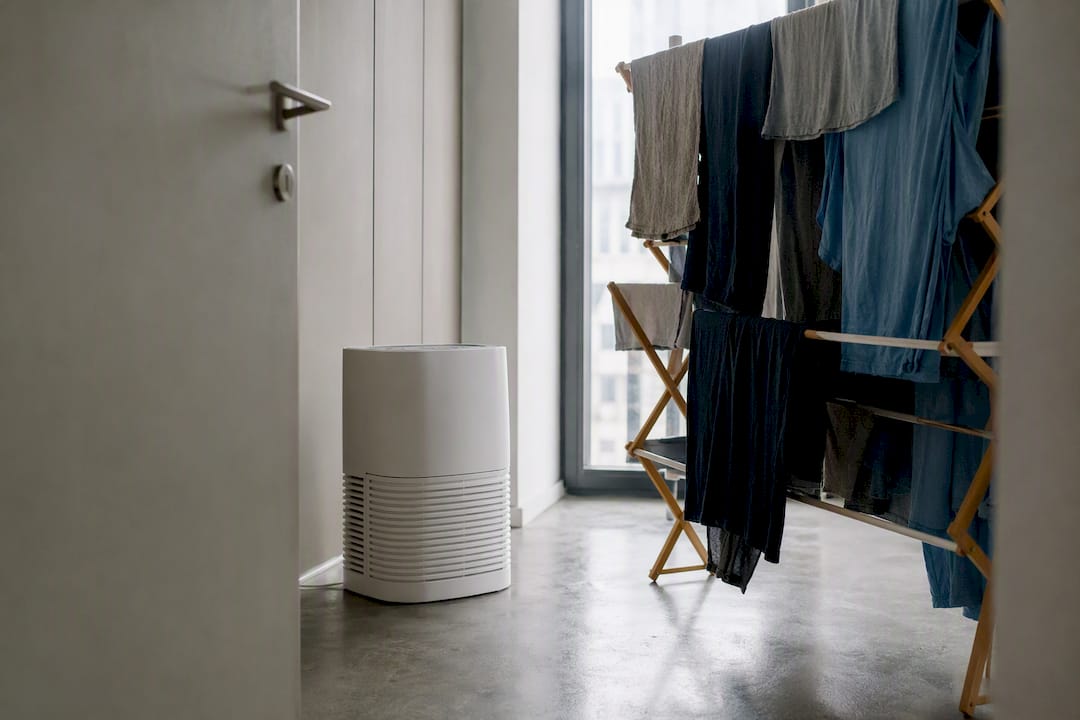
Windows are trickier here than in most other markets. Opening them to “air the place out” only helps when outdoor air is actually drier than indoor air, which in Dubai often isn’t the case, especially overnight and in the shoulder seasons.
A few smaller habits round this out:
- Keep pet water bowls, vases, and other open containers to a minimum in problem rooms
- Move plants away from corners that already run damp
- Pull furniture a few centimetres from exterior walls to let air circulate behind it, since poor airflow behind wardrobes and beds creates micro-humidity pockets that condense even when the rest of the room reads fine
When and how to use a portable dehumidifier
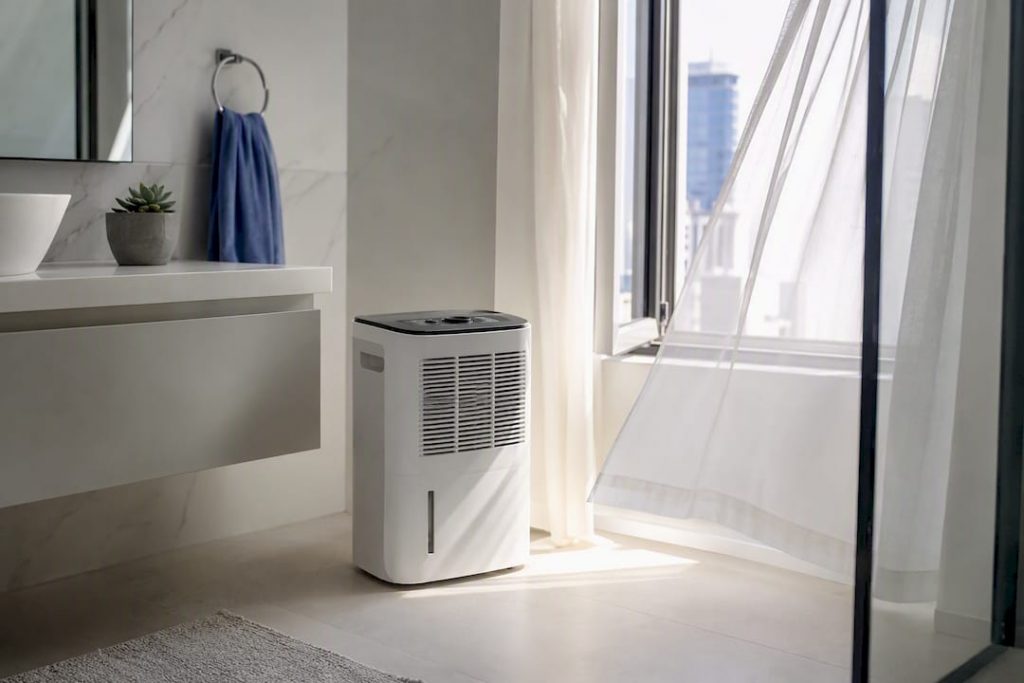
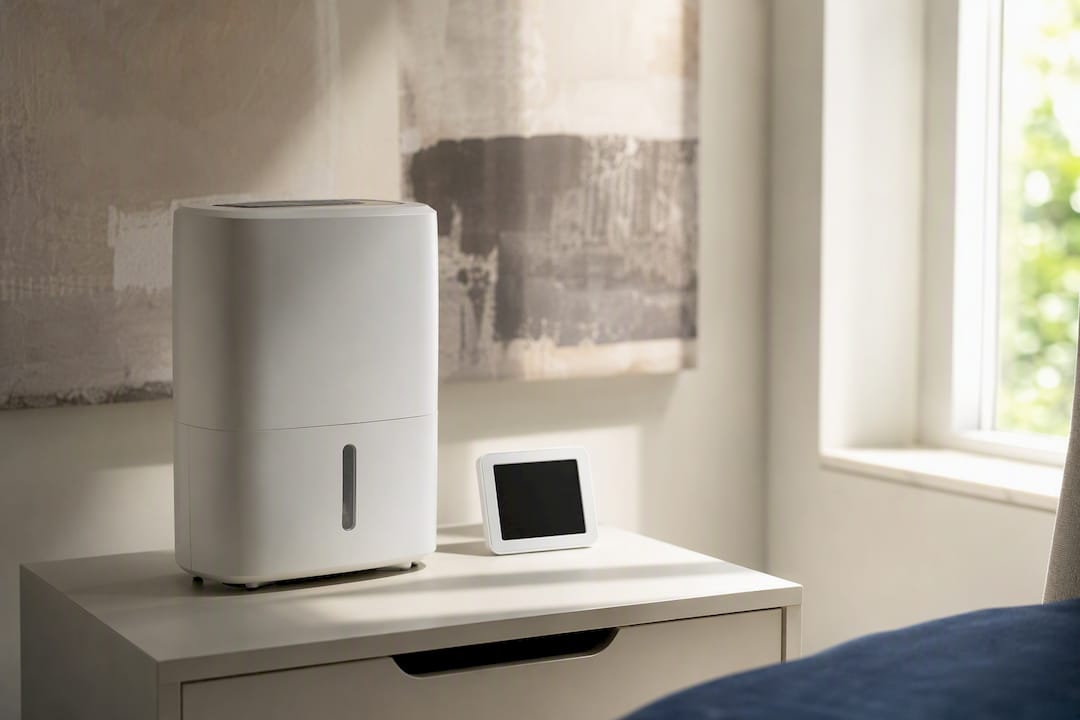
Reach for a dehumidifier when a hygrometer shows relative humidity persistently above 60%, when you notice musty smells in a wardrobe or storage room, or when condensation keeps forming on a specific wall or window despite the AC running normally. These are usually localised problems rather than whole-apartment ones.
- Pick a room-focused unit sized to the space, not a large-capacity unit meant for an entire floor plan. Guidance on dehumidifying apartments recommends matching unit capacity to the specific room rather than oversizing for the whole apartment.
- Set up continuous drainage if you’re running the unit daily, using a drain hose into a floor drain or a small condensate pump, so you’re not emptying a tank every few hours.
- Place the unit near the actual problem, whether that’s a laundry nook, a walk in wardrobe, or a bedroom corner facing an exterior wall, rather than defaulting to the centre of the room.
- Leave at least 30cm of clearance from walls and furniture so air can circulate freely through the intake and exhaust.
- Keep windows and doors closed while it runs. Portable units work best as a supplement to AC in a sealed space, not as a replacement for it, and open windows undo the extraction almost as fast as it happens.
Pro Tip: If a corner behind a wardrobe stays damp no matter what, a small fan pushing air from that pocket towards the dehumidifier often clears it faster than moving the dehumidifier itself, since central placement alone frequently misses these tucked-away spots.
A well-placed unit, properly sized, should bring a problem room’s reading down within a day or two. If it doesn’t move at all, the moisture source is likely structural, such as a leak or condensation from an external wall, and no amount of dehumidifier runtime will fix that on its own.
Is your ventilation removing moisture or just moving it?
An extractor fan that vents into a ceiling void instead of outside isn’t removing humidity. It’s redistributing it into a space you can’t see, which often shows up later as a musty smell or a damp patch on a ceiling in another room entirely.
Check this yourself with a simple test: hold a strip of tissue paper near the extractor grille while it’s running. If it’s pulled firmly against the grille, the fan is drawing air properly, though that alone doesn’t confirm where the air is being exhausted to. If you’ve never seen where the ductwork terminates, or your building doesn’t provide that information, ask your building management or a licensed technician to confirm the exhaust point.
- Run range hoods on full power when boiling, steaming, or stewing
- Cover pots where practical to cut steam output at the source
- Treat any extractor that isn’t obviously roof or wall vented as suspect until confirmed otherwise
Keeping your maintenance schedule on track
Most humidity complaints in Dubai apartments trace back to maintenance gaps rather than bad habits. An AC unit with a clogged filter or a blocked condensate drain doesn’t just cool poorly, it can actively spread mould spores through the room it’s meant to be drying out, according to Handyman.ae’s mould prevention guidance.
- Book professional servicing every 3–6 months, the interval recommended for UAE air conditioning and humidity control, and more often during dusty periods.
- Clean or replace filters monthly when sandstorms or construction dust are heavy in your area.
- Check condensate lines and drip pans for standing water or slow drainage, a common and often-missed failure point.
- Inspect hidden zones behind wardrobes, under beds, and in corners for early signs of dampness or discolouration, and treat any leak the moment you spot it rather than waiting for it to dry out on its own.
- Call a professional for an assessment if humidity stays high after all of the above. Persistent damp despite good habits and a serviced AC usually points to something structural, like duct sealing or insulation gaps that a technician needs to trace.
Pro Tip: Third-party maintenance guides consistently flag neglected AC servicing as a leading cause of indoor air quality problems, which lines up with what UAE-specific sources report about clogged filters turning cooling systems into moisture and mould sources.
Where to get local help and the right equipment
Getting the settings and habits right solves most humidity problems, but some rooms need dedicated equipment to finish the job. ClimatePro stocks portable dehumidifiers sized for UAE apartment rooms, along with the hygrometers you need to actually confirm your humidity levels rather than guess at them, with delivery across Dubai, Abu Dhabi, Sharjah, Ajman, Ras Al Khaimah, Fujairah, and Umm Al Quwain.
- Browse the dehumidifier range for room-sized and heavy-use options
- Read the dehumidification process explained to understand how AC and portable units work together
- Check smart climate control tips for UAE homes for thermostat and fan guidance specific to this climate
- Fix persistent odours with the musty smell removal guide
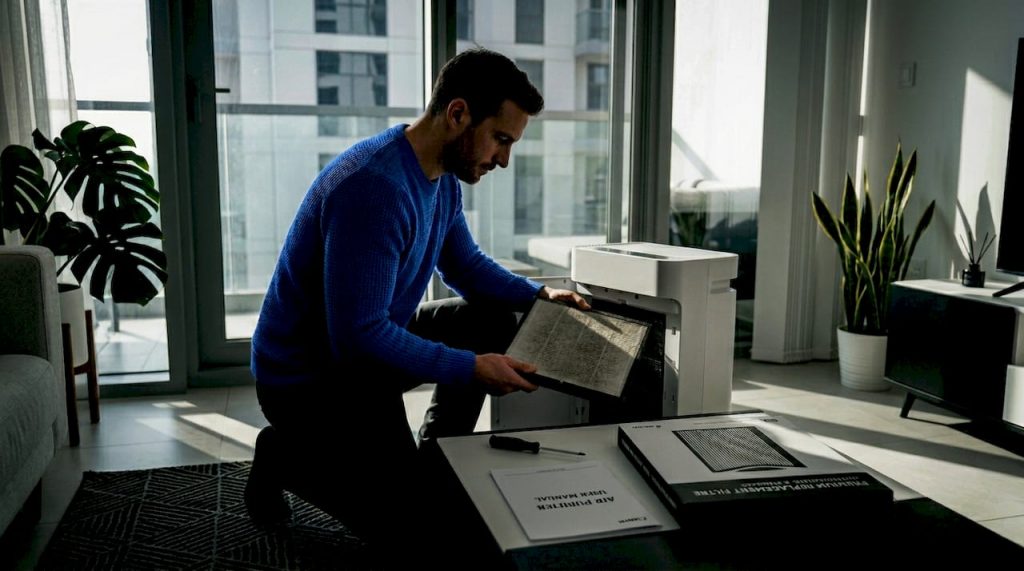
- Keep AC filtration performance up with genuine replacement filters
Editorial take on getting humidity control right in Dubai apartments
The research here points to a plain conclusion: most Dubai apartment humidity problems are settings and maintenance failures, not equipment gaps. Residents chase colder temperatures when they should be chasing longer coil runtime, and they blame “the climate” for damp corners that a cleared condensate drain would fix in an afternoon.
Conventional advice tends to oversell whole-apartment dehumidifiers as a first move. That’s backwards. A correctly set AC, serviced on schedule, handles the bulk of the load in most units. A dehumidifier earns its place in specific pockets, a laundry nook, a wardrobe against an exterior wall, or a bathroom with a weak extractor, not as a blanket fix bought before anyone’s checked whether the AC is actually working properly.
If you’re only going to do one thing this week, check your filters and condensate line before you spend money on anything else. A hygrometer costs little and tells you immediately whether the problem is even still there.
Get the right equipment for lasting humidity control
Climatepro is the practical alternative to guessing your way through humidity fixes room by room. Rather than trial-and-error with settings alone, you get access to dehumidifiers, hygrometers, and filters chosen specifically for UAE apartment conditions, with delivery across Dubai and the wider Emirates.

If a wardrobe, laundry nook, or bedroom corner in your apartment keeps reading damp no matter what you do to the AC, a compact unit like the Xiaomi Smart Dehumidifier Lite is sized for exactly that kind of targeted problem rather than a whole-floor job. Pair it with a proper air purifier if lingering mould spores or musty smells are part of the issue, since damp corners rarely stay odour-free for long. Browse the full dehumidifier range now and match a unit to the specific room that’s giving you trouble.
Sources
- Is humidity building up in your UAE home right now? Here’s how to tell if you need a dehumidifier
- Air conditioning and humidity control in Dubai: achieving optimal comfort
- Humid apartment without AC? 7 ways to lower moisture