
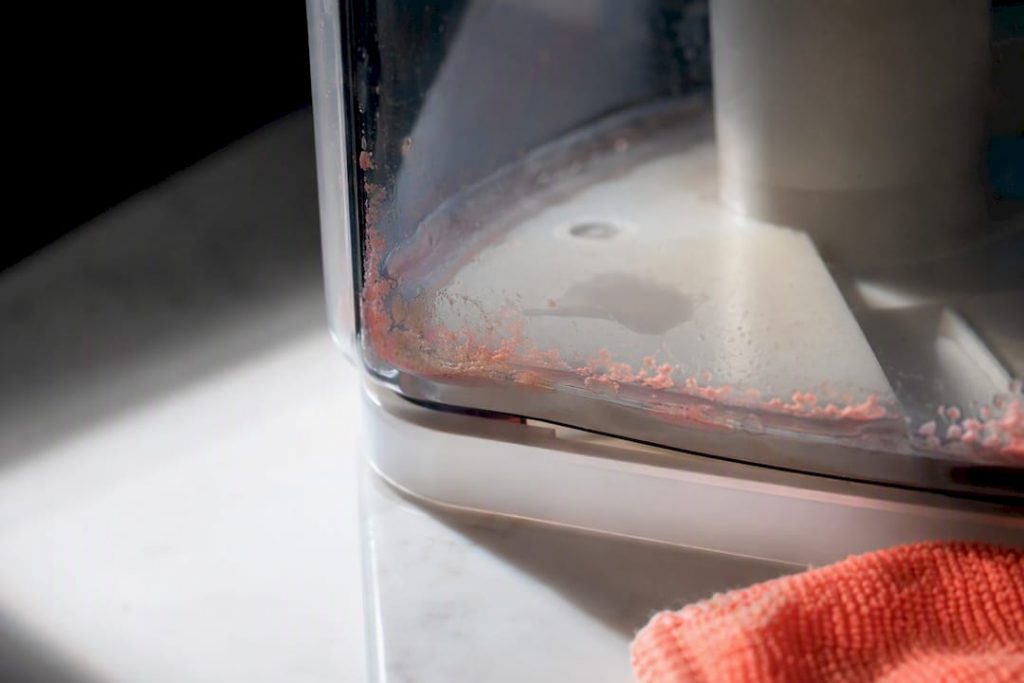
That pink or orange film in your humidifier tank is almost always bacterial slime or mould growth, not a harmless mineral stain. Stop using the unit immediately, empty the tank, and let all parts dry completely before you clean it. Switching to distilled water and emptying the tank daily prevents most recurrences.
TL;DR:
- Pink or orange residues are almost always bacterial slime or mold, not harmless mineral deposits, and require disinfection, not just scrubbing.
- Serratia marcescens can establish a visible film within 24 to 48 hours, especially in dark, damp areas with standing water and organic film.
- Risks are highest for infants, allergy sufferers, immunocompromised individuals, and those with respiratory issues, as inhaled microbes can worsen health conditions.
- A daily rinse with distilled water and weekly deep cleaning with vinegar and disinfectants significantly reduce mold growth and recurrence.
- Units with removable, wide-mouth tanks and easily accessible filters are more resistant to bacterial colonization and easier to maintain.
Table of Contents
- What causes pink residue in a humidifier tank
- How fast does pink mould grow, and where should you check?
- Health risks: who needs to be most careful
- Step-by-step cleaning and disinfecting protocol
- Which disinfectants are safe, and what to skip
- A daily and weekly routine that actually prevents recurrence
- When cleaning won’t fix it: repair or replace?
- The one weekly habit that stops most problems before they start
- Easier humidifiers and parts if yours has reached its limit
- Sources
What causes pink residue in a humidifier tank
Pink residue usually comes from one of three sources: bacteria, mould, or a mineral biofilm that bacteria then colonise. Serratia marcescens is the organism most commonly reported behind the pink or orange slime homeowners find in tanks, shower curtains and pet bowls, and it thrives wherever there’s standing water and a film to feed on. Mould genera such as Aureobasidium pullulans and Fusarium can produce similar pink or black staining, particularly on filters and wicks that stay damp between uses.
Bacterial slime feels slippery and smears easily. Mineral deposits from hard water feel gritty or chalky and don’t wipe away as a film. The distinction matters because straight scrubbing handles mineral scale, but slime and mould need actual disinfection.
Three conditions combine to create the problem:
- Standing water left in the tank between uses, which gives bacteria and mould days rather than hours to establish.
- An organic film from soap residue, skin oils or dust that gives microbes something to feed on.
- Dark, damp surfaces inside the tank and base, which mimic the conditions mould needs to spread.
Distilled water strips out the calcium and magnesium that tap water carries, so there’s less mineral scale for bacteria to hide inside. It doesn’t sterilise the tank, but it removes one of the three ingredients pink growth needs.
How fast does pink mould grow, and where should you check?
Under warm, humid conditions, Serratia marcescens can establish a visible film within 24 to 48 hours, with a mature colony forming over several days if the tank isn’t emptied. Check the seams where the tank meets the base, the base tray itself, the nozzle, the filter or wick, and any spray ports. A thin, slippery sheen is early-stage growth. Raised, textured pink or orange patches mean an established colony that needs proper disinfection, not just a rinse.
Health risks: who needs to be most careful
A dirty humidifier doesn’t just look unpleasant. It aerosolises whatever is growing in the tank straight into the air you breathe, and the EPA specifically warns that portable humidifiers can disperse microorganisms and minerals from the tank into indoor air. For most healthy adults, the result is mild irritation: a scratchy throat, sneezing, or a musty smell in the room.
For some households, the risk is higher. Dirty humidifiers can aggravate asthma and allergy symptoms, and prolonged exposure to contaminated mist has been linked in clinical literature to lung inflammation, sometimes called “humidifier lung” or hypersensitivity pneumonitis. Case reports documenting inhalation exposures from contaminated humidifiers reinforce why persistent symptoms shouldn’t be brushed off.
Infants, people with asthma or existing respiratory conditions, older adults, and anyone who’s immunocompromised carry the greatest risk from mould and bacterial exposure. If anyone in the house develops new coughing, wheezing, or breathing difficulty that seems tied to humidifier use, stop running the unit and speak to a doctor before switching it back on.
Step-by-step cleaning and disinfecting protocol
Before you start, unplug the unit and open a window or turn on a fan. Heavy growth can release spores into the air when disturbed, so gloves and a simple mask are worth wearing if the colony looks established.
- Drain the tank fully and rinse under running water to clear loose debris.
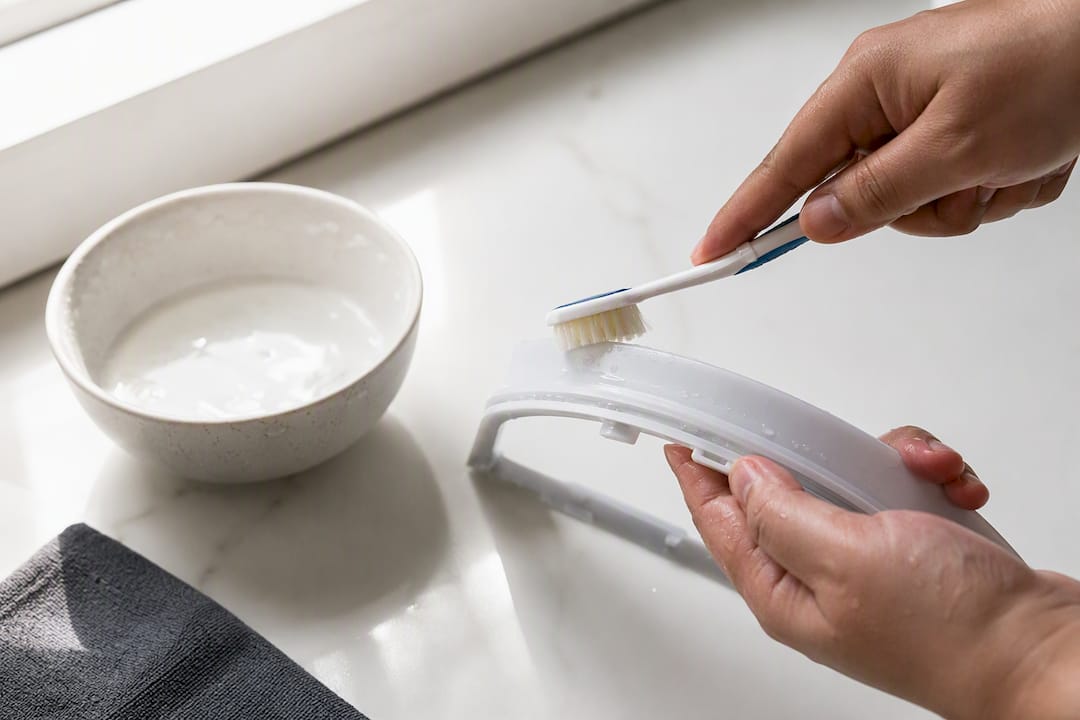
- Scrub the tank, base and nozzle with a solution of equal parts white vinegar and water, working into every seam with a soft brush or old toothbrush.
- Disinfect with a manufacturer-approved diluted bleach solution or a hydrogen peroxide soak, following the product’s instructions for concentration and contact time.
- Rinse every part thoroughly under running water until no smell of vinegar or bleach remains.
- Air-dry all components completely before reassembling. Don’t leave any part damp.
Washable filters and wicks can usually go through the same vinegar and disinfectant cycle, but check the manual first. Foam wicks and non-washable filters that show staining or a musty smell after cleaning should simply be replaced. Once reassembled, run the unit briefly with clean water only and check for any lingering odour before returning it to normal use.
Pro Tip: Keep an old, soft-bristled toothbrush next to the humidifier permanently. Having the tool on hand removes the biggest excuse for skipping the scrub step, which is the part most people avoid.
Which disinfectants are safe, and what to skip
Vinegar cuts through scale and loosens slime, but it isn’t a strong enough disinfectant on its own to reliably kill bacteria and mould. For that, use a diluted bleach solution or hydrogen peroxide soak, following the ratios your manufacturer allows, since some plastics degrade with prolonged bleach exposure. Diluted bleach and hydrogen peroxide are both effective for broader antimicrobial disinfection when used at the right strength and for the recommended contact time, typically a few minutes of soaking followed by a thorough rinse.
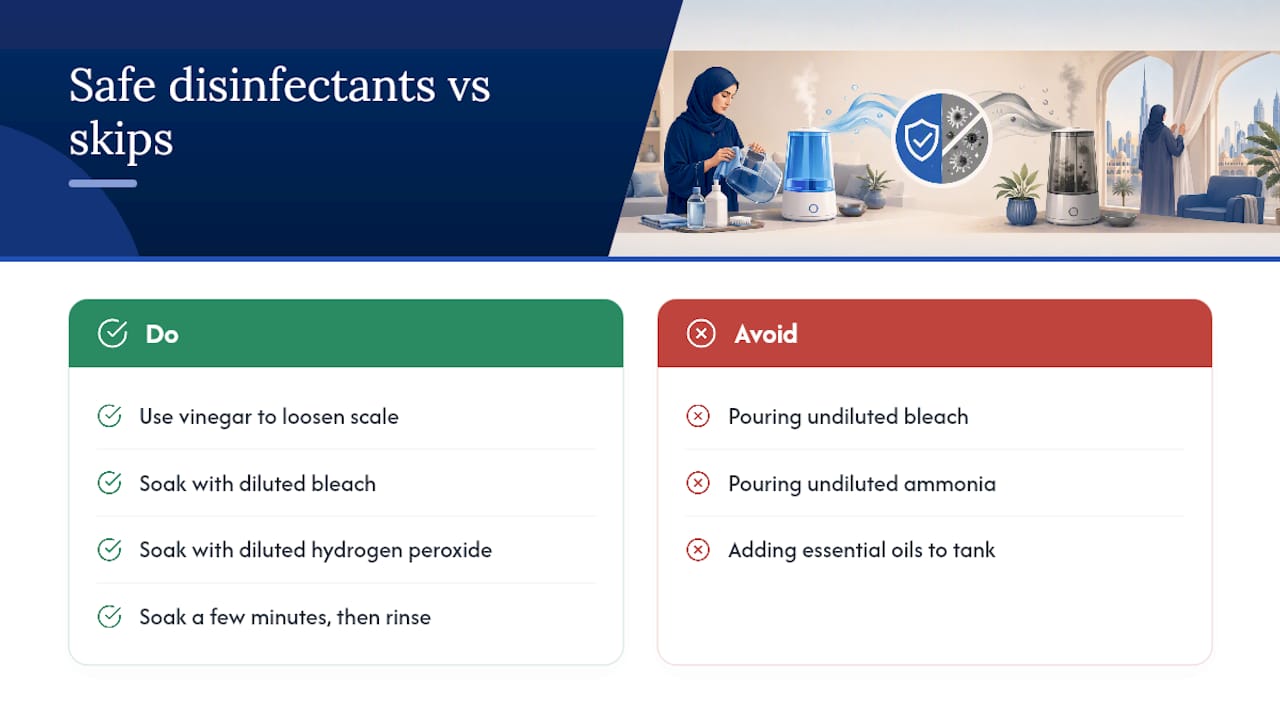
Never pour undiluted bleach, ammonia, or essential oils directly into the tank. Undiluted chemicals can damage seals and internal components, and any leftover residue gets aerosolised straight into the room the moment you switch the unit back on.
A daily and weekly routine that actually prevents recurrence
Consistency beats intensity here. A humidifier that gets a quick daily rinse rarely needs the harsh disinfectant round at all.
Daily:
- Empty the tank and wipe it dry, don’t just top up on yesterday’s water.
- Refill with distilled or demineralised water rather than tap water.
- Limit continuous runtime rather than leaving the unit going around the clock.
Weekly:
- Do a full vinegar scrub and disinfectant soak, even if nothing looks visibly dirty yet.
- Descale any mineral buildup on the base or nozzle.
- Check filters and wicks for staining and replace them on the schedule the manufacturer recommends.
Environment:
- Keep indoor relative humidity below 50% using a hygrometer. The EPA’s guidance on humidifier use and care ties directly to this figure as the threshold where mould risk climbs.
- Improve airflow in the room to stop moisture pooling on nearby surfaces.
Households on hard water supplies should expect to descale more often than this baseline, since mineral scale creates the textured surface bacteria find easiest to colonise. Our distilled water and weekly habit guide breaks this routine down further if you want a printable version.
When cleaning won’t fix it: repair or replace?
Some units are past saving. Persistent odour after a full disinfection cycle, mould growing in spots you physically can’t reach, or cracked and warped seals are all signs the internal plastic has absorbed the problem rather than just hosting it on the surface.
When you do replace, prioritise a model with a removable tank, straightforward filter access, and clear manufacturer cleaning instructions on the box or product page. Units where replacement parts are easy to identify and order save you the guesswork later. Climatepro’s humidifier catalogue lists compatible parts alongside each model, which makes the ongoing maintenance side of ownership far less of a hunt.
The one weekly habit that stops most problems before they start
Daily rinses matter, but the single habit that prevents most pink mould cases is a fixed weekly deep clean, done on the same day every week regardless of how the tank looks. Bacteria don’t wait for visible signs before they start colonising a film, so a routine built on a calendar date rather than a visual check catches growth before it’s established. Pair that with distilled water and you’ve removed two of the three ingredients pink slime needs to take hold. For a fuller checklist, Climatepro’s mould prevention guide and humidity control workflow cover the environmental side in more depth than a single article can.
— Nevel
Easier humidifiers and parts if yours has reached its limit
If your current unit keeps growing pink slime no matter how carefully you clean it, the tank design itself might be working against you. There are humidifiers built with removable, wide-mouth tanks that are genuinely easy to scrub by hand, along with filters and wicks that make weekly upkeep a five-minute job instead of a wrestling match with narrow openings.

Browse the humidifier range for easy-clean tank designs, or check the dehumidifier range if excess indoor moisture is part of the problem in the first place. Replacement filters, including Blueair Classic 400 Series filters, are listed against their compatible models so you’re not guessing what fits. If you’re ready to stop fighting your current unit, start with the humidifier catalogue and filter by tank type before you buy.
Sources
- Use and care of home humidifiers | US EPA
- How to clean a humidifier | Healthline
- PubMed: clinical articles on humidifier-associated respiratory illness
- Pink stuff in your humidifier – what is it and is it harmful? – Plentiful Air
This article is general information, not a substitute for advice from a qualified doctor. Consult a qualified healthcare professional about your own circumstances before acting on anything here.