
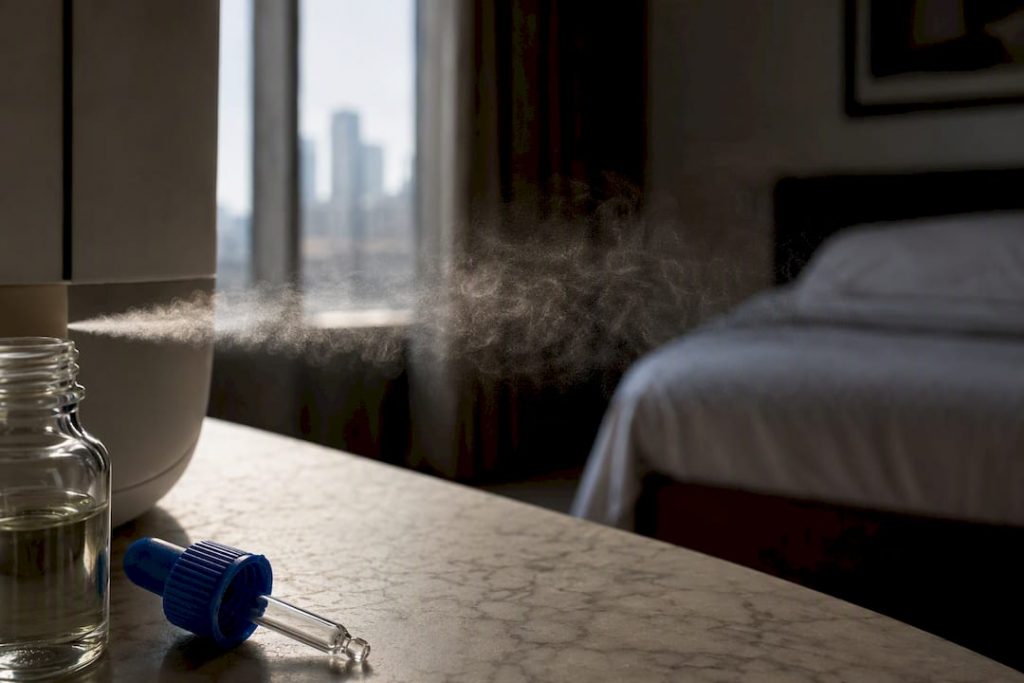
Generally, no. Most humidifiers are not designed to carry essential oils, and adding them to the water tank can damage internal components or affect your health. The exception is a unit with a manufacturer-fitted aroma tray or oil compartment, which isolates the oil from the water path. Outside of that, keep essential oils in humidifier water off the list, especially in bedrooms shared with infants or people with asthma.
TL;DR:
- Most humidifiers are not designed for essential oils and adding them can damage the device or harm health, especially in bedrooms shared with children or asthma sufferers.
- Evaporative and wick-based humidifiers cannot handle oils, while ultrasonic and steam models require verified, dedicated aroma compartments to prevent damage and ensure safety.
- Aerosolized essential oils release over a thousand VOCs, with some classified as potentially hazardous, so frequent use in bedrooms or with vulnerable individuals should be avoided.
- Use only oils approved for a humidifier’s aroma tray if available, starting with one to two drops for short sessions, and always ventilate afterward to minimize respiratory risks.
- Separating fragrance devices from humidifiers enhances control, reduces VOC exposure, and avoids residue buildup, while regular cleaning prolongs device lifespan and prevents bacterial growth.
Table of Contents
- Which humidifier types allow oils in a humidifier and which don’t
- What the research says about VOCs and particle emissions
- How to add fragrance to a humidifier the safe way
- Safer ways to scent a room without touching the humidifier
- Cleaning and maintenance to prevent residue and damage
- What Climatepro recommends for homeowners
- Why most advice on this topic misses the point
- Finding the right humidifier for your home
- Sources
- FAQ
Which humidifier types allow oils in a humidifier and which don’t
The honest answer depends entirely on how your unit generates mist, not on the brand or the price tag.
Evaporative (wick-based) humidifiers draw water up through an absorbent wick and rely on airflow to evaporate it. Oils clog and saturate that wick almost immediately, and manufacturer guidance is consistent on this point: oils have no place in an evaporative unit. Once the wick is oiled, it’s effectively ruined.
Ultrasonic humidifiers use a vibrating diaphragm to shatter water into a fine mist, and this is where confusion sets in. Many ultrasonic models are not oil-compatible, but some include a dedicated aroma tray or pad specifically because it keeps oil out of the water reservoir. If you’re weighing up essential oils for humidifiers, check for that tray before assuming your unit can handle it.
Steam (boiler-style) humidifiers heat water to produce vapour, and some are sold with menthol cups or oil wells built in. Even here, caution matters, because heat can alter the chemistry of the oil.
A few checks before you use any oils in a humidifier:
- Read the manual for the words “aroma tray,” “oil compartment,” or “not compatible with oils”
- Assume evaporative and wick-based units are off limits by default
- Contact the manufacturer directly if the packaging is silent on the subject
- Treat “essential oil safe” claims on generic accessories with scepticism unless your model’s manual confirms it
Adding oils to a unit without explicit approval can void your warranty, regardless of how careful you are.
What the research says about VOCs and particle emissions
A 2021 laboratory study measured what actually leaves the diffuser when essential oils are aerosolised, and the numbers are larger than most people expect. Testing across 14 common essential oils identified 1,034 distinct volatile organic compounds, 251 of them classed as potentially hazardous. The same study recorded a fivefold jump in fine particulate (PM1) emissions when an ultrasonic device ran on tap water instead of deionised water, which suggests water quality compounds the problem rather than causing it outright.
By the numbers: One study of 14 essential oils found 1,034 VOCs released during aerosolisation, with 251 flagged as potentially hazardous, and a fivefold rise in fine particulate emissions linked to water mineral content.
Particle size and chemistry both matter for how deep these compounds travel into the lungs. Smaller particles reach further into the respiratory tract, and terpene compounds like pinene, linalool and camphor can oxidise in the air into more irritating byproducts. A prospective study on biogenic volatile organic compounds found that rising levels of these same compounds predicted worse respiratory symptoms and reduced peak expiratory flow in people with seasonal asthma.
Children, older adults, and anyone with asthma or another respiratory condition carry the highest risk from routine exposure. The practical takeaway is straightforward: don’t run oil-based mist continuously in bedrooms, nurseries, or any room where a vulnerable person spends hours at a time. Occasional, well-ventilated use is a different risk profile to leaving a diffuser running all night next to a cot.

How to add fragrance to a humidifier the safe way
If your humidifier has a genuine aroma tray or oil-approved compartment, there’s a right way to use it and several wrong ones.
- Confirm the feature exists. Look for a labelled tray, pad, or cup separate from the main water tank. This isolation is the entire point, as noted in manufacturer guidance on aroma trays, which exist precisely so oil never touches the reservoir.
- Start with 1 to 2 drops. Don’t assume more scent means better results. Manufacturer guidance for units with dedicated trays generally caps sessions at 2 to 5 drops.
- Run short sessions. Fifteen to thirty minutes is enough for most rooms, particularly ones without much airflow.
- Ventilate afterwards. Open a window or door once the session ends, especially before children or pets return to the room.
- Never pour oils into the main tank unless your manual explicitly states it’s approved, and even then, follow the stated ratio to the letter.
Stick to 100% natural, unadulterated oils when the manufacturer calls for them, and steer clear of synthetic fragrance blends or menthol-heavy products in any room used by young children.
Pro Tip: Keep a small logbook near the humidifier noting the date, oil used, and number of drops. It sounds fussy, but it’s the fastest way to spot a pattern if anyone in the house starts reacting to a particular scent.
Safer ways to scent a room without touching the humidifier
Separating humidity control from fragrance is the simplest fix, and it solves most of the problems above in one move.
- A small dedicated essential oil diffuser handles scent on its own terms, with dosing you control precisely and no risk to your humidifier’s internals.
- Reed diffusers, sachets, or scented pads in wardrobes and living areas add fragrance with zero aerosolisation and no moving parts to maintain.
- Running your humidifier purely for moisture control and a separate diffuser for scent means neither device cross-contaminates the other.
The advantage isn’t just convenience. It’s better dosing control, easier cleaning, and far less aerosolised VOC exposure than routing scent through a device built to move large volumes of mist.
Cleaning and maintenance to prevent residue and damage
Oil residue and mineral buildup both feed bacterial growth, and either one shortens a humidifier’s working life. A simple routine keeps both in check.
- Daily: empty the tank, rinse it, and wipe up any spills immediately, since oil left on plastic surfaces outside the tank can degrade seals over time.
- Weekly: descale according to the manufacturer’s instructions, using a mild vinegar solution only if the manual approves it.
- Replace ruined wicks or filters rather than trying to rescue them. Once a wick has absorbed oil, its evaporation rate and lifespan are both compromised.
- Log every cleaning date and oil session. It’s a small habit that makes warranty claims and troubleshooting far easier, and it pairs well with a weekly anti-mould routine.
What Climatepro recommends for homeowners
Climatepro’s practical position is simple: keep humidity and fragrance as separate jobs unless your unit explicitly supports an isolated oil tray. For deeper reading, our guides on distilled water for humidifiers and maintaining 40 to 50% relative humidity cover the fundamentals that matter more than scent ever will. Always check your manual, and register your purchase for local support.
Why most advice on this topic misses the point
The internet’s advice on essential oils and humidifiers tends to split into two extremes: enthusiastic aromatherapy blogs that treat any humidifier as a diffuser, and alarmist warnings that treat all oils as dangerous. Neither position holds up against the evidence. The 2021 VOC study didn’t find that essential oils are inherently toxic. It found that aerosolising them at volume, through a device built to move a lot of air and water, changes the exposure profile in ways a small bedside diffuser doesn’t replicate.
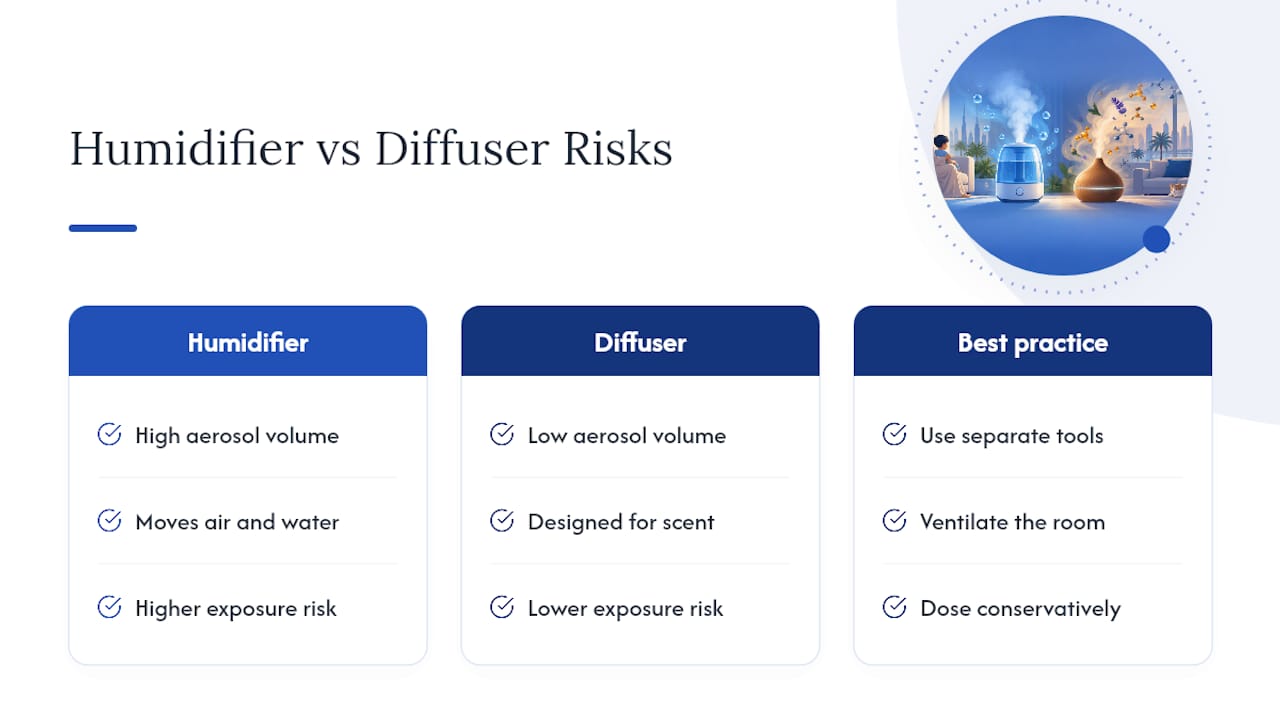
Conventional advice often stops at “check your manual,” which is correct but incomplete. The more useful habit is treating humidity control and fragrance as two separate problems with two separate tools. A humidifier’s job is moisture. A diffuser’s job is scent. Collapsing them into one device because it’s convenient is where most of the real risk creeps in, not from essential oils themselves, but from using the wrong tool to deliver them at the wrong dose, in the wrong room, for too many hours at a stretch.
If you take one thing from the evidence, prioritise ventilation and dosing over brand loyalty or oil selection. A well-ventilated room with two drops of oil on an approved tray is a different risk category to a sealed nursery running an oil-laced mist all night.
— Nevel
Finding the right humidifier for your home
There are humidifier models designed to meet the demands of homes where air conditioning strips moisture out of the air far faster than in milder climates. If scent matters to you, that’s exactly why checking the product page before you buy matters more than guessing after the fact.

Browse the humidifier range and look specifically for listings that mention an aroma tray or oil-compatible design, since not every model on the market includes one. Pair your unit with genuine replacement filters and accessories rather than improvised cotton pads, which keeps warranty cover intact and avoids the wick damage covered above. Purchases from this supplier may include local delivery across the Emirates and warranty support handled in-country, avoiding the need to ship a faulty unit overseas and wait weeks for resolution. If you’re ready to fix dry indoor air properly, start by checking the humidifier catalogue for a model that matches your room size and your scenting preferences.
Sources
The 2021 VOC and particulate emissions study underpins the health figures above. The BVOC and asthma study explains the respiratory link. AirCare’s manufacturer guidance and Respiratory Therapy Zone’s water guide cover device compatibility and safe water choices.
This article is general information, not a substitute for advice from a qualified doctor. Consult a qualified healthcare professional about your own circumstances before acting on anything here.
- VOCs and particulate emissions from essential oils (2021)
- Essential oils, asthma, thunderstorms, and plant gases: respiratory response to BVOCs (2019)
FAQ
What oils can you put in a humidifier?
Never add any oil, natural or synthetic, directly to the water tank unless the manual explicitly says it’s safe.
Is it good to put essential oils in a humidifier?
It depends entirely on your unit and your household. A 2021 study found aerosolised oils release over a thousand VOCs, with 251 classed as potentially hazardous, so routine use isn’t automatically “good” even when the humidifier supports it. It’s a reasonable occasional choice in a well-ventilated room without infants or asthma sufferers present.
What is the best essential oil to use in a humidifier?
There isn’t a single best option, because it depends on your manufacturer’s approval and who’s in the room. If oils are approved for your model, milder options are generally preferred over strong terpene-heavy oils like eucalyptus in spaces used by children.
What is the best liquid to put in a humidifier?
Distilled water is the safest base liquid for any humidifier, since it limits mineral aerosol and reduces the carrier mass for other residues, according to homeowner water guidance. Tap water increases particulate emissions and mineral dust, and additives beyond distilled water should only go in when your manual specifically allows them.
Do humidifiers need oils to work properly?
No. A humidifier’s job is to add moisture to the air, and it does that with plain water, ideally distilled. Oils are purely optional for fragrance and only belong in units with a dedicated, isolated tray.