Odour control solutions are products or systems designed to neutralise and eliminate unpleasant smells in living environments, not simply cover them with fragrance. The most effective options in 2026 include enzymatic sprays, activated carbon air purifiers, and odour-absorbing gels, each targeting different odour sources and room sizes. Choosing the wrong product for your space means the smell returns within hours. This guide ranks and compares the top methods based on recent lab testing and real-world performance, so you can select the right approach for your home or rental.
1. what are the most effective odour control solutions for indoor use?
The four primary categories of odour control solutions are enzymatic sprays, neutralising sprays, air purifiers, and passive absorbers. Each works through a different mechanism, and none is universally superior. The right choice depends on your odour source, room size, and how frequently the smell recurs.
Here is a breakdown of each category:
- Enzymatic sprays: Break down odour-causing organic molecules at the source. Best for pet accidents, cooking residue, and smoke embedded in fabrics or carpets.
- Neutralising sprays: Chemically alter odour molecules in the air or on surfaces. Effective for rapid treatment of kitchen and bathroom smells.
- Air purifiers: Use HEPA filters, activated carbon filtering, or specialised odour-elimination technology to continuously treat airborne odours across large spaces.
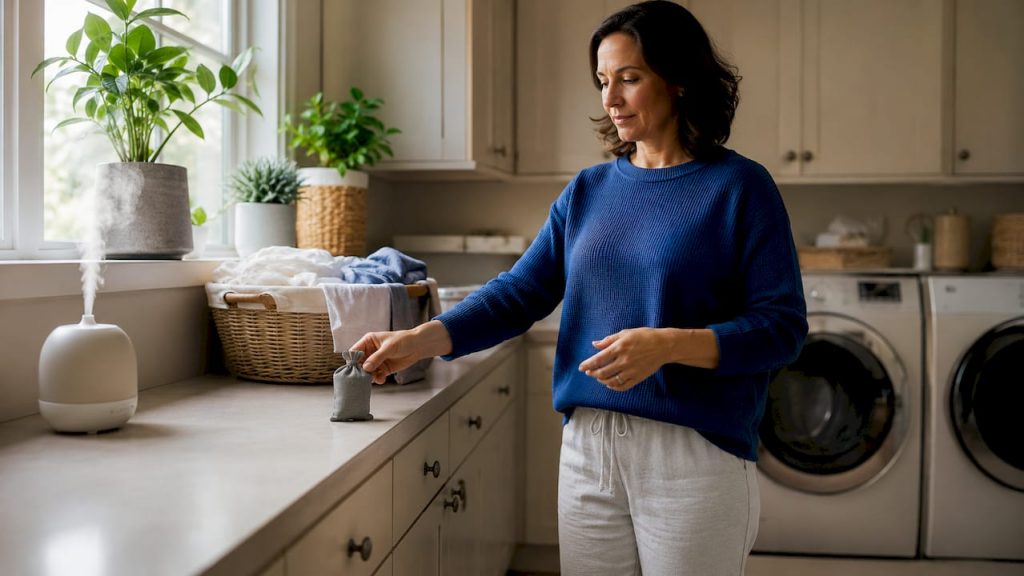
- Odour-absorbing gels: Emit neutralising agents passively over 30–60 days. Suited to small, persistent problem zones like pet areas, bins, and laundry rooms.
- Passive charcoal or bamboo bags: Absorb odour molecules from surrounding air. Only effective in small, enclosed spaces under 100 square feet.
A common mistake is buying a spray labelled “odour eliminator” when it only contains fragrance. Many sprays only mask smells rather than alter or trap odour molecules permanently. The 24-hour sniff test is the most reliable way to tell the difference: if the smell returns after the fragrance fades, the product is a masking agent, not an eliminator.
Pro Tip: Match your solution to both the odour source and the room size. A charcoal bag will do nothing in an open-plan living area, and an air purifier is overkill for a small wardrobe.
2. how enzymatic sprays deliver real odour elimination
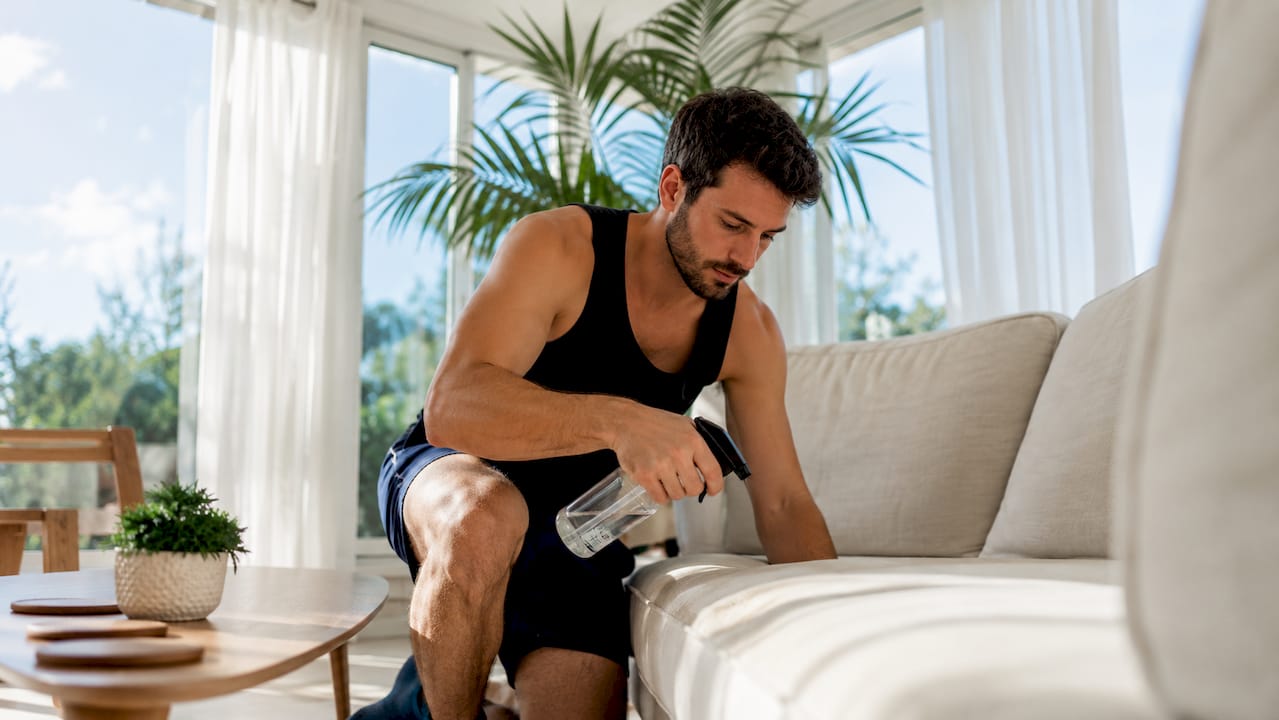
Enzymatic sprays are the most effective home odour neutralisers for organic odour sources, including pet urine, cooking grease, and cigarette smoke. They work by introducing enzymes that break down the proteins and fatty acids responsible for the smell, rather than coating them with fragrance.
Enzymatic sprays applied directly to fabric or carpet can neutralise embedded odours within 30 minutes. That speed matters when you are dealing with a fresh pet accident or post-cooking residue on upholstery. The key is direct contact: spraying into the air achieves very little because the enzymes need to reach the odour-causing compounds on the surface.
Key application points for enzymatic sprays:
- Apply directly to the affected fabric, carpet, or surface, not into the air above it.
- Allow the spray to dwell for at least 10–15 minutes before blotting or wiping.
- Repeat applications are often needed for deeply embedded odours, particularly in thick carpet pile.
- Unscented formulas are preferable for households with pets or young children.
Unscented neutralising sprays combined with active ventilation reduce persistent cooking odours by 85% within an hour. That figure reflects kitchen tests conducted in 2026, and it underscores how much ventilation amplifies spray performance. Opening a window or running a range hood while spraying is not optional; it is part of the method.
Pro Tip: Apply enzymatic sprays to fabric and upholstery rather than just misting the air. Surface contact is what activates the enzyme reaction.
3. what role do air purifiers play in home odour management?
Air purifiers are the most effective solution for continuous, whole-room odour control, particularly in open-plan living areas where passive absorbers and sprays cannot keep up. They work by drawing air through a series of filters that trap and neutralise airborne odour molecules rather than releasing fragrance to cover them.
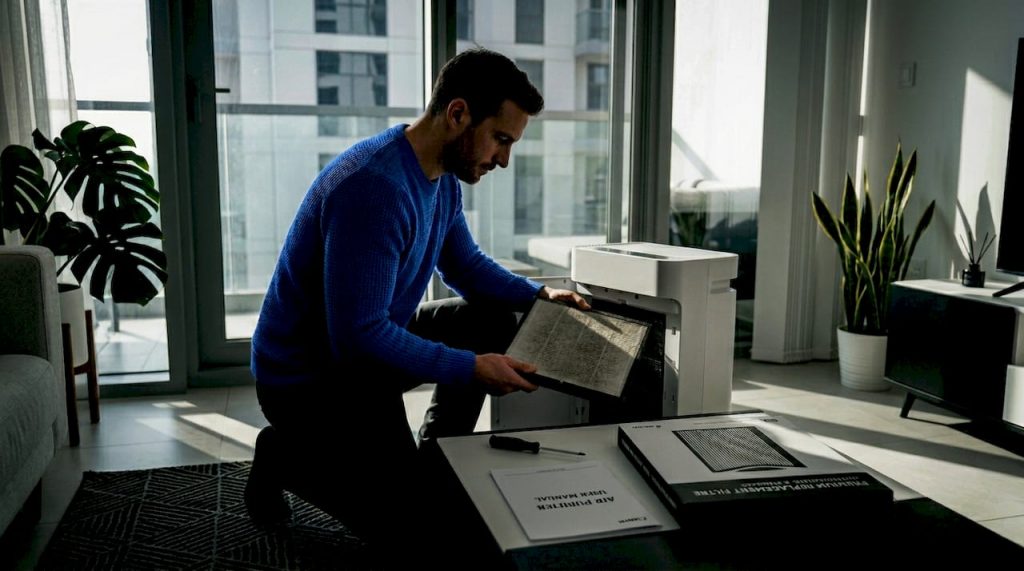
Air purifiers with activated carbon and specialised filtering systems neutralise airborne odours beyond masking, providing continuous odour control across large living spaces. Activated carbon is particularly effective against volatile organic compounds (VOCs), cooking smells, smoke, and chemical odours from cleaning products or new furniture. HEPA filters handle particulate matter like pet dander and dust, which often carry odour-causing compounds.
The main advantages of air purifiers for odour management include:
- Continuous operation: Unlike sprays, purifiers work around the clock without repeated manual application.
- Broad-spectrum coverage: They address smoke, cooking smells, pet dander, and chemical odours simultaneously.
- Air quality improvement: Beyond odour control, they reduce allergens, fine particles, and airborne contaminants.
- Scalable to room size: Models are rated by room coverage area, so you can match the unit to your space precisely.
Some advanced purifiers combine HEPA and activated carbon filtration with additional odour-elimination stages. Regular filter replacement is non-negotiable for sustained performance. A clogged carbon filter stops adsorbing odour molecules and can begin releasing them back into the room. For renters and homeowners managing persistent smells in kitchens, living rooms, or bedrooms, a quality air purifier is the most reliable long-term investment. You can explore air quality strategies for larger spaces to understand how purifiers integrate with broader ventilation approaches.
4. odour-absorbing gels vs passive absorbers: which works better?
Odour-absorbing gels and passive charcoal absorbers are both marketed as low-effort, continuous odour solutions. They are not equivalent in performance, and the difference comes down to how each interacts with air circulation.
| Feature | Odour-Absorbing Gels | Passive Charcoal Bags |
|---|---|---|
| Mechanism | Emit neutralising agents into surrounding air | Absorb odour molecules from passing air |
| Effective room size | Small to medium rooms, enclosed zones | Under 100 sq ft only |
| Duration | 30–60 days per unit | 1–2 months, then require sun-recharging |
| Best use case | Pet areas, bins, laundry rooms | Wardrobes, car interiors, small drawers |
| Performance in large rooms | Minimal | Negligible |
Odour-absorbing gels dissolve as odours are neutralised and leave behind fresh air rather than fragrance. Fresh Wave is a well-known brand in this category. The gel evaporates over 30–60 days, making it a practical option for persistent low-level odour zones like garbage disposal areas, pet beds, and small bathrooms.
Passive charcoal bags only work well in small, stagnant spaces under 100 square feet. The reason is straightforward: passive absorbers rely on air currents to bring odour molecules into contact with the absorbing material. In a large or open room, air circulation is too diffuse for meaningful contact to occur. Placing a charcoal bag in a lounge room and expecting results is a common and costly mistake.
Pro Tip: Rotate or replace gels and absorbers on a set schedule, every 30 days for gels in high-odour zones, rather than waiting until you notice the smell returning.
5. natural odour removal solutions worth considering
Natural odour removal solutions include baking soda, white vinegar, activated charcoal, and plant-based enzymatic products. These options appeal to households seeking chemical-free alternatives, and several perform reliably within their limitations.
Baking soda (sodium bicarbonate) neutralises acidic odour compounds on contact. It works well as a carpet deodoriser when left to sit for 15–30 minutes before vacuuming, and as a refrigerator absorber when placed in an open container. White vinegar neutralises alkaline odour sources, making it effective against fish smells and some pet odours when used as a surface spray diluted with water.
Plant-based enzymatic products, such as those using citrus or pine-derived enzymes, perform comparably to synthetic enzymatic sprays for organic odours. They are a sound choice for households with pets, infants, or occupants with chemical sensitivities. The trade-off is that natural formulas sometimes require longer dwell times to achieve the same result as synthetic alternatives.
Activated charcoal in loose or bag form functions identically to commercial charcoal absorbers. Its effectiveness is governed by the same spatial rules: useful in small enclosed spaces, ineffective in open rooms. Natural solutions are best used as part of a layered approach rather than as standalone odour management products for persistent or severe smells.
6. best practices for selecting and using odour control products
Selecting the right odour control product starts with identifying the odour source type. Organic odours from pets, cooking, and biological waste respond best to enzymatic sprays. Smoke odours require activated carbon filtration. Persistent low-level smells in confined spaces suit gels or passive absorbers. Chemical odours from cleaning products or new materials need active air filtration.
Dos and don’ts for effective odour management:
- Do ventilate actively when using sprays. Proper ventilation enhances spray effectiveness by dispersing and flushing odour molecules out of the space.
- Do match product coverage to room size. A purifier rated for 20 square metres will underperform in a 40-square-metre open-plan area.
- Do replace filters and gels on schedule. Overdue replacements reduce performance and can worsen air quality.
- Don’t rely solely on masking sprays for recurring odours. Check ingredient labels for enzyme or active neutralising compounds.
- Don’t place passive absorbers in large rooms. Passive absorbers are ineffective in large rooms over 100 square feet due to insufficient air contact.
- Don’t assume one product handles all odour types. Smoke, pet, and cooking odours each respond to different chemical mechanisms.
For ongoing odour management in active households, a layered approach delivers the best results:
- Treat odour sources directly with an enzymatic spray.
- Run an air purifier continuously for airborne odour removal.
- Place odour-absorbing gels in persistent problem zones.
- Ventilate actively during and after cooking or cleaning.
Pro Tip: Combining an enzymatic spray for source treatment with an activated carbon air purifier for airborne control gives you a two-stage defence that outperforms any single product.
Key takeaways
The most effective approach to odour control combines enzymatic sprays for source treatment, activated carbon air purifiers for continuous airborne removal, and odour-absorbing gels for persistent low-level zones.
| Point | Details |
|---|---|
| Match product to odour source | Enzymatic sprays suit organic odours; activated carbon suits smoke and chemical smells. |
| Size determines passive absorber performance | Charcoal bags and gels only work reliably in spaces under 100 square feet. |
| Ventilation amplifies spray results | Active air movement during spray application reduces cooking odours by up to 85%. |
| Air purifiers provide continuous coverage | Activated carbon purifiers treat airborne odours around the clock without manual reapplication. |
| Layered methods outperform single products | Combining sprays, purifiers, and gels addresses odour at source, in the air, and in problem zones. |
What i have learned about odour control in everyday homes
After working with indoor air quality products across a wide range of home and rental environments, one pattern stands out clearly: most people underestimate how much the odour source type matters. They buy a single product, apply it broadly, and wonder why the smell returns within a day.
Enzymatic sprays consistently outperform masking agents for pet and cooking odours when applied correctly. The difference is not subtle. A masking spray applied to a pet-soiled carpet will smell fine for a few hours, then the original odour returns as the fragrance fades. An enzymatic spray applied to the same carpet breaks down the compounds causing the smell. The odour does not return because the source has been treated.
Passive absorbers are popular because they require no effort. That popularity is partly their problem. Homeowners place charcoal bags in living rooms and kitchens expecting results, and when the smell persists, they assume odour control products simply do not work. The product is not failing; it is being used outside its effective range.
The investment that pays off most consistently is a quality air purifier with activated carbon filtration. It handles the ongoing, ambient odour load that no spray or gel can address continuously. For renters in particular, where cooking smells, pet odours, and poor ventilation are common challenges, a purifier running in the main living area makes a measurable difference to daily comfort. No single product is a set-and-forget solution in an active household. Realistic expectations and a layered approach are what actually work.
— Nevel
Climatepro’s top air purifiers for odour control
For homeowners and renters across the UAE seeking reliable odour management, Climatepro stocks the Honeywell Air Touch range, two of the most trusted air purifiers for odour and allergen removal available in the region.

The Honeywell Air Touch P1 is priced at AED 591 and suits smaller rooms and apartments. The Honeywell Air Touch P2 at AED 705 covers larger living spaces with activated carbon and HEPA filtration working together to neutralise odours continuously. Both models are available for delivery across Dubai, Abu Dhabi, Sharjah, and all seven emirates. Visit the Climatepro air purifier catalogue for full specifications, filter replacement options, and pricing.
FAQ
What is the most effective odour control solution for pet smells?
Enzymatic sprays applied directly to the affected fabric or carpet are the most effective option for pet odours. They break down odour-causing proteins at the source and can neutralise embedded smells within 30 minutes.
Do charcoal bags actually work for home odour removal?
Charcoal bags work only in small, enclosed spaces under 100 square feet. In larger rooms or open-plan areas, air circulation is too diffuse for the absorber to make meaningful contact with odour molecules.
How often should odour-absorbing gels be replaced?
Odour-absorbing gels require replacement every 30–60 days depending on the odour intensity of the space. High-odour zones like pet areas or bins will exhaust a gel unit faster than low-traffic rooms.
Can an air purifier replace other odour control methods?
An air purifier handles airborne odours continuously but does not treat odours embedded in surfaces or fabrics. For complete odour management, combine a purifier with enzymatic sprays for source treatment.
How do i tell if a spray is a true odour eliminator or just a masking agent?
Apply the spray and assess the odour again after 24 hours once the fragrance has fully dissipated. If the original smell has returned, the product is a masking agent. True eliminators alter or trap odour molecules permanently.
Recommended
- Office air quality improvement: top 10 strategies — Blog | ClimatePro UAE
- What air solution experts do for better indoor air — Blog | ClimatePro UAE
- Home air quality improvement guide for UAE homeowners — Blog | ClimatePro UAE
- Understand air cleaning technologies for healthier UAE homes — Blog | ClimatePro UAE