Children aged 0–5 breathe 40–60% more air per unit of body weight than adults, which means whatever is in the air your nursery circulates, your child absorbs at a far greater rate. In the UAE, where desert dust, persistent AC use, and sealed interiors create a unique set of indoor air challenges, nursery air safety tips are not optional extras. They are a core part of keeping your child healthy. This article covers the key criteria, equipment, daily habits, and material choices that give parents a practical framework for maintaining clean, safe nursery air.
Table of Contents
- Key criteria for nursery air safety in the UAE
- Essential equipment to improve nursery air quality
- Daily habits to maintain safe nursery air
- Managing temperature and humidity for healthy nursery air
- How to choose safe nursery furnishings and materials
- Comparison of air quality improvement methods for nurseries
- Why nursery air safety needs continuous care beyond basics
- How ClimatePro can help you ensure nursery air safety
- Frequently asked questions
Key Takeaways
| Point | Details |
|---|---|
| Children’s vulnerability | Young children breathe significantly more air per body weight, making nursery air quality vital for their health. |
| Ventilation standards | Nurseries should meet ASHRAE standards of 10 CFM per person plus 0.12 CFM per square foot to ensure safe air. |
| Humidity control | Maintain nursery humidity between 40-60% to prevent mould growth and protect respiratory health. |
| Effective filtration | Use HEPA or MERV 11-13 filters and replace them regularly to capture harmful particles and allergens. |
| Ongoing care | Nursery air safety requires continuous monitoring and regular cleaning habits to maintain a healthy environment. |
Key criteria for nursery air safety in the UAE
Having introduced the importance of air quality in nurseries, it helps to understand the specific factors that determine whether that air is safe or not. Not all indoor air problems are visible, and in a UAE nursery, several conditions need regular evaluation.
Ventilation is the foundation. Fresh air must continually dilute the carbon dioxide, dust, and chemical vapours that accumulate indoors. Nurseries require minimum ventilation rates of 10 CFM (cubic feet per minute) per person plus 0.12 CFM per square foot to meet acceptable indoor air quality standards. In practice, many apartments in Dubai and Abu Dhabi rely entirely on recirculated AC air, which does not count as ventilation. Mechanical or natural fresh air supply must be part of the equation.
Humidity control is equally important and often mismanaged in the UAE. The desert climate pulls moisture from the air outdoors, while air conditioning removes what little humidity remains indoors. Indoor relative humidity should be maintained between 40 and 60% to prevent both mould growth above that range and dry, irritated airways below it. Understanding improving UAE air quality in the local context helps parents address these conditions accurately.
Key criteria to assess in any UAE nursery:
- Ventilation rate: Is fresh outdoor air actually entering the room, or is only recirculated AC air in use?
- Humidity level: Is a hygrometer (a device that measures relative humidity) in place to monitor conditions continuously?
- Particulate load: Are desert dust and PM2.5 particles (fine particles smaller than 2.5 micrometres) being filtered from the air?
- VOC sources: Are there new paints, furniture, or cleaning products releasing chemical gases into the room?
- Temperature stability: Is the room temperature consistent to prevent humidity swings?
Monitoring air quality at home with a dedicated monitor gives parents objective data rather than guesswork on all of these criteria.
Essential equipment to improve nursery air quality
Now that we know what to measure, let us consider the practical equipment that helps ensure nursery air stays healthy and pollutant-free.
The right tools make consistent air quality management achievable without requiring constant manual effort. Here are the primary equipment categories every UAE nursery should consider:
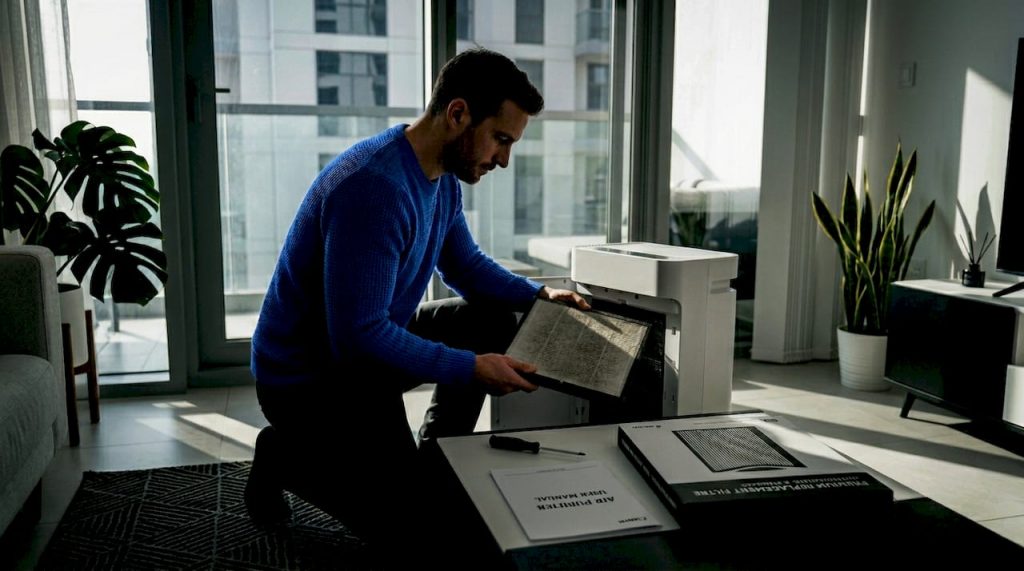
- HEPA air purifier: A True HEPA filter captures 99.97% of particles 0.3 micrometres or larger, including desert dust, pollen, and airborne allergens. Position it away from the cot but within the room to allow circulation. HEPA-rated purifiers are the most reliable solution for removing fine particulate matter in sealed nursery spaces.
- Hygrometer: A standalone humidity and temperature monitor gives you real-time readings so you can respond before conditions drift outside the safe range.
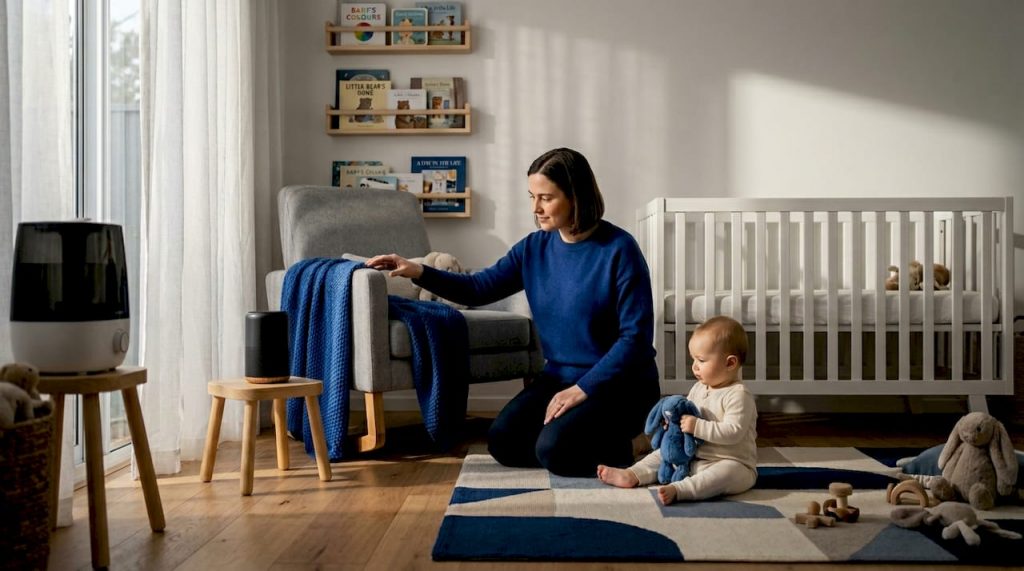
- Humidifier or dehumidifier: Depending on the season and your AC settings, humidity may need to go up or come down. Humidifiers for indoor use are particularly useful during winter when AC and dry desert air combine to drop indoor humidity well below 40%.
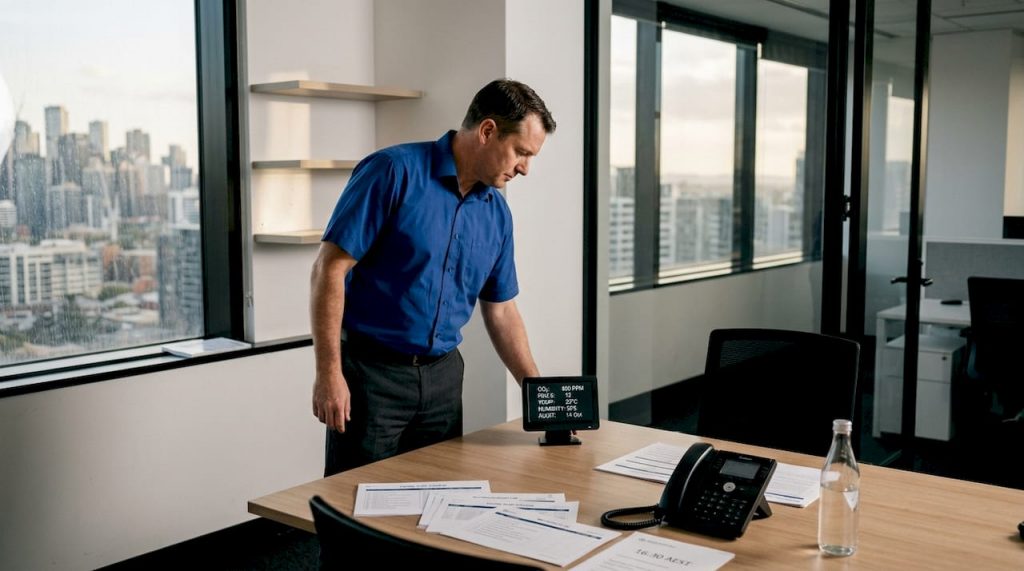
- Air quality monitor: Devices that track PM2.5, PM10, CO2, and VOC levels simultaneously give parents a clear picture of what their child is breathing at any given time.
- MERV 11 to 13 rated HVAC filters: If your apartment or villa has a central AC system, replace HVAC filters every 1 to 3 months using MERV 11 to 13 rated filters, which are designed to capture finer particles than standard residential filters.
Children in the UAE are particularly vulnerable to PM2.5 and PM10 from desert dust, making continuous air quality monitoring a practical necessity rather than a luxury.
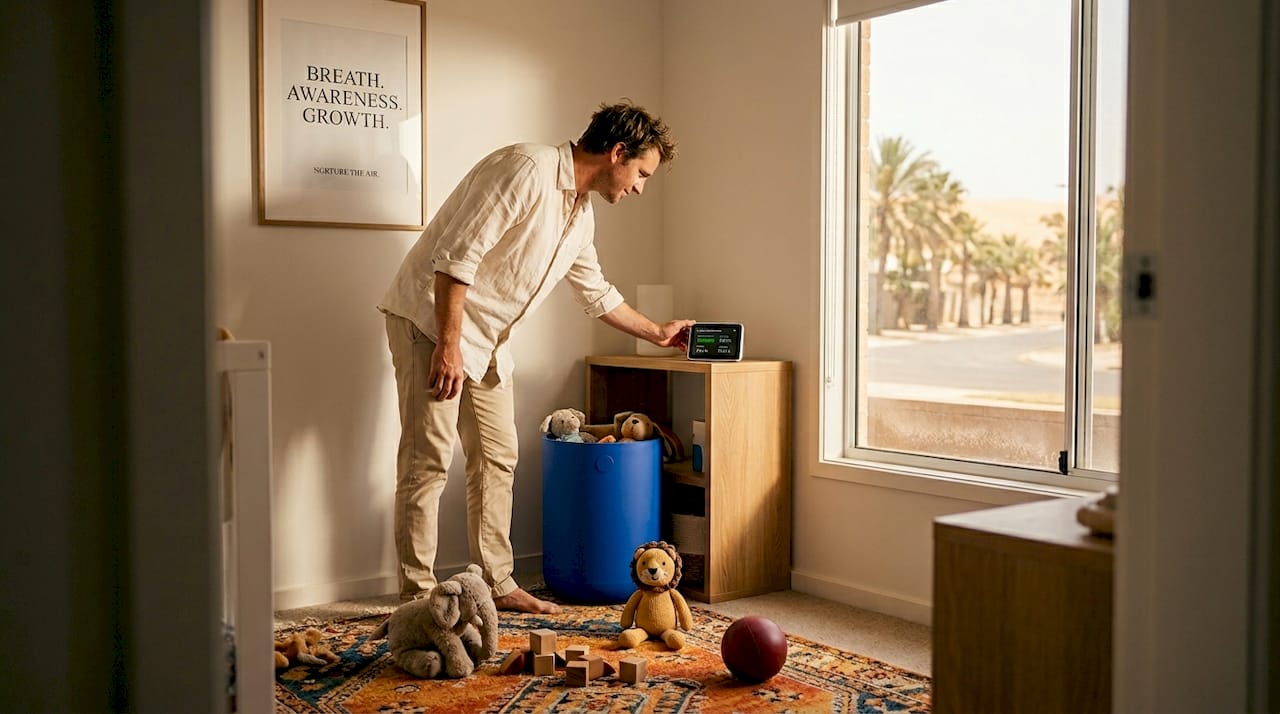
Pro Tip: Place your air quality monitor at cot height rather than on a shelf or table. Children breathe air closer to the floor, and pollutant concentrations often differ significantly at ground level compared to adult breathing height.
Daily habits to maintain safe nursery air
Beyond equipment, maintaining safe air quality requires consistent daily care and careful habits that prevent indoor pollution from building up over time.
Equipment alone cannot maintain clean air if daily routines introduce or spread pollutants. The following nursery air hygiene practices are straightforward to implement and make a measurable difference.
- Vacuum weekly using HEPA-filtered vacuums and wash all nursery bedding in hot water weekly to remove dust mites and allergens. Dust mites thrive in soft furnishings and are a leading trigger for respiratory irritation in young children.
- Avoid feather dusters entirely. They scatter allergens into the air rather than removing them. Use a damp microfibre cloth instead, which captures dust without dispersing it.
- Keep nursery windows closed on days when outdoor air quality is poor. In the UAE, sandstorm events and high PM10 days are common, and opening windows during these periods brings more harm than benefit.
- Avoid using aerosol sprays, scented plug-ins, or strong cleaning products inside or directly adjacent to the nursery. These products release VOCs (volatile organic compounds), which are chemical gases that can irritate young lungs.
- Ventilate the room during periods of good outdoor air quality, typically in early morning hours before temperatures rise and dust activity increases.
- Wipe down hard surfaces such as shelves, windowsills, and furniture weekly using a damp cloth to prevent dust accumulation.
Understanding air cleaning technologies helps parents make informed decisions about which daily practices offer the most value in combination with their equipment.
Pro Tip: If you use a robot vacuum in the nursery, schedule it to run while the child is out of the room. The stirring action of vacuuming can temporarily increase airborne particle counts, which settle again within 20 to 30 minutes.
Managing temperature and humidity for healthy nursery air
Temperature and humidity are vital but often overlooked factors that significantly influence nursery air safety. In the UAE, both variables are heavily influenced by aggressive air conditioning, making active monitoring essential.
Ideal nursery conditions include a temperature of 68 to 72°F (20 to 22°C) and relative humidity between 40 and 60%. Indoor humidity in UAE homes requires careful management because desert air and continuous AC use create a persistent drying effect that pushes humidity well below 40% without intervention.
| Condition | Humidity level | Impact on nursery air |
|---|---|---|
| Too dry | Below 40% | Dry airways, increased susceptibility to respiratory infections, static dust |
| Optimal range | 40% to 60% | Comfortable breathing, reduced mould and dust mite activity |
| Too humid | Above 60% | Mould growth, increased dust mite populations, musty odours |
Key points for managing nursery temperature and humidity in the UAE:
- Install a hygrometer in the nursery at cot height to get accurate, real-time humidity data.
- Run a humidifier during winter months and when AC is running continuously to counteract the drying effect.
- Use a dehumidifier during late summer and early autumn when coastal humidity in cities such as Dubai and Abu Dhabi rises significantly.
- Avoid placing the cot directly in front of an AC vent, as direct airflow creates localised temperature and humidity drops that are harder to manage.
- Check and adjust humidity settings weekly rather than assuming conditions are stable.
For broader guidance on smart climate control in UAE homes, practical room-by-room strategies are available to support consistent indoor conditions throughout the year.
How to choose safe nursery furnishings and materials
Finally, the materials brought into a nursery affect air safety just as much as ventilation and filtration. New furniture, paint, and textiles can release chemical pollutants for months after installation.
VOCs such as formaldehyde and benzene are commonly off-gassed by pressed wood furniture, synthetic carpets, and solvent-based paints. In a small, sealed nursery, these gases can accumulate to concentrations that irritate a child’s developing respiratory system. Use GREENGUARD Gold certified low-VOC furniture and avoid loose crib sheets to minimise off-gassing and suffocation risks. GREENGUARD Gold is a recognised certification that confirms products meet strict chemical emission standards for sensitive environments.
Practical material selection guidance for UAE nurseries:
- Choose solid wood or GREENGUARD Gold certified furniture over particle board or MDF (medium-density fibreboard), which typically contain higher levels of formaldehyde-based adhesives.
- Select low-VOC or zero-VOC paints when painting nursery walls. Allow new paint to fully cure and ventilate the room for at least 72 hours before the child occupies it.
- Use fitted crib sheets made from natural fabrics such as cotton or bamboo. Loose or oversized sheets pose suffocation risks and do not improve breathability.
- Opt for natural fibre curtains over synthetic options, as synthetic textiles can release chemical compounds under UAE heat conditions.
- Avoid placing new synthetic rugs in the nursery immediately after purchase. Air them outdoors in a shaded area for several days before bringing them inside.
Reviewing guidance on interpreting air quality data helps parents understand whether newly introduced materials are affecting their nursery’s measured air quality.
Comparison of air quality improvement methods for nurseries
To help you decide what works best for your nursery, here is a practical comparison of the main air safety methods tailored for UAE homes.
| Method | Primary benefit | Limitation in UAE context | Best used for |
|---|---|---|---|
| Mechanical ventilation | Supplies fresh outdoor air | Outdoor dust events reduce its effectiveness | Reducing CO2 and VOC build-up |
| HEPA filtration | Removes fine particulates and allergens | Does not address humidity or gases | Desert dust and PM2.5 removal |
| Humidity control | Prevents mould and dry airways | Requires consistent monitoring and adjustment | Year-round comfort and mould prevention |
| Material selection | Reduces VOC off-gassing at source | One-time decision, not a continuous fix | Reducing chemical pollutant load |
| Air quality monitoring | Enables timely, data-driven responses | Does not clean air independently | Identifying and tracking problems |
Mechanical ventilation rates specified by ASHRAE (American Society of Heating, Refrigerating and Air-Conditioning Engineers) and IMC (International Mechanical Code) standards form the baseline for any safe nursery environment, but in the UAE context, filtration and humidity control carry additional weight due to the local climate. No single method is sufficient on its own. The most effective nursery air safety approach combines ventilation, filtration, humidity management, and thoughtful material choices working together.
Why nursery air safety needs continuous care beyond basics
Many parents treat nursery air safety as a setup task: buy a purifier, choose the right paint, and consider the job done. That approach misses a fundamental reality. Air quality in nurseries changes daily, and what was acceptable on Monday may not be acceptable on Thursday.
In the UAE, desert dust events, seasonal humidity shifts, and changes in AC operation all affect indoor air conditions in ways that cannot be predicted or managed through a one-time configuration. Children breathe more air relative to body weight making them highly vulnerable to PM2.5 and PM10 from desert dust, which means conditions need to be actively tracked rather than assumed stable.
The practical implication is this: a nursery without continuous air quality monitoring is a nursery where parents are responding to symptoms (coughing, dry skin, disrupted sleep) rather than causes. A monitor that costs a fraction of a purifier provides the data that tells you whether your equipment is working, when filters need changing, and when an outdoor dust event has breached your indoor defences.
Air safety is not a product category. It is an ongoing practice. Parents who build regular checks into their weekly routine, review their monitor data, and respond to seasonal changes will consistently maintain safer conditions than those who rely on equipment alone. The tools support the habit. The habit cannot be replaced by the tools.
How ClimatePro can help you ensure nursery air safety
With these expert tips in hand, here is how ClimatePro can support you in creating and maintaining a safe, healthy nursery environment for your little one.

ClimatePro UAE stocks a wide selection of HEPA air purifiers suited to various nursery sizes, so you can match filtration capacity to your room’s actual square footage. Our range of humidifiers and dehumidifiers is selected specifically for UAE indoor conditions, giving you reliable humidity control across all seasons. We also supply replacement filters so your equipment maintains peak performance without interruption. ClimatePro delivers across Dubai, Abu Dhabi, Sharjah, Ajman, Ras Al Khaimah, Fujairah, and Umm Al Quwain, making it straightforward to access the right nursery air quality solutions wherever you are in the UAE.
Frequently asked questions
What is the ideal ventilation rate for a nursery to keep air safe?
Nurseries should have ventilation rates of at least 10 CFM per person plus 0.12 CFM per square foot to provide adequate fresh air and reduce pollutants effectively.
How often should nursery air filters be replaced for best air quality?
HVAC filters should be replaced every 1 to 3 months using MERV 11 to 13 rated filters, while portable HEPA purifier filters may require monthly changes depending on dust load and usage.
Can indoor plants improve nursery air quality effectively?
Certain plants can absorb VOCs and add oxygen, but mechanical filtration is still needed for adequate pollutant removal. Plants work best as a low-level supplement, not a primary air cleaning solution.
What temperature and humidity levels are best for nursery air safety in the UAE?
Ideal nursery temperature sits between 68 and 72°F, with relative humidity between 40 and 60%. UAE desert climate and AC use make active humidity management essential year-round to stay within this range.
Are scented candles safe to use in a nursery?
No. Scented candles and incense release harmful chemicals that can harm children’s developing lungs and should be kept out of the nursery entirely to maintain safe air quality.