

Keep indoor humidity between 30% and 50%, fix leaks within 24 hours, dry wet materials within 24–48 hours, run exhaust fans during and after showers or cooking, and inspect high-risk rooms monthly. That five-point rule covers most of what causes household mould, and it works because mould needs moisture above all else. Denying it that moisture, not chasing it with bleach, is the entire strategy.
Quick stats: Indoor relative humidity should sit at 30–50%, and any wet material needs to dry within 24–48 hours or it should be removed.
Start today with these actions:
- Buy a hygrometer and check it weekly during humid months
- Set your dehumidifier to a target below 50% for a safety margin
- Run bathroom and kitchen exhaust fans during use and for 30 minutes after
- Check gutters and downpipes for blockages
- Look at your roofline and attic for water stains after any storm
- Clear floor drains and confirm the washing machine door is left open to dry
- Walk the perimeter of your home and check for pooling water near the foundation
- Note any musty smell, since it usually shows up before visible mould does
Key Takeaways
Preventing mould comes down to controlling indoor humidity, drying wet materials within 24–48 hours, and inspecting high-risk rooms every month.
| Point | Details |
|---|---|
| Hold humidity at 30–50% | Use a hygrometer costing $10–$50 and keep readings below the 60% ceiling. |
| Dry everything within 24–48 hours | Water-damaged materials that stay wet longer than this usually need to be discarded. |
| Know the DIY size limit | Clean patches under roughly 3 ft by 3 ft yourself; call a professional for anything larger. |
| Fix moisture sources, not just stains | Cleaning mould without repairing the leak or ventilation issue behind it guarantees it returns. |
| Stock the right gear | Climatepro’s dehumidifier range covers room-specific humidity control matched to these targets. |
This article is general information, not a substitute for advice from a qualified doctor. Consult a qualified healthcare professional about your own circumstances before acting on anything here.
Table of Contents
- Mould prevention checklist: the full step-by-step routine
- Room-by-room inspection checklist for common mould spots
- How to control indoor humidity and ventilation properly
- What to do if water damage happens in your home
- Should you clean mould yourself or call a professional?
- Exterior maintenance that stops mould before it starts indoors
- What the evidence says about these numbers
- Devices that make this checklist easier to maintain
- Sources
Mould prevention checklist: the full step-by-step routine
A one-off clean-up rarely stops mould for good. What works is a routine, split into daily habits, weekly checks, monthly inspections, and seasonal maintenance. Treat it like servicing a car: skip a step and the whole system runs worse.
Daily
- Wipe down condensation on windows and sills, especially in winter mornings.
- Run the exhaust fan during and after any shower, bath, or heavy cooking.
- Leave the washing machine door and detergent drawer open to air out.
Weekly
4. Check the hygrometer reading in your most humid room and log it.
5. Empty and clean the dehumidifier’s water tank, wiping the coils dry.
6. Inspect under sinks in the kitchen and bathroom for drips or damp cabinet bases.
Monthly
7. Walk through the room-by-room inspection (covered in the next section).
8. Check the AC drain line for slow flow or standing water in the pan.
9. Test any sump pump if your property has one.
Seasonal
10. Before summer, service the AC and confirm the fan is set to ‘auto’, not ‘on’, since a fan running constantly can pull moisture back into the house, according to NC State Extension.
11. Before winter, check attic insulation and roof flashing for damage from the previous storm season.
12. After any major weather event, do a full exterior and interior sweep for new leaks.
The tools for this routine are cheap and most homeowners only need to buy them once:
- Hygrometer — around $10 to $50, and the single most useful device on this list
- Portable dehumidifier — sized to the room, set to a 45% target
- Bathroom and kitchen exhaust fans — check they vent outside, not into the attic
- Wet/dry vacuum — for fast extraction after small spills or leaks
- Simple moisture meter — optional, but useful for checking wall cavities after a leak
- Basic leak-detection habits — knowing where your main shutoff valve is saves hours
Managing indoor moisture properly also means understanding the full humidity control workflow rather than treating the dehumidifier as a set-and-forget appliance.
Pro Tip: Never clean visible mould without fixing the moisture source at the same time. Scrubbing a patch on a bathroom ceiling does nothing if the exhaust fan still isn’t venting outside. The mould will be back within weeks, and you’ll have wasted the effort.

Room-by-room inspection checklist for common mould spots
Mould doesn’t spread evenly through a house. It concentrates in specific rooms and specific hiding spots within those rooms, so a room-by-room approach catches problems a general walkthrough misses.
Bathroom (monthly): Check grout and silicone seals around the tub and shower for soft or black spots. Look behind the toilet, under the vanity, and around the exhaust fan housing. Condensation that lingers more than 20 minutes after a shower usually points to inadequate ventilation, one of the clearest early warning signs Harvard Health flags for homeowners.
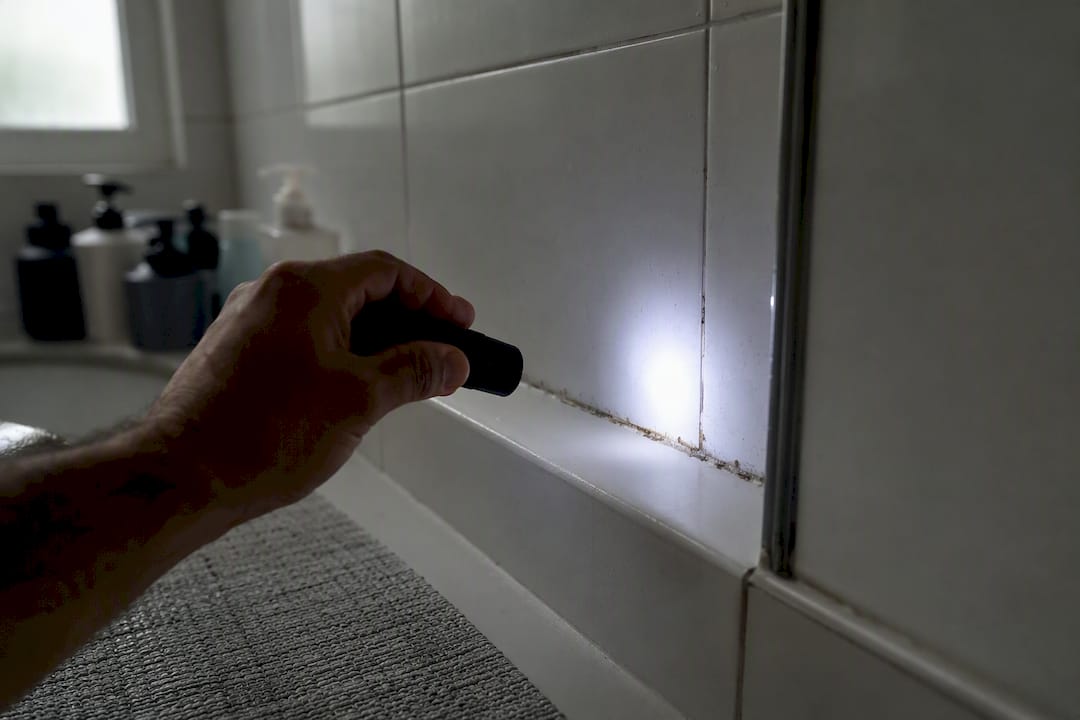
Kitchen (monthly): Inspect under the sink, behind the fridge seal, and around the dishwasher connection. A slow leak behind an appliance can run for months before it shows on the floor.
Laundry (monthly): Confirm the dryer vents outside, not into a wall cavity or the ceiling space. Check behind and under the washing machine for hose leaks.
Attic (seasonally): Look for water stains on rafters, damp or compressed insulation, and any daylight showing through the roof deck.
Crawl space or basement (seasonally): Check for standing water, damp soil odour, and confirm any vapour barrier is intact. NC State Extension recommends a 6 to 8 mil plastic barrier over exposed soil, with a dedicated crawl-space dehumidifier if moisture persists.
Windows and HVAC (monthly): Check window frames for condensation trails and inspect the AC drain pan and ducting for damp buildup.
Storage areas: Cardboard boxes stored against exterior walls act like sponges. Move anything valuable into sealed plastic bins, off the floor, according to Health Canada.
Pro Tip: Photograph any damp stain or damage the day you find it, with a coin or ruler in frame for scale. That single habit makes insurance claims and follow-up repairs far easier to track.
If you spot damp cabinet bases under a sink, stop using that cupboard, dry it out immediately, and call a plumber before restocking it.
How to control indoor humidity and ventilation properly
Getting humidity right is the single biggest lever in mould prevention. The EPA sets the target at 30–50% relative humidity, with 60% as a hard ceiling you should never sit above for extended periods.
A hygrometer costing $10 to $50 is the only way to know your actual number rather than guessing from how the air feels. Place it in the most humid room in the house, usually a bathroom, laundry, or a bedroom with poor airflow, and check it weekly during humid months.
Air conditioning and dehumidifiers do different jobs, and mixing up their settings causes problems. For your AC, keep the fan on ‘auto’ rather than running it continuously. A fan that never stops can pull moisture back through the coil and into the living space instead of draining it away.
Ventilation rules are simple but often skipped:
- Run the bathroom exhaust fan during showers and for at least 30 minutes after
- Confirm dryer vents exit outside the building, never into an attic or wall cavity
- Open windows only when outdoor humidity is lower than indoor humidity, otherwise you’re pumping moisture in
- Keep furniture and storage a few centimetres off exterior walls to allow airflow
Small habits matter more than most homeowners expect. Leaving a washing machine door open, verifying vent routing, and running exhausts consistently are high-impact, low-cost interventions that stop problems before they start.
What to do if water damage happens in your home
Speed decides whether a leak becomes a five-minute clean-up or a full remediation job. The EPA’s rule is firm: dry everything within 24–48 hours or remove it.
The workflow, in order:
- Stop the water source first. Turn off the supply valve or fix the leak point.
- Extract standing water with a wet/dry vacuum or towels.
- Remove saturated materials that can’t be dried quickly.
- Circulate air with fans across the affected area.
- Run a dehumidifier continuously until the space reads back at 30–50% RH.
Some materials rarely survive that 24 to 48 hour window and should be discarded rather than dried:
- Carpet padding, since it holds water against the subfloor
- Water-stained ceiling tiles
- Wet fibreglass or cellulose insulation
- Particleboard or MDF furniture that has swollen
Photograph anything you discard before it goes in the bin. The CDC recommends this specifically for insurance claims, alongside running fans and dehumidifiers as soon as it’s electrically safe to do so.
Should you clean mould yourself or call a professional?
Size and location decide this, not how confident you feel with a scrub brush. Harvard Health sets the DIY threshold at patches smaller than roughly 3 ft by 3 ft (about 90cm by 90cm). Anything larger, or mould you can smell but not see, calls for a professional.
For any cleaning, wear gloves, goggles, and an N95 respirator. The CDC’s cleaning guidance is specific on this point, and it never involves mixing bleach with ammonia.
DIY sequence for hard, non-porous surfaces:
- Contain the area and ventilate it well.
- Scrub with plain detergent and water rather than bleach, which offers little extra benefit on porous surfaces.
- Dry the surface completely and immediately.
- Monitor the spot weekly for two to three weeks to confirm it doesn’t return.
Call a professional when:
- The affected area exceeds roughly 3 ft by 3 ft
- HVAC ducting is contaminated
- Mould keeps coming back after you’ve already fixed the moisture source
- Anyone in the household is immunocompromised
- The home has experienced significant flooding
Exterior maintenance that stops mould before it starts indoors
Most indoor mould problems start outside the walls. Clean gutters twice a year, extend downpipes 4 to 6 ft from the foundation, and maintain a 5% grade sloping away from the house for at least 3 metres. Inspect roof flashing after any major storm.
- Clean gutters in spring and autumn
- Check for pooling water near the foundation within 24 hours of heavy rain
- Extend downpipes well clear of the walls to direct water away from the foundation.
- Inspect flashing around chimneys, vents, and skylights
Pro Tip: Keep garden beds and irrigation lines away from the foundation. A sprinkler soaking the same wall every evening will undo months of good indoor humidity control.
What the evidence says about these numbers
These targets aren’t arbitrary. The EPA sets 30–50% as the ideal humidity band and 24–48 hours as the drying window before mould gains a foothold. Harvard Health backs the 3 ft by 3 ft DIY threshold, and the CDC’s cleaning guidance shapes the PPE and detergent rules used throughout this checklist.
- US Environmental Protection Agency (EPA)
- Centers for Disease Control and Prevention (CDC)
- Harvard Health Publishing
- University extension programs (NC State, University of Georgia)
Mould spores exist in almost every home and outdoor environment. Total elimination isn’t the goal, and chasing it wastes effort. Denying spores the moisture they need to establish is what actually works.
How we recommend using this checklist day to day
Prioritise humidity and leaks first, then work through room checks monthly. If you only manage three things, monitor your hygrometer weekly, run your exhaust fans properly, and fix small leaks within a day. Those three habits catch most household mould before it starts.
Devices that make this checklist easier to maintain
A hygrometer tells you when humidity is drifting, but a proper dehumidifier is what actually pulls it back into range without you standing over it. Climatepro’s dehumidifier range covers everything from single-room units to larger capacity models for basements and crawl spaces, priced for the settings this checklist recommends.

For a bedroom or small laundry, a compact unit like the Xiaomi Smart Dehumidifier Lite holds a room at the 45% target without much noise. If you’re also managing dust or allergens alongside humidity, Climatepro’s air purifier range pairs with dehumidification for a fuller indoor air strategy, and genuine replacement filters are stocked for most major models sold through the store. Delivery covers Dubai, Abu Dhabi, Sharjah, Ajman, Ras Al Khaimah, Fujairah, and Umm Al Quwain. Whole-home ducted moisture control needs a different approach than a portable unit, so start with the room causing the most trouble, check the dehumidifier catalogue, and size a unit to that space today.
Sources
- A brief guide to mold, moisture, and your home | US EPA
- Mold in the home: Identifying and treating the issue to prevent health problems – Harvard Health
- 8 Tips to Clean Mold | CDC
- Mold and moisture home inspection (UGA guide) | University of Georgia Extension
- Preventing mold in your home | NC State Extension
Recommended
- Fresh air process for homes: a homeowner’s how-to — Blog | ClimatePro UAE
- Step by step air quality assessment for homes — Blog | ClimatePro UAE
- Dust control guide for homes: practical steps for UAE households — Blog | ClimatePro UAE
- Humidity control workflow: your step-by-step home guide — Blog | ClimatePro UAE