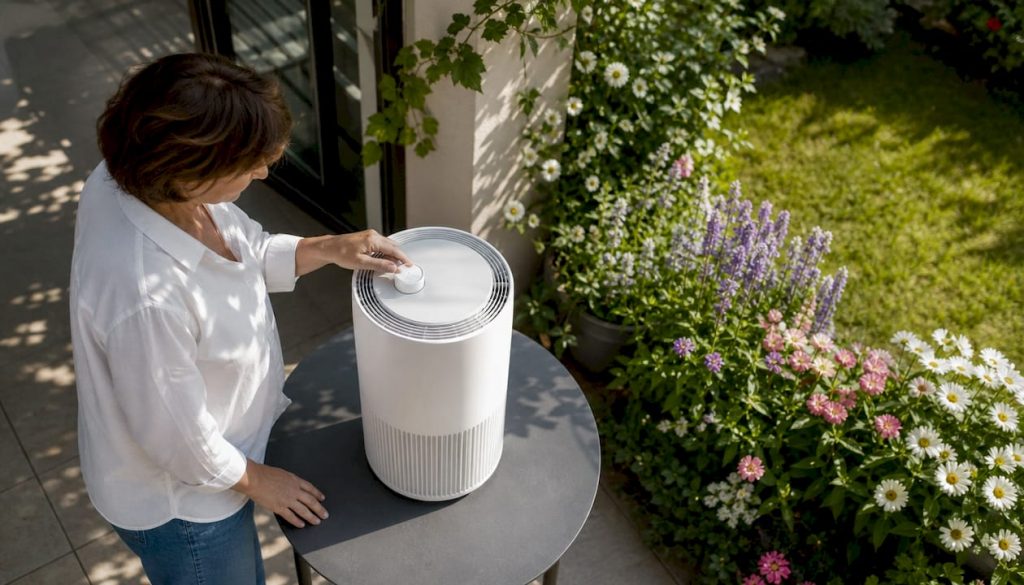
Air purification is the process of removing airborne pollutants through technologies that target particles, gases, and microorganisms to improve indoor air quality. The full list of air purification methods includes mechanical filtration, activated carbon, UV-C light, ionisation, and photocatalytic oxidation, each addressing a different category of indoor pollutant. The World Health Organization recognises indoor air pollution as a significant health risk, making the choice of purification technology a practical health decision, not just a comfort preference. Technologies like True HEPA filtration, activated carbon, and UV-C light each serve distinct roles, and the most effective home setups combine at least two of them.
1. What is the list of air purification methods used in homes?
The recognised categories of indoor air purification are mechanical filtration, chemical adsorption, biological inactivation, ionisation, and photocatalytic oxidation. Each category targets a different type of pollutant. Mechanical filters capture solid particles. Chemical filters adsorb gases and odours. Biological methods neutralise pathogens. Ionisation and photocatalytic oxidation use electrical or light-based reactions to alter pollutants. Understanding which category addresses your specific concern is the first step toward choosing the right solution.
2. Mechanical filtration: True HEPA as the gold standard
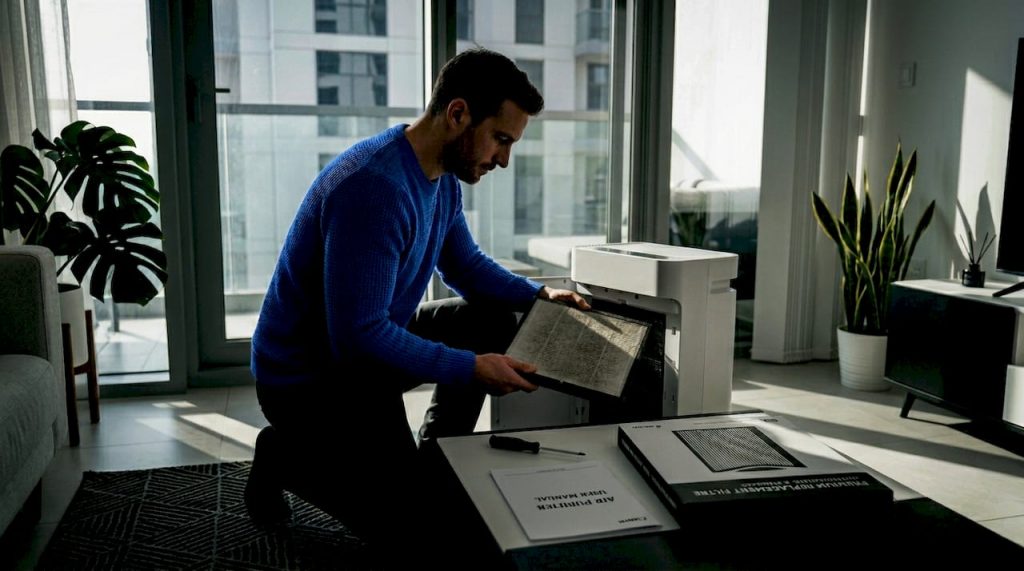
True HEPA filtration is the most reliable particle removal method available for residential use. A True HEPA filter captures 99.97% of airborne particles at 0.3 microns, including PM2.5, dust, pollen, pet dander, and mould spores. That certification standard is set by the US Department of Energy and is the benchmark the industry uses globally.
The particles a True HEPA filter captures include:
- PM2.5 (fine particulate matter linked to respiratory and cardiovascular disease)
- Dust mite debris (a primary trigger for asthma and allergic rhinitis)
- Pet dander (proteins shed by cats, dogs, and other animals)
- Pollen (seasonal allergen affecting millions of residents)
- Mould spores (common in humid climates including the UAE)
HEPA filtration for UAE homes is particularly relevant given the region’s high dust and sand particle load. Research shows that HEPA purifier use produced a 12% improvement in cognitive test scores for adults aged 40 and over after one month. That result suggests the benefits of cleaner air extend well beyond allergy relief.
True HEPA filters require replacement every 12–18 months, with annual costs typically in the range of $25–$50 USD. That makes them one of the most cost-effective purification technologies available.
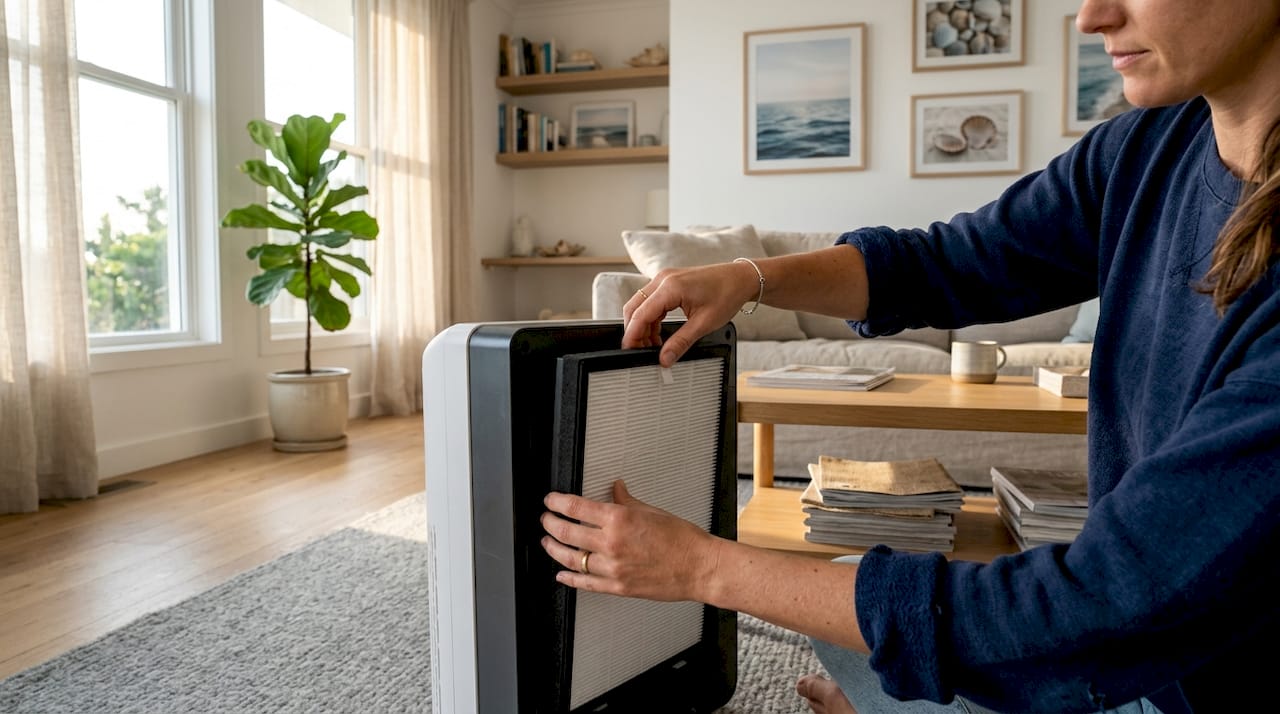
Pro Tip: Always verify that a product is labelled “True HEPA” rather than “HEPA-type” or “HEPA-like.” Only “True HEPA” meets the 99.97% standard at 0.3 microns. HEPA-type filters carry no standardised efficiency rating and may perform significantly below that threshold.
3. Activated carbon filtration: targeting gases and odours
Activated carbon filtration addresses the pollutants that mechanical filters cannot capture: gases, volatile organic compounds (VOCs), and odours. The filter works through adsorption, a process where gas molecules bond to the porous surface of carbon granules. A single gram of activated carbon can have a surface area exceeding 500 square metres, which gives it exceptional capacity to trap chemical compounds.
Pollutants that activated carbon handles well include:
- VOCs from paints, cleaning products, and new furniture
- Cooking odours and smoke
- Formaldehyde from building materials and adhesives
- Chemical fumes from printers and office equipment
- Pet odours
The limitation is saturation. Activated carbon filters saturate faster than HEPA filters and require replacement every 3–6 months, at an annual cost of $30–$100 USD. In homes with heavy cooking or smoking, saturation can occur within three months, which increases running costs noticeably. For practical guidance on managing odours in the home, Climatepro’s odour control solutions guide covers the topic in detail.
Pro Tip: In high-odour environments such as kitchens or homes with pets, choose a purifier with a thicker activated carbon bed rather than a thin carbon-coated pre-filter. Thicker beds last longer and adsorb a greater volume of VOCs before saturation.
4. UV-C light: neutralising pathogens
UV-C light purification works by exposing microorganisms to ultraviolet radiation at wavelengths between 200 and 280 nanometres, which damages their DNA and prevents reproduction. UV-C is effective against bacteria, viruses, and mould spores when the exposure time and intensity are sufficient. This makes it a useful secondary technology in homes where pathogen control is a priority, such as households with immunocompromised residents.
UV-C has two significant limitations. First, it does not remove particles or gases. A UV-C only unit leaves dust, pollen, and VOCs entirely unaddressed. Second, UV-C bulbs must be fully enclosed within the purifier housing. Direct UV-C exposure damages human skin and eyes. Some UV-C systems also generate trace amounts of ozone as a byproduct, which is a concern in enclosed spaces.
Key considerations for UV-C purifiers:
- UV-C is a complement to HEPA and carbon filtration, not a replacement
- Bulb effectiveness degrades over time and requires periodic replacement
- Only enclosed UV-C systems are safe for residential use
- Verify that the unit is certified to produce no harmful ozone emissions
5. Photocatalytic oxidation: chemical breakdown of pollutants
Photocatalytic oxidation (PCO) uses UV light combined with a titanium dioxide catalyst to break down VOCs and organic pollutants into carbon dioxide and water. The technology is marketed as a way to destroy rather than capture chemical contaminants. PCO units are sometimes positioned as superior to activated carbon because the filter does not saturate.
The reality is more nuanced. PCO can produce harmful intermediate byproducts, including formaldehyde and acetaldehyde, if the reaction is incomplete. Residential PCO units do not always achieve the reaction completeness needed to avoid these byproducts. For this reason, air cleaning technologies for UAE homes guidance recommends treating PCO as a supplementary technology rather than a primary filtration method.
6. Ionisation: particle removal with significant caveats
Ionisation purifiers emit charged ions that attach to airborne particles, causing them to cluster and fall onto surfaces. The mechanism does reduce airborne particle counts, but the particles are not removed from the room. They settle on floors, walls, and furniture, where they can be resuspended by foot traffic or air movement.
Ionisers redistribute particles and generate ozone as a byproduct in many models. Ozone is a lung irritant at concentrations above 0.07 parts per million, the threshold set by the US Environmental Protection Agency. Research confirms that mechanical filtration systems score higher on the Health and Safety Performance Index than ionisation and ozone-based technologies, which rank lower due to secondary pollutant generation.
Ionisation alone is not a recommended primary air purification method for residential use. The particles it displaces remain in the home, and ozone byproducts create a secondary health risk that outweighs the benefit for most households.
For a detailed breakdown of the technology, Climatepro’s article on air ionisation explained covers the mechanism and safety considerations thoroughly. Ionisation is best considered as a secondary feature in a multi-stage purifier, not as a standalone solution.
7. How to combine air purification methods for best results
The most effective home air purification approach combines True HEPA filtration with activated carbon as the foundation. HEPA handles particles; activated carbon handles gases and odours. Neither technology addresses what the other targets, so using both together covers the full spectrum of common indoor pollutants.
A practical selection framework:
- Identify your primary concern. Allergies and dust require HEPA. Cooking odours and VOCs require activated carbon. Pathogen control adds UV-C.
- Match purifier capacity to room size. Use the Clean Air Delivery Rate (CADR) rating to confirm the unit can cycle the room’s air volume at least 4–5 times per hour.
- Place the purifier near the pollutant source. Placement near emission sources increases removal efficacy significantly. A unit placed in a corner away from the kitchen or entry point performs well below its rated capacity.
- Budget for filter maintenance. HEPA filters cost $25–$50 USD per year. Activated carbon filters add $30–$100 USD per year depending on usage.
- Add ventilation as a complement. Air purifiers cannot replace source control or ventilation. Fresh air dilutes pollutants that purifiers cannot fully capture. Combining a purifier with heat recovery ventilation improves both air quality and energy efficiency.
| Scenario | Recommended combination |
|---|---|
| Allergy sufferer, bedroom | True HEPA + pre-filter |
| Cooking odours, open plan | True HEPA + thick activated carbon |
| Pet household | True HEPA + activated carbon + pre-filter |
| Pathogen concern, clinic-style | True HEPA + activated carbon + UV-C |
| General apartment use | True HEPA + activated carbon |
Pro Tip: Source control reduces the load on any purifier. Vacuuming with a HEPA-equipped vacuum, using low-VOC paints and cleaning products, and maintaining adequate ventilation all reduce the volume of pollutants a purifier must process.
Key takeaways
The most effective home air purification strategy combines True HEPA filtration for particles with activated carbon for gases, supported by correct placement and regular filter maintenance.
| Point | Details |
|---|---|
| True HEPA is the particle standard | Only True HEPA certified filters capture 99.97% of particles at 0.3 microns. |
| Activated carbon targets gases | Carbon filters address VOCs and odours that HEPA cannot capture; replace every 3–6 months. |
| Ionisation carries health risks | Ionisers redistribute particles and may produce ozone; use only as a secondary feature. |
| Placement affects performance | Position purifiers near pollutant sources, not in corners, for maximum efficacy. |
| Purifiers complement ventilation | Source control and fresh air ventilation remain essential alongside any purifier. |
What I’ve learned from years of watching homeowners get air purification wrong
The most common mistake I see is homeowners buying a single-technology purifier and expecting it to solve every air quality problem. A UV-C only unit does nothing for dust. A standalone ioniser moves particles around without removing them. The marketing around these technologies is often misleading, and the gap between what a product claims and what it actually delivers is wider than most people realise.
The hybrid approach is not a compromise. It is the correct answer. A True HEPA and activated carbon combination addresses the two most common categories of indoor pollutant simultaneously. Every other technology is either a useful addition to that foundation or a distraction from it.
The second mistake is ignoring placement. I have seen well-specified purifiers sitting in the corner of a room, cycling clean air in a small radius while the kitchen or entry point continues to flood the space with particles and odours. Real-world purifier performance depends as much on placement and room dynamics as it does on the unit’s rated capacity. Move the purifier close to where the pollution originates and you will notice the difference within days.
Maintenance is the third failure point. A saturated activated carbon filter does not just stop working. It can begin releasing previously adsorbed compounds back into the air. Replacing filters on schedule is not optional. It is the difference between a purifier that protects your household and one that provides false reassurance.
My honest recommendation is to prioritise proven technologies, maintain them properly, and treat ventilation as a non-negotiable complement. The air quality improvement you get from a well-maintained HEPA and carbon system, placed correctly and paired with adequate fresh air, is real and measurable.
— Nevel
Climatepro’s range for every home air quality need
Climatepro stocks a broad selection of air purifiers for UAE homes that combine True HEPA and activated carbon filtration in a single unit, covering the full spectrum of particle and gas removal. The range includes models suited to single bedrooms, open-plan living areas, and larger apartments, with CADR ratings to match each room size.

The Honeywell Air Touch P2 is a strong choice for residents managing allergies or dust sensitivity, combining True HEPA and activated carbon filtration at AED 705. For larger spaces, the Honeywell Air Touch U1 at AED 935 delivers higher CADR output with the same dual-filtration approach. Climatepro delivers across Dubai, Abu Dhabi, Sharjah, and all seven emirates, with replacement filters available to keep every unit performing at its rated standard.
FAQ
What is the most effective air purification method for allergies?
True HEPA filtration is the most effective method for allergy sufferers. It captures 99.97% of particles at 0.3 microns, including pollen, dust mite debris, and pet dander.
How often do air purifier filters need replacing?
True HEPA filters require replacement every 12–18 months. Activated carbon filters need replacing every 3–6 months, or more frequently in homes with heavy cooking or smoking.
Are ionisers safe to use at home?
Ionisers carry risk because many models produce ozone, a lung irritant. They also redistribute rather than remove particles. Use ionisation only as a secondary feature within a multi-stage purifier that includes True HEPA filtration.
Does an air purifier replace the need for ventilation?
No. Air purifiers reduce airborne pollutant concentrations but cannot replace fresh air ventilation. Source control and adequate ventilation remain essential complements to any purification system.
What does CADR mean and why does it matter?
CADR stands for Clean Air Delivery Rate and measures how quickly a purifier removes specific pollutants from a given room volume. Matching CADR to room size confirms the unit can cycle the air a sufficient number of times per hour to be effective.
Recommended
- Understand air cleaning technologies for healthier UAE homes — Blog | ClimatePro UAE
- Why is air purification needed for your health? — Blog | ClimatePro UAE
- Odour control solutions: best methods for homes — Blog | ClimatePro UAE
- Energy efficient air cleaning workflow for homes — Blog | ClimatePro UAE