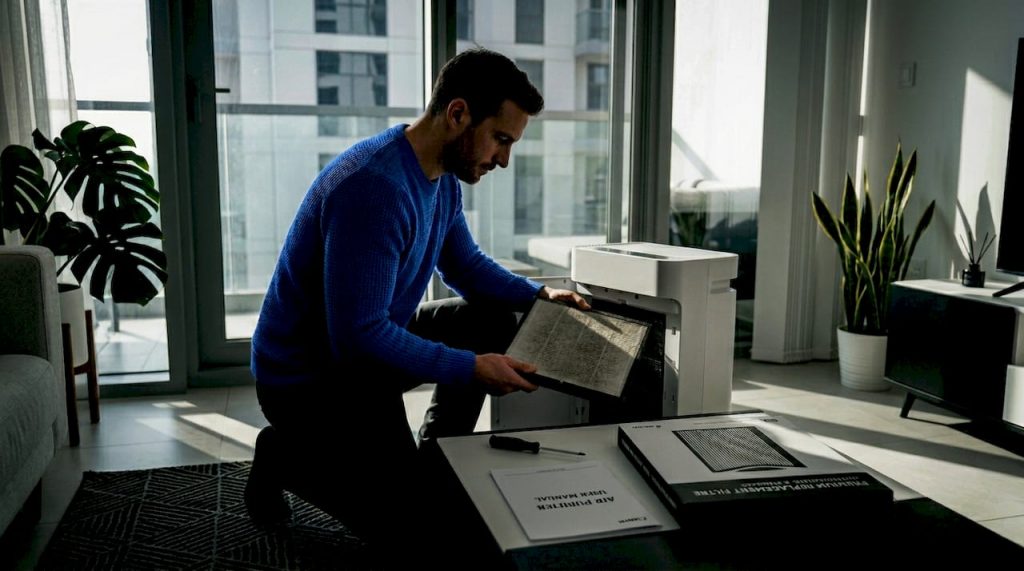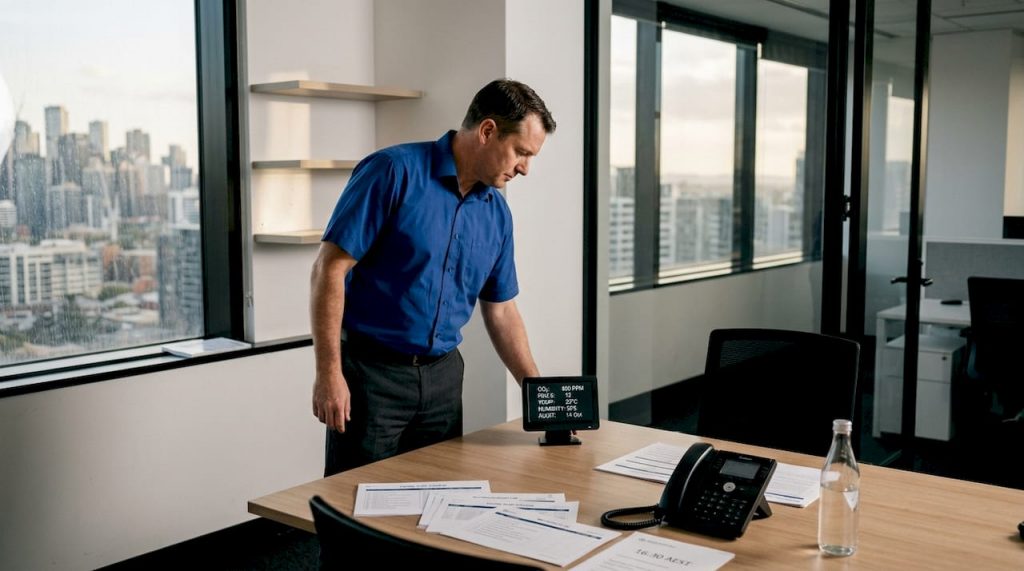
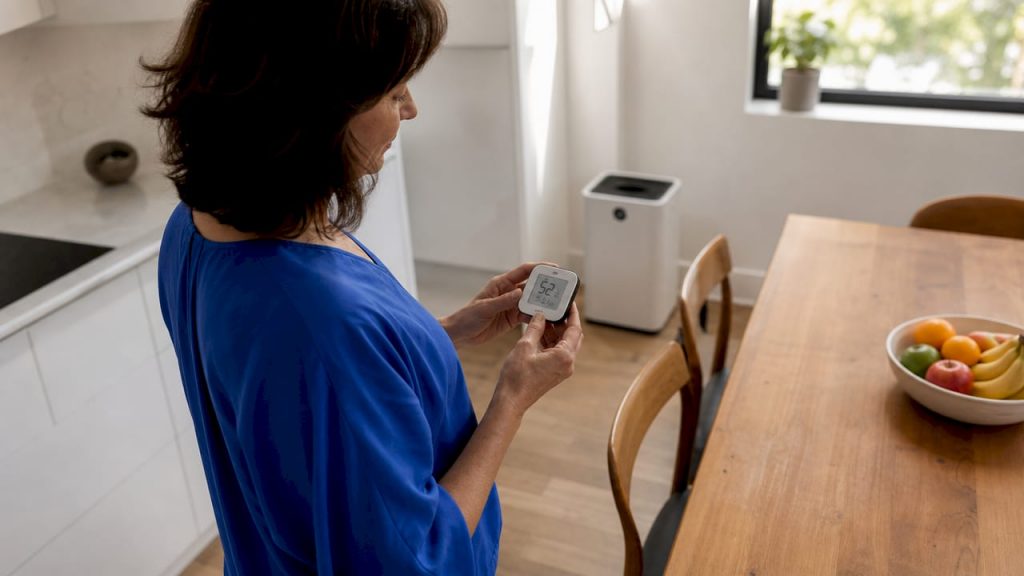
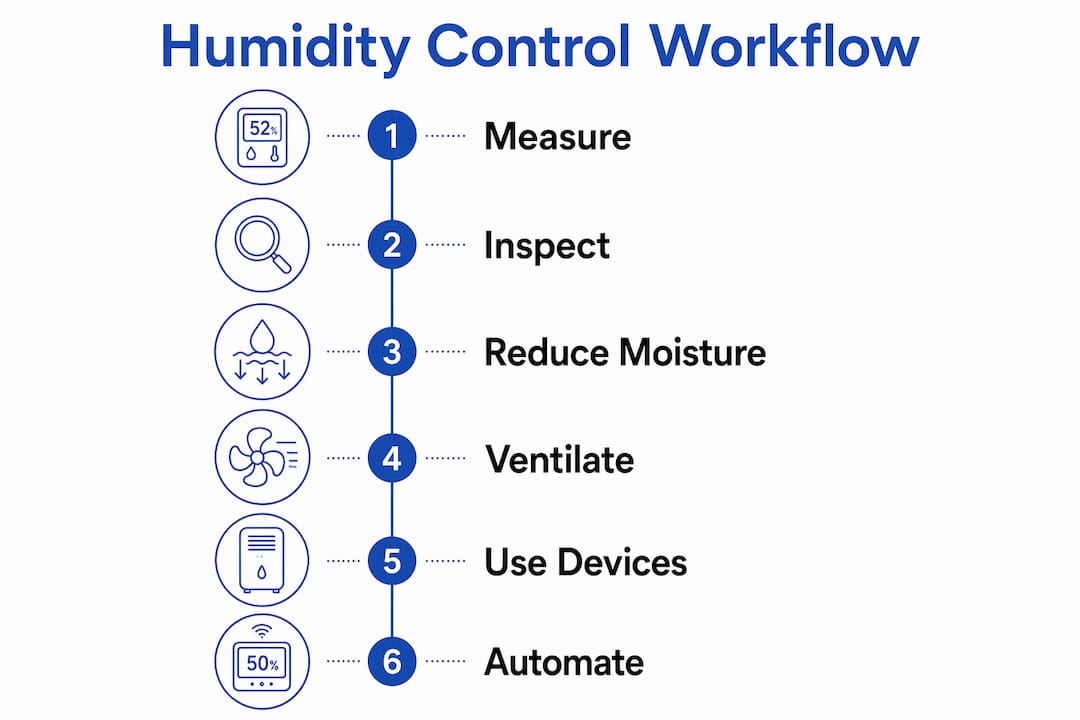
A humidity control workflow is a structured, step-by-step process for monitoring and managing indoor moisture levels to protect your health, comfort, and home. The standard industry term for this practice is indoor relative humidity (RH) management, and it covers everything from measuring moisture in the air to operating dehumidifiers, humidifiers, and ventilation systems. IAQ standards recommend a target indoor RH of 40–60%, dropping to 30–50% in cooler months to prevent condensation and mould. Getting this right requires five coordinated steps: monitoring, source control, ventilation, device use, and automation. Each step builds on the last, and skipping any one of them leaves gaps that no single appliance can fix.
What tools do you need for an effective humidity control workflow?
The right tools make the difference between guessing and knowing. A digital hygrometer is the starting point for any humidity regulation process. These devices measure relative humidity accurately and cost very little. Place one in each main living area, the bedroom, and any room prone to dampness, such as a laundry or bathroom.
Beyond the hygrometer, a practical humidity management system for most homes includes:
- Digital hygrometers placed at mid-wall height, away from windows and air vents, for accurate readings
- Bathroom and kitchen exhaust fans rated to move air effectively (check that ducts vent outdoors, not into the roof cavity)
- A dehumidifier sized to the room area, with an auto-drain or large tank for continuous operation
- A humidifier for dry seasons, particularly in air-conditioned spaces where RH drops below 30%
- A smart thermostat with a humidity control mode, if your HVAC system supports one
Before running any device, inspect your home for leaks, blocked vents, and condensation on windows. These are signs of existing moisture problems that appliances alone will not solve. Set your humidity targets clearly: 40–60% for most of the year, and 30–50% during cooler, drier periods.
| Tool | Role in the workflow |
|---|---|
| Digital hygrometer | Measures current RH so you know when to act |
| Exhaust fan | Removes moisture at the source in wet rooms |
| Dehumidifier | Reduces excess moisture in humid spaces |
| Humidifier | Adds moisture when air is too dry |
| Smart thermostat | Automates device responses to RH readings |
Pro Tip: Place your hygrometer at least one metre from any window or exterior wall. Readings near cold surfaces skew high and give a false picture of the room’s actual humidity.
How do you monitor and measure indoor humidity accurately?
Relative humidity is the percentage of moisture in the air compared to the maximum it can hold at that temperature. When RH rises above 60%, mould growth accelerates and dust mites thrive. When it drops below 30%, skin dries out, timber floors crack, and respiratory irritation increases.
Accurate monitoring requires more than one sensor. A single hygrometer in the lounge room tells you nothing about the bathroom or the bedroom. Place sensors in at least three locations and check readings morning and evening for the first two weeks. This gives you a baseline picture of how humidity moves through your home across the day.
Common monitoring mistakes include:
- Relying on your air conditioner’s built-in display, which often reads the return-air temperature rather than room RH
- Placing sensors near cooking areas or laundry appliances where steam spikes readings temporarily
- Checking readings only once a day and missing peak moisture events after showers or cooking
Seasonal adjustment matters. IAQ best practices for 2026 confirm that winter targets should sit at 30–50% RH to prevent condensation on cold windows and walls. Shift your targets as the season changes rather than keeping a fixed setpoint year-round.
Pro Tip: Calibrate a new hygrometer by placing it in a sealed bag with a damp cloth for one hour. It should read close to 100% RH. If it reads significantly lower, factor in the offset when interpreting your readings.
How do you control moisture sources to reduce indoor humidity?
Moisture source control is the most underrated step in the humidity regulation process. Devices can only remove moisture after it enters the air. Reducing how much enters in the first place cuts the workload on every appliance you own.
The main indoor moisture sources in a typical home are:
- Showering and bathing. Steam from a hot shower raises bathroom RH dramatically within minutes.
- Cooking. Boiling, frying, and using a dishwasher all release significant moisture into the kitchen.
- Laundry drying indoors. A single load of wet washing releases several litres of water vapour as it dries.
- Plumbing leaks. Even a slow drip under a sink creates persistent dampness that feeds mould.
- Moisture seeping from outdoors. Poor ground slope around the foundation and unsealed crawl spaces allow moisture to migrate inward.
ASHRAE 62.2 recommends running bathroom exhaust fans during showers and for 15–20 minutes afterward to clear residual steam. A fan rated at 100 cfm for intermittent use handles a standard bathroom effectively. Kitchen range hoods should vent outdoors, not recirculate air back into the room.
The EPA recommends structural measures as part of any complete moisture control plan. These include grading soil away from the foundation, fitting vapour barriers in crawl spaces, and confirming that all exhaust ducts terminate outside rather than into roof cavities. These steps prevent moisture from entering before it can be measured or removed.
Pro Tip: Dry clothes outdoors or in a vented dryer whenever possible. Indoor drying on racks is one of the highest single-event moisture contributors in a home, often raising whole-room RH by 10–15 percentage points over several hours.
How do you use ventilation, humidifiers, and dehumidifiers effectively?
Devices work best when they are sized correctly and set to appropriate targets. An undersized dehumidifier runs continuously without reaching the setpoint. An oversized one short-cycles and leaves humidity uneven across the room.
Dehumidifier settings and placement
Setting a dehumidifier to 50–55% RH avoids over-drying the air and conserves energy compared to running it at maximum continuously. Max continuous operation can dry out timber floors and increase electricity costs without meaningful benefit. Place the unit away from walls and furniture so air circulates freely around it. Empty or drain the tank regularly, as a full tank stops the unit silently.
Humidifier use in dry conditions
Humidifiers are necessary when RH drops below 30%, which happens in heavily air-conditioned homes during summer or in cooler climates during winter. Set the target to no higher than 50% RH to avoid creating conditions that favour mould. For guidance on choosing the right unit, humidifier selection for dry air covers placement, capacity, and maintenance in detail.
Ventilation and smart automation
| Control method | How it works | Best suited to |
|---|---|---|
| Manual operation | You switch devices on and off based on hygrometer readings | Small spaces, low-budget setups |
| Timed operation | Fans and devices run on a fixed schedule regardless of actual RH | Predictable routines, e.g. post-shower timers |
| Smart automation | Devices respond automatically to live RH sensor data | Whole-home systems, consistent results |
Smart thermostats with humidity modes adjust fan speed and cooling cycles to pull moisture more effectively. These require proper integration with your HVAC system to function as intended. For UAE homeowners, smart climate control guidance outlines how to configure these systems for local conditions.
A critical concept in automated humidity control is the deadband. A 2–5% RH deadband around your setpoint prevents the humidifier and dehumidifier from operating at the same time. For example, a 60% setpoint with a 2% deadband activates the dehumidifier at 62% and the humidifier at 58%. Without this buffer, devices fight each other and waste energy.
Pro Tip: Set longer off-cycle timers than on-cycle timers in any automated system. An off-timer of around 10 minutes gives the dehumidifier time to actually reduce RH before the next cycle begins, rather than switching on and off rapidly without effect.
What are the most common humidity control problems and how do you fix them?
Even a well-planned humidity management system runs into problems. Knowing what to look for saves time and prevents damage.
- AC short-cycling. Oversized air conditioning units run cycles of only 10–15 minutes, which is not long enough to remove adequate moisture from the air. Signs include sticky air even when the temperature feels cool. The fix is proper system sizing, not running the AC harder.
- Dehumidifier running but not reducing RH. Check the tank first. Silent tank-full failures are common. Configure push notifications on smart units so you know when the tank needs emptying rather than assuming the device is running.
- Uneven humidity across rooms. One dehumidifier in a central hallway rarely covers all rooms equally. Add a second unit or a portable device in the problem room.
- Hygrometer readings that seem wrong. Sensors drift over time. Recalibrate every six months using the damp-cloth method described in the monitoring section.
- Mould appearing despite devices running. This usually points to a hidden moisture source such as a slow leak, poor insulation, or an exhaust fan venting into the roof cavity rather than outdoors.
Humidity control is a system, not a single device. Behaviour, structural maintenance, and technology must work together. Fixing one without addressing the others produces incomplete results.
Pro Tip: Schedule a quarterly check of all exhaust fan ducts. Ducts that have sagged, disconnected, or become blocked are one of the most common causes of persistent high humidity in bathrooms and kitchens.
Key takeaways
A complete humidity control workflow combines monitoring, source reduction, ventilation, correctly sized devices, and automation to maintain indoor RH within the 40–60% target range recommended by IAQ standards.
| Point | Details |
|---|---|
| Set clear RH targets | Aim for 40–60% year-round and 30–50% in cooler months to prevent mould and condensation. |
| Monitor with multiple sensors | Place digital hygrometers in at least three rooms for an accurate whole-home picture. |
| Reduce moisture at the source | Run exhaust fans for 15–20 minutes after showers and avoid drying clothes indoors. |
| Size and set devices correctly | Set dehumidifiers to 50–55% RH and use a 2–5% deadband in automated systems. |
| Troubleshoot silently failing devices | Configure alerts on smart dehumidifiers and inspect exhaust ducts every quarter. |
Why most homeowners get humidity control backwards
Most homeowners I have worked with buy a dehumidifier, plug it in, and assume the problem is solved. That approach misses the point entirely. The device is the last line of defence, not the first. Structural issues and behaviour patterns drive most indoor humidity problems, and no appliance compensates for a bathroom fan venting into the roof or wet laundry drying in the bedroom.
The other misconception I see constantly is over-reliance on air conditioning. People assume a running AC means controlled humidity. It does not. An oversized system that short-cycles removes almost no moisture at all, and the air feels cool but clammy. Proper humidity management requires understanding why the AC is failing at moisture removal, not just turning it down further.
What actually works is treating humidity control as a system. Behaviour comes first: run fans, fix leaks, dry clothes outdoors. Structure comes second: check ducts, slope the ground away from the foundation, seal crawl spaces. Devices come third: sized correctly, set to appropriate targets, and monitored for silent failures. Automation comes last, and only once the first three layers are in place. Skipping to automation without fixing the foundation is expensive and ineffective.
The homeowners who get this right are the ones who check their hygrometers regularly and adjust their habits seasonally. They do not set and forget. They treat humidity management the same way they treat any home maintenance task: scheduled, consistent, and responsive to what the data shows.
— Nevel
Climatepro products for your humidity management system
Climatepro stocks a full range of humidity control and indoor air quality products for UAE homes, with delivery across Dubai, Abu Dhabi, Sharjah, and all seven emirates.

For homes with excess moisture, the Climatepro dehumidifier range covers units suited to single rooms through to larger open-plan spaces. For dry indoor environments, the humidifier collection includes options with auto-shutoff, adjustable mist output, and quiet operation for bedrooms and nurseries. Climatepro also carries combination units such as the Dyson Purifier Humidify+Cool PH2 De-NOx and the Blueair 2-in-1 Purify + Humidify DH3i, which handle both air purification and humidity in one unit. Every product listed includes specifications to help you match capacity to your room size before purchasing.
FAQ
What is the ideal indoor humidity level for a home?
The recommended indoor RH range is 40–60% for most of the year, dropping to 30–50% in cooler months to prevent condensation on windows and walls.
How often should I check my home’s humidity levels?
Check readings morning and evening for the first two weeks to establish a baseline, then daily or whenever weather conditions change significantly.
Can my air conditioner control humidity on its own?
Air conditioning alone is unreliable for humidity control. Oversized AC units run short cycles of 10–15 minutes and do not remove sufficient moisture from the air.
What is a humidity deadband and why does it matter?
A deadband is a buffer zone around your RH setpoint, typically 2–5%, that prevents your humidifier and dehumidifier from operating simultaneously and wasting energy.
How do I know if my dehumidifier has stopped working?
A full water tank is the most common cause of silent dehumidifier failure. Configure push notifications on smart units and check the tank daily on manual models.