
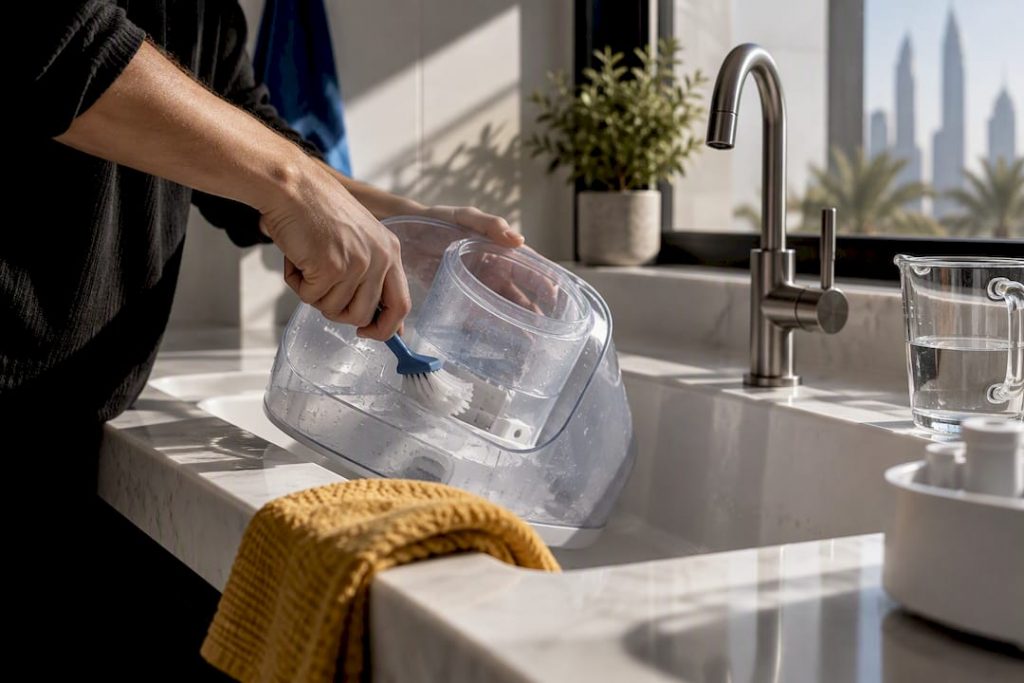
Yes, humidifiers can release bacteria and mould into the air when reservoirs, filters or mist paths hold contaminated water or biofilm. Peer-reviewed research, Mayo Clinic guidance and Consumer Reports both point to the same fix: empty and dry the tank daily, sanitise weekly, and keep the room’s relative humidity in a safe range. Follow those three habits and most of the risk disappears.
TL;DR:
- Regularly empty, dry, and sanitise humidifiers weekly to prevent biofilm formation and reduce bacterial and mold buildup.
- Ultrasonic and impeller models disperse microbes more easily since they do not heat water, increasing airborne contamination risks.
- Continuous operation of humidifiers raises room humidity above safe levels, promoting mold growth and increasing bioaerosol counts.
- Maintaining indoor humidity between 40 and 50 percent minimizes microbial growth and airborne irritants, requiring the use of a hygrometer for monitoring.
- Households with children, asthma, COPD, or weakened immunity should follow stricter cleaning routines and consider consulting healthcare professionals before use.
Table of Contents
- How humidifiers turn dirty water into airborne exposure
- What contaminated humidifiers can do to your health
- Which humidifier habits push the risk higher
- Your daily, weekly and seasonal cleaning checklist
- Setting the right humidity target and checking it
- Practical routines that make the difference at home
- Weighing the benefit against the upkeep
- Where ClimatePro fits into safer humidifier use
- Sources
- FAQ
How humidifiers turn dirty water into airborne exposure
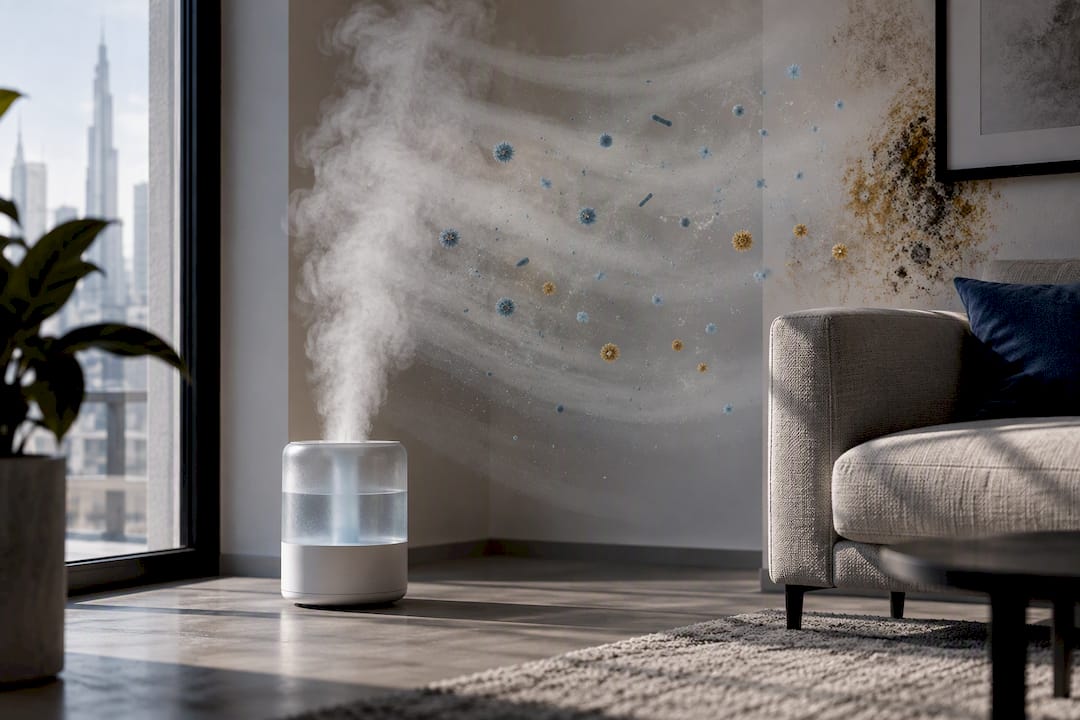
A humidifier only spreads bacteria if something in its water path already holds bacteria. The mechanism differs by design. Ultrasonic and impeller units use vibration or a spinning disc to break water into a fine mist at room temperature, so anything living in the tank rides straight out into the air. Steam and evaporative models heat the water first, which reduces the number of live microbes that survive into the mist, according to a review of household humidifier emissions.
The bigger problem sits on the tank walls themselves. Standing water lets a biofilm form: a slippery layer where bacteria multiply and shed both intact cells and fragments into the mist every time the unit runs. Once airborne, the smallest droplets are light enough to travel deep into the lower airways rather than settling in the nose or throat.
- Ultrasonic and impeller humidifiers disperse minerals and microbes because they do not heat the water enough to kill them.
- Steam humidifiers reduce live microbial content through heating, though they carry their own burn risk.
- Biofilm on tank walls is the main reservoir for bacteria and can release fragments continuously once established.
Portable ultrasonic humidifiers can shift indoor air toward higher bacterial counts within days of continuous use, with certain genera becoming more dominant as run time increases, according to a study on ultrasonic humidifier bioaerosols.
What contaminated humidifiers can do to your health
Most healthy people who use a clean humidifier notice nothing beyond relief from dry skin, a scratchy throat or irritated sinuses. The risk profile changes once a unit is neglected for days or weeks.
- Respiratory irritation from inhaled endotoxins and mineral particles, even without infection.
- Asthma exacerbations triggered by bacteria or mould carried in the mist, a pattern flagged in Mayo Clinic’s consumer guidance on humidifier care.
- Humidifier fever, a flu-like reaction to inhaled microbial material that typically resolves once exposure stops.
- Rare opportunistic infections, including Legionella and nontuberculous mycobacteria (NTM), which favour warm, stagnant water rather than the humidifier itself.
The strength of evidence varies by outcome. Irritation and fever-type reactions are reasonably well documented in exposure studies, while serious infections tied specifically to household humidifiers remain uncommon and are usually reported as individual case clusters rather than population-wide trends.
One experimental study found airborne bacterial counts rose sharply over days of continuous ultrasonic humidifier use, with surface fungal growth following once relative humidity climbed above safe levels, according to an apartment-based bioaerosol outbreak study. That same study found relative humidity could exceed 80% during continuous operation, well past the point where mould finds a foothold.
Infants, people with asthma or COPD, and anyone with a weakened immune system are more sensitive to all of the above, since their airways handle inhaled irritants and microbes less well than a healthy adult’s.
Which humidifier habits push the risk higher
Not every humidifier carries the same risk, and not every use pattern does either. Two variables matter most: how the device makes mist, and how long it runs.
Ultrasonic and impeller humidifiers aerosolise whatever is in the water, including minerals and microbes, because they operate without heat. Steam and evaporative units reduce live microbial content through heating but trade that benefit for a burn hazard and, in evaporative models, a wick that itself needs regular replacement.
Continuous, round-the-clock operation is the single biggest behavioural risk factor. Long run times keep the reservoir warm and undisturbed, exactly the conditions biofilm needs to establish, and they push room humidity past the point where mould and dust mites thrive.
- Persistent musty or sour odour from the unit, even after refilling with clean water.
- Pink, orange or black slime on the tank, wick or mist outlet.
- Visible white or grey dust settling on nearby furniture from mineral-laden mist.
- Room humidity climbing faster than expected, suggesting the unit is overcompensating for a leak or miscalibrated sensor.
Any one of these signs is a cue to stop, clean thoroughly and reassess before running the unit again.
Your daily, weekly and seasonal cleaning checklist
A humidifier is safe largely because of what happens between uses, not because of any feature printed on the box. The routine below covers the intervals that matter most.
- Empty the tank every day. Tip out leftover water rather than topping it up, since standing water is where biofilm starts.
- Rinse and towel-dry the tank daily before refilling, and use distilled or demineralised water where possible to cut down on mineral scale that shelters bacteria.
- Descale weekly with a mild vinegar solution to loosen mineral deposits and early biofilm.
- Sanitise weekly with a dilute bleach solution or a manufacturer-recommended disinfectant, then rinse thoroughly. Never mix bleach with vinegar or other cleaning products in the same session, since combining them can produce harmful fumes.
- Inspect filters, seals and cartridges on the schedule the manufacturer sets, and replace filters at the recommended interval rather than waiting for visible clogging.
- Dry and store the unit fully between seasons of use. A damp tank left in storage is an ideal biofilm incubator for the months it sits unused.
Consumer Reports’ testing arm recommends this same daily-rinse, weekly-sanitise rhythm and cautions that manufacturer claims about “antimicrobial” materials shouldn’t replace regular cleaning.
Nurseries and homes with pets warrant a tighter routine. Place the unit out of a child’s reach, avoid tap water where mineral content is high, and consider sanitising twice weekly if the room sees heavy use.
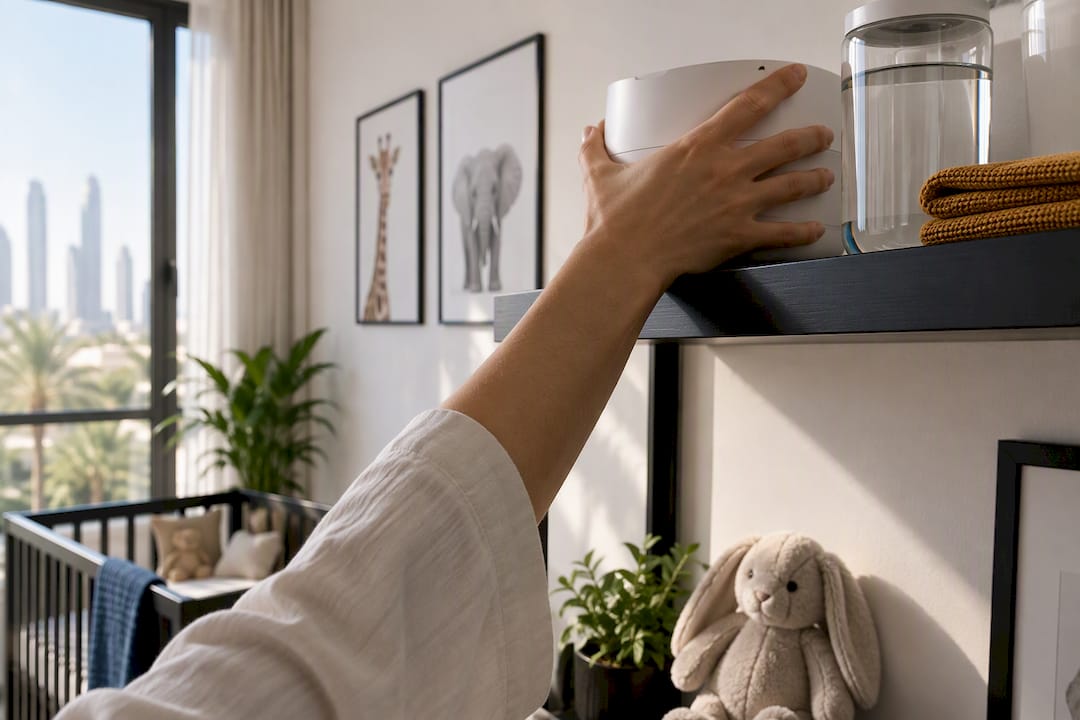
Pro Tip: Keep a spare tank or cartridge on hand so you can sanitise one while the other stays in use, rather than skipping a cleaning day because the unit is still running.
Setting the right humidity target and checking it
The comfort range most health bodies point to is 40 to 50% relative humidity indoors. Below that, dry air irritates skin and airways; above roughly 60 to 70% for extended periods, mould and dust mites start to thrive, and airborne microbial growth becomes more likely, a pattern confirmed in the apartment humidifier study cited earlier.
A basic hygrometer, placed away from direct airflow from the humidifier itself, gives a reliable reading. Check more than one room if humidity varies noticeably between them, particularly bedrooms where a humidifier runs overnight.
- Target 40 to 50% relative humidity for most living spaces.
- Treat readings above 60% as a signal to shorten humidifier run time or switch it off.
- Improve ventilation or bring in a dehumidifier or air conditioner if humidity stays high despite adjustments.
- Check windowsills, corners and wardrobes for early mould growth if high humidity has persisted for more than a few days.
Practical routines that make the difference at home
Consistency matters more than any single cleaning product. A simple pattern, daily tank empty and refill plus one dedicated weekly sanitise, closes off most of the pathway from dirty water to airborne exposure. ClimatePro’s own step-by-step vinegar cleaning routine walks through that weekly sanitise in about ten minutes, and it pairs naturally with the daily habit above.
- Use distilled water in nurseries to limit mineral scale and reduce the surfaces bacteria can cling to, detailed further in distilled-water guidance for humidifiers.
- Watch for pink or black residue early, since it spreads quickly once established, as covered in preventing pink mould in humidifiers.
- Replace filters and tanks with genuine parts rather than generic substitutes, which may not seal or fit as intended.
- Keep spare seals and cartridges on hand in households with young children, where consistent daily use makes wear happen faster.
Understanding how ultrasonic units generate mist in the first place makes these habits easier to stick to, a topic covered in ClimatePro’s guide to ultrasonic humidification.
Weighing the benefit against the upkeep
Humidifiers solve a real problem: dry air that cracks skin, irritates sinuses and disturbs sleep. The mistake most people make isn’t buying one, it’s treating it like a household appliance that runs itself. It doesn’t. A humidifier is closer to a fish tank than a fan: something living can grow in the water if you let it sit.
The fix is unglamorous but effective. Anyone managing asthma, COPD or a weakened immune system should talk to a healthcare professional before adding a humidifier to their routine, particularly for a bedroom used overnight.
— Nevel
Where ClimatePro fits into safer humidifier use
Choosing a humidifier that’s easy to clean matters as much as the cleaning routine itself. ClimatePro’s humidifiers range includes models with wide tank openings and serviceable filters, built for the maintenance habits outlined above rather than against them.

When you’re shopping, prioritise:
- Wide tank openings that make daily rinsing and weekly sanitising straightforward rather than fiddly.
- Serviceable filters and cartridges with clear replacement intervals printed in the manual.
- Genuine spare parts availability, so a worn seal or cartridge doesn’t force an early replacement of the whole unit.
ClimatePro stocks matching filters and accessories alongside its humidifier range, with local support for households that want a unit they can keep clean for years rather than months.
This article is general information, not a substitute for advice from a qualified doctor. Consult a qualified healthcare professional about your own circumstances before acting on anything here.
Sources
- Portable ultrasonic humidifier exacerbates indoor bioaerosol risks by raising bacterial concentrations and fueling pathogenic genera
- Emission and health risks of household humidifiers (review)
FAQ
Is a humidifier unhealthy?
A humidifier itself isn’t unhealthy, but a neglected one can release bacteria, mould or mineral particles into the air.
Is it bad to use a humidifier daily?
Daily use is fine as long as you empty and dry the tank each day and refill with fresh water. Problems arise from letting water sit in the tank for days, not from running the unit every day.
What are the symptoms of humidifier poisoning?
“Humidifier poisoning” usually refers to humidifier fever, a flu-like reaction to inhaled microbial material that can include fever, chills and breathing difficulty. Symptoms typically resolve once exposure to the contaminated mist stops, but persistent or severe symptoms warrant medical attention.
Do doctors recommend humidifiers?
Clinical guidance from sources like Mayo Clinic supports humidifiers for relieving dry-air symptoms, provided they’re kept clean and humidity is monitored. Doctors generally advise extra caution for infants and people with asthma, COPD or weakened immunity.