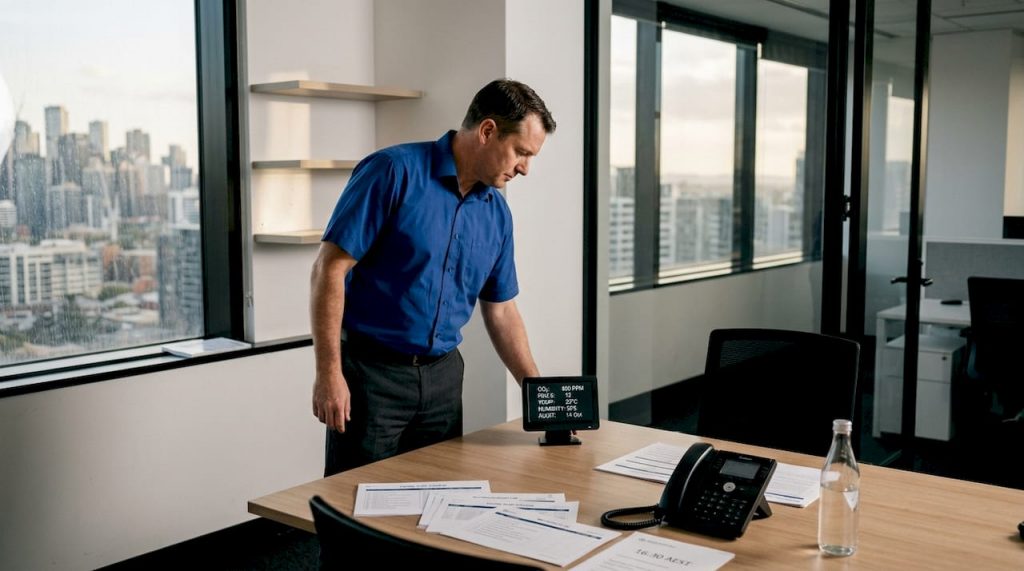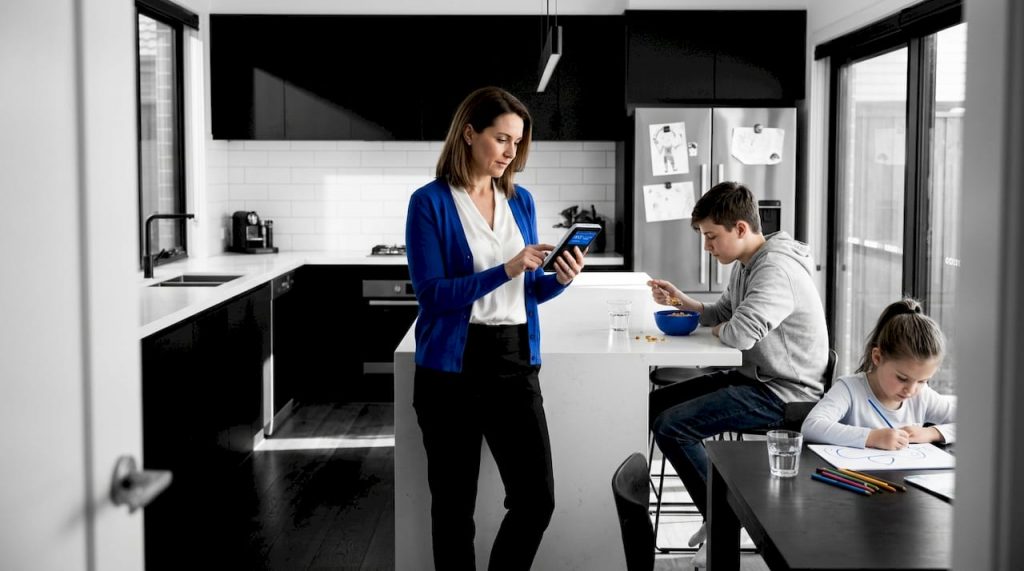

Air quality index readings appear on phones, apps, and roadside displays across the UAE every day, yet most residents treat the number as a simple good-or-bad score. That interpretation can leave families exposed. The UAE’s combination of desert dust, urban emissions, industrial activity, and rapidly shifting weather means an AQI reading can change from moderate to hazardous in under an hour. Understanding what the index actually measures, which pollutant is driving it, and how to translate each category into practical indoor action is what separates informed health decisions from guesswork.
Table of Contents
- What is the air quality index and how does it work?
- Making sense of AQI numbers and health categories
- Different AQIs, different sources: What you need to know
- How to use the AQI for indoor air decisions in the UAE
- Why interpreting AQI in the UAE demands extra attention
- Next steps: Protect your indoor air quality
- Frequently asked questions
Key Takeaways
| Point | Details |
|---|---|
| Know the AQI basics | AQI is a colour-coded scale translating pollution data into clear health guidance. |
| Interpret AQI carefully | Different devices and sources use varied calculations—always check what pollutant and period your number reflects. |
| Act quickly on high readings | Use AQI alerts to adjust activities and protect indoor air quality, especially during UAE dust events. |
| Watch for symptoms | Pay attention to early signs like coughing and act fast to reduce exposure indoors and out. |
| Combine AQI with action | Monitoring AQI is only useful if paired with smart actions like filtration and limited outdoor exposure. |
What is the air quality index and how does it work?
The air quality index is a colour-coded scale that translates complex pollution data into a single, actionable number. The US EPA AQI is a nationally uniform, colour-coded index used to communicate daily air quality and health risk, with the value increasing as both pollution level and health concern rise. While the UAE uses its own national reporting systems, the underlying logic follows this same internationally recognised framework.
The scale runs from 0 to 500 and is divided into six colour-coded categories:
| AQI range | Colour | Health category |
|---|---|---|
| 0–50 | Green | Good |
| 51–100 | Yellow | Moderate |
| 101–150 | Orange | Unhealthy for sensitive groups |
| 151–200 | Red | Unhealthy |
| 201–300 | Purple | Very unhealthy |
| 301–500 | Maroon | Hazardous |
Calculating the final AQI figure involves measuring several pollutants, including PM2.5, PM10, ozone, nitrogen dioxide, sulphur dioxide, and carbon monoxide. The index is driven by the pollutant with the highest resulting concern level across specified concentration measurements and averaging periods. This means the AQI you see is always reflecting the worst-performing pollutant at that moment, not an average across all of them.
Key aspects of how AQI is structured:
- Each pollutant has its own set of concentration breakpoints tied to health evidence
- The pollutant that produces the highest sub-index score determines the overall AQI
- Averaging periods differ by pollutant (PM2.5 uses a 24-hour average; ozone uses 8-hour averages)
- The colour category tells you who is affected and what precautions are relevant
Understanding why monitoring AQI at home matters is the logical next step. Outdoor readings are a starting point, but indoor concentrations are shaped by ventilation rates, filtration, and building tightness. Knowing how outdoor AQI feeds into indoor exposure helps residents make more targeted decisions about when to run air purifiers or close windows. You can also improve your understanding of indoor air turnover by reviewing the principles behind air changes per hour, which directly influences how quickly outdoor pollutants infiltrate a sealed space.
“The AQI communicates health risk clearly and consistently so that residents can take protective action without needing to interpret raw pollutant data themselves.” — US EPA
Making sense of AQI numbers and health categories
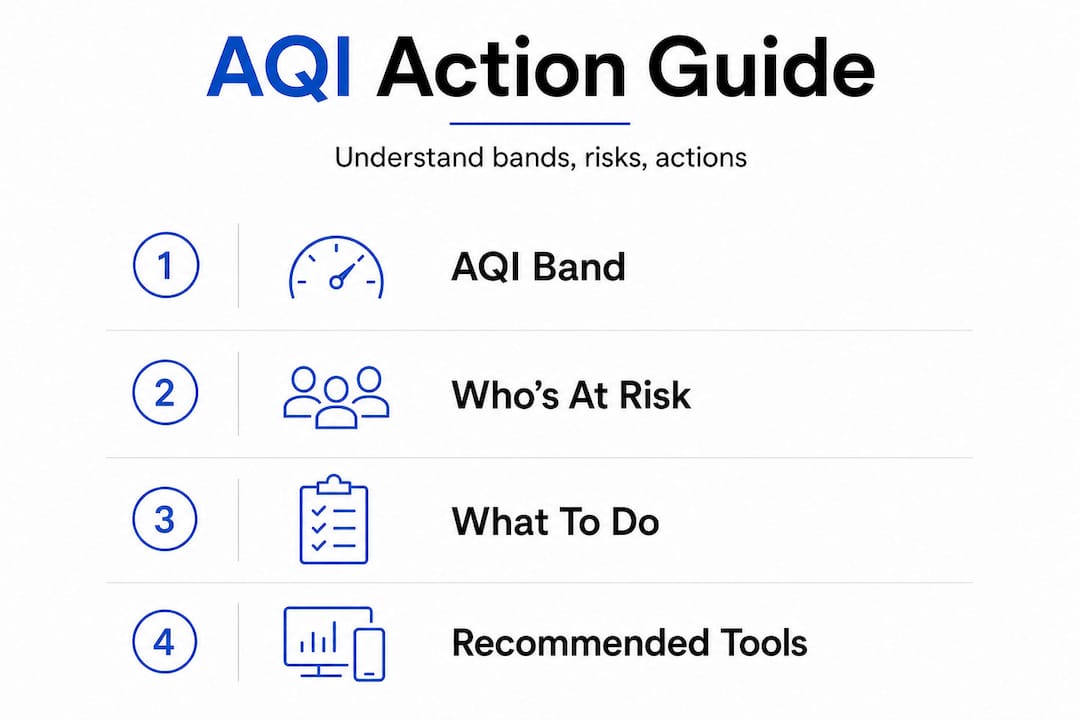
Knowing the colour categories is useful. Knowing what each category means for your household is essential. Each band signals a different level of risk and a different recommended response.
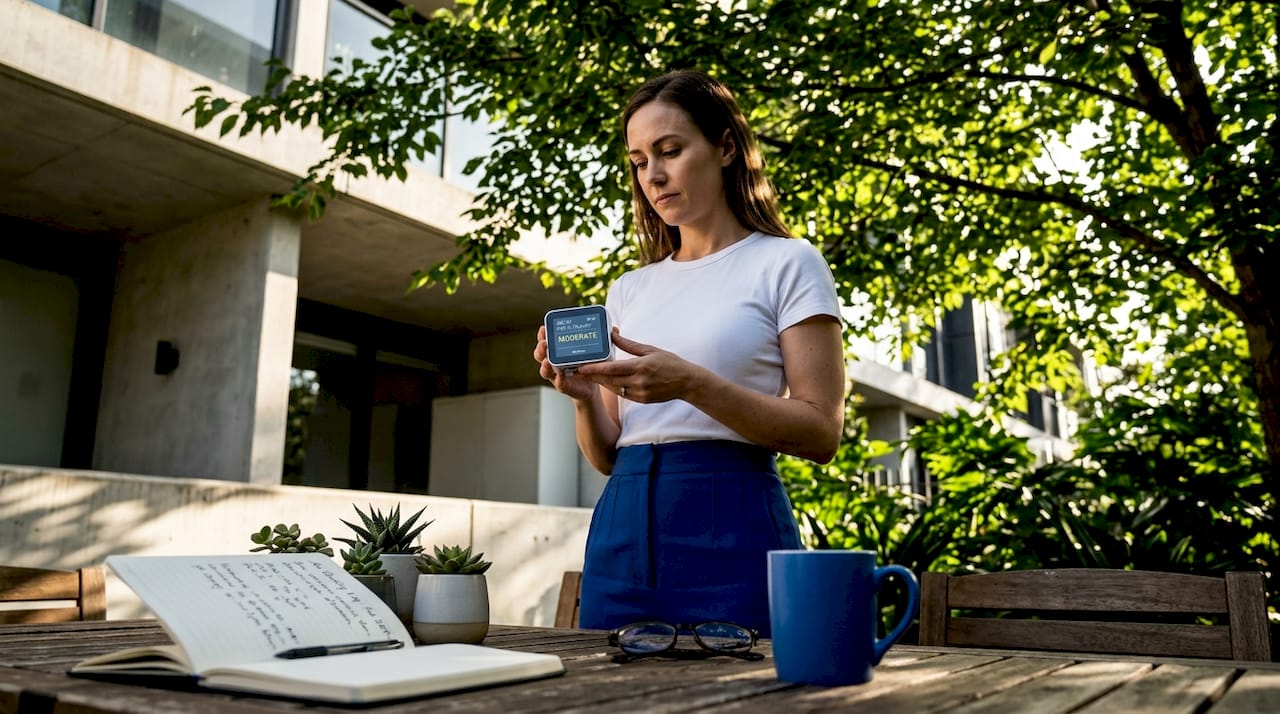
AQI categories indicate who is at risk at each level. At 101 to 150, air is unhealthy for sensitive groups such as children, the elderly, and people with respiratory or cardiovascular conditions. Above 150, both sensitive groups and the general population face increased risk. The transition between these bands is not gradual. Health effects can appear quickly once certain thresholds are crossed.
How health risk escalates across AQI bands:
| AQI range | Who is at risk | Recommended action |
|---|---|---|
| 0–50 | No identified risk | Normal activity |
| 51–100 | Unusually sensitive individuals | Limit prolonged outdoor exertion |
| 101–150 | Sensitive groups | Reduce outdoor time, use filtration indoors |
| 151–200 | General population | Avoid prolonged outdoor activity |
| 201–300 | All residents | Stay indoors, run air purifiers |
| 301–500 | All residents, severe risk | Avoid all outdoor exposure |
The AQI communicates health effects that may be experienced within hours or days of exposure, grounded in breakpoints reviewed as part of the National Ambient Air Quality Standards evidence review process. This is not a theoretical risk. Coughing, eye irritation, and shortness of breath can begin within hours at AQI levels above 150, particularly for children who spend time outdoors during school hours.
Steps for applying AQI categories to daily decisions:
- Check the AQI category, not just the raw number
- Identify whether anyone in your household falls into a sensitive group
- Assess whether planned activities involve extended outdoor time
- Adjust ventilation or filtration based on the category, not the number alone
- Revisit the reading at mid-day, as UAE conditions shift significantly between morning and afternoon
Pro Tip: Many UAE residents check AQI once in the morning and assume it holds all day. Summer shamal winds and afternoon traffic emissions can push readings up sharply between 11am and 4pm. Check again before lunchtime.
Reviewing the evidence behind air cleaning technologies gives further context on how indoor filtration responds differently at each AQI band. A purifier sized for moderate outdoor AQI may not provide adequate protection when readings move into the unhealthy or very unhealthy range.
Different AQIs, different sources: What you need to know
Not every AQI reading comes from the same source, and the differences matter more than most residents realise. Government monitoring stations, smartphone apps, and home air quality sensors can all display AQI-style numbers, but they are rarely measuring the same thing in the same way.
Different apps and products may show different AQI-like numbers because they use different pollutant coverage and time aggregation methods. A home sensor showing an AQI of 85 and a government station showing 120 for the same suburb are not necessarily in conflict. They are measuring different things, over different periods, sometimes for different pollutants.
Key differences to check before trusting any AQI source:
- Pollutant coverage: Does the source measure PM2.5 only, or does it include PM10, ozone, and NO2?
- Time averaging: Is the reading based on a 1-hour, 8-hour, or 24-hour average?
- Sensor type: Government stations use certified reference monitors; consumer devices use lower-cost optical sensors that perform differently in humid or dusty conditions
- Location: A sensor inside your apartment measures a different environment than a rooftop station 3 kilometres away
- Calculation standard: Some apps apply the US EPA formula; others use the European CAQI or a proprietary formula
Because AQI is derived from multiple pollutants and reflects the single highest concern level, the overall reading can rise sharply even when only one pollutant, such as PM2.5 during a dust or smoke event, is elevated. During UAE sandstorm conditions, this is almost always PM2.5 and PM10 driving the index. Checking which pollutant is listed as dominant on your source page tells you exactly what risk you are managing.
Pro Tip: When tracking AQI at home, use your sensor as a relative indicator of change rather than an absolute value. If your indoor reading rises 30 points in 20 minutes with windows closed, that is a signal to act regardless of whether the number matches the official station.
How to use the AQI for indoor air decisions in the UAE
Outdoor AQI is an early warning signal. Acting on it before polluted air reaches the inside of your home is where the real health protection happens. The UAE context amplifies this urgency. Buildings in Dubai, Abu Dhabi, and Sharjah face dust infiltration through HVAC systems, window seals, and door gaps even when windows are closed. The gap between outdoor and indoor air quality is smaller than most residents assume.
AQI is intended to help people reduce their inhaled dose of pollutants during episodes by adjusting activity level, limiting exposure duration, and choosing times or places with better air. For indoor decisions, this translates into a practical sequence.
Step-by-step indoor response based on AQI:
- Check the current outdoor AQI and identify the dominant pollutant
- For readings above 100, close windows and switch HVAC to recirculation mode
- Run a HEPA-rated air purifier in rooms where family members spend the most time
- Reduce indoor activities that add pollutants, such as candles, cooking without extraction, or strong cleaning products
- For readings above 150, limit any outdoor exposure for children and elderly household members
- Monitor for physical symptoms and adjust behaviour if any appear
Residents assessing indoor air quality should interpret AQI as an outdoor risk signal that can precede indoor particulate infiltration and combine it with indoor ventilation and filtration actions rather than relying solely on indoor sensor absence. In practical terms, this means not waiting until a home sensor triggers before acting. By the time PM2.5 is detectable indoors, it has already infiltrated.
Symptoms to watch for and respond to immediately include:
- Persistent coughing or throat irritation
- Wheezing or tightness in the chest
- Watering or burning eyes
- Headaches or unusual fatigue during or after outdoor exposure
Recognising symptoms and reducing exposure immediately is part of the EPA’s practical guidance during unhealthy air conditions. In the UAE, where outdoor air quality can deteriorate within minutes during a haboob, the response window is narrow. Having filtration running before conditions worsen is more effective than reacting after symptoms begin.
Understanding how air cleaning for UAE homes works in different scenarios helps residents choose filtration that responds adequately to the range of AQI levels they are likely to encounter across the year.
“Reducing inhaled dose through activity adjustment, time reduction, and location choice are the practical tools available to residents when AQI rises.” — US EPA
Why interpreting AQI in the UAE demands extra attention
Most AQI guides are written for temperate climates with relatively stable pollution sources and predictable seasonal patterns. The UAE does not fit that profile. Dust events, seasonal inversions, industrial emissions from surrounding areas, and the sheer scale of ongoing construction all interact in ways that can push AQI from acceptable to hazardous within a single hour.
One of the most common errors UAE residents make is treating “moderate” as safe for everyone. A reading of 80 in a cool, stable climate carries different practical implications than a reading of 80 in summer humidity with rising dust levels. The number is the same. The infiltration rate into buildings, the added respiratory load from heat, and the speed at which conditions can deteriorate are not.
A second overlooked issue is the assumption that indoor spaces are always cleaner than outside. In a well-sealed, well-filtered home, that may be true. In a typical residential building with ageing HVAC filters, gaps around window frames, and no active air purification, indoor PM2.5 levels routinely track outdoor levels within 30 to 60 minutes. Residents who close their windows and assume they are protected without running filtration are managing a risk they cannot see.
The third pitfall is over-reliance on consumer device numbers without understanding the health category behind them. A gadget displaying 95 tells you nothing without context. Is that 95 driven by PM2.5 or NO2? Is it a 1-hour or 24-hour average? Is it trending upward? The health category and the dominant pollutant together provide the actionable intelligence. The raw number alone does not.
A robust indoor air strategy in the UAE merges three elements: regular AQI monitoring from a reliable source, immediate protective action based on health category rather than raw number, and properly maintained filtration that can handle the PM2.5 and PM10 loads typical of Gulf dust events. Residents who want to build that strategy can find practical guidance across a range of topics at the ClimatePro UAE blog, which covers UAE-specific scenarios in detail.
Next steps: Protect your indoor air quality
Understanding AQI is only valuable when paired with the right equipment. For UAE households facing dust events, seasonal pollution spikes, and year-round particulate infiltration, a reliable air purifier is the most practical tool for turning AQI awareness into genuine health protection.
ClimatePro UAE offers a range of solutions suited to the UAE environment, including the Honeywell Air Touch P2 Air Purifier, which delivers HEPA-grade filtration for homes and offices. For a broader view of available options, the full range of air purifiers in Dubai covers units suited to various room sizes and air quality challenges. If you are building a longer-term indoor air strategy, reading about how to monitor AQI for your family provides the foundational framework for combining outdoor data with indoor action. ClimatePro UAE delivers across all seven emirates.
Frequently asked questions
What does a high AQI mean for indoor air quality in the UAE?
A high outdoor AQI signals that indoor air can quickly become polluted through infiltration, so proactive filtration and ventilation management are needed before pollutants enter. AQI should be treated as an outdoor risk signal that precedes indoor particulate infiltration.
How do I know which pollutant is driving the AQI in my area?
Check the detail view on your AQI source; the index always reflects the pollutant with the highest concentration at that time, so looking at the dominant pollutant listed tells you exactly what is causing the elevated reading.
Is the AQI forecast or nowcast more useful in the UAE?
Both serve different purposes, but during sudden events like sandstorms, the nowcast or current AQI value is more reliable because it reflects fast-changing conditions that a daily forecast cannot anticipate.
What symptoms mean I should act on a bad AQI day?
Coughing, wheezing, or shortness of breath are the primary signals, and reducing exposure immediately is the recommended response on any day when AQI is elevated.
Are WHO air quality guidelines part of the AQI?
No. The WHO provides global guidelines that set recommended concentration limits but does not use an AQI scale; these guidelines inform the health evidence behind AQI categories without being directly incorporated into the index itself.