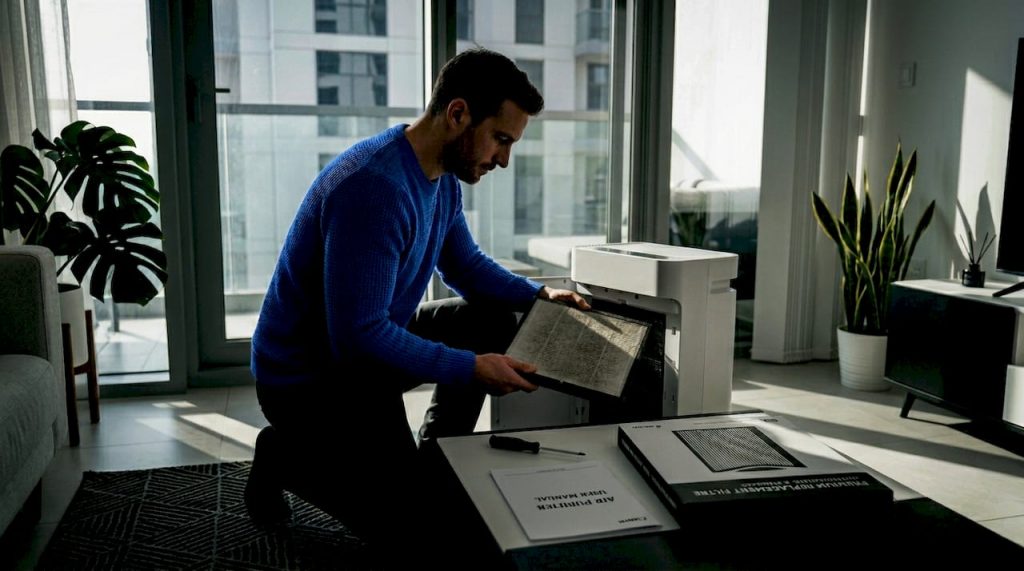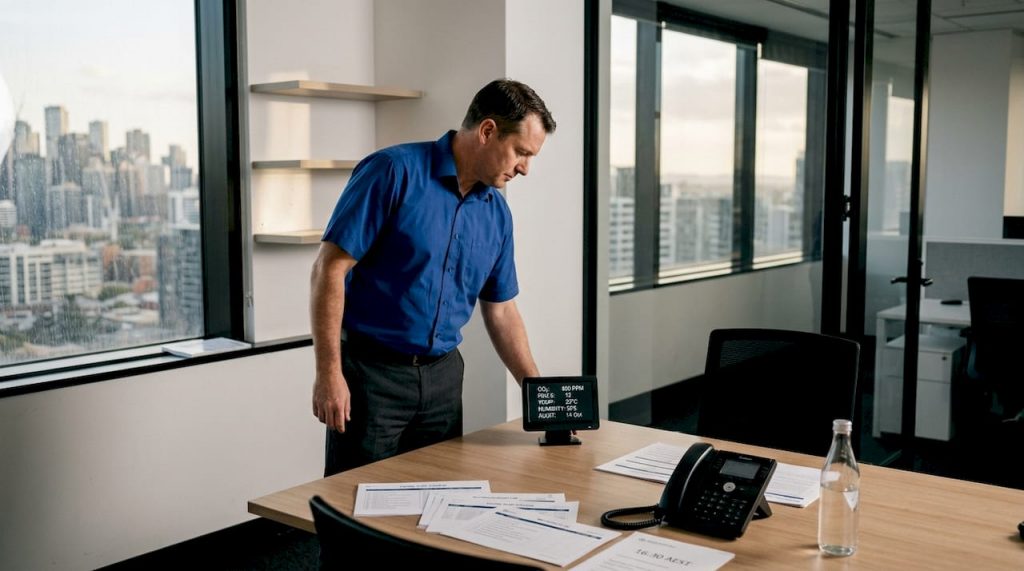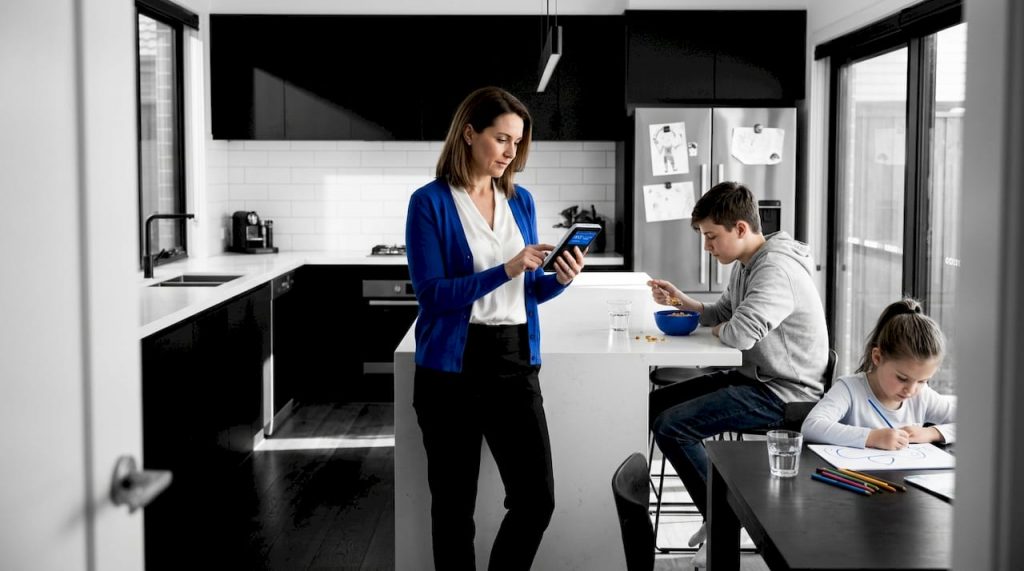
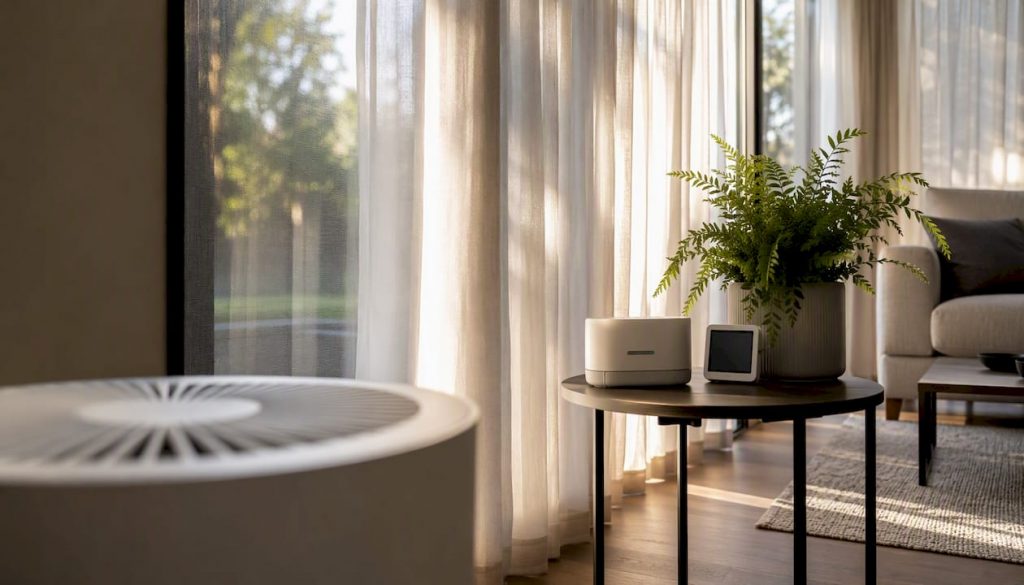
These four steps form the backbone of the US EPA’s three-part strategy of source control, ventilation, and supplemental filtration, and they apply directly to typical Australian homes.
Priority checklist (ordered by impact and cost):
-
Control sources first. Stop indoor smoking, use a rangehood vented outdoors when cooking, and swap to low-VOC paints and cleaners. Source control costs little and delivers the biggest reduction in pollutant load.
-
Ventilate when outdoor air is clean. Open windows and doors for 10–15 minutes, ideally cross-ventilating. Run kitchen and bathroom exhaust fans during and after cooking or showering.
-
Run a correctly sized HEPA purifier. Match the device’s Clean Air Delivery Rate (CADR) to your room volume. Running a unit 24/7 in the rooms where you spend the most time produces the most consistent benefit.
-
Keep humidity between 30–50%. Use a dehumidifier in damp rooms or during humid seasons, and a humidifier in very dry conditions. Staying in this range limits mould growth and dust mite activity.
-
Vacuum with a HEPA-filter vacuum weekly and launder bedding in hot water every 1–2 weeks to reduce allergen load.
-
During bushfire smoke or high-pollen events: close all windows and doors, switch your HVAC to recirculate, and rely entirely on HEPA filtration. Check the AirRater app or your state EPA’s air quality index before opening up again.
Key takeaways
Improving indoor air quality requires source control, correctly sized HEPA filtration, disciplined ventilation, and humidity management working together rather than any single intervention in isolation.
| Point | Details |
|---|---|
| Source control first | Eliminate indoor smoking, use a vented rangehood, and choose low-VOC products before adding filtration. |
| Size your purifier correctly | Match CADR to room volume for at least 4–5 air changes per hour; under-sizing is the most common error. |
| Target humidity 30–50% | Keep relative humidity in this range to limit mould growth and dust mite activity, per EPA guidance. |
| Close up during smoke or pollen events | Shut windows, switch HVAC to recirculate, and run HEPA purifiers continuously during bushfire or high-pollen alerts. |
| Climatepro for ready solutions | Climatepro stocks HEPA purifiers, humidifiers, dehumidifiers, and genuine replacement filters with room-specific guidance. |
Table of Contents
- Why does indoor air quality matter for your health?
- What are the common sources of indoor air pollution?
- When should you open windows and when should you keep them shut?
- How do HEPA purifiers work and how do you size one correctly?
- How does humidity affect indoor air quality?
- Cleaning and maintenance routines that reduce airborne allergens
- How to monitor indoor air quality and know when to act
- How to choose an air purifier for your Australian home
- What to do during bushfire smoke or high-pollen days
- Why device-first interventions are the right starting point
- Climatepro stocks the devices that make these steps practical
- Sources
Why does indoor air quality matter for your health?
Poor indoor air quality is linked to respiratory irritation, worsened asthma, allergic reactions, and, with prolonged exposure, more serious chronic conditions. Peer-reviewed evidence ties indoor pollutant exposures to measurable respiratory and cardiovascular disease markers, particularly in people who spend most of their time indoors.
For Australians, the risk has a seasonal dimension that most other countries do not face at the same scale. Bushfire smoke seasons push fine particulate matter (PM2.5) to hazardous levels across large regions, and those particles infiltrate homes through gaps in windows, doors, and ductwork. High-pollen days in spring, particularly in south-eastern Australia, drive allergy and asthma presentations sharply upward. Urban traffic pollution adds a background load of nitrogen oxides (NOx) and ultrafine particles that seep indoors year-round.
What makes the indoor environment particularly tricky is that gas appliances, household chemicals, and off-gassing furnishings can generate pollutant concentrations indoors that rival or exceed outdoor levels, even on a clear day. Cooking on a gas stove without a rangehood, for example, can spike NOx and PM2.5 to levels that would trigger air quality alerts outdoors.
What are the common sources of indoor air pollution?
Indoor pollutants fall into three broad categories: particulates, gases, and biological contaminants. Knowing which category a source belongs to matters because the control strategies differ.
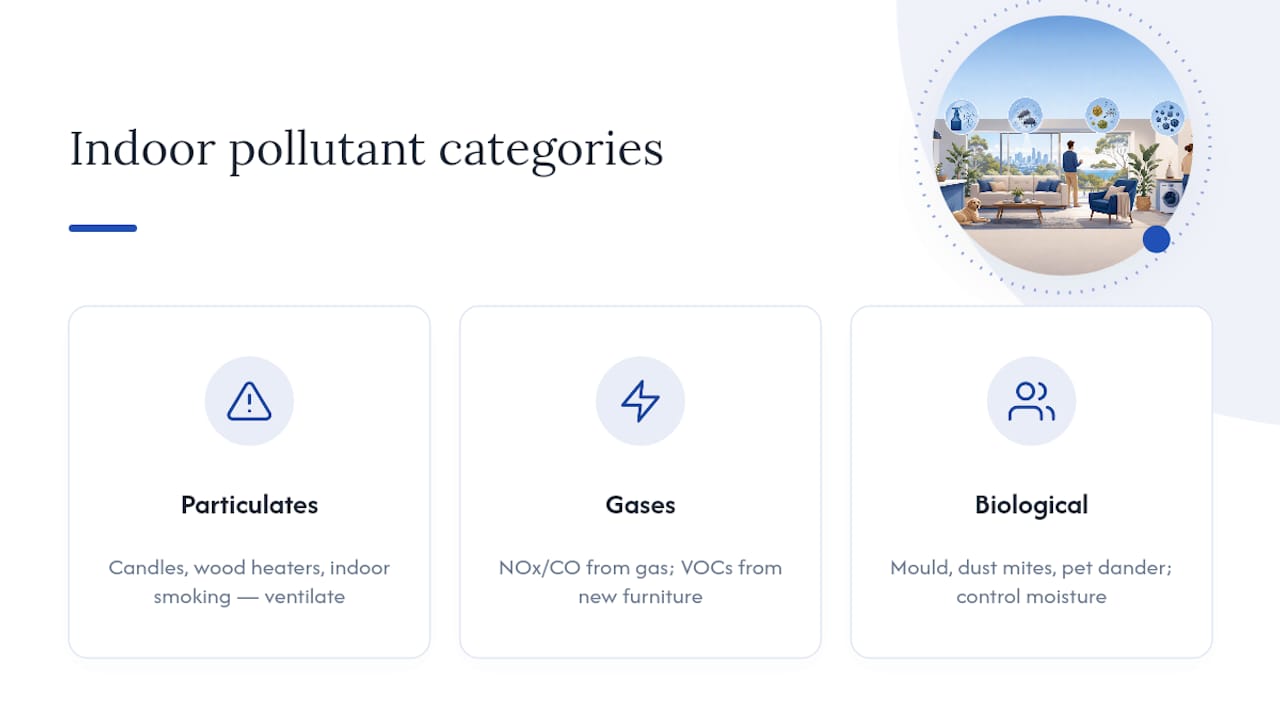
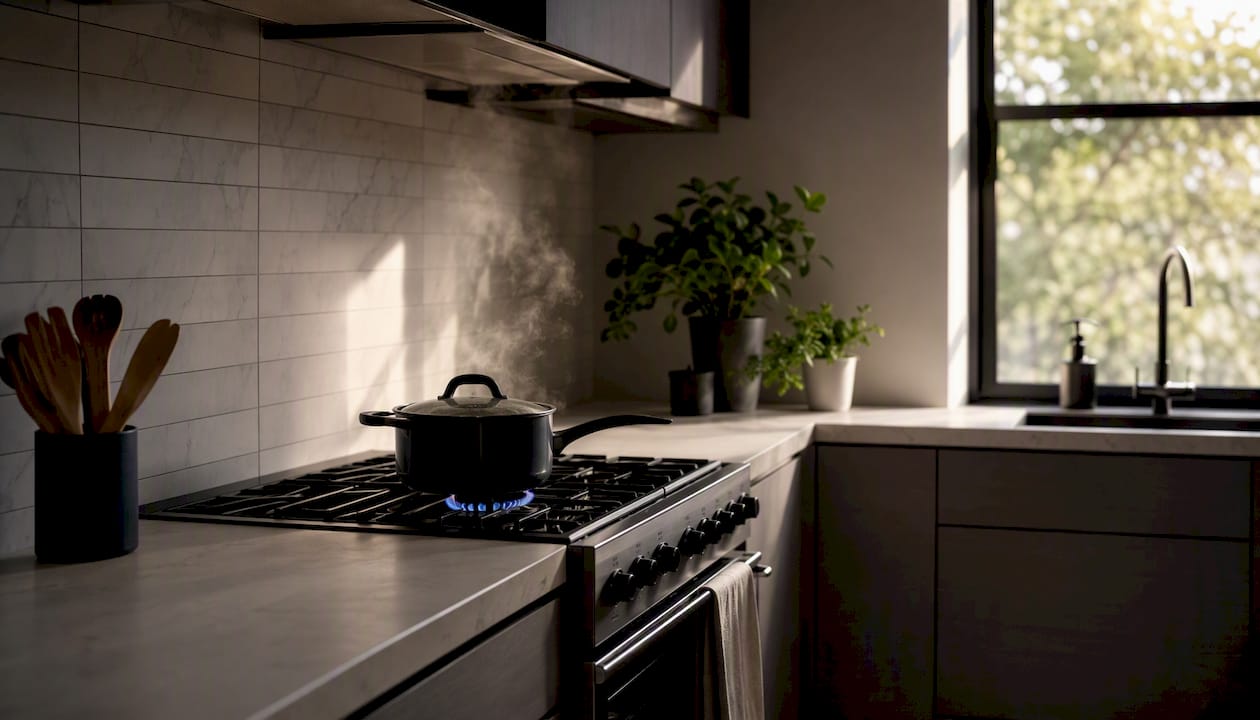
Combustion sources produce both particulates and gases. Gas stoves and heaters emit NOx and carbon monoxide (CO). Wood heaters release fine particles and polycyclic aromatic hydrocarbons. Candles, incense, and indoor smoking all add particulates and VOCs. These sources are well-documented contributors to unhealthy indoor air and respond best to source elimination or ventilation at the point of emission.
Biological sources include mould spores, dust mite allergens, and pet dander. Mould grows wherever moisture accumulates, particularly in bathrooms, under sinks, and around poorly sealed windows. Pet dander is ultrafine and stays airborne for hours.
VOC sources are often invisible and odourless after the initial off-gassing period. New furniture, flooring, paints, adhesives, and many cleaning products release volatile organic compounds including formaldehyde and benzene. A newly renovated room can have elevated VOC levels for weeks.
Outdoor infiltration brings in whatever is happening outside: bushfire smoke, pollen, traffic-related NOx, and ozone. Homes with poor draught sealing are especially vulnerable. Winter is a hidden risk period because homes are closed up and indoor sources accumulate without dilution.
When should you open windows and when should you keep them shut?
Ventilation works by diluting indoor pollutants with cleaner outdoor air. The key word is “cleaner.” When outdoor air quality is poor, opening windows makes things worse, not better.
When outdoor air is clean, ventilate actively:
- Check the AirRater app, your state EPA’s air quality index, or the Bureau of Meteorology’s forecast before opening up.
- Open windows on opposite sides of the home to create cross-ventilation. Even 10–15 minutes of cross-ventilation significantly reduces CO2, VOC, and particulate concentrations that build up overnight.
- Run kitchen exhaust fans during cooking and for at least 10 minutes after. Run bathroom fans during and for 20 minutes after showering.
- Trickle vents, where fitted, provide low-level continuous ventilation without the full exposure of open windows.
When outdoor air is poor (bushfire smoke, high pollen, or high-pollution days), close up and filter:
- Close all windows and doors. Seal obvious gaps with draught excluders or rolled towels at door bases.
- Switch your HVAC or split system to recirculate mode rather than fresh air intake.
- Run HEPA purifiers continuously, increasing fan speed during the event.
- Avoid any indoor combustion: no candles, no wood heater, no gas cooking without an exhaust fan.
Harvard’s guidance on wildfire smoke is direct: seal the building and rely on mechanical filtration rather than natural ventilation during smoke events. This applies equally to Australian bushfire conditions.
For mechanical ventilation systems, filter changes are the single most important maintenance task. A clogged filter restricts airflow and can push accumulated particulates back into the supply air. Check filters every three months and replace them at least annually, or more frequently during high-pollution seasons. If you are considering a whole-home HVAC upgrade or renovation, specifying MERV-13 filters at installation is a straightforward way to build in better particulate capture from day one.
Pro Tip: For apartment dwellers with limited window access, understanding why ventilation matters and how to work with building ventilation systems can make a significant difference to daily air quality.
How do HEPA purifiers work and how do you size one correctly?
H13-grade HEPA, the standard Climatepro recommends, captures particles at an even higher efficiency and is the appropriate specification for allergy and asthma management.
One critical caveat: HEPA performance depends entirely on matching the device’s CADR to the room volume. CADR (Clean Air Delivery Rate) measures the volume of clean air a purifier delivers per hour. Under-sizing is the most common mistake buyers make.
How to size a purifier:
- Measure your room in square metres and multiply by ceiling height (typically 2.4–2.7 m) to get the room volume in cubic metres.
- Aim for at least 4–5 air changes per hour (ACH) for general use, and 6+ ACH for allergy or asthma management.
- Multiply room volume by your target ACH to get the minimum CADR in cubic metres per hour.
- Example: a 20 m² room with 2.5 m ceilings = 50 m³. At 5 ACH, you need a CADR of at least 250 m³/h. A unit rated for a small bedroom will not achieve this in an open-plan space.
For a deeper explanation of air changes per hour and how they relate to purifier sizing, the calculation is worth understanding before you buy.
Placement and operation:
- Place the purifier in the room where you spend the most time, away from walls and corners to allow free airflow.
- Run it continuously where possible. Cycling a purifier on and off allows particles to re-accumulate between cycles.
- Increase fan speed during cooking, cleaning, or outdoor pollution events.
Filter maintenance:
- Replace HEPA filters according to the manufacturer’s schedule, typically every 6–12 months depending on use and local air quality.
- A filter that looks grey or dark is overloaded and restricts airflow. Some units have indicator lights; do not rely solely on these.
- Pre-filters (which capture larger particles) should be cleaned monthly to extend HEPA filter life.
Safety note: Avoid ionising air purifiers and ozone generators. Ozone is a respiratory irritant and there is no established safe indoor level. Stick to mechanical HEPA filtration. The range of air purification methods worth considering for Australian homes centres on HEPA as the evidence-backed standard.
How does humidity affect indoor air quality?
Humidity is one of the most overlooked variables in home air quality. Too high and you create conditions for mould growth and dust mite proliferation. Too low and respiratory mucous membranes dry out, reducing the body’s natural defence against airborne particles.
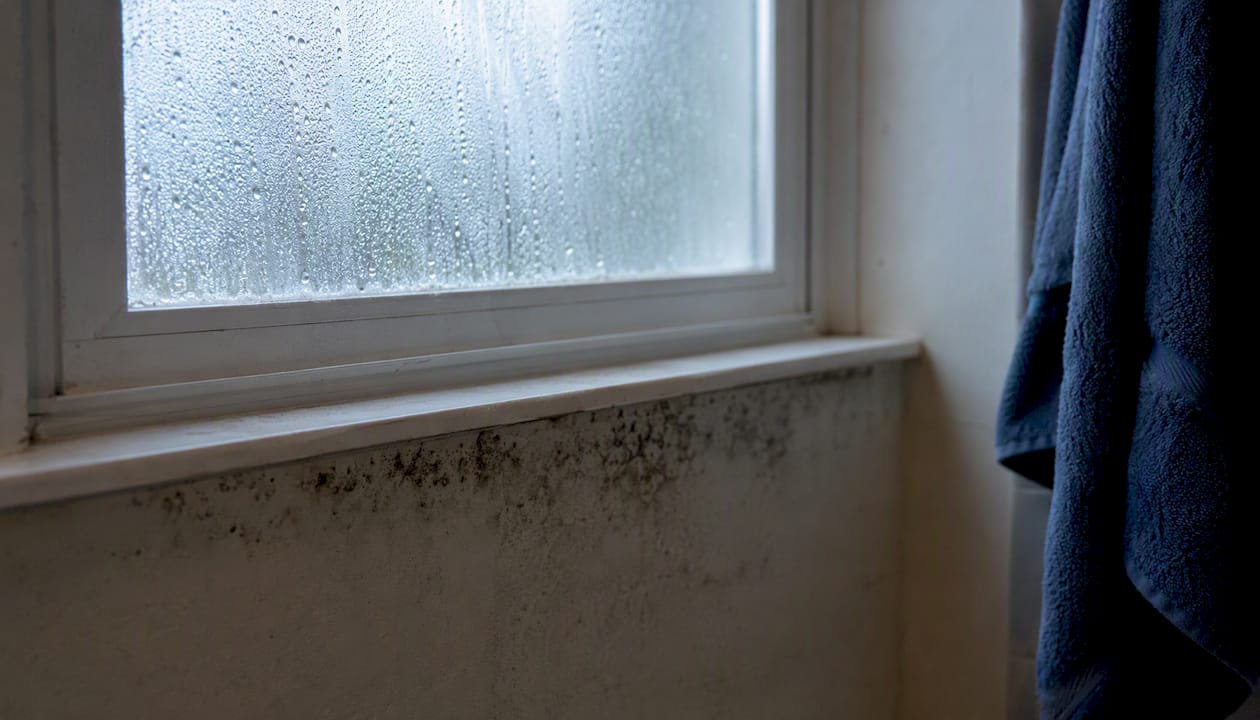
The EPA recommends keeping indoor relative humidity ideally between 30–50% and below 60%.
| Humidity level | Likely effect | Recommended action |
|---|---|---|
| Below 30% | Dry air, irritated airways, static buildup | Run a humidifier |
| 30–50% | Optimal range for health and comfort | Maintain with monitoring |
| 30–50% | Elevated dust mite activity begins | Increase ventilation, check for leaks |
| Above 60% | Mould growth risk, high dust mite load | Run a dehumidifier, address moisture sources |
Dehumidifier guidance:
- Use in bathrooms, laundries, basements, or any room with persistent condensation.
- Empty water tanks daily or connect to a drain. Stagnant water in the tank becomes a mould and bacteria source.
- Clean the tank and filter monthly.
Humidifier guidance:
- Use in dry climates or during winter when heating dries indoor air.
- Use distilled or demineralised water to prevent mineral dust dispersal.
- Clean the tank every 2–3 days to prevent bacterial and mould growth inside the unit.
For homes where humidity fluctuates significantly across seasons, smart humidity control systems can automate adjustments and reduce the need for manual monitoring.
Cleaning and maintenance routines that reduce airborne allergens
Cleaning removes settled allergens before they are re-suspended into the air. The technique matters as much as the frequency.
- Vacuum with a HEPA-filter vacuum weekly. Standard vacuums exhaust fine particles back into the air. A HEPA-sealed vacuum captures them. Pay particular attention to carpets, rugs, upholstered furniture, and under beds.
- Launder bedding in water at 60°C every 1–2 weeks. This temperature kills dust mites. Covers and pillowcases accumulate the highest mite load of any surface in the home.
- Wipe hard surfaces with a damp cloth rather than a dry duster. Dry dusting re-suspends particles. A damp microfibre cloth captures them.
- Use door mats at every entry and adopt a no-shoes-indoors policy. Shoes track in pollen, pesticides, and outdoor particulates. Studies consistently show that removing shoes at the door reduces indoor dust load.
- Clean bathroom exhaust fans and rangehood filters every 3 months. Grease-clogged rangehood filters reduce airflow and trap combustion products near the cooking surface.
- Replace HVAC filters every 3–6 months. Use at least MERV-8 filters for standard residential use; MERV-13 for allergy or asthma households. Harvard Health guidance specifically notes that filter upgrades and routine cleaning are among the most practical steps for reducing indoor allergen load.
- Consider professional duct cleaning if your home has ducted heating or cooling that has not been serviced in more than five years, or if you notice dust blowing from vents when the system starts.
- Declutter soft furnishings. Cushions, throws, and decorative items accumulate allergens. Washing them regularly or reducing their number lowers the total allergen reservoir in the home.
How to monitor indoor air quality and know when to act
A monitor tells you what is actually happening in your home, not what you assume. Portable air-quality monitors can identify home-specific problems such as PM2.5 spikes during cooking, CO2 build-up in poorly ventilated rooms, and VOC rises after cleaning, and they confirm whether interventions are working.
Sensor types and what they measure:
- PM2.5: Fine particulate matter. The most important metric for respiratory health. Spikes during cooking, vacuuming, or outdoor smoke events.
- CO2: Carbon dioxide. A proxy for ventilation adequacy. Rising CO2 in a closed room indicates insufficient fresh air exchange.
- VOC: Volatile organic compounds. Useful for detecting off-gassing from new furniture, cleaning products, or paints.
- Humidity: Relative humidity percentage. Essential for mould and dust mite risk assessment.
Action thresholds:
| Reading | Threshold | Recommended action |
|---|---|---|
| PM2.5 | Above 25 µg/m³ (24-hour average) | Increase ventilation or run HEPA purifier at higher speed |
| PM2.5 | Above 55 µg/m³ | Close windows if outdoor smoke is the source; run purifier continuously |
| CO2 | Elevated levels | Ventilate immediately; open windows or increase mechanical ventilation |
| CO2 | High levels | Ventilate urgently; check for combustion sources |
| Relative humidity | Above 60% | Run dehumidifier; inspect for moisture sources |
Peer-reviewed guidance on monitor placement recommends positioning sensors at breathing height (roughly 1–1.5 m from the floor) in frequently used rooms, and away from direct pollutant sources such as stoves or open windows, so readings reflect general exposure rather than a localised spike.
For continuous monitoring, a device placed in the main living area and one in the bedroom gives the most representative picture of daily exposure. Use spot checks in the kitchen during cooking to understand your peak exposure events. The role of smart air monitors in home management has expanded considerably as consumer-grade sensors have become more accurate and affordable.
How to choose an air purifier for your Australian home
Choosing the right purifier comes down to five verifiable criteria. Ignore marketing claims about “negative ions” or “photocatalytic oxidation” and focus on these.
- Room size and CADR match. Calculate your room volume and required CADR as described in the filtration section above. Never buy a unit rated for a smaller space than the room you intend to use it in. Consumer Reports’ testing consistently identifies under-sizing as the primary reason purifiers underperform.
- HEPA grade. Look for H13 or H14 HEPA certification. Lower-grade “HEPA-type” or “HEPA-style” filters do not meet the same capture efficiency standard.
- Filter availability and replacement cost. A purifier is only as good as its filter maintenance. Before buying, confirm that replacement filters are available in Australia and check the annual replacement cost. A cheap unit with expensive or hard-to-source filters costs more over three years than a mid-range unit with readily available filters.
- Noise level. Check the decibel rating at the speed you intend to run it. A unit that is too loud to run at night in a bedroom will not be used continuously, which defeats the purpose.
- Energy consumption. Most HEPA purifiers draw 20–60 watts at medium speed. Running a 40W unit 24/7 costs roughly $50–$70 per year at average Australian electricity rates, which is modest relative to the health benefit. Confirm the wattage before purchase.
Pro Tip: Ask the retailer for the CADR figure in cubic metres per hour, not just square metres coverage. Coverage ratings assume a standard ceiling height and a lower ACH than most allergy or asthma households need. The cubic metre per hour figure lets you do your own calculation.
Australia-specific notes:
- Avoid ozone generators. The Australian Competition and Consumer Commission (ACCC) has flagged ozone-generating devices as a health risk, and they are not appropriate for occupied spaces.
- Check that the unit carries an Australian electrical safety mark (RCM) before purchase.
- Warranty and local parts support matter. A unit with no Australian distributor may leave you without filter replacements or service options within 12 months.
What to do during bushfire smoke or high-pollen days
Bushfire smoke and high-pollen events require a different approach to everyday air quality management. The instinct to “let fresh air in” is exactly wrong during these events.
Immediate steps when an alert is issued:
- Close all windows and doors. Check weather seals and use draught excluders at door bases.
- Switch your split system or ducted HVAC to recirculate mode. This stops the system drawing in outdoor air.
- Run HEPA purifiers continuously in bedrooms and main living areas. Increase fan speed.
- Avoid any indoor combustion: no candles, no wood heater, no gas cooking without the rangehood running.
- If you have a ducted system with MERV-13 or better filters, it can supplement portable purifiers effectively.
Where to get air quality alerts in Australia:
- AirRater app (free, available on iOS and Android): provides real-time air quality and pollen data for most Australian cities, with health guidance for sensitive groups.
- State EPA websites: NSW EPA, EPA Victoria, Queensland Department of Environment, SA EPA, and equivalents in WA and the ACT all publish air quality index (AQI) readings updated hourly.
- Bureau of Meteorology: smoke and dust forecasts are integrated into weather warnings during fire seasons.
For vulnerable people (children, older adults, people with asthma or cardiovascular conditions): stay indoors during smoke events, keep purifiers running, and seek medical advice if symptoms worsen. N95 or P2 respirators provide protection when outdoor movement is unavoidable.
Why device-first interventions are the right starting point
The conventional advice on indoor air quality tends to start with behaviour changes: open windows more, clean more often, buy fewer synthetic products. Those steps matter, but they have a ceiling. Behaviour alone cannot compensate for a poorly ventilated home during a bushfire event, or for the continuous off-gassing of a recently renovated space, or for the allergen load in a home with pets and carpet.
The evidence from Harvard’s Healthy Buildings programme is pointed: improvements to outdoor air quality through legislation have not been matched indoors, and individuals need to take proactive steps. A correctly sized HEPA purifier running continuously in the bedroom produces measurable, verifiable reductions in PM2.5 exposure. These are not incremental gains; they are structural changes to the air you breathe every day.
What gets underestimated is the interaction between interventions. Source control reduces the load on your purifier, extending filter life and improving efficiency. Good humidity control reduces the biological particle load that your purifier then has to capture. Monitoring tells you whether the combination is working. The three-part framework of source control, ventilation, and filtration works best when all three are operating together, not when one substitutes for the others.
The practical implication: start with the highest-impact, lowest-cost steps (source control and ventilation), then add filtration sized to your actual room volumes, then use monitoring to verify and adjust. That sequence produces the best outcome per dollar spent.
Climatepro stocks the devices that make these steps practical
Putting this guide into practice means having the right equipment for your specific rooms and conditions. Climatepro carries HEPA air purifiers sized for everything from single bedrooms to open-plan living areas, along with humidifiers and dehumidifiers for humidity control across different room types. Genuine replacement filters for Blueair, Honeywell, and other stocked brands are available directly, so filter maintenance does not become a sourcing problem six months after purchase.

For readers who want a room-specific recommendation rather than a general category, Climatepro’s product pages include CADR ratings and room-size guidance so you can match capacity to your actual space. Browse the full air purifier range or contact the team directly for help selecting the right capacity model for your home or workplace.
Sources
The following sources informed this guide and are worth consulting for deeper or more localised information.
- Simple steps for improving indoor air quality | Harvard T.H. Chan School of Public Health
- Easy ways you can improve indoor air quality – Harvard Health
- What can I do to improve indoor air quality in my home? | US EPA
This article is general information, not a substitute for advice from a qualified doctor. Consult a qualified healthcare professional about your own circumstances before acting on anything here.
Recommended
- Fresh air process for homes: a homeowner’s how-to — Blog | ClimatePro UAE
- Why healthy air matters: essential insights for Australians — Blog | ClimatePro UAE
- Apartment ventilation guide: design, airtightness, and airflow — Blog | ClimatePro UAE
- Home air quality improvement guide for UAE homeowners — Blog | ClimatePro UAE