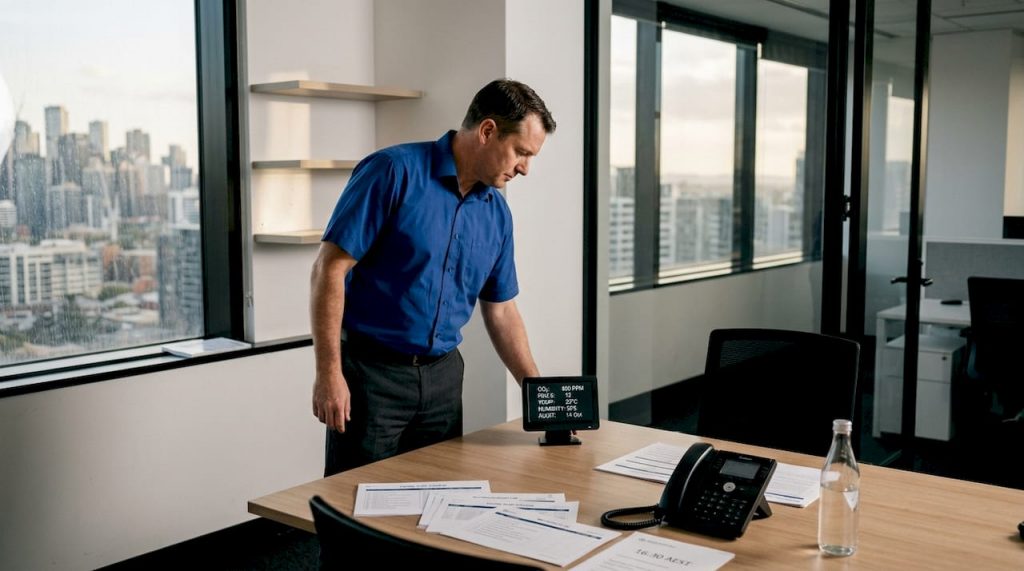
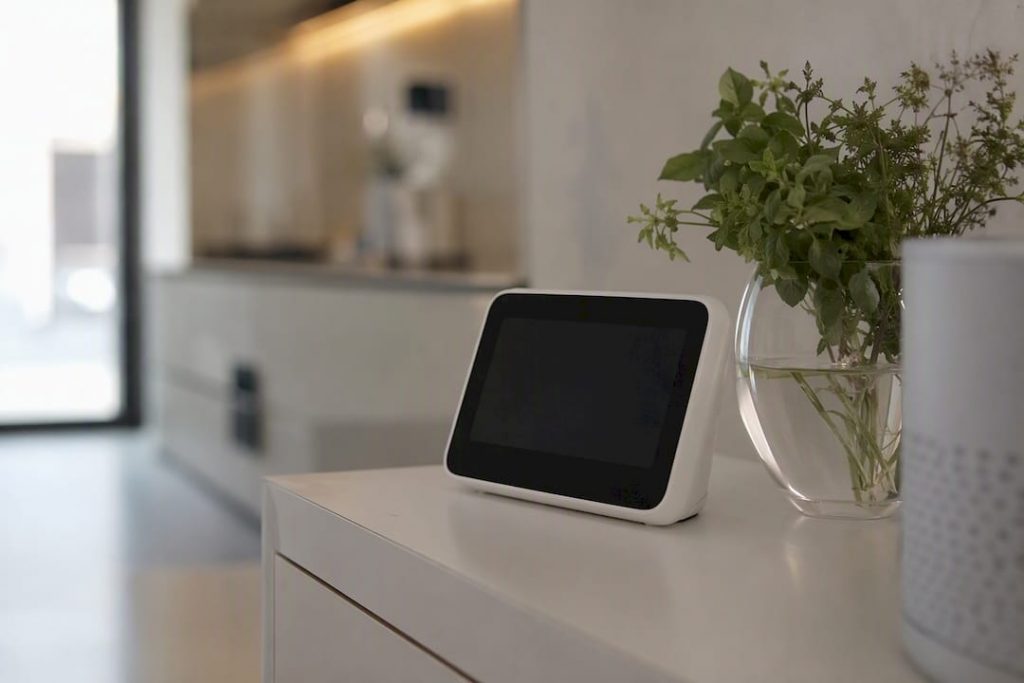
A basic indoor air quality monitor combined with a handful of sensory checks will detect most common household air problems, from cooking fumes to hidden mould. You do not need a laboratory to find out whether your air is a problem. Start with a monitor placed at breathing height in your living room or bedroom, and pay attention to what your nose and body are already telling you.
If your first reading looks abnormal, here is what to do right away:
- Open windows or turn on exhaust fans to increase ventilation.
- Run a HEPA air purifier sized correctly for the room.
- Move away from the likely source, particularly if you smell gas or exhaust.
Some readings demand immediate action rather than a wait-and-see approach. A CO2 reading above typical indoor thresholds means the room needs fresh air now. A sudden PM2.5 spike or a persistent chemical smell points to a source that needs identifying. A triggered carbon monoxide alarm means evacuate the property immediately and call emergency services from outside.
Pro Tip: Place your first monitor in the room where you sleep or spend the most waking hours. That single reading gives you the most representative snapshot of your actual daily exposure.
Key Takeaways
Detecting indoor air pollution effectively requires pairing a continuous consumer monitor for PM2.5 and CO2 with sensory checks, dedicated CO and radon tests, and professional testing when problems persist.
| Point | Details |
|---|---|
| Start with one monitor | Place a PM2.5 and CO2 monitor at breathing height in your main living space or bedroom. |
| Trust NDIR and laser sensors | Choose devices with NDIR CO2 and laser PM2.5 sensors over cheaper eCO2 estimates. |
| Watch key thresholds | Ventilate above 1,000 ppm CO2 and treat any CO alarm as an evacuation trigger. |
| Combine senses with data | Log symptoms, odours and activities alongside monitor readings to catch intermittent spikes. |
| Escalate only when needed | Use radon kits and professional testing after consumer monitoring shows a persistent problem. |
Table of Contents
- Which indoor pollutants matter for how to detect indoor air pollution?
- What are the signs of poor indoor air quality?
- What are the best methods to detect indoor air pollution at home?
- How do you choose the right indoor air quality monitor?
- What IAQ readings mean and when should you act?
- When should you hire a professional for indoor air quality testing?
- What should you do when your monitor shows poor air quality?
- How do you maintain monitors and where can you get support?
- Where can you read more about indoor air quality?
- Why quick checks beat perfect data
- Sources
Which indoor pollutants matter for how to detect indoor air pollution?
Six pollutants account for almost every home air quality complaint, and each behaves differently enough that no single test catches them all.
- PM2.5 and PM10 are fine and coarse particles from cooking, candles, dust and outdoor infiltration. PM2.5 penetrates deep into the lungs and bloodstream.
- Carbon dioxide (CO2) is not toxic at typical indoor levels but works as a reliable proxy for how well a room is ventilated.
- Carbon monoxide (CO) is a colourless, odourless gas from faulty combustion appliances that can be lethal within minutes at high concentrations.
- Volatile organic compounds (VOCs) come off paints, furniture, cleaning products and air fresheners, and are linked to headaches and irritation.
- Radon is a naturally occurring radioactive gas that seeps up from soil and is a recognised cancer risk over long-term exposure.
- Humidity and mould go together. Damp conditions above 60% relative humidity encourage mould growth, which releases spores and irritants.
PM2.5 carries particular weight because of how much time we actually spend indoors. The average person spends roughly 90% of their time indoors, which means even a moderate improvement in home air quality has an outsized effect on total exposure.
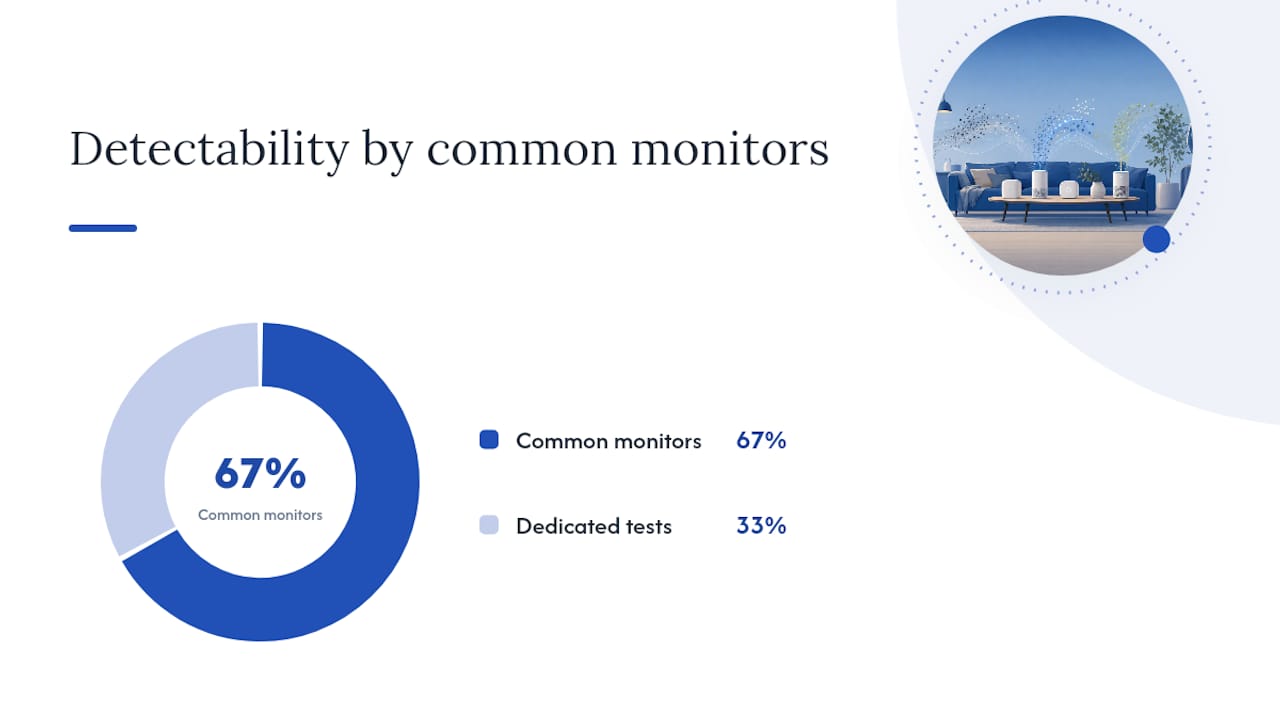
Most consumer monitors handle PM2.5, CO2, humidity and often VOCs in one device. Carbon monoxide and radon are different beasts. CO needs a dedicated life-safety alarm because concentrations can turn dangerous in minutes, not hours. Radon needs a specific test kit or continuous radon monitor because it requires longer sampling periods to give a meaningful average, something covered further below.
What are the signs of poor indoor air quality?
Your body often flags a problem before any device does. Watch for these patterns:
- Headaches, drowsiness or brain fog that ease noticeably once you step outside.
- A musty or stale smell, particularly in bathrooms, basements or closets.
- Visible mould spots or persistent condensation on windows.
- Dust that resettles quickly after cleaning, suggesting poor filtration or airflow.
- New or worsening allergy symptoms that flare at home but not elsewhere.
The timing pattern matters as much as the symptom itself. If a headache appears every evening after the heater runs, or allergy symptoms only strike in one bedroom, that is a strong clue the source is indoor and localised, not a citywide pollution event.
Pro Tip: Run a monitor for a full week and jot down when you notice smells or symptoms. Cross-referencing your notes against the data log often reveals a spike tied to cooking, showering or a specific appliance cycle.
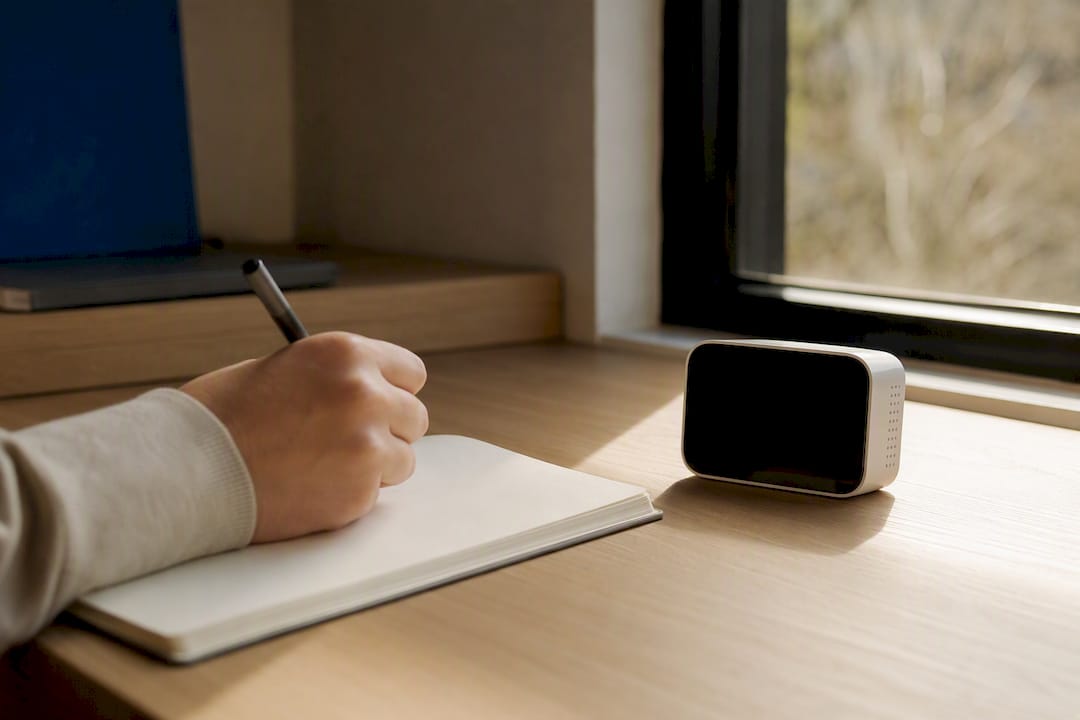
Visible mould or a persistent musty odour justifies calling a professional even when your monitor reads within normal range, because consumer devices do not detect mould spores directly.
What are the best methods to detect indoor air pollution at home?
Four detection approaches cover almost every home scenario, and they are not interchangeable. Each one answers a different question.
Multi-parameter consumer monitors track PM2.5, CO2, humidity and often VOCs continuously, giving you a live picture of daily conditions. Single-purpose detectors, like CO alarms and radon kits, exist because those two hazards need dedicated sensing technology and, in CO’s case, an audible alarm rather than a screen you have to check. DIY spot tests, such as mould swabs or short-term radon canisters, give a one-time answer for a specific concern. Professional assessments bring calibrated equipment and lab analysis when problems persist despite everything else.
Sensor technology explains a lot of the accuracy gap between cheap and reliable devices. NDIR (non-dispersive infrared) sensors measure CO2 directly and are considered accurate enough for home use. Laser-based optical sensors measure PM2.5 by counting particles passing through a beam. TVOC sensors detect a broad mix of volatile compounds but cannot identify which specific chemical is present, so treat a TVOC spike as a signal to investigate, not a diagnosis.
Where you put the monitor changes what it tells you. Breathing height, away from windows, vents, and cooking plumes, gives the most representative reading. CO2 levels stabilise within a few minutes of closing a door or turning on the stove, but radon needs days to weeks of sampling because concentrations shift with weather, soil conditions and ventilation habits.
A practical home monitoring session looks like this:
- Place the monitor in your main living space or bedroom at breathing height, at least a metre from windows and vents.
- Let it run continuously for at least 48 hours, including normal cooking, cleaning and sleeping periods.
- Log major activities, cooking, vacuuming, guests smoking outside, so spikes can be explained rather than misread as chronic problems.
- Move the monitor to a second room, such as a nursery or home office, for another 48 hours if the first location raises questions.
- Compare weekday and weekend patterns, since ventilation habits and occupancy often differ.
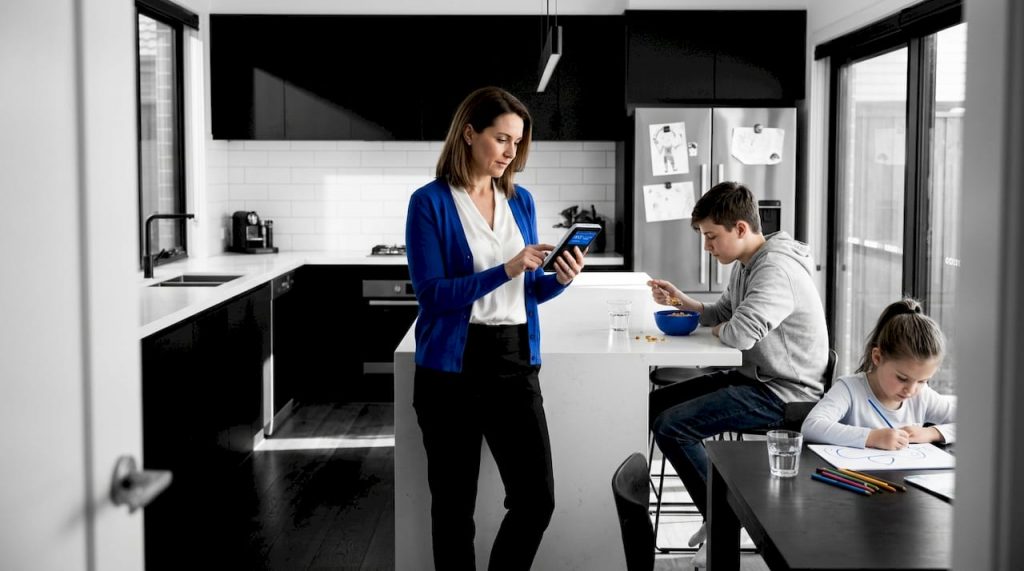
Cross-check what a smart air monitor actually reports against the room you are testing, because a device tucked behind a curtain or beside a running appliance will give misleading numbers regardless of how good its sensors are.
Pro Tip: Export your readings to the manufacturer’s app or a simple spreadsheet weekly. A single bad reading is often noise, but a repeating pattern across several days points to a real, fixable source.
How do you choose the right indoor air quality monitor?
The right monitor depends on which pollutants concern you most, not on how many features the box lists. Start by matching the device to your actual problem: dust and allergies point towards PM2.5 accuracy, a stuffy bedroom points towards CO2, and a musty basement points towards humidity and mould-friendly conditions.
Sensor type separates reliable devices from decorative ones. Look specifically for NDIR CO2 sensors, since eCO2 estimates derived from VOC readings are known to be unreliable for actual ventilation tracking. For particles, laser-based optical sensors give the most consistent PM2.5 readings among consumer-grade devices.
Beyond sensor type, weigh these practical factors:
- Portability: a battery-powered unit lets you test multiple rooms; a mains-only unit suits a fixed monitoring spot.
- Data logging: app history or exportable data makes trend-spotting far easier than checking a screen once a day.
- Calibration: check whether the manufacturer states an accuracy range or recalibration schedule.
- Running cost: some units need replacement sensor cartridges, which adds to the true cost of ownership.
Budget tiers roughly break down into three bands. Entry-level trend monitors flag obvious problems and alert you to spikes. Mid-range multi-parameter units, the kind detailed in this digital air quality monitor guide, suit daily tracking across PM2.5, CO2 and humidity. Dedicated CO and radon detectors remain a separate purchase regardless of budget, because no multi-parameter monitor reliably substitutes for either.
Pro Tip: On a tight budget, prioritise a monitor that measures PM2.5 and CO2 accurately, then add a standalone CO alarm and a radon test kit rather than chasing an all-in-one device that does everything adequately and nothing well.
What IAQ readings mean and when should you act?
Numbers only help if you know what they mean. These are the benchmarks most home users rely on:
- PM2.5: readings that stay low most of the time but spike during cooking are normal; sustained elevation across a full day suggests a persistent source or poor filtration.
- CO2: certain CO2 level ranges indicate varying degrees of ventilation adequacy, with lower levels showing good ventilation and higher levels signaling need for airing or ventilation improvement.
- Carbon monoxide: any alarm activation means evacuate immediately. There is no safe “wait and monitor” tier with CO.
- Humidity: aim for 30 to 50% relative humidity. Below that range dries out skin and airways; above it invites mould and dust mites.
- Radon: action levels vary by country, but persistent readings above your national guidance level warrant mitigation, typically sub-slab depressurisation.
Treat single spikes with a healthy dose of scepticism. Consumer sensors carry inherent uncertainty, and a five-minute PM2.5 spike from toast burning is not the same signal as an elevated 24-hour average. Monitoring PM2.5 alongside CO2 gives a clearer picture than watching either number in isolation, since CO2 tells you about ventilation while PM2.5 tells you about particle load.
When a reading crosses into concerning territory, act in stages. Immediately, open windows, switch on exhaust fans, and run a HEPA purifier. Over the following days, track whether the pattern repeats and inspect likely sources, gas appliances, damp corners, unventilated bathrooms. If problems persist, escalate to professional testing. The health stakes justify the caution: reducing indoor PM2.5 through filtration and ventilation is linked to lower cardiovascular risk in populations with significant pollution exposure.
When should you hire a professional for indoor air quality testing?
Bring in a professional when symptoms persist despite normal-looking readings, when you find mould alongside inconsistent monitor data, when radon tests exceed your national action level, or after renovation work introduces unfamiliar chemical exposure.
Professionals typically measure with calibrated particle counters, full VOC panels, formaldehyde-specific tests, carbon monoxide, radon, and an inspection of ventilation and HVAC performance. That level of detail goes well beyond what any consumer monitor attempts.
Expect a written report with lab results and remediation recommendations, not just a verbal summary. Before booking, ask what pollutants are included, whether the report includes actionable remediation steps, and whether follow-up testing is part of the service. A layered approach, consumer monitor first, then targeted kits, then professional testing only when needed, keeps costs proportional to the actual problem.
What should you do when your monitor shows poor air quality?
Work through fixes from fastest to most permanent:
- Open windows or run exhaust fans immediately to flush the space.
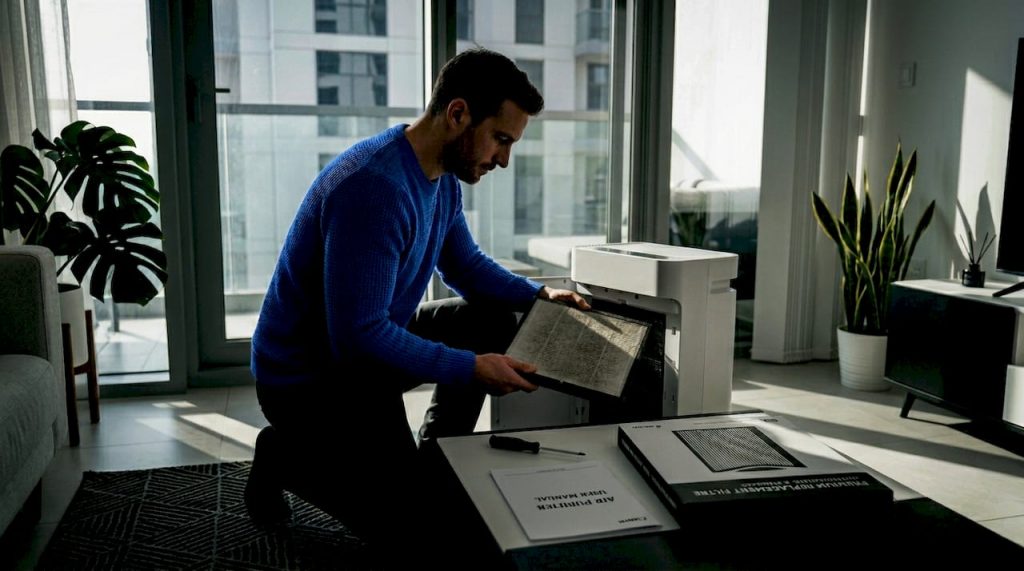
- Run a HEPA air purifier sized for the room while ventilating.
- Stop the source: turn off an unvented gas burner, extinguish candles or incense, or move cleaning activities outdoors.
- Evacuate immediately and call emergency services if a carbon monoxide alarm sounds. Do not attempt to ventilate first.
Once the immediate spike settles, address the underlying pattern:
- Use exhaust fans routinely during cooking and showering, not just when levels spike.
- Replace HVAC filters on schedule rather than waiting for visible dust.
- Dry damp areas promptly and fix any leaks contributing to elevated humidity.
For longer-term fixes, consider upgrading to HEPA H13 filtration, adding whole-home ventilation such as an HRV or ERV where appropriate, sealing structural sources of damp, and testing for radon if you have not already. These changes take weeks or months to plan but address root causes rather than symptoms.
How do you maintain monitors and where can you get support?
A monitor that is not maintained drifts out of accuracy over time. Clean particle sensors every few months, since dust buildup on the optical chamber skews PM2.5 readings low. Replace batteries or check mains connections regularly, and install firmware updates when the manufacturer releases them, since calibration improvements often ship this way.
When it is time to act on a poor reading, browse air purifiers by room size and CADR rating rather than picking the first option you see. Matching purifier capacity to room size determines whether it actually clears PM2.5 at a useful rate. Before buying any purifier, check replacement filter cost and availability, since ongoing filter expense often outweighs the upfront price over a year of use.
If humidity readings sit outside the 30 to 50% range, a dedicated dehumidifier or humidifier addresses that specific problem more directly than a purifier ever will.
Where can you read more about indoor air quality?
For deeper reading, consult the WHO household air pollution fact sheet and Harvard Health’s guidance on indoor air and heart health. Always check your monitor’s manual and your national radon or CO alarm standards for device-specific behaviour.
Why quick checks beat perfect data
The conventional advice on indoor air quality overloads people with sensor specifications before they have even confirmed a problem exists. That gets the priority backwards. A cheap monitor with a decent NDIR sensor, run for a week while you jot down when you feel off, tells you more than an expensive device left in the wrong corner of the house.
What gets underestimated is how much sensory information you already have. A musty smell or a headache that lifts the moment you step outside is data, and it often surfaces mould or ventilation problems before any consumer sensor would catch them. Digital monitoring and physical observation work best as a pair, not as competing methods.
If there is one place to put your first dollar, it is a monitor that measures PM2.5 and CO2 reliably. Radon kits and CO alarms matter, but they answer narrower questions. Get the daily picture right first, then layer in the specific tests as your situation demands it.
This article is general information, not a substitute for advice from a qualified doctor. Consult a qualified healthcare professional about your own circumstances before acting on anything here.
Sources
- Indoor air quality and heart health – Harvard Health
- Household air pollution and health – WHO
- Improving indoor air quality might save your life » Yale Climate Connections
- Home Air Quality Testing: DIY Kits, Monitors & Pro Help
- Signs of unhealthy indoor air – American Lung Association
Recommended
- Step by step air quality assessment for homes — Blog | ClimatePro UAE
- Role of smart air monitors: 2026 home guide — Blog | ClimatePro UAE
- How to improve indoor air quality at home in Australia — Blog | ClimatePro UAE
- Air pollution effects on plants: what protects your indoor garden — Blog | ClimatePro UAE