
Air pollution harms animals by causing respiratory illness, sensory disruption, reproductive failure, and ecosystem collapse. The technical term for this field of study is environmental toxicology, and its findings apply equally to your pet dog and to a honeybee foraging in a city park. Pollutants such as particulate matter (PM2.5), nitrogen oxides, and ground-level ozone do not discriminate between species. Understanding the impact of air pollution on wildlife and domestic animals is the first step toward protecting the creatures in your care and the broader ecosystems they depend on.
How does air pollution cause respiratory and systemic health issues in animals?
Air pollution damages animal respiratory systems through two primary agents: fine particulate matter (PM2.5) and toxic gases such as nitrogen oxides and ozone. PM2.5 particles are small enough to penetrate deep into lung tissue, triggering inflammation that can become chronic. Nitrogen oxides irritate airways and reduce the lung’s ability to clear pathogens. Ozone degrades lung cell membranes on contact.

The effects are well documented in commercial poultry. PM2.5 in poultry houses consists of feed dust, feather fragments, and dried faecal matter, creating a complex mixture that causes measurable lung inflammation in broilers. This is not an isolated agricultural problem. The same particle sizes circulate in urban air and affect pets living in homes near busy roads or industrial zones.
Pets with pre-existing conditions face compounded risk. Short-snouted breeds such as French Bulldogs, Pugs, and Persian cats have reduced breathing reserve, meaning even moderate pollution levels can push them into respiratory distress. For these animals, air quality is not a background concern. It is a direct health variable.
The harm extends beyond the lungs. PM2.5 exposure triggers brain-wide oxidative stress and structural changes in both laboratory animals and humans. Oxidative stress means cells are damaged faster than the body can repair them. Over time, this contributes to neurological decline, cardiovascular disease, and immune suppression in affected animals.
Key respiratory and systemic effects of air pollution on animals include:
- Airway inflammation: PM2.5 and ozone irritate the bronchial lining, causing swelling and reduced airflow.
- Chronic lung disease: Repeated exposure leads to fibrosis and permanent loss of lung capacity.
- Neurological damage: PM2.5 crosses the blood-brain barrier, causing oxidative stress and structural brain changes.
- Immune suppression: Pollutant-driven inflammation diverts immune resources, leaving animals more vulnerable to infection.
- Cardiovascular strain: Systemic inflammation from dirty air increases the workload on the heart.
Pro Tip: If your pet coughs frequently after outdoor walks or shows reduced stamina, consult a vet and check local air quality index readings for your area. Pollution spikes often correlate with high-traffic periods and weather inversions.
In what ways does air pollution interfere with animal sensory functions and behaviour?
Air pollution degrades the chemical signals that animals rely on for survival before it causes any visible physical harm. This is one of the least understood consequences of dirty air, and it affects species from insects to large mammals. Floral scents, pheromones, and territorial markers are all volatile organic compounds. Ozone and nitrogen oxides react with these compounds and break them down in the atmosphere.
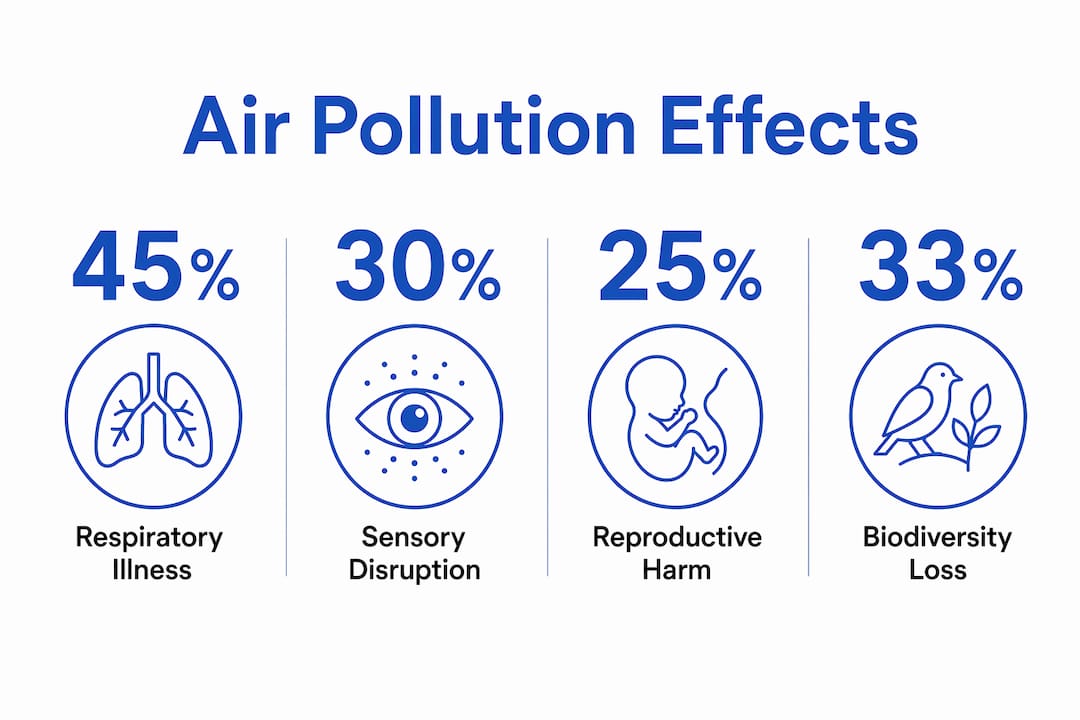
The consequences for pollinators are severe. In ozone-polluted air, only 30% of honeybees could recognise floral scents at 6 metres, compared to bees in clean air. That figure represents a catastrophic reduction in foraging efficiency. Fewer successful foraging trips means less food for the colony and reduced pollination for the plants that depend on bees.
The disruption does not stop at feeding. Ozone pollution breaks down insect pheromones, causing male moths to court other males instead of females and leaving insects more exposed to predators because they cannot detect warning signals. These are not minor inconveniences. They are direct threats to reproductive success and survival.
The sequence of sensory disruption follows a clear pattern:
- Pollutants react with scent compounds in the air, reducing their concentration and altering their chemical structure.
- Animals fail to detect food sources at normal distances, forcing longer and riskier foraging trips.
- Mating signals are degraded, reducing successful pairings and lowering birth rates across affected populations.
- Predator detection weakens, increasing mortality rates among prey species that rely on chemical cues for early warning.
- Population decline accelerates, as reproductive failure and higher predation combine over successive seasons.
Pro Tip: Garden design matters for urban wildlife. Planting dense clusters of strongly scented native flowers gives pollinators a better chance of detecting blooms even in moderately polluted air.
What are the reproductive and ecological consequences of chronic air pollution exposure on wildlife?
Chronic pollution exposure reduces reproductive capacity across a wide range of species. Air pollutants impair reproduction in marine life by disrupting endocrine systems, the hormone networks that regulate fertility, gestation, and offspring development. On land, nitrogen deposition alters soil chemistry, which changes plant communities, which in turn removes the food and shelter that wildlife depends on.
The scale of ecological damage from nitrogen deposition is measurable. Nitrogen deposition causes a 33% loss of species richness in UK plant communities, according to the Joint Nature Conservation Committee (JNCC). A one-third reduction in plant species diversity does not just affect botanists. It collapses the food web from the ground up, removing specialist insects, then the birds and mammals that feed on them.
| Pollution type | Primary ecological impact | Affected species groups |
|---|---|---|
| Nitrogen deposition | 33% loss of plant species richness | Insects, birds, small mammals |
| PM2.5 | Lung inflammation and systemic disease | Poultry, pets, urban wildlife |
| Ozone | Sensory disruption and pheromone breakdown | Pollinators, moths, predator-prey species |
| Endocrine disruptors | Reproductive failure and hormonal imbalance | Marine life, amphibians, reptiles |
Chronic pollution exposure also disrupts ecosystem functionality beyond direct toxicity. Species that were once in balance shift in relative abundance. Pollution-tolerant species outcompete sensitive ones, reducing biodiversity and making ecosystems less resilient to other pressures such as drought or disease. The result is a simplified ecosystem that is far more vulnerable to collapse.
How does air pollution affect domestic pets and what practical steps can owners take?
Domestic pets face a specific and underappreciated risk: they spend significant time indoors, but indoor air is not clean air. Outdoor pollutants infiltrate homes, mixing with indoor contaminants such as cleaning product fumes, cooking smoke, and off-gassing from synthetic materials. The combined exposure is often higher than either source alone. Pets that spend time on the floor are also closer to settled dust and particulates than their owners.
Pollution acts as a stressor that worsens existing respiratory or cardiovascular conditions in pets. A dog with mild asthma may manage well in clean air but deteriorate quickly during a pollution episode. Cats, which groom constantly, ingest particulates that settle on their fur. Birds kept indoors are acutely sensitive to airborne toxins because of their highly efficient respiratory systems.
Practical steps pet owners can take to reduce pollution exposure include:
- Monitor air quality daily. Check the local Air Quality Index (AQI) before outdoor walks. Limit exercise during high-pollution periods.
- Avoid peak traffic times. Morning and evening rush hours produce the highest roadside PM2.5 concentrations. Walk pets at midday when possible.
- Reduce indoor pollution sources. Switch to fragrance-free cleaning products, avoid aerosol sprays, and ventilate when cooking.
- Use HEPA filtration indoors. A HEPA air purifier captures particles down to 0.3 microns, removing the PM2.5 fraction that causes the most harm. Learn more about indoor air quality solutions for homes with pets.
- Watch for warning signs. Persistent coughing, wheezing, reduced stamina, or eye discharge after outdoor time are signs that pollution may be affecting your pet’s health.
Pro Tip: Place your air purifier in the room where your pet spends the most time, not just the bedroom. Consistent filtration in a pet’s primary living space delivers the greatest reduction in cumulative exposure.
What advances and interventions exist to mitigate air pollution impacts on animals?
Science is developing targeted interventions to reduce the harm dirty air causes to animals. The most specific recent advance involves probiotic treatment for poultry. Intratracheal administration of Lactobacillus rhamnosus at 1×10^4 CFU/mL reduces lung inflammation caused by PM2.5 in broilers. This approach works because the complex PM2.5 mixture in poultry houses requires a microbiota-focused response, not just physical filtration. The finding opens a pathway for probiotic-based respiratory protection in other species.
For domestic pets and indoor animals, HEPA air purifiers remain the most practical and evidence-supported intervention. HEPA filters capture PM2.5 and finer particles, reducing the concentration of the pollutants most associated with lung inflammation and systemic harm. Understanding air quality concepts such as particle size categories and AQI thresholds helps pet owners choose the right filtration level for their home.
At the ecosystem level, the most effective interventions combine emissions reduction with habitat conservation. Reducing nitrogen oxide emissions from vehicles and industry directly lowers the nitrogen deposition that strips plant diversity. Protecting and restoring native vegetation buffers wildlife from the sensory disruption caused by ozone. Neither approach works in isolation. Filtration protects animals indoors; emissions policy protects them outside.
Key takeaways
Air pollution harms animals through respiratory damage, sensory disruption, reproductive failure, and biodiversity loss, making clean air a direct animal welfare issue.
| Point | Details |
|---|---|
| Respiratory and systemic harm | PM2.5 and ozone cause lung inflammation, oxidative stress, and neurological damage in pets and wildlife. |
| Sensory disruption | Ozone degrades pheromones and floral scents, impairing foraging, mating, and predator detection in pollinators and insects. |
| Ecological consequences | Nitrogen deposition causes a 33% loss of plant species richness, collapsing food webs and reducing biodiversity. |
| Pet owner action | Monitor AQI daily, reduce indoor pollution sources, and use HEPA filtration in rooms where pets spend the most time. |
| Emerging interventions | Lactobacillus rhamnosus probiotics reduce PM2.5-induced lung inflammation in poultry, pointing toward new treatment pathways. |
Why I think we underestimate what pollution does to animals
Most public conversation about air pollution focuses on human health. The animal side of this story gets far less attention, and that gap has real consequences. Pets cannot tell you their chest feels tight. A honeybee colony does not file a health report when its foraging range collapses. The harm accumulates silently.
What strikes me most is the sensory disruption angle. We accept that pollution makes air harder to breathe. We rarely consider that it also makes the world harder to smell, and for most animals, smell is the primary sense. A 70% reduction in scent recognition for honeybees is not a minor inconvenience. It is a survival crisis playing out invisibly across every polluted city.
Pet owners have more direct influence than they realise. Choosing HEPA filtration, checking AQI before walks, and reducing indoor chemical sources are not symbolic gestures. They are measurable reductions in the daily pollutant load your animal absorbs. The same logic applies to supporting emissions reduction policy. The animals most affected by outdoor air quality have no vote and no voice in that process.
The evidence is clear enough to act on now. Waiting for perfect certainty is a choice that costs animals their health.
— Nevel
Cleaner indoor air for your pets, with Climatepro
Protecting your pet from airborne pollutants starts indoors, where you have direct control over air quality. Climatepro stocks a range of HEPA air purifiers suited to homes, apartments, and offices across the UAE, with delivery available to Dubai, Abu Dhabi, Sharjah, and all seven emirates.

The Honeywell Air Touch range, available at Climatepro, uses True HEPA filtration to capture PM2.5 and finer particles, the same particle fraction linked to lung inflammation and systemic harm in pets. The Honeywell Air Touch P2 is a strong choice for medium-sized rooms, while the Honeywell Air Touch U1 suits larger living areas. Placing a unit in the room where your pet spends the most time delivers the most consistent reduction in daily pollutant exposure.
FAQ
How does air pollution affect animals directly?
Air pollution causes respiratory inflammation, sensory disruption, reproductive failure, and neurological damage in animals. PM2.5 and ozone are the primary agents, affecting species from domestic pets to wild pollinators.
Are pets more vulnerable to air pollution than humans?
Pets with short snouts or pre-existing conditions have reduced breathing reserve, making them more sensitive to moderate pollution levels. Animals that spend time on the floor also absorb higher concentrations of settled particulates.
What signs indicate my pet is affected by poor air quality?
Persistent coughing, wheezing, eye discharge, and reduced stamina after outdoor activity are common indicators. These symptoms often worsen during high-AQI days or near heavy traffic.
Does indoor air protect animals from outdoor pollution?
Outdoor pollutants infiltrate homes and mix with indoor contaminants, creating cumulative exposure risks for pets. HEPA filtration reduces this combined indoor pollutant load significantly.
How does air pollution affect wildlife ecosystems?
Nitrogen deposition causes a 33% loss of plant species richness, disrupting food webs from insects through to birds and mammals. Ozone also degrades pheromones and floral scents, impairing pollinator foraging and mating success.