Indoor air quality in UAE homes is a genuine health concern, not just a comfort preference. This home air quality improvement guide addresses the specific conditions that make UAE residences prone to trapped pollutants, elevated humidity, and inadequate fresh air circulation. The combination of year-round air conditioning, tightly sealed buildings, and outdoor dust creates an environment where standard advice falls short. Whether you live in a Dubai apartment or a villa in Abu Dhabi, the steps covered here are practical, evidence-based, and designed for the UAE’s climate.
Table of Contents
- Understand the problem: indoor air quality challenges in UAE homes
- Prepare your home for air quality improvement: what you need and check first
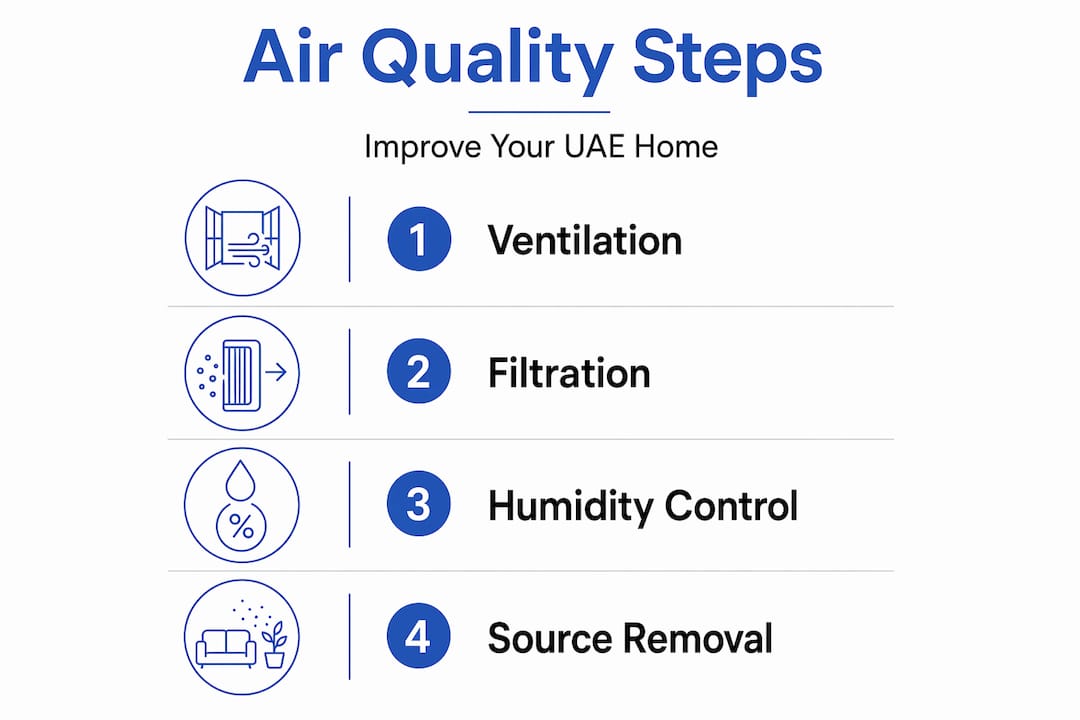
- Execute improvement steps: ventilation, filtration, humidity control, and source removal
- Verify and maintain ongoing air quality improvements in your home
- Fresh perspectives on achieving lasting indoor air quality improvements in UAE homes
- Take the next step with ClimatePro’s air quality solutions
- Frequently asked questions
Key Takeaways
| Point | Details |
|---|---|
| UAE homes face unique air quality challenges | Sealed construction and climate cause pollutant buildup requiring mechanical ventilation and filtration. |
| Humidity control is critical | Maintain indoor humidity between 30% and 50% to prevent mould and dust mite growth. |
| HVAC maintenance improves air quality | Regular professional cleaning plus filter changes every 2-3 months reduce allergens and extend system life. |
| Effective filtration requires correct sizing | HEPA purifiers must be sized for 4-5 air changes per hour to benefit allergy and asthma sufferers. |
| Ongoing monitoring ensures lasting benefits | Use sensors and annual assessments to track air quality and catch issues early for sustained health. |
Understand the problem: indoor air quality challenges in UAE homes
Most UAE residents spend the vast majority of their time indoors. Dubai residents spend approximately 90% of their time inside, where HVAC systems recirculate pollutants and elevated humidity triggers microbial growth. That is not a minor issue. It means the quality of the air inside your home directly shapes your daily health.
Several factors make improving air quality in UAE apartments more demanding than in cooler climates:
- Air conditioning dependence: Continuous AC use keeps outdoor heat out but also keeps indoor pollutants in. Dust, volatile organic compounds (VOCs), and biological contaminants build up when air is not regularly exchanged.
- Elevated indoor humidity: When AC systems are not maintained, or when apartments have poor drainage, indoor humidity can exceed 60%, creating conditions where mould and dust mites thrive.
- Sealed building design: UAE homes are sealed for cooling efficiency, which significantly restricts natural fresh air exchange and requires mechanical ventilation to compensate.
- Outdoor pollution and dust: Sandstorms and construction activity push fine particulate matter into any gaps in the building envelope, adding to indoor pollutant loads.
“Tightly constructed buildings solve one problem and create another. They reduce energy use but trap everything inside with you, including pollutants your nose cannot detect.”
Understanding these root causes is what separates effective remediation from surface-level fixes.
Prepare your home for air quality improvement: what you need and check first
Before purchasing equipment or adjusting settings, a clear-eyed assessment of your home’s current condition is essential. Acting without this step often leads to wasted effort.
Start with moisture sources. Inspect under sinks, around AC units, behind washing machines, and in bathrooms. Any visible water stain, condensation, or musty odour signals a problem that must be corrected before filtration or humidity control can be effective.
Gather the right tools and equipment. A well-prepared homeowner needs:
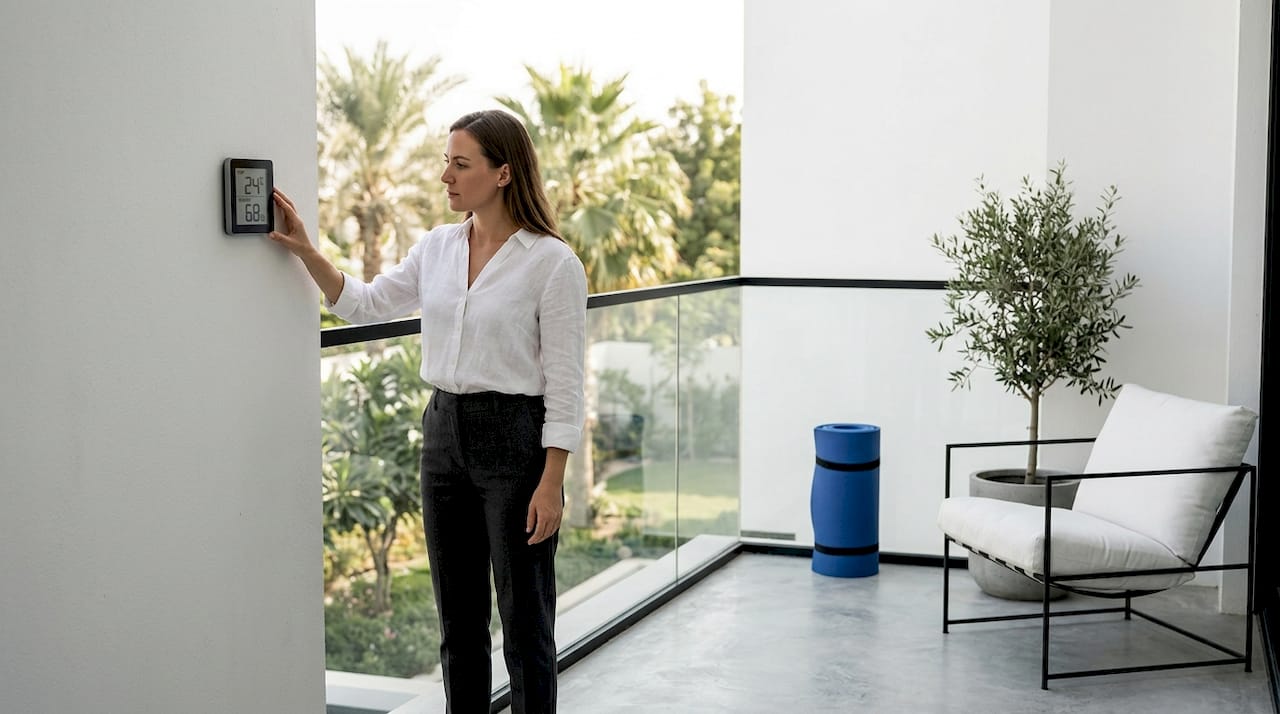
- A digital hygrometer to measure indoor relative humidity
- A HEPA-rated vacuum cleaner to reduce settled dust
- An air purifier with a true HEPA filter and activated carbon layer
- A dehumidifier or humidifier, depending on seasonal conditions
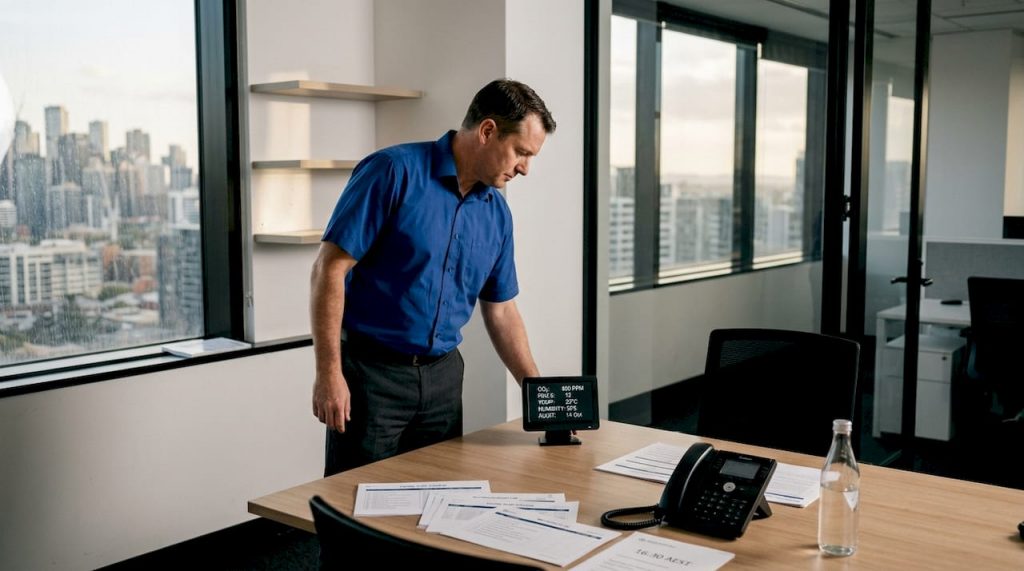
- A basic air quality monitor capable of measuring PM2.5 and VOC levels
Understand your HVAC system’s condition. Professional HVAC cleaning reduces airborne mould spores by over 90%, and HEPA filtration cuts PM2.5 particles by up to 90%. If your ducts have not been cleaned in the past year, this is a priority, not an optional step.
Set a clear humidity target. Maintaining indoor humidity between 30% and 50% is the recognised standard for inhibiting microbial growth while preserving comfort. Use your hygrometer readings as a baseline before making any changes.
| Preparation step | Tool or action required | Priority level |
|---|---|---|
| Inspect moisture sources | Visual check, torch | High |
| Measure indoor humidity | Digital hygrometer | High |
| Assess HVAC filter condition | Check filter age and appearance | High |
| Test air quality baseline | PM2.5 and VOC monitor | Medium |
| Book HVAC professional clean | Licensed HVAC technician | Medium |
Pro Tip: Before spending money on smart climate control tips or new equipment, fix any visible moisture problems first. Humidity management and air cleaning technologies in UAE homes are far less effective when there is an active water source driving mould growth.
Execute improvement steps: ventilation, filtration, humidity control, and source removal
With your baseline established and tools in hand, follow these steps in order. Each builds on the previous one.
-
Upgrade your ventilation. Natural ventilation is rarely viable in the UAE for most of the year. Energy recovery ventilators (ERVs) introduce fresh outdoor air while recovering energy from the outgoing air stream, which means ERVs effectively introduce fresh air in sealed UAE homes without significant energy loss. This is one of the most impactful investments you can make.
-
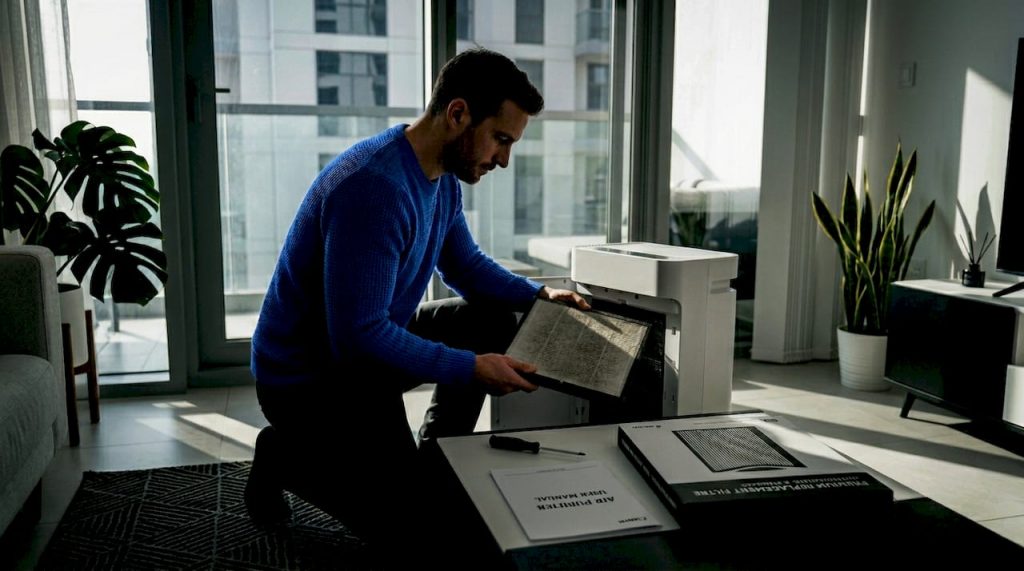
Improve your filtration. Replace your HVAC filter with a higher-MERV-rated option (MERV 11 to 13 is appropriate for most residential systems). Add a standalone HEPA air purifier in bedrooms and living areas. HEPA filters capture over 99.97% of particles down to 0.3 microns, and activated carbon layers adsorb VOCs and odours that HEPA alone cannot address.
-
Control indoor humidity. Use a dehumidifier during humid months and a humidifier during dry winter periods. The goal is to keep humidity consistently between 30% and 50%. Monitor readings daily until conditions stabilise. The air changes per hour provided by your ventilation system also plays a direct role in humidity regulation.
-
Remove or seal pollutant sources. Identify and remove products that emit VOCs, including certain paints, adhesives, air fresheners, and cleaning sprays. Where removal is not possible, ensure adequate ventilation when using these products and store them sealed in well-ventilated areas.
-
Fix all moisture and drainage issues. Fixing moisture issues is more important than cleaning visible mould, because mould returns without addressing the underlying humidity and leak sources. Repair leaks, seal gaps around AC units, and ensure bathroom exhaust fans are functioning.
| Filtration type | Best for | Limitation |
|---|---|---|
| Central HVAC with MERV 11-13 | Whole-home particle reduction | Does not address VOCs |
| Standalone HEPA purifier | Targeted room-level filtration | Limited to room size |
| Activated carbon filter | VOC and odour control | Requires regular replacement |
| ERV system | Fresh air and humidity balance | Higher installation cost |
Pro Tip: When selecting a portable air purifier, check the Clean Air Delivery Rate (CADR) for your room size. Most manufacturers state coverage areas based on a single air change per hour. For allergy or asthma relief, you need four to five air changes per hour, which reduces the effective coverage to roughly 40% of what the packaging states.
Verify and maintain ongoing air quality improvements in your home
Implementing changes is only half the work. Verification and consistent maintenance determine whether improvements last.
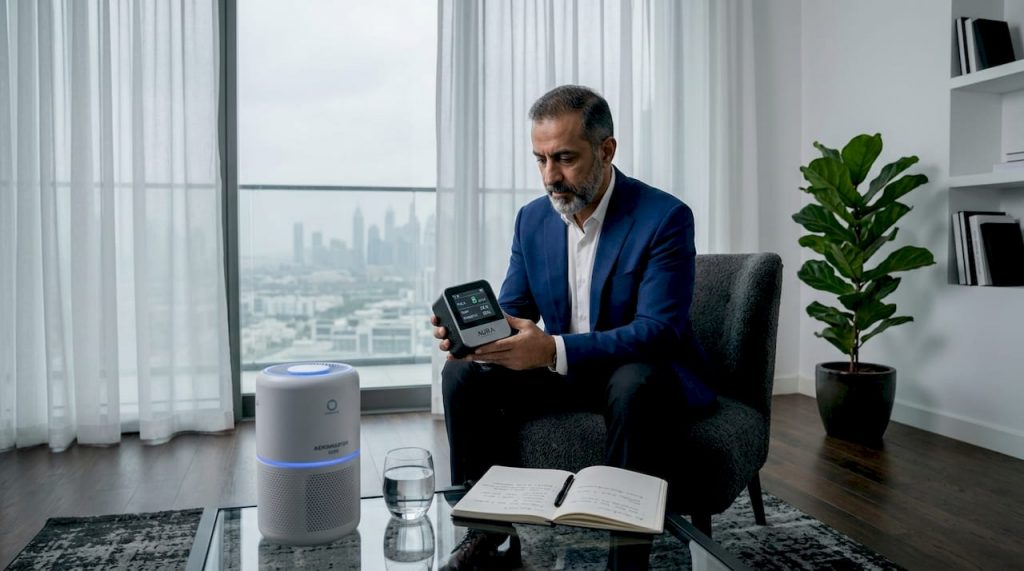
Monitor continuously. IoT-enabled air quality monitors can track PM2.5, VOCs, humidity, and temperature in real time. Reviewing this data regularly reveals whether your changes are working or whether new problems have emerged. Learning why monitoring AQI at home matters gives you a clearer picture of how daily activities like cooking, cleaning, and running the AC affect your indoor environment.
Keep a maintenance log. Record filter change dates, HVAC cleaning appointments, and any unusual humidity readings. This log helps you anticipate maintenance needs rather than reacting to problems after they develop.
Key maintenance intervals for UAE homes:
- HVAC filters: Replace every 2 to 3 months due to high dust levels in the UAE
- Air purifier filters: Follow manufacturer guidance but inspect monthly in dusty conditions
- HVAC professional cleaning: Every 6 to 12 months depending on environment and usage
- Full air quality assessment: Annual professional assessments are recommended, with more frequent checks if symptoms worsen or renovations occur
Schedule follow-up assessments. Follow-up assessments 6 to 12 months after initial interventions confirm whether improvements are holding. If readings have regressed, this points to an unresolved source issue rather than equipment failure.
Pro Tip: Pair your air quality monitor with a simple spreadsheet or app log. When you can see trends over weeks and months, it becomes straightforward to correlate spikes in PM2.5 or VOCs with specific events, such as a new cleaning product, a renovation in a neighbouring unit, or a sandstorm. Understanding these links is how you learn to interpret air quality index readings in context.
Fresh perspectives on achieving lasting indoor air quality improvements in UAE homes
The most common misconception among UAE homeowners is that opening windows is a sufficient indoor air quality solution. On a cooler day in January, this can help. For the other ten months, outdoor air in the UAE often carries fine dust, construction particulates, and high humidity that make indoor conditions worse, not better. Mechanical ventilation is more effective than natural ventilation for the vast majority of the UAE year.
A second persistent misconception is that cleaning visible mould resolves the problem. It does not. Mould is a symptom of sustained moisture. Without addressing the humidity source or the building defect allowing water ingress, mould returns within weeks regardless of how thoroughly the surface was treated. Moisture management is the core intervention; mould removal is secondary.
The 40% coverage rule for air purifiers is widely underappreciated. Manufacturers test under conditions that do not reflect allergy or asthma sufferer requirements. Buying a unit rated for 50 square metres and placing it in a 50-square-metre room will not deliver the air changes needed for meaningful health benefit. Size up significantly, or use multiple units.
Perhaps the most useful reframe is to stop treating indoor air quality as a single-product problem. A standalone air purifier improves filtration. A dehumidifier controls moisture. An ERV addresses fresh air exchange. A properly maintained HVAC system handles temperature and baseline filtration. Each component addresses a different variable. Air cleaning technologies work best as part of a coordinated approach, not as isolated solutions. The homeowners who see lasting results treat their indoor environment as a system, adjusting one variable at a time and measuring outcomes before making further changes.
One more point worth emphasising: HVAC filter replacement every 2 to 3 months is essential in UAE conditions. The standard advice of six-month intervals, which applies to moderate climates, is insufficient here. High dust loads clog filters faster, reducing airflow and pushing contaminants back into the living space.
Take the next step with ClimatePro’s air quality solutions
ClimatePro UAE stocks a range of products specifically suited to the conditions described throughout this guide. Whether you are addressing dust, humidity, VOCs, or inadequate fresh air, the right equipment makes a measurable difference.

Browse HEPA-certified air purifiers designed for UAE residential use, or explore dehumidifiers and humidifiers to help you maintain the 30% to 50% humidity range that protects against mould and dust mites. For those ready to address ventilation properly, read more about energy recovery ventilation explained and how ERV systems fit into a UAE home setup. ClimatePro delivers across Dubai, Abu Dhabi, Sharjah, Ajman, Ras Al Khaimah, Fujairah, and Umm Al Quwain, with product support available for residential, office, and commercial applications.
Frequently asked questions
How often should I replace HVAC filters in the UAE?
Due to high dust levels, HVAC filters in UAE homes should be replaced every 2 to 3 months. Standard 6-month schedules are insufficient in UAE conditions, as dust loads clog filters far faster and reduce both air quality and system efficiency.
Can opening windows improve indoor air quality in UAE homes?
Opening windows can help during cooler months with low outdoor pollution, but for most of the year the outdoor environment makes it counterproductive. UAE homes are sealed for cooling efficiency, and mechanical ventilation consistently outperforms natural ventilation across the UAE’s climate conditions.
What relative humidity should I maintain indoors to prevent mould?
Maintain indoor relative humidity between 30% and 50%. Microbial growth initiates at 60% relative humidity, so staying well below that threshold is the most reliable way to prevent mould and dust mite activity in UAE homes.
Do air purifiers replace the need for ventilation?
No. Air purifiers remove particles from circulating indoor air but do not supply fresh oxygen or remove carbon dioxide build-up. Purifiers and ventilation serve complementary functions and are both necessary for a complete indoor air quality approach.
How quickly can indoor air quality improve after making changes?
Particulate levels can drop within hours of effective filtration being in place. VOC reduction takes longer, often days to weeks, while microbial contaminants take the longest to resolve and require sustained humidity control alongside remediation.
Recommended
- How to improve air quality in UAE apartments — Blog | ClimatePro UAE
- Understand air cleaning technologies for healthier UAE homes — Blog | ClimatePro UAE
- How to interpret air quality index for healthy homes — Blog | ClimatePro UAE
- Levoit Core 300S air purifier: Guide to cleaner indoor air — Blog | ClimatePro UAE