Common air toxins include particulate matter (PM2.5 and PM10), nitrogen dioxide (NO2), ground-level ozone (O3), carbon monoxide (CO), sulfur dioxide (SO2), lead, volatile organic compounds (VOCs) such as benzene and formaldehyde, and polycyclic aromatic hydrocarbons (PAHs). Each has a distinct source, a distinct way of entering the body, and a distinct set of health effects.
The scale of the problem is not abstract. The World Health Organization estimates that air pollution contributes to roughly 6.7 million premature deaths worldwide every year, with household exposure to inefficient cooking fuels affecting around 2.1 billion people. Here is a quick reference before the detail:
- PM2.5 / PM10 — fine and coarse particles that penetrate the lungs and bloodstream, driving cardiovascular and respiratory disease.
- NO2 — a combustion gas linked to airway inflammation and worsened asthma.
- O3 (ground-level ozone) — a reactive gas that inflames lung tissue and aggravates asthma.
- CO — an odourless gas that blocks oxygen transport in blood, dangerous at high concentrations.
- SO2 — an industrial and combustion gas that irritates airways and eyes.
- Lead — a heavy metal toxin affecting neurological development, especially in children.
- VOCs (benzene, formaldehyde) — chemical vapours from fuels and building materials, some classified as carcinogens.
- PAHs — combustion by-products linked to cancer risk with prolonged exposure.
6.7 million premature deaths a year are attributed to air pollution globally, according to WHO figures, with PM, CO, O3, NO2 and SO2 named among the pollutants of greatest public-health concern.
Key Takeaways
Reducing your exposure to air toxins depends on matching the right response, source control, ventilation, or filtration, to the specific pollutant and setting you’re dealing with.
| Point | Details |
|---|---|
| Know the main toxins | PM2.5/PM10, NO2, O3, CO, SO2, lead, VOCs (benzene, formaldehyde), and PAHs cover most everyday exposure risks. |
| Exposure pattern changes risk | Short-term spikes cause immediate irritation; long-term low-level exposure to carcinogens builds cumulative risk over years. |
| Vulnerable groups need extra caution | Children, older people, pregnant people, and those with asthma or heart disease face higher risk at the same exposure level. |
| Indoor sources add a double burden | Gas stoves, fireplaces, tobacco smoke, and off-gassing furniture combine with infiltrated outdoor pollution indoors. |
| Match filtration to the pollutant | HEPA filters target particulate matter; activated carbon targets VOCs and odours; combined systems cover both. |
Table of Contents
- What are the main types of air pollutants?
- How does exposure duration change health risk?
- Where do air toxins come from inside your home?
- How are air toxins measured and regulated?
- What can you do to reduce your daily exposure?
- When should you seek medical advice about air toxin exposure?
- Why understanding exposure matters more than memorising a pollutant list
- Frequently asked questions
- Sources
What are the main types of air pollutants?
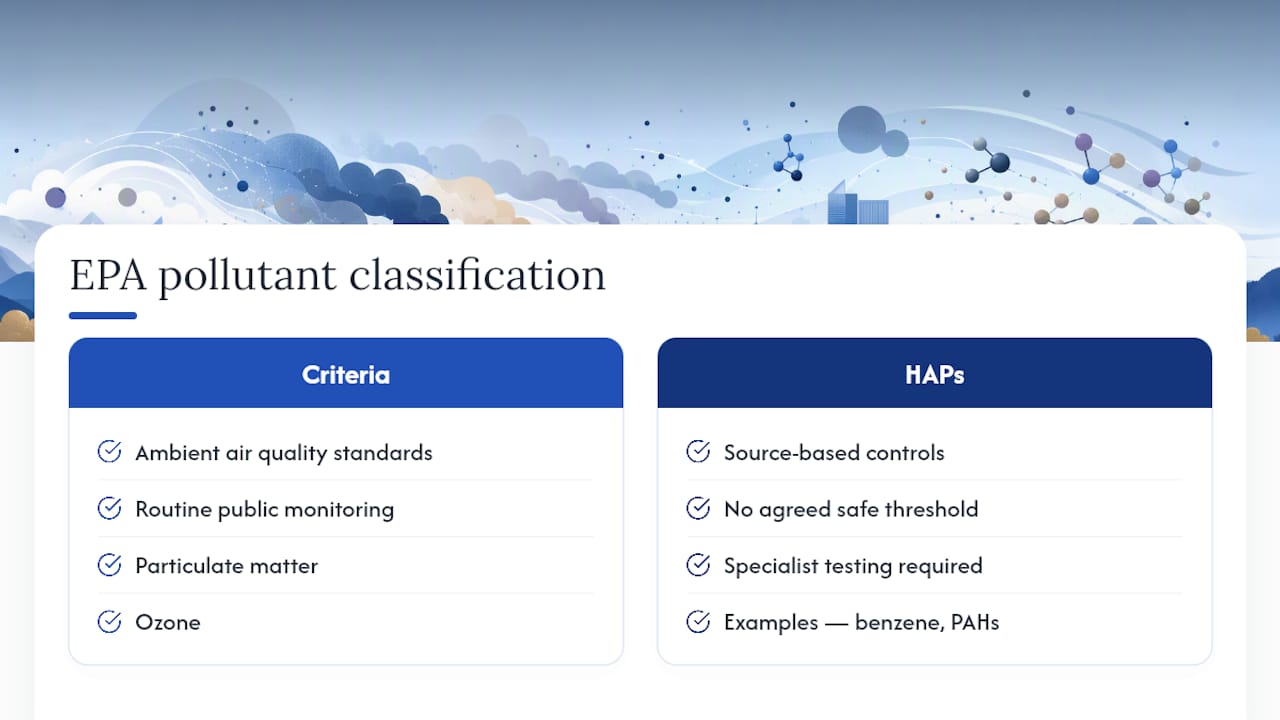
Regulators split harmful airborne substances into two broad categories: criteria pollutants, which have ambient air quality standards, and hazardous air pollutants (HAPs), also called air toxics, which are managed through source-based controls because there is no agreed safe threshold for their cancer or reproductive risks. The EPA’s framework names six criteria pollutants: particulate matter, ozone, carbon monoxide, sulfur dioxide, nitrogen dioxide and lead. VOCs like benzene and PAHs generally fall into the HAP category. That distinction matters when you’re trying to work out which pollutants get routine public monitoring and which ones need specialist testing to detect.
Particulate matter (PM2.5 and PM10)
Particulate matter is not one substance. It’s a mixture of solid particles and liquid droplets, ranging from dust and pollen down to particles roughly 30 times thinner than a human hair. The regulatory split between PM2.5 (fine particles under 2.5 micrometres) and PM10 (coarse particles up to 10 micrometres) exists because size determines how deep a particle travels into the respiratory system. EPA modelling shows PM2.5 penetrates past the nose and throat into the alveoli and can cross into the bloodstream, while PM10 tends to lodge in the upper airways.
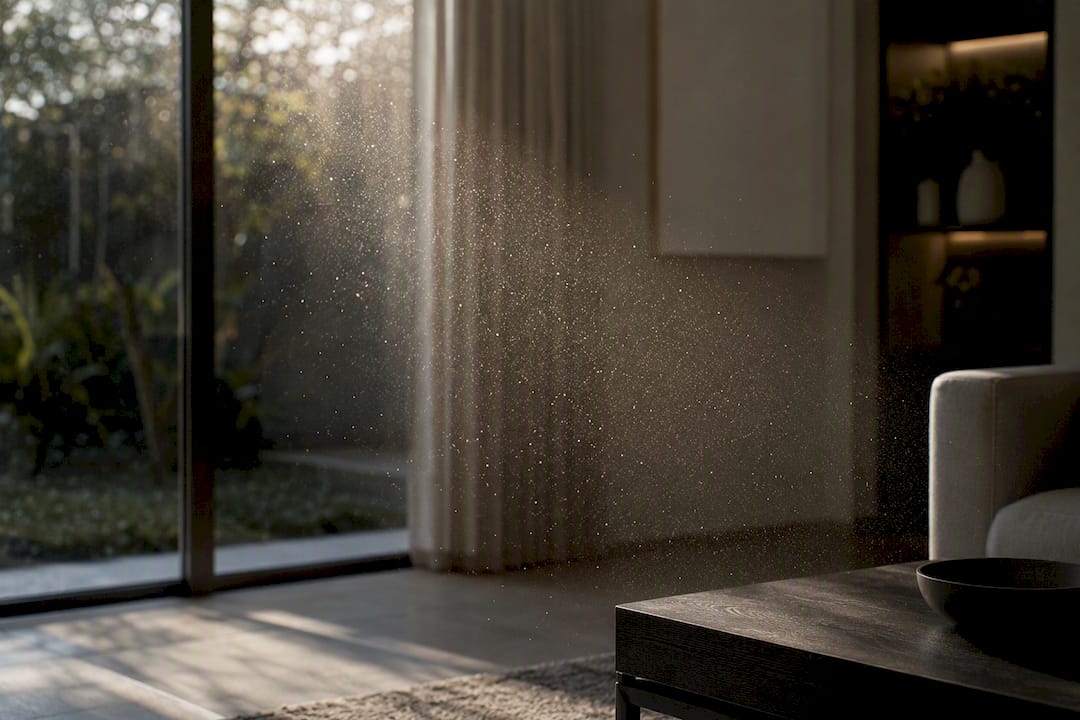
Outdoor sources include vehicle exhaust, construction dust, bushfires, and industrial combustion. Indoors, PM comes from cooking (especially frying and grilling), candles, tobacco smoke, and fireplaces. Health effects range from coughing and eye irritation at low exposure to heart attacks, stroke, and reduced lung function with sustained exposure. PM2.5 is measured in micrograms per cubic metre (µg/m3), and WHO guideline values sit well below levels common in many polluted cities.
Nitrogen dioxide (NO2)
NO2 is a reddish-brown gas produced mainly by burning fuel at high temperatures. Vehicles, gas stoves, and power plants are the dominant sources. It’s a criteria pollutant measured in parts per billion (ppb), and traffic corridors typically show the highest concentrations. NO2 inflames the lining of the airways, reduces immunity to lung infections, and is strongly associated with triggering and worsening asthma, particularly in children whose lungs are still developing. Traffic-related pollution is one of the more consistent sources of childhood respiratory harm because busy roads combine NO2 with PM and other combustion by-products in one exposure event.
Ground-level ozone (O3)
Ozone at ground level is a different beast to the protective ozone layer above the atmosphere. It forms when sunlight reacts with NO2 and VOCs, which is why ozone spikes tend to occur on hot, sunny afternoons rather than overnight. It’s a criteria pollutant with no direct emission source; it’s a secondary pollutant created in the air itself. EPA research links ambient ozone exposure to respiratory inflammation, aggravated asthma, and, in some studies, premature mortality during short-term exposure spikes. Outdoor exercise on high-ozone afternoons is one of the more avoidable exposure risks for otherwise healthy adults.
Carbon monoxide (CO)
CO is colourless, odourless, and produced by incomplete combustion of fuel, whether that’s a car engine, a gas heater, or a charcoal barbecue used in an enclosed space. It binds to haemoglobin more readily than oxygen does, which starves organs and tissue of oxygen. At low concentrations it causes headaches and dizziness; at high concentrations in poorly ventilated spaces, it kills within hours. Every enclosed combustion appliance in a home is a potential CO source, which is why working detectors matter more for this pollutant than for almost any other on this list.
Sulfur dioxide (SO2)
SO2 comes largely from burning fuels containing sulfur, particularly in power generation, shipping, and heavy industry. It’s a criteria pollutant that irritates the respiratory tract and eyes, and it reacts in the atmosphere to form fine particulate matter, adding a second exposure pathway on top of direct inhalation. People with asthma are notably more sensitive to short bursts of SO2 than the general population.
Lead
Lead is a heavy metal that was once common in petrol and paint and is now tightly restricted in most countries, but legacy exposure remains a concern near older housing stock, some industrial sites, and certain imported products. It’s one of the six criteria pollutants precisely because of its severity: lead accumulates in the body, and even low-level exposure in children is linked to reduced IQ, attention difficulties, and developmental delays. There is no known safe blood-lead level for children.
VOCs: benzene and formaldehyde
Volatile organic compounds evaporate readily at room temperature and cover a huge range of chemicals, from paint thinners to nail polish. Benzene, found in vehicle exhaust, tobacco smoke, and some industrial processes, is classified by the EPA as a hazardous air pollutant with well-documented cancer risk from prolonged exposure. Formaldehyde, released by pressed-wood furniture, some insulation, and certain adhesives, irritates the eyes and throat at low levels and is also classified as a carcinogen with sustained exposure. Both are examples of why the “criteria vs HAP” distinction exists: there’s no widely agreed safe threshold for either.
Polycyclic aromatic hydrocarbons (PAHs)
PAHs form when organic material burns incompletely, whether that’s tobacco, wood, charcoal, or diesel exhaust. They attach to particulate matter, which means inhaling PM often means inhaling PAHs at the same time. Several PAHs are recognised carcinogens, and cooking methods like charring or smoking food are a surprisingly under-discussed indoor and dietary source.
How does exposure duration change health risk?
Exposure and dose aren’t the same thing. Exposure is contact with a pollutant; dose is how much of it actually reaches your tissues, which depends on concentration, duration, and how you’re breathing (a jogger inhales far more polluted air per minute than someone walking). Two people standing in the same smoky room absorb different doses depending on their breathing rate, lung capacity, and time spent there.
Short-term spikes and long-term low-level exposure produce genuinely different health pathways. A WHO overview of health impacts notes that acute exposure to gases like NO2 causes immediate airway irritation, while chronic exposure to carcinogens such as benzene or formaldehyde builds cumulative risk that can stay silent for years before a diagnosis appears.
A rough timeline looks like this:
- Hours: Eye and throat irritation, coughing, headaches from CO or high PM events; asthma attacks can start within hours of a spike.
- Days: Hospital admissions for respiratory and cardiac events tend to climb during multi-day pollution episodes, such as bushfire smoke events or ozone heatwaves.
- Years: Chronic low-level exposure to PM2.5, benzene, formaldehyde, and PAHs is linked to cardiovascular disease, impaired lung development in children, and elevated cancer risk.
Some groups carry disproportionate risk regardless of exposure level. Children breathe more air relative to their body weight and have lungs still under development. Older people often carry existing cardiovascular or respiratory conditions that pollution worsens. Pregnant people face documented associations between air pollution and birth outcomes. People with asthma or heart disease sit closer to a clinical threshold, so a moderate spike that a healthy adult barely notices can trigger a genuine medical event for them. Outdoor workers and anyone in an occupationally exposed role add a layer of dose most residential guidance doesn’t account for.
Where do air toxins come from inside your home?
Outdoor pollution doesn’t stay outdoors. It infiltrates through windows, doors, and ventilation gaps, layering on top of whatever your home generates on its own. WHO material on air pollution describes this as a double burden: infiltrated outdoor PM and gases combine with indoor-generated pollutants, and in tightly sealed, energy-efficient homes, that combination can concentrate rather than disperse.
The common indoor contributors are familiar once you list them out:
- Gas stoves and unflued heaters, which release NO2 and CO during use.
- Fireplaces and wood heaters, a major indoor source of PM and PAHs.
- Tobacco smoke, still one of the most concentrated indoor sources of PM, benzene, and formaldehyde.
- Candles and incense, contributing PM and VOCs with regular use.
- Cleaning products, aerosols, and air fresheners, many of which release VOCs on contact with air.
- Paints, solvents, and new furniture or flooring, which off-gas formaldehyde and other VOCs for weeks or months after installation.
- Idling vehicles in attached or enclosed garages, a serious and underestimated CO risk.
Mitigation starts with source control: choosing low-VOC paints and furnishings, using a rangehood every time you cook with gas, and never running a combustion engine in an enclosed space. Ventilation habits matter almost as much as source control, particularly in apartments where cross-ventilation is limited and outdoor air needs deliberate management rather than an open window left to chance.
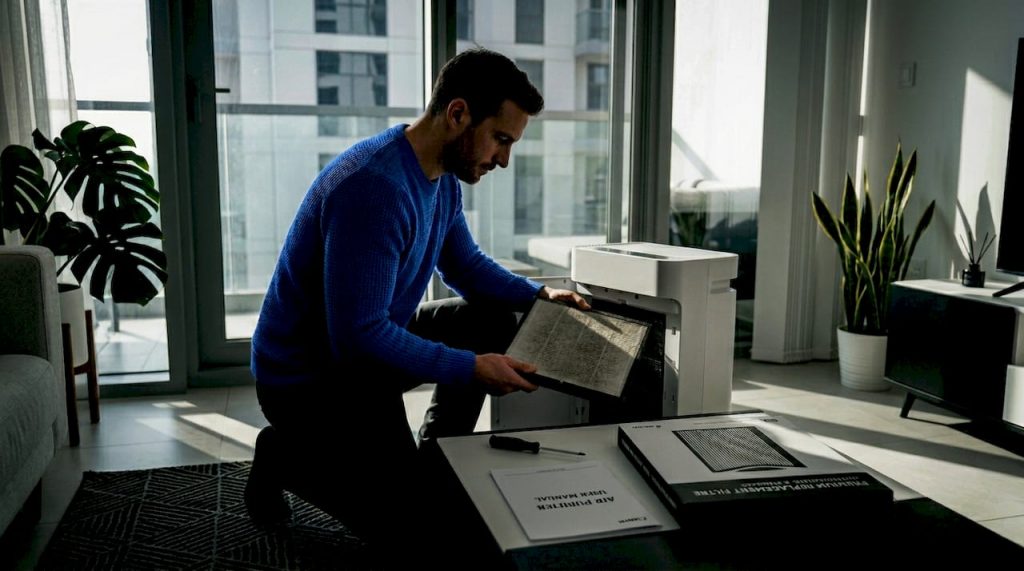
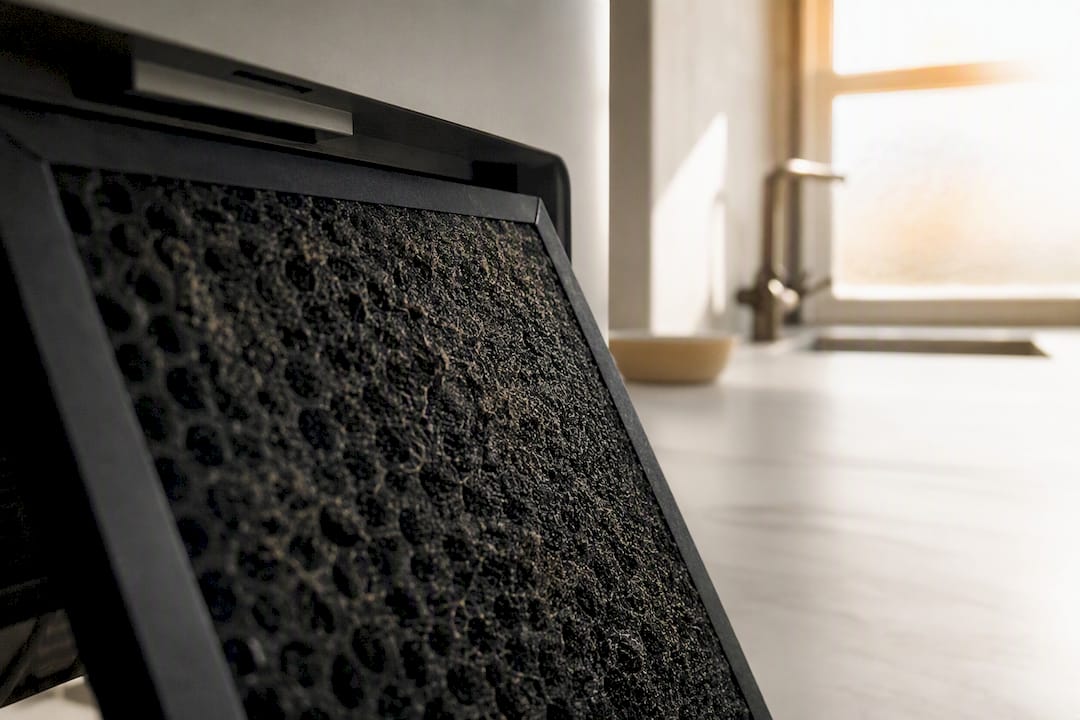
Filtration fills the gap ventilation can’t close, especially on high-pollution days when opening windows brings the problem inside. HEPA filtration is built to capture fine particles, including PM2.5, smoke, and pollen, while activated carbon media is designed to adsorb gaseous VOCs and odours that a HEPA filter alone won’t touch. A combined HEPA and carbon system covers both problems at once, which matters in homes dealing with both infiltrated outdoor PM and indoor off-gassing.
How are air toxins measured and regulated?
Air toxins are tracked using two main measurement conventions. Particulate matter is reported in micrograms per cubic metre (µg/m3); gases like NO2, O3, SO2, and CO are typically reported in parts per billion or parts per million (ppb/ppm). WHO publishes guideline values for several of these pollutants, giving health authorities a benchmark to compare monitored levels against, though actual legal limits vary by country and sit above the WHO guideline in many places.
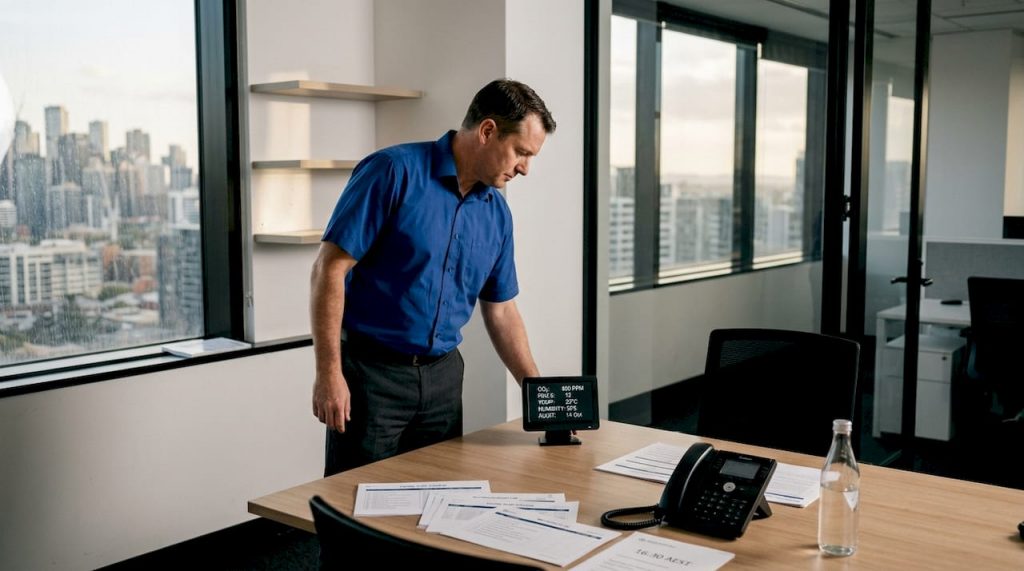
The Air Quality Index (AQI) exists to translate that raw technical data into something usable at a glance. It rolls several pollutant readings, usually PM2.5, PM10, O3, NO2, SO2 and CO, into a single number and colour-coded category, so the public gets one figure rather than six separate readings in different units. It’s a communication tool rather than a scientific measurement itself, and it’s most useful for deciding whether today is a day to limit outdoor exertion.
The regulatory split between criteria pollutants and hazardous air pollutants shapes how each group gets managed. Criteria pollutants carry ambient standards, meaning regulators set an acceptable concentration in outdoor air and monitor against it continuously. Hazardous air pollutants, including benzene, formaldehyde, and other substances the EPA lists as air toxics, are instead controlled at the source, factory emission limits, product formulation rules, because there’s no scientifically agreed safe exposure floor for many of them. Understanding this split helps explain why some pollutants get daily public reporting and others require targeted testing to even detect. Readers wanting the fuller technical picture can work through a broader explainer on air quality concepts covering AQI construction and guideline interpretation in more depth.
What can you do to reduce your daily exposure?
Small, consistent habits do more for your exposure profile than any single dramatic change. Checking a local AQI reading before a run and shifting outdoor exercise away from peak traffic hours cuts your PM and NO2 dose meaningfully, particularly near arterial roads. Choosing low-VOC paints, adhesives, and furniture when renovating avoids adding a slow-release indoor source that lingers for months.
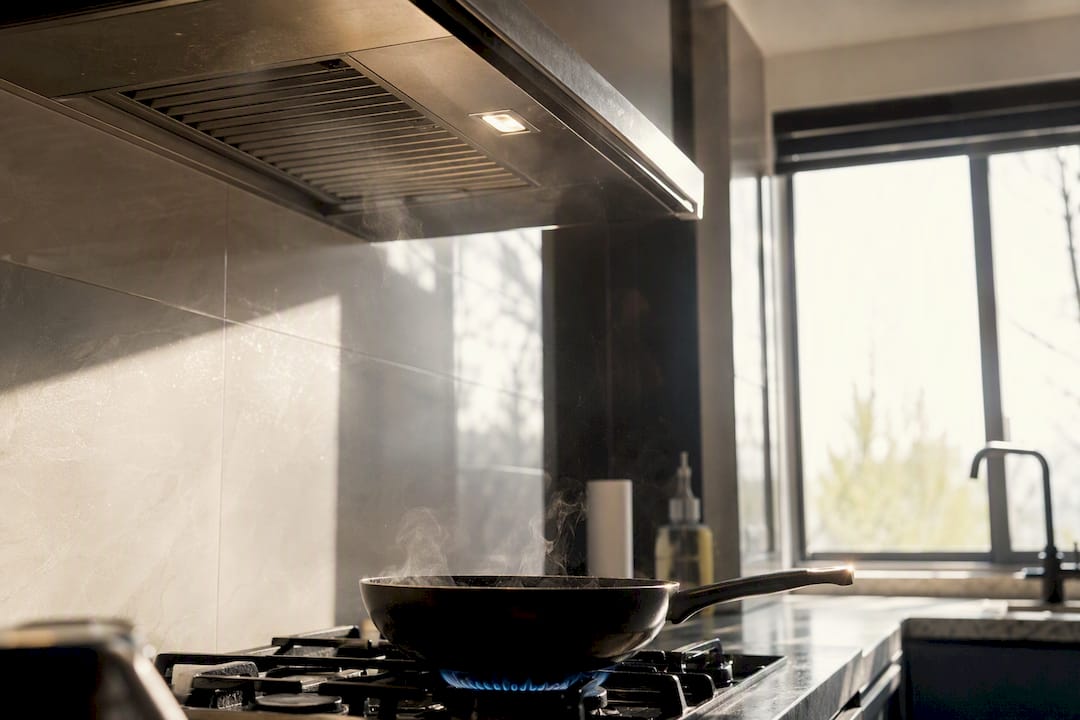
Indoors, the habits that matter most are the ones people skip out of convenience: running the rangehood every time you cook with gas, never idling a car in an attached garage even briefly, keeping smoking entirely outdoors, and having gas heaters and stoves serviced regularly to catch incomplete combustion before it becomes a CO problem.
Filtration earns its place on high-pollution days and in homes near busy roads or industrial areas. HEPA filtration is the right call for PM from traffic, smoke, or dust; activated carbon layers on protection against VOCs from furnishings or cleaning products. A purifier sized correctly for the room matters more than raw specifications, an undersized unit in a large living room won’t clear the air fast enough to matter. During bushfire smoke events or severe dust episodes, a well-fitted P2/N95 mask outdoors and a retreat to a filtered indoor space are the two most effective near-term protections available to an individual.
When should you seek medical advice about air toxin exposure?
Some symptoms warrant immediate attention rather than home management. Severe breathing difficulty, chest pain, fainting, or sudden confusion during or after a pollution event, particularly a CO exposure scenario, calls for emergency care without delay.
Recurring but less acute symptoms deserve a GP visit rather than an emergency response:
- Persistent coughing, wheezing, or breathlessness that tracks with pollution spikes.
- Worsening asthma control despite normal medication use.
- Ongoing headaches or fatigue in a home with gas appliances, which can point to low-grade CO exposure.
- Concerns about a child’s developmental symptoms near older housing, given the neurological risks tied to lead exposure.
For real-time conditions, local air-quality alert services and health department advisories remain the most reliable day-to-day reference, alongside the WHO and EPA resources cited throughout this article.
Why understanding exposure matters more than memorising a pollutant list
Most people can name two or three air toxins if asked. Fewer understand that the exposure pattern, not just the pollutant itself, determines whether a substance causes a headache today or a health problem in a decade. That gap in understanding is where most household mitigation advice falls short: it tells people to “improve air quality” without explaining that a benzene source and a CO source demand entirely different urgency.
The pollutants worth worrying about most are the ones with no safe threshold, benzene, formaldehyde, PAHs, because there’s no dose below which the cumulative cancer risk drops to zero. That’s a genuinely different risk category to something like ozone, which causes real but largely reversible irritation once exposure stops. Treating every pollutant on a single sliding scale of “bad” obscures which ones need product substitution (swap the source out entirely) versus which ones need ventilation and filtration (manage the exposure). Climatepro’s role in this picture is straightforward: matching a household’s actual pollutant mix, PM-heavy from traffic, VOC-heavy from new furniture, or both, to the right filtration approach, rather than selling a single generic solution to every indoor air problem.
For readers ready to act on the filtration side of exposure reduction, Climatepro’s air purifier catalogue covers HEPA and activated-carbon models suited to different room sizes and pollutant mixes. The Honeywell Air Touch P2 is a solid mid-range option for homes dealing with both PM infiltration and everyday VOC sources like cooking and cleaning products, and it sits at AED 705. Anyone managing filter replacements as part of routine maintenance can also check Climatepro’s replacement filter range to keep an existing purifier performing at its rated capacity rather than losing efficiency silently over months of use.
Frequently asked questions
What are the most common examples of air toxins?
Particulate matter (PM2.5 and PM10), nitrogen dioxide, ground-level ozone, carbon monoxide, sulfur dioxide, lead, VOCs such as benzene and formaldehyde, and PAHs are the pollutants most consistently named across WHO and EPA guidance.
What’s the difference between PM2.5 and PM10?
PM2.5 refers to fine particles under 2.5 micrometres that penetrate deep into the lungs and bloodstream; PM10 covers coarser particles up to 10 micrometres that mostly lodge in the upper airway. Size determines how far a particle travels into the body and how serious the resulting health effect tends to be.
Are indoor air toxins worse than outdoor ones?
Neither is universally worse. Indoor spaces combine infiltrated outdoor pollution with sources like gas stoves, tobacco smoke, and off-gassing furniture, which can push indoor concentrations of certain VOCs and particulates higher than outdoor levels, particularly in tightly sealed homes.
How do I know if my local air quality is unsafe?
Check your local AQI reading, which combines PM, ozone, NO2, SO2, and CO readings into one number and category. Rising numbers or “unhealthy” categories signal a day to limit outdoor exertion and consider indoor filtration.
Can air purifiers actually remove air toxins like benzene and formaldehyde?
HEPA filtration targets particulate matter effectively but doesn’t capture gaseous VOCs like benzene or formaldehyde on its own. Activated carbon media is designed specifically to adsorb these gases, so a unit combining both technologies covers a broader range of indoor air toxins than HEPA alone.
This article is general information, not a substitute for advice from a qualified doctor. Consult a qualified healthcare professional about your own circumstances before acting on anything here.
Sources
Recommended
- Air quality concepts explained: your 2026 guide — Blog | ClimatePro UAE
- Air pollution effects on plants: what protects your indoor garden — Blog | ClimatePro UAE
- How air pollution affects animals: a guide for pet owners — Blog | ClimatePro UAE
- List of air purification methods for healthier homes — Blog | ClimatePro UAE