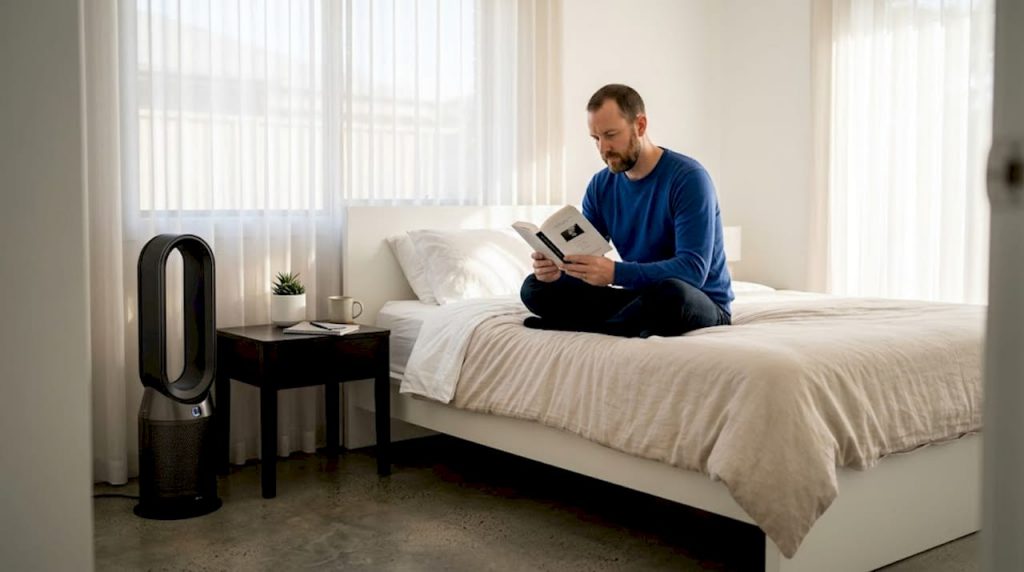
Choosing the right dyson air purifier for bedroom use is not as straightforward as picking the quietest or most expensive model on the shelf. Bedrooms present specific challenges: limited space, the need for near-silent operation during sleep, and the constant presence of allergens like dust mites, pet dander, and volatile organic compounds off-gassing from furniture. A unit that performs well in a living room may run too loudly or cover too little area once placed in a smaller, enclosed space. This guide covers the specifications, features, and models that actually matter for getting cleaner air while you sleep.
Table of Contents
- Key takeaways
- Dyson air purifier for bedroom: sizing and noise
- Core Dyson features for bedroom air quality
- Comparing popular Dyson models for bedrooms
- Getting the most from your Dyson in the bedroom
- My take on Dyson purifiers in the bedroom
- Find the right purifier for your bedroom
- FAQ
Key takeaways
| Point | Details |
|---|---|
| Noise levels matter most | Select a purifier operating below 45 dB to avoid disturbing sleep in bedroom environments. |
| Room size drives model choice | Measure your bedroom before buying; an undersised unit runs louder and cleans less effectively. |
| HEPA H13 filtration is the standard | Dyson’s sealed filter captures 99.97% of particles down to 0.3 microns, including common allergens. |
| Night Mode is the key bedroom setting | Using Night Mode limits fan speed and dims the display, making operation far more sleep-friendly. |
| Sensor readings need context | Temporary spikes from cooking or sprays do not mean poor overall air quality in your bedroom. |
Dyson air purifier for bedroom: sizing and noise
Before looking at any specific Dyson model, two specifications determine whether a purifier will actually work for your bedroom: coverage area and noise output.
Coverage area is measured in square metres and represents the floor space a unit can effectively clean within a set time period. If you place a purifier rated for 20 square metres into a 35-square-metre master bedroom, the motor works harder, the fan runs faster, and noise levels climb. Industry experts recommend that bedroom purifiers operate below 45 dB to avoid disrupting sleep, a threshold that is easy to breach when the unit is undersised for the room.
How to measure your room correctly
Measuring your bedroom takes under two minutes. Multiply the length by the width to get the floor area in square metres. For rooms with alcoves or wardrobes, measure the full rectangular footprint. Once you have your number, select a model rated for at least 20% more coverage than your actual room size. That buffer means the unit can run on a lower, quieter fan speed and still turn over the air fully.
Here is a practical reference for matching room size to purifier class:
| Room size | Recommended coverage rating | Noise impact at low speed |
|---|---|---|
| Up to 15 m² | 20 m² rated unit | Very low, typically under 38 dB |
| 15 to 25 m² | 30 to 35 m² rated unit | Low, typically 38 to 42 dB |
| 25 to 40 m² | 45 m² or higher rated unit | Moderate, manageable with Night Mode |
Dyson’s range spans compact models suited to smaller rooms through to larger units designed for open-plan spaces. Matching the unit to your specific room size is the single most reliable step toward quieter overnight operation.
Pro Tip: If your bedroom is above 30 square metres, consider a model in Dyson’s Big Quiet range. These units are engineered specifically to move larger volumes of air at lower fan speeds, keeping noise down without sacrificing purification performance.
Core Dyson features for bedroom air quality
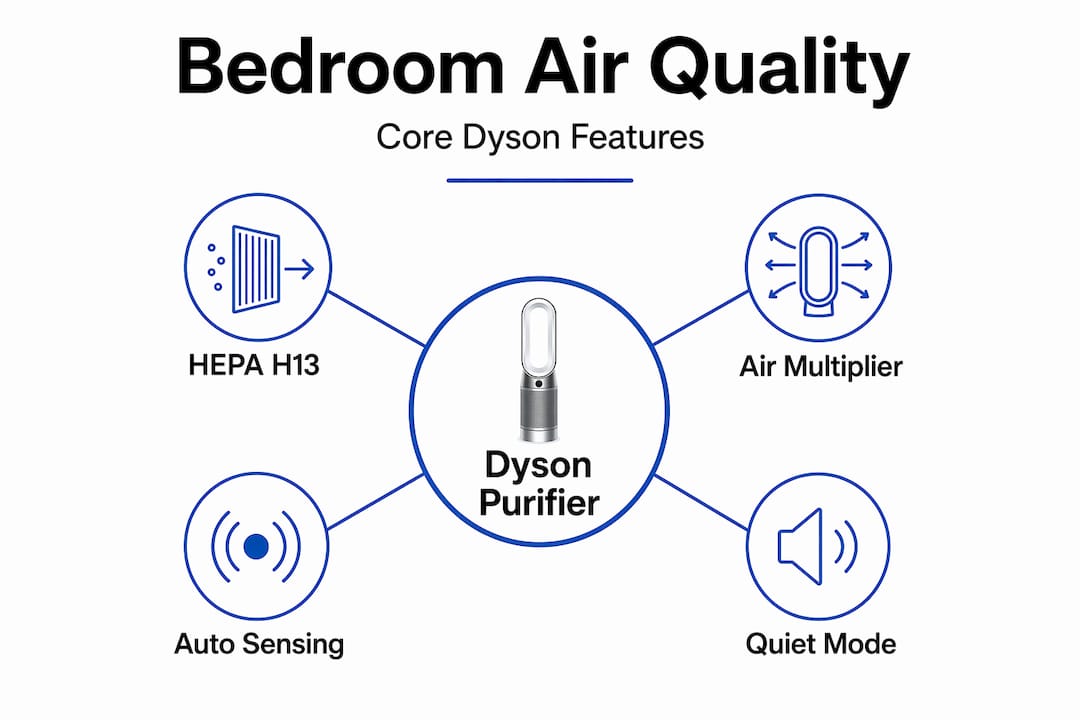
Once you have the right size, Dyson’s technology does the heavy lifting. Three features in particular set Dyson purifiers apart for bedroom environments.
HEPA H13 filtration and activated carbon
Dyson’s sealed HEPA H13 filter captures 99.97% of fine particles as small as 0.3 microns. That includes dust mite debris, pollen, mould spores, and pet dander. The filter pairs with an activated carbon layer that adsorbs gases and odours, including VOCs from cleaning products, furniture off-gassing, and personal care products commonly stored in bedrooms.
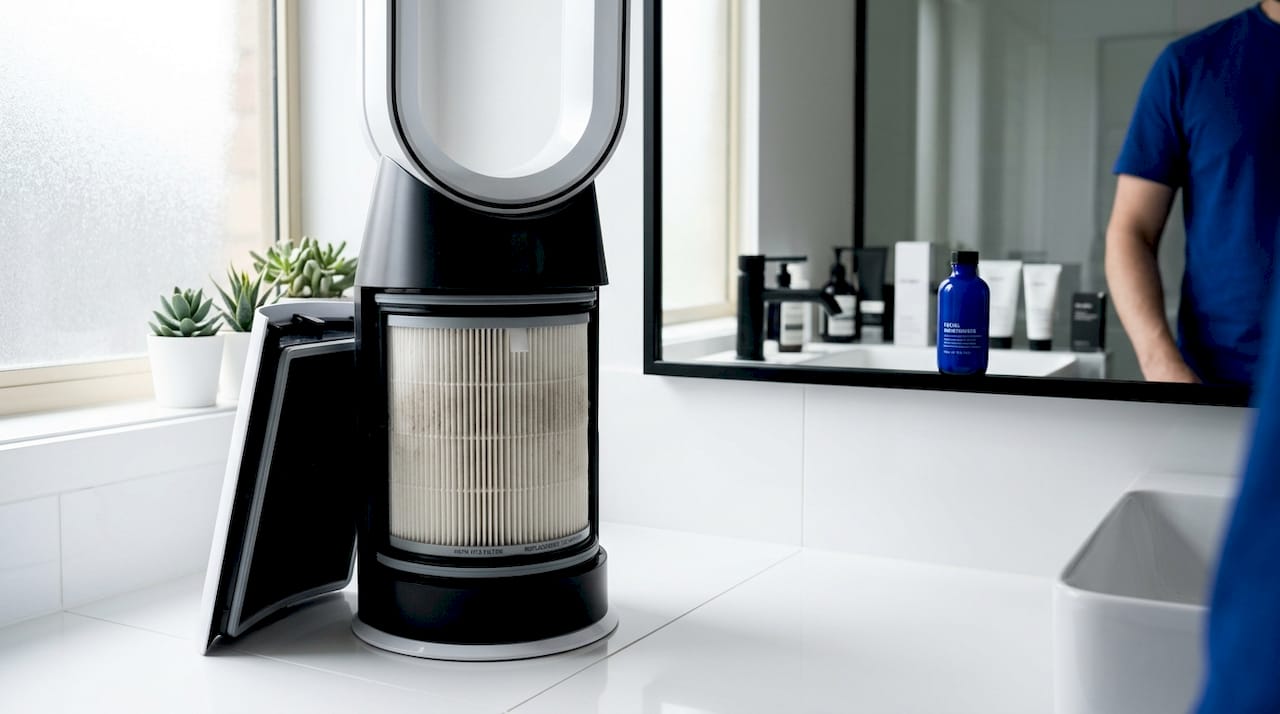
The word “sealed” is critical here. Some purifiers use HEPA-grade filter material but allow air to bypass the filter at the housing joints. Dyson’s sealed system means all air that passes through the unit goes through the filter, not around it.
Air Multiplier technology
Dyson combines purification with Air Multiplier circulation to distribute cleaned air evenly throughout the room. Without this, purifiers can create a clean “bubble” directly around the unit while leaving corners and areas near the ceiling relatively stagnant. In a bedroom where you are stationary for seven to nine hours, consistent air quality across the whole space matters more than a high peak flow reading directly in front of the machine.
Real-time intelligent sensing
Dyson’s sensors detect PM2.5, VOCs, nitrogen dioxide, and formaldehyde in real time. Auto Mode uses these readings to adjust fan speed when pollutant levels rise, then reduces speed once the air clears. Auto Mode responds to indoor pollution spikes automatically, though users should still open windows when outdoor conditions allow, since purifiers recirculate existing indoor air rather than introducing fresh air from outside.
Pro Tip: Connect your Dyson to the MyDyson app for detailed air quality metrics and filter status. The app shows real-time pollution data and alerts you when filters need replacing, removing any guesswork from maintenance.
Comparing popular Dyson models for bedrooms
Not every Dyson model suits every bedroom. Below is a direct comparison of the models most relevant to bedroom use.
| Model | Best suited for | Key features | Approx. noise (night mode) |
|---|---|---|---|
| Big Quiet Formaldehyde | Large bedrooms 30 m² and above | Formaldehyde sensor, catalytic filter, High volume airflow | Below 40 dB |
| Purifier Hot+Cool HP09 | Year-round bedroom climate control | Heating, cooling, purification | Below 40 dB in night mode |
| Purifier Cool TP07 | Standard bedrooms 15 to 25 m² | Cooling fan, HEPA+carbon filtration | 40 to 44 dB |
| HushJet Purifier Compact HJ10 | Small to medium rooms | Long-life electrostatic filter, ultra-quiet design | Under 38 dB |
Model highlights worth knowing
The Dyson Big Quiet Formaldehyde model targets larger bedrooms where formaldehyde from furniture, flooring, or paint is a concern. Unlike HEPA-only systems that trap particles, this model uses a catalytic filter that destroys formaldehyde molecules rather than simply capturing them, meaning the filter does not become saturated with formaldehyde over time.
The Hot+Cool HP09 is the most versatile bedroom option, particularly in climates like the UAE where both heating and cooling needs vary across seasons. It heats a 350-square-foot room by around 4.4°C in roughly 22 minutes while simultaneously purifying the air. Consolidating heating, cooling, and purification into one unit also frees up meaningful floor space in the bedroom.
The HushJet Purifier Compact HJ10 earns attention for its filter longevity. Its electrostatic filter lasts up to five years, which significantly reduces running costs compared to models requiring annual filter replacements. For smaller rooms up to around 20 square metres, it delivers quiet, consistent performance without a high ongoing maintenance cost.
- Consider formaldehyde-specific filtration if your bedroom has recently been renovated or contains new flat-pack furniture
- Prioritise the HJ10 if filter replacement costs concern you over the long term
- The TP07 offers the strongest value for standard bedrooms where heating is not required
- The HP09 is worth the premium if you want to replace a fan or heater in addition to a standalone purifier
Getting the most from your Dyson in the bedroom
Having the right model is only part of the equation. How you set up and operate the purifier shapes the actual experience overnight.
-
Activate Night Mode before sleeping. Night Mode dims the display and limits the fan to lower speeds, keeping operation under 45 dB. Leave Auto Mode running underneath Night Mode so the unit still responds to any pollution events without ramping up to a disruptive speed.
-
Position the unit away from the bed but facing the room. Placing the purifier directly beside your pillow creates a noticeable draft even at low speeds. Position it at floor level at least 1.5 metres from the bed, facing toward the centre of the room so cleaned air circulates naturally rather than blowing directly onto the sleeper.
-
Read sensor alerts with context. Sensor readings for PM2.5 and VOCs will spike temporarily from aerosol sprays, burning candles, or cooking smells drifting from other rooms. These brief spikes do not indicate a persistent problem. If your sensor shows elevated readings consistently through the night with windows closed, that warrants investigation.
-
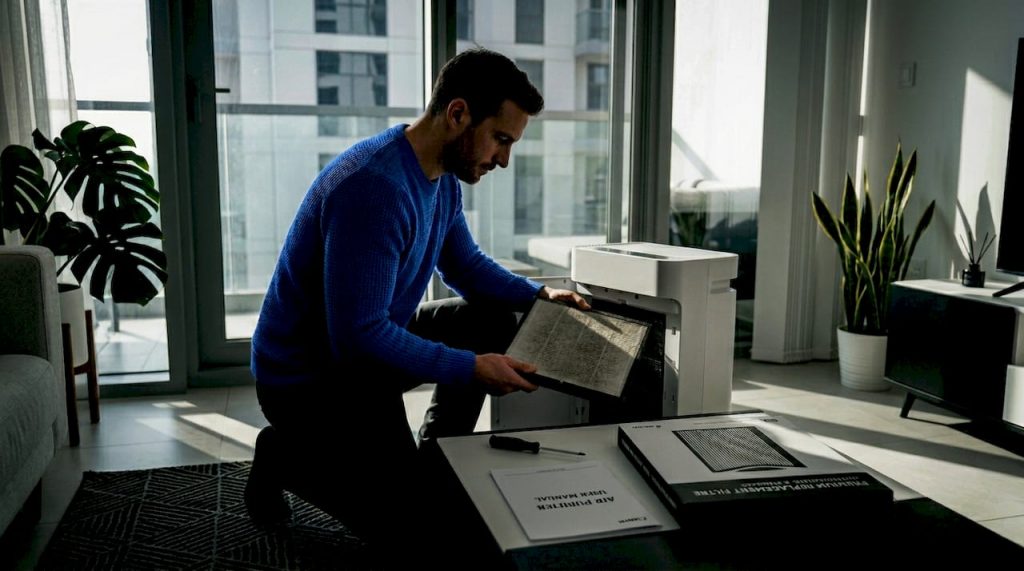
Check filters every three to six months. A clogged filter forces the motor to work harder, raising noise levels and reducing airflow. The MyDyson app tracks filter life, but a physical check is a good habit, particularly in dusty environments like those common across the UAE.
-
Ventilate when outdoor air quality permits. Purifiers recirculate indoor air. Opening windows for 10 to 15 minutes on a morning with low outdoor pollution refreshes CO2 levels and reduces the load on the purifier.
Pro Tip: Run the purifier on a medium speed setting for 20 to 30 minutes before going to bed. By the time you sleep, the air quality in the room will already be at its best, and the unit can drop to Night Mode rather than working hard from a polluted baseline.
My take on Dyson purifiers in the bedroom
I’ve reviewed and recommended enough air purifiers to know where the marketing stops and the real-world performance begins. Dyson’s bedroom-specific strengths, intelligent sensing combined with even air circulation, genuinely translate into a fresher sleeping environment. That is not something every brand can claim with the same credibility.
Where I see buyers go wrong most often is undersising. People see a compact unit, appreciate the aesthetics, and buy it for a room it cannot handle comfortably. The result is a machine running at full speed all night, undermining the very thing they were trying to fix.
The other common pitfall is ignoring the difference between purification and ventilation. A Dyson cleans what is already in the room very well. It does not substitute for fresh air. I’d always recommend pairing regular ventilation with purifier use, particularly in tightly sealed apartments.
On cost: yes, Dyson purifiers carry a premium. In my experience, the units that consistently hold their performance over two to three years justify that cost more readily than budget alternatives that degrade quickly. For a bedroom, where you spend roughly a third of your life, the investment in consistent, quiet, and genuinely effective air cleaning is one worth making carefully.
— Nevel
Find the right purifier for your bedroom
Dyson is not the only option worth considering for bedroom air quality. ClimatePro stocks a broad range of purifiers suited to different room sizes, budgets, and air quality needs across the UAE.

For bedrooms where a streamlined, budget-considered option is preferred, the Honeywell Air Touch P2 delivers strong HEPA filtration performance at a more accessible price point. For larger spaces or rooms requiring higher air volume throughput, the Blueair Blue 211i Max offers a well-regarded alternative with quiet operation. Climatepro also carries Dyson models alongside these alternatives, so you can compare specifications side by side before purchasing. Browse the full air purifier range with delivery available across Dubai, Abu Dhabi, Sharjah, and all UAE emirates.
FAQ
What noise level should a bedroom air purifier not exceed?
Bedroom air purifiers should operate below 45 dB to avoid disrupting sleep. Most Dyson models achieve this on Night Mode or their lowest fan speed settings.
How does a Dyson air purifier work in a bedroom?
Dyson draws room air through a sealed HEPA H13 and activated carbon filter, then projects cleaned air back through the room using Air Multiplier technology. Onboard sensors detect pollutants in real time and adjust fan speed automatically via Auto Mode.
Which Dyson model is best for a small bedroom?
The Dyson HushJet Purifier Compact HJ10 suits smaller bedrooms well. Its electrostatic filter lasts up to five years and it operates very quietly, making it a practical and cost-effective choice for rooms up to around 20 square metres.
Should I run my Dyson air purifier all night?
Yes. Running the purifier overnight on Night Mode with Auto Mode active maintains consistent air quality while keeping noise and light output low. A pre-sleep run at medium speed for 20 to 30 minutes before switching to Night Mode is an effective approach.
Can a Dyson air purifier remove allergens from bedroom air?
Dyson’s sealed HEPA H13 filter captures 99.97% of particles down to 0.3 microns, which includes dust mite debris, pollen, mould spores, and pet dander. These are the primary allergens affecting bedroom air quality for most people.
Recommended
- Dyson Air Purifier Buying Guide: Which Model Is Right for You? — Blog | ClimatePro UAE
- Buy Dyson Purifier Big+Quiet in Dubai | Best Price AED 2,244 | ClimatePro UAE
- Levoit Core 300S air purifier: Guide to cleaner indoor air — Blog | ClimatePro UAE
- Buy Dyson HushJet Purifier Compact HJ10 – White/Silver in Dubai | Best Price AED 1,241 | ClimatePro UAE