
Most nighttime throat dryness comes down to three overlapping culprits: mouth breathing, dry indoor air (often worsened by air conditioning), and mild dehydration, with reflux and sleep apnoea as possible contributors in persistent cases. Tonight, sip water rather than gulping it, try a saline nasal spray if you’re congested, and place a humidifier or even a bowl of water near the bed. Skip the nightcap. If dryness lasts beyond two weeks or comes with real pain, see a doctor.
TL;DR:
- Mouth breathing, dry indoor air, and dehydration are the main causes of nighttime throat dryness, with sleep disorders and reflux as contributing factors.
- Using a humidifier set between 30% and 50% humidity, repositioning vents, and maintaining proper device cleaning can significantly reduce symptoms.
- Immediate relief can be achieved with small sips of water, saline sprays, steam inhalation, and strategies to keep airflow away from the bed.
- Long-term resolution requires addressing underlying conditions such as allergies, GERD, or sleep apnoea through targeted treatment plans.
- Persistent or severe dryness lasting over two weeks or accompanied by pain or breathing issues warrants medical consultation rather than continued home remedies.
Table of Contents
- What’s causing your dry throat at night?
- What can you do right now to relieve a dry throat?
- When does dry throat mean something more serious?
- How to use a humidifier safely for a dry throat
- Building a night routine that prevents dry throat
- Managing the underlying conditions behind chronic dry throat
- Diet and daily habits that reduce nighttime throat dryness
- Do allergens and air pollution make dry throat worse?
- A publisher’s view on fixing dry throat properly
- How Climatepro helps you sleep with a comfortable throat
- Sources
- FAQ
What’s causing your dry throat at night?
Your symptom pattern usually points to the trigger. Saliva production naturally drops during sleep, which is why almost everyone gets a slightly dry mouth overnight, but some patterns signal something more specific worth addressing.
Mouth breathing is the most common cause. If you wake with an open mouth, chapped lips, or a throat that feels like sandpaper, nasal congestion or a deviated septum could be forcing you to breathe through your mouth instead of your nose.
Low indoor humidity and air conditioning dry out the air you’re breathing all night. Cooling systems pull moisture out of the air as a byproduct of dropping the temperature, and that cool, low-humidity air dries respiratory mucous membranes rather than making you sick with any specific bug. There’s no such thing as “AC flu.” It’s just dry air doing what dry air does.
Dehydration compounds everything. A late glass of wine, a strong coffee before bed, or a hard gym session earlier in the evening all leave you starting the night with less fluid reserve than usual.
Medications are an underrated cause. Antihistamines, some blood pressure drugs, and antidepressants can reduce saliva flow as a side effect, and this is one of the most overlooked entries in the NHS’s list of dry mouth causes.
Sleep-disordered breathing deserves attention if snoring is loud, or a partner has noticed pauses in your breathing. Research links obstructive sleep apnoea directly to nocturnal oral dryness, since disrupted breathing patterns almost always mean mouth breathing.
GERD and postnasal drip show up as dry throat paired with a sour taste, heartburn, or a nagging cough after lying down.
Acute infections (colds, tonsillitis, early flu) cause dry throat too, but these tend to resolve within a week or so and come with other obvious symptoms.
What can you do right now to relieve a dry throat?
Fixing tonight’s discomfort takes a few minutes, not a shopping trip.
- Sip, don’t gulp. Keep a glass of water on your nightstand and take small sips if you wake up. Chugging a full glass disrupts sleep more than the dryness itself.
- Use a saline nasal spray. This clears congestion that’s forcing mouth breathing, without the rebound effect of decongestant sprays.
- Try a brief steam inhalation before bed if you’re congested. Lean over a bowl of hot water for a minute or two. Never leave a child unattended with steam.
- Set up a humidifier conservatively. Place it a metre or so from the bed, aim it away from your face, and start on the lowest setting.
- Skip the nightcap. Alcohol and caffeine both dehydrate you and relax the throat muscles in ways that worsen snoring and reflux.
- Chew sugar-free gum or suck a lozenge before bed. Both stimulate saliva production, which is your body’s own defence against dryness.
- Gargle warm salt water if your throat feels raw as well as dry.
- Move your bed away from the direct AC vent. Repositioning away from direct airflow often fixes the problem without touching the thermostat at all.
Pro Tip: A cheap vent deflector, the plastic kind sold for ducted air conditioning, redirects cool airflow away from your pillow without changing anything else in the room. It’s often the single easiest fix nobody tries first.
When does dry throat mean something more serious?
Most dry throat resolves with basic self-care. Some signs mean it’s time to stop self-treating.
Seek prompt medical attention if you have:
- Difficulty breathing or swallowing
- A high fever alongside the dry throat
- Visible blood, or a lump or swelling in the neck
- Severe, worsening pain rather than mild irritation
See a GP if the dryness has lasted more than two weeks, keeps recurring, or comes with ongoing hoarseness. Persistent or unusually severe symptoms warrant clinical review rather than another week of home remedies.
If a partner reports loud snoring, gasping, or pauses in your breathing, ask your GP about sleep apnoea testing. A typical pathway starts with a GP assessment, then moves to an ENT specialist or a sleep clinic for further testing, alongside a review of any medications that might be drying your mouth.
How to use a humidifier safely for a dry throat
A humidifier is one of the more reliable tools for nighttime throat dryness, but only when it’s set up and maintained properly.
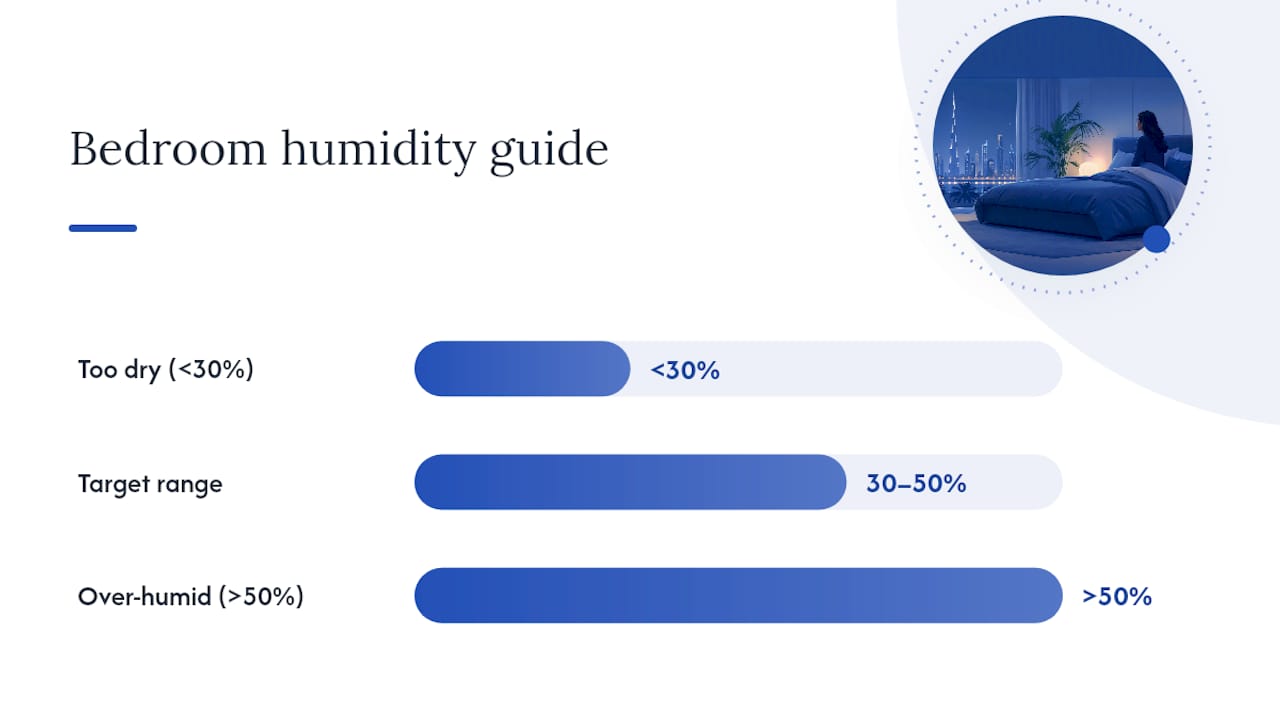
Aim for a bedroom humidity range of 30% to 50%, which is the range recommended for easing dryness without promoting mould growth. A cheap hygrometer gives you a far more reliable reading than the sensor built into most humidifiers, which tend to run optimistic.
Cool-mist and warm-mist models both work, but they suit different situations:
- Cool-mist units are generally the safer pick around children, since there’s no hot water involved.
- Warm-mist models can feel more soothing if you’re congested, though they carry a burn risk if knocked over.
Cleaning matters as much as the setting. Stagnant water in a humidifier tank breeds bacteria and mould within days, and running that through the air you breathe all night defeats the purpose entirely. Empty and dry the tank daily, deep clean weekly with a diluted vinegar solution, and replace any filter on schedule.
Match the unit’s rated coverage to your actual room size. Undersized units in a large bedroom barely move the humidity, while oversized units in a small room can push past 50% and start growing mould on windowsills. A humidifier eases dryness and congestion but doesn’t treat the underlying infection or condition causing it. Point the mist away from your pillow, not at it, and check how AC and humidity interact in your room if you’re running both systems at once.
Pro Tip: Buy a hygrometer before you buy a humidifier. Running a humidifier blind, based only on how your throat feels, is how most people end up over-humidifying and growing mould behind furniture within a month.
Building a night routine that prevents dry throat
A short, repeatable routine beats scrambling for remedies at 2am.
- Hydrate earlier in the evening, not right before bed, so you’re not either dehydrated or making trips to the bathroom.
- Cut off alcohol and caffeine at least three to four hours before sleep, and keep the last meal light to reduce reflux risk.
- Check your bedroom humidity with a hygrometer and adjust your humidifier or AC settings accordingly.
- Redirect AC vents away from the bed and replace HVAC filters on schedule, since clogged filters push out drier, dustier air.
- Use a saline rinse if you’re prone to congestion, and elevate your head slightly if reflux is a factor.
- Review medications with your prescriber if dry mouth started around the same time as a new prescription.
None of these steps take more than a few minutes, but doing them consistently is what actually stops the problem from recurring night after night.
Managing the underlying conditions behind chronic dry throat
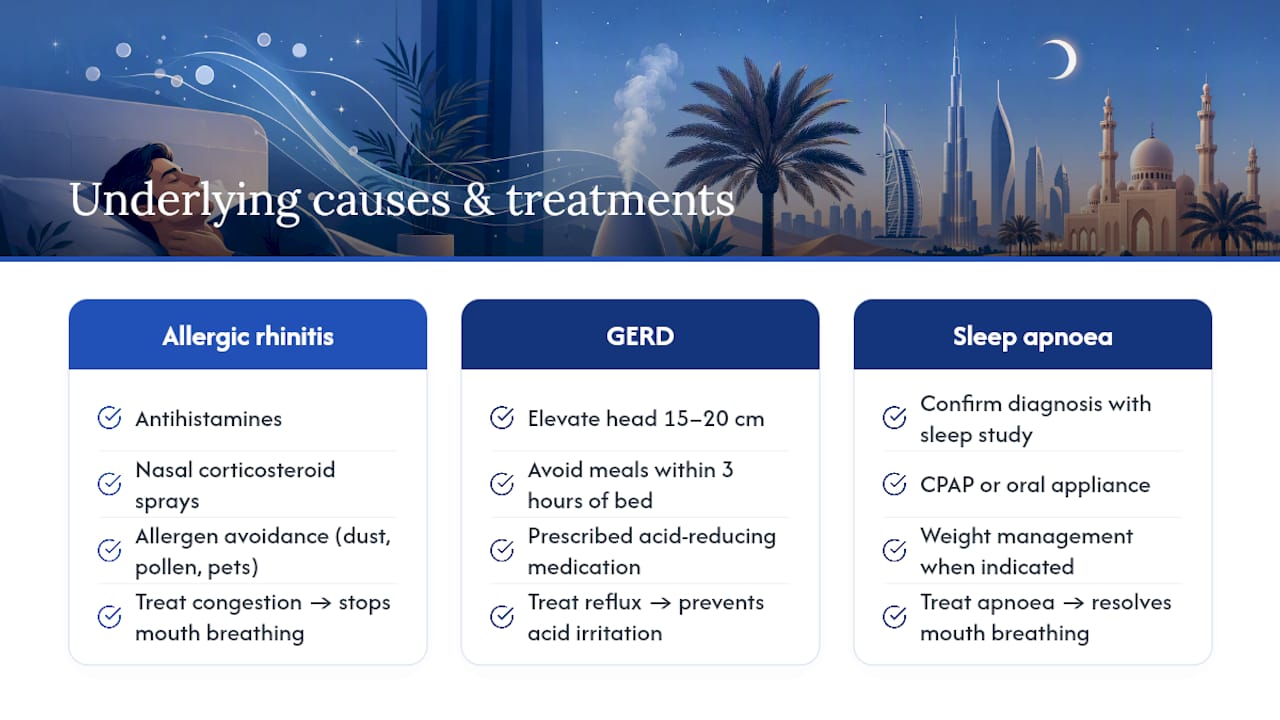
Nightly remedies only go so far when an underlying condition is driving the problem. Allergic rhinitis, for instance, needs its own treatment plan, typically antihistamines, nasal corticosteroid sprays, or allergen avoidance measures, because treating the congestion resolves the mouth breathing that causes the dryness. Working with a GP or allergist to identify specific triggers (dust mites, pollen, pet dander) makes a bigger long-term difference than any nighttime remedy.
GERD-related throat dryness needs a similar structural approach. Elevating the head of the bed by 15 to 20 centimetres, avoiding meals within three hours of lying down, and in some cases using prescribed acid-reducing medication all address the reflux itself rather than just the dryness it causes. Throat dryness that shows up alongside a sour taste or chronic cough rarely improves with humidifiers alone, because the mechanism is acid irritation, not just dry air.
Obstructive sleep apnoea requires the most structured management of the three. A confirmed diagnosis through a sleep study can lead to a CPAP machine, an oral appliance, or in some cases weight management guidance, and treating the apnoea itself typically resolves the associated mouth breathing and throat dryness within weeks.
The common thread across all three: dry throat is often a downstream symptom, not the actual problem. Treating it as a standalone issue means you’ll keep managing symptoms indefinitely instead of resolving the cause.
Diet and daily habits that reduce nighttime throat dryness
What you eat and drink during the day shapes how your throat feels at 3am. Spicy, salty, and highly processed foods tend to worsen reflux in people already prone to it, and reflux is a direct driver of nocturnal throat irritation.
Building consistent hydration throughout the day, rather than front loading or back loading your fluid intake, keeps saliva production steadier overnight. Water is the best baseline choice; herbal teas without caffeine are a reasonable evening option, while carbonated and sugary drinks tend to aggravate reflux in sensitive people.
Smoking and vaping dry out and irritate the throat lining directly, and quitting or cutting back produces a noticeable improvement in throat comfort within days for many people. Chronic mouth breathing during the day, often from nasal congestion left untreated, also trains the body toward mouth breathing at night. Addressing daytime nasal health, through allergy treatment or simply blowing your nose properly before bed, pays off after dark.
Weight also plays a role for some people, since excess weight around the neck and abdomen increases both snoring and reflux risk. None of these changes work overnight, but they compound: a person who fixes hydration, cuts late-night alcohol, and manages reflux triggers usually sees fewer dry-throat mornings within two to three weeks.
Do allergens and air pollution make dry throat worse?
Humidity isn’t the only environmental factor at play. Airborne allergens, dust, and pollutants irritate the throat lining independently of how much moisture is in the air, and in dry climates the two problems often compound each other.
Dust mites, pet dander, and pollen trigger inflammation in the nasal passages, which causes congestion, which causes mouth breathing, which dries the throat. It’s a chain reaction, and breaking it earlier in the sequence, by reducing allergen exposure, prevents the dryness rather than just treating it. A HEPA air purifier running in the bedroom overnight reduces airborne particles that would otherwise settle in the nose and throat.
Outdoor air pollution, common in dusty or heavily trafficked urban areas, has a similar effect: fine particulate matter irritates mucous membranes and can leave the throat feeling raw even when humidity levels are fine. Keeping windows closed on high-pollution days and running a purifier with a genuine HEPA filter reduces that exposure meaningfully.
Dry, dusty conditions and low humidity often occur together, which means addressing one without the other only gets you halfway. A room that’s humidified but full of dust and allergens will still leave some people waking up with an irritated throat, just from a different mechanism. Checking how to manage dry air more broadly helps separate which factor is actually driving your symptoms.
A publisher’s view on fixing dry throat properly
Most cases resolve with humidity control, better hydration, and small habit changes. What’s often missed is that persistent or severe symptoms, especially alongside reflux or loud snoring, need clinical assessment, not another week of home remedies. Climatepro publishes practical guides on humidity and filtration precisely because the fix is usually mechanical, not mysterious, but knowing when it isn’t matters just as much.
— Nevel
How Climatepro helps you sleep with a comfortable throat
Climatepro is the practical alternative to guessing your way through dry indoor air. Rather than trial-and-error with whatever humidifier is on sale, you get a curated range chosen specifically for UAE conditions, where air conditioning runs for months at a stretch and drops indoor humidity well below the comfortable range.

Start with the humidifiers category if dry air and AC use are your main triggers, or check the air purifiers range if allergens and dust are compounding the problem alongside dryness. Both categories include models sized for typical bedrooms, so you’re not stuck oversizing or undersizing a unit for your room. Once you’ve got a device running, keep it working properly with genuine replacement filters and maintenance accessories, since a neglected filter or a mouldy tank causes more problems than the dry air ever did. Delivery covers multiple Emirates, and warranty support is provided locally. Browse the humidifier range now and pick the model that matches your room size tonight.
Sources
- Waking Up With a Dry Throat
- Can air conditioning make you sick?
- Dry mouth
- Humidifiers: In-depth review
- Can air conditioning cause a sore throat?
This article is general information, not a substitute for advice from a qualified doctor. Consult a qualified healthcare professional about your own circumstances before acting on anything here.
FAQ
How can I stop my throat from getting dry at night?
Sip water before bed, run a humidifier set to 30 to 50% humidity, and treat any nasal congestion with saline spray so you breathe through your nose instead of your mouth. Redirecting your bed away from a direct AC vent often resolves dryness within a night or two.
Is dry throat a symptom of anything serious?
It’s usually linked to mouth breathing, dry air, or dehydration, and it resolves with basic self-care in most cases. It can also signal GERD, allergies, or obstructive sleep apnoea when it’s persistent or paired with snoring, heartburn, or daytime fatigue.
Is dry mouth at night serious?
Occasional dry mouth at night is common and rarely serious, often tied to medications, mouth breathing, or dehydration according to NHS guidance. It becomes worth investigating if it’s constant, affects your sleep quality, or comes with other symptoms like a persistent sore throat or hoarseness.
How do I cure dryness of the throat long term?
There’s no single cure since the right fix depends on the cause, whether that’s treating allergies, managing reflux, or addressing sleep apnoea. Maintaining bedroom humidity between 30% and 50% with a properly cleaned humidifier, alongside good hydration habits, prevents most recurring cases.