
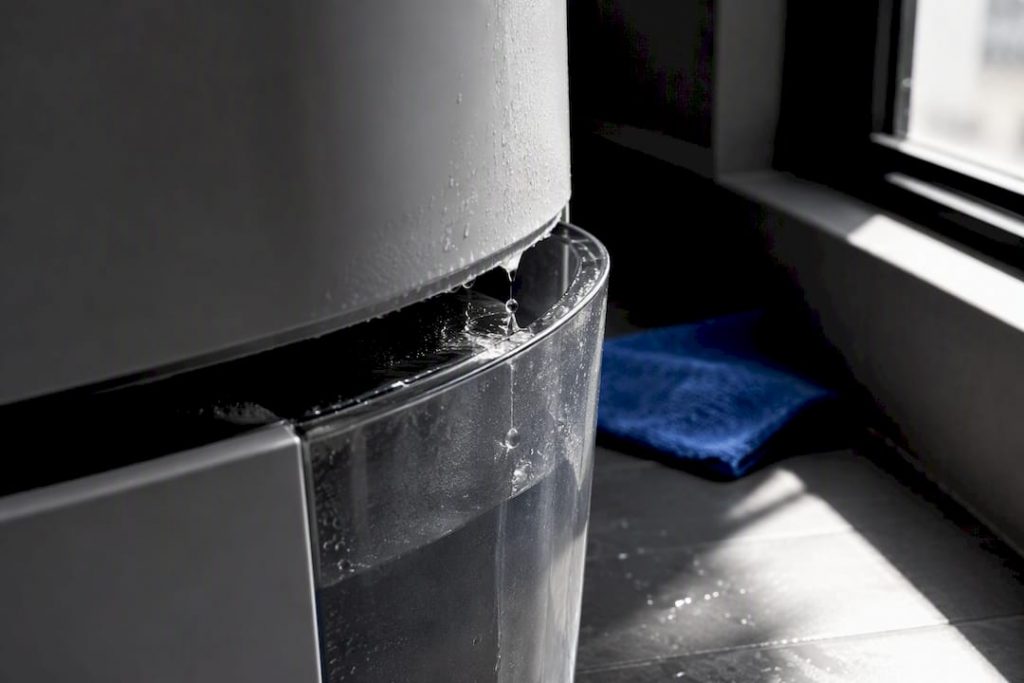
No, you should not drink water collected by a household dehumidifier. Although the condensate starts out close to pure, contact with the coils, storage tank and internal biofilm typically introduces bacteria, metals and other contaminants before the water ever reaches the reservoir. The sections below explain the specific risks, where the water can still be reused safely, and when a purpose-built potable device is the better choice.
TL;DR:
- Household dehumidifier condensate can harbor bacteria, metals, and organic compounds, making it unsafe to drink due to contamination from biofilms and internal surfaces.
- Drinking or using dehumidifier water can cause gastrointestinal illness, especially in vulnerable groups like infants, the elderly, and immunocompromised individuals.
- The water is safe for non-potable uses such as cleaning, toilet flushing, or watering outdoor plants, provided it looks clear and has no odor, and should never be used for drinking or cooking.
- Regular maintenance like daily tank rinsing and weekly cleaning helps reduce bacterial load but does not make condensate potable; advanced filtration or disinfection is needed for safe drinking water.
- For reliable drinking water, consider installing purpose-built atmospheric water generators with certified filtration, especially if mains water is unreliable or large volumes are needed.
Table of Contents
- How condensate becomes contaminated: microbes, metals and dust
- What health risks drinking or using the water can cause
- Where condensate is fine to use, and where to never use it
- Reducing contamination: maintenance, filters and realistic treatment options
- When to choose a purpose-built potable device instead of relying on condensate
- Practical, localised tips for air-conditioned homes
- A simple rule to remember
- How ClimatePro can help with dehumidifiers and filters
- Sources
- FAQ
How condensate becomes contaminated: microbes, metals and dust
Water vapour condensing on a dehumidifier’s cold coil begins as something close to distilled water, free of minerals and dissolved solids. That purity does not survive the trip through the machine. The coil surface, the drainage path and the storage tank all sit in a warm, damp, dark environment, which is exactly the condition that lets biofilm form on plastic and metal surfaces inside the unit.
Once biofilm establishes itself, it becomes a steady source of contamination for every litre that passes through. Public health guidance on preventing waterborne germs at home points to biofilm control as the main defence against germs spreading from water-using household devices, dehumidifiers included.
Several contaminant types show up consistently in tested condensate:
- Heterotrophic bacteria that colonise the coil and tank surfaces, sometimes joined by opportunistic organisms such as Legionella or Mycobacterium species.
- Trace metals, including residues from solder joints and internal fittings not rated for food or drinking water contact.
- Airborne dust and volatile organic compounds drawn in with the room air and concentrated as the water condenses.
- Mould and algae fragments, particularly in units that have sat unused or uncleaned for weeks.
Real-world condensate samples show that bacterial contamination can vary widely and opportunistic pathogens such as Legionella and Mycobacterium species may be present. That variability is the point: a dehumidifier tank is an uncontrolled environment, and there is no way to know from looking at the water which end of that range you are dealing with.
What health risks drinking or using the water can cause
Drinking condensate carries a real chance of gastrointestinal illness, with symptoms such as nausea, stomach cramps and diarrhoea being the most likely outcome for a healthy adult. The bacterial load in an unclean tank is usually the trigger, and the risk rises the longer the water has sat.
A smaller but more serious risk involves opportunistic organisms like Legionella, which are more of a concern when water is aerosolised (inhaled as fine mist) than when it is swallowed, but which still make consuming stagnant condensate an unnecessary gamble. Trace metal exposure from internal components adds a further, harder to detect layer of risk, since taste and smell rarely give any warning.
Some groups face higher stakes than others:
- Infants, pregnant women and elderly people, whose immune responses are less able to clear opportunistic infections.
- People with chronic respiratory conditions, who are more vulnerable to organisms like Legionella.
- Anyone with a weakened immune system, including those on immunosuppressive medication.
Pro Tip: If you would not drink water straight from a garden hose that had sat in a warm shed for a week, treat dehumidifier condensate the same way.
Where condensate is fine to use, and where to never use it
Dehumidifier water is not worthless, it is simply limited to non-potable jobs where a bit of bacterial load does not matter.
- Mopping floors and general cleaning, where the water never contacts food or skin for long periods.
- Toilet flushing, a low-risk reuse that saves mains water without any ingestion pathway.
- Washing a car exterior, provided the water is used the same day it is collected.
- Watering non-edible outdoor plants, such as ornamental shrubs or lawn areas, after a quick smell and clarity check.
Never use condensate for drinking, cooking, filling a pet’s water bowl, or irrigating food crops and edible garden plants, since none of those uses tolerates the bacterial and chemical variability described above. Before any reuse, give the water a quick check: it should look clear and smell neutral. Cloudy water, a musty odour, or visible film on the surface means it goes straight down the drain, not onto a plant or a mop bucket.
Reducing contamination: maintenance, filters and realistic treatment options
Good maintenance will not make condensate drinkable, but it dramatically cuts the bacterial load and odour that make reuse unpleasant or risky. CDC guidance on waterborne germs at home frames regular cleaning as the practical first defence against biofilm, and that principle applies directly to dehumidifier tanks and coils.
A realistic routine looks like this:
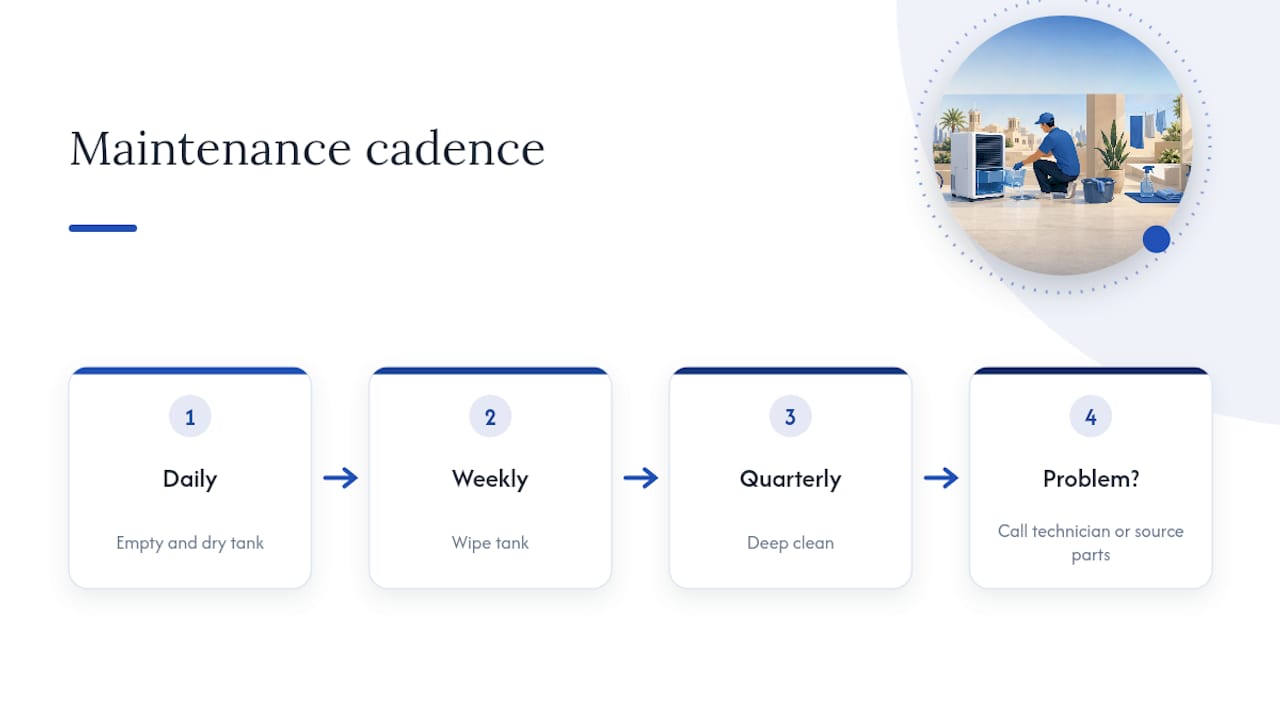
- Empty and rinse the tank daily if the unit is running continuously, especially in humid climates.
- Wipe the tank and coil area weekly with a mild detergent to disrupt early biofilm.
- Rinse the drainage path monthly to clear mineral build-up and slime.
- Deep clean the whole unit quarterly, including filters and any hose fittings.
Carbon filtration can reduce odour and some organic compounds, and a UV stage can reduce microbial counts, but neither addresses metal leaching from internal components, and neither is validated for turning dehumidifier condensate into drinking water. Reverse osmosis goes further on dissolved contaminants but is rarely fitted to household units and adds cost and complexity that most homes will not use correctly.
Boiling kills most bacteria but does nothing for dissolved metals or chemical residues, so it is not a shortcut to potable water either. Certified treatment for potable reuse involves validated filtration, disinfection and material standards, which is a different undertaking entirely from running condensate through a kettle.
Pro Tip: Treat your dehumidifier tank the way you would treat a humidifier reservoir: empty it daily, dry it between uses, and never let standing water sit for more than a day or two.
When to choose a purpose-built potable device instead of relying on condensate
A standard household dehumidifier and a purpose-built atmospheric water generator solve different problems, even though both pull water out of the air. Stanford magazine’s explainer on dehumidifier water notes that atmospheric water generators are engineered with certified filtration and disinfection stages that household dehumidifiers simply do not have.
Signs it is time to look at a proper potable device rather than a bucket of condensate:
- You want a genuine backup drinking water source, not just moisture control.
- You are in a location where mains water is unreliable or absent.
- You need volume and consistency that ad hoc reuse cannot deliver.
Industry review of AC condensate reuse (2026) treats building-scale condensate as a resource only when it is monitored and managed like a plumbing system, a level of oversight that is impractical for a household bucket and another reason to keep home reuse strictly non-potable.
Practical, localised tips for air-conditioned homes
Homes that run air conditioning for most of the year put dehumidifiers under near-constant load, which speeds up biofilm formation. Dehumidifier suppliers generally recommend daily emptying, a weekly wipe-down, and a quarterly deep clean as a baseline routine for continuous use. When a tank develops persistent odour or a unit’s filter is past its replacement point, it is worth calling a technician or sourcing genuine replacement parts rather than pushing on with a compromised machine. A step-by-step humidity control guide covers the full routine in more detail.
A simple rule to remember
The safest approach to dehumidifier water is a single habit: if you would not put it in food, do not use it near food, pets or people either. Condensate is genuinely useful for cleaning, flushing and the odd non-edible plant, but that usefulness ends the moment drinking or cooking enters the picture. Keep that line firm and the rest of the decision makes itself.
— Nevel
How ClimatePro can help with dehumidifiers and filters
A reliable dehumidifier with a clean, well-maintained tank does far more for indoor air quality than trying to stretch condensate into something it isn’t. ClimatePro stocks dehumidifiers, genuine replacement filters and accessories suited to homes running air conditioning for most of the year, along with guidance on matching a unit to your space and keeping it clean.

- Browse the dehumidifier catalogue to compare capacity and tank size.
- Check the filter range for genuine replacements that match your model.
- Contact a specialist team if you are considering a potable atmospheric water generator, since that is a distinct product class from a household dehumidifier and needs separate advice.
Visit the ClimatePro catalogue to find a unit and the parts to keep it running cleanly.
Sources
- CDC: Preventing waterborne germs at home
- EPA: Action 4.5 summary — AC condensate water reuse (2026)
- Stanford magazine: Don’t drink the water from your dehumidifier
This article is general information, not a substitute for advice from a qualified doctor. Consult a qualified healthcare professional about your own circumstances before acting on anything here.
FAQ
What happens if I drink dehumidifier water?
Drinking dehumidifier condensate most often causes mild gastrointestinal upset such as nausea, cramping or diarrhoea, caused by bacteria that build up in the tank. In rarer cases involving opportunistic organisms or contaminated components, the effects can be more serious, particularly for infants, elderly people or anyone with a weakened immune system.
Can I use the water from my dehumidifier for anything?
Yes, condensate is fine for mopping floors, flushing toilets, washing a car exterior, or watering non-edible outdoor plants. It should never go near drinking, cooking, pet water bowls or edible garden crops, and should be checked for clarity and smell before any reuse.
Is it safe to sleep in the same room as a dehumidifier?
Running a dehumidifier in a bedroom is generally fine and can help with mould and allergy control when humidity stays in the recommended range. The main precaution is keeping the unit clean, since a neglected tank and filter can release odour and dust back into the room air.
Are dehumidifiers good or bad for your health?
Dehumidifiers are broadly beneficial for health when properly maintained, since they curb mould growth and dust mites that thrive in damp air. The health risk sits specifically in the collected water and a neglected tank, not in running the machine itself, which is why regular cleaning matters more than the device’s presence in a room.