

Condensation on windows happens when moist indoor air meets a cold glass surface and drops below its dew point. Wipe or squeegee the water off now, ventilate the room, and run an extractor fan or dehumidifier to stop more from forming. Long term, the fix is lowering indoor humidity, raising the glass surface temperature, or both, through better ventilation, dehumidification or upgraded glazing.
TL;DR:
- External window condensation indicates weather-related temperature differences and does not signify a window fault, while internal condensation points to high indoor humidity.
- Persistent indoor condensation often results from household activities like cooking, showering, or indoor drying, especially in tightly sealed modern homes with poor ventilation.
- Immediate solutions include wiping existing water, running extractor fans after high-moisture activities, and using targeted dehumidifiers in problem rooms to prevent mold and repair costs.
- Long-term control requires good ventilation, proper insulation, and correct window installation, with careful attention to sealing trickle vents and keeping curtains away from cold glass.
- When condensation persists despite these measures or is accompanied by visible damage, it indicates seal failure or structural issues that need professional assessment and repair.
Table of Contents
- What causes condensation on windows, and where it forms
- What’s really driving the moisture in your home
- Why persistent condensation is more than a wiping chore
- How to clear condensation off your windows today
- Building a long-term strategy against window condensation
- When condensation means it’s time to call a professional
- A measurement-first approach to window condensation
- Measure first, fix cheap, then invest
- Where to find the right dehumidifier for your home
- Sources
- FAQ
What causes condensation on windows, and where it forms
Condensation forms when warm, moist air cools against a surface colder than its dew point, releasing water as droplets. Where that water appears tells you what’s actually wrong.
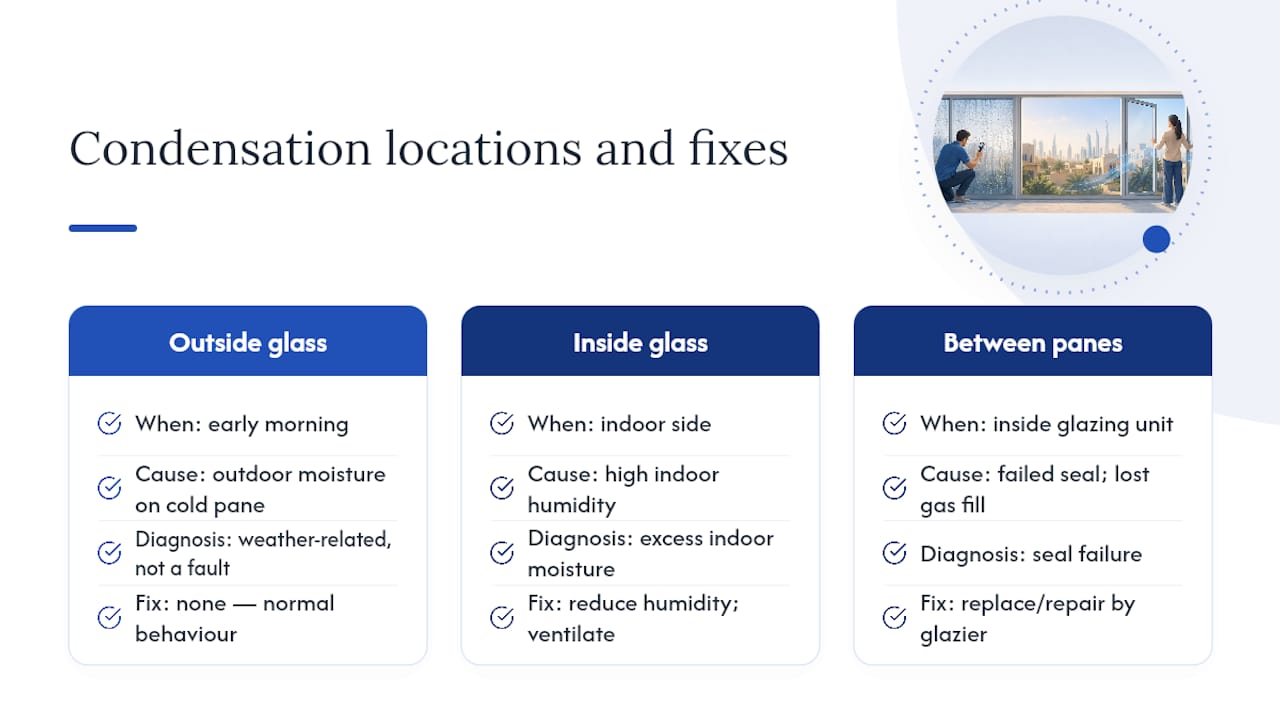
Condensation on the outside of the glass, usually in the early morning, is often a sign the window is doing its job. Modern, thermally efficient glazing keeps indoor heat from escaping, so the outer pane stays cold enough for outdoor moisture to settle on it. According to the GGF condensation leaflet, this is weather related and not a fault.
Condensation on the inside points the other way. Indoor air is carrying more moisture than the glass temperature allows it to hold, and the fix lies with humidity control, not the window itself.
Condensation trapped between the panes of a double or triple-glazed unit is different again. It usually means the seal has failed and the gas fill has been lost, and no amount of wiping or ventilation will resolve it. That one needs a glazier.
What’s really driving the moisture in your home
Most condensation traces back to ordinary household activity rather than a building fault. Cooking, boiling a kettle, showering, drying clothes indoors, houseplants, and even breathing while you sleep all add water vapour to the air, and it has to go somewhere.
Modern homes make the problem worse by trapping that moisture inside. Tighter seals and double glazing cut draughts and energy bills, but they also reduce the natural air exchange older, leakier homes had. Blocked trickle vents and curtains pulled hard against the glass compound it further.
Cold spots make everything worse. Single glazing, older aluminium frames without a thermal break, and poor installation all lower the glass surface temperature, giving moisture more places to condense.
Common contributors worth checking around your home:
- Showering or bathing without extraction running
- Drying laundry on indoor racks instead of outdoors or in a vented dryer
- Cooking without a range hood or open window
- Overcrowded houseplants in a poorly ventilated room
- Curtains or blinds sitting flush against cold glass.
- Single-glazed or poorly sealed window frames
Why persistent condensation is more than a wiping chore
Left unchecked, condensation stops being cosmetic and starts being a maintenance problem. Damp surfaces that never fully dry are exactly what mould and mildew need to establish themselves, and that has real air quality consequences for anyone with asthma, allergies or a young family in the house.
Timber sills, painted frames and plasterboard reveals absorb that moisture over repeated cycles. Paint bubbles, wood swells and eventually rots, and what started as a few drops on the glass turns into a repair bill on the frame.
Sometimes persistent condensation is a symptom, not the disease. If wiping, ventilating and dehumidifying don’t reduce it, you may be looking at a hidden insulation gap, a roof leak, or rising damp feeding moisture into the room from somewhere you can’t see, and that calls for a tradesperson, not another squeegee pass.

How to clear condensation off your windows today
Start with the water that’s already there, then work on why it showed up.
- Wipe the glass and sill with a microfibre cloth or squeegee first thing in the morning, before it has a chance to soak into the frame.
- Keep sills clear of clutter and pot plants so air can move across the glass instead of pooling moisture against it.
- Run the extractor fan during and for at least fifteen minutes after cooking or showering, and crack a window if you can.
- If you own a dehumidifier, run it in the affected room rather than the whole house. Targeted use dries the air where it matters most.
- Move laundry outdoors or into a vented dryer instead of drying it on an indoor rack, which can add a surprising amount of moisture to a small room.
Pro Tip: Wipe windows before you open curtains or blinds for the day. Trapped moisture behind fabric that’s already touching cold glass gives mould a head start you won’t notice until it’s visible.
Building a long-term strategy against window condensation
Quick fixes buy you time. A durable solution combines ventilation, humidity control and, where needed, better glass.
Ventilation is the cheapest lever. Trickle vents should stay open, not painted shut or blocked by furniture, and extractor fans need to run for a good ten to fifteen minutes after any high-humidity activity, not just during it.
Dehumidifiers earn their keep in rooms where ventilation alone can’t keep up, especially bedrooms with drying washing or bathrooms without strong extraction. Size the unit to the room rather than buying the biggest one available. In air-conditioned homes, a dehumidifier and the AC system need to work together rather than against each other. Outdoor air pulled in by poor sealing can actually raise indoor dew point faster than opening a window helps, which is why sealed, air-conditioned rooms often do better with mechanical dehumidification than with a cracked window.
Thermal upgrades address the other half of the equation, the glass temperature itself. Double or triple glazing with a thermal break in the frame keeps the inner pane warmer, and correct installation matters as much as the glazing spec. Poorly fitted units create cold bridging that undoes the benefit of good glass, a point the EPA’s moisture control guidance makes clear when it treats window performance as a design and installation issue together, not glazing alone.
Small habits round it out:
- Keep curtains and blinds a short distance away from the glass to allow warm room air to circulate across it.
- Leave a gap between furniture and cold walls or windows.
- Dry laundry outdoors or in a vented dryer whenever possible.
- Check trickle vents aren’t painted shut or covered by blinds.
When condensation means it’s time to call a professional
Some signs point past a DIY fix. Fogging that sits permanently between the panes, condensation that keeps returning despite ventilation and dehumidifying, or visible staining, swelling or gaps around the frame all suggest a repair job rather than a routine.
Before you call anyone, gather evidence: a few photos, the time of day it appears, and a humidity reading if you have one. A glazier or window technician will typically check for failed seals, reseal or replace the glazing unit, or repair frame and flashing issues that are letting moisture or cold air in where it shouldn’t be. As the EPA notes, even efficient windows can develop condensation problems if the surrounding installation is faulty, so replacing the glass alone doesn’t always solve it.
A measurement-first approach to window condensation
Guessing wastes money. Before buying anything, check the relative humidity in the room with a basic hygrometer, and note which windows fog first. That tells you whether you have a whole-house humidity problem or one bad room.
Climatepro’s own step-by-step humidity guide walks through that measurement stage in more detail, including how to read the numbers once you have them.
For most homes, keeping indoor relative humidity in the 30 to 40 percent range in cooler months limits condensation risk without leaving the air uncomfortably dry, a range Climatepro’s guide on setting winter dehumidifiers covers for UAE conditions specifically.
Practical habits that make the numbers hold:
- Run extractor fans during and after cooking, showering or bathing.
- Keep curtains and furniture clear of cold glass to let warm air circulate.
- Recheck humidity after any change to ventilation or AC settings, since air-conditioned rooms can behave differently to naturally ventilated ones.
Measure first, fix cheap, then invest
Most condensation problems don’t need a tradesperson on day one. A hygrometer, a squeegee and a disciplined extraction habit solve the majority of cases within a week or two. Where that isn’t enough, a dehumidifier sized to the room is the next logical step, well before glazing replacement enters the conversation.
The bigger mistake is letting it run for a season “because it’s just condensation.” Mould remediation and rotten sills cost far more than the humidity control that would have prevented them.
— Nevel
Where to find the right dehumidifier for your home
Specialist suppliers are the best choice once measuring has told you what your room actually needs, rather than guessing at a device size in a hardware aisle. For the interior condensation this article covers, a properly sized dehumidifier is usually the more direct fix than an air purifier, which addresses particles and odours rather than the moisture causing your window fogging.

Before buying, check three things: the room size against the unit’s rated capacity, whether local warranty and support come with it, and whether replacement filters are readily available for ongoing upkeep. Specialist suppliers stock dehumidifiers suited to various home sizes, with delivery options across various Emirates in the UAE. Browse the dehumidifier range to find a unit sized to the room giving you trouble, and pair it with a hygrometer so you know exactly when it’s working.
Sources
For readers who want the technical detail behind these fixes:
- GGF condensation leaflet (2025)
- Moisture control guidance for building design, construction and maintenance (EPA)
FAQ
How do I stop condensation on my windows?
Wipe the glass daily, run extractor fans during and after cooking or showering, and keep indoor humidity in a moderate range with ventilation or a dehumidifier. If it keeps coming back despite these steps, check for a hidden leak or a failed sealed glazing unit.
Should I be worried about condensation on windows?
Occasional condensation, especially on the outside of efficient glazing, is normal and not a cause for concern. Persistent indoor condensation is worth acting on quickly, because prolonged dampness on sills and frames encourages mould growth and can damage paint and timber over time.
Does condensation on windows mean the house is too cold?
Not necessarily. Condensation is more often a sign that indoor humidity is too high relative to the glass temperature, rather than the room itself being cold, and running an extractor fan or dehumidifier usually helps more than turning up the heating.
Does vinegar stop condensation on windows?
Vinegar can help clean grime or mineral residue off glass, but it doesn’t lower humidity or change the glass surface temperature, so it won’t stop condensation from forming again. Ventilation, extraction and dehumidification address the actual cause; vinegar is just a cleaning step.