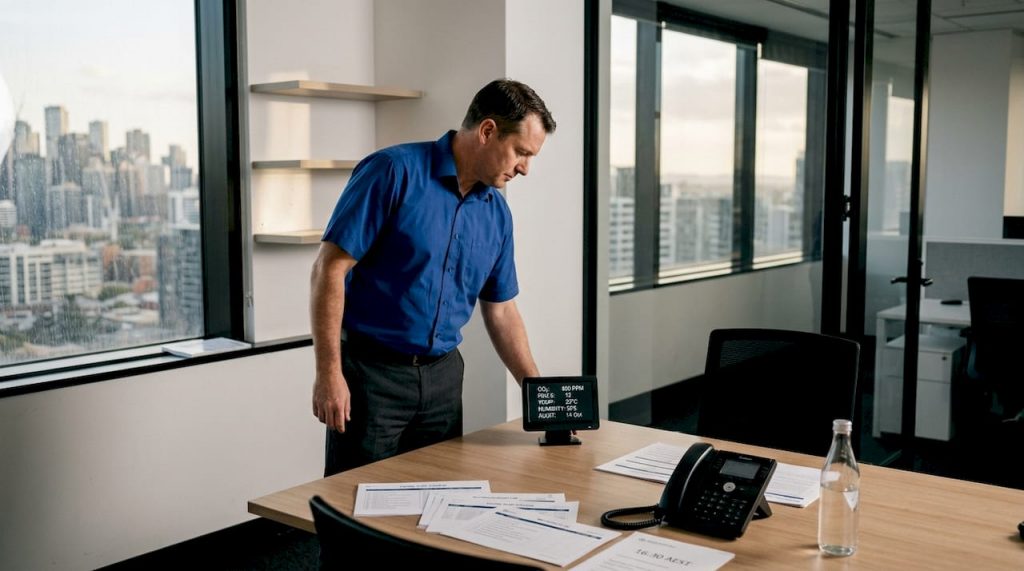
Ventilate the space and run a HEPA plus activated carbon air purifier on high, then follow with absorbers and a proper surface clean. Fresh, light smoke usually clears within a day or two of consistent airflow and filtration. Long-term residue, sometimes called thirdhand smoke, sinks into walls, fabric and HVAC systems and needs deeper work. Spraying a scent over it only hides the problem until the heat or humidity brings it back.
TL;DR:
- Cross-ventilation and a HEPA plus activated carbon purifier on high for at least four hours are essential for immediate smoke smell reduction.
- Deep cleaning requires treating walls, fabrics, HVAC systems, and sealing surfaces to effectively address bonded nicotine and tar residues.
- Persistent smell after basic cleaning suggests building residue, requiring professional deodorisation or surface replacement, especially in heavily contaminated spaces.
- Air purifiers with genuine activated carbon are necessary to adsorb gaseous VOCs, with regular filter replacement to maintain effectiveness.
- Removing cigarette smell from vehicles or personal items often needs targeted cleaning, fresh filters, and sometimes professional treatment for complete odour elimination.
Table of Contents
- Immediate steps to reduce cigarette smell fast
- How to deep clean a home with persistent smoke residue
- Removing cigarette smell from a car interior
- Getting cigarette smell off your hair, skin and clothes
- When to call in professional smoke remediation
- Choosing an air purifier and carbon filter that actually work
- The real trade-off between speed and permanence
- Where to find HEPA and carbon air purifiers for smoke odour
- Sources
- FAQ
Immediate steps to reduce cigarette smell fast
The first hour matters. Open windows on opposite sides of the room to create cross-ventilation, and point a box fan toward the outside to pull smoky air out rather than just stirring it around.
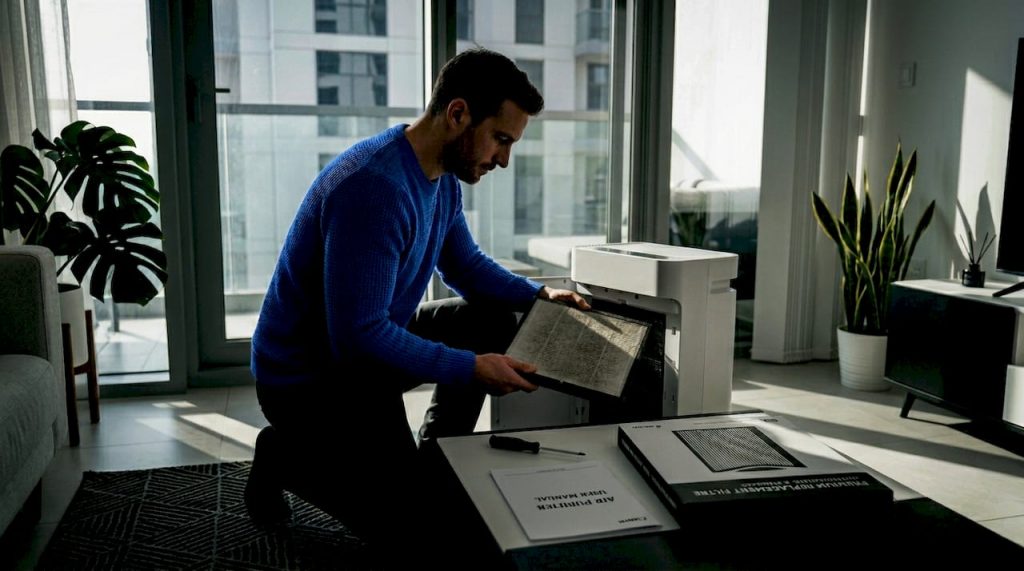
Once air is moving, bring in mechanical filtration. Run a HEPA plus activated carbon purifier on its highest setting for at least four to six hours in the affected room, then drop to a steady lower speed for ongoing maintenance. HEPA filters trap particles, but activated carbon does the real work on smoke odour because it adsorbs the gaseous compounds that HEPA alone lets straight through.
- Set up cross-ventilation with windows and a fan pointed outward, not just spinning air in place.
- Run a HEPA + carbon purifier on high for 4 to 6 hours, then continue at a lower setting overnight.
- Place shallow bowls of white vinegar, baking soda or activated charcoal in the room and leave them overnight to absorb lingering odour.
- Wipe down light bulbs, switch plates and lampshades. These heat up and re-release nicotine residue that has settled on them, according to the Cleaning Institute.
- Never run ozone generators in a room while people or pets are present, and never mix bleach with ammonia based cleaners.
Pro Tip: Absorbers like baking soda and charcoal work well on fresh, airborne smoke, but they don’t pull nicotine and tar out of walls or upholstery. If the smell returns once the bowls are gone, you’re dealing with residue, not just lingering air, and it’s time for the deeper clean below.
How to deep clean a home with persistent smoke residue
Fresh smoke floats. Old smoke bonds. Nicotine and tar molecules chemically attach to porous surfaces, and that residue can react with other indoor pollutants to form nitrosamines, compounds linked to health effects, according to the Lawrence Berkeley National Laboratory. That’s why a scented spray never solves a long-term smoke problem. It’s masking a chemical residue, not removing it.
A proper remediation follows a set order, working from the air outward to the fixed surfaces:
- Clear the air first. Keep the purifier running while you work so you’re not re-breathing what you disturb.
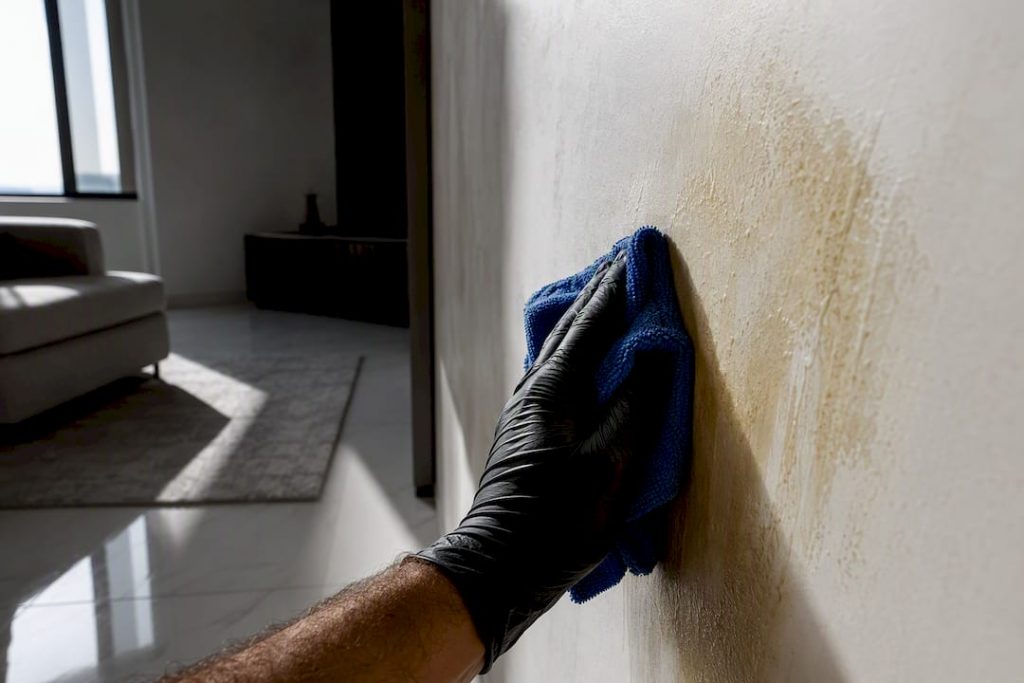
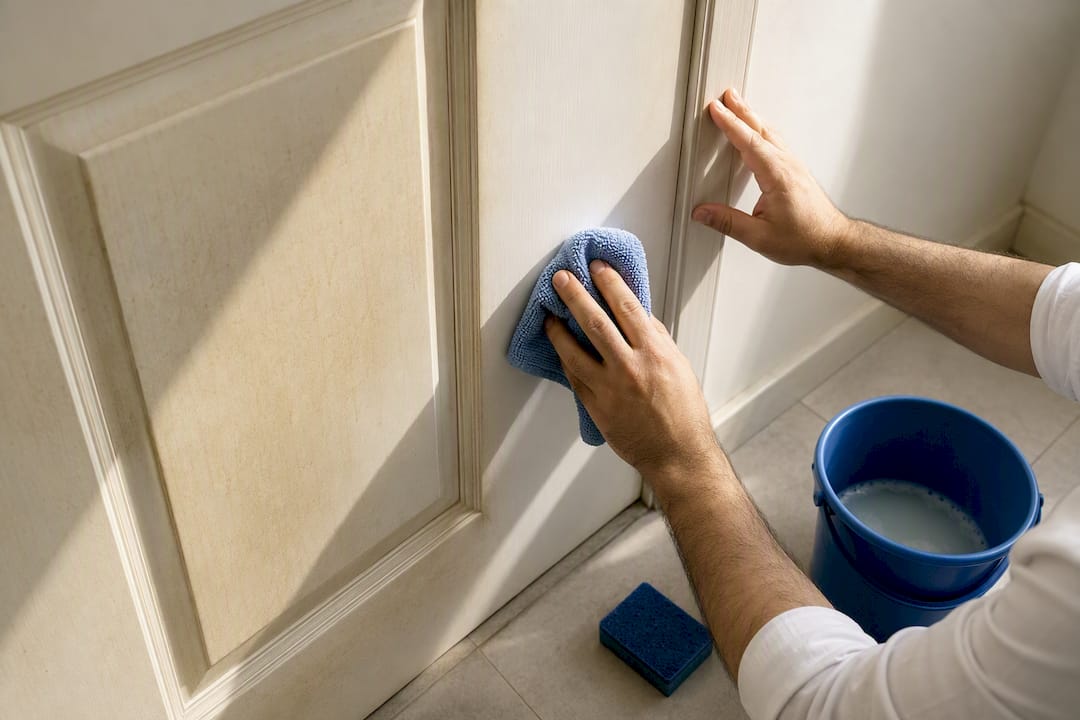
- Clean hard surfaces. Wash walls and ceilings with a degreasing cleaner or a TSP substitute, working top to bottom. If nicotine staining bleeds through after cleaning, prime with a shellac based, odour-blocking primer before repainting.
- Treat fabrics. Wash curtains and washable soft furnishings twice with a cup of baking soda added to the cycle. Steam clean carpets and upholstery, and if padding underneath carpet is heavily saturated, budget to replace it rather than clean it.
- Service the HVAC system. Replace filters, wipe accessible vents and grilles, and book a professional duct clean if the system has circulated smoky air for years.
- Seal what won’t come clean. Painting over compromised drywall without a proper sealing primer rarely lasts. The smell resurfaces within weeks.
Timeline depends on severity. A light or recent smoke event often clears in 24 to 48 hours with ventilation and absorbers alone, while heavy, long-term contamination can take multiple days of staged work, sometimes stretching into a professional job, according to restoration industry estimates. Light jobs might only cost the price of cleaning supplies; moderate cases involving carpet replacement or repainting can have significant costs; heavy contamination requiring drywall removal and professional deodorisation costs considerably more.
Removing cigarette smell from a car interior
A car cabin heats up fast and traps odour in a fraction of the space of a room, which is why smoke smell lingers so stubbornly in vehicles even after a light clean.
- Clear out ash, butts and rubbish, then open all doors to ventilate for at least 15 minutes before you start cleaning.
- Wipe down the dashboard, windows and hard trim with a degreasing cleaner, since smoke film clings to glass and plastic just as it does to walls.
- Shampoo the carpets and seats, or sprinkle baking soda over fabric surfaces, leave it a few hours, then vacuum thoroughly.
- Clean the headliner gently with a barely damp cloth. It’s fabric glued to a fragile backing, so oversoaking can cause it to sag.
- Replace the cabin air filter, since a saturated filter keeps recirculating smoky air every time the fan runs.
- Leave an activated charcoal bag in the cabin overnight for a few nights running to pull residual odour out of the air.
For smell that survives all of this, a professional automotive detailer can flush the HVAC system and treat upholstery with tools a home clean can’t replicate. This guide on diagnosing car odour at the source covers that process in more depth. Skip ozone treatments unless a licensed technician is running them, and never sit in a car during an ozone cycle.
Getting cigarette smell off your hair, skin and clothes
The fastest personal fix is unglamorous: shower, wash your hair, and brush your teeth. Nicotine particles cling to hair and skin the same way they cling to walls, and dry shampoo is a reasonable stopgap only when a full shower isn’t possible.
- Shower and wash hair as soon as you can; use dry shampoo only as a temporary measure between washes.
- Brush teeth and use mouthwash, since smoke residue in the mouth and throat is a real contributor to lingering breath odour.
- Machine wash clothing with a cup of baking soda added to the detergent, and repeat the wash if smell persists before tumble drying, which the drying heat can otherwise set into the fabric, Healthline notes.
- Hand-wash delicates that can’t handle a machine cycle, using the same baking soda approach in a soak.
- Dryer sheets and fabric sprays offer a quick, temporary cover for smells on the go, but they sit on top of the odour rather than removing it, so treat them as a stopgap, not a fix.
- Air garments thoroughly before sealing them away in a wardrobe or storage bag, since trapping residual odour just locks it in.
When to call in professional smoke remediation
Some signs mean DIY has reached its limit. Odour returning within days of a thorough clean, yellowed or nicotine-stained walls, an HVAC system that keeps recirculating smoky air, or upholstery and padding that stayed saturated for years are all reasonable triggers to bring in a specialist.
- Odour comes straight back after a full clean and dry.
- Walls or ceilings show yellow staining that wiping doesn’t shift.
- Carpet padding or heavy upholstery has been saturated for an extended period.
Professional jobs typically follow a defined sequence: assess the extent of contamination, run air purification, apply deodorisation such as controlled ozone or a hydroxyl generator, deep clean every affected surface, then seal or replace what can’t be salvaged and restore the space, as outlined by SERVPRO. Ozone breaks down odour molecules effectively but is genuinely hazardous to people and pets in an occupied space, which is why licensed technicians use monitoring equipment and clear the area first. Hydroxyl generators are often used as a gentler alternative in occupied or sensitive settings. Ask any provider for a written scope of work, the deodorisation method they plan to use, and confirmation of safety clearance before you re-enter.
Choosing an air purifier and carbon filter that actually work
Cigarette smoke is two problems at once: fine particles and gaseous VOCs. A purifier running HEPA filtration alone knocks down the visible haze but leaves the smell behind, because the gases that carry odour pass straight through a particle filter. You need a genuine activated carbon stage with real mass behind it, not a thin carbon-infused sheet, to actually adsorb those compounds.
- Match purifier size to the room using its CADR rating; an undersized unit will run constantly and still lose the fight against a smoky room.
- Run the purifier on high during active cleaning, then drop to a lower continuous setting for several days afterward while residue keeps off-gassing.
- Replace carbon filters on the schedule the manufacturer sets. Carbon loses its adsorption capacity over time and stops pulling odour once it’s saturated.
- A filter such as the Levoit Vital 200S smoke remover carbon replacement filter is built specifically for this kind of heavy odour load rather than general dust duty.
Pro Tip: A purifier is one leg of the stool, not the whole fix. Pair it with the ventilation and surface cleaning covered earlier, and check our odour control methods for homes for room-specific placement advice.
The real trade-off between speed and permanence
Removing smoke smell is really two jobs: clearing the air and pulling residue out of surfaces. Skip either one and the smell comes back. DIY suits fresh, light exposure; heavy or decades-old contamination usually needs a professional assessment before you spend money guessing.
— Nevel
Where to find HEPA and carbon air purifiers for smoke odour
Some retailers sell HEPA and activated carbon air purifiers designed for heavy odour loads, alongside genuine replacement filters so the carbon stage keeps working long after the first clean is done.

Rather than guessing at a generic purifier, browse the air purifiers range for units sized to your room, or head straight to the filters category if you already own a purifier and just need a fresh carbon cartridge. The Levoit Vital 200S smoke remover carbon replacement filter is a solid example of a filter purpose built for tobacco odour rather than general household dust. Certain online stores ship across all seven Emirates with local warranty support, so replacement parts and advice do not involve waiting on an overseas order. If you’re not sure what size or carbon load your space needs, reach out for guidance before you buy, and get the right unit running the first time.
Sources
- Dangers of third-hand smoke | Lawrence Berkeley National Laboratory
- How to remove the smell of cigarette smoke | SERVPRO
- How to remove cigarette smell from you, your clothes, your car, and home | Healthline
- Cleaning Institute — cigarette and tobacco smoke smell
FAQ
How do I get rid of cigarette smell immediately?
Open windows for cross-ventilation, run a fan to push smoky air outside, and turn on a HEPA plus activated carbon purifier on its highest setting. Adding bowls of baking soda or activated charcoal overnight helps absorb what’s left in the air, though it won’t touch residue baked into walls or fabric.
How long does it take for cigarette smoke smell to go away?
Light, recent smoke exposure often clears within 24 to 48 hours with steady ventilation and filtration, based on restoration industry estimates. Heavy or long-term contamination, where nicotine has bonded into porous surfaces, can take several days of staged cleaning and sometimes a professional deodorisation job to fully resolve.
What scent gets rid of cigarette smell?
No scent actually removes cigarette smell; fragrances just cover it temporarily while the underlying residue stays put. Natural absorbers like baking soda, activated charcoal and white vinegar work differently. They pull odour molecules out of the air rather than masking them, which is why they’re more effective for fresh smoke.
What is the best deodoriser for cigarette smoke?
For fresh smoke, a HEPA plus activated carbon air purifier paired with baking soda or charcoal absorbers gives the most reliable result, since the carbon stage adsorbs the gaseous compounds that cause the smell. A filter like the Levoit Vital 200S smoke remover carbon replacement filter is built specifically for this heavier odour load rather than general dust.